1863 risultati
rif. 25434Letter from 'S. S. Transylvania' en route from Glasgow to New York 24 26 and 29 November 1928. Postcard undated but contemporaneous. TSS Transylvania the prefix stands for ‘Twin Screw Steamship’ was built in Glasgow for the Anchor Line and launched in 1925. She had three funnels but two were redundant only serving to render the ship more attractive to prospective passengers. In 1940 she requisitioned by the Royal Navy and the following year she was torpedoed by the Germans sinking with the loss of 36 lives. The letter is 13pp 12mo; with neat single-space typing on thirteen leaves. It contains three line diagrams and on a separate 12mo leaf is an ink drawing with captions titled ‘As the Herrewich sic appeared when we last saw her’. Also present is a sepia postcard of ‘T.S.S. TRANSYLVANIA’. The letter and diagram are in fair condition aged and worn but with text clear and entire. The postcard is good with light aging. Signed in type ‘Alex.’ With manuscript diagrams and salutation to ‘Dear Mother and Father’. A well written missive the use of catch-words implies a good education beginning: ‘It is surprising that now more than five days after leaving Glasgow we should be only about 1000 miles from home. The explanation is probably well known to you all: but although you will have had newspaper accounts of the great storm and of the wreck we stood by I’m quite sure that some amplifications in the form of our personal experiences will be both welcome and of interest. In the first place let me hasten to assure you that none of us came to any harm. In the main we are all well. Mary has not been able to be out of bed much so far but on the other hand she has been free from sickness - which is a very remarkable thing considering our experiences.’ After news of ‘Anne’ and ‘Virginia’ ‘Mary’ and ‘Aunt Mima’ are also referred to he reports that they ‘arrived at Moville about midnight on Monday and spent a great night in Lough Foyle. At 10.00 o’clock next morning the Londonderry tender came alongside and we took 350 passengers and their baggage on board - making the total passenger compliment about 1100. There are about 25 in the first class.’ He finds the Transylvania ‘a splendid ship for watching the sea from. The forward extension of B. deck in front of the bridge is very clear of truck and there are no boats on it as there are on the others’. The account of the journey continues followed by a seven-page account of the storm and rescue beginning: ‘In the evening of Tuesday it was apparent that the sea was rising higher and higher as was the wind: and through the night it was obvious that something unusual in the way of weather was blowing up. / Now I’ve thought previously that we have been in Atlantic storms before. Two years ago on the “Cameronia” was a bad time: and one day last year the “Caledonia” was thrown about considerably: but our in pencil ‘my’ farthest stretch of imagination - even my wildest fears - have never pictured anyting so in pencil ‘as’ tremendous as we awoke in pencil ‘the situation’ to on Wednesday morning.’ He gives a vivid description of the ship ‘riding out the storm magnificently’ as he is caught by ‘plants flowerpots chairs and so on’: ‘The second and third class passengers were locked in and battened down for about two days. The stern of the ship was almost completely under water and the hatchways to the steward’s quarters were stove in during the night and all the stewards woke up to find themselves invaded by a foot or two of water.’ The storm subsides and she comes across the wreck of a ‘large German tramp’ he calls the ‘Herrenwich’ ‘a poignant and pathetic spectacle; and more so was the view we had of the hapless crew clinging to what was left on the bare decks. We gradually got the story bit by bit as it filtered through the bridge where it was picked up I suppose by signals. A great wave had landed on the “Herrenwich” and had stove in the hatch of No. 3 hold on the forward well deck. This hold was full of water and the restraining bulkheads were bulging. The captain sent out his S. O. S. and immediately there - after another sea came on board and carried off bodily the bridge the wireless the wireless room and all the boats save one which was stove in. The captain and a quartermaster were swept overboard with the bidge and were lost immediately.’ He describes ‘a masterly exposition magnificently executed of the tactics of sea rescue. It was obviously impossible to go right up to the ship but sometimes we were not more than 100 yards away and communication by megaphone was possible. It was equally impossible for us simply to take up a position on the nether side and so act as a breakwater. The manoeuvre which was carried out time after time therefore was to circle the wreck as quickly as possible and to drift past her on the weather side and so give her a certain degree of intermittent protection. This meant that twice in every circuit the captain had to bring the “Transylvania” broadside on to the seas and every time this happened there came the sickening sense of going over on our beam ends - as I believe many less seaworthy and splendid ships would have done. And each time of course until everything was secured anything movable was thrown about in the wildest way. Oil was poured on the water with each circuit and the difference it made was wonderful.’ The seven-page account of the storm and rescue ends with the information that ‘the bridge is 62 feet from the waterline and when we were in the trough 19 out of every 20 waves were seen to be on a level with or higher than the bridge’. It reflects: ‘I’ve often told myself that I wanted to experience a real Atlantic storm. Now I have experienced it. I’d like it again but never again would I like to take Mary and the children into it.’ The letter finishes with two two-page updates from 26 and 29 November the last beginning with the information that the ship has ‘passed Nantucket light ship and may therefore expect to reach quarantine to-night’. See Image. Letter from 'S. S. Transylvania' (en route from Glasgow to New York), 24, 26 and 29 November 1928. Postcard undated, but contemp unknown
1902rif. z013503Chicago: Inter Ocean Newspaper Company 1902. First edition. Hardcover. Good. 1902. First edition. Hardcover 4to. in black cloth with gilt spine title. 219pp. illustrated. Good. Boards mottled lacks frontis. Light foxing to margins else contents unmarked. Inter Ocean Newspaper Company hardcover
1972rif. 77592Washington DC: United States Department of the Navy Maury Center for Ocean Science 1972. Presumed First Edition First printing. Spiral bound. Good. 4 210 pages. Consists of data graphically displayed. Arrival Angle. DB Loss Noise DB and Depth in meters. This is part of the Long Range Acoustic Propagation Project. There is a distribution limitation statement at the bottom of the front cover "This document may be further distributed by the holder only with the specific prior approval of the Director Long Range Acoustic Propagation Project ONR Code 102-OS" However it is understood that this limitation no longer applies due to the passage of time and advances in technology. Passive Sonar is a device that detects the source of acoustic vibrations or noise and determines the direction or bearing to the source. It is used as a hydroacoustic direction finder. Passive sonars operate in the range of sonic ultrasonic and infrasonic frequencies. They are used on submarines on surface vessels in containers lowered from helicopters and on buoys Passive sonars consist of sonic detector compensator filter amplifier and display device. Anti-submarine warfare ASW or in older form A/S is a branch of underwater warfare that uses surface warships aircraft or other submarines to find track and deter damage or destroy enemy submarines. Successful anti-submarine warfare depends on a mix of sensor and weapon technology training and experience. Sophisticated sonar equipment for first detecting then classifying locating and tracking the target submarine is a key element of ASW. To destroy submarines both torpedoes and naval mines are used launched from air surface and underwater platforms. ASW also involves protecting friendly ships. United States, Department of the Navy, Maury Center for Ocean Science unknown
1972rif. 77594Washington DC: United States Department of the Navy Maury Center for Ocean Science 1972. Presumed First Edition First printing. Spiral bound. Good. 4 180 pages. Consists of data graphically displayed. Arrival Angle. DB Loss Noise DB and Depth in meters. This is part of the Long Range Acoustic Propagation Project. There is a distribution limitation statement at the bottom of the front cover "This document may be further distributed by the holder only with the specific prior approval of the Director Long Range Acoustic Propagation Project ONR Code 102-OS" However it is understood that this limitation no longer applies due to the passage of time and advances in technology. Passive Sonar is a device that detects the source of acoustic vibrations or noise and determines the direction or bearing to the source. It is used as a hydroacoustic direction finder. Passive sonars operate in the range of sonic ultrasonic and infrasonic frequencies. They are used on submarines on surface vessels in containers lowered from helicopters and on buoys Passive sonars consist of sonic detector compensator filter amplifier and display device. Anti-submarine warfare ASW or in older form A/S is a branch of underwater warfare that uses surface warships aircraft or other submarines to find track and deter damage or destroy enemy submarines. Successful anti-submarine warfare depends on a mix of sensor and weapon technology training and experience. Sophisticated sonar equipment for first detecting then classifying locating and tracking the target submarine is a key element of ASW. To destroy submarines both torpedoes and naval mines are used launched from air surface and underwater platforms. ASW also involves protecting friendly ships. United States, Department of the Navy, Maury Center for Ocean Science unknown
1972rif. 77591Washington DC: United States Department of the Navy Maury Center for Ocean Science 1972. Presumed First Edition First printing. Spiral bound. Good. 4 240 pages. Consists of data graphically displayed. Arrival Angle. DB Loss Noise DB and Depth in meters. This is part of the Long Range Acoustic Propagation Project. There is a distribution limitation statement at the bottom of the front cover "This document may be further distributed by the holder only with the specific prior approval of the Director Long Range Acoustic Propagation Project ONR Code 102-OS" However it is understood that this limitation no longer applies due to the passage of time and advances in technology. Passive Sonar is a device that detects the source of acoustic vibrations or noise and determines the direction or bearing to the source. It is used as a hydroacoustic direction finder. Passive sonars operate in the range of sonic ultrasonic and infrasonic frequencies. They are used on submarines on surface vessels in containers lowered from helicopters and on buoys Passive sonars consist of sonic detector compensator filter amplifier and display device. Anti-submarine warfare ASW or in older form A/S is a branch of underwater warfare that uses surface warships aircraft or other submarines to find track and deter damage or destroy enemy submarines. Successful anti-submarine warfare depends on a mix of sensor and weapon technology training and experience. Sophisticated sonar equipment for first detecting then classifying locating and tracking the target submarine is a key element of ASW. To destroy submarines both torpedoes and naval mines are used launched from air surface and underwater platforms. ASW also involves protecting friendly ships. United States, Department of the Navy, Maury Center for Ocean Science unknown
1972rif. 77593Washington DC: United States Department of the Navy Maury Center for Ocean Science 1972. Presumed First Edition First printing. Spiral bound. Good. 4 240 pages. Consists of data graphically displayed. Arrival Angle. DB Loss Noise DB and Depth in meters. This is part of the Long Range Acoustic Propagation Project. There is a distribution limitation statement at the bottom of the front cover "This document may be further distributed by the holder only with the specific prior approval of the Director Long Range Acoustic Propagation Project ONR Code 102-OS" However it is understood that this limitation no longer applies due to the passage of time and advances in technology. Passive Sonar is a device that detects the source of acoustic vibrations or noise and determines the direction or bearing to the source. It is used as a hydroacoustic direction finder. Passive sonars operate in the range of sonic ultrasonic and infrasonic frequencies. They are used on submarines on surface vessels in containers lowered from helicopters and on buoys Passive sonars consist of sonic detector compensator filter amplifier and display device. Anti-submarine warfare ASW or in older form A/S is a branch of underwater warfare that uses surface warships aircraft or other submarines to find track and deter damage or destroy enemy submarines. Successful anti-submarine warfare depends on a mix of sensor and weapon technology training and experience. Sophisticated sonar equipment for first detecting then classifying locating and tracking the target submarine is a key element of ASW. To destroy submarines both torpedoes and naval mines are used launched from air surface and underwater platforms. ASW also involves protecting friendly ships. United States, Department of the Navy, Maury Center for Ocean Science unknown
1972rif. 77590Washington DC: United States Department of the Navy Maury Center for Ocean Science 1972. Presumed First Edition First printing. Spiral bound. Good. 4 240 pages. Consists of data graphically displayed. Arrival Angle. DB Loss Noise DB and Depth in meters. This is part of the Long Range Acoustic Propagation Project. There is a distribution limitation statement at the bottom of the front cover "This document may be further distributed by the holder only with the specific prior approval of the Director Long Range Acoustic Propagation Project ONR Code 102-OS" However it is understood that this limitation no longer applies due to the passage of time and advances in technology. Passive Sonar is a device that detects the source of acoustic vibrations or noise and determines the direction or bearing to the source. It is used as a hydroacoustic direction finder. Passive sonars operate in the range of sonic ultrasonic and infrasonic frequencies. They are used on submarines on surface vessels in containers lowered from helicopters and on buoys Passive sonars consist of sonic detector compensator filter amplifier and display device. Anti-submarine warfare ASW or in older form A/S is a branch of underwater warfare that uses surface warships aircraft or other submarines to find track and deter damage or destroy enemy submarines. Successful anti-submarine warfare depends on a mix of sensor and weapon technology training and experience. Sophisticated sonar equipment for first detecting then classifying locating and tracking the target submarine is a key element of ASW. To destroy submarines both torpedoes and naval mines are used launched from air surface and underwater platforms. ASW also involves protecting friendly ships. United States, Department of the Navy, Maury Center for Ocean Science unknown
1972rif. 77589Washington DC: United States Department of the Navy Maury Center for Ocean Science 1972. Presumed First Edition First printing. Spiral bound. Good. 4 189 1 pages. Consists of data graphically displayed. Arrival Angle. DB Loss Noise DB and Depth in meters This is part of the Long Range Acoustic Propagation Project. There is a distribution limitation statement at the bottom of the front cover "This document may be further distributed by the holder only with the specific prior approval of the Director Long Range Acoustic Propagation Project ONR Code 102-OS" However it is understood that this limitation no longer applies due to the passage of time and advances in technology. Passive Sonar is a device that detects the source of acoustic vibrations or noise and determines the direction or bearing to the source. It is used as a hydroacoustic direction finder. Passive sonars operate in the range of sonic ultrasonic and infrasonic frequencies. They are used on submarines on surface vessels in containers lowered from helicopters and on buoys Passive sonars consist of sonic detector compensator filter amplifier and display device. Anti-submarine warfare ASW or in older form A/S is a branch of underwater warfare that uses surface warships aircraft or other submarines to find track and deter damage or destroy enemy submarines. Successful anti-submarine warfare depends on a mix of sensor and weapon technology training and experience. Sophisticated sonar equipment for first detecting then classifying locating and tracking the target submarine is a key element of ASW. To destroy submarines both torpedoes and naval mines are used launched from air surface and underwater platforms. ASW also involves protecting friendly ships. United States, Department of the Navy, Maury Center for Ocean Science unknown
1972rif. 77595Washington DC: United States Department of the Navy Maury Center for Ocean Science 1972. Presumed First Edition First printing. Spiral bound. Good. 4 150 pages. Consists of data graphically displayed. Arrival Angle. DB Loss Noise DB and Depth in meters. This is part of the Long Range Acoustic Propagation Project. There is a distribution limitation statement at the bottom of the front cover "This document may be further distributed by the holder only with the specific prior approval of the Director Long Range Acoustic Propagation Project ONR Code 102-OS" However it is understood that this limitation no longer applies due to the passage of time and advances in technology. Passive Sonar is a device that detects the source of acoustic vibrations or noise and determines the direction or bearing to the source. It is used as a hydroacoustic direction finder. Passive sonars operate in the range of sonic ultrasonic and infrasonic frequencies. They are used on submarines on surface vessels in containers lowered from helicopters and on buoys Passive sonars consist of sonic detector compensator filter amplifier and display device. Anti-submarine warfare ASW or in older form A/S is a branch of underwater warfare that uses surface warships aircraft or other submarines to find track and deter damage or destroy enemy submarines. Successful anti-submarine warfare depends on a mix of sensor and weapon technology training and experience. Sophisticated sonar equipment for first detecting then classifying locating and tracking the target submarine is a key element of ASW. To destroy submarines both torpedoes and naval mines are used launched from air surface and underwater platforms. ASW also involves protecting friendly ships. United States, Department of the Navy, Maury Center for Ocean Science unknown
1972rif. 77588Washington DC: United States Department of the Navy Maury Center for Ocean Science 1972. Presumed First Edition First printing. Spiral bound. Good. 4 240 pages. Consists of data graphically displayed. Arrival Angle. DB Loss Noise DB and Depth in meters. Rear cover & last page has tear. This is part of the Long Range Acoustic Propagation Project. There is a distribution limitation at the bottom of the front cover "This document may be further distributed by the holder only with the specific prior approval of the Director Long Range Acoustic Propagation Project ONR Code 102-OS" It is understood that this limitation no longer applies due to the passage of time and technology advances. Passive Sonar detects the source of acoustic vibrations or noise and determines the direction or bearing to the source. It is used as a hydroacoustic direction finder. Passive sonars operate in the range of sonic ultrasonic and infrasonic frequencies. They are used on submarines on surface vessels in containers lowered from helicopters and on buoys Passive sonars consist of sonic detector compensator filter amplifier and display device. Anti-submarine warfare ASW or in older form A/S is a branch of underwater warfare that uses surface warships aircraft or other submarines to find track and deter damage or destroy enemy submarines. Successful anti-submarine warfare depends on a mix of sensor and weapon technology training and experience. Sophisticated sonar equipment for first detecting then classifying locating and tracking the target submarine is a key element of ASW. To destroy submarines both torpedoes and naval mines are used launched from air surface and underwater platforms. ASW also involves protecting friendly ships. United States, Department of the Navy, Maury Center for Ocean Science unknown
2000rif. 68664Washington DC: National Academies Press 2000. Presumed first edition/first printing. Hardcover. Very good. No dust jacket. Sewn binding. Cloth over boards. xvi 405 p. Illustrations. Refernces. Index. To provide advice to federal state and local government agencies charged with addressing the growing problems associated with nutrient pollution and eutrophication the National Research Council charged the Committee on the Causes and Management of Coastal Eutrophication to review current knowledge of watershed estuarine and coastal processes and their roles in eutrophication; assess past and ongoing efforts to monitor and assess water quality on a variety of scales; and address barriers to implementation of effective management practices and regulatory strategies for preventing and reducing nutrient enrichment and its effects. National Academies Press hardcover
1979rif. 65988United States 1979. Presumed first edition/first printing. Hardcover. Very good. No dust jacket. viii 801-1333 p. Includes: illustrations diagrams. Volume 2 ONLY. This sumposium was cosponsored by the Defense Mapping Agency and the National Ocean Survey. It was hosted by the Aplied Research Laboratories and held at the University of Texas at Austin. Volume II includes Session IV on Terrestrial Adjustments Session V on Advanced Systems the Closing Session and the Symposium Scrapbook of photographs countries representated and the list of attendees. United States hardcover
1945rif. 1518n.p.: U.S. Pacific Fleet 1945. fair. 423 wraps text in Japanese only the introduction and index have been translated covers worn and soiled. This handbook was originally published in 1901 by the Keigansha Governmental Research Bureau with corrections including No. 94 to 1943. The U.S. Pacific Fleet reproduced this book because it was the latest material at hand on the political organization of Japan. The handbook was marked "Restricted " but that classification was crossed out by hand on the cover and changed to "Unclassified--1945-6. " U.S. Pacific Fleet paperback
2025rif. 10-5-2515Penguin Press 2025-05-13. First Edition. hardcover. Like New/Like New. 6x1x9. Signed by Author. Signed by author on title page. First edition with full number line. Dust jacket in protective mylar cover. In a fading Connecticut mill town nineteen-year-old Hai's life teeters on the edge until a chance meeting with Grazina an elderly widow pulls him back. As he becomes her caretaker Hai forges unlikely bonds — including with co-workers at a local fast-food shop — that slowly reframe his understanding of family survival and joy. With tenderness and honesty this novel explores resilience memory and the unexpected ways lives can intertwine. Penguin Press hardcover
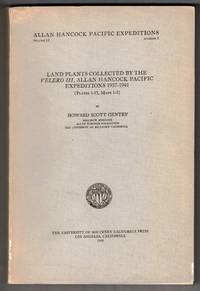
1949rif. 69540Los Angeles: The University of Southern California Press 1949. Paperback. Good. 245pp. Octavo 23.5 cm Gray printed wraps. Several small chipped losses to the surface of the spine and to the bottom fore-edge corner of the front wrap. Wraps mildly toned at the edges. Text block cracked at p. 204. Notation in pen on first page. Allan Hancock Pacific Expeditions Volume 13 Number 2. The 1000-ton vessel Velero III a floating research lab funded by Los Angeles oil millionaire Angeleno George Allan Hancock 1875-1965 enriched early ocean research tremendously. Hancock acted as captain aboard the research vessel and the Velero III would undertake yearly months-long scientific expeditions throughout the Pacific Ocean with scientists geologists paleontologists and marine biologists from university institutions the Smithsonian the Steinhart Aquarium the San Diego Zoo and the Bureau of Fisheries. The University of Southern California Press paperback
2025rif. 048444U.S.A.: Penguin Press 2025. Book. As New. Hardcover. Signed by Authors. 1ST. Outstanding Copy - Signed By The Author On The Title Page. A First Edition First Printing. Book Is In Fine Condition. Boards Are Clean Not Bumped. Fore Edges Are Clean. Interior Is Clean And Legible. Not Remaindered. Dust Jacket Is In Fine Condition. Not Chipped Or Crinkled. Not Price Clipped. Dust Jacket Is Covered By Mylar Brodart. Thanks And Enjoy. Penguin Press Hardcover
1995rif. 14980Somerset New Jersey U.S.A.: John Wiley & Sons Inc 1995 second editionsoft cover in near fine conditionsome underlining present. 2nd Edition. Soft cover. Near Fine. Somerset, New Jersey, U.S.A.: John Wiley & Sons Inc paperback
1995rif. 11495Washington D.C.: National Academies Press 1995. First Edition. Paperback. Very Good/Not issued. 8.80 x 5.90 x 0.25 inches. Very Good condition. The covers look great. The binding is tight. Previous organization's stamp on title page. The interior pages are clean and unmarked. USPS electronic tracking number issued free of charge. National Academies Press paperback
2002rif. 35769Océano 2002. Hardcover. As New/Near Fine. VOL 2 ONLY! Unmarked copy in excellent condition. 2004 printing. Océano hardcover
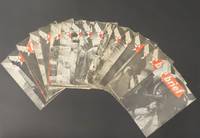
1945rif. 5514Set of 17 issues of Brief all from 1945. Each issue includes a full page photo of a pin-up girl on the back cover. Models include: Marguerite Chapman Virginia de Luce Lana Turner Belita Dorothy Morris Ava Gardner and many others. In addition to being a news and information publication Brief also strives to acquaint the men with the accomplishments of the personnel of AAFPOA. Creasing and occasional fold lines down middle a few have some water staining to back wrap see images. 18 pp. 9 x 12 inches. Complete list of issue dates: 9 Jan 6 Feb 13 Feb 20 Feb 27 Feb 6 March 13 March 5 June 12 June 19 June 26 June 3 July 10 July 24 July 7 Aug 14 Aug 28 Aug. Information and Education Division of AAFPOA paperback
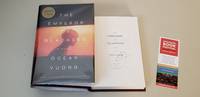
2025rif. 5252First edition first prnt. One of an unspecified number off copies issued by the publisher with a tipped-in page signed by Vuong for promotional purposes. Dustjacket with printed "Oprah's Book Club 2025" logo as issued and a "Signed Copy" sticker on the front panel. Unread copy in Fine condition in a Fine dustjacket with an archival cover. Vuong's fourth book second novel. Penguin Press hardcover
rif. 1272783057.Gpaperback. Good. Access codes and supplements are not guaranteed with used items. May be an ex-library book. paperback
rif. 9788592649449AYINE EDITORA. new. Um Vietn dilacerado pela guerra e pelo comunismo AYINE EDITORA unknown
rif. 9786555320039ROCCO. new. Sucesso de pblico e aclamado pela cr�tica nos Estados Unidos o romance de estreia do poeta Ocean Vuong � um retrato devastador de uma fam�lia um primeiro amor e o poder redentor da narrativa. Sobre a terra somos belos por um instante � uma carta de um filho para uma me que no sabe ler. Escrita quando o palestrante Cachorrinho est� com quase 30 anos a carta desenterra uma hist�ria de fam�lia que comeou antes dele nascer e morar nos Estados Unidos - uma hist�ria cujo epicentro est� enraizado no Vietn - e serve como uma porta de entrada para partes de sua vida que sua me que carrega cicatrizes da guerra nunca teve conhecimento com direito a uma revelao inesquec�vel. Ao mesmo tempo um testemunho do amor intenso e ineg�vel entre uma me solteira e seu filho � tamb�m uma explorao brutalmente honesta sobre raa classe e masculinidade.Com surpreendente urgncia e graa Ocean Vuong escreve sobre pessoas presas entre mundos d�spares e pergunta como podemos curar e resgatar uns aos outros sem abandonar quem somos. ROCCO unknown
rif. B9781163989463Paperback / softback. New. paperback