LAPLACE (Cyrille Pierre Théodore).Livre Rare Book
1.863 Ergebnisse
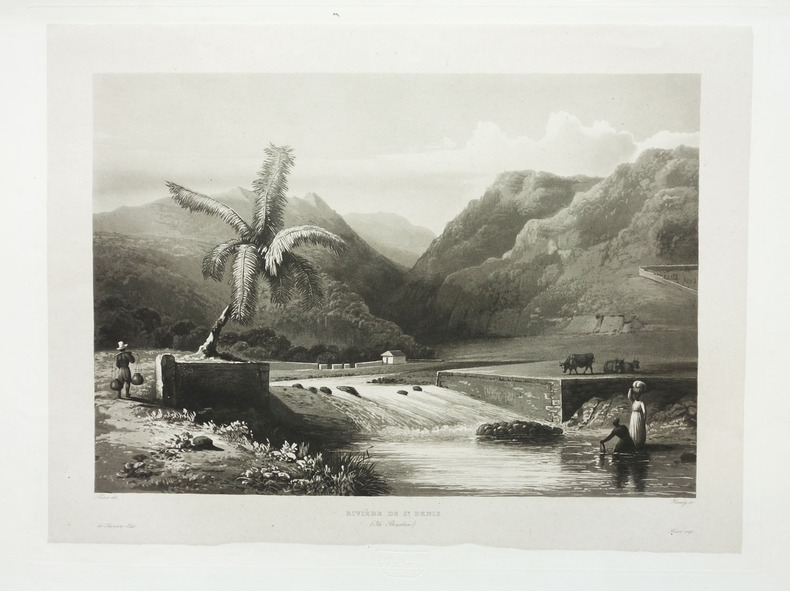
1833Best.-Nr. LBW-1982Paris, 1833-1839. 267 x 356 mm.
1833Best.-Nr. LBW-1987Paris, 1833-1839. 272 x 365 mm.
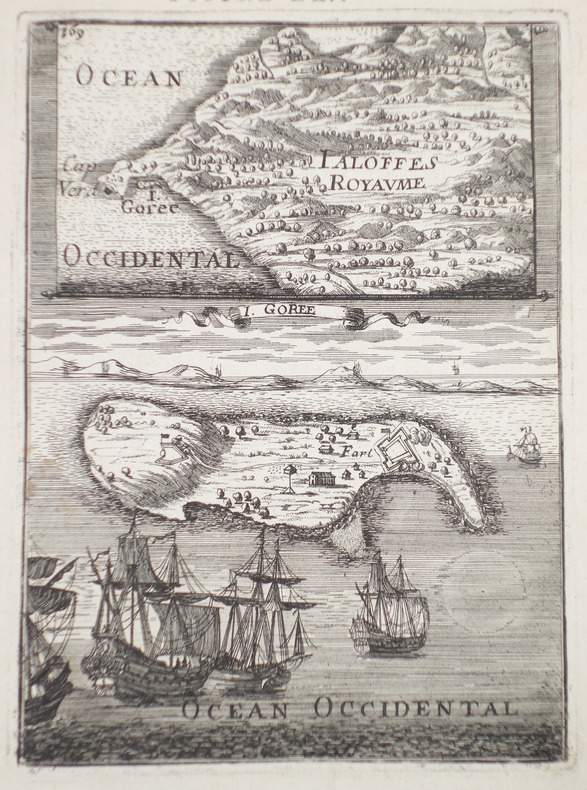
1683Best.-Nr. LBW-2314[1683]. 142 x 103 mm.
1923Very Good Turkish, Ottoman (1500-1928) Full morocco in Ottoman style. Large roy. 8vo. (25 x 18 cm). In Ottoman script (Old Turkish with Arabic letters). 62 p., 18 unnumbered b/w photos, and four b/w maps. Slight foxing on extremities. Otherwise a very good copy. First and only edition of this exceedingly rare first book on Muslims and Islam in the Comoro Islands of Africa, located in the Mozambique Channel to the north-west of Madagascar and facing Mozambique, including Ngazidja (Grande Comore), Ndzuwani (Anjouan), Mwali (Moheli) and Mayotte (Maore) Islands. The book gives detailed information about the races, customs, and traditions of the natives of the archipelago, the introduction of Islam to the islands, and how influential it was on the people as well as on their education, social structure and the population of the archipelago. The work carried out in the context of missionary activities is also discussed in detail, and such information is supported by photographs, statistical tables and chronology of the islands. According to the information given in the work, Muslims first came to Yuhana Island in 750 AD and began to settle on the island. Since 854, there are claims that the Ismailis, a Shiite community, and then the Fatimid prince came to the islands and ruled for a period. Especially Arabs, Iranians, and Indians, who came and settled on the islands mostly for trade or travel, introduced Islam to the islands' natives, strengthened their ties with marriages and thus increased the population and influence on the islands and became instrumental in the establishment of Islam. Okday also describes the process of French exploitation that started when Comoros fell into the hands of the French, each of whom was under the control of the Malagasy despite England and Germany, and got the support of their pirates. This book has rich and attractive photos of natives of the archipelago, and other peoples who lived on the islands like Arabs, traditional homes and streets, Sultan Ahmad of the Comodo, statesmen and clergies, Prince Said Mohammad, women, and a French ship named 'La Bourdonnaise' as well as four maps showing the African continent and each of the islands. Ismail Hakki Tevfik Okday was an Ottoman intellectual and military commander, who participated in the First Balkan War, the Great War, and the Turkish War of Independence. He was born in Athens as the son of Ahmet Tevfik Pasha, who was then the Ottoman Ambassador to Greece, and later became the last Grand Vizier of the Ottoman Empire. Only two printed copies in OCLC: 949523840 (Bogaziçi University and Stanford University Libraries).; Özege 131.
1876Best.-Nr. 2754Paris, Imprimerie Nationale, 1876. In-8 broché de 226 pp., couverture bleue imprimée.
1875Best.-Nr. 2755Paris, Imprimerie Nationale, 1875. In-8 broché de 207 pp., couverture bleue imprimée.
1877Best.-Nr. 2756Paris, Imprimerie Nationale, 1877. In-8 broché de 268 pp., couverture bleue imprimée.
1892Very Good English, Middle (1100-1500) Original imitation vellum. An OCLC register says "decorated with small shells and seaweed pasted on". Chipped on extremities and spine, slight pouring on paper; several tapes used at the link of the pages to binding. Otherwise a good copy. Small 4to. (27 x 18 cm). In Middle English (15th century). The first leaf attached to front cover. At end, 6 blank leaves. [46] p. with [7] blank pages, many illustrations, 1 letter with its broken seal. Separately, a facsimile of a letter from Isabella (Dona Isabel por Gracia de Dios Reina de Castilla y Leon etc. etc. A Don Cristobal Colon de Genova) to Columbus, dated 'Granada a? trece de Abril de MCCCCXCII,' with a broken seal attached. Script on vellum as well. Two registers in OCLC (1029665801 and 60764823 -This one is New York Edition-). 'Düsseldorf Edition' says "A spurious work purporting to be the logbook of Christopher Columbus, which, according to legend, he threw into the sea during a storm, and which was found on the coast of Pembrokeshire 400 years later. Written in antiquated English, with paper and binding made to imitate in color and appearance a volume damaged by exposure to seawater. "S.A.S.X. MY XPO FERENS" from cover, variously interpreted, eg. Supples servus altissimi Salvatoris Xristi Mariae Josephi Xpoferens. Forgery attributed to Karl Maria Seyppel. Printed by lithographic process on imitation parchment paper. Text and illustrations printed to appear handwritten, with many decorated initials. Accompanied by: reproduction of a letter purported to be by the finder of the logbook dated "September forth 1890"; "Don~a Isabel por gracia de Dios Reina do Castilla y Leon, etc., etc. a? Don Cristo?bal Colon de Ge?nova," supposed letter on imitation parchment, authorizing his voyage, dated "Granada, a? trece de abril de mccccxcij," with an attached seal, laid in.". This is a fine hoax on Colombus' first travel into America. It includes a map containing Cuba, San Salvador, and unknown areas with a hand drawing of Columbus as well as other illustrations and decorative borders, etc. This Edition may be printed in memory of the 400th year of '1492'. "Columbus's log of the first voyage has not survived, although we do have an abstract of it, written in the 1530s by Bartolome de las Casas. However, that actually used the "Barcelona Copy" of Columbus's original log. The chart above shows the sources that exist today in green, and sources that have disappeared in red. The chart also shows where secondary souses got their original information. When he returned to Spain in 1493, Columbus gave his original log to the Sovereigns at the royal court in Barcelona. Queen Isabela ordered the log to be copied, resulting in the so-called Barcelona Copy. The original has not been seen since, however, the Barcelona Copy was returned to Columbus just before his second voyage later that year, and remained in his possession until his death in 1506. It then passed into the hands of son Fernando, who used it when he wrote a biography of Columbus in 1538. The Barcelona Copy too was lost sometime after 1554. Sometime around 1530, the Barcelona Copy was abstracted by Las Casas into the Diario. This abstract as part of his research that led to his massive work, the Historia de las Indias. So The Diario remains our best historical record of the first voyage of Columbus. On the westward passage, Columbus kept two sets of distance figures in the log. According to Las Casas, this was done to allay the fears of the crew that they had sailed too far from Spain. The abstract is mostly written in the third person, but there are a number of large direct quotes from the log written in Columbus's own first-person.". (Source: Christopher-Columbus Europe website).
PARIS, Les Éditions de Paris, 1948 - In-8, 20x13,5 - broché - 318 et (2) pages; 1 hors-texte photos N&B HT - carte sur double page.- bon exemplaire
Best.-Nr. 5336PARIS, Les Éditions de Paris, 1948 - In-8, 20x13,5 - broché - 318 et (2) pages; 1 hors-texte photos N&B HT - carte sur double page.- bon exemplaire
Best.-Nr. Hagman, Tore and PhotograIn Pristine Condition. unknown
1886In 8. Dim. 19x12 cm. Pp. 281+(3). Interessante opera di viaggi del 1886 di Albert David che descrive il suo viaggio lungo l'Oceano Pacifico. All'interno sono presenti dieci incisioni fuori testo che mostrano vedute: Baie Borja, Lima, Indiani peruviani, Tahiti ecc... Tra i luoghi descritti: Distretto di Magellano e Canali laterali della Patagonia, Lima durante vl'occupazione cilena, Valparaiso e i Cileni dopo la Guerra del Pacifico, Peru e Cile, Callao, Pisco, Pisagua, Arica e Tacna, Iquique, Lota, Una necropoli degli Incas, Honolulu, Un mese a Noukahiva, Tahiti ecc... In buone condizioni e completo Copertina editoriale in buone condizioni generali con lievi usure ai margini e dorso. Legatura in buone condizioni. All'interno le pagine si presentano in buone condizioni con fioriture. Interesting work of travel of 1886 written by Albert David describing his travel in the Pacific Ocean. Inside there are ten out of text planches showing different views: Baie Borja, Lima, Peruvian Indians, Tahiti ecc... Between the places described: District of Magellano and channels of Patagonia, Lima during Chile occupation, Valparaiso and Cileni after Pacific war, Peru and Cile, Callao, Pisco, Pisagua, Arica e Tacna, Iquique, Lota, a city of Incas, Honolulu, a month in Noukahiva, Tahiti ecc... In good conditions and complete. Editorial cover in good general conditions slightly worn in the edges and spine. Binding in good conditions. Inside pages are in good conditions with foxings.
Best.-Nr. 660554-nnew. unknown
Best.-Nr. 660554like new. unknown
Best.-Nr. ria9780309063982_inpHardback. New. New Book; Fast Shipping from UK; Not signed; Not First Edition; Describes the development of ocean sciences highlighting the contributions of the National Science Foundation NSF to the field's progress. This book also examines the institutional structures and technology that made the advances pos hardcover
Best.-Nr. A9780309063982Hardback. New. Describes the development of ocean sciences highlighting the contributions of the National Science Foundation NSF to the field's progress. This book also examines the institutional structures and technology that made the advances possible. It documents the history of NSF's Division of Ocean Sciences. hardcover
1927Best.-Nr. 11406The Royal Mail Steam Packet Company. Fine. 1927. Ephemera. Orca: 1 sheet printed on coated white paper stock 11" x 95" folded; when completely unfolded 38"x44"; printed & illustrated on both sides. NILE CRUISES: 4" x 7.25 booklet; photographs of 4 steamers with facing cabin plans; back cover with color map folds out to map of the Plan of Cairo on inside. NILE CRUISES 1925 48pp 4" x 7.25 booklet; photographs of 4 steamers with facing cabin plans; back cover with color map folds out to map of the Plan of Cairo on inside. MEDITERRANIAN PASSENGER SERVICE BY "4 ACES" American Export Lines; ; 1950 folding brochure unfolds to 10 four panel pages of 48 panels including cover; with illustrations map charts drawings. SUMMER CRUISE 1927: 1 sheet on canary paper stock printed on both sides folds to 6.5"x3.5"; map & itinerary on one side. . The Royal Mail Steam Packet Company unknown
Best.-Nr. Johanne HuitfeldtBook is in perfect condition - but jacket is very shelfworn. unknown
Best.-Nr. 1549113577.GaudioCD. Good. Access codes and supplements are not guaranteed with used items. May be an ex-library book. unknown
Best.-Nr. 3038relié - 12x18,5 - 249 pp - 1974 - éditions FAMOT, Genève.exemplaire réservé par François BEAUVAL à ses amis bibliophiles.
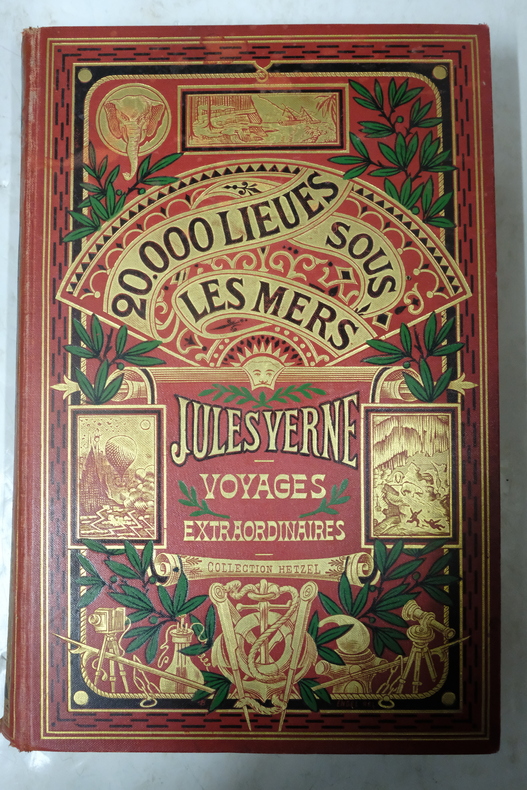
1905Best.-Nr. LIT9659M1905, J. Hetzel et Cie, relié, 434 pages, tranches dorées, bon état général, quelques légères marques du temps et rousseurs.
in-8°, 255 pages, 33 photographies dont 18 en couleurs, broche, couverture illustree à rabats. Bel exemplaire. [TX-4]
1921Best.-Nr. 316061Ocean City N.J.: privately printed 1921. First Edition. Vignette title page illustrated after photographs advertisements. 176 8 pp. 8vo 8-1/2 x 5-1/2 inches. Original reverse calf gilt preserved in dust jacket with typed spine label. Calf worn and toned with loss to extremities and spine overopened toning to gutters and margins. First Edition. Vignette title page illustrated after photographs advertisements. 176 8 pp. 8vo 8-1/2 x 5-1/2 inches. Cf. Bruns O1 1916-1919 editions "scarce ephemera". Cf. Bruns O1 1916-1919 editions "scarce ephemera" privately printed unknown
Best.-Nr. 25434Letter from 'S. S. Transylvania' en route from Glasgow to New York 24 26 and 29 November 1928. Postcard undated but contemporaneous. TSS Transylvania the prefix stands for ‘Twin Screw Steamship’ was built in Glasgow for the Anchor Line and launched in 1925. She had three funnels but two were redundant only serving to render the ship more attractive to prospective passengers. In 1940 she requisitioned by the Royal Navy and the following year she was torpedoed by the Germans sinking with the loss of 36 lives. The letter is 13pp 12mo; with neat single-space typing on thirteen leaves. It contains three line diagrams and on a separate 12mo leaf is an ink drawing with captions titled ‘As the Herrewich sic appeared when we last saw her’. Also present is a sepia postcard of ‘T.S.S. TRANSYLVANIA’. The letter and diagram are in fair condition aged and worn but with text clear and entire. The postcard is good with light aging. Signed in type ‘Alex.’ With manuscript diagrams and salutation to ‘Dear Mother and Father’. A well written missive the use of catch-words implies a good education beginning: ‘It is surprising that now more than five days after leaving Glasgow we should be only about 1000 miles from home. The explanation is probably well known to you all: but although you will have had newspaper accounts of the great storm and of the wreck we stood by I’m quite sure that some amplifications in the form of our personal experiences will be both welcome and of interest. In the first place let me hasten to assure you that none of us came to any harm. In the main we are all well. Mary has not been able to be out of bed much so far but on the other hand she has been free from sickness - which is a very remarkable thing considering our experiences.’ After news of ‘Anne’ and ‘Virginia’ ‘Mary’ and ‘Aunt Mima’ are also referred to he reports that they ‘arrived at Moville about midnight on Monday and spent a great night in Lough Foyle. At 10.00 o’clock next morning the Londonderry tender came alongside and we took 350 passengers and their baggage on board - making the total passenger compliment about 1100. There are about 25 in the first class.’ He finds the Transylvania ‘a splendid ship for watching the sea from. The forward extension of B. deck in front of the bridge is very clear of truck and there are no boats on it as there are on the others’. The account of the journey continues followed by a seven-page account of the storm and rescue beginning: ‘In the evening of Tuesday it was apparent that the sea was rising higher and higher as was the wind: and through the night it was obvious that something unusual in the way of weather was blowing up. / Now I’ve thought previously that we have been in Atlantic storms before. Two years ago on the “Cameronia” was a bad time: and one day last year the “Caledonia” was thrown about considerably: but our in pencil ‘my’ farthest stretch of imagination - even my wildest fears - have never pictured anyting so in pencil ‘as’ tremendous as we awoke in pencil ‘the situation’ to on Wednesday morning.’ He gives a vivid description of the ship ‘riding out the storm magnificently’ as he is caught by ‘plants flowerpots chairs and so on’: ‘The second and third class passengers were locked in and battened down for about two days. The stern of the ship was almost completely under water and the hatchways to the steward’s quarters were stove in during the night and all the stewards woke up to find themselves invaded by a foot or two of water.’ The storm subsides and she comes across the wreck of a ‘large German tramp’ he calls the ‘Herrenwich’ ‘a poignant and pathetic spectacle; and more so was the view we had of the hapless crew clinging to what was left on the bare decks. We gradually got the story bit by bit as it filtered through the bridge where it was picked up I suppose by signals. A great wave had landed on the “Herrenwich” and had stove in the hatch of No. 3 hold on the forward well deck. This hold was full of water and the restraining bulkheads were bulging. The captain sent out his S. O. S. and immediately there - after another sea came on board and carried off bodily the bridge the wireless the wireless room and all the boats save one which was stove in. The captain and a quartermaster were swept overboard with the bidge and were lost immediately.’ He describes ‘a masterly exposition magnificently executed of the tactics of sea rescue. It was obviously impossible to go right up to the ship but sometimes we were not more than 100 yards away and communication by megaphone was possible. It was equally impossible for us simply to take up a position on the nether side and so act as a breakwater. The manoeuvre which was carried out time after time therefore was to circle the wreck as quickly as possible and to drift past her on the weather side and so give her a certain degree of intermittent protection. This meant that twice in every circuit the captain had to bring the “Transylvania” broadside on to the seas and every time this happened there came the sickening sense of going over on our beam ends - as I believe many less seaworthy and splendid ships would have done. And each time of course until everything was secured anything movable was thrown about in the wildest way. Oil was poured on the water with each circuit and the difference it made was wonderful.’ The seven-page account of the storm and rescue ends with the information that ‘the bridge is 62 feet from the waterline and when we were in the trough 19 out of every 20 waves were seen to be on a level with or higher than the bridge’. It reflects: ‘I’ve often told myself that I wanted to experience a real Atlantic storm. Now I have experienced it. I’d like it again but never again would I like to take Mary and the children into it.’ The letter finishes with two two-page updates from 26 and 29 November the last beginning with the information that the ship has ‘passed Nantucket light ship and may therefore expect to reach quarantine to-night’. See Image. Letter from 'S. S. Transylvania' (en route from Glasgow to New York), 24, 26 and 29 November 1928. Postcard undated, but contemp unknown
1889Outer dimensions: 21.75" x 14.5". Ocean currents indicated. Clean and unmarked with light wear. A quality vintage copy. Book