7 142 résultats
18191 - Public Celebration of Conclusion of Armistice with Germany. The Domain, Sydney, Wednesday, 13th Nov., 1918. Arranged by the Government in Conjunction with the Returned Sailors and Soldiers' Imperial League of Australia. An original 4-Page leaflet, printed by William Applegate Gullick, Government Printer. Includes an opening address by the Premier, Hon. W.A. Holman, with addresses by His Excellency the Governor, and Col. Chaplain McKenzie, M.C. Pamphlet measures approximately 10 inches x 7.5 inches (25cm x 19cm). Creases and repaired tears to leafs, otherwise in Good Condition. This is a Rare document printed by the Government of Australia. 2 - Ball's Head Beautification Scheme. Municipality of North Sydney . Inaugural Ceremony Held on Saturday, 25 July, 1931. An original 4-Page leaflet, printed by the North Sydney Printing Co. Includes program for the Inaugural Ceremony and a brief history of Ball's Head by Captain J. H. Watson, honorary research secretary of the Royal Australian historical society. Pamphlet measures approximately 9 inches x 5.75 inches (23cm 14,5cm). Indication of a fold to center, otherwise in Very Good Condition Nicely Preserved
1519réf. 57522Various places mostly Sand Point Id. and Victor Mt. 1915-1938. Preaching in Montana and Idaho During War and Peace Two volumes of an unidentified pastor's register for a variety of locations in Idaho Montana and Washington beginning during the First World War and continuing throughout the entire interwar period. In it the unnamed pastor records his sermons the dates and locations they were given their titles the number of people in the congregation and frequently supplies notes about the service weather or other local events. In addition he has recorded extensive lists of baptisms marriages new church members and funerals throughout the entire period providing valuable demographic and genealogical information. On the rear pastedown of the earlier volume the writer has provided a brief history of his service: he began his ministry in 1893 and spent several years preaching in Alabama before moving to a variety of churches across the country including in Tennessee New York and Texas. The registers begin with a new appointment in Sand Point Idaho in November of 1915. During this period of worldwide tension and struggle the pastor's early entries often allude to the political situation at home or the ongoing war. On November 5 1916 - the day of the 1916 Presidential Election - the topic of his sermon appropriately enough is "Presidents." On December 28th of that year he notes that "Soldiers came home." Since the United States had yet to join in World War I this perhaps refers to new trainees inducted as part of the National Defense Act of 1916 which significantly increased the size of the Army and National Guard. The next year America had joined the war and supplies at home were scarce in the face of international pressures and German submarine patrols. In this environment a sermon was delivered on October 14 1917 titled "Food Conservation." In 1918 he notes a guest lecture by a "Mr. Krikorian" which proved to be "a splendid meeting on the Armenian situation. Collection $409.45." That year saw the beginning of several years of armed conflict between Armenia and Azerbaijan exacerbated by meddling from the Soviets Ottomans and the British. Things didn't improve quickly for Sand Point as September of 1918 saw the first hometown death - a "Memorial service for W.D. Martin - Killed in France. First of Co. A to fall." His loss was dearly felt by his community as evidenced by a turnout of 225: much greater than the average congregation of fifty to eighty for that church. We unfortunately are not privy to the speech our record keeper would have made around Armistice Day November 11 1918; he was unable to preach for six weeks due to catching the Spanish Flu. The pandemic was keenly felt even in Idaho where annotations over the next several months note that the "flu scare is on." His topical lectures for the period end on April 13 1919 with an entry titled "Lecture on the League of Nations." Besides making note of current events in his sermons the preacher at times uses these registers as a journal. Particularly after moving to a new position serving Victor and Stevensville Montana in 1921 he struggles to reckon with the frigid temperatures and seems to have developed an interest in sports often noting local baseball and basketball games. One day in particular his sermon was not well attended because he assumes "many at ball game." Aside from taking notice of "much sickness" during the 1923 measles outbreak current events feature less in the remainder of the register. The Depression doesn't seem to have been strongly felt in his leg of Montana - or at least it is not much reflected in the register except perhaps for slightly decreased congregations in 1930 and 1931 which quickly recovered to record numbers or a 1933 sermon on "Hunger & Thirst." A guest lecturer "Reverend Adams of China" also delivered a speech on that country in 1933 but it is unclear whether or not that was related to the ongoing Uighur uprising or simply a description for a Western audience. The final entry is for a sermon given on Thanksgiving of 1938. An extensive and detailed record of a pastor's work throughout World War I and the entire interwar period augmented by a remarkable wealth of detail on local baptisms funerals and marriages in Idaho and Montana. Quarto. Original three-quarter leather and pebbled black cloth gilt. Leather rubbed both spines perished boards detached and most leaves of first volume loose hinges of second volume cracked but holding. Internally clean and unmarked. The bindings only fair but internally near fine. hardcover
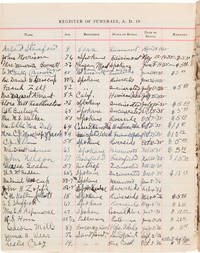
1519réf. 57522Various places mostly Sand Point Id. and Victor Mt. 1915-1938. Preaching in Montana and Idaho During War and Peace Two volumes of an unidentified pastor's register for a variety of locations in Idaho Montana and Washington beginning during the First World War and continuing throughout the entire interwar period. In it the unnamed pastor records his sermons the dates and locations they were given their titles the number of people in the congregation and frequently supplies notes about the service weather or other local events. In addition he has recorded extensive lists of baptisms marriages new church members and funerals throughout the entire period providing valuable demographic and genealogical information. On the rear pastedown of the earlier volume the writer has provided a brief history of his service: he began his ministry in 1893 and spent several years preaching in Alabama before moving to a variety of churches across the country including in Tennessee New York and Texas. The registers begin with a new appointment in Sand Point Idaho in November of 1915. During this period of worldwide tension and struggle the pastor's early entries often allude to the political situation at home or the ongoing war. On November 5 1916 - the day of the 1916 Presidential Election - the topic of his sermon appropriately enough is "Presidents." On December 28th of that year he notes that "Soldiers came home." Since the United States had yet to join in World War I this perhaps refers to new trainees inducted as part of the National Defense Act of 1916 which significantly increased the size of the Army and National Guard. The next year America had joined the war and supplies at home were scarce in the face of international pressures and German submarine patrols. In this environment a sermon was delivered on October 14 1917 titled "Food Conservation." In 1918 he notes a guest lecture by a "Mr. Krikorian" which proved to be "a splendid meeting on the Armenian situation. Collection $409.45." That year saw the beginning of several years of armed conflict between Armenia and Azerbaijan exacerbated by meddling from the Soviets Ottomans and the British. Things didn't improve quickly for Sand Point as September of 1918 saw the first hometown death - a "Memorial service for W.D. Martin - Killed in France. First of Co. A to fall." His loss was dearly felt by his community as evidenced by a turnout of 225: much greater than the average congregation of fifty to eighty for that church. We unfortunately are not privy to the speech our record keeper would have made around Armistice Day November 11 1918; he was unable to preach for six weeks due to catching the Spanish Flu. The pandemic was keenly felt even in Idaho where annotations over the next several months note that the "flu scare is on." His topical lectures for the period end on April 13 1919 with an entry titled "Lecture on the League of Nations." Besides making note of current events in his sermons the preacher at times uses these registers as a journal. Particularly after moving to a new position serving Victor and Stevensville Montana in 1921 he struggles to reckon with the frigid temperatures and seems to have developed an interest in sports often noting local baseball and basketball games. One day in particular his sermon was not well attended because he assumes "many at ball game." Aside from taking notice of "much sickness" during the 1923 measles outbreak current events feature less in the remainder of the register. The Depression doesn't seem to have been strongly felt in his leg of Montana - or at least it is not much reflected in the register except perhaps for slightly decreased congregations in 1930 and 1931 which quickly recovered to record numbers or a 1933 sermon on "Hunger & Thirst." A guest lecturer "Reverend Adams of China" also delivered a speech on that country in 1933 but it is unclear whether or not that was related to the ongoing Uighur uprising or simply a description for a Western audience. The final entry is for a sermon given on Thanksgiving of 1938. An extensive and detailed record of a pastor's work throughout World War I and the entire interwar period augmented by a remarkable wealth of detail on local baptisms funerals and marriages in Idaho and Montana. Quarto. Original three-quarter leather and pebbled black cloth gilt. Leather rubbed both spines perished boards detached and most leaves of first volume loose hinges of second volume cracked but holding. Internally clean and unmarked. The bindings only fair but internally near fine. hardcover books
19408vo. 8 pages, plus 2 full page sketch maps and photographic plate illustrations. Original condition with blue wrappers, titles to front, and containing all the ads. This is a complete issue, seldom found in such good and original condition. Significant for its early account of biodiversity in the now protected "Coral Triangle" of the Pacific, Cheesman's succinct and well illustrated primary source reveals highlights of an entire year of entomological research on little-known islands of the Pacific, just north of the Dampier Strait, in Papua New Guinea, on behalf of the Natural History division of the British Museum. The splendid coral reefs of Mayalibit Bay, limestone mountains and formations, a wealth of exotic vegetation, mangrove swamps, fauna and reptilia are but a few features examined. On the volcanic Mount Nok she set up camp, where she interacted with native inhabitants of small villages, remarking on their language, education, and on previous feuds with "Bush Tribes.' On Japen island she first establishes camp on Mt. Baduri, from where she collects samples and observes birds. before relocating to two other locations. In the tropical forests for six months, many samples were acquired, and a remarkable storm was documented.
réf. 63-3794San Francisco & Los Angeles CA: Pacific Novelty Co. Britton & Rey 1910 - 1930. Two 3.5" x 5.5" Post Cards Very Good with Color Illustration. One mailed postmarked with MSS signed by Doris Miller.Text in English & Chinese. San Francisco & Los Angeles, CA: Pacific Novelty Co., Britton & Rey, 1910 - 1930. unknown
réf. 0266364802.Ghardcover. Good. Access codes and supplements are not guaranteed with used items. May be an ex-library book. hardcover
1960réf. 64757Portland OR: Portland Linotyping Company 512 NW 17th Ave. ca. 1960. Oblong folio. 14.25 x 10.25 in. iv 2 206 i.e. 250 pp added supplement pages in assorted sections. printed throughout w/ peach-coloured border at lower fore-edge type specimens included throughout with each section divided by thick cardstock divider and thumb tab. Original publisher’s blue buckram 16-ring binder gilt lettering stamped on front cover & spine slight shelfwear NF copy from the library of David Kohl 1946-2025 former art teacher at the Hong Kong International School musician artist and historian. First edition of this exceedingly scarce and massive type font specimen book issued by the Portland Linotyping Company who specialized in commercial trade typesetting for many local Pacific Northwest regional newspapers magazines and job printers. This particular type specimen catalogue was intended to be expanded as per the additional 34 supplement pages and note on colophon specifying “New type faces are being constantly added to our library and when they become available new insert sheets will be printed and distributed to the holders of our specimen books.” Their Linotype Composition faces encompassed Baskerville to Condensed Gothic Garamond to Oldstyle Antique as well as Spartan Book and Times Roman; Monotype Composition included Bodoni Copperplate Gothic Garamond Modern Rockwell Antique and 20th-Century Medium; while the Handset Display typefaces ranged from Aurora Condensed to Bulmer Italic Craw Modern to a series of Gothics as well as Optima Italic P.T. Barnum and more. Through the 1960’s under Ray Sneddon 1926-2017 the company would evolve into Phototypesetting and further into film and computer-based advertising typefaces for PNW designers and ad agencies. Sneddon was recruited out of Canada and in 1958 he became printer owner/operator of Portland Linotyping Company where he remained overseeing the operation until his retirement in 1989. No copies in Worldcat. Portland Linotyping Company, 512 NW 17th Ave., hardcover
1937In-16 p., cartonato editoriale, dorso restaurato, pp. 480. Prima edizione italiana. Testo in buono stato (text in good condition).
réf. qi2188Télé 7 jours Revue In-4 (20 x 28 cm), broché, 127 pages, sans date ; mors frottés, pliures et marques d'usage sur les plats, par ailleurs assez bon état général. Livraison a domicile (La Poste) ou en Mondial Relay sur simple demande.
réf. 0656149868.Ghardcover. Good. Access codes and supplements are not guaranteed with used items. May be an ex-library book. hardcover
1961réf. 224201961. U.S. Naval Missile Center Authors and Editors Handbook 1961 establishes standardized authorship formatting and editorial control for technical reports produced at the Pacific Missile Range documenting the internal communication systems that supported U.S. guided missile and early satellite programs during the Cold War. Issued for personnel at Point Mugu California the manual defines procedures for drafting reviewing and disseminating classified and technical material tied to weapons development providing direct evidence of how military knowledge was structured codified and circulated within federal defense infrastructure. The inclusion of a contemporaneous typescript insert History of the Pacific Missile Range February 1961 further situates the handbook within active missile testing and space recovery operations supporting research into Cold War science military bureaucracy and the integration of documentation practices into weapons development. Pacific Missile Range and U.S. Naval Missile Center. Authors and Editors Handbook. Point Mugu CA: U.S. Naval Missile Center 1 August 1961. First edition. Publication No. NMC-MP-61-9. Quarto format 218 pages with an additional 5-page typescript insert titled History of the Pacific Missile Range February 1961 issued by the Public Affairs Office. Three-hole-punched sheets bound with cloth tape and printed card wrappers. The handbook is organized into four sections: Report Preparation Manuscript Preparation Language Grammar and Punctuation and Matters of Style outlining requirements for technical clarity typographic consistency and standardized formatting across naval missile documentation. The inserted historical report traces the establishment of the Pacific Missile Range in 1957 under William Holaday and details its expansion into "an ocean-spanning instrumented network capable of supplying information on the launching guidance and impact of the nation's largest missiles and satellites." Documented events include "On 16 Dec 1958 the first REGULUS II missile was fired" and the recovery of "DISCOVERER XIII. making it the first man-made object ever recovered from orbit" providing a contemporaneous record of early U.S. missile and satellite operations. Produced during a period of rapid expansion in U.S. missile testing and space reconnaissance the manual demonstrates how technical writing standards were integrated into military systems to ensure uniformity precision and reliability in the production of strategic knowledge. References to parallel guides such as Guide for Air Force Writing and Preparation of Weapon-Test Reports indicate alignment across branches of the armed services in codifying technical communication. The Pacific Missile Range functioned as a central node in Cold War weapons testing linking launch sites tracking stations and recovery operations across the Pacific and the documentation practices outlined here formed part of the operational infrastructure supporting those activities. Chipping to spine tape light edge wear to wrappers and faint soiling to covers; interior clean and complete including all tables figures and inserted report. Overall very good condition. unknown
1961réf. 224201961. U.S. Naval Missile Center Authors and Editors Handbook 1961 establishes standardized authorship formatting and editorial control for technical reports produced at the Pacific Missile Range documenting the internal communication systems that supported U.S. guided missile and early satellite programs during the Cold War. Issued for personnel at Point Mugu California the manual defines procedures for drafting reviewing and disseminating classified and technical material tied to weapons development providing direct evidence of how military knowledge was structured codified and circulated within federal defense infrastructure. The inclusion of a contemporaneous typescript insert History of the Pacific Missile Range February 1961 further situates the handbook within active missile testing and space recovery operations supporting research into Cold War science military bureaucracy and the integration of documentation practices into weapons development. Pacific Missile Range and U.S. Naval Missile Center. Authors and Editors Handbook. Point Mugu CA: U.S. Naval Missile Center 1 August 1961. First edition. Publication No. NMC-MP-61-9. Quarto format 218 pages with an additional 5-page typescript insert titled History of the Pacific Missile Range February 1961 issued by the Public Affairs Office. Three-hole-punched sheets bound with cloth tape and printed card wrappers. The handbook is organized into four sections: Report Preparation Manuscript Preparation Language Grammar and Punctuation and Matters of Style outlining requirements for technical clarity typographic consistency and standardized formatting across naval missile documentation. The inserted historical report traces the establishment of the Pacific Missile Range in 1957 under William Holaday and details its expansion into "an ocean-spanning instrumented network capable of supplying information on the launching guidance and impact of the nation's largest missiles and satellites." Documented events include "On 16 Dec 1958 the first REGULUS II missile was fired" and the recovery of "DISCOVERER XIII. making it the first man-made object ever recovered from orbit" providing a contemporaneous record of early U.S. missile and satellite operations. Produced during a period of rapid expansion in U.S. missile testing and space reconnaissance the manual demonstrates how technical writing standards were integrated into military systems to ensure uniformity precision and reliability in the production of strategic knowledge. References to parallel guides such as Guide for Air Force Writing and Preparation of Weapon-Test Reports indicate alignment across branches of the armed services in codifying technical communication. The Pacific Missile Range functioned as a central node in Cold War weapons testing linking launch sites tracking stations and recovery operations across the Pacific and the documentation practices outlined here formed part of the operational infrastructure supporting those activities. Chipping to spine tape light edge wear to wrappers and faint soiling to covers; interior clean and complete including all tables figures and inserted report. Overall very good condition. unknown books
1946réf. 45-862Pearl Harbor: Fourteenth Naval District 1946. 1946. 1st ed. 174p. Photos. Crew rosters. Front lightly soiled. Tear in spine repaired. Very Good copy. 1st. Paperback. Very Good. Fourteenth Naval District, 1946. Paperback
1911réf. EL332001911 Berliner Entomologische Zeitschrift, 56, 1911 : in-8, broché extrait, pp. 197-272, 4 figures in-texte, couverture muette d'attente. Bon état, dos abimé !
1897réf. IC267041897 xi, 174 p., num. figs, 1 folded map, modern boards. . With library stamp on first blank end-paper. Scarce.
1901réf. VZ364641901 27 p., printed wrappers. With author’s dedication to Dr. Yves Delage.We added De Burlett, 1932. Over den bouw van het labyrinth van Echidna (1 p., printed wrappers, with the signature of Dr. L.D. Brongersma).
196216° leg.ra ed.le pp.94 con belle foto dell'autore, leggere gore di umidità alle copp., ben tenuto
Cm. 19; pp. 90, (6). Tela editoriale a stampa. Numerose fotografie fuori testo. Manca la sovracoperta 776
1906réf. MISS021Echo OR: UMATILLA RIVER WATER USERS' ASSOCIATION 1906. First Edition. Soft cover. Near Fine. Original printing. Stapled printed wraps. Very very scarce booklet describing the Hermiston Water Rights Association. Tall light green wrappers. 59pp. Contains a few ads. For some context beginning of page 44 reads Hermiston is the central point of the Umatilla Irrigation Project by the United States Government." Printed inside the front cover is list of seven U. S. Reclamation engineers. On verso of front leaf is list of officers of the association. Facing page list of "What Irrigation Does." After several pages of the description of the area are the by-laws of the association and articles of incorporation pps 17-35 and following that various promotional material of local communities. Near fine condition. Front cover slightly pulled from spine of text block. Rare with only 2 copies appearing on World Cat. UMATILLA RIVER WATER USERS' ASSOCIATION unknown
réf. 6207244230.Gpaperback. Good. Access codes and supplements are not guaranteed with used items. May be an ex-library book. paperback
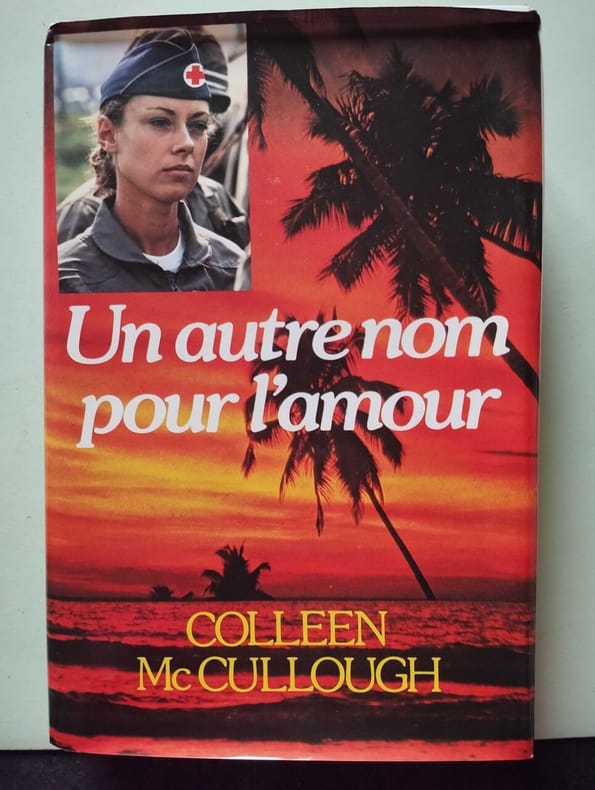
1982réf. 500336653France loisirs 1982 389 pages in8. 1982. Relié cartonné - toilé sous jaquette. 389 pages. En 1945 sur une île du Pacifique l'infirmière militaire Honora prend en charge un service de soins psychiatriques pour des soldats traumatisés par la guerre. Sa relation dévouée avec ses patients qui la voient comme une figure maternelle sœur et amante est bouleversée par l'arrivée du sergent Michael Wilson déclenchant des sentiments exacerbés de jalousie de haine et menant à une tragédie
1982réf. 500336654France loisirs 1982 389 pages in8. 1982. Relié cartonné - toilé sous jaquette. 389 pages. En 1945 sur une île du Pacifique l'infirmière militaire Honora prend en charge un service de soins psychiatriques pour des soldats traumatisés par la guerre. Sa relation dévouée avec ses patients qui la voient comme une figure maternelle sœur et amante est bouleversée par l'arrivée du sergent Michael Wilson déclenchant des sentiments exacerbés de jalousie de haine et menant à une tragédie
réf. 13991Récit de voyage adapté de l’anglais d’après l’ouvrage de J.H.M ABBOTT. In 8 pleine toile rouge de l’éditeur, illustrations en couleurs contrecollée sur le premier plat avec titre et filets dorés en encadrement. Titre et fers dorés au dos. 105x190mm. Faux-titre, frontispice illustré en couleurs, titre, une carte, 169pages, une page de table des matières. Illustrations hors texte en couleurs de NORMAN HARDY. Vincennes les Arts Graphiques. Collection contes et nouvelles 1912. Bon exemplaire
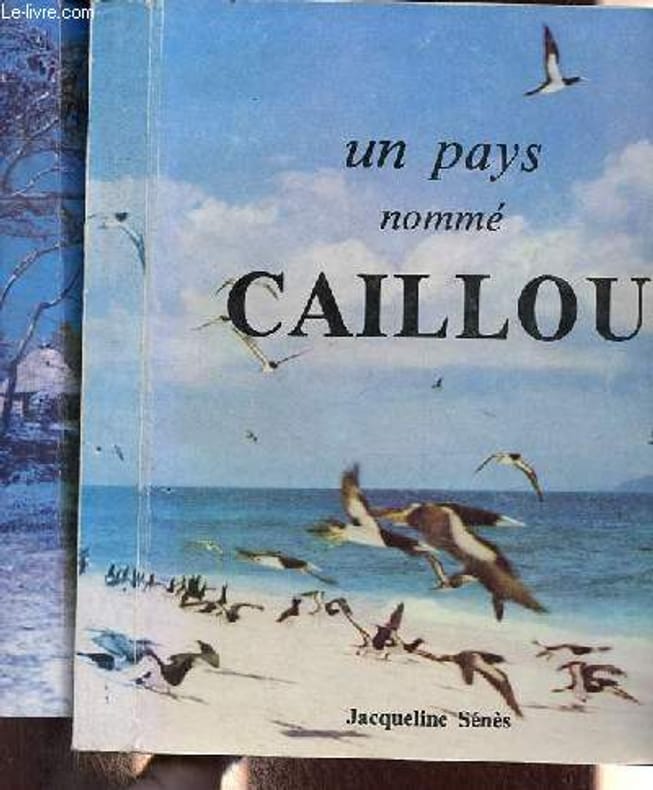
1981réf. R100071533Imprimeries reunies de Noumea. 1980-1981. In-8. Broché. Bon état, Couv. convenable, Dos satisfaisant, Intérieur frais. 366 pages + 357 pages - nombreuses photos, illustrations en noir et blanc dans et hors texte - quelques photos en couleurs hors texte.. . . . Classification Dewey : 996-Autres régions du pacifique
1942Torino, 1942, 4-10 gennaio, copertina illustrata a colori in fascicolo originale completo di pp. 16 de “Illustrazione del popolo”.