182 risultati
rif. ria9781845937898_inpPaperback / softback. New. New Book; Fast Shipping from UK; Not signed; Not First Edition; Volume 2 of this revised edition of Tropical Fruits examines the more specialist tropical fruits such as guava durian mangosteen passion fruits and palm fruits. With growing interest in the cultivation production study sales and m paperback
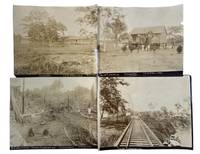
1922rif. 221591922. Group of Honduras plantation photographs early twentieth century by Wolfe photographer documenting agricultural development and infrastructure expansion at Toloa Plantation in northern Honduras. The images illustrate a system of export-oriented plantation agriculture revealing how land clearing transportation infrastructure and administrative spaces were organized to support large-scale fruit production and providing primary-source visual evidence for the study of U.S.-backed economic expansion in Central America. The photographs show the mechanisms by which plantation economies functioned including the integration of rail transport controlled landscapes and built environments within a system tied to foreign corporate investment. Wolfe. Toloa Plantation Honduras. Four large albumen prints each approximately 8.5 x 11 inches with black-lettered captions in the negatives identifying location. Images include a cleared agricultural field showing tree stumps and early planting rows indicating recent land conversion; a straight railroad track extending through dense tropical vegetation suggesting transport routes for agricultural goods; and two views of a wooden plantation building or administrative residence one with multiple figures posed in front likely workers or managerial staff. The photographs emphasize spatial organization including cleared land linear rail corridors and landscaped residential or operational structures with visual focus on the relationship between natural terrain and imposed infrastructure. These photographs document the expansion of plantation economies in Honduras during a period when U.S.-based companies such as the United Fruit Company and Cuyamel Fruit Company established extensive agricultural and transportation networks in the region. The presence of rail infrastructure and controlled landscapes reflects systems of land concession export production and foreign capital investment that shaped regional economies and governance. As visual records the images align with broader practices of documenting and promoting agricultural development to support commercial and political interests. Minor edge wear; overall very good condition. A focused photographic record of plantation systems and infrastructure in early twentieth-century Honduras. unknown
1922rif. 221591922. Group of Honduras plantation photographs early twentieth century by Wolfe photographer documenting agricultural development and infrastructure expansion at Toloa Plantation in northern Honduras. The images illustrate a system of export-oriented plantation agriculture revealing how land clearing transportation infrastructure and administrative spaces were organized to support large-scale fruit production and providing primary-source visual evidence for the study of U.S.-backed economic expansion in Central America. The photographs show the mechanisms by which plantation economies functioned including the integration of rail transport controlled landscapes and built environments within a system tied to foreign corporate investment. Wolfe. Toloa Plantation Honduras. Four large albumen prints each approximately 8.5 x 11 inches with black-lettered captions in the negatives identifying location. Images include a cleared agricultural field showing tree stumps and early planting rows indicating recent land conversion; a straight railroad track extending through dense tropical vegetation suggesting transport routes for agricultural goods; and two views of a wooden plantation building or administrative residence one with multiple figures posed in front likely workers or managerial staff. The photographs emphasize spatial organization including cleared land linear rail corridors and landscaped residential or operational structures with visual focus on the relationship between natural terrain and imposed infrastructure. These photographs document the expansion of plantation economies in Honduras during a period when U.S.-based companies such as the United Fruit Company and Cuyamel Fruit Company established extensive agricultural and transportation networks in the region. The presence of rail infrastructure and controlled landscapes reflects systems of land concession export production and foreign capital investment that shaped regional economies and governance. As visual records the images align with broader practices of documenting and promoting agricultural development to support commercial and political interests. Minor edge wear; overall very good condition. A focused photographic record of plantation systems and infrastructure in early twentieth-century Honduras. unknown books
rif. 226068A Paris, A la Librairie Grecque-Latine-Allemande, 1816 2 vol. in-8, (2)-392 pp. et 411 pp.-(3), planches, veau raciné, dos lisse orné, roulette dorée en encadrement sur les plats, tranches marbrées (rel. de l'époque). Infime travail de ver au mors inférieur du tome 2, un coin usé.
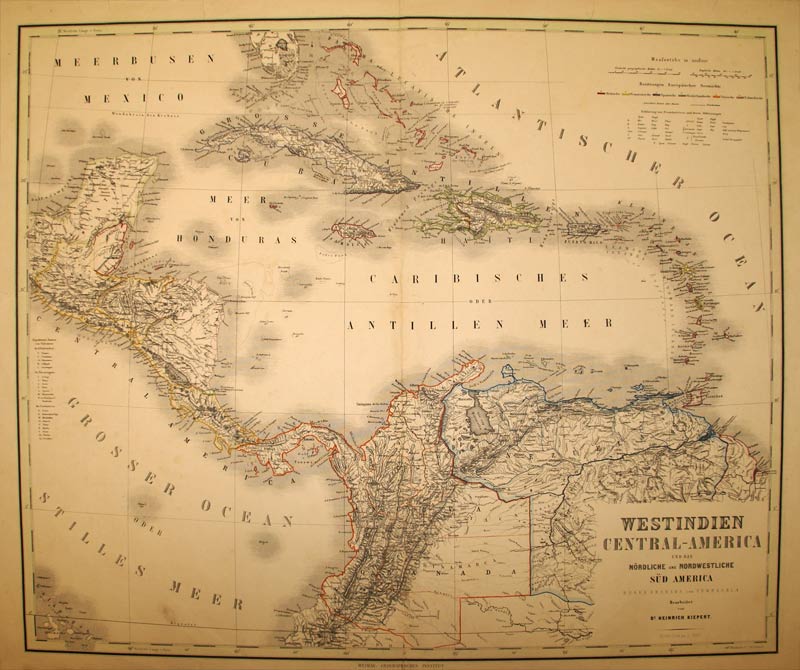
1860rif. KART0040Weimar, Geograph. Inst. o. J. (ca 1860). Grenzkol. Stahlst., mit Erläut. u. Glossar, 51 x 62 cm. Breitrand. Mittelfaltung. Mit hinterlegten Randläs. Im w. Rand leichte Benutzunsspuren. Im Kartenbild einige Fingerfl. Rücks. leicht verstaubt mit wenigen kl. Braunspuren. Insges. sehr guter Zustand. Die Karte umfasst das Gebiet vom Meerbusen von Mexico, der Karibik bis zum Beginn von Ecuador.
1956rif. V4272Zürich (Büchergilde Gutenberg) 1956 (= Erste Ausgabe). 8°, Originalleinen mit Originalumschlag, 285 S., Bildtafeln in Kupertiefdruck
1925rif. 4042Lübeck, Quitzow, 1925. 40 S. s/w Tafeln, 1 gefaltete Karte, 296 S., 1 Bl., geprägter illustrierter Original-Leinenband. ZUSTAND 1.