Stokes, Joseph FAntiquariat.de

795 résultats
1980réf. 10901ABLondon, Collins, ©1980. 20 cm. 160 S. Durchgehend farbig illustriert. Illustrierter Pappband (Hardcover). Tadelloses gepflegtes Exemplar aus der Bibliothek von Prof.em. Wilhelm Barthlott, Bonn (Stempel).
1827réf. 28809ABFrankfurt a.M., Heinrich Wilmans, 1827. Kl.-8°. (4) 236 S. Orig.-Broschur + Wichtig: Für unsere Kunden in der EU erfolgt der Versand alle 14 Tage verzollt ab Deutschland / Postbank-Konto in Deutschland vorhanden + 1. Jg. 4. Bändchen. (bestossen und angestaubt, Umschlagdeckel mit Fehlstelle und kleinem Bibliothekskleber).
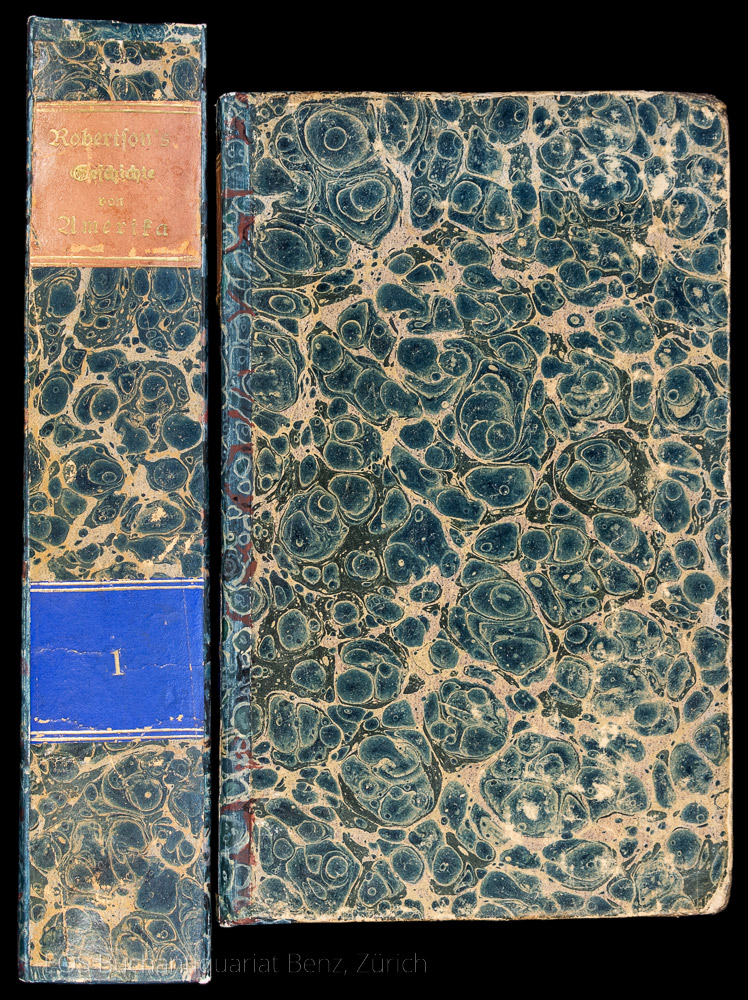
1759réf. 6261BBLeipzig, Arkstee und Merkus, 1759. 4°. (1) Bl., (8) 726 (42) S., (1) Bl. Mit 17 (dv. 12 gef.) gest. Karten u. 11 gest. Tafeln. Lederband der Zeit mit restauriertem Rücken, schlichte Vergoldung und Rückenschild. + Wichtig: Für unsere Kunden in der EU erfolgt der Versand alle 14 Tage verzollt ab Deutschland / Postbank-Konto in Deutschland vorhanden +, A|B 17. Band.
1777réf. 2318BBLeipzig, Weidmanns Erben und Reich, 1777. Gr.-8°. 1 Portrait, 13 Bl., 574 S.; 1 Bl., 618 S., 29 Bl. Mit 4 gefalteten Karten und 1 Tafel. Pappbände der Zeit mit Rückensch. + Wichtig: Für unsere Kunden in der EU erfolgt der Versand alle 14 Tage verzollt ab Deutschland / Postbank-Konto in Deutschland vorhanden +, A|B|C 2 Bände.
1958réf. 51048The Book Club, London 1958. 248 pages ohne Schutzumschlag gebundene Ausgabe, Hardcover/Pappeinband, Einband fleckig, sonst Exemplar in gutem Erhaltungszustand
1995réf. 6176ABLahaina, Hawaii, Ross-Hargreaves, [1995]. 21 cm. 64 S. Mit zahlr. Farbabb. Illustrierte Originalbroschur (Softcover). Neuwertiges Exemplar.
1683réf. 11424Paris, Denis Thierry, 1683. Kupferstich. Blattgröße: 20,8 x 13,5 cm, Druckspiegel: 15 x 10 cm
2012réf. 1080406Frankfurt, M.: Lang, 2012. XXXIII + 308 S. Originalhardcover.
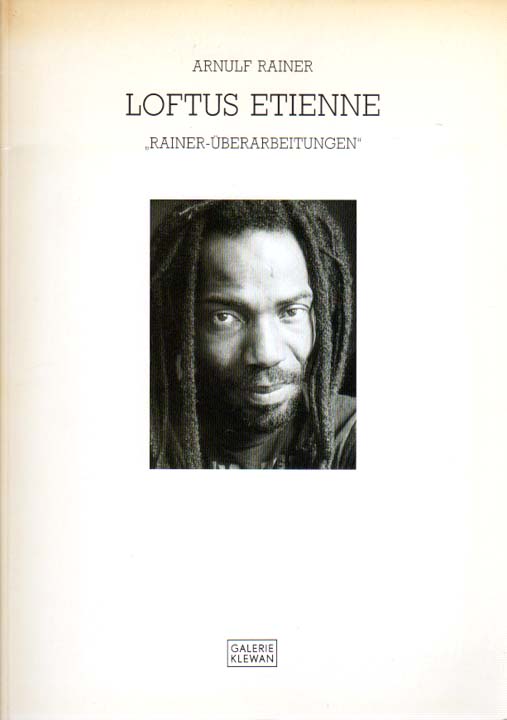
1987réf. 3271DBMünchen., Galerie Klewan., 1987. 30 x 21 cm. 48 unpaginierte S. OKarton., 3271DB Auflage: 1000 Exemplare. Einbandrand vorne am oberen Rand etwas nachgedunkelt, eine Kante minimal gestaucht. Gutes Exemplar.
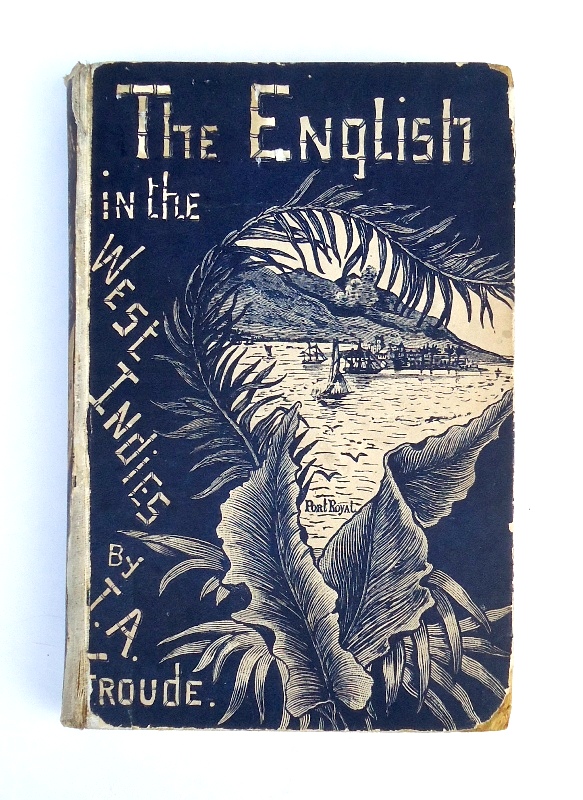
1888réf. 21740London, Longmans, Green, and Co., 1888. 8to. With illustrations engraved on wood by G. Pearson after drawings by the author. VIII, 328 p. Paperboard with cover illustration. Binding rubbed and bumped. Hinge a bit loose. 3 stamps of a library on the preliminaries.
1969réf. 98859New York, Kraus Reprint Co., 1969. 738 S. Gr.-8°, Halbleinen
1836réf. 011073, 1836. Erstausgabe Goldgeprägter Halblederband Solide, Materiell Gut
réf. 709804to. 2-pages approximately 250 words in part: "the idea of moving there from Phila. Has taken such a hold on my mind that I merely wanted your advice . the stagnation of Business here induced me to apply to you . I once more trouble you requesting your opinion." McCalmont 1765-1838 was co-owner of plantations in Demarara and one of the largest enslavers there; Demarara was a colony of the Dutch West India Company or the Netherlands 1745-1815 when it became a British colony Old fold lines but very good. unknown books
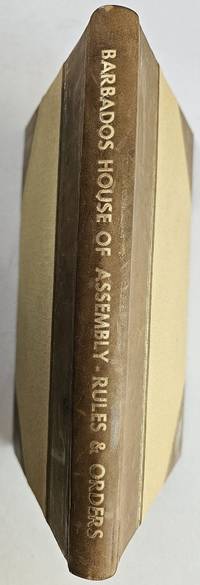
1867réf. BK0152Barbados: Office of "The Official Gazette" No. 14 Broad Street 1867. 30 pp. with unnumbered index 42 pp. Half leather over cloth boards. Ink ownership inscription "W. Brandford Griffith / 1869" on a preliminary blank. Scattered foxing and light toning. A locally printed manual for the Barbados House of Assembly with the ownership inscription of William Brandford Griffith then both a member of the Assembly and the island's auditor-general. Griffith served in the Assembly from 1861 to 1874 and was appointed auditor-general in 1863; he subsequently held several other colonial offices before becoming governor of the Gold Coast in 1885. The rules numbered through 271 and accompanied by an extensive alphabetical index set out the conduct of the Assembly's public business. The index includes procedures for issuing election writs and returning the names of elected members to the governor and council together with the course to be followed when writs had not been executed. Although published well after emancipation these rules governed an Assembly whose electorate remained restricted by property qualifications. Free men of color had gained voting rights subject to those qualifications in 1831 and Samuel Jackman Prescod entered the Assembly in 1843. Planters and merchants nevertheless continued to dominate both the Assembly and the Legislative Council during the period in which Griffith served. OCLC records the 1867 edition OCLC 823344433 but we have been unable to identify a current institutional holding. . Office of "The Official Gazette," No. 14, Broad Street unknown books
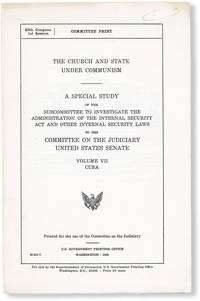
1965réf. 49702Washington DC: U.S. Government Printing Office 1965. First Edition. Octavo 23.5cm.; staplebound self-wrappers printed within single rule; v18pp. Light wear and a hint of toning to extremities one instance of underlining else Very Good and sound. One of a series of reports on church and state under communism divided by country. U.S. Government Printing Office unknown books
1971réf. 47663Miami: Ediciones Universal 1971. First Edition. Octavo 20.5cm.; publisher's pictorial card wrappers; 263pp. Light shelf wear tiny dampstain to bottom fore-edge corner of textblock else Near Fine. Account of present-day Cuba by the exiled Cuban journalist who nearly twenty-five years earlier was nominated Vice President by the Socialist Revolutionary Movement with twenty-two-year-old Enrique Ovares as President. According to the author biography on the rear cover: "Ni un sólo minuto de sa vida no está dedicado a Cuba. Nadie lo aventaja en la lucha constante contra el régimen castrista y contra los malandrines que ofenden la dignidad nacional. Ediciones Universal unknown books
1973réf. 24847Bridgetown Barbados: CADEC 1973. Second Edition. Quarto 27.5cm.; original white pictorial staplebound wrappers printed in green and black; 59pp.; illus. Mild dust soiling else Fine. Guide and objectives of the Consultation as formed by the Caribbean Conference of Churches. Originally published as a report of the first Consultation held in 1971. CADEC unknown books
1853réf. 604771853. London: Printed by W. Clowes and Sons 1853. London: Printed by W. Clowes and Sons 1853. The First Compilation of the Laws of St. Lucia Saint Lucia. Laws at Present in Force in the Island of St. Lucia. London: Printed by W. Clowes and Sons 1853. vi 388 pp. Octavo 9-1/2" x 6". Contemporary calf with early rebacking red and black lettering pieces and small paper location label to spine upper lettering piece and endpapers renewed. Moderate rubbing to extremities some scuffing and edgewear to boards gilt red and black lettering pieces light toning to text internally clean. Ex-library. Old shelf label at head of spine small embossed stamps to boards inkstamp Bibliothek des Reichsgerichts to title page. A solid copy of a scarce title. $450. With index and side-notes. Saint Lucia was discovered by Columbus in 1502. The first group of colonists from England were massacred by the Caribs but the French succeeded in colonizing the island in 1642. It passed between France and Great Britain a number of times and became a British possession in 1803. It became independent and joined the Commonwealth in 1979. As one would suspect traces of French law remain in the island's legal system. The Reichsgerichtsbibliothek Imperial Court of Justice Library was at its peak Germany's largest and most important law library with 170000 works in its collection before the outbreak of the First World War. OCLC locates 9 copies in North America. Sweet & Maxwell A Legal Bibliography of the British Commonwealth 7:341. unknown books
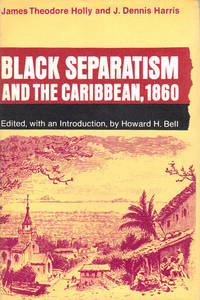
1970réf. 15231Ann Arbor: University of Michigan Press 1970. First Edition. Octavo. Cloth boards; dustjacket; 174pp. Removed from a non-circulating private library with ink ownership markings to front endpaper and accompanying black ink elisions from de-accession. Else a clean sharp tight copy in lightly soiled dustwrapper. Reprints James Theodore Holly's "Vindication of the Capacity of the Negro Race for Self-Government and Civilized Progress" 1857 and Harris's "A Summer on the Borders of the Caribbean Sea" 1860. Introduction by Howard H. Bell. University of Michigan Press unknown books
1973réf. 44039London: Caribbean Situationist 1973. First Edition. thus. Very good. Poster reproducing translated text by Khayati originally published in Internationale Situationniste and subsequently as a brochure in 1971 Ford 167. Illustrated with black and white photographs of Kingston Jamaica; Trinidad; and Hungary. Lower right corner includes a blank space intended to advertise a record shop where an LP of the text apparently spurious would be available. Uncommon. OCLC odes not locate a copy though there does appear to be on at Michigan. Wraps. Poster folded into quarters 36" x 23" approx. unfolded. Verso lightly toned; moderate wear to edges and fold lines. Creasing to corners. Very good. Caribbean Situationist unknown books
1910réf. 238911910. Pineapple plantation photo archive circa 1910s documenting cultivation harvest and transport on an unidentified tropical plantation during the expansion of commercial pineapple production for export markets and black sharecropping labor. The photographs concentrate on the agricultural cycle rather than plantation buildings or domestic life moving from densely planted acreage and individual ripening fruit to large accumulations of harvested pineapples and a mule drawn wagon loaded for transport. Pineapple cultivation expanded substantially in the Caribbean and Hawaii during the early twentieth century making the crop increasingly visible within American commercial agriculture and food consumption. Photo archive of 10 silver gelatin photographs each approximately 3 x 4 inches Caribbean location circa 1910s. Several photographs survey extensive fields planted almost entirely in pineapple including broad views in which rows of spiked plants extend toward distant hills and close studies showing mature fruit rising from individual plants. Other images record the harvest after removal from the field: pineapples are arranged in substantial piles beside cultivated acreage while two white men pose before one accumulation holding individual fruit. Another photograph shows a mule drawn wooden wagon filled above its sideboards with harvested pineapples with one white man standing beside the wagon another seated atop the load and a black man positioned with the mule team further highlights post emancipation plantation labor. The men's differing positions within the harvest scenes preserve visible evidence of diverse groups participating in the plantation's agricultural economy alongside the animal powered transportation used to move a bulky commercial crop from the field. Commercial pineapple production was developing rapidly across several regions connected to the United States Hawaii and the Carbons during this period. The photographs belong to that broader transformation of pineapple from a geographically restricted tropical fruit into an increasingly standardized export commodity but neither crop morphology nor the visible terrain distinguishes securely among these producing regions. More specifically the images record the material stages behind that trade: dense monocrop planting maturation in the field manual harvesting accumulation of fruit and transportation by mule drawn wagon. Light handling wear occasional edge and corner losses minor curling and scattered toning; image surfaces remain generally clear with strong detail. Overall in good condition. A concentrated photographic record of early twentieth century pineapple agriculture showing the field harvest labor and transport required to move a tropical crop toward commercial distribution. unknown books
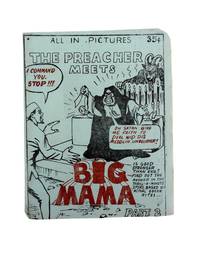
1967réf. 237191967. Black HistoryComics 1960s Guyanese comic book by an early influential Black cartoonist. Seymour Rudy. The Preacher Meets Big Mama: Part 2. Georgetown British Guyana: All in Pictures ca. 1967. First edition. Scarce. Illustrated throughout with black-and-white cartoon panels. Original pictorial wrappers printed in black and red on pale blue stock. A rare early work by Samuel Rudolph "Rudy" Seymour widely regarded as the father of Guyanese comics. This installment blends Christian moralism with Afro-Caribbean folklore in a visually arresting local comic format. Rudy Seymour was one of the earliest creators of locally produced comic books in Guyana whose illustrated narratives reflected and shaped mid-20th century Guyanese visual culture. In The Preacher Meets Big Mama Seymour depicts a confrontation between a Christian preacher and "Big Mama" a feared spiritualist figure with ties to Obeah a syncretic Afro-Caribbean spiritual system. The plot follows the preacher's attempt to rescue a boy from Big Mama's cult culminating in scenes of ritualistic sacrifice demonic invocation and divine intervention. The narrative unfolds in vernacular Guyanese Creole grounding the story in a distinctly local idiom. Seymour's stark expressive linework animates themes of good versus evil colonial Christianity versus ancestral spiritual knowledge and gendered power structures. While the portrayal of Big Mama leans into negative colonial stereotypes casting her as a devil-worshipper the comic simultaneously elevates Afro-Caribbean spiritual conflict to the central stage of popular print culture. Seymour's broader contributions to Caribbean arts extended beyond this title; his pioneering comics inspired future generations and played a foundational role in developing the graphic arts in Guyana. He continued illustrating through the 1970s and remained a cultural fixture until his passing in 2020. Minor wear to spine and covers; interior pages lightly toned but well-preserved and tightly bound. Overall very good condition. A mid-century Caribbean comic documenting a formative moment in Black diasporic graphic storytelling and the postcolonial negotiation of identity faith and resistance in Guyanese print media. unknown books
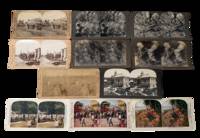
1890réf. 231711890. Stereoview archive of the post-emancipation Caribbean showing how the islands were marketed to western viewers through plantation labor export agriculture civic spectacle and catastrophe. As a group these photos function not only as an ethnographic travel archive but as evidence of the visual economy that followed slavery. The British West Indies moved through emancipation in 1834 to 1838 the French Caribbean in 1848 Puerto Rico in 1873 and Cuba in 1886 yet plantation production remained central to regional life well into the early twentieth century. These stereoviews preserve a colonial way of seeing in which Black and Afro-Caribbean labor rural discipline and extractive agriculture remained the background condition of "tropical" beauty and commercial modernity. Cuba's sugar economy in particular expanded through the nineteenth century and slavery was not abolished there until 1886 while Weyler's later reconcentration policy during the Cuban War of Independence violently reorganized rural life. Martinique after 1848 likewise shifted into new labor regimes including imported workers from India and China. Archive of 11 stereoview cards late 1890s to early 1900s depicting Cuba Jamaica Martinique Puerto Rico and the Dominican Republic. Most black and white with a few colorized. Each measure 3.5" x 7". All with captions on the margins. "Reconcentrado Farming Scene Province of Havana Cuba" links agricultural production to the brutal displacements of Spain's reconcentration campaign; "Cutting sugar cane Montego Bay Jamaica W.I." records cane labor in a colony where emancipation had not ended plantation dependency; and "Harvesting Coconuts Porto Rico" likewise frames Caribbean land through export work rather than local life. Other views extend that economic framing through cacao and coffee scenes while the paired Havana cards shift into urban leisure and public display including "Beautiful Central Park Havana Cuba" and "Holiday in Havana Cuba" the latter with both Cuban and American flags visible a telling image of the new imperial order after 1898. The disaster views from Martinique and the Lesser Antilles show how stereoview publishers also turned Caribbean destruction into consumable spectacle. the Morne Rouge card is accompanied on the reverse by the grim printed text "Dead bodies which were to be seen in Morne Rouge." while the wider context is the 1902 eruptions of Mount Pelée in Martinique and La Soufrière on Saint Vincent two catastrophes that killed roughly 30000 and 1600 people respectively and devastated local communities and agriculture. Some corner wear light toning scattered surface and edge wear. Overall very good condition. This collection gives direct visual representation of Caribbean history Atlantic slavery and emancipation plantation labor and U.S. imperial expansion in the circum-Caribbean preserving the transition from slavery to post-abolition labor. unknown books
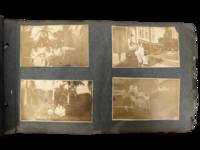
1914réf. 231551914. Caribbean photograph album likely compiled by a person connected to the Panama Canal Zone and the Caribbean documenting how steamship mobility port circulation and U.S. imperial presence linked Jamaica Venezuela Trinidad Barbados Cuba Puerto Rico the Bahamas Florida and Panama in the years after the canal opened. The felt cover lettered "PANAMA" and bearing the Seal of the Canal Zone places the album within the new travel geography created by U.S. control of the Canal Zone and the canal's 1914 opening when Panama became a central hinge between Atlantic and Pacific movement and a major point of contact between North American travelers and Caribbean port cities. Photos show passengers on steamers and docks markets and streets forts and government buildings and repeated encounters between white visitors and Afro Caribbean and mixed-heritage residents across multiple colonial and semi-colonial settings. Panama Canal Zone travel photograph album. Caribbean and circum-Caribbean locations including Kingston Jamaica; La Guaira and Caracas Venezuela; Trinidad; Key West and Palm Beach Florida; Havana Cuba; Barbados; Panama City Balboa and Colón Panama; Nassau Bahamas; and San Juan Puerto Rico. Likely circa mid 1910s to early 1920s. Oblong felt-covered album measuring 6.5" x 11" with "PANAMA" stitched in large letters on the front cover and photographs pasted to grey leaves. Contains more than 160 black-and-white photographs most approximately 2.5 x 4.5 inches many with handwritten captions identifying locations activities and occasional names. The sequence opens in Kingston with captions including "Kingston JA" and "on the steamer" then moves through island and mainland stops; "Port of Spain Trinidad" "Market at Barbados" "Rapid Transit Barbados" "Havana Cuba" "San Juan Porto Rico" "Morro Castle" "Balboa" and "Colon R.P." Repeated figures especially a young college-aged woman and an older woman appear throughout. Notable images include a group of locals in shallow water at Barbados sifting for tossed coins from rowboats; a large crowd scene in San Juan gathered for what appears to be a public speech or civic event; battlements cannon and stone defenses in Havana; vernacular dwellings and children in impoverished conditions in Balboa; posed visitor photographs in what is labeled a "bull ring"; and numerous street dockside market and architectural views that juxtapose local populations with hotels public buildings ruins and newer urban construction. The album's historical force comes from the way it captures the social landscape of Caribbean travel under early twentieth-century U.S. power. After 1914 the Canal Zone intensified Panama's role within a wider American maritime sphere while Caribbean travel increasingly moved through port infrastructures shaped by empire commerce military strategy and tourism; this album records that world at eye level with photographs of docks steamers fortifications government sites public squares and local street life rather than limiting themselves to family snapshots alone. At the same time the images preserve the unequal human encounters built into that system especially where visitors photograph Black children boatmen market crowds and working neighborhoods as part of the travel experience. Felt cover worn and soiled with losses at edges and stitching strain; leaves brittle with chipping and tears; photographs generally present and legible with silvering fading corner wear and occasional losses or lifting. Overall fair to good condition. A substantial early twentieth-century visual record of Canal Zone connected Caribbean travel with dense captioning and wide geographic reach from Jamaica and Barbados to Havana San Juan and Panama. unknown books
1908réf. 228161908. Ober Frederick A. A Guide to the West Indies and Bermudas. New York: Dodd Mead & Company 1908. First edition. First printing. 525 pages with five fold-out color maps and numerous black-and-white photographic illustrations. Original red cloth stamped in gilt as issued with no dust jacket. 8vo. An early 20th-century travel guide reflecting U.S. and European imperial tourism in the Caribbean at the height of American expansion following the Spanish-American War. Ober a prolific writer on the Caribbean and Latin America interweaves geography natural history and colonial ethnography offering a period perspective into the ways tourists imperial authorities and travel publishers framed the predominantly Black Afro-Caribbean and Creole cultures of the region during the Jim Crow era. This guide includes detailed chapters on Cuba Puerto Rico Jamaica Trinidad Barbados Guadeloupe Martinique and dozens of other island territories along with sections on "The Bermudas" "The Lesser Antilles" "The South Coast of Cuba" and "A Glimpse of South America." The contents pages visible here show Ober's systematic movement through the archipelago giving each island a discrete treatment with notes on climate agriculture transportation and colonial governance. As Ober writes in his introduction the West Indies form "a region of infinite variety" a phrase that reflects both genuine admiration and the period's exoticizing tone common to pre-WWI travel literature. The fold-out maps chart shipping routes railways ports and political boundaries at a moment when the United States had recently taken possession of Puerto Rico 1898 and solidified its influence in Cuba and the broader Caribbean basin. Light rubbing to cloth with slight sunning to spine; corners mildly worn. Five fold-out maps complete crisp and clean one with a minor tear near margins. Interior exceptionally bright with no writing or markings; binding tight. Overall very good condition. A well-preserved first printing of an important Caribbean travel guide valuable for scholars of U.S. imperial history Caribbean studies tourism studies and the racial-cultural representation of the West Indies during the early American century. unknown books