Biblio.com
712 résultats
1862réf. 030663Kjobenhavn Copenhagen: J H Schultz 1862. 1st Edition . Soft cover. Near Fine. 11 Pp. Original Printed Wrappers No Names Or Marks Minute Loss At Lower Tips Of Cover And First Page. Ex Copley Library Although Not Marked As Such. J H Schultz paperback
1973réf. 0285701973. 1st Edition . Hardcover. Fine/Near Fine. 152 Pp. 14" Tall Beige Buckram With Printed And Illustrated Dj And Printed Slipcase With Both The Chinese Language And English Language Inserts. Fine In Near Fine Dj Slipcase Has Light Wear No Names Or Marks. International Postage About $62. hardcover
1973réf. 024280Beijing 1973. First Edition . Cloth. Fine/Near Fine Slipcase. 14" Tall. Color and B/W Plates. 152 pp loose 19 pp booklet same title with English translation of text for plates another 15 pp booklet same title with Chinese text and the catalogue of "The Exhibition of Archaelogical Finds of the People's Republic of China" 60 pp. Book is fine clean and unworn and unmarked slipcase has a touch of bumping and original owner's personal information on rear panel. International postage at cost of Priority Mail and insurance. hardcover
1979réf. ABE-155195916775340 PAGES-35 CM X 50 CM-M.FERNAND LEGROS EN CORRECTIONNELLE L'EXPERTISE EST HUMAINE-FESIIVAL DE CANNES, "FEMME ENTRE CHIEN ET LOUP", ANDRE DELVAUX-LE SECOND EMPIRE AU GRAND PALAIS, DEMI PAGE-MUSIQUES DES ANTILLES LA TRADITION CARAIBE, 1P, CARTE
réf. ABE-1151822236TIRAGE ARGENTIQUE 18X13-AGENCE KEYSTONE-LÉGENDE:"LA PRINCESSE MARGARET QUI SÉJOURNE DEPUIS HIER À PARIS A VISITÉ CE MATIN LA TOUR EIFFEL. LA PRINCESSE,ACCOMPAGNÉE DU CAPITAINE OLIVER DAWNAY (DERRIÈRE),SECRÉTAIRE DE LA REINE,ET D'UN OFFICIEL DE LA TOUR EIFFEL (À DROITE) À LA DEUXIÈME PLATE-FORME DE LA TOUR." ED/BG/211151- (CP8)
réf. 26675BORDEAUX G.BERTIN sd,plaque publicitaire sur carton; 80x50 cm;bon état
1827réf. 28809AB1. Jg. 4. Bändchen. Frankfurt a.M., Heinrich Wilmans, 1827. Kl.-8°. (4) 236 S. Orig.-Broschur (bestossen und angestaubt, Umschlagdeckel mit Fehlstelle und kleinem Bibliothekskleber).
1827réf. 28809ABFrankfurt a.M., Heinrich Wilmans, 1827. Kl.-8°. (4) 236 S. Orig.-Broschur + Wichtig: Für unsere Kunden in der EU erfolgt der Versand alle 14 Tage verzollt ab Deutschland / Postbank-Konto in Deutschland vorhanden + 1. Jg. 4. Bändchen. (bestossen und angestaubt, Umschlagdeckel mit Fehlstelle und kleinem Bibliothekskleber).
réf. 5300CARIBBEAN TRAVEL JOURNAL. Diary. 101 pages. The Caribbean. c. 1908-9. The handwritten journal belonging to C. B. Benson of Hudson New York. The diary recounts Bensons experience on an organized cruise group visit to Caribbean locations such as St. Thomas Puerto Rico Kingston Jamaica Caracas Venezuela Panama City Panama Port of Spain Trinidad and Martinique. Benson records his experiences in each location including his impressions of the town the locals sights he visited and local travel. He visited forts a school churches a mill a sugar plantation and Carnival celebrations. Benson took his tour during the era of colonial rule the attitudes of which infuse both his experiences and observations. Based on his mention of an earthquake in Kingston Jamaica taking place a year or two before he travelled in 1908 or 1909. St. Thomas where we arrived about 6 A.M. mid morning Jan 26 is one of the Virgin group and we found her framed and frescoed in the principal churches. Columbus in 1493 gave the group of 100 islands rocks andwhich comprise the group. St. Thomas is 13 miles in length and 3 miles in width at its broadest. And I guess we walked the length of it speaking broadly and in the abstract at this distance.The heat of the tropical sun also takes its toll and blurs our ideas of time and distance somewhat. The town of Charlotte Amelia contains 13000 inhabitants merchants and black babies and they are all dressed in their Sunday best to receive us properly.Thursday morning at 8 we went ashore at Porto sic Rico.Returning thro the village streets we stopped at the market place and noticed the display of fruits in baskets a couple of men seated on low stools with blacks in front of them.a native womanwas entertaining us in the middle of the road with a dance.When passing the island of Haiti.Do you know why we do not stop at the Island of Haiti No There are cannibals there there are so many fat people aboard you would lose your wife At St Thomas the American council held open house and received some of us who dared to invade this solitude.An hours railroad ride which was made interesting by stops at every littleand station where the bare legged boy with the oil gun in hand squirted oilbearings sic of the cars and engine. As it was before the 17 miles came to an end the rear axle of the parlor car so called because it had leather covered reclining seats caught fire. But when this happened we were nearly at the end of our journey and we were not delayed much. At the sugar plantation where we detrained we found we had some distance to walk downto the sugar mill. As there was no path and the sticky wet ground to soil made worse by the heavy rain of the night before.A sugar mill is never a clean place.The process is somewhat intricate but way he likened to the process of brewing.The cane piled up in the yard is boiled in a number of vats then is run off with barrels and in a black and solid state in shipped to the Refineries at New York. The fiber of the cane is then hardened and dried and is fed to the furnaces to boilcane. After return to the town San Juan we visited the shops. Walked out to the fort at the entrance of the harbor. The town is excellently policed and paved in the principal streets with telegram blocks.As this day was Thursday we concluded that every day was wash day for the native women and girls who for want of other diversions spend most of their time in this form of dissipation. Even the balconies of the main public street filled with traffic of street cars carriages and drays had their fill of wash some of which are found laying in the street having been carried down by the wind. No one had appropriated it as yet; and we did not add it to our collection of souvenirs. At the officers quarters I applied for a permit of the officer of the day to enter the fort San Cristobal the fort commanding the entrance to the harbor.The fort was like most forts. The high tower gave a commanding view of the town and harbor. Then we visited the Governors Palace. In the Reception Room hanging on opposite sides facing each other are life sized oil paintings of McKinley & Cleveland. In the garden were some large palms tropical ferns a fountain &.Jan 29. early in the morning we were at Kingston in Jamaica. The channel is narrow and tortuous but well Taking a local pilot we soonopposite itof three vessels one of which was the Princess Louise that was caught in the hurricane here three years ago andthe larger of the three vessels was trying to pick up the light from the light house which had been blown down. This destruction of the hurricane.After driving about a mile thru the city the destruction to the buildings & pavements made by the earthquake here a year or two ago half of the city seems to be in ruins and no attempt has been made apparently to rebuild & restore the city. Thousands of lives were lost here at that time which did immense damage to the fruits. Most of the uninhabitable part of the island belongs to the United Fruit Company a Boston Corporation who ships immense quantities of bananas from Port Antonio. Owing to recent destruction by fire of Hotel Litchfield our stop at the port of San Antonio and stay of night at the Hotel was omitted. An excursion across the island by train to Mandeville was arranged in its place.The town of Colon in its principle streets are paved with brick and appear clean. We noticed many buzzards. The air was clear and there was a delightful cool breeze blowing.We stopped at all of the stations going to Panama and noted the wonderful impressions made by the Sanitary Commission. The well ventilated and screened houses. The plan for disposal of garbage the open drainage the cleared landsBut of course the facts are here bug and drain all working to the mutual exclusion of some ideas to the American white employers. Therefore after a few months they must have a reaction in the States toand detach themselves from all absorbing facts. The fighting for life againstfires. Most things arebetween the white employers and the black employees. So we find the White Bar and the Black Bar The White Employees The Silver White Employees &c as signs on the cars intended to carry workmen back and forth from the works.Caracas the capital of Venezuela is about 3000 ft up but the sun in the middle of the day we found very hot.Plaza Bolivar was decorated with rows of colored electric lights. They are preparing for the Carnival season which ushers in Lent in Catholic countries. The market place had counters for dry goods highly colored handkerchiefs etc. Another section was devoted to fruits vegetables etc. We noticed some very large apricots. Mr. Bolivar apparently has done a great deal for his native town. He has given his name while the people furnished the funds for the largest parks a street and the coinage of the plutocrats.The Spaniard theHildago -in his easy subjugation of thepleasure loving tropical savage has replaced the native of simple taste and left in his place the mongrel half-breed with all the vices of the conqueror and none of the virtues of theIndian savage. The diary is in very good condition. It is mostly written in pencil but is quite legible. hardcover
réf. 5300CARIBBEAN TRAVEL JOURNAL. Diary. 101 pages. The Caribbean. c. 1908-9. The handwritten journal belonging to C. B. Benson of Hudson New York. The diary recounts Bensons experience on an organized cruise group visit to Caribbean locations such as St. Thomas Puerto Rico Kingston Jamaica Caracas Venezuela Panama City Panama Port of Spain Trinidad and Martinique. Benson records his experiences in each location including his impressions of the town the locals sights he visited and local travel. He visited forts a school churches a mill a sugar plantation and Carnival celebrations. Benson took his tour during the era of colonial rule the attitudes of which infuse both his experiences and observations. Based on his mention of an earthquake in Kingston Jamaica taking place a year or two before he travelled in 1908 or 1909. St. Thomas where we arrived about 6 A.M. mid morning Jan 26 is one of the Virgin group and we found her framed and frescoed in the principal churches. Columbus in 1493 gave the group of 100 islands rocks andwhich comprise the group. St. Thomas is 13 miles in length and 3 miles in width at its broadest. And I guess we walked the length of it speaking broadly and in the abstract at this distance.The heat of the tropical sun also takes its toll and blurs our ideas of time and distance somewhat. The town of Charlotte Amelia contains 13000 inhabitants merchants and black babies and they are all dressed in their Sunday best to receive us properly.Thursday morning at 8 we went ashore at Porto sic Rico.Returning thro the village streets we stopped at the market place and noticed the display of fruits in baskets a couple of men seated on low stools with blacks in front of them.a native womanwas entertaining us in the middle of the road with a dance.When passing the island of Haiti.Do you know why we do not stop at the Island of Haiti No There are cannibals there there are so many fat people aboard you would lose your wife At St Thomas the American council held open house and received some of us who dared to invade this solitude.An hours railroad ride which was made interesting by stops at every littleand station where the bare legged boy with the oil gun in hand squirted oilbearings sic of the cars and engine. As it was before the 17 miles came to an end the rear axle of the parlor car so called because it had leather covered reclining seats caught fire. But when this happened we were nearly at the end of our journey and we were not delayed much. At the sugar plantation where we detrained we found we had some distance to walk downto the sugar mill. As there was no path and the sticky wet ground to soil made worse by the heavy rain of the night before.A sugar mill is never a clean place.The process is somewhat intricate but way he likened to the process of brewing.The cane piled up in the yard is boiled in a number of vats then is run off with barrels and in a black and solid state in shipped to the Refineries at New York. The fiber of the cane is then hardened and dried and is fed to the furnaces to boilcane. After return to the town San Juan we visited the shops. Walked out to the fort at the entrance of the harbor. The town is excellently policed and paved in the principal streets with telegram blocks.As this day was Thursday we concluded that every day was wash day for the native women and girls who for want of other diversions spend most of their time in this form of dissipation. Even the balconies of the main public street filled with traffic of street cars carriages and drays had their fill of wash some of which are found laying in the street having been carried down by the wind. No one had appropriated it as yet; and we did not add it to our collection of souvenirs. At the officers quarters I applied for a permit of the officer of the day to enter the fort San Cristobal the fort commanding the entrance to the harbor.The fort was like most forts. The high tower gave a commanding view of the town and harbor. Then we visited the Governors Palace. In the Reception Room hanging on opposite sides facing each other are life sized oil paintings of McKinley & Cleveland. In the garden were some large palms tropical ferns a fountain &.Jan 29. early in the morning we were at Kingston in Jamaica. The channel is narrow and tortuous but well Taking a local pilot we soonopposite itof three vessels one of which was the Princess Louise that was caught in the hurricane here three years ago andthe larger of the three vessels was trying to pick up the light from the light house which had been blown down. This destruction of the hurricane.After driving about a mile thru the city the destruction to the buildings & pavements made by the earthquake here a year or two ago half of the city seems to be in ruins and no attempt has been made apparently to rebuild & restore the city. Thousands of lives were lost here at that time which did immense damage to the fruits. Most of the uninhabitable part of the island belongs to the United Fruit Company a Boston Corporation who ships immense quantities of bananas from Port Antonio. Owing to recent destruction by fire of Hotel Litchfield our stop at the port of San Antonio and stay of night at the Hotel was omitted. An excursion across the island by train to Mandeville was arranged in its place.The town of Colon in its principle streets are paved with brick and appear clean. We noticed many buzzards. The air was clear and there was a delightful cool breeze blowing.We stopped at all of the stations going to Panama and noted the wonderful impressions made by the Sanitary Commission. The well ventilated and screened houses. The plan for disposal of garbage the open drainage the cleared landsBut of course the facts are here bug and drain all working to the mutual exclusion of some ideas to the American white employers. Therefore after a few months they must have a reaction in the States toand detach themselves from all absorbing facts. The fighting for life againstfires. Most things arebetween the white employers and the black employees. So we find the White Bar and the Black Bar The White Employees The Silver White Employees &c as signs on the cars intended to carry workmen back and forth from the works.Caracas the capital of Venezuela is about 3000 ft up but the sun in the middle of the day we found very hot.Plaza Bolivar was decorated with rows of colored electric lights. They are preparing for the Carnival season which ushers in Lent in Catholic countries. The market place had counters for dry goods highly colored handkerchiefs etc. Another section was devoted to fruits vegetables etc. We noticed some very large apricots. Mr. Bolivar apparently has done a great deal for his native town. He has given his name while the people furnished the funds for the largest parks a street and the coinage of the plutocrats.The Spaniard theHildago -in his easy subjugation of thepleasure loving tropical savage has replaced the native of simple taste and left in his place the mongrel half-breed with all the vices of the conqueror and none of the virtues of theIndian savage. The diary is in very good condition. It is mostly written in pencil but is quite legible. hardcover books
2013réf. LITT685745221114Théâtre National Populaire et Cheyne éditeur, 2013, 14,5 x 22, 112 pages cousues sous couverture rempliée imprimée. Avec les contributions de Ananda Devi, Bruno Doucey, Daniel Maximin, etc.
1975réf. LFA-126727336"Le Monde - Dossiers et Documents" : 52 pages, format 320 x 235 mm, publié en janvier 1975
1859réf. 27043Paris France: Various Publishers 1859. French text; details below on publisher and pagination. Including: Le Pape et le Congres. Paris. E. Dentu & Didot Freres 1859. 46 pages; no author noted; OCLC credits Arthur Vicomte de Dubreuil-Helion La Gueronniere. Les Jesuites en 1860 par Charles Habeneck. Paris. Imprimerie L. Tinterlin et Cie. 1860. 32 pages. La Vraie Liberte Consequence Necessaire de la Separation des Pouvoirs Temporel et Spirituel. Par Celestin de Blignieres. Paris. Chez Tous les Libraires. 1860. 47 pages. Pale spotty foxing. Pape et Empereur. Par J.-M. Cayla. Paris. E. Dentu. 1861. 32 pages. La France Sans le Pape. Par J.-M. Cayla. Paris. E. Dentu. 1861. 32 pages. Le 89 du Clerge. Par J.-M. Cayla. Paris. E. Dentu. 1861. 32 pages. Le Pretres a Marier. Par J.-M. Cayla. Paris. E. Dentu. 1861. 31 pages. Plus de Couvents! Par J.-M. Cayla. Paris. E. Dentu. 1861. 32 pages. Paper darkened some. L'Eglise et L'Instruction Primaire a la Campagne. Par M.L. Derome. Paris. E. Dentu. 1861. 32 pages. La France Rome et L'Italie. Arthur Vicomte de Dubreuil-Helion La Gueronniere. Paris. E. Dentu. 1861. 61 pages. La France et La Liberte. Pars B. Sarrans Jeune. Paris. E. Dentu. 1861. 32 pages. Retablissement du Divorce. Par Eugene Debriges. Paris. E. Dentu. 1861. 31 pages. Paper darkened spottily foxed some. L'Empereur Rome et Le Roi D'Italie. Paris. E. Dentu. 1861. 31 pages. OCLC credits authorship to Armand Levy. L'Independence D'Haiti et La France. Par Charolais. Paris. Dentu. 1861. 32 pages. OCLC with the note: "Signed: 'Charolais' which is said to be not a pseudonym but the name of a French journalist whom Mr. Delorme had asked for political reasons to sign in his place" - Bissanthe. Haitian bibliography dictionary. Les Interets Francais et Europeens a Santo-Domingo. Paris. Dentu. 1861. 31 pages. No author noted here or in OCLC. L'Espagne et Son Avenir. Par Emile Bonnaud. Paris. Chez Castel.1860. 32 pages; last several leaves spotty foxed. Le Prisonnier du Pape. Par J.-B Charles Paya. Paris. Chabot-Fontenay. 1864. 64 pages 8 advertisements for various works by this author. Paper darkened some little spotting. La Papaute Moderne Condamnee par le Pape Saint Gregoire le Grand Extraits des Ouvrages de Saint Gregoire le Grand. Traduits et commentes par l'Abbe Guettee. Paris. Dentu. 1861. 61 pages. La Question de Cuba. Paris. Dentu. 1859. 63 pages. OCLC attributes to Philippe Athanase Cucheval-Clarigny. Unless noted above in the individual entry condition of the pamphlets are in clean very good condition. Often half-titles are present. Each pamphlet has tax stamps of 5 cen. Imperial Timbre. Front endpaper with a handwritten "Contents" with short titles and dates of the above books; all present here. Title page of the first pamphlet with the small owner name-stamp of collector George R. Brush M.D. U.S. Navy; in service as a surgeon & medical inspector from 1861-1894. Approx. 6 1/2" x 9 1/2"size; bound in red marbled-paper covered boards; red morocco leather spine; gilt decorations & titles patterned-paper endpapers. Some edge tips wear and rubbing to the boards; base of bottom spine compartment scarred and darkened; text block clean and in very good condition. . First Edition. Leather. Very Good. Various Publishers
2010réf. PEINTURE45645650520Lyon, Fage éditions, "Varia", 2010, 20 x 25, 144 pages cousues sous couverture souple illustrée. Iconographie noir & blanc et couleurs. Catalogue publié à l'occasion de l'exposition présentée au Musée des Beaux-Arts de Nantes du 29 avril au 29 août 2010.
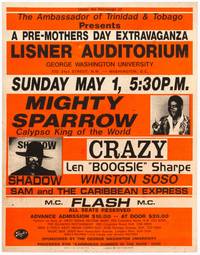
1988réf. 564096Landover Maryland / Washington D.C.: Special Effects Inc. / George Washington University 1988. Softcover. Very Good. Poster. Measuring 22" x 28". Printed in orange and black on thick coated card stock. Staple holes some foxing and soil a very good copy of a scarce poster advertising a 1988 performance by some of the world's greatest Calypso artists. Special Effects Inc. / George Washington University unknown
1988réf. 564096Landover Maryland / Washington D.C.: Special Effects Inc. / George Washington University 1988. Softcover. Very Good. Poster. Measuring 22" x 28". Printed in orange and black on thick coated card stock. Staple holes some foxing and soil a very good copy of a scarce poster advertising a 1988 performance by some of the world's greatest Calypso artists. Special Effects Inc. / George Washington University unknown books
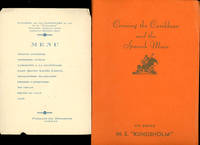
1938réf. z08233New York: Swedish-American Line 1938. Paperback. Very Good. Lot of information and souvenirs from a 1938 cruise aboard Swedish-American Line's Kunsholm motor liner from New York City to the Caribbean and West Indies. Includes several menus invitations to cocktails of liner stationary addressed to the passenger a passenger list a list of shore excursions a letter of welcome from the Swedish-American Line director and a souvenir booklet of "reminiscences" from the cruise. Illustrated wraps 8vo. Varying paginations with illustrations. Very good. Bending and some edgewear to items predominately clean and unmarked. A nice lot of materials for the cruise and travel enthusiast. Digital images available upon request. Swedish-American Line paperback
19481st English edition. Later boards. 8vo. 94 pages, 22 cm. In English. CONTENTS: Characteristics of the Jewish Settlement --- The Pre-Historic' Period --- The New Immigration [refugees & survivors] --- Economic Development --- Culture and Press --- Jews and Cubans --- Organizing the Community. Translated from Spanish into English by Simon Wolin. Boris Sapir (1902-1989) was a prominent Russian Menshevik who fled to Germany then Cuba after the Bolshevik ascension to power. He worked as a historian during his brief time in Cuba, but he ultimately emigrated to the U. S. SUBJECTS: Cuban Jewry. No copies in OCLC. Ex-library with usual markings. Some damp stains, but overall Very good condition. (YID-32-22)
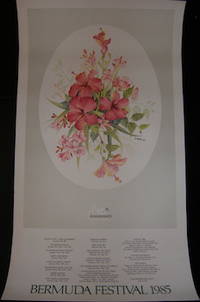
réf. 17-6279Bermuda The Caribbean: Bermuda Festival 1985. 62.5 x 35.5 cm. Poster announcing the annual Bermuda Festival. Offset color lithograph. Very Good. A horizontal crease in lower right quadrant and some smaller creases at lower left sheet edge. Bermuda, The Caribbean: Bermuda Festival, 1985. unknown
2008réf. Q-0979728207Royal Caribbean and Make A Wish 2008-01-01. Hardcover. New. In shrink wrap. Looks like an interesting title! Royal Caribbean and Make A Wish hardcover
2003réf. LFA-126748784Une revue de 36 pages, format 165 x 235 mm, illustrée, brochée couverture couleurs, publiée en 2003, AIAPS, bon état
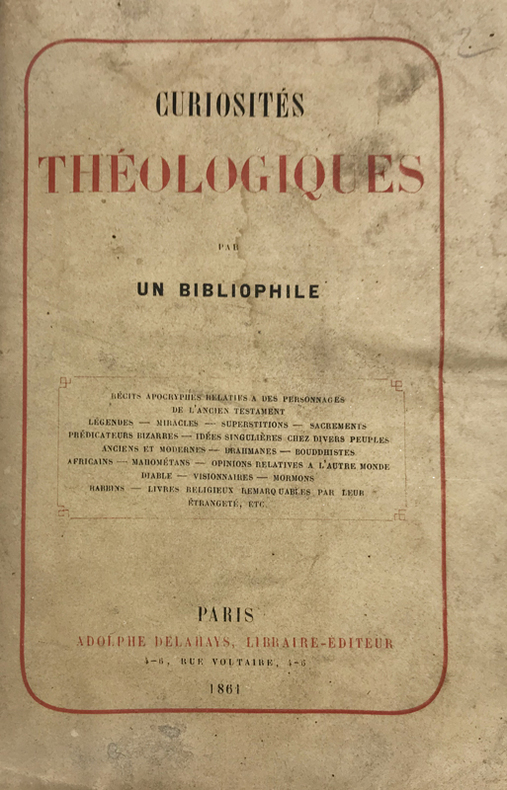
1861réf. 10901Paris, Adolphe Delahays, 1861 ; in-16, broché ; (4), II, 358 pp., (6) pp. de catalogue du libraire, couverture beige imprimée en rouge et noir.
réf. 201006201Paris, Flammarion - national geographic society, 1976 ; grand in-8, 216 pp., cartonnage d'éditeur avec jaquette. Très bon état.
réf. 57269P., Bourrelier (Collection "La Joie de Connaître"), 1948, in 12 cartonnage illustré de l'éditeur, 96 pages ; illustrations hors-texte ; traces de ruban adhésif sur les gardes.