1 022 résultats
1973réf. 44039London: Caribbean Situationist 1973. First Edition. thus. Very good. Poster reproducing translated text by Khayati originally published in Internationale Situationniste and subsequently as a brochure in 1971 Ford 167. Illustrated with black and white photographs of Kingston Jamaica; Trinidad; and Hungary. Lower right corner includes a blank space intended to advertise a record shop where an LP of the text apparently spurious would be available. Uncommon. OCLC odes not locate a copy though there does appear to be on at Michigan. Wraps. Poster folded into quarters 36" x 23" approx. unfolded. Verso lightly toned; moderate wear to edges and fold lines. Creasing to corners. Very good. Caribbean Situationist unknown
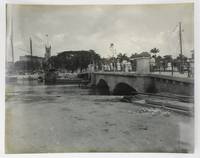
1925réf. 6159Various places 1925. Very good. Fourteen silver gelatin photographs 8 x 10 inches. Minor wear and soiling. Images generally crisp and clear. A handsome group of photographs possibly taken on someone's holiday through the Caribbean showing scenes in Barbados Martinique the Panama Canal and Guaira Venezuela. Five of the images show Barbados. Of note are a view taken from the water showing the harbor and the local boats with the dock workers; a tree-lined dirt avenue with houses on one side; and a handsome view of locals crossing a bridge with Parliament in the background. Of the four views of Martinique three show Mount Pelee and the fourth is a lovely shot of two local women on a dirt road barefoot and carrying baskets of produce on their heads. The three images of Venezuela are all taken from aboard a ship and show coastline. The two photos of the Panama Canal depict a ship -- presumably the author's vessel -- transiting the locks. Both are well-composed and give an early view of this important technological wonder. A nice group. unknown
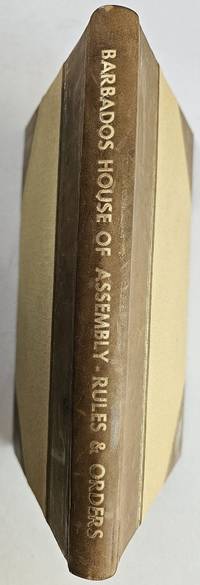
1867réf. BK0152Barbados: Office of "The Official Gazette" No. 14 Broad Street 1867. 30 pp. with unnumbered index 42 pp. Half leather over cloth boards. Ink ownership inscription "W. Brandford Griffith / 1869" on a preliminary blank. Scattered foxing and light toning. A locally printed manual for the Barbados House of Assembly with the ownership inscription of William Brandford Griffith then both a member of the Assembly and the island's auditor-general. Griffith served in the Assembly from 1861 to 1874 and was appointed auditor-general in 1863; he subsequently held several other colonial offices before becoming governor of the Gold Coast in 1885. The rules numbered through 271 and accompanied by an extensive alphabetical index set out the conduct of the Assembly's public business. The index includes procedures for issuing election writs and returning the names of elected members to the governor and council together with the course to be followed when writs had not been executed. Although published well after emancipation these rules governed an Assembly whose electorate remained restricted by property qualifications. Free men of color had gained voting rights subject to those qualifications in 1831 and Samuel Jackman Prescod entered the Assembly in 1843. Planters and merchants nevertheless continued to dominate both the Assembly and the Legislative Council during the period in which Griffith served. OCLC records the 1867 edition OCLC 823344433 but we have been unable to identify a current institutional holding. . Office of "The Official Gazette," No. 14, Broad Street unknown
réf. 709804to. 2-pages approximately 250 words in part: "the idea of moving there from Phila. Has taken such a hold on my mind that I merely wanted your advice . the stagnation of Business here induced me to apply to you . I once more trouble you requesting your opinion." McCalmont 1765-1838 was co-owner of plantations in Demarara and one of the largest enslavers there; Demarara was a colony of the Dutch West India Company or the Netherlands 1745-1815 when it became a British colony Old fold lines but very good. unknown
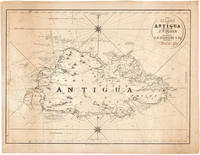
1860réf. 48522Antigua but actually Philadelphia: R.B. Eldridge & Co. ca.1860. Interesting Map of the Island of Antigua An unusual lithographic edition of Norie's 1827 revision of this handsome chart lithographed by Wagner & McGuigan in Philadelphia. A statement in the cartouche reads: "Presented by R.B. Eldridge Antigua to Captain Andrew Tyler." The captain's name is accomplished in manuscript. R.B. Eldridge is not listed in Tooley's DICTIONARY OF MAPMAKERS and appears to be unrelated to publisher of charts George Eldridge. It seems most likely that he was rather an Antigua merchant who commissioned a reprint of the chart for complimentary distribution to sea captains. A handsome piece. Lithographic sheet map 20½ x 26½ inches. Backed with contemporary blue paper. Light foxing and toning. A few small tears in margins. Very good. unknown
1867réf. BK0152Barbados: Office of "The Official Gazette" No. 14 Broad Street 1867. 30 pp. with unnumbered index 42 pp. Half leather over cloth boards. Ink ownership inscription "W. Brandford Griffith / 1869" on a preliminary blank. Scattered foxing and light toning. A locally printed manual for the Barbados House of Assembly with the ownership inscription of William Brandford Griffith then both a member of the Assembly and the island's auditor-general. Griffith served in the Assembly from 1861 to 1874 and was appointed auditor-general in 1863; he subsequently held several other colonial offices before becoming governor of the Gold Coast in 1885. The rules numbered through 271 and accompanied by an extensive alphabetical index set out the conduct of the Assembly's public business. The index includes procedures for issuing election writs and returning the names of elected members to the governor and council together with the course to be followed when writs had not been executed. Although published well after emancipation these rules governed an Assembly whose electorate remained restricted by property qualifications. Free men of color had gained voting rights subject to those qualifications in 1831 and Samuel Jackman Prescod entered the Assembly in 1843. Planters and merchants nevertheless continued to dominate both the Assembly and the Legislative Council during the period in which Griffith served. OCLC records the 1867 edition OCLC 823344433 but we have been unable to identify a current institutional holding. . Office of "The Official Gazette," No. 14, Broad Street unknown books
1860réf. 48522Antigua but actually Philadelphia: R.B. Eldridge & Co. ca.1860. Interesting Map of the Island of Antigua An unusual lithographic edition of Norie's 1827 revision of this handsome chart lithographed by Wagner & McGuigan in Philadelphia. A statement in the cartouche reads: "Presented by R.B. Eldridge Antigua to Captain Andrew Tyler." The captain's name is accomplished in manuscript. R.B. Eldridge is not listed in Tooley's DICTIONARY OF MAPMAKERS and appears to be unrelated to publisher of charts George Eldridge. It seems most likely that he was rather an Antigua merchant who commissioned a reprint of the chart for complimentary distribution to sea captains. A handsome piece. Lithographic sheet map 20½ x 26½ inches. Backed with contemporary blue paper. Light foxing and toning. A few small tears in margins. Very good. unknown books
1925réf. 6159Various places 1925. Very good. Fourteen silver gelatin photographs 8 x 10 inches. Minor wear and soiling. Images generally crisp and clear. A handsome group of photographs possibly taken on someone's holiday through the Caribbean showing scenes in Barbados Martinique the Panama Canal and Guaira Venezuela. Five of the images show Barbados. Of note are a view taken from the water showing the harbor and the local boats with the dock workers; a tree-lined dirt avenue with houses on one side; and a handsome view of locals crossing a bridge with Parliament in the background. Of the four views of Martinique three show Mount Pelee and the fourth is a lovely shot of two local women on a dirt road barefoot and carrying baskets of produce on their heads. The three images of Venezuela are all taken from aboard a ship and show coastline. The two photos of the Panama Canal depict a ship -- presumably the author's vessel -- transiting the locks. Both are well-composed and give an early view of this important technological wonder. A nice group. unknown books
1973réf. 44039London: Caribbean Situationist 1973. First Edition. thus. Very good. Poster reproducing translated text by Khayati originally published in Internationale Situationniste and subsequently as a brochure in 1971 Ford 167. Illustrated with black and white photographs of Kingston Jamaica; Trinidad; and Hungary. Lower right corner includes a blank space intended to advertise a record shop where an LP of the text apparently spurious would be available. Uncommon. OCLC odes not locate a copy though there does appear to be on at Michigan. Wraps. Poster folded into quarters 36" x 23" approx. unfolded. Verso lightly toned; moderate wear to edges and fold lines. Creasing to corners. Very good. Caribbean Situationist unknown books
réf. 709804to. 2-pages approximately 250 words in part: "the idea of moving there from Phila. Has taken such a hold on my mind that I merely wanted your advice . the stagnation of Business here induced me to apply to you . I once more trouble you requesting your opinion." McCalmont 1765-1838 was co-owner of plantations in Demarara and one of the largest enslavers there; Demarara was a colony of the Dutch West India Company or the Netherlands 1745-1815 when it became a British colony Old fold lines but very good. unknown books
1971réf. 47663Miami: Ediciones Universal 1971. First Edition. Octavo 20.5cm.; publisher's pictorial card wrappers; 263pp. Light shelf wear tiny dampstain to bottom fore-edge corner of textblock else Near Fine. Account of present-day Cuba by the exiled Cuban journalist who nearly twenty-five years earlier was nominated Vice President by the Socialist Revolutionary Movement with twenty-two-year-old Enrique Ovares as President. According to the author biography on the rear cover: "Ni un sólo minuto de sa vida no está dedicado a Cuba. Nadie lo aventaja en la lucha constante contra el régimen castrista y contra los malandrines que ofenden la dignidad nacional. Ediciones Universal unknown
1971réf. 47663Miami: Ediciones Universal 1971. First Edition. Octavo 20.5cm.; publisher's pictorial card wrappers; 263pp. Light shelf wear tiny dampstain to bottom fore-edge corner of textblock else Near Fine. Account of present-day Cuba by the exiled Cuban journalist who nearly twenty-five years earlier was nominated Vice President by the Socialist Revolutionary Movement with twenty-two-year-old Enrique Ovares as President. According to the author biography on the rear cover: "Ni un sólo minuto de sa vida no está dedicado a Cuba. Nadie lo aventaja en la lucha constante contra el régimen castrista y contra los malandrines que ofenden la dignidad nacional. Ediciones Universal unknown books
1905réf. 105099Four postcards approximately 3 1/2" x 5 1/2" with stamps. Some writing on image side post marked some aging and browning edges slightly bumped; otherwise very good. This collection of four postcards from Cuba are postmarked stamped and written out. The authors are Anna and Nestor although in one card the author is less clear to a Miss K. Greve. Who lived in the upper West side of New York City. One card features Baby New Year for 1907 and has some color; the other three show La Catedral a promenade and what appears to me some kind of American monument. books
1849réf. G1027Paris, Firmin Didot Frères, Éditeurs, 1849 ; in-8, 4-160-164-156-102-2-8 pp. + 1 carte dépliante, 26 pl. hors-texte, broché (dos fendu, avec quelques petits manques, quelques rousseurs, quelques planches sont détachées). Collection: l'Univers«Histoire et description de tous les peuples». Ouvrage particulièrement intéressant sur les Antilles, qui sont peu nombreux. Illustré de gravures en taille-douce, exécutées par divers graveurs. État moyen.
1849Paris, Firmin Didot Frères, Éditeurs, 1849; in-8, 4-160-164-156-102-2-8 pp. + 1 carte dépliante, 26 pl. hors-texte, broché (dos fendu, avec quelques petits manques, quelques rousseurs, quelques planches sont détachées). Collection : l'Univers « Histoire et description de tous les peuples ». Ouvrage particulièrement intéressant sur les Antilles, qui sont peu nombreux. Illustré de gravures en taille-douce, exécutées par divers graveurs. État moyen.
1963Endpapers darkened (as usual). A few underlinings. Otherwise internally a tight copy with faint foxing to first pages ; Rear fold out map in NF condition. Including slipcase and original mylar; 16mo 6" - 7" tall; 545 pages
1751réf. 1177351751 A Londres, Chez Nourse, 1751, 2 volumes in-12 de 95x165 mm environ, (2) ff., 285 pages - (1) f., 248 pages, complet des 6 planches dépliantes. Pleines reliures marbrées d'époque, dos longs portant titres et tomaisons dorées, fers dorés, filet d'encadrement à froid sur les plats, filet doré sur les coupes, tranches mouchetées, gardes de papier marbré à la coquille. Coins légèrement émoussés, quelques griffures et épidermures sur le cuir, rares rousseurs sinon bon état.
1898réf. List2965United States and Caribbean 1898. Approximately twenty-nine pieces: logbook of eighty-four double-sided pages measuring 13 x 20 inches; eight letters seventeen documents and forms and three pieces of miscellany. Much wear and significant damage to logbook including water damage mildew and tearing; log book overall fair to good minus. Other materials good to very good. Overall good. William Higgins 1791–1872 was a farmer sea captain and owner of and investor in ships from Bowdoinham Maine. According to the Maine Maritime Museum which holds his family papers Higgins’ ships traded mainly in lumber which they took from Wilmington North Carolina to the Caribbean. Offered here is a logbook recording the travels of several of Higgins’ ships particularly the brigs Mary Jane and Llewellyn alongside related documents and personal letters. The logbook dating between 1832 and 1836 extensively documents the course wind data and weather remarks for travels of the ships between east coast US port cities and various locations in the Caribbean including Barbados St. Thomas and Martinique. The logbook also contains a copy of astronomer and mathematician Elijah Burritt’s illustration “A Plan of the Solar System Exhibiting its Relative Magnitudes and Distances” engraved by W. G Evans and printed in 1835 by F.J. Huntington. The letters and documents date from 1830 to 1867 and are also mostly business-related including an insurance document for the brig William Parrington a roll of sailors enlisted to work on a six-month journey between the Caribbean and the US in 1845 a bill of sale for ¼ stake in the brig Mary Jane and receipts and logs for items including various liquors sugar molasses casks and so on. One letter from a young man in Wilmington requests advice on how to start his own business in the style of Higgins’; other letters concern family matters. One interesting undated document is a writ addressed to the Marshal of the District of Maine concerning a lawsuit filed against Higgins and Rufus Carr master of the William Parrington by Zachrisson Nelson Co. The suit alleged that Carr acting as an agent for the ship’s owners that is Higgins had agreed to an affreightment involving shipping from Jamaica to Spain to New York but had then “wholly neglected and refused to do so”. Of interest to scholars of maritime history and trade in the mid-19th century. unknown
1898réf. List2965United States and Caribbean 1898. Approximately twenty-nine pieces: logbook of eighty-four double-sided pages measuring 13 x 20 inches; eight letters seventeen documents and forms and three pieces of miscellany. Much wear and significant damage to logbook including water damage mildew and tearing; log book overall fair to good minus. Other materials good to very good. Overall good. William Higgins 1791–1872 was a farmer sea captain and owner of and investor in ships from Bowdoinham Maine. According to the Maine Maritime Museum which holds his family papers Higgins’ ships traded mainly in lumber which they took from Wilmington North Carolina to the Caribbean. Offered here is a logbook recording the travels of several of Higgins’ ships particularly the brigs Mary Jane and Llewellyn alongside related documents and personal letters. The logbook dating between 1832 and 1836 extensively documents the course wind data and weather remarks for travels of the ships between east coast US port cities and various locations in the Caribbean including Barbados St. Thomas and Martinique. The logbook also contains a copy of astronomer and mathematician Elijah Burritt’s illustration “A Plan of the Solar System Exhibiting its Relative Magnitudes and Distances” engraved by W. G Evans and printed in 1835 by F.J. Huntington. The letters and documents date from 1830 to 1867 and are also mostly business-related including an insurance document for the brig William Parrington a roll of sailors enlisted to work on a six-month journey between the Caribbean and the US in 1845 a bill of sale for ¼ stake in the brig Mary Jane and receipts and logs for items including various liquors sugar molasses casks and so on. One letter from a young man in Wilmington requests advice on how to start his own business in the style of Higgins’; other letters concern family matters. One interesting undated document is a writ addressed to the Marshal of the District of Maine concerning a lawsuit filed against Higgins and Rufus Carr master of the William Parrington by Zachrisson Nelson Co. The suit alleged that Carr acting as an agent for the ship’s owners that is Higgins had agreed to an affreightment involving shipping from Jamaica to Spain to New York but had then “wholly neglected and refused to do so”. Of interest to scholars of maritime history and trade in the mid-19th century. unknown books
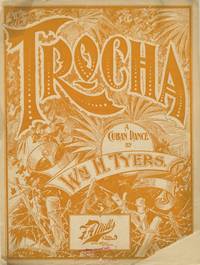
1890réf. List3666New York: Jos. W. Stern & Co 1890. Folio sheet music illustrated pictorial cover printed in orange. 5 pp. including cover. Approximately 13 ½ x 10 ½ inches. Covers detached loss to front cover contents complete fair to good. A decorative late nineteenth-century dance publication for “Trocha” described on the cover as “A Cuban Dance” composed by the African American composer and bandleader W. H. Tyers. The elaborate pictorial cover incorporates stylized tropical foliage and island scenery rendered in a bold single-color design typical for the period’s fascination with exoticized musical forms. William H. Tyers 1870–1924 was an African American composer arranger and bandleader active in New York during the ragtime era. Born in Petersburg Virginia to Henry Tyers and Jane “Jennie” Jones both formerly enslaved he spent part of his youth in Richmond before his family relocated to New York City where he began studying piano. His early teachers recognized an aptitude for composition as well as performance and by the mid-1880s he was writing dance pieces including polkas and waltzes. Around the age of twenty Tyers secured employment as a music librarian and arranger with a touring concert company a position that brought him to Europe where he studied orchestration and arranging with Professor Gaspari in Hamburg. Returning to New York Tyers became active in the city’s rapidly expanding popular music trade working as an arranger and composer for publishers including F. A. Mills and Jos. W. Stern & Co. In 1896 he published “Sambo” a syncopated march sometimes considered to be one of the first instrumental rags.1 “Trocha” also released in the 1980s brought Tyers prominence for his ability to write Latin-style rhythms. It was re-issued in 1913 as a tango and its success led Tyers to work as an arranger with Joseph W. Stern in 1897. Tyers’ compositions blended contemporary American dance music with Caribbean and Latin themes a style reflected in pieces such as Trocha and later in his well-known ragtime composition Panama 1911 which remained a staple of early jazz and dance orchestras. OCLC finds two copies with different entries at the Cleveland Public Library and the British Museum Reference Collections. 1 “William Tyers Music Arranger” African American Registry https://aaregistry.org/story/william-tyers-born/ accessed March 10 2026. Jos. W. Stern & Co unknown
1890réf. List3666New York: Jos. W. Stern & Co 1890. Folio sheet music illustrated pictorial cover printed in orange. 5 pp. including cover. Approximately 13 ½ x 10 ½ inches. Covers detached loss to front cover contents complete fair to good. A decorative late nineteenth-century dance publication for “Trocha” described on the cover as “A Cuban Dance” composed by the African American composer and bandleader W. H. Tyers. The elaborate pictorial cover incorporates stylized tropical foliage and island scenery rendered in a bold single-color design typical for the period’s fascination with exoticized musical forms. William H. Tyers 1870–1924 was an African American composer arranger and bandleader active in New York during the ragtime era. Born in Petersburg Virginia to Henry Tyers and Jane “Jennie” Jones both formerly enslaved he spent part of his youth in Richmond before his family relocated to New York City where he began studying piano. His early teachers recognized an aptitude for composition as well as performance and by the mid-1880s he was writing dance pieces including polkas and waltzes. Around the age of twenty Tyers secured employment as a music librarian and arranger with a touring concert company a position that brought him to Europe where he studied orchestration and arranging with Professor Gaspari in Hamburg. Returning to New York Tyers became active in the city’s rapidly expanding popular music trade working as an arranger and composer for publishers including F. A. Mills and Jos. W. Stern & Co. In 1896 he published “Sambo” a syncopated march sometimes considered to be one of the first instrumental rags.1 “Trocha” also released in the 1980s brought Tyers prominence for his ability to write Latin-style rhythms. It was re-issued in 1913 as a tango and its success led Tyers to work as an arranger with Joseph W. Stern in 1897. Tyers’ compositions blended contemporary American dance music with Caribbean and Latin themes a style reflected in pieces such as Trocha and later in his well-known ragtime composition Panama 1911 which remained a staple of early jazz and dance orchestras. OCLC finds two copies with different entries at the Cleveland Public Library and the British Museum Reference Collections. 1 “William Tyers Music Arranger” African American Registry https://aaregistry.org/story/william-tyers-born/ accessed March 10 2026. Jos. W. Stern & Co unknown books
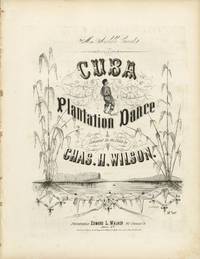
1855réf. List3682Philadelphia: Edward L. Walker 142 Chestnut St. above 6th 1855. Folio sheet music pictorial lithographed cover approximately 13.5 × 10.5 inches. Light edge wear and minor toning; very good with a strong impression of the cover illustration. An antebellum piano dance reflecting the plantation imagery that circulated widely in mid-nineteenth-century American popular music. “Cuba Plantation Dance” was composed by Chas. H. Wilson a little-documented composer whose name appears chiefly in connection with this work and issued in Philadelphia during the early 1850s by Edward L. Walker the predecessor firm to the major publishing house Lee & Walker. A copy is recorded in the Levy Collection at Johns Hopkins which dates the publication to 1855. The cover presents a stylized plantation landscape framed by tall stalks of sugar cane with a small central vignette of a dancing Black figure. The use of Cuban plantation imagery reflects contemporary American fascination with the Caribbean sugar economy and with plantation life beyond the United States. During the 1850s Cuba was one of the largest slave societies in the Atlantic world. By the midcentury the island’s sugar plantations relied on hundreds of thousands of enslaved Africans and the enslaved population of Cuba was estimated at roughly 400000 people in the 1840s–1850s working primarily in the rapidly expanding sugar industry. Although Spain formally agreed to end the Atlantic slave trade in 1820 illegal importations of enslaved Africans into Cuba continued for decades supplying labor for the island’s plantations well into the 1850s. American publishers frequently borrowed such imagery for plantation-themed dance music marketed to the parlor trade. Pieces labeled “plantation dances” or “Ethiopian dances” formed part of the broader culture of minstrel and plantation entertainment. The title page bears a dedication to “Miss Arabelle Conrad” typical of mid-century sheet music addressed to amateur pianists. Along with the aforementioned copy in the Levy collection we find copies at Michigan and Temple. Edward L. Walker, 142 Chestnut St., above 6th unknown
1855réf. List3682Philadelphia: Edward L. Walker 142 Chestnut St. above 6th 1855. Folio sheet music pictorial lithographed cover approximately 13.5 × 10.5 inches. Light edge wear and minor toning; very good with a strong impression of the cover illustration. An antebellum piano dance reflecting the plantation imagery that circulated widely in mid-nineteenth-century American popular music. “Cuba Plantation Dance” was composed by Chas. H. Wilson a little-documented composer whose name appears chiefly in connection with this work and issued in Philadelphia during the early 1850s by Edward L. Walker the predecessor firm to the major publishing house Lee & Walker. A copy is recorded in the Levy Collection at Johns Hopkins which dates the publication to 1855. The cover presents a stylized plantation landscape framed by tall stalks of sugar cane with a small central vignette of a dancing Black figure. The use of Cuban plantation imagery reflects contemporary American fascination with the Caribbean sugar economy and with plantation life beyond the United States. During the 1850s Cuba was one of the largest slave societies in the Atlantic world. By the midcentury the island’s sugar plantations relied on hundreds of thousands of enslaved Africans and the enslaved population of Cuba was estimated at roughly 400000 people in the 1840s–1850s working primarily in the rapidly expanding sugar industry. Although Spain formally agreed to end the Atlantic slave trade in 1820 illegal importations of enslaved Africans into Cuba continued for decades supplying labor for the island’s plantations well into the 1850s. American publishers frequently borrowed such imagery for plantation-themed dance music marketed to the parlor trade. Pieces labeled “plantation dances” or “Ethiopian dances” formed part of the broader culture of minstrel and plantation entertainment. The title page bears a dedication to “Miss Arabelle Conrad” typical of mid-century sheet music addressed to amateur pianists. Along with the aforementioned copy in the Levy collection we find copies at Michigan and Temple. Edward L. Walker, 142 Chestnut St., above 6th unknown books
1932réf. 62783New York New Orleans Boston Chicago San Francisco & Miami: United Fruit Company Steamship Company Newcomb Printing Co. Inc. 1932. Tall 8vo. 7.2 x 9.5 in. 30 2 pp. printed in black & gold. With photo illustrations throughout gold borders decorations double-page centerfold pictorial map. Gold & black illustrated softcovers Art Deco cover art depicting a Great White Fleet ship minor rubbing shelfwear slight bumping to lower right corner still a VG bright copy. First edition of this beautifully illustrated Art Deco brochure for the Great White Fleet which featured spacious white yacht-like steamships offering dependable year-round service from New York New Orleans and Boston to Havana & Santiago Cuba; Kingston Jamaica; Cristobal Panama Canal Zone; Port Limon Costa Rica; Cartagena Puerto Colombia and Santa Marta Colombia; Puerto Barrios Guatemala and Honduras and British Honduras. United Fruit Company Steamship Company, [Newcomb Printing Co., Inc., paperback
2001réf. LFA-126716706N° 23 (2001) 80 pages, format 210 x 270 mm, illustré, broché couverture couleurs, bon état