Panama Canal CompanyBiblio.com
804 risultati
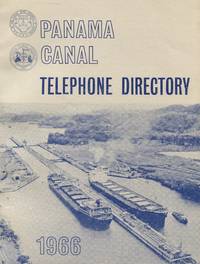
1966rif. 8201Panama Canal Company 1966. 1st Edition. Softcover. Very Good. A vintage 1966 telephone directory from the Panama Canal Zone. It includes phone numbers and contact listings for businesses and residents and features several maps of the area at the end. Text in English. 187 pp. Panama Canal Company paperback
1912Features: Puget Sound Branch a Good Investment for the Chicago, Milwaukee & St. Paul's; Rumors of Graft in Puget Sound Extension; New Station at Kelso Opened; Robert Dollar's Views; What a Big Terminal Plant Means to a Port - by R.F. Ayers, President Pacific Terminals Company (with photo of Mr. Ayers); Ten Reasons Why There Should Be Free Tolls (through the Panama Canal); The Panama Canal and the West Indies; Coaling Light Vessels at Sea Hazardous Work - article with photo of light vessel stationed on Swiftsure Bank; Anti-Rolling Tanks Death to Seasickness - article with two diagrams illustrating tank arrangements; Jury Decides for Underwriters; Water Grades a Large Factor in Commerce; Repairs, Drydocking and Other Work; Photo of steel stern frame made by the Scullin-Gallagher Iron & Steel Company; and more. 44 pages including several pages of nostalgic ads, some illustrated in black and white, featuring local marine and rail interests. Printed upon glossy coated stock. Average wear. Binding intact. Few library markings to front cover. A well-preserved copy of this highly-informative memento of Pacific Northwest transportation over a century ago. 12" x 9". Magazine
1912Features: The Present Railway Situation in the United States; B.F. Bush becomes president of the Denver & Rio Grand (with photo of Bush); Railway Mileage in 1911; Interstate Commerce Commission Decisions; Coast Shipbuilding Companies Rushed With Work - feature article with photo of submarine F.3 immediately after launching, apparently at the Seattle Construction & Drydock Co.; Representative of the Royal Mail Steam Packet Line inspects the northwest for business opportunities which will open with the Panama Canal; Economy of the [Seattle] Municipal Plan (part 3); Free Ships and Revised Navigation Laws - discussion of the rehabilitation of the merchant marine; Free [Panama Canal] Tolls To American Ships Would Solve Problem; What Is The Merchant's Exchange of Seattle? - an explanatory article by R.C. Hill, whose photo accompanies the article; Seattle People Honor Captain "Buck" Bailey; Port Commission Plan for Grays Harbor; Review of Marine Insurance and Shipping Law; Bogue Plans for Tacoma Harbor Are Extensive - article with map; Tacoma Will Be Ready When Panama Canal Opened - brief article includes nice birdseye view illustration of the harbor and environs showing present developments and developments under way; and more. 44 pages including several pages of nostalgic ads, some illustrated in black and white, featuring local marine and rail interests. Printed upon glossy coated stock. Average wear. Binding intact. Few library markings to front cover. A well-preserved copy of this highly-informative memento of Pacific Northwest transportation over a century ago. 12" x 9". Magazine
1912Features: B.F. Bush on Evil Results to Accrue from Diversion of Capital from Railway Enterprises; Japanese Trainmaster kills self after Emperor is delayed; Tell the Truth, Mr. (Gifford) Pinchot! - fallout from a December 16th article about Alaska; Charles F. Speare discusses the alliance between the Northern Pacific and the Chicago & Northwestern Railroads; Southern Pacific and Pacific Mail (article from the Wall Street Journal); Cash Shortage in Western Canada; Captain N.E. Cousins has been in the employ of the Pacific Coast Steamship Lines Co. since 1878 - article with photo; Get Ready for the Opening of the Panama Canal; Economy of the [Seattle] Municipal Plan (part 2) - major article with map; Cunard and Anchor Lines Amalgamate - article with list of the vessels, and their tonnage, of each company; Protest the Carriage of Navy Coal in Foreign Bottoms - George F. Thorndyke of the Globe Navigation Company speaks out; Edvard Jansen to take over from Ida Wilson Lewis, "The Grace Darling of America", tending the Lime Rock light station; Review of Marine Insurance and Shipping Law; Illustration of the central winch on Dredge New Orleans; Portland News Notes; Schedule for Canadian-Pacific Railways Steamships connecting Seattle with Victoria and Vancouver; and more. 44 pages including several pages of nostalgic ads, some illustrated in black and white, featuring local marine and rail interests. Printed upon glossy coated stock. Average wear. Binding intact. Few library markings to front cover. A well-preserved copy of this highly-informative memento of Pacific Northwest transportation over a century ago. 12" x 9". Magazine
1911"Get Ready For the Panama Canal". Features: Over $25 million invested in Harriman Terminals; Kenneth C. Kerr describes Washington and Alaska's attendance at big New York land show; Editorial discusses the early opening of the Panama Canal and describes it as the "Greatest Epoch in American History"; Martin A. Knapp discusses Interstate Commerce Regulations; O.-W.R. & N. Co. News; G.W. Luce of the Southern Pacific discusses Panama Canal; Brief business biography of Frank W. Parker of the Northwestern Line, including photo of Parker; Appointments, Changes, Personals, etc.; Article by J.H. Bloedel, President of the Larsen Lumber Co., about the Panama Canal with reference to its influence on Pacific Coast Forest Products; Economy of the Commission Plan; Port of Vancouver Drydock and Shipbuilding Company plans big steel drydock for Vancouver; American-Hawaiian S.S. Co. Enters Bids for Carrying Mail; Big Coal Depots for Panama Canal; Missouri River Preparing for Panama Canal; Modern Fireboat Badly Needed for Tacoma's Harbor (article with photo of the harbor); Review of Marine Insurance and Shipping Law; Pacific Coast Casualties; "The Chester" - The World's Lightest Draft Steamer - article with photo; and more. 44 pages including several pages of nostalgic ads, some illustrated in black and white, for local marine and rail interests. Printed upon glossy coated stock. Average wear. Binding intact. Few library markings to front cover. A sound copy of this highly-informative memento of the rail and marine businesses of the Pacific Northwest over a century ago. 12" x 9". Magazine
1911Features: First Annual Report of American Express Companies; John F. Stevens Retires From Hill Lines; B.F. Bush Succeeds George Gould as president of the Missouri Pacific Railway (with photo of Mr. Bush); Causes for Trade Depression; Development of Alaska Fisheries; Hearing Regarding Pacific Coast Rate Cases; Larger Terminal Yards Planned for Tacoma; The Railroads and the Panama Canal; Sixty-Seven Steamships in Canadian Pacific's Great Fleet - article with nice illustration; Review of Marine Insurance and Shipping Law; Three Sailors of the British Steamer Benedick convicted of mutiny by Edinburgh court; Captain David Baird to take charge of the Victoria and Vancouver Stevedore Co.'s Vancouver Branch - with photo of Mr. Baird; Suspension of Capt. Alfred Croskey Reduced; Tacoma News; Captain Fred Warner to command the famous steamer Corwin (brief article with photo); Nice illustrated one-page ad for The Shasta Limited, "The Finest Train in the West", which connects Seattle to San Francisco; Nice one-page illustrated ad for the Vulcan Iron Works of Seattle features an aerial view of their plant; Willamette Iron & Steel Works ad features nice photo of fireboat "Geo. H. Williams" belching black smoke and pumping water in the air; Canadian-Pacific Railway Steamships ad features schedule for their connections between Seattle, Victoria and Vancouver; and more. 40 pages including several pages of nostalgic ads, some illustrated in black and white, featuring local marine and rail interests. Printed upon glossy coated stock. Average wear. Binding intact. Few library markings to front cover. A well-preserved copy of this highly-informative memento of Pacific Northwest transportation over a century ago. 12" x 9". Magazine
1912Features: Northern Pacific Railway Co. Making Big Improvements in the State of Washington; Julius Kruttschnitt an Optimist; Mobilization and the Railways - article from the Army & Navy Journal; Amending Our Shipping Laws; George G. Gould Retains His Position; Railway News in Brief; Noted Engineer E.C. Hawkins - Obituary with photo; Interstate Commerce Decisions; San Francisco Will Be Ready for the Panama Canal and the Panama Pacific International Exposition in 1915 - article with photos of "San Francisco's Two Big Men", James Rolph Jr., Mayor, and C.C. Moore; Statutory Regulation of Ocean Traffic; Pacific Coast S.S. Co. Places Order for 10,000-Ton Steamer - article with diagram of outboard profile of the vessel; Comprehensive Review of Far Eastern Shipping Situation by U.S. Consul General at Hong Kong, George E. Anderson; Astoria Getting Ready for Panama Canal; Panama Canal Rates - The Big Issue; Captain John Truebridge - Obituary; Review of Marine Insurance and Shipping Law; Some Perils of the Deck Load - Feature article includes photo of a leaning steamer Cuzco; The Advantages of the Water-Tube Boiler; Record of a Ballin Water Tube Boiler - article with photo; The International Navigation Congress; Boiler Inspection for [Panama] Canal Zone; General Shipping News; Oil Engined Barges to Revolutionize Shipping; and much more. 40 pages including several pages of nostalgic ads, some illustrated in black and white, featuring local marine and rail interests. Printed upon glossy coated stock. Average wear. Binding intact. Few library markings to front cover. A well-preserved copy of this highly-informative memento of Pacific Northwest transportation over a century ago. 12" x 9". Magazine
1912Features: New Transcontinental Railroad is Planned; Railroad Construction Work in Western Canada; A Study of Railroad Accidents; Grand Trunk Pacific Completes Fine Dock at Vancouver - article with photo of the new structure; Proposed Improvements for the Port of Seattle - Smith's Cove, Salmon Bay, East Waterway, Central Waterfront District, Harbor Island; San Francisco Preparing for Panama Canal Trade - major article with graph, table and photo of one of San Francisco's new concrete piers; Control of Freight Rates Through Panama Canal; Professional Biography of Marcus Talbot, Manager of the Port of Portland (with photo of Mr. Talbot); Provisions of New Visual Rule; Death of Noted Admiralty Lawyer Charles Page - major article; That Olympic-Hawke Collision; Legal Decisions; High-Class Salvage job of the fishing steamer Independent - article with photo of the vessel being held up by two barges; Captain William Kidston - obituary; Veteran Shipmaster Albert H. Laffin - Obituary; Veteran Tug Boat Captain William Gove - Obituary; Hong Kong Harbor Needs Deepening - after visit by the big American Steamer Minnesota; New Invention for Calming Big Seas; and much more. 44 pages including several pages of nostalgic ads, some illustrated in black and white, featuring local marine and rail interests. Printed upon glossy coated stock. Average wear. Binding intact. Few library markings to front cover. A well-preserved copy of this highly-informative memento of Pacific Northwest transportation over a century ago. 12" x 9". Magazine
1911Features: Seattle's Public Utilities Department and the Railroads - major article; Southern Pacific announces fast excess-fare train between New Orleans and San Francisco; Promotion for T.B. Degnan of the Great Northern Railway Co.; No Time To Lose - Editorial discusses how representatives of eight Puget Sound cities oppose tolls being charged through the Panama Canal to vessels flying the U.S. flag and engaged in U.S. coastwise traffic; Handsome New Union Passenger Station for Aberdeen, WA - article with artist's rendering of the future station; Foreign Capital in Railways of the United States - major article by Harvard Professor of Economics William Z. Ripley; Business biography of J.E. Dalrymple, recently elected vice-president of the Grand Trunk Pacific Railway Co.; Railway News in Brief; Battery Truck Crane the Latest Invention in Freight Handling - major article with wonderful illustration of a mobile electric crane invented by General Electric of Schenectady, NY to be used for loading rail cars (who knew Elon Musk was so old!); How Should Tacoma Prepare for the Opening of the Panama Canal? - major article with excellent photo of the busy Tacoma waterfront; Statement Concerning Panama Canal by George S. Dearborn, president of the American-Hawaiian S.S. Co.; British View of Panama Canal; High Honor for W.D. Wells of the Alaska-Pacific Steamship Co.; Review of Marine Insurance and Shipping Law; Repair bill for the White Star liner Olympic; Submarine Motor Salvage Boat invented by Mr. E.H. Crossley; New Steamer Solduck will be an All-steel Modern Vessel - major article including diagram of its outboard profile; Article on Steam Cannery Tender for the Northwestern Fisheries Company - article with diagram of the outboard profile of this vessel; Pacific Coast Casualties; Steamboat Fairhaven Sinks in Harbor; and more. 44 pages including several pages of nostalgic ads, some illustrated in black and white, featuring local marine and rail interests. Printed upon glossy coated stock. Average wear. Binding intact. Few library markings to front cover. A well-preserved copy of this highly-informative memento of Pacific Northwest transportation over a century ago. 12" x 9". Magazine
1913Attractive black and white photos and illustrations in text. Includes Panama Canal construction. The highlight of this article is the eleven-page article on the Rescue of Titanic survivors by the Carpathia. This article includes twelve black and white photos and is a must for Titanic collectors. Almost two inches thick - a substantive volume in marbled boards with maroon trim. Somewhat above-average wear. Narrow opening in binding at first page, which is partially loose. Narrow opening along back hinge. Usual library markings. Liquid paper applied to upper corner of front free endpaper. A worthy copy. Book
rif. 212241Paris, Hachette, 1886 in-4, 399-[2] pp., portrait, carte dépl., plan dépl., tabl. dépl., demi-chagrin rouge à coins, dos à nerfs orné, tête dorée (reliure de l'époque). Qqs épid. sur le premier plat, nerfs et mors un peu frottés.
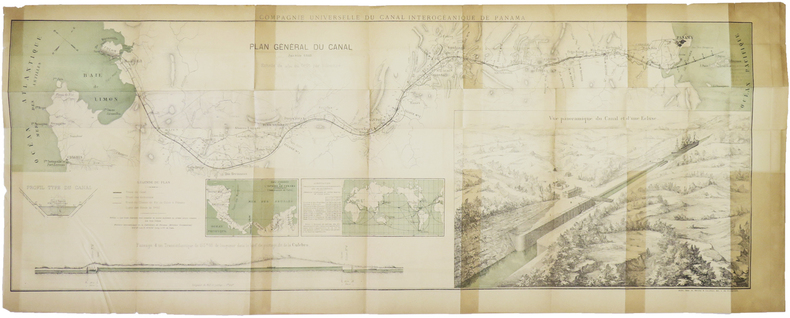
1888rif. LBW-5014[1888]. 281 x 775 mm.
1854Trad. da Eduard Hoepfner, pref. di Carl RITTERIn-8° (cm. 21,7x13,4), pp. XVIII, 570 + 4 CARTE (2 ripieg.; del Nicaragua; del corso del fiume San Juan + 5 sezioni; pianura di Leon e Fonseca-Bai), + 31 TAVOLE, molte incise da Rob. KUPFER (tra cui 4 colorate a mano, 1 doppia litogr. a colori; 8 ripiegate; 11 vedute a piena pagina; 87 figg. di statue di molti IDOLI, oggetti, vedutine, incisioni rupestri ecc.). Mz. tela post., tit. oro, bella carta decorata antica ai piatti. Tracce di colla e della cop. orig. aderiscono al marg. int. del. front. Fioriture solo a qc. tav. L'ingegnere e archeol. SQUIER nel 1848 fu ambasciatore USA in Am. Centrale. Col tit. "Nicaragua; its people, scenery, monuments, and the proposed interoceanic canal" uscì nel 1852. Informaz. di prima mano su paese, geol., geogr., lingue native, etnol., società, storia dell'Am. Centrale fin dall'indip. dalla Spagna. Un cap. di 62 pagine sull'auspicato CANALE tra la Baia di San Juan del Norte e il Pacifico. Un capitolo di 102 pagine sulle popolazioni originarie "Die URBEWWOHNER Nicaragua's. Fondamentale.
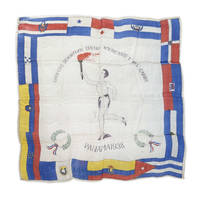
rif. FRE70Printed silk necktie 43 × 43 cm 16⅞ × 16⅞ in. decorated with the flags of the participating nations surrounding a runner carrying a flaming torch inscribed “IV Juegos Deportivos Centro Americanos y del Caribe / Panama 1938.” Good condition. A colorful souvenir from the IV Central American and Caribbean Games held in Panama City from February 5 to 24 1938. The Games represented an important stage in the consolidation of a distinctly Central American and Caribbean regional sporting identity. The 1938 competition was the first edition officially styled the “Central American and Caribbean Games” and the first in which Colombia and Venezuela participated. Ten countries and more than 1200 athletes took part—the largest international sporting gathering yet held in the region and Panama's first international sporting event on such a scale. The necktie's design is particularly expressive of this regional idea: the flags of the participating republics form a continuous border around the athlete and Olympic-style torch visually presenting the countries as members of a common Caribbean and Central American community. The Games had begun in Mexico City in 1926 with only three participating nations; their expansion through Havana and San Salvador and finally to Panama transformed what had begun as a small Central American competition into a broader regional institution. Held in a region whose political and economic life had long been shaped by European colonialism and increasingly United States power the Games also offered the participating countries a highly visible means of representing themselves to one another as sovereign nations rather than through imperial or metropolitan institutions. unknown
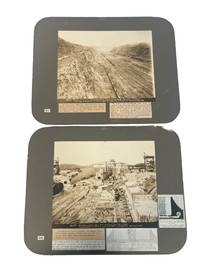
1912rif. 201831912. Panama Canal Early Photography Two large albumen photographs of the construction of the Panama Canal 1912. Photographs are pasted down to grey cardstock with captions and articles describing the imagery below. Photos measure 11" x 14". The building of the Panama Canal was not met with ease as the former French owned project was abandoned due to lack of investment and a high worker mortality rate and the grappling of territory between Panama Columbia and the United States. In 1903 Panama gained it's independence and as the United States recognized this Roosevelt used buying power to his advantage to funnel millions of dollars towards Panama and the funding of this project. These two photographs are early large scale displays of the massive amounts of land and infrastructure that went into this long awaited project. One photograph shows the Culebra Cut in June 1912. The article pasted to the front states that "To remove the 105000000 cubicyards of earth from the backbone of the Americas required about 6000000 pounds of high-grade dynamite each year to break up the material.in which time some 19000000 pounds were exploded in Culebra Cut only eight men were killed." The second photograph dated January 1912 shows the Miraflores Upper Locks with a diagram of what the final construction would look like. The photograph shows a partially built sill multiple tracks for hauling material heavy duty cranes and other industrial equipment. Thousands of local men were hired for this dangerous and underpaying job over the course of a decade. These Caribbean workers endured poor working conditions low wages and unbearable temperatures for a government that was not theirs over 5000 becoming casualties. By it's opening ceremony in 1914 The Panama Canal was the most expensive project in US history estimated at $350000000. These early photographs show only a portion of what went into this costly construction. Minor wear to edges of board upper right corner of one is chipped. Images are crisp and clear overall very good condition. unknown
1912rif. 201831912. Panama Canal Early Photography Two large albumen photographs of the construction of the Panama Canal 1912. Photographs are pasted down to grey cardstock with captions and articles describing the imagery below. Photos measure 11" x 14". The building of the Panama Canal was not met with ease as the former French owned project was abandoned due to lack of investment and a high worker mortality rate and the grappling of territory between Panama Columbia and the United States. In 1903 Panama gained it's independence and as the United States recognized this Roosevelt used buying power to his advantage to funnel millions of dollars towards Panama and the funding of this project. These two photographs are early large scale displays of the massive amounts of land and infrastructure that went into this long awaited project. One photograph shows the Culebra Cut in June 1912. The article pasted to the front states that "To remove the 105000000 cubicyards of earth from the backbone of the Americas required about 6000000 pounds of high-grade dynamite each year to break up the material.in which time some 19000000 pounds were exploded in Culebra Cut only eight men were killed." The second photograph dated January 1912 shows the Miraflores Upper Locks with a diagram of what the final construction would look like. The photograph shows a partially built sill multiple tracks for hauling material heavy duty cranes and other industrial equipment. Thousands of local men were hired for this dangerous and underpaying job over the course of a decade. These Caribbean workers endured poor working conditions low wages and unbearable temperatures for a government that was not theirs over 5000 becoming casualties. By it's opening ceremony in 1914 The Panama Canal was the most expensive project in US history estimated at $350000000. These early photographs show only a portion of what went into this costly construction. Minor wear to edges of board upper right corner of one is chipped. Images are crisp and clear overall very good condition. unknown books
1883Folio 219p., illus. Maps, folded maps and profiles throughout. U.S. House of Representatives, 47th Congress, 2d Sess., Ex Doc. 107 Hardcover Ex-Library in very good condition. 3/4 leather! rubbed
1872151 p. plates, 20 fold. maps (incl. diagrs.) 31 x 24 cm. Hardcover Very good condition, some closed tears repair with mending tissue
1956rif. 150115Los Angeles: Paramount Pictures 1956. Vintage promotional reference photograph of Al Capp from the 1956 film. "Culver Pictures Inc." and "131242" stamps and two later date "Culver Pictures Inc." labels on verso. Based on the 1954 Broadway play "King of Hearts" by Jean Kerr. Al Capp famed cartoonist for his long-running satirical comic strip "Li'l Abner" portrays himself in a cameo role as well as providing promotional art for the film. Divorced comic strip cartoonist Francis X. Dignan Bob Hope is hired as a ghost-writer for the pompous fiance George Sanders of his ex-wife Eva Marie Saint. Set in Port Huron Michigan and New York City. 8 x 10.25 inches. Very Good with creasing primarily to margin. Paramount Pictures unknown
1956rif. 150115Los Angeles: Paramount Pictures 1956. Vintage promotional reference photograph of Al Capp from the 1956 film. "Culver Pictures Inc." and "131242" stamps and two later date "Culver Pictures Inc." labels on verso. Based on the 1954 Broadway play "King of Hearts" by Jean Kerr. Al Capp famed cartoonist for his long-running satirical comic strip "Li'l Abner" portrays himself in a cameo role as well as providing promotional art for the film. Divorced comic strip cartoonist Francis X. Dignan Bob Hope is hired as a ghost-writer for the pompous fiance George Sanders of his ex-wife Eva Marie Saint. Set in Port Huron Michigan and New York City. 8 x 10.25 inches. Very Good with creasing primarily to margin. Paramount Pictures unknown books
1879rif. 46867London, The Economist Office, 1879. Small folio. Bound in comtemporary half cloth. Entire volume 37, July - December, 1879, of The Economist. Minor wear to extremities and a few repairs to a few leaves, otherwise fine and clean. Pp. 761-1504.
1879rif. 46867London The Economist Office 1879. Small folio. Bound in comtemporary half cloth. Entire volume 37 July - December 1879 of The Economist. Minor wear to extremities and a few repairs to a few leaves otherwise fine and clean. Pp. 761-1504. Original printing of The Economist - the most important and influential economic journal worldwide - from the year 1879. The initial planning of the Panama Canal began in 1879. The enormous endeavor of digging the Canal was reflected in The Economist: "The canal proposed by M. de Lesseps and intended to pierce the Isthmus of Panama is in many respects a bolder enterprise even than the Suez Canal. The engineering difficulties are far greater the climate is a much more serious obstacle to labour and especially to that of Europeans and finally the possibility of a rival plan being carried out is much greater." hardcover
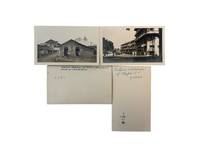
1942rif. 221221942. Latin America Panama Life in both urban Panama and the rural town of Chepo during the 1940s photo archive with most prints dated to 1942. Archive of 17 items 16 silver gelatin photographs measure 3.5" x 2.5" with one panoramic photo mounted on cardstock measuring 2.25" x 11". This archive offers a visually rich record of everyday life across class racial and geographic boundaries. Multiple photographs feature captions in ink on the verso providing locations and dates. The archive is split between two geographic zones: the modest rural community of Chepo and a more metropolitan center-likely Panama City-showing large buildings post offices police headquarters cantinas and well-trafficked intersections. In one striking rural image captioned "Dorein sic Indian Mother and Child" a white American tourist likely one of the photo owners stands beside an Indigenous woman and her child on a stilted wooden platform. The Darien likely of either the Emberá Wounaan or Kuna tribes woman wears only a sarong while a toddler stands nude at her feet highlighting the tension between Western spectatorship and traditional village life. In another photo local children gather in front of a wooden building marked "Cantina La Favorita de Chepo" while boys play barefoot on an unpaved road. Women in housedresses stand along porches and Indigenous women in linen skirts and little else are seen emerging from thatched or wooded homes. An image marked "Cantina at Chepo - 3-29-42" shows two white men and a white woman smiling at a table in a roofed structure made of rough wooden beams likely serving as a makeshift bar during their travels. The photos from urban Panama offer a sharp contrast. A modern cantilevered government building identified as the "Police Headquarters" is captioned en verso "Building now has many bullet holes on the sides" possibly a reference to political unrest or postwar violence. Another image shows a broad intersection labeled "6th & 8th St" filled with pedestrians in Western clothing including men in white suits and hats women in modern dresses and a cyclist passing beneath a neocolonial archway connecting civic buildings. Other rural images feature homes elevated on stilts a forested footpath with American visitors walking alongside locals and a panoramic view mounted to board showing a wide aerial view of one of the region's larger towns. Minor wear to edges. Overall very good condition. A rare and intimate archive documenting contrasting experiences of daily life in Panama across rural Indigenous communities and modernizing urban zones in the early 1940s with strong documentary value in the areas of colonial tourism race and hemispheric wartime movement. unknown
1942rif. 221221942. Latin America Panama Life in both urban Panama and the rural town of Chepo during the 1940s photo archive with most prints dated to 1942. Archive of 17 items 16 silver gelatin photographs measure 3.5" x 2.5" with one panoramic photo mounted on cardstock measuring 2.25" x 11". This archive offers a visually rich record of everyday life across class racial and geographic boundaries. Multiple photographs feature captions in ink on the verso providing locations and dates. The archive is split between two geographic zones: the modest rural community of Chepo and a more metropolitan center-likely Panama City-showing large buildings post offices police headquarters cantinas and well-trafficked intersections. In one striking rural image captioned "Dorein sic Indian Mother and Child" a white American tourist likely one of the photo owners stands beside an Indigenous woman and her child on a stilted wooden platform. The Darien likely of either the Emberá Wounaan or Kuna tribes woman wears only a sarong while a toddler stands nude at her feet highlighting the tension between Western spectatorship and traditional village life. In another photo local children gather in front of a wooden building marked "Cantina La Favorita de Chepo" while boys play barefoot on an unpaved road. Women in housedresses stand along porches and Indigenous women in linen skirts and little else are seen emerging from thatched or wooded homes. An image marked "Cantina at Chepo - 3-29-42" shows two white men and a white woman smiling at a table in a roofed structure made of rough wooden beams likely serving as a makeshift bar during their travels. The photos from urban Panama offer a sharp contrast. A modern cantilevered government building identified as the "Police Headquarters" is captioned en verso "Building now has many bullet holes on the sides" possibly a reference to political unrest or postwar violence. Another image shows a broad intersection labeled "6th & 8th St" filled with pedestrians in Western clothing including men in white suits and hats women in modern dresses and a cyclist passing beneath a neocolonial archway connecting civic buildings. Other rural images feature homes elevated on stilts a forested footpath with American visitors walking alongside locals and a panoramic view mounted to board showing a wide aerial view of one of the region's larger towns. Minor wear to edges. Overall very good condition. A rare and intimate archive documenting contrasting experiences of daily life in Panama across rural Indigenous communities and modernizing urban zones in the early 1940s with strong documentary value in the areas of colonial tourism race and hemispheric wartime movement. unknown books
2004208 pages. Bibliography and glossary. Sumptuously and profusely illustrated with colour photos and reproductions of archival maps and illustrations. Text in English. "Documents the tremendous impact the arrival of New World gold and silver had upon Europe and the world economy. Describes the routes followed by the galleons on their return to Spain, loaded with precious metals, and the techniques used for their extraction. Discusses how mining towns were established, and famous fairs held in Portobelo and Jalapa. From this we learn how several mints were founded." - from Prologue. Clean, bright, tight and unmarked with negligible wear. Dust jacket now preserved in archival-grade Brodart. A suberb copy of this beautifully-presented work. Gift quality. Book