6 033 résultats
réf. 0860083640.Ghardcover. Good. Access codes and supplements are not guaranteed with used items. May be an ex-library book. hardcover
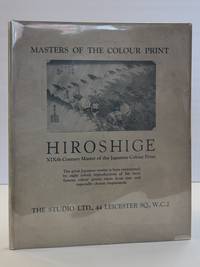
1929réf. 1417264London: The Studio Ltd 1929. Hardcover. Quarto 6 pages 5 full color plates. In Good minus condition with a Good dust jacket. Spine tan with black lettering. Dust jacket protected with a mylar covering price uncut: "5s. net". Creasing and tearing along edges of dust jacket. Foxing and heavy scuffing to dust jacket. Rubbing to edges of boards. Age toning and foxing throughout textblock. Missing three plates II IV VI VII and VIII present. Plate IV loose but present. Shelved on the Front Table. II IV VI VII VIII. 1417264. Shelved Dupont Bookstore. The Studio Ltd hardcover
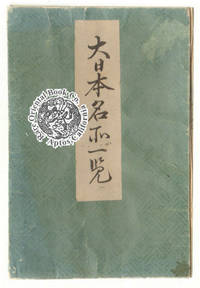
réf. B39203-FCThe Sansei-Sha Co. Ltd. Collectible - Good. JAPAN: Sensei-Sha. No date given c. early 1900s Edition unknown. Hardcover 32mo pgs not numbered. Small fold-out accordian style binding with color tipped in plates. Near very good. Covers are lightly edgeworn and soiled. Contents clean and binding sound pgs are lightly toned. Tokaido Japan Art Inquire if you need further information. The Sansei-Sha Co., Ltd. hardcover
2008réf. 2255Ateneum Art Museum 2008. 1. Very Good. Released alongside an exhibition of the same name held at Ateneum Art Museum in 2008. The articles in the richly illustrated book shed light on the lives of Hokusai and Hiroshige as well as the development of Japanese woodcut art and the process of making the works. Many of the works in the Ateneum's exhibition are also presented in more detail with pictures. Yellowing on the cover. Text in English and Finnish. 190 pp. Ateneum Art Museum unknown
1984réf. pl157-14George Braziller Incorporated 1984. Hardcover. Used - Like New. 2 volume set in slipcase clean text solid binding minor wear on covers. International Shipping Available 2. George Braziller Incorporated hardcover
1973réf. 476902Rutland Vt : C. E. Tuttle 1973. Reprint. Hardcover. Near fine copy in the original paper-labeled cloth-wrapped boards. Remains well-preserved overall. Physical description; 35 double leaves : col. ill. map; 10 x 15 cm. Subjects; Japanese poetry ; Translations into English. English poetry Translations from Japanese. Tokaido Japan Views. Rutland, Vt : C. E. Tuttle hardcover
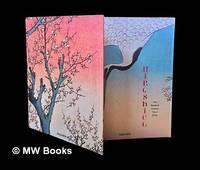
2010réf. 478423Koln : Taschen 2010. First Edition. Softcover. Fine side-stitched copy in a fine case with illustrated boards. Held closed by pins light staining on ribbons. Remains well-preserved overall. Physical description; 272 pages : color illustrations ; 32 cm. Notes; On double leaves oriental style fukurotoji. English with some Japanese. Includes bibliographical references. Subjects; And Hiroshige 1797-1858. Meisho Edo hyakkei. Tokyo Japan In art. Ukiyoe. Trede Melanie. Bichler Lorenz. Ukiyoe ta Kinen Bijutsukan. Ko?ln : Taschen paperback
1988réf. 155114New York : G. Braziller 1988. First Edition. Hardcover. Fine cloth copy in an equally fine dw. Particularly and surprisingly well-preserved; tight bright clean and especially sharp-cornered.; 192 pages; Description: 192 p. : ill. some col. ; 37 cm. "" Published in association with The Rhode Island School of Design. ""Reproduced from the Abby Aldrich Rockefeller Collection of Japanese prints Museum of Art Rhode Island School of Design""--Verso of t. P. Bibliography: p. 192. Subjects: Ando Hiroshige 1797-1858 --Exhibitions --Rhode Island School of Design --Museum of Art --Catalogs. Summary: This edition includes a selection of the finest examples of Hiroshige's bird and flower prints from the renowned Abby Aldrich Rockefeller Collection now housed at the Museum of Art Rhode Island School of Design. New York : G. Braziller hardcover
réf. 47318575-nnew. unknown
réf. 51-2009Tokyo : Takamizawa Ukiyoe circa 1960s. Oblong accordion format with miniature woodcuts pasted on pages. 13 x 19.5 cm. Red brocade silk covered cloth in buckram slipcase. OCLC Number: 893642632 Tokyo : Takamizawa Ukiyoe, circa 1960s hardcover
réf. 51-0870Japan: 19th Century. Color woodcut. 36 x 24 cm. Edo period–Meiji era1868 Keiô 4/Meiji 1 intercalary 4th monthPublisher Maruya Heijirô Artist Utagawa Hiroshige III Japanese 1842–1894. Hiroshige giga on left sheet åºƒé‡æˆ¯ç”». Provenance: Pacific Asia Museum Pasadena. Japan: 19th Century. unknown
réf. 04-1693ca. 1930s. Portfolio of 6 silkscreens after Hiroshige. 26 x 41 cm. sheet size. ca. 1930s. unknown
réf. 02-1017Mokuban: Yugenkaisha Takamizawa n.d. 53 color woodcuts 8 x 13 cm. Pasted into oblong accordion board binding which has split between two pages thus the item is in two pieces but is in otherwise very good condition with slightly browned pages. 13 x 19.5 cm. Images pasted at the top 2 corners; marked with publisher's stamp in the plate and verso. Mokuban: Yugenkaisha Takamizawa, [n.d.] unknown
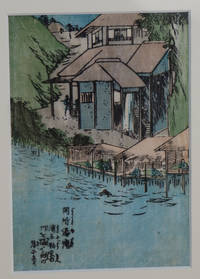
réf. X14HIROSHIGE Ando 1797-1858. Relaxing by the Water. Original woodblock from the series "Ehon Edo Miyage" published by Kikuya Kozaburo Volume 3 printed in Japan 1850-68. 295 x 210mm. This original print is delivered to you in its unframed state carefully protected in a solid cardboard tube. Utagawa Hiroshige born AndÅ TokutarÅ 安藤 徳太郎; 1797 – 12 October 1858 was a Japanese ukiyo-e artist considered the last great master of that tradition. Hiroshige is best known for his horizontal-format landscape series The Fifty-three Stations of the TÅkaidÅ and for his vertical-format landscape series One Hundred Famous Views of Edo. The subjects of his work were atypical of the ukiyo-e genre whose typical focus was on beautiful women popular actors and other scenes of the urban pleasure districts of Japan's Edo period 1603–1868. The popular series Thirty-six Views of Mount Fuji by Hokusai was a strong influence on Hiroshige's choice of subject though Hiroshige's approach was more poetic and ambient than Hokusai's bolder more formal prints. Subtle use of color was essential in Hiroshige's prints often printed with multiple impressions in the same area and with extensive use of bokashi color gradation both of which were rather labor-intensive techniques. For scholars and collectors Hiroshige's death marked the beginning of a rapid decline in the ukiyo-e genre especially in the face of the westernization that followed the Meiji Restoration of 1868. Hiroshige's work came to have a marked influence on western European painting towards the close of the 19th century as a part of the trend in Japonism. Western European artists such as Manet and Monet collected and closely studied Hiroshige's compositions: Vincent van Gogh for instance painted copies of some Hiroshige prints. Japanese woodblock prints known as ukiyo-e Produced in their many thousands and hugely popular during the Edo period 1615 – 1868 these colourful woodblock prints known as ukiyo-e depicted scenes from everyday Japan. Ukiyo-e literally means 'pictures of the floating world'. The 'floating world' referred to the licensed brothel and theatre districts of Japan's major cities during the Edo period. Inhabited by prostitutes and Kabuki actors Kabuki is a traditional Japanese form of theatre these were the playgrounds of the newly wealthy merchant class. Despite their low status in the strict social hierarchy of the time actors and courtesans became the style icons of their day and their fashions spread to the general population via inexpensive woodblock prints. The ukiyo-e style was developed in 1765 and remained popular until the closing decades of the Meiji period 1868 – 1912. While only the wealthy could afford paintings by the artists of the day ukiyo-e prints were enjoyed by a wide audience because they could be produced quite cheaply and in large numbers. The production process The earliest woodblock prints were simple black and white prints taken from a single block. Sometimes they were coloured by hand but this process was expensive. In the 1740s additional woodblocks were used to print the colours pink and green but it wasn't until 1765 that the technique of using multiple colour woodblocks was perfected. The glorious full-colour prints that resulted were known as nishiki-e or 'brocade pictures'. The team involved in the production of ukiyo-e was known as the 'ukiyo-e quartet'. It comprised the publisher who usually had overall control of the process the designer/artist the block cutter and the printer. The artist would draw the design on paper. Once complete an exact copy was made and placed face-down on a cherry wood block. Cherry wood was favoured due to the fine even grain and consistent density. The block cutter then carved directly through the copy to produce what is known as the 'key-block'. The printer used the key-block to produce a number of black and white prints from which further blocks could be made for each colour needed in the final print. Known as 'key-block proofs' these prints feature registration marks: small rectangles outside the area of the picture. When the colour blocks were carved these marks were used to create stops so that the printer could line up the separate colours precisely.
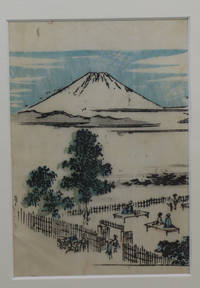
réf. X16Sipping Tea Viewing Mount Fuji. Original woodblock from the series "Ehon Edo Miyage" published by Kikuya Kozaburo Volume 3 printed in Japan 1850-68. 295 x 210 mm. This original print is delivered to you in its unframed state carefully protected in a solid cardboard tube. Utagawa Hiroshige born AndÅ TokutarÅ 安藤 徳太郎; 1797 – 12 October 1858 was a Japanese ukiyo-e artist considered the last great master of that tradition. Hiroshige is best known for his horizontal-format landscape series The Fifty-three Stations of the TÅkaidÅ and for his vertical-format landscape series One Hundred Famous Views of Edo. The subjects of his work were atypical of the ukiyo-e genre whose typical focus was on beautiful women popular actors and other scenes of the urban pleasure districts of Japan's Edo period 1603–1868. The popular series Thirty-six Views of Mount Fuji by Hokusai was a strong influence on Hiroshige's choice of subject though Hiroshige's approach was more poetic and ambient than Hokusai's bolder more formal prints. Subtle use of color was essential in Hiroshige's prints often printed with multiple impressions in the same area and with extensive use of bokashi color gradation both of which were rather labor-intensive techniques. For scholars and collectors Hiroshige's death marked the beginning of a rapid decline in the ukiyo-e genre especially in the face of the westernization that followed the Meiji Restoration of 1868. Hiroshige's work came to have a marked influence on western European painting towards the close of the 19th century as a part of the trend in Japonism. Western European artists such as Manet and Monet collected and closely studied Hiroshige's compositions: Vincent van Gogh for instance painted copies of some Hiroshige prints. Japanese woodblock prints known as ukiyo-e Produced in their many thousands and hugely popular during the Edo period 1615 – 1868 these colourful woodblock prints known as ukiyo-e depicted scenes from everyday Japan. Ukiyo-e literally means 'pictures of the floating world'. The 'floating world' referred to the licensed brothel and theatre districts of Japan's major cities during the Edo period. Inhabited by prostitutes and Kabuki actors Kabuki is a traditional Japanese form of theatre these were the playgrounds of the newly wealthy merchant class. Despite their low status in the strict social hierarchy of the time actors and courtesans became the style icons of their day and their fashions spread to the general population via inexpensive woodblock prints. The ukiyo-e style was developed in 1765 and remained popular until the closing decades of the Meiji period 1868 – 1912. While only the wealthy could afford paintings by the artists of the day ukiyo-e prints were enjoyed by a wide audience because they could be produced quite cheaply and in large numbers. The production process The earliest woodblock prints were simple black and white prints taken from a single block. Sometimes they were coloured by hand but this process was expensive. In the 1740s additional woodblocks were used to print the colours pink and green but it wasn't until 1765 that the technique of using multiple colour woodblocks was perfected. The glorious full-colour prints that resulted were known as nishiki-e or 'brocade pictures'. The team involved in the production of ukiyo-e was known as the 'ukiyo-e quartet'. It comprised the publisher who usually had overall control of the process the designer/artist the block cutter and the printer. The artist would draw the design on paper. Once complete an exact copy was made and placed face-down on a cherry wood block. Cherry wood was favoured due to the fine even grain and consistent density. The block cutter then carved directly through the copy to produce what is known as the 'key-block'. The printer used the key-block to produce a number of black and white prints from which further blocks could be made for each colour needed in the final print. Known as 'key-block proofs' these prints feature registration marks: small rectangles outside the area of the picture. When the colour blocks were carved these marks were used to create stops so that the printer could line up the separate colours precisely.
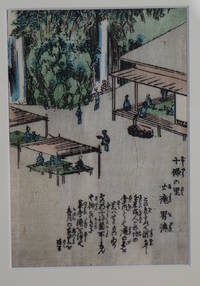
réf. X13HIROSHIGE Ando J 797-1858. Waterfall at Jujyo No Sato. Original woodblock from the series "Ehon Edo Miyage" published by Kikuya Kozaburo Volume 3 printed in Japan 1850-68. 295 x 210 mm. This original print is delivered to you in its unframed state carefully protected in a solid cardboard tube. Utagawa Hiroshige born AndÅ TokutarÅ 安藤 徳太郎; 1797 – 12 October 1858 was a Japanese ukiyo-e artist considered the last great master of that tradition. Hiroshige is best known for his horizontal-format landscape series The Fifty-three Stations of the TÅkaidÅ and for his vertical-format landscape series One Hundred Famous Views of Edo. The subjects of his work were atypical of the ukiyo-e genre whose typical focus was on beautiful women popular actors and other scenes of the urban pleasure districts of Japan's Edo period 1603–1868. The popular series Thirty-six Views of Mount Fuji by Hokusai was a strong influence on Hiroshige's choice of subject though Hiroshige's approach was more poetic and ambient than Hokusai's bolder more formal prints. Subtle use of color was essential in Hiroshige's prints often printed with multiple impressions in the same area and with extensive use of bokashi color gradation both of which were rather labor-intensive techniques. For scholars and collectors Hiroshige's death marked the beginning of a rapid decline in the ukiyo-e genre especially in the face of the westernization that followed the Meiji Restoration of 1868. Hiroshige's work came to have a marked influence on western European painting towards the close of the 19th century as a part of the trend in Japonism. Western European artists such as Manet and Monet collected and closely studied Hiroshige's compositions: Vincent van Gogh for instance painted copies of some Hiroshige prints. Japanese woodblock print known as ukiyo-e were produced in their many thousands and hugely popular during the Edo period 1615 – 1868 These colourful woodblock prints depicted scenes from everyday Japan. Ukiyo-e literally means 'pictures of the floating world'. The 'floating world' referred to the licensed brothel and theatre districts of Japan's major cities during the Edo period. Inhabited by prostitutes and Kabuki actors Kabuki is a traditional Japanese form of theatre these were the playgrounds of the newly wealthy merchant class. Despite their low status in the strict social hierarchy of the time actors and courtesans became the style icons of their day and their fashions spread to the general population via inexpensive woodblock prints. The ukiyo-e style was developed in 1765 and remained popular until the closing decades of the Meiji period 1868 – 1912. While only the wealthy could afford paintings by the artists of the day ukiyo-e prints were enjoyed by a wide audience because they could be produced quite cheaply and in large numbers. The production process The earliest woodblock prints were simple black and white prints taken from a single block. Sometimes they were coloured by hand but this process was expensive. In the 1740s additional woodblocks were used to print the colours pink and green but it wasn't until 1765 that the technique of using multiple colour woodblocks was perfected. The glorious full-colour prints that resulted were known as nishiki-e or 'brocade pictures'. The team involved in the production of ukiyo-e was known as the 'ukiyo-e quartet'. It comprised the publisher who usually had overall control of the process the designer/artist the block cutter and the printer. The artist would draw the design on paper. Once complete an exact copy was made and placed face-down on a cherry wood block. Cherry wood was favoured due to the fine even grain and consistent density. The block cutter then carved directly through the copy to produce what is known as the 'key-block'. The printer used the key-block to produce a number of black and white prints from which further blocks could be made for each colour needed in the final print. Known as 'key-block proofs' these prints feature registration marks: small rectangles outside the area of the picture. When the colour blocks were carved these marks were used to create stops so that the printer could line up the separate colours precisely.
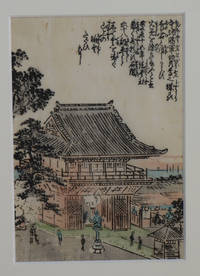
réf. X15HIROSHIGE Ando 1797-1858. Visiting the Temple. Original woodblock from the series "Ehon Edo Miyage" published by Kikuya Kozaburo Volume 3 printed in Japan 1850-68. 295 x 210 mm. This original print is delivered to you in its unframed state carefully protected in a solid cardboard tube. Utagawa Hiroshige born AndÅ TokutarÅ 安藤 徳太郎; 1797 – 12 October 1858 was a Japanese ukiyo-e artist considered the last great master of that tradition. Hiroshige is best known for his horizontal-format landscape series The Fifty-three Stations of the TÅkaidÅ and for his vertical-format landscape series One Hundred Famous Views of Edo. The subjects of his work were atypical of the ukiyo-e genre whose typical focus was on beautiful women popular actors and other scenes of the urban pleasure districts of Japan's Edo period 1603–1868. The popular series Thirty-six Views of Mount Fuji by Hokusai was a strong influence on Hiroshige's choice of subject though Hiroshige's approach was more poetic and ambient than Hokusai's bolder more formal prints. Subtle use of color was essential in Hiroshige's prints often printed with multiple impressions in the same area and with extensive use of bokashi color gradation both of which were rather labor-intensive techniques. For scholars and collectors Hiroshige's death marked the beginning of a rapid decline in the ukiyo-e genre especially in the face of the westernization that followed the Meiji Restoration of 1868. Hiroshige's work came to have a marked influence on western European painting towards the close of the 19th century as a part of the trend in Japonism. Western European artists such as Manet and Monet collected and closely studied Hiroshige's compositions: Vincent van Gogh for instance painted copies of some Hiroshige prints. Japanese woodblock prints known as ukiyo-e were produced in their many thousands and hugely popular during the Edo period 1615 – 1868 these colourful woodblock prints known as ukiyo-e depicted scenes from everyday Japan. Ukiyo-e literally means 'pictures of the floating world'. The 'floating world' referred to the licensed brothel and theatre districts of Japan's major cities during the Edo period. Inhabited by prostitutes and Kabuki actors Kabuki is a traditional Japanese form of theatre these were the playgrounds of the newly wealthy merchant class. Despite their low status in the strict social hierarchy of the time actors and courtesans became the style icons of their day and their fashions spread to the general population via inexpensive woodblock prints. The ukiyo-e style was developed in 1765 and remained popular until the closing decades of the Meiji period 1868 – 1912. While only the wealthy could afford paintings by the artists of the day ukiyo-e prints were enjoyed by a wide audience because they could be produced quite cheaply and in large numbers. The production process The earliest woodblock prints were simple black and white prints taken from a single block. Sometimes they were coloured by hand but this process was expensive. In the 1740s additional woodblocks were used to print the colours pink and green but it wasn't until 1765 that the technique of using multiple colour woodblocks was perfected. The glorious full-colour prints that resulted were known as nishiki-e or 'brocade pictures'. The team involved in the production of ukiyo-e was known as the 'ukiyo-e quartet'. It comprised the publisher who usually had overall control of the process the designer/artist the block cutter and the printer. The artist would draw the design on paper. Once complete an exact copy was made and placed face-down on a cherry wood block. Cherry wood was favoured due to the fine even grain and consistent density. The block cutter then carved directly through the copy to produce what is known as the 'key-block'. The printer used the key-block to produce a number of black and white prints from which further blocks could be made for each colour needed in the final print. Known as 'key-block proofs' these prints feature registration marks: small rectangles outside the area of the picture. When the colour blocks were carved these marks were used to create stops so that the printer could line up the separate colours precisely.
réf. 42023901Edo 1833-34 Takenouchi. A single Oban horizontal color woodblock print: 35.7 x 23 cm. sheet:37.5 x 34.8 cm.dusty excellent impression and registry a bit of old 'rubbing' to surface else solid & firm. RARE EARLY EDITION . . . SUPERB COMPOSITION LANDSCAPE BY JAPAN'S MOST ICONIC . . . LANDSCAPE ARTIST & PRINTMAKER . . . HIROSHIGE . . . FROM THE SERIES: . . . TOKAIDO GO JU SAN TSUGI NO UCHI: . . . NO. 5 IN "THE 53 STATIONS OF THE TOKAIDO HIGHWAY" . . SHINMACHI-BASHI: NEW TOWN BRIDGE . . THE ARTIST: ANDO Hiroshige 1797-1858 was the last major master of the Ukiyo-e school. In 1811 he entered the studio of Utagawa Toyohiro soon given the 'nom d'artiste' "Hiroshige." . He published his first color woodblock printed book in 1818. He was greatly influenced by Hokusai's series of landscape prints including this series TOKAIDO GO JU SAN TSUGI. Being impressed Hiroshige set out to do his own impressions of the Tokaido highway series. . . Hiroshige soon distinguished himself as the landscape master of Japan during this period. He made a large contribution to the development of the landscape color print as well as the traditional "Kacho" "Bird & Flower" prints with a tendency to the Kyoto Shijo School. . He remained the master of impressionist creating poetic views of nature and remained the best-loved of all Japanese artists. See Lane below p.229. With signature samples by dates. . FAMOUS PRINT FROM THE FAMOUS TOKAIDO HIGHWAY SERIES: . This famous series by Ando Hiroshige I TOKAIDO GOJU SAN TSUGI NO UCHI: THE FIFTY-THREE STAGES OF THE TOKAIDO HIGHWAY has been a standard and famous series of 54 prints since its issue in 1833-34. This is stop #5 showing Hodogaya Shin Machi Bashi New Bridge over the Katabira river. . Published by Takenouchi Magohachi Hoeidô and Tsuruya Kiemon Senkakudô circa 1833-34 Tenpo 4-5th. years with the red Hanko seal/chop of both Hoeido and Senkakudo. . CONDITION: . NOTES ON SPECIFIC COPIES: . Copy 1.: This is the original FIRST EDITION of the print. It was published circa 1833-34. The front surface is rubbed dusty the back side is re-backed with some Japanese calligraphy paper. . The impression & registry are excellent the colors are strong. . There are some neat restorations to the back side of the print using Washi handmade Japanese mulberry fiber paper when the item was re-backed in the distant past. . The white borders intact and perhaps a tiny bit trimmed. . The front side as usual a bit dusty rubbed with minor soil a feint discoloration above the trees on the left 1/3. Regardless the image & coloring are strong & impressive. . The print has been 're-backed' some time in its distant past using some old Washi paper which appears to have been an old signature samples sheet with other Fude bamboo brush & Sumi black ink writing. There are 2 small pin/tiny holes which are mended by the backing. . This was a common practice in the early 19th century. The work is now quite firm & solid. The backing paper is not visible from the front side. . Given the fact that is print is about 187 years old it is in better than the average condition. Please review the photos prior to ordering. . edition. It is in pristine condition excellent registry & impression about as good as it can get. . Copy 2: This is a circa 1920's reprint of the original edition. A pristine example UNUSED with superb impression and registry about as good as it can get. Ready for framing and display. . Color photos are posted to our website. . REFERENCES: . This print was exhibited at Le Musée National des Arts Asiatiques Guimet July-October 2019. This print was offered at Sotheby's London: see Sothebys 2020/fine-japanese-art/utagawa- iroshige-i-1797-1858-four-prints-hodogaya This link shows our Hodogaya print as the top left example. Their estimate was about $993 per print in a group of 4. LANE Richard: IMAGES FROM THE FLOATING WORLD: THE JAPANESE PRINT: see p.229 for an excellent biography of Hiroshige PRINT INCLUDING AN ILLUSTRATED DICTIONARY OF UKIYO-E: see p.232 #1 he cites: "55 Oban prints ca. 1833-34 publishers Hoeidoh & Senkakudoh." This print being #5 of the Tokaido series cited as #74 page 232 & illustration. See his p.230-31 for a map of the Tokaido station series. Wikipedia: Hiroshige I: TOKAIDO GOJU SAN TSUGI: See wikipedia for more info on 53 Stations of the Tokaido. unknown
réf. 39040901Tokyo circa 1920-30's. Oban color woodblock print a bit dusty artist signature and red seal in block sheet: 36.7 x 24.3 cm print: 23 x 34.8 excellent registry & impression pastel colors print #1 of the series corner mended. . . . A REPRINT OF THE MID-19TH CENTURY FAMOUS SERIES . .TOKAIDO GOJU SAN TSUGI: THE 53 STAGES OF THE TOKAIDO HIGHWA . . PRINT NUMBER 1 THE START OF THE HIGHWAY . . AT NIHON BASHI OLD EDO TOKYO . . A COLOR WOODBLOCK PRINT This is a very good color woodblock reprint of the original series. Colors are in pastels nicely executed with scene title and the artist's signature and red cinnabar Hanko in the lower right corner. . The lively scene is the first stage on the famous THE FIFTY-THREE STAGES OF THE TOKAIDO HIGHWAY the Nihon Bashi bridge. . It shows a large group of all manner of people animals coolies. pilgrims merchants haulers beggars children women and the devout people either coming or going on the Tokaido Eastern Highway. A Lord's procession is just visible at the top of the bride with two large Pompom bearers at the very top. . The busy scene is typical of the Edo period when "Shanks Mare" was the usual method of travel for commoners. . This was one of Hiroshige's most famous series consisting of 55 prints in all covering the 53 stations of the highway. Each day's walk ended at a new 'station' where people rested overnight then proceeded the next day. Usually it took a person 53 days to walk from Edo to Kyoto. . CONDITION: The work is with excellent registry and impression. There is some of the usual minor rubbing to the front and back sides. There is a mend in the upper right corner margin this does not affect the print whatsoever and can be matted out easily. . Otherwise the print is firm and solid ready for matting and display. . Please review photos posted to our website. . NOTE: Color scans are posted to our website. . . unknown
réf. 32072801Edo 1841-42 Takenouchi. Color Oban woodblock printsigned in block 34.2 x 21.8 cm. edges trimmed five small verso old mends now solid excellent impression & registry a bit dusty very good reprint example sold "as is." . . . . . HAKONE KOSUI NO ZU: HAKONE -VIEW OF THE LAKE . . . ONE OF THE MOST ICONIC & FAMOUS VIEWS OF THE SERIES . . . THE FIFTY-THREE STAGES OF THE TOKAIDO HIGHWAY . . This is one of the most famous and iconic prints of the series showing great composition and excellent use of multiple colors. The mountain which faces Mt. Fuji showing "respect" as well as "pointing" to the most" Sacred" mountain of Japan. The blue lake to the left of the mountain completes a classic view. This is print number 11 of the series. Per Forrer this print is the exact print discussed and illustrated with the exact three cinnabar Hanko seals/chops. It was published by Takenouchi Magohachi Hoeido ca. 1831-4 Signed Hiroshige Ga with censor seal Kiwame. See Forrer below. . We believe this is a later but undated reprint of the above example. . CONDITION: The print surface is soiled dusty with four mends on the verso corners plus a few other mends. Some usual but minor color toning with trimmed margins sold "as is." Nevertheless this still remains a very famous and stunning woodblock color print. . TERMS OF SALE: This print is sold "as is" and is NOT returnable. By ordering this item you agree to the above terms. Please view color photos posted to our website prior to ordering. . REFERENCES: . LANE Richard.: IMAGES FROM THE FLOATING WORLD: THE JAPANESE PRINT INCLUDING AN ILLUSTRATED DICTIONARY OF UKIYO-E pp.229 172-184231-233 #80 showing Hiroshige signature as ca. 1832 in this print. FORRER Matthi. et al.: HIROSHIGE: PRINTS AND DRAWINGS see #18 & opposite page color print our exact example published by Takenouchi Magohachi Hoeido ca. 1831-34 with Kiwame censor seal. . This work is cited in several of the standard bibliographies. . . unknown
réf. 27050601Edo 1865 Kinrin Do. Blue stiff covers accordion folded very clean bright example without flaw folds down to 12.2 x 18.3 cm. opens to a large 120.8 x 37.7 cm. published Keio 1st year = 1865. RARE FIRST & ONLY EDITION BRILLIANT EXAMPLE . . . HIROSHIGE'S STAR PUPIL AND SON-IN-LAW'S SUPERBLY . . . IMAGINATIVE BIRD'S EYE VIEW MAP OF JAPAN . . . WITH NAMES OF CITIES & VILLAGES CITED . . . A MARVELOUS COLOR WOODBLOCK PRINTED MAP UTAGAWA Hiroshige II aka. Kisai Rissoh 1826-1869: He was Ni-daime 2nd generation Japanese designer of Ukiyo-e art. He inherited the name Hiroshige II following the death in 1858 of his master Hiroshige I whose daughter he married. . In 1865 he moved from Edo to Yokohama after dissolving his marriage and began using the name Kisai Rissho alternate pronunciation Ryusho. His work so resembles that of his master that scholars have often been confused. . Ryusai used many Go studio names but after taking over from his master he favored Ichiryusai Kisai Yusho Rissho and the bewildering Shigenobu his first Go. He most likely assisted his master in the last few years of his life. Roberts devotes a long entry to him see below. He is well collected by world museums. . THE MAP: The map is signed Kisai Ryuushoh/Risshou. . The map is bound in its original reverse embossed swastika designs on blue paper. It is according folded in half then in 9 folded parts as issued. The map is undated but has a Kiwame censor's seal indicating a date range of on the right edge of the first page. Places of interest and milage distances are cited at the top of the map similar information is at the bottom on the first & last pages. On the last page far left is a red cartouche with the name and address of the publisher. . CONTENTS OF THE MAP: . The map is executed in pastels for the ost part except for the bright red boxed indicating larger more important places and smaller yellow boxes for villages. Even smaller places are simply noted by written names. . The work covers all of the major Japanese islands Kyushu in the south Sado to the west Hokkaido to the north. . The area around each ocean is a atender blue fading to the background paper color. Dark blue indicates deep ocean dark green indicates trees pale green mountains brown and gray for baron lands. Small pagodas with blue roofs are shrines castles indicated by name in yellow boxes other shrines and holy sites again in blue. Rivers in blue small ships ply the waterways . The work has an overall charm with a pleasant view with a command of all areas from far above in the uniquely Japanese period "Bird's Eye View." . DATE: The map was printed in Keio 1st year=1865. . CONDITION: The map is in its original front & back paper covers with a later brushed title slip. . The map is beautifully printed with fine registry and excellent impression soft tender pastels. . The hinges are firm with a couple of tiny Washi paper mends to double-folded areas else back is clean overall very soild and firm. . There are no marks stains or worm holes. By and large an excellent example in the best of condition. . REFERENCE: . KOBE CITY MUSEUM. KOBE SHI RITSU HAKUBUTSU KAN.: AKIOKA KO CHIZU KOLEKUSHYON MEI HIN TEN: EXHIBITION OF THE AKIOKA COLLECTION OF FAMOUS OLD MAPS see p.66 plate #79 for this exact map & p.102 #79 for description & notes. ROBERTS Laurance P.: A DICTIONARY OF JAPANESE ARTISTS: PAINTING SCULPTURE CERAMICS PRINTS LACQUER. Listed on p.45. Lane Richard.: IMAGES FROM THE FLOATING WORLD The Japanese Print. D IN: KOBE CITY MUSEUM. KOBE SHI RITSU HAKUBUTSUKAN: EZU TO FUKEI E NO YONA CHIZU CHIZU NO YONA E: BETWEEN LANDSCAPE PAINTING AND PANORAMIC MAPS. . . unknown
réf. 99001601Edo 1891. A brocade silk covered album Oban size all edge gilt with a total of 65 fine color prints including 2 title pages one dedication printbook size 24.5 x 35.5 cm. 4.15 cm. thick. A stunning group famous sights. R A R E ! . . . A STUNNING EXAMPLE WITH A SIXTY-FIVE . . . COLOR WOODBLOCK BLOCK PRINTS . . . BY THE MASTER OF JAPANESE LANDSCAPE . . Hiroshige II 1826-1869 and III 1843-1894: Were one in the same a pupil of the most famous and great master of landscape & composition Ando Hiroshige I. . Using his master's name plus his old name Ichiryusai he was the adopted son of Hiroshige I and was a very skilled painter who actually painted alongside & with the master until his master's death in 1858. . After that Ichiryusai specialized in Japan's modernization railroad prints depicting these new innovations recently imported from the West around Yokohama as well as issuing many series of beautiful landscape views and scenery. . In his later years he executed a most beautiful and exquisite set of his own interpretation of his master's most well-known series of prints showing Mt. Fuji and the celebrated places around Edo. This was not done to merely copy the master's works but rather as a sincere Confucian tribute to his adopted father & now father-in-law and master. He married his master's daughter. . He took each of the master's views & repainted them in pastel colors with great control & precision. Some of the more delicate places such as rainbows and clouds behind a flock of birds were actually brushed on by hand a technique rarely ever done. The woodblocks used were of the highest quality a majority of which were center cuts & these have left a most beautiful wood-pattern in the print. This example shows 28 prints from the Fuji Sanju Rokkei and 35 from the Edo Yonju Hakkei series with the title page from each present. . There is a dedication & memorial print to Hiroshige I from his faithful son and pupil. This print is most similar to one found as the frontispiece to the book by E. F. Strange: THE COLOR PRINTS OF HIROSHIGE London 1925. . It's clear that this print by Kunisada who is Toyokuni I was used as a model by Ichiryusai as it differs in what the master is holding. Kunisada shows him holding his rosary beads while Ichiryusai shows the master with his Fude brush pen and paper in hand. Ichiryusai and Kunisada had collaborated to issue a series of 36 prints: EDO JIMAN or THIRTY-SIX PLACES OF WHICH YEDO IS PROUD. . Ichiryusai has taken much care to represent the most wonderful views of Mt. Fuji & Edo with great skill. A majority of these prints are certainly well-known to the art world at large as well as by Japanese print collectors. . Many of these prints show up in the usual reference books. Some of the more famous Edo views are showing a falcon in winter rain on the river bridge storks cat view in Asakusa busy street scenes Asakusa temple & lantern in snow river scenes &c. . Some Mt. Fuji views show many snow scenes seasonal views cherry blossoms a majority show water and mountains a very charming set of prints. . Alternate title is MEISHO EDO HYAKKEI. . THE BINDING: This stunning album is beautifully bound in traditional silk-gilt brocade with prints on both sides of an accordion folded album. . Color photos are posted to our website. . REFERENCES: . L. Roberts: A DICTIONARY OF JAPANESE PRINTS ARTISTS p.44-45 for background on Hiroshige III & III. E. F. Strange: THE COLOR PRINTS OF HIROSHIGE R. Lane: IMAGES FROM THE FLOATING WORLD p.232-254 most all of the prints in this album are listed under Hiroshige I's series: MEISHO EDO HYAKKEI: ONE HUNDRED FAMOUS VIEWS OF EDO. . . unknown
réf. 41045801Japan n.d. ca. 1920's. Oban sheet color woodblock printed sheet: 38 x 25.5 cm. print size: 34.5 x 22 cm. an unusually clean bright copy excellent registry and color a superbly executed example far and above average. . . . . A LOVELY DUSK SNOW SCENE ALONG THE SUMIDA RIVER . . This is a RARE reprint of the original nicely done the colors are true to the original. . A lovely & tender snow scene. The sun has just set its dusk snowing two coolies and two other people scurry along the snow-covered road. . Elongated flowing style clouds adorn the lower edge. This is typical Hiroshige style. With print title cartouche at upper left and Hiroshige's signature with Kiwame censor seal at upper right corner. . HIROSHIGE I: 1797-1858. Master of Japanese scenery illustrates his superb skill in the winter scene of a snowy dusk along the Sumida river. . A horizontal format print from the series of eight titled: TOTO YUKIMI HYAKKEI: VIEW OF EDO SNOW ALONG THE SUMIDA RIVER . Color photos are posted to our website. . CONDITION: The print is flawless no issues pristine clean firm and Solid in "collector's condition." . The colors are vivid with excellent impression & registry. As good as it can get ! Seldom found in such stunning condit on. . A superb example of fine color woodblock printing. . . unknown
2017réf. 129607PIE International. New. Paperback. FREE UPGRADE to Courier/Priority Shipping Upon Request - IN STOCK AND IMMEDIATELY AVAILABLE FOR SHIPMENT - BRAND NEW FLAWLESS COPY NEVER OPENED - with a bonus offer--; Japanese Edition; 8.9 X 7.2 X 0.8 inches; 240 pages . 2017. 4756248101 . PIE International paperback
2014réf. 111804Marsilio Editori. New. Paperback. FREE UPGRADE to Courier/Priority Shipping Upon Request - IN STOCK AND IMMEDIATELY AVAILABLE FOR SHIPMENT - Flawless copy brand new pristine never opened - Text in Italian. -- with a bonus offer-- . 2014. 8831720120 . Marsilio Editori paperback