Multiple ContributorsMareMagnum

446 résultats
187116 pages. Contents: Boy's blouse, shirt-waist, and knickerbockers; Serviceable Clubbing; New York Fashions - chintz silks and percales, riding habits, applique embroidery , cashmere wraps, varieties; Personal; crochet cover for boiled eggs, potatoes, etc.; Sillk Brush; Crochet cover for flat-iron; crochet and serpentine braid insertion for lingerie; tatted rosette; ironing mat, corner of border for cushions, covers; cravats and bows for the hair; Hannah; Dreams; Useful recipes; Lovely illustration "The Rustic Mirror" shows girl looking at her reflection in water; Holiday Faces - with illustrations; Legends of the Cross; Clara Barton in Strasburg and Paris; Whorth While for Women to Know; The School-Master; A Stroll on Shingleton Beach - and what came of it; Paris Fashions; Sea-Side Fantasies - illustration; humor. Average wear. Book
187016 pages. Features: Summer walking suit; shade trees for streets; Complaining of monotony; Summer conveniences - refrigerants; white pique dress for boy from 2 to 3 years old; child's crochet collar; bead mosaic handle of riding-whip; white needle-work rosettes for infants' caps; knitted lace for lingerie; tapestry border for chairs, rugs, etc.; summer hats and bonnets; coiffur for elderly lady; gentleman's hat shade; Mademoiselle Fifine's Supper; Female Common-school teachers; Paris Fashions; Full-page illustration "Lady Washington's Rebuke"; Full-page illustration "Idling away a Summer Day", by Gaston Fay; The Cryptogram - continued; What the Whole Family Said; Large illustration "Girl and Thrush"; humor; and more. Average wear. Large clipping from bottom of page 531. Book
187114 pages. Contents: Cover Illustration "Child's Gabrielle Dress and Walking Coat and Ladies' Summer Dresses"; Politeness at Home; Manners Upon the Road - of summer friends; New York Fashions; Nice illustration "The Peddler"; Births in Holland; Hugh Damer's Last Leger - continued; Handkerchief with tatted border; fringe for trimming coverlets, curtains, etc.; crochet rosette for covers, lingerie; Medallions for cigar-cases, etc.; cover for prayer-books, bibles; Hair Dressing - with illustrations; A Very Natural Flower; Chat from the Capital; Useful Recipes; The Empress Augusta - full-page illustration; Invalidism; Notable Sleepers; humor. Average wear. Page 420 loose but present. Book
1921réf. 000464New York: Macmillan 1921. 1st Edition 1st Printing. Hardcover. Near Fine/No Jacket. 8vo - over 7¾ - 9¾" tall. A near fine semi-autobiographical novel by Hamlin Garland. Book is very lightly bumped at bottom of spine. Cover is a beautiful red black and gilded picture of a covered wagon at sunset. A beautiful binding. Book has minor tanning to rear paste-down and lfp. A beautiful book. Macmillan hardcover
2005réf. 2090502113717143Not Available 2005. Soft Cover. Fine. The book is in fine condition. Not Available paperback
1963No marks or inscriptions to contents. No creasing to covers or to spine. A very clean very tight copy with bright very faintly marked boards and no bumping to corners. 52pp. Rear cover opens up to a map of the entire Wall.
1985No marks or inscriptions.and no creasing to covers. A very clean very tight copy with bright unmarked boards and no bumping to corners. 32pp. An illustrated souvenir of Hadrian's Wall near the Scottish border.
1981réf. BN336882Oxford University Press 1981. 1981. Goodbye to Berlin Alpha Books S. Goodbye to Berlin Alpha Books S. Border Rosemary and Christopher Isherwood Oxford University Press unknown
2001réf. 48669London, Reaction Books (FOCI / Focus on Contemporary Issues), 2001. Space, Place and the Contemporary World 190 S. Broschierte Ausgabe
1994[Migranti](cm. 22.5) Cartonato editoriale, sovracoperta stampata a colori. -pp.303. Seconda edizione, stampata a solo un mese di distanza dalla prima. "Attraverso le frontiere che ci eravamo illusi di sigillare, passano culture che si influenzano a vicenda creando un gigantesco meticciato. Ogni radice cresce dentro l'altra, in una «salsa» vitale e bastarda che diventa la cultura del mondo. Passano le medicine, i vaccini che salvano i bambini. Passa la droga, con i suoi emissari criminali e la sua ricchezza. Pusher, missionari, mercenari, portatori di cure, di pace e di morte viaggiano con gli stessi aerei, attraversano gli stessi aeroporti, escono, entrano, arrivano. (pag. 34) È un mondo fondato sulla differenza fra estraneità e inimicizia, fra diversità e antagonismo, fra le pretese di alcuni e le necessità di tutti. È una valle inesplorata. In quella valle ci sono «gli altri». Qualcuno ha insegnato, invano, ad amarli. Qualcun altro, per secoli, ha indottrinato a distruggerli. È un momento nuovo e misterioso della storia. Non esiste nella cultura, non esiste nei fatti accaduti, non l'abbiamo dentro di noi. (pag. 61) Non posso attraversare la vita accettando di contare meno di un teenager di gang che non si lascia sfuggire occasione per una rasoiata, di un bravo esecutore di stragi di mafia, che fuma, tiene il dito sul pulsante del timer e guarda paziente scorrere il traffico, di un seguace di Aidid che lavora anche la notte a preparare trappole di morte, di un cecchino che non perde un dettaglio di vita, dall'alto delle colline di Sarajevo. (pag. 290) La domanda è se vogliamo definitivamente essere spettatori: di violenze, di massacri, di funerali, di stragi, di eventi misteriosi. Guardiamoci intorno: pezzi di Stato vanno alla deriva, organizzazioni si sfaldano, corpi armati che dovrebbero proteggere si rivelano un pericolo. I governi, da Mosca a Port-au-Prince, uccidono i propri cittadini. Il crimine, da Bogotà a Palermo, controlla aree del mondo. L'identità si celebra negando ad altri l'identità. (pag. 292) Le organizzazioni internazionali sono bande di santi e bande di mercenari, gente che rischia la vita per un bambino, gente che profitta della morte di altri. Ci copre un mare di parole. Serve alla finzione di governare, di far apparire, come esistente, ciò che in realtà non esiste. Il paesaggio è dominato dai signori della guerra, dai signori della droga, dai signori di frammenti del potere, dai signori della salute, dai signori delle notizie... (pag. 293)". Piccolo strappetto sulla parte dorsale della sovracoperta, che coinvolge lievemente anche il dorso cartonato, peraltro intonso, ottime condiozioni. [n49] Libro
2005In 8 (21x14) Brossura illustrata; pp. 128; Molto buono
2001réf. r1909Berlin: Springer. VG : in very good condition without dust jacket as issued. 2001. First Edition. Hardback laminated board cover. 240mm x 160mm 9" x 6". 459pp. Heavy item - shipping supplement may apply for overseas. . Springer hardcover
1963Mm 220x310 Volume con legatura editoriale in tela, pagine 337 con 271 illustrazioni in bianco e nero, sovraccoperta figurata. Weighing over 1 Kg. international orders may need extra shipping
1973réf. 2082702114602007Non-sale Shinwa Bank Seibikai 1973. Soft Cover. Fine. Number of books: 1 Non-sale Shinwa Bank Seibikai paperback
2021br. Laddove le frontiere non delimitano nazioni, nascono instabilità croniche che inaspriscono conflitti e miseria. L'ex Jugoslavia, i Paesi del Sahel, l'Afghanistan e la Siria sono solo alcuni esempi. Malcolm, Laji, Hamid e Mohammed, protagonisti delle quattro conversazioni, ripercorreranno i drammatici eventi che hanno caratterizzato la storia di questi Paesi. Attraverso le loro visionarie congetture, tracceranno nuove linee di confine, ristabilendo l'identità di quei popoli soggiogati dai vincitori della Grande Guerra, sventrati dal colonialismo ottocentesco o smembrati dall'imperialismo britannico. Un viaggio fatto di parole per revisionare i confini e, infine, ritrovare le nazioni.
2017br. La caduta del muro di Berlino, simbolo dell'ordine bipolare sorto dalla seconda guerra mondiale, sembrò inaugurare una stagione in cui sarebbero venute meno molte altre frontiere, insieme alla liberalizzazione e integrazione dei mercati, la creazione di vaste zone di libero scambio, la nascita di una nuova unione politica e monetaria. Solo trent'anni dopo quella tendenza appare invertita e si assiste a una rivalutazione di confini e frontiere, a un'espansione del loro numero e persino alla loro reintroduzione là dove, come in Europa, erano state virtualmente abolite. Un illusorio ritorno di fiamma della sovranità nazionale, un fenomeno controtempo o la rivincita del peso della storia e del potere del luogo? Il fatto che le frontiere siano tornate di attualità, ci avverte l'autore nella sua analisi delle più pericolose linee di faglia che si sono aperte nel mondo contemporaneo, non significa però che esse corrispondano a ciò di cui l'attualità avrebbe bisogno.
1970Features: Sheep Camp Murders - Brushy Basin 1903; The Puzzle of Baptiste Charbonneau; Motion picture vignettes; Cook's Peak and the Bones of Sing Lee; The Border Jumpers - American settlers cross the Canadian border into British Columbia to lynch accused murderer Louie Sam; Lost Rhoades Mine - Brigham Young's Klondike; Trained for Trouble - Collies protected sheep; A Gambler who never quit - Dutch Jake Goetz; Tunnel of Death - tunnel to the bank vault of the First National Bank of Las Vegas; End of the Trail for Red Buck - George Waightman; The Barker Spread in the Sangre de Christos; Jessie Benton Fremon appraises Kit Carson; The Butterfield Trail in Texas; and more. Two-inch tear to front cover near spine else unmarked with average wear. Sound copy. Magazine
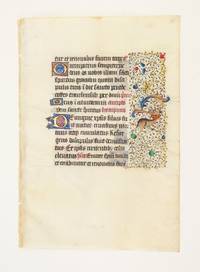
réf. ST17060NFrance probably Besançon 3rd quarter of 15th century. 239 x 165 mm. 9 3/8 x 6 1/2". Single column 15 lines in an elegant gothic book hand. Rubrics in dark pink line enders in pink and blue with white tracery and gold bezant one- and two-line initials painted gold on pink and blue ground with white tracery each side with a panel border decorated with hairline vines gold bezants and ivy and colorful flowers and acanthus RECTO BORDER INHABITED BY A CHARMING DOG-LIKE CREATURE. ◆A small light stain in border decoration largely masked by dense hairline vines but IN FINE CONDITION--bright clean and well preserved. From a large Book of Hours probably produced in Besançon this leaf features very pretty panel borders including one with a particularly charming inhabitant in the form of a dog-like creature with no front legs wearing an orange collar and emitting an acanthus leaf from its mouth. Imaginative touches like this and luxurious elements such as the several dozen gilt bezants and ivy leaves in each border and the unusually wide margins point to this manuscript having been quite a costly production. For additional leaves from this same manuscript at different price points please check our website. unknown books
1947Sm. 8vo., First Edition, with frontispiece and 71 half-tone illustrations (a number full-age) in the text; beige cloth, a near fine copy in unclipped dustwrapper. SCARCE IN THIS CONDITION.
réf. 6410831Cambridge University Press CUP . Papeback. New. pp. 140 Cambridge University Press CUP unknown
1989réf. DADAX0521388082Cambridge University Press 1989-07-28. ReprintSubsequent. paperback. New. 6.00x0.35x9.00. Buy with confidence. Excellent Customer Service & Return policy. Cambridge University Press paperback
réf. ria9780521388085_inpPaperback. New. New Book; Fast Shipping from UK; Not signed; Not First Edition; Markets are assumed to be in a state of equilibrium. Fixed point theorems explain the circumstances of equilibrium. This book demonstrates the mathematical techniques involved and applies them to co-operative and noncooperative games. T paperback
réf. B9780521388085Paperback / softback. New. Markets are assumed to be in a state of equilibrium. Fixed point theorems explain the circumstances of equilibrium. This book demonstrates the mathematical techniques involved and applies them to co-operative and noncooperative games. This book will be useful as a text or reference work for mathematical economists graduate and advanced undergraduate students. paperback
1990réf. x-0521388082Cambridge Univ Pr 1990. Paperback. New. rep sub edition. 144 pages. 9.25x6.25x0.50 inches. Cambridge Univ Pr paperback
1916réf. 239811916. Fifth Massachusetts Infantry Mexican Border photo and ephemera archive 1916 to 1917 documenting the mobilization encampment training movement and social organization of a Massachusetts National Guard regiment sent to the Southwest during the crisis surrounding Pancho Villa and the U.S. Punitive Expedition into Mexico. President Woodrow Wilson called National Guard units into federal service in June 1916 after Villa's March attack on Columbus New Mexico and Brigadier General John J. Pershing's subsequent advance into Mexico; by the end of the campaign most of the National Guard had been federalized and concentrated along the border. The Fifth Massachusetts Infantry was among the state organizations serving in the El Paso region contemporary reports identifying its soldiers among the thousands of militiamen stationed there while individual companies also operated from points including Las Cruces. The photographs and accompanying papers record that mobilization from inside the regiment identifying officers and enlisted men mapping camps and patrol country recording the material organization of military life and preserving the correspondence and commemorative culture that connected service on the border to home. Disbound album archive of 56 silver gelatin photographs and 13 pieces of ephemera including a piece of Texas cotton and a "Mexican cigarette" handwritten letters and verse newspaper clippings and a First Annual Dinner handout for the Fifth Massachusetts Infantry; photographs approximately 3 x 4.75 inches and album leaves approximately 5.5 x 7.25 inches principally Texas and New Mexico 1916 to 1917. Many photographs carry handwritten captions identifying people locations and events. A regimental band poses with cornets horns drums and other instruments the large bass drum lettered "Fifth Massachusetts Infantry Boston"; a lineup of five uniformed men before wooden camp buildings is identified as "Sergt. Maj. Gamble; Maj. Thomas; Sergt. Peters; Sergt. Murphy; Sergt. Bugler Ray." Individual portraits identify "Francis Smith" and "Chaplain Rollins" among others while other photographs record color guards soldiers with rifles mounted men trucks and military transport tent streets inspections camp formations and servicemen relaxing outside quarters. Landscape views follow the regiment through the border environment with captions referring to Camp Cotton El Paso Mount Franklin Las Cruces the Rio Grande and the Mexican border. One photograph captioned "Wrecked Tent Aug 17 1916" records damage within camp; another "Mexican Doby Hut / Aug. 23 1916" shows four Mexican children before an adobe dwelling. Ephemera extends the record beyond the camera: newspaper clippings concern the Fifth Massachusetts and border duty the unit dinner program documents post deployment regimental commemoration and handwritten correspondence includes a poem describing the anticipation of seeing a loved one again from the train home. The 1916 mobilization placed citizen soldiers from state National Guard organizations into a rapidly expanded federal border defense system while Pershing's Regular Army expedition pursued Villa inside Mexico. Guardsmen arriving in the Southwest encountered tent encampments shortages unfamiliar heat and terrain road marches drills trench digging weapons training patrol assignments and border guard duty; Army histories describe Camp Cotton near El Paso as initially austere with soldiers sleeping on the ground and constructing drainage and sanitation works before facilities improved later that summer. The 1916 border deployment also preceded American entry into the First World War by less than a year giving National Guard organizations practical experience in mobilization camp administration transport discipline and field service immediately before a much larger federal call to arms. Album leaves disbound with edge chipping tears losses around binding holes and scattered mounting residue; photographs show light to moderate silvering fading creasing and surface wear with ephemera variously toned and worn. Overall in good condition. A regimental record of how the Fifth Massachusetts Infantry lived trained moved and maintained unit identity during the United States military mobilization along the Mexican border in 1916. unknown books