12 294 résultats
1838réf. 17987Paris Caüet et Maumus 1838 In-8 302 pp, couverture imprimée d'époque, un petit manque au premier plat en haut et accroc au deuxième plat mais correct dans l'ensemble, légères traces d'humidité, exemplaire non coupé
réf. LBW-6473Paris, 2 décembre 1835. 1 p. in-4 (25,4 x 20,1 cm) avec en-tête imprimé; petite déchirure sans manque.
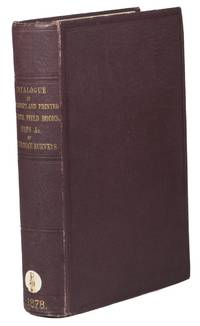
1878réf. ABC_45484London: George E. Eyre & William Spottiswoode colophon 1878. Contemporary cloth title in gold on spine. Large 8vo. First and only edition of a catalogue of the material held in the London India Office that was produced by the Indian Surveys for the East India Company. The catalogue was printed by order of her Majesty's Secretary of State for India in council. It is a key reference work for all studies on the East India Company era in Indian and British history.Shelf mark on spine library plate on front paste-down Scheepvaartmuseum Amsterdam. Slight foxing on the first and last couple pages. Otherwise in very good condition.l Kaul Early writings on India: a union catalogue of books on India in the English language published up to 1900 and available in Delhi libraries 1975 92. George E. Eyre & William Spottiswoode (colophon), hardcover
réf. 110519A La Haye, chez les Libraires Associés, 1776, 7 volumes in-12 de 190x115 mm environ, Tome 1 : 2 ff.blancs, portrait-frontispice, xij-482 pages, 1 carte dépliante, 2 ff.blancs, avec une planche hors-texte, - Tome 2 : 1f.blanc, viij-448 pages, 1 carte dépliante, 1f.blanc, avec planche hors-texte, - Tome 3 : 1f.blanc, xij-468 pages, 1carte dépliante, 1f.blanc, avec une planche hors-texte, - Tome 4 : 1f.blanc, viij-311 pages, 1 carte dépliante, 1f.blanc, avec une planche hors-texte, - Tome 5 : 1f.blanc, xj-311 pages, 1 carte dépliante, 1f.blanc, avec une planche hors-texte, - Tome 6 : 1f.blanc, viij-296 pages, 1 carte dépliante, 1 f.blanc, avec une planche hors-texte, - Tome 7 : 1f.blanc, 331 pages, 1 carte dépliante, 1f.blanc, avec une planche hors-texte. demi basane havane, titres et tomaisons dorés sur dos lisses, ornés de frises et petits fers dorés, tranches jaspées.Des rousseurs et pages brunies, quelques cernes par endroits, petits trous de ver et galeries sur le cuir, des déchirures sans manque sur les cartes (une carte restaurée, tome 3).Complet des 7 frontispices (1 portrait, 6 planches de Eisen) et des cartes dépliantes.
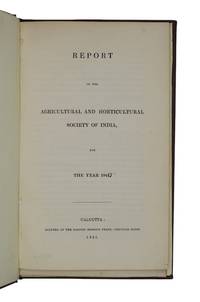
1841réf. AQ32634Calcutta: Printed at the Baptist Mission Press 1841. 35pp 1. Bound with: Drop-head title: List of members of the Agricultural & Horticultural Society of India. January 1st 1841. Calcutta. Bishop's College Press 1841. 2 23pp 1. 8vo. Modern brown cloth lettered in gilt to spine. Two early manuscript corrections to first mentioned work title and drop-head title. The second located copy of the annual report of the Agricultural & Horticultural Society of India for the year 1840 together with a contemporary list of members printed at the Baptist Mission Press at Calcutta which operated from 1818 until the 1970s. The Society was founded by orientalist and missionary William Carey 1761-1834 in 1820. The report records the progress of the work done by the society including efforts to promote and improve cotton cultivation in the country the introduction of a new species of mulberry plant the promotion of tea culture in Assam and revision of discriminating duties on rum and tobacco. OCLC and COPAC record copies of each work at a single location BL. . First edition. Printed at the Baptist Mission Press hardcover
1915réf. AQ27136Ranikhet: Abdulla Khan photographer 1915. 24 black and white photographs mounted on twelve leaves. Sewn as issued in original publisher's printed red wrappers. Rubbed and creased a trifle bowed. An unrecorded publication comprised of 24 evocative photographs primarily group shots of members of the 1/4th Battalion Duke of Cornwall's Light Infantry whilst stationed at Bareilly Uttar Pradesh during the first year of the Great War. 1/4th Battalion formed in Truro made up part of the Devon and Cornwall Brigade in Wessex Division. They sailed for India late 1914 and landed in Bombay on 10th November 1914 and remained there until 1916 where they moved to Aden 1916-1917 and then finished out the war in Egypt 1917-1918. . Oblong 8vo. [Abdulla Khan, photographer] unknown
réf. 66551c.1918-1919. Original photo-album. Oblong 4to. 15.5 x 20 cm. 12 leaves of grey card each with 8 original small format black & white photographs 4.5 x 6.25 cm some with manuscript captions housed in contemporary grey cloth binding. Some variable fading to photographs overall a neat and well-preserved album. An album of 96 small format photographs taken in all likelihood by a colonial administrator in the Dera Ghazi Khan area of the Punjab now Pakistan in 1918-1919. Several of the photographs show Fort Murray scene of an uprising by the Marri and Khetran tribes in 1918. One shows a character marked 'Teague-Jones' likely to be Reginal Teague-Jones 1889-1988 an intelligence office with the British Army stationed in Dera at the time and subsequently in the Caucasus during the Russian civil war. There are also several photographs of Lahore showing Shalimar Gardens. c.1918-1919. hardcover
réf. 59553Printed at the 101 H.L.O. Printing Group of Survey of India 1969. Extremely large colour-printed folding map of India and the adjacent countries 82 x 173 cm mounted onto linen with seven inset maps showing Density of Population Principal Industries Geology and Principal Minerals Orographical Features Average Rainfall Isothermal Lines and a small version of India and Surrounding Countries. Remnants of original paper wrappers printed in red still present to verso. Light spotting to verso only generally a very good copy of this large-scale map. First published in 1951. Printed at the 101 (H.L.O.) Printing Group of Survey of India, 1969. unknown
First edition, 4to, [6], 75, [1]pp., without the initial imprimatur leaf, running title on last leaf cropped ( one or two others just shaved), cut close on some lower margins with the occasional loss of a catchword, recent quarter calf, marbled boards. Details the damages which the English East India Company had sustained by the East India Company of the United Provinces that includes the capture of over 30 ships on the coast of America, including their cargoes, and the burning down of the English Factory of Cape-Corse, claimed by the English and Dutch East India Companies, the English Turkey-Company, &c, followed by a rebuttal of the Dutch demands. A large part of the work relates to transgressions in the West Indies. There is also a section dealing with fishing rights off the Greenland coast. European Americana 664/42; Goldsmith, 1743; Kress, 1130; Sabin, 11492; Wing C1371.
1796In 12° (12,5×8 cm); (8), 157, (1) pp. Legatura coeva in cartoncino settecentesco con titolo impresso in oro su fascetta in pelle al dorso. Antichi pecetta e timbretto di proprietà privata al frontespizio che attestano l'appartenenza del volume prima, all'avvocato Domenico Magiera e poi all'avvocato Alfonso Magiera, ambedue appartenente all'antica famiglia ebrea di origini polacche dei Magiera. Esemplare in buone-ottime condizioni di conservazione. Prima rarissima traduzione italiana, nessun esemplare censito in ICCU, di una delle opere principali del celeberrimo scrittore e botanico francese, Jacques-Henri Bernardin de Saint-Pierre (Le Havre, 19 gennaio 1737 - Éragny, 21 gennaio 1814). Sant-Pierre fu uno degli scrittori di maggior successo del settecento e le sue opere vennero tradotte in numerosissime lingue. Autore di alcuni dei più importanti racconti del settecento, ebbe una vita avventurosa. A soli dodici anni intraprese un viaggio fino alla Martinica che lo segnò profondamente. Militare di carriera partecipò alla campagnia d'Assia del 1760 perdendo i gradi militari guadagnati sul campo a causa della sua insubordinazione. Tornato a Parigi si diede all'insegnamento della matematica ma la vita sedentaria e monotona che viveva non riusciva a soddisfarlo. Si rimise quindi in viaggio viaggiando attraverso i Paesi Bassi, Germania e Russia (dove sembra che fu amante di Caterina II di Russia), poi di nuovo a Dresda, Varsavia e Berlino dove si fermò per un certo periodo ospite di Federico II. Viaggiato di nuovo attraverso la Francia si decise a tornare alle Mauritius (dal 1768 al 1771). Giunse di nuovo a Parigi dove si stabilì e dove legò con gli ambienti illuministi ed in particolare con Rousseau. Fu qui che mise a frutto le sue esperienze di viaggio che utilizzò per ambientare i suoi romanzi che ottennero da subito un enorme successo. Con la sua opera "Études de la Nature" nel 1784 la sua fama e le sue ricchezze crebbero ulteriormente. "Luigi XVI lo nominò intendente del Jardin des plantes, la Rivoluzione professore di morale all'École normale, quindi membro dell'Académie des sciences morales (1795); Napoleone, che lo ammirava moltissimo, lo pensionò." (da Treccani). La sua opera anticipa e apre la strada al romanticismo del primo ottocento che in buona parte anticipò, tanto che in molte sue opere non si può non notare il gusto per le rovine, i sepolcri ed il pathos romantico. La Capanna Indiana come altri suoi romanzi si inserisce perfettamente nell'ambito delle utopie naturistico-umanitarie nate sull'onda della filosofia di Rousseau ed è uno dei più chiari esempi del genere che allo stesso Sat-Pierre è considerato l'inventore, il viaggio pittoresco dove le descrizioni di luoghi naturali splendidi viene arricchita attraverso l'utilizzo di un linguaggio elevato fatto di termini scientifici. Il romanzo "La Capanna Indiana" è un viaggio attraverso i paesaggi dell'India alla ricerca della verità ad alcune domande esistenziali come "Dov'è la verità? Con quali mezzi possiamo trovarla (gli uomini hanno tutti diverse percezioni della verità, anche facendo affidamento sulla ragione)? In quali circostanze la verità può essere colta?". Dopo aver cercato la verità in lungo ed in largo per tutta l'India ed i personaggi più dotti, le domande trovano la risposta presso un paria che spiega al protagonista che dobbiamo cercare la verità con un cuore semplice, essa si trova solo in natura e dovrebbe essere detta solo alle persone buone e cioè a coloro che sono pronti ad ascoltarla. L'opera descrive perfettamente alcune degli aspetti più interessanti e curiosi della società e dei costumi indiani dell'epoca. Opera rarissima in questa prima edizione italiana.
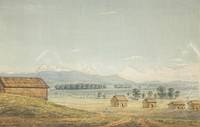
réf. MC70Watercolour on board ca. 27 x 42 cm 10.5 x 16.5 in. Recently matted some minor abrasion on the lower right but overall a very good watercolour. Almora is "a cantonment town in the Almora district in the state of Uttarakhand India. Almora was founded in 1568. It is considered the cultural heart of the Kumaon region of Uttarakhand. Almora has an average elevation of 1651 metres 5417 feet. The snow capped Himalayas can be seen in the background "Wikipedia. unknown
réf. 10626-9371339187Paperback. New. Book Condition is in New Paperback Original Edition. Shipped Same Day. We do not ship APO and FPO. Will be dispatched fast. Please send me an email if you have any questions. 100% Satisfaction. paperback
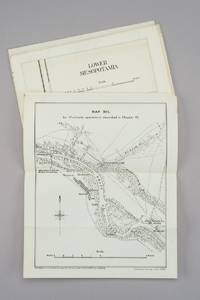
1923réf. BRI-1923-152His Majesty’s Stationery Office HMSO London First published: 1923 1923. This is the official history produced by the Historical Section of the Committee of Imperial Defence. Your set is the 1923–27 reprint of the original 1920–27 issue. Reprints are still highly collectible especially when complete with maps. 8vo. SHORT DESCRIPTION Year: 1923-1927 nVolume: Volume I Volume II Volume III Volume IV nPublisher: His Majesty’s Stationery Office DESCRIPTION A definitive four-volume official history of the Mesopotamian campaign combining authoritative military analysis and detailed operational maps into one of the British Empire’s most important First World War records. n nCloth remains bright with some fading and handling marks particularly to spines. Light bumping to extremities. Internally clean with occasional light spotting. Maps appear complete and well-preserved. One volume with small shelf label to spine. Overall a strong working set of this substantial official history. STORY This is not a general history—it is the British Empire’s official account of one of the most complex and underexamined theatres of the First World War. Compiled at the request of the Government of India and based directly on official military records The Campaign in Mesopotamia presents a forensic reconstruction of operations across modern-day Iraq. From the early advances along the Shatt al-Arab to the catastrophic siege of Kut and the eventual capture of Baghdad this work captures both the ambition and the miscalculations of imperial warfare. What distinguishes this set is its authority. Written by Brigadier-General F. J. Moberly under the Historical Section of the Committee of Imperial Defence it is effectively the Empire documenting itself—strategy logistics command decisions and failures laid bare with institutional precision. The inclusion of detailed folding maps—such as the operational plans around Mohammerah and the lower Mesopotamian theatre—transforms the work from narrative into a functional military record. These were tools of understanding not decoration. Complete sets are increasingly difficult to assemble in uniform condition. As a four-volume official history this stands as one of the definitive primary sources for the Mesopotamian campaign and remains essential for collectors of military history imperial studies and Middle Eastern conflict narratives. WHY THIS MATTERS Official war histories occupy a unique position in the rare book market—they are both primary sources and institutional narratives. This set provides direct insight into British imperial military operations in the Middle East a region whose geopolitical significance continues to resonate today. Complete sets particularly with maps intact are increasingly scarce in the trade. Volume I His Majesty’s Stationery Office (HMSO) London First published: 1923 unknown
In 16° (cm 11,7 x 19,3), legatura piena pelle marmoreggiata coeva, titolo su tassello, fregi in oro al dorso, pp VIII, 184, impresa (di Barthélémy Chirol ad istanza di Gabriel Cramer) al frontespizio. Esemplare in buone condizioni. Destinati a porre rimedio all'ingiustizia dell'esecuzione del generale Lally, i "Fragments" apparvero, nella prima versione di XX Articoli, verso la fine del mese di luglio 1773. Questa prima edizione di Ginevra, impressa da Barhélémy Chirol su richiesta di Gabriel Cramer, fu seguita da vicino dall'edizione di Parigi e da una edizione pirata di Londra. Nell'edizione delle "Oeuvres complètes" di Kehl, il testo volterriano fu radicalmente alterato su autorizzazione di Condorcet, che implicato nell'"affaire Lally", volle "rettificare" gli "errori" di Voltaire. Come nell'"affaire Calas", Voltaire prese le difese di un individuo accusato ingiustamente, uscendo alla fine vittorioso dal confronto con il potere giudiziario. La critica volterriana della giustizia francese nell'opera, è la stessa che V. scaglia dai tempi del suo "Commentaire sur le livre Des délits et des peines de Beccaria": processi segreti, giudizi vaghi, codice di leggi fatto apposta per precisare i delitti inesistenti. Inoltre V. approfitta del teatro della guerra in India per colmare la sua curiosità sulle civiltà orientali, soprattutto in vista della campagnacontro la religione giudeo-cristiana. L'India è secondo lui la più antica civiltà, ed è sintesi della grandezza e insieme del ridicolo della specie umana. Esemplari censiti in COPAC.
1771réf. 46404432Romae, Typis Sac. Congregationis de Propag. Fide, 1771 ; petit in-8, broché, couverture bleue muette, entièrement non rogné. XX pp., 152 pp. - Bois gravé sur le titre.ÉDITION ORIGINALE de cet important manuel de la langue Hindustani telle qu’elle est pratiquée à l’Université de Kas (Benarès). Alphabet, prononciation, grammaire, prières catholiques (pater, ave Maria, etc.) imprimés avec le texte latin en interlinéaire.Le philologue Jean Christophe Amaduzzi (Rimini 1740 - Rome 1792) dirigeait l’imprimerie de la Propagation de la Foi. Le livre a été imprimé sur les presses de cet établissement. Brunet I, 197. Bel exemplaire à l’état de neuf, non coupé.
1744Avertissement Preliminaire - Les trois Volumes 6 liv. en feuilles 3 16,5x9,5 cm., legatura in piena pelle, 5 nervetti, fregi e titoli in oro al dorso, tagli spruzzati, segnalibro, pagg. (20) 396; 353; 471 (8), marginose, testatine figurate, capilettera e finalini, 2 carte geografiche pi? volte ripiegate, prima edizione, in francese, mancano le sguardie e le prime e ultime pagine bianche, ma esemplare ben conservato. Sulla prima sguardia di tutti i tre volumi ampia dedica manoscritta Table des Auteurs cite's dans cet ouvrage- Table des Chapitres: Description Chorografique des Indes anciennes, Religion des anciens Indiens, Des Rois, Division des Etats, Caractere & Moeurs des Indiens, Animaux des Indes anciennes, Commerce des Anciens aux Indes, R?volution des Indes dans le moien age, Interruption & renouvellement des Voiages aux Indes . Premier ?tablissement des Portugais, Carta geografica "India cognita ab Expeditione Alexandri ad quintum ? Christo Saeculum" -- Descriptione Corographique des Indes modernes, Des Etas du Grand Mogol, De la Presquile au-del? du Gange, Isles principales des Indes, Religions des Indes, Idolatres des Indes, Juis des Indes, Mahometans des Indes, Chretiens des Indes, Carta geografica "Carte des Indes Orientales dress?e sur les Observations de l'Academie Royal.."--Commerce des Indes, ...des Portugais aux Indes, ...des Hollandois aux Indes, ...des Anglois aux Indes, ...des V?nitiens aux Index, ...de Fran?ois aux Indes
réf. c5082A Londres et se trouve à Paris, chez Regnault, 1786 ; plein veau fauve de l'époque, dos lisse orné filets fleurons et petits fers dorés, 2 étiquettes de titre et tomaison de maroquin vert, trnaches marbrées de bleu et rose. XXIVpp.,486pp.,1f.nch( errata); VIIIpp.,414pp.,1f.nch (errata) et 2 cartes hors texte, dont 1 à contours coloriés, tirées sur papier bleuté.
réf. 1271.1aaf18ème, 26x43 cm, Vue (optique) des Magazins de la Compagnie des Indes à Pondichery (Inde française), de l’Amiraute et de la Maison du Gouverneur. Gravure coloriée. Passepartout (35x52.5)
1862réf. 8301's Gravenhage & Amsterdam, Martinus Nijhoff & Frederik Muller, 1862. 11 volumes in-8 de [2]-IX-294 / X-[2-errata]-537 / XIV-[2-errata]-400-[2] / XV-[2-errata]-CLIII-321 / XII-CXXXIII-293 / XI-CIX-221 / IX-[2-errata]-CLXXI-403-86 / X-CXLI-365 / X-CI-[2]-447 / VIII-LXXXV-439 et X-LXXXVII-503 pages, demi-veau moucheté à coins, dos lisses ornés de roulettes, tomaison et fleurons dorés, étiquette de titre en maroquin rouge, tranches marbrées. Coiffes, coins et dos un peu frottés, mais joli aspect général, intérieur frais, très rares rousseurs.
1725réf. 43857Claude-Gilles Lecamus Couverture souple Toulouse 1725
1906réf. 21207831906. Gale & Polden Ltd. London Offices and Warehouse Aldershot Stores Bombay. 1906. Royal 8vo. Colour-printed card wrappers; pp. xiv 31 four colour illustrations after paintings on 2 leaves of plates highly illustrated after photographs in the text; spotting to wrappers inside of lower wrapper with small abrasure internally very good.This extremely rare publication by the military printers and publisher Gale and Polden in Aldershot opens with the detailed schedule of the Royal visit from their landing in Chennai on the 24th of January until their departure from Hyderabad on the 10th of February and a visit to Ellora Caves on Friday the 16th. This publication covers only a small part of the Royal tour which in total lasted from November 1905 to March 1906 and we assume this sovenir was published for the members of tf the Army and Navy who where engaged in safeguarding and as entourage. The bulk of this souvenir describes life work and pastimes in Army and Navy.We were not able to trace any copy institutionally or commercially nor is this publication referred to in any text known to the internet. unknown
réf. 23438Simla 12 July 1917. One page 8vo small closed tear. fold mark ow good condition. With pencilled notes above the signatures and on verso identifying signatories. See image. Simla 12 July 1917 unknown
1913réf. 185139Lahore: Printed at the "Civil and Military Gazette" Press 1913. The 1913 edition of this handbook with guidance on camping fishing shooting and other matters. Readers are also warned against felling trees for firewood and against gifting or selling guns to any subject of the maharaja not licensed to carry firearms. The Kashmir visitor rules were first issued in 1806. Institutional searches show small holdings of a range of editions but no copies of this 1913 publication. Small octavo. Original green hexagonally grain cloth front cover lettered in gilt. Spine sunned light wear a few pages dog-eared: near-fine. hardcover
1903réf. 43874London: Adam and Charles Black 1903. First edition Copy Number 173 of 1000 signed by Mortimer Menpes. 100 Plates. The illustrations have been engraved and printed at the Menpes Press under Mr. Menpes's direction. 210 pp. 1 vols. 4to. Cream cloth some wear at bottom front joint inner hinges started. First edition Copy Number 173 of 1000 signed by Mortimer Menpes. 100 Plates. The illustrations have been engraved and printed at the Menpes Press under Mr. Menpes's direction. 210 pp. 1 vols. 4to. The first Durbar was held in 1877 to proclaim Queen Victoria as Empress of India. This is the second Durbar to proclaim Edward VII as king in 1902 but was not attended by the King either. It was not until the 1911 Durbar when George V and Queen Mary went to India was the Emperor and his Empress proclaimed in person to the people of India. Our authors stayed in Camp Number One called "The Millionaires' Camp." in Delhi. With an ALS from Menpes tipped in at the back. Inman #18 Adam and Charles Black unknown
1903réf. 43874London: Adam and Charles Black 1903. First edition Copy Number 173 of 1000 signed by Mortimer Menpes. 100 Plates. The illustrations have been engraved and printed at the Menpes Press under Mr. Menpes's direction. 210 pp. 1 vols. 4to. Cream cloth some wear at bottom front joint inner hinges started. First edition Copy Number 173 of 1000 signed by Mortimer Menpes. 100 Plates. The illustrations have been engraved and printed at the Menpes Press under Mr. Menpes's direction. 210 pp. 1 vols. 4to. The first Durbar was held in 1877 to proclaim Queen Victoria as Empress of India. This is the second Durbar to proclaim Edward VII as king in 1902 but was not attended by the King either. It was not until the 1911 Durbar when George V and Queen Mary went to India was the Emperor and his Empress proclaimed in person to the people of India. Our authors stayed in Camp Number One called "The Millionaires' Camp." in Delhi. With an ALS from Menpes tipped in at the back. Inman #18 Adam and Charles Black unknown books