11 261 résultats
1963Paris, Librairie Hachette, 1963; in-folio, 8-224-XLIV-4, cartonnage d'éditeur imprimé. Très bon état.
1993Paris, Imprimerie Nationale Éditions, 1993; in-folio, 204 pp., reliure d'éditeur pleine toile beige, dos lisse, sous jaquette illustrée. Amina Okada est conservateur au Musée Guimet. Joschi fait partie d'un organisme d'archéologue en Inde. Photographies de Jean-Louis Nou. Très bon état.
1960Paris, New York Graphic Society, vers 1960; in-folio, 32 pp. + 32 planches, reliure pleine toile d'éditeur, avec jaquette imprimée. Préface de W.G. Archer.
1960Paris, New York Graphic Society, vers 1960; in-folio, 14 pp. + 32 planches, reliure pleine toile d'éditeur, avec jaquette imprimée.
1968réf. 87661Greenwich CT: New York Graphic Society 1968. First American Edition. Folio. 33.5cm. Publisher's black cloth titled in gilt to spine and front board. Dustjacket and Slipcase. 295pp. Very light wear to extremities and spine ends tight and bright; internally clean and fresh lavishly illustrated throughout; in a clean sharp pictorial dustjacket with a little fraying to the head of the spine; and a grey card publisher's slipcase with a little wear and toning to the edges and corners. A very good copy. Partly sponsored by Unesco Heritage this is a large format showcase of examples of the arts and culture of the various peoples of the Himalayan region. Written and edited by Madanjeet Singh noted Indian diplomat writer and artist and a lifelong campaigner for world peace and harmony. New York Graphic Society unknown
1968réf. 87661Greenwich CT: New York Graphic Society 1968. First American Edition. Folio. 33.5cm. Publisher's black cloth titled in gilt to spine and front board. Dustjacket and Slipcase. 295pp. Very light wear to extremities and spine ends tight and bright; internally clean and fresh lavishly illustrated throughout; in a clean sharp pictorial dustjacket with a little fraying to the head of the spine; and a grey card publisher's slipcase with a little wear and toning to the edges and corners. A very good copy. Partly sponsored by Unesco Heritage this is a large format showcase of examples of the arts and culture of the various peoples of the Himalayan region. Written and edited by Madanjeet Singh noted Indian diplomat writer and artist and a lifelong campaigner for world peace and harmony. New York Graphic Society unknown books
1968réf. 15New Delhi.: Indian Council for Cultural Relations. 1968- 1982. A broken run of 59 issues. All in lightly worn original wrappers many have the volume and issue number handwritten on the spines. Vol 9 Nos 3 5 & 6 1968; Vol 10 Nos 1 2 3 4 5 & 6 1969; Vol 11 Nos 1 2 3 4 5 & 6 1970; Vol 12 Nos 1 2 5 & 6 1971; Vol 13 Nos 1 2 3 4 5 & 6 1972; Vol XIV Nos 1 2 3 4 5 & 6 1973; Vol XV Nos 1 2 3 & 4 1974; Vol XVI Nos 1 2 3 & 4 1975; Vol XVII Nos 1 2 3 & 4 1976; Vol XVIII Nos 1 2 3 & 4 1977; Vol XIX Nos 1 2 3 & 4 1978; Vol XX Nos 1 & 2 1979; Vol XXI Nos 2 & 4 1980; Vol XXII Nos 2 & 3 1981; Vol XXIII Nos 1 & 2 1982. Good overview of the arts in India with contributions from around the country in each issue. . Indian Council for Cultural Relations. unknown
1969réf. 116671969 Paris, Direction des Musées de France, 1969, in 4°, relié pleine toile marron amateur ; nombreuses illustrations.
réf. 18256Paris, A. Barraud, 1877. In-8, 184 pp., demi-chagrin écrasé à coins rouge, doubles filets dorés sur les plats, dos lisse orné de filets, fleurons dorés et d'arabesques à froid, tête dorée, couverture conservée (petites épidermures et taches).
réf. 50230P., Publications Orientalistes de France, 1977, in 8° broché, 340 pages.
réf. 201610571Paris, Librairie L. Conquet, 1897 ; in-12, 210-230 pp., cartonnage. Les 2 volumes. En superbe état 2 vol. Edition illustrée de cinquante compositions de DURAND gravées à l'eau-forte par E. CHAMPOLLION - TIRAGE DE 150 EXEMPLAIRES - 1 À 15 sur Japon et 16 a 150 Vélin du Marais. Exemplaire n°60 sur vélin du marais - Ex. Libris James Manfield- très belle reliure plein chagrain dos bien orné à 4 nerfs - reliure signé SINDSALL NOMTHAMPTON.
1957réf. 62102New York: Oxford Univ. Press 1957. Three works in one vol. 8vo. xiii 1 233 1; 188; 197 1 pp. With illust. title photo plate tables charts. Orange tweed boards tiger paw print on front cover pictorial map endpapers minor shelfwear slight rubbing w/ d.j. cover art of tiger stalking minor scuffing edgewear price-clipped still VG/VG copy. First American omnibus edition of this extraordinary trilogy recounting Corbett’s experiences as big game hunter of Man-Eating Tigers in his lifetime career in India. He hunted down eight man-eating tigers and two man-eating leopards and in The Chowgarh Tigers he records his year-long quest from 1929-1930 to hunt and ill a female tiger that killed over 64 people in her five-year rampage. Corbett was a meticulous hunter expert tracker and persistent in preparation and often carried his favorite rifles - an M98 bolt-action Rigby-Mauser and a .450-400 Double Barrel Nitro Express. Oxford Univ. Press, hardcover
1959réf. 62583London: Robert Hale Ltd. 1959. 8vo. 191 1 pp. Numerous photo plates. Burgundy-coloured publisher’s boards gilt lettering on spine minor foxing & dustsoiling to upper fore-edge of textblock occasional light foxing w/ d.j. cover art of Tiger by Val Biro slight dustsoiling shelfwear still a VG/NF copy. Second printing of this authoritative work on tiger hunting in the Game Departent of Gwalior State Madyhya Pradesh and Jaipur Rajasthan relating his sagas of tiger hunts hunting and killing cattle-stealing tigers man-eating tigers terrorizing villages as well as organizing hunts of the Maharaja’s along with King George V Lord Reading and Lord Mountbatten. Robert Hale, Ltd., hardcover
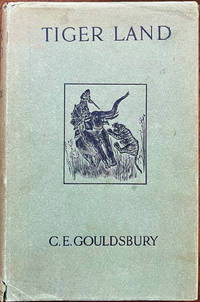
1913réf. 62084London: Chapman & Hall Ltd. 1913. Thick 8vo. xvi 2 216 1 pp. plus 4 pp. publisher’s ads. Photo frontisp. 23 photo plates. Pictorial green linen publisher’s cloth gilt illustration front cover of tiger attacking elephant and hunter gilt lettering front cover & spine very slight bumping to couple corners minor shelfwear slight foxing to fore-edges w/ d.j. dark gray-green paper illust. repeated on front cover in blue blue lettering VG/NF copy w/ “Association for Promoting Christian Knowledge” prize bookplate on front pastedown to F.H. Giltrap of Mountjoy School in 1914. Second edition of this informative memoir drawn from personal interviews experiences and notebooks of big game hunter and late Inspector General of Police Bombay Digby Davies as well as the author’s own sporting experiences. At the time he had been specifically requested to eliminate all personal names and references in the incidents with Davies whom Gouldsbury would specifically mention in the follow-up “Tiger Slayer by Order” 1915. Gouldsbury writes of numerous encounters with tigers in his own adventures hunting from elephant back and machans as well as leopards and maruading elephants with additional references to bison ibex and others. Davies relates his time serving during the Sepoy Mutiny work as a sporting inspector and specifically hunting down tigers elephants and others endangering villagers and livestock. One chapter specifically mentions hunting a 419 lb. tiger stretching over 10 feet 7 inches from nose to end of tail and standing 3 1/2 feet which had terrorized villagers killing cattle across Bengal. Very rare in original dustjacket. Chapman & Hall, Ltd., hardcover
réf. 3291
1900réf. D0407Edinburgh & London, Oliver & Boyd, s.d. (vers 1900) ; 140 x 214 mm, 56 pp., cahier agrafé (petite déchirure en queue, sur 8 pages). En langue anglaise. Bon état.
1900Edinburgh & London, Oliver & Boyd, s.d. (vers 1900); 140 x 214 mm, 56 pp., cahier agrafé (petite déchirure en queue, sur 8 pages). En langue anglaise. Bon état.
1889réf. 002014No Place: No Publisher 1889. Cabinet card of a Regimental boxing match in India approximately 165mm x 105mm in size dated 1889 to reverse. Image faded pin hole to either end where once pinned up slightly rubbed. Reverse has notes in ink 'From Joseph Theodore O'Brien to his affectionate chum Edward Perkins Ramplu India 20th February 1889 for Rs 150 37 rounds'. First Edition. Unbound. Good. 32mo Oblong. Cabinet Card. No Publisher Paperback
1915réf. AQ27136Ranikhet: Abdulla Khan photographer 1915. 24 black and white photographs mounted on twelve leaves. Sewn as issued in original publisher's printed red wrappers. Rubbed and creased a trifle bowed. An unrecorded publication comprised of 24 evocative photographs primarily group shots of members of the 1/4th Battalion Duke of Cornwall's Light Infantry whilst stationed at Bareilly Uttar Pradesh during the first year of the Great War. 1/4th Battalion formed in Truro made up part of the Devon and Cornwall Brigade in Wessex Division. They sailed for India late 1914 and landed in Bombay on 10th November 1914 and remained there until 1916 where they moved to Aden 1916-1917 and then finished out the war in Egypt 1917-1918. . Oblong 8vo. [Abdulla Khan, photographer] unknown
1796réf. 398421796. The archive comprises: 1. Autograph letter signed "John Canning." Bifolium 13 x 8 1/4 inches 21 lines in fine Malay Jawi with Arabic opening formula docketed "Calcutta 10 Dec 1796"; octagonal red-wax armorial seal of the Canning family. Letter requests that local rulers receive Capt. Hogan "as our agent. to conclude a treaty advantageous to both sides" dated 22 Jumada II 1211 / 10 Dec 1796. 2. to 5. 4 Paper wrappers. English addresses in a copperplate hand & parallel Jawi headings each with intact Canning seal. Addressed to the Sultan of Magindanao King of Mempawah Borneo King of Bali Sultan of Borneo. 6. to 8. 3 Yellow-silk diplomatic covers. Golden satin sleeves with paper address bands in two languages; two remain unopened and sealed. Addressed to the Sultan of Johor unopened King of Sumbawa unopened Sultan of Sulu wrapper only. An exceptional archive uniting British Malay and Islamic manuscript traditions that captures the East India Company’s first concerted overtures to the island-states of Southeast Asia. Drafted in the wake of the Dutch East India Company's collapse and the French Revolutionary Wars this archive documents the East India Company's first concerted diplomatic overtures to the maritime courts of the Malay world. With Dutch control unraveling after the 1795 Batavian Revolution Britain saw a strategic opportunity to enter the lucrative Spice Island trade. Lacking on-the-ground alliances the Company turned to private initiative: Captain Michael Hogan an Irish-American merchant and former convict transport captain was enlisted as unofficial envoy aboard his ship Marquis Cornwallis. The diplomatic texts were composed by Captain John Goodall Canning then Harbour-Master of the port in refined court Malay using Jawi script the Islamic-inflected lingua franca of diplomacy from Aceh to Sulu. In keeping with regional tradition the letters open with Islamic invocation and florid honorifics followed by carefully phrased expressions of friendship and commercial intent. The surviving autograph letter fixes the date of the mission and declares its purpose: "to plant affection and concord and if Your Highness deem it good to enter with us into a compact benefiting both realms." After disembarking convicts in Port Jackson Sydney in February 1796 the Marquis Cornwallis passed northward through Torres Strait calling at New Guinea the Moluccas and ports across the Java Sea almost certainly delivering these and parallel documents en route. The silk wrappers signal the elevated diplomatic status of the messages which were meant to be presented in person by Hogan and opened only in the presence of the addressee. The present archive offers a rare and vivid glimpse into the hybrid ceremonial linguistic and political world of early modern Southeast Asia and into the improvisational diplomacy of the Company at the edge of empire. unknown
1796réf. 398421796. The archive comprises: 1. Autograph letter signed "John Canning." Bifolium 13 x 8 1/4 inches 21 lines in fine Malay Jawi with Arabic opening formula docketed "Calcutta 10 Dec 1796"; octagonal red-wax armorial seal of the Canning family. Letter requests that local rulers receive Capt. Hogan "as our agent. to conclude a treaty advantageous to both sides" dated 22 Jumada II 1211 / 10 Dec 1796. 2. to 5. 4 Paper wrappers. English addresses in a copperplate hand & parallel Jawi headings each with intact Canning seal. Addressed to the Sultan of Magindanao King of Mempawah Borneo King of Bali Sultan of Borneo. 6. to 8. 3 Yellow-silk diplomatic covers. Golden satin sleeves with paper address bands in two languages; two remain unopened and sealed. Addressed to the Sultan of Johor unopened King of Sumbawa unopened Sultan of Sulu wrapper only. An exceptional archive uniting British Malay and Islamic manuscript traditions that captures the East India Company’s first concerted overtures to the island-states of Southeast Asia. Drafted in the wake of the Dutch East India Company's collapse and the French Revolutionary Wars this archive documents the East India Company's first concerted diplomatic overtures to the maritime courts of the Malay world. With Dutch control unraveling after the 1795 Batavian Revolution Britain saw a strategic opportunity to enter the lucrative Spice Island trade. Lacking on-the-ground alliances the Company turned to private initiative: Captain Michael Hogan an Irish-American merchant and former convict transport captain was enlisted as unofficial envoy aboard his ship Marquis Cornwallis. The diplomatic texts were composed by Captain John Goodall Canning then Harbour-Master of the port in refined court Malay using Jawi script the Islamic-inflected lingua franca of diplomacy from Aceh to Sulu. In keeping with regional tradition the letters open with Islamic invocation and florid honorifics followed by carefully phrased expressions of friendship and commercial intent. The surviving autograph letter fixes the date of the mission and declares its purpose: "to plant affection and concord and if Your Highness deem it good to enter with us into a compact benefiting both realms." After disembarking convicts in Port Jackson Sydney in February 1796 the Marquis Cornwallis passed northward through Torres Strait calling at New Guinea the Moluccas and ports across the Java Sea almost certainly delivering these and parallel documents en route. The silk wrappers signal the elevated diplomatic status of the messages which were meant to be presented in person by Hogan and opened only in the presence of the addressee. The present archive offers a rare and vivid glimpse into the hybrid ceremonial linguistic and political world of early modern Southeast Asia and into the improvisational diplomacy of the Company at the edge of empire. unknown books
1778réf. 223135London.: Printed for John Nourse. 1778-1880. Third Edition"revised by the author" of Volume I; first edition of Volume II Part I only lacking Part II. Two volumes 23 maps plans or views of 36 most folding: iv 436pp xcvii Index iii Errata Errata in the Index Directions for the Binder to Place the Maps; ii 365pp contemporary calf boards re-backed boards scored and scuffed 28.3 x 22 cm several of the maps with small fold splits no loss some offsetting the folding views of Calcutta and Bengal particularly fine the large folding "General Map of Indostan" in the first volume heavily spotted affecting the facing leaf several old paper repairs and inked corrections in an early hand with the armorial bookplates of Joseph Cator a prominent merchant and administrator with the East India Company and of Peter Cator his son founder of the Cator Prize and of Bertie Peter Cator and of Kelham Hall a handsome example lacking the second part of Volume II in good condition. Foundational work written by Robert Orme an official and historiographer for the British East India Company EIC with a noteworthy family provenance. The text chronicles the geopolitical struggles and military conflicts that paved the way for British dominance over the Indian subcontinent. The Cator family built a legacy of immense wealth regional development and colonial influence spanning three generations. Joseph Cator 1733–1818 laid the financial foundations as a wealthy "nabob" and high-ranking East India Company official in Calcutta. His 1780 marriage to Diana Bertie daughter of Sir Albemarle Bertie successfully elevated the family into the British aristocracy allowing him to return to England and manage expanding Kent estates like Beckenham Place Park. His son Peter Cator 1796–1873 leveraged this land inheritance during the mid-19th-century railway boom. Alongside his brother Peter transformed these holdings into the upmarket Cator Estate across Blackheath and Beckenham while also working as a lawyer and establishing educational scripture prizes in Madras. This colonial and legal influence continued with his descendant Sir Ralph Bertie Peter Cator 1861–1945 who served the British Empire as a prominent colonial judge holding key judicial appointments as the First Judge of British East Africa and later in the High Court of Constantinople. . Printed for John Nourse. hardcover
réf. 24731One item from ‘Allen’s Indian Mail’ 28 March 1887. Three items marked as from the periodical ‘India’ 1902 1903 and 1906. Another ‘Reprinted from “INDIA” August 16 1901.’. Five galley-proofs of articles written during the high-point of the Raj by leading Victorian journalist in India W. Martin Wood editor of the Times of India founder and editor of the Bombay Review. Ephemeral items creased and worn but with text clear and entire. ONE: Headed ‘ALLEN’S INDIAN MAIL / THE LATE MR. EDWARD BROOME C.E. / Mr. M. Martin Wood writes to us as follows: -’. Sixty-two lines in small print follow beginning: ‘Some little time back your “Domestic Occurrences” contained the name of Mr. Edward Broome Civil Engineer as having died at Southport something under 60 years of age. It struck me then that a note of Mr. Broome’s quiet work in India ought to be made’. TWO: Annotated at head by Wood ‘India Sep 16th. 1902’. Sixty-eight lines of small print. Three sections concerning drought ‘in Gujerat and the Deccan’. The first begins: ‘An esteemed correspondent writes: Telegrams from India during the last few weeks have told us very little about the suspension and in certain districts what almost threatens failure of the later monsoon rains.’ The second starts: ‘But this passive creed is nto that of their masters from the West’. The third: ‘Meantime what has become of the Scott-Moncrieff comprehensive Water-Supply and Irrigation Report’ THREE: Headed ‘INDIA’S CHRONIC DEFICIT. / FROM AN ANGLO-INDIAN CORRESPONDENT. Annotated by Wood at head: ‘From India Feb. 13th. 03’. Beginning ‘Those few of our official financiers at Simla or in the palace overlooking St. James’s Park who are at all sensitive to Press criticism must have felt happy when in the last Financial Statement they recorded the line - “the entry under Exchange has become of minor importance.”’ Ninety-three lines of text. FOUR: Headed ‘INDIA’S SEABORNE TRADE: / BALANCED ONLY BY DEADWEIGHTS.’ Annotated at head by Wood: ‘From India Jan 15. 06’. Begins: ‘Only within the last fortnight have come to hand detailed returns of India’s trade with the outside world during the first six months of its current financial year - April 1 to September 30.’ Eighty-one lines in small print. FIVE: Headed ‘Reprinted from “INDIA” August 16 1901. / INDIAN LOANS GUARANTEE. / AN EMERGENT ILLUSTRATION. / BY AN ANGLO-INDIAN.’ Beginning ‘The miscarriage of the proposed Indian sterling loan of £3000000 last month must have recalled attention to the often pressed always postponed demand for a British Treasury guarantee in support of the public debt of India.’ Sixty-five lines of small print. One item from ‘Allen’s Indian Mail’, [28 March 1887]. Three items marked as from the periodical ‘India’, [1902], 1903 unknown
réf. 24732One item from ‘Allen’s Indian Mail’ 28 March 1887. The other ‘Reprinted from “INDIA” August 16 1901.’. Two galley-proofs of articles by leading Victorian journalist in India W. Martin Wood editor of the Times of India founder and editor of the Bombay Review. Ephemeral items creased and worn but with text clear and entire. ONE: Headed ‘ALLEN’S INDIAN MAIL / THE LATE MR. EDWARD BROOME C.E. / Mr. M. Martin Wood writes to us as follows: -’. Sixty-two lines in small print follow beginning: ‘Some little time back your “Domestic Occurrences” contained the name of Mr. Edward Broome Civil Engineer as having died at Southport something under 60 years of age. It struck me then that a note of Mr. Broome’s quiet work in India ought to be made’. TWO: Annotated at head by Wood ‘India Sep 16th. 1902’. Sixty-eight lines of small print. Three sections concerning drought ‘in Gujerat and the Deccan’. The first begins: ‘An esteemed correspondent writes: Telegrams from India during the last few weeks have told us very little about the suspension and in certain districts what almost threatens failure of the later monsoon rains.’ The second starts: ‘But this passive creed is nto that of their masters from the West’. The third: ‘Meantime what has become of the Scott-Moncrieff comprehensive Water-Supply and Irrigation Report’ THREE: Headed ‘INDIA’S CHRONIC DEFICIT. / FROM AN ANGLO-INDIAN CORRESPONDENT. Annotated by Wood at head: ‘From India Feb. 13th. 03’. Beginning ‘Those few of our official financiers at Simla or in the palace overlooking St. James’s Park who are at all sensitive to Press criticism must have felt happy when in the last Financial Statement they recorded the line - “the entry under Exchange has become of minor importance.”’ Ninety-three lines of text. FOUR: Headed ‘INDIA’S SEABORNE TRADE: / BALANCED ONLY BY DEADWEIGHTS.’ Annotated at head by Wood: ‘From India Jan 15. 06’. Begins: ‘Only within the last fortnight have come to hand detailed returns of India’s trade with the outside world during the first six months of its current financial year - April 1 to September 30.’ Eighty-one lines in small print. FIVE: Headed ‘Reprinted from “INDIA” August 16 1901. / INDIAN LOANS GUARANTEE. / AN EMERGENT ILLUSTRATION. / BY AN ANGLO-INDIAN.’ Beginning ‘The miscarriage of the proposed Indian sterling loan of £3000000 last month must have recalled attention to the often pressed always postponed demand for a British Treasury guarantee in support of the public debt of India.’ Sixty-five lines of small print. One item from ‘Allen’s Indian Mail’, [28 March 1887]. The other ‘Reprinted from “INDIA,” August 16, 1901.’ unknown
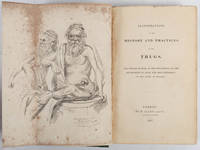
1837réf. 224787London.: Wm. H. Allen and Co. First Edition. 1837. Black and white folding engraved frontispiece and one other folding plate ii blanks iv 475pp 22 x 13.5 cms original green cloth-covered boards re-backed mounting the original paper title label chipped endpapers renewed the plates spotted and darkened concentrated at the margins and folds early inked ownership inscription "John C. Clare/Calcutta Decr. 1851" to the initial blank and one other recent to the front pastedown a little dusty the original boards a trifle scuffed frontispiece starting but firm in the renewed binding a good copy of a scarce work. Scarce. The author Edward Thornton 1799-1875 was on the staff of East India House 1814-57 and his account was a sensational exposé that detailed the secret hereditary network of highway assassins who terrorised travellers across India for centuries. Relying heavily on official court records and testimonies from captured informants Thornton meticulously documented how these gangs disguised themselves as friendly travellers used a sacred cloth scarf rumāl to strangle their victims without shedding blood and buried them in hidden graves to avoid detection. The account deeply fascinated and horrified Western readers by illustrating the religious rituals underpinning the crimes—including devotion to the goddess Kali and the tracking of omens—while ultimately highlighting the aggressive intelligence-led colonial campaign spearheaded by William Sleeman and was hugely popular. With the early ownership inscription of "John C. Clare Calcutta Decr. 1851" possibly the prominent 19th-century British ship master and captain who regularly commanded merchant voyages along trade routes between the UK Australia and Calcutta India. In October 1851 the British Indian Association had been formed in Calcutta marking the exact birth of organised Indian nationalist politics and a shift in how both native elites and Europeans challenged the British East India Company's monopoly. . Wm. H. Allen and Co. hardcover