[Kaart India, Malediven en Sri Lanka]Biblio.com
13.152 risultati
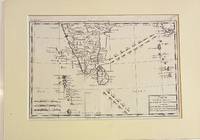
rif. 120757-030Attractive map of southern India Sri Lanka and the Maldives. The prevailing winds are shown between India and Malabar and marked with the months of the year. 235 x 370 mm. In passepartout 300 x 420 mm. With a stamp on the passepartout of G.J. Korteling Bennebroekerdreef 29 Bennebroek.Rigobert Bonne was an important French cartographer of the late 18th century. In 1773 he succeeded Jacques Bellin as the royal cartographer in the office of the Hydrographer at the Depot de la Marine. Working in his official capacity Bonne compiled some of the most detailed and accurate maps of the period. References: Gole India #83-2.3. Publication from Atlas de Toutes les Parties Connues du Globe Terrestre.NL Decoratieve kaart van Zuidelijk deel van India de Malediven Ceylon Sri Lanka etc. Op de kaart de tekst: Golfde de Bengale Cormin Cote de Coromandel Is. Laquedives Isles Maldives Ligne Equinoctiale Mer des Indes etc. unknown
1920rif. 514000Cambridge University Press / James Pott and Co 1920. Leather. NEAR FINE. Undated but ca. 1920 -- title page states Printed by J. B. Peace whose term as Printer at Cambridge lasted from 1916-1922. 4x5.25' Amethyst setting dual columns with center refs. Smyth-sewn binding with overcast stitching in Black 'French Morocco' leather with 3/4 yapp all edges Art Gilt. 4 1119 153 Concordance pp. 12 color lithograph maps. Some trivial wear to the edges with a few short tears some separation at both outer gatherings--an 'inherent vice' kind of flaw with overcast-stitching bindings. Otherwise an exceedingly clean and sharp copy with crisp fresh pages and nice supple leather. Cambridge University Press / James Pott and Co unknown
2008rif. LFA01757Mensuel catholique et indépendant : 46 pages, format 200 x 300 mm, illustrée, brochée couverture couleurs
rif. 74411766. In 4° demi-basane, dos à nerfs.
grand in-8°, 146 pp., gloss., biblio, broche, couverture illustree Bel exemplaire. [109B-14]
rif. 202201720Paris, Editions bhaktivedanta, 1981 ; in-8, 877 pp., cartonnage de l'éditeur. Édition complète volume 1.
rif. 202201719Paris, Editions bhaktivedanta, 1982 ; in-8, 715 pp., cartonnage de l'éditeur. Volume 5 : deuxième chant " la manifestation cosmique " 1e édition.
1963rif. 18952SKIRA, Lausanne 1963 In-4, broché, 213 pp.
1963rif. 22387SKIRA, Lausanne 1963 In-4, pleine toile beige, sous jaquette imprimée, illustrations contrecollées, en couleurs, 213 pp. Tranche avec petite salissure et papier légèrement gondolé sur un feuillet, sinon bon état.
rif. 201007642Paris, Fayard, 1992 ; in-8, 280 pp., broché, couverture illustr. Traduit de l'anglais par Eric Diacon - bon état.
1945Paris, Calmann Lévy, Éditeurs, s.d. (vers 1945); in-8, 322 pp., broché. Préface d'Octave Mirbeau. Livre sur la vie quotidienne des Egyptiens. Les auteurs seront présentés comme des écrivains égyptiens de langue française. "Le Livre de Goha le Simple", présenté pour le Prix Goncourt, en 1919, obtient la deuxième place derrière "À l’ombre des jeunes filles en fleurs" de Marcel Proust. Le livre sera porté à l'écran sous le titre "Goha", par Jacques Baratier, avec Omar Sharif et Claudia Cardinale. Bon état.
1945rif. J1854Paris, Calmann Lévy, Éditeurs, s.d. (vers 1945) ; in-8, 322 pp., broché. Préface d'Octave Mirbeau. Livre sur la vie quotidienne des Egyptiens. Les auteurs seront présentés comme des écrivains égyptiens de langue française. "Le Livre de Goha le Simple", présenté pour le Prix Goncourt, en 1919, obtient la deuxième place derrière "À l’ombre des jeunes filles en fleurs" de Marcel Proust. Le livre sera porté à l'écran sous le titre "Goha", par Jacques Baratier, avec Omar Sharif et Claudia Cardinale. Bon état.
rif. 201119840, Editions philippe picquier , 2004 ; in-8, 186 pp., br.
rif. 201204551Paris, Fleuve noir , 2002 ; in-8, 232 pp., br.
rif. 201007275Paris, Flammarion, 2003 ; in-8, 500 pp., broché, couverture illustr. Traduit de l'anglais par Martine Leroy-Battistelli.
1768Amsterdam, Arkstee & Merkus, 1768; in-8, XXVIII pp. + 208 pp. + 4 planches dépliantes, relié plein-veau d'époque, dos lisse orné. (Reliure état moyen, plats frottes, mors fragile). John Zephaniah Holwell (1711-1798) chirurgien anglais contacté par la Compagnie orientale des Indes, puis gouverneur temporaire du Bengale (1760) édita à Londres, de 1765 à 1771, trois volumes de Interesting Historical Events Relative to the Provinces of Bengal and the Empire of Indostan, with a seasonable hint and perswasive to the honourable the court of directors of the East India Company. As also the mythology and cosmogony, fasts and festivals of the Gentoo's, followers of the Shastah. And a dissertation on the metempsychosis, commonly, though erroneously, called the Pythagorean doctrine, dont nous proposons une traduction ici. L’ouvrage fournit des témoignages intéressants concernant l'hindouisme. Bon état.
1768rif. A2647Amsterdam, Arkstee & Merkus, 1768 ; in-8, XXVIII pp. + 208 pp. + 4 planches dépliantes, relié plein-veau d'époque, dos lisse orné. (Reliure état moyen, plats frottes, mors fragile). John Zephaniah Holwell (1711-1798) chirurgien anglais contacté par la Compagnie orientale des Indes, puis gouverneur temporaire du Bengale (1760) édita à Londres, de 1765 à 1771, trois volumes de Interesting Historical Events Relative to the Provinces of Bengal and the Empire of Indostan, with a seasonable hint and perswasive to the honourable the court of directors of the East India Company. As also the mythology and cosmogony, fasts and festivals of the Gentoo's, followers of the Shastah. And a dissertation on the metempsychosis, commonly, though erroneously, called the Pythagorean doctrine, dont nous proposons une traduction ici. L’ouvrage fournit des témoignages intéressants concernant l'hindouisme. Bon état.
rif. LFA-126745703Un guide de 256 pages, format 95 x 140 mm, broché couverture couleurs, s.d. (2e édition), Editions Lonely Planet, bon état
rif. 23810‘Trin. Coll. Sunday 12 o’clock’. 24 November 1839; Trinity College Cambridge. See Napier’s entry and that of his sister Maria’s husband John Gellibrand Hubbard 1805-1889 1st Baron Addington in the Oxford DNB. 3pp 4to. In good condition lightly aged and discoloured with small closed tear to a crease. Part of letter torn away on opening and now under small black wax seal good impression of crest with letter N. Folded four times. Addressed with three postmarks on reverse of second leaf to ‘The Rt Honble The Lady Napier Kew Green’. Minuted by Lady Napier: 'Cambridge Novr. 1838’. 64 lines of neatly-written text. He greets his mother as ‘My dear Mamma’ and begins by expressing delight at the arrival of his sister Maria on the previous day ‘though it happened at rather an unfortunate time for my occupations. I am glad to see her looking so very well and wearing her curls but I miss you very much and I wish you had been able to come along with them.’ Despite the fact that ‘Cambridge is particularly wet & dirty’ Maria and ‘Hubbard’ Maria had married John Hubbard the future Lord Addington in 1837 breakfasted with him that morning. ‘Sedgwick and we sat talking till Church time when we got squeezed into St Mary’s and heard Melville preach much worse than usual.’ The letter proceeds with references to ‘Whewell’ Trinity Chapel ‘Thorp’ ‘the Philosophical society’ ‘Ld & Lady Fitzalan’ ‘Lucy’ Lady Kinlock. He reports that ‘Cambridge was very much shocked by the Duke of Wellington's reported stroke and delighted to hear it was only a cold.’ Turning to personal matters he writes: ‘Maria is very much cut up about her cook who after appearing to be a pattern of culinary morality for some months has turned out a peculating thief besides having had several children in the house which she clandestinely conveyed out of the way in the dirty clothes basket’. One of Sedgwick’s dog’s five puppies is mousing for him. ‘Maria says that Sir Alexander has at last gone north and high time it was for I see Mr Ewart has gone down to stand for the boroughs he has been petting so long through Patrick.’ He ends by mentioning ‘Sir Thomas misfortunes whiuch are so very hard upon his old age but Maria declares that he seems to bear it very cheerfully.’ He concludes: ‘I write this dull letter late at night dear Mother it is only to announce Maria’s happy arrival and I intend to despatch a longer one to 9. this week. Lady Fitz. is pale and plain & Maria cust her out.’ The letter is signed ‘Napier / Trin. Coll. Sunday 12 o’clock’. ‘Trin. Coll. Sunday 12 o’clock’. [24 November 1839; Trinity College, Cambridge.] hardcover
rif. 23811‘The Hague / November 28th. 1860’. An excellent letter in which a serving Victorian ambassador discusses the nature of diplomacy and gives a vivid assessment of his former superior Sir Hamilton Seymour whom he jokingly characterizes ‘the great Elchee’. See both men’s entries in the Oxford DNB. 7pp 4to. On two bifoliums. In good condition lightly aged and with creases from folding into a packet. Minuted on reverse of last leaf. Addressed to ‘The Honble. George Elliot’ he received his KCB in 1862 and headed ‘Private’. Beginning on the subject of his brother-in-law Henry Lockwood 1825-1882 Napier writes: ‘My dear Elliott Many thanks for your kind letter informing me that Lord John Russell had moved Lockwood from Constantinople to Stockholm. It must be in many respects a great advantage to Lockwood and he will be very grateful to Lord John for the change. I hope that my brother in Law did not incur any blame from being involved in the dissensions of the Constantinople Embassy. I do not know all the circumstances indeed I have heard one side much more than the other. The malignant atmosphere of the place could not have been more strikingly shewn than in a musunderstanding between a most amiable Minister and a very devoted and agreeable subordinate. Such at least was Lumley to Sir Hamilton when I knew him.’ Napier had served as first secretary to Sir Hamilton Seymour in St Petersburg with John Lumley-Savile the future Lord Savile as second secretary. Napier considers Lumley as secretary to the Constantinople ambassador Sir Henry Bulwer is in Napier’s view ‘most in the wrong. Bulwer has a natural fondness for the twilight in business matters and this fanciful partiality for secrecy and winding may have led him to keep some things close from his Secretary’. After a comment on Lords Cowley and Shatford he continues: ‘The great Elchee never gave me a key or shewed me a Dispatch but when I wanted to know anything I would go to his room and talk to him about George Canning or the greek Revolution; or Sophocles or the Emperor Nicholas. Shaking such provocations in the face of that furious genius he would rowse up and open the flood gates of his conversation one thing led on another and at length he had disburdened himself of the past the present and the future. I was young and liked the humour of the thing besides I admired the old man angry so intense so handsome so austere so like Cato outside. And we cannot deny them generous sympathies and great services. Cowley Henry Wellesley 1st Earl Cowley who had been Minister Plenipotentiary was older and more than even on a foot of equality. He could not ever abide him. In fact your Secretary seems the natural enemy of his Chief. Please God I may not find it so if I ever become an Ambassador.’ Over two pages he discusses the ‘most just and wise regulations’ of the Foreign Office and what may happen ‘if your Ambassador is as wild as Nebuchadnezar and your Secretary not as discreet as Daniel’ before continuing: ‘You must have observed that Diplomacy is becoming a caste that we are a sort of Brahmins. Every man has a son in the possession. The diplomatic qualities will become progressive and hereditary. The Children will be wiser than their fathers. I have myself a son who is as smooth as Jacob and who never smiles unless he meets another young augur.’ He jokes: ‘You must be prepared to have an application soon for an unpaid attachéship. My second son is turbulent. I intend him for a naval reformer. I suppose your brother Henry has some of the same.’ This leads to a discussion of Elliot’s wider family the Mintos and the jesting reproach: ‘You are allowing Elcho and The Duke of Argyle to run away with the sympathies of Scotland. This must not be. There will not be a piece of bannock left in the land for a true Whig.’ ‘The Hague / November 28th. 1860’. unknown
1992rif. 852481992 Lyon, Lugd, sans date (vers 1992), grand in 8° broché, 335 pages ; illustrations hors-texte en noir et en couleurs ; couverture illustrée.
1909rif. 104805Paris, émile Nourry, coll. « Bibliothèque de critique religieuse » 1909 In-12 19 x 12 cm. Broché, XXXIX-286 pp., notes en bas de page, index des textes, index des mots, table des matières.
rif. 32930P., Cailleau, 1783, 2 volumes in 12 brochés, XII-282 et 204 pages ; rares rousseurs ; qq. petites mouillures brunes marginales ; couvertures muettes de parution (fanées). TRES RARE.
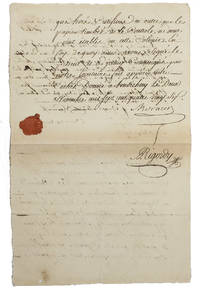
1786rif. ABC_45537Puducherry Pondichéry 1786. Folio. Manuscript death certificate including a red wax seal of a former employee of the French East India Company who is buried in the cemetery of the Église Notre-Dame-des-Anges in Puducherry which was the capital of the Indian district and later also the larger union territory of the same name which was ruled by the French from 1673 to 1954. The certificate is signed by the reverend father Damas who was superior of Puducherry and was authenticated by the authorizing officer of the French East India Company Jean-François de Moracin who was also commissioner general of the ports and naval arsenals in the colonies.In good condition. unknown
1963Tipped-in cover illustration partly missing. Some soiling to yellow covers and with some minor fraying. Outer bottom spine cover missing; Bound volume. Including supplement. With tipped in color illustrations and numerous b&w illustrations. Theme of this issue: Deccani Kalams; 4to; 64, xii pages