12.989 risultati
rif. DADAX0231164556New unknown
1965Revue. 144 pages
1966Broch?. 160 pages. Dos tach?.
rif. SONG1910294446Used: Good unknown
rif. 20094Paris A. Leconte Editeur s. d. (1933). Broché 12 cm x 19 cm 132 pages 11 photos noir & blanc hors-texte sous serpente. Texte du Commandant Pilate. Non coupé bon état
rif. ria9783337994815_inpPaperback. New. New Book; Fast Shipping from UK; Not signed; Not First Edition; Census of India 1891 Vol. XXVI; Rajputana; - Part I- the Report Imperial Tables and Supplementary Returns is an unchanged high-quality reprint of the original edition of 1892. Hansebooks is editor of the literature on different topi paperback
rif. A9783337994815Paperback / softback. New. paperback
rif. B9783337994815Paperback / softback. New. paperback
2002rif. 43757AUTREMENT - Série Mémoires N°81 2002 In-8
rif. 91334aafParis, Paul Geuthner, 1937, in-4to, 262 p. + (3); 51 p. + 165 planches, non rogné, brochure originale. bel exemplaire
1937Complet en 2 tomes, Tome I: 265pp., Tome II: 51pp. + 165 planches hors-texte, 24cm., brochures originales, bon état, X99396
1937rif. X99396Paris, Paul Geuthner 1937 Complet en 2 tomes, Tome I: 265pp., Tome II: 51pp. + 165 planches hors-texte, 24cm., brochures originales, bon état, X99396
19298vo., First Edition, with fine portrait photograph in photogravure and 4 large folding maps, personal name-stamp on front free endpaper, half-title and title lightly spotted; blue cloth, upper board lettered in gilt, gilt back, a remarkably bright, clean, crisp copy. Detailed account of the 'Butcher of Amritsar', one of the most controversial of all British military commanders, remembered most often for the notorious Amritsar Massacre of 1919. In his earlier career, however, he was mentioned in despatches for his command of Seistan Force in WWI; shortly after Amritsar he was mentioned again for the relief of Thai by 45th Infantry Brigade during the Third Anglo-Afghan War. We have not seen for sale a copy of the original edition of this work for over twenty years. RARE.
rif. DADAX1438432003New unknown
rif. DADAX0230619088New unknown
rif. DADAX0367177315New unknown
rif. DADAX0230619045New unknown
rif. DADAX0415085195New unknown
rif. DADAX0415085187New unknown
rif. DADAX0521116864New unknown
rif. DADAX0415886368New unknown
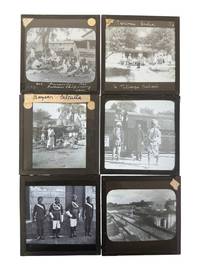
1900rif. 232871900. India glass lantern slide archive documenting class hierarchy dichotomy in British India with scenes of village labor bazaar exchange railway movement industrialization Sikhs and colonial cavalry circa 1900-20. Images clearly depict the class divide and caste system; villagers and laborers are shown seated on bare ground in carpentry work men and goats occupy an unpaved settlement space Sikh men stand beside a railway carriage tied to imperial transport networks a factory scene introduces mechanized industry and a formal portrait of turbaned cavalry soldiers. Photo archive of 8 glass lantern slides 3.25" x 3.25" India circa 1900 to 1920. Several slides retain manuscript captions on the mounts including "Central India" "Village School" "Bazaar Calcutta" and "MV. parannis an Indian carpentry clas." "Parannis" is probably a misspelling or misreading of "Pariahs" a historical caste/community term used in colonial-era descriptions of South Indi The British largely preserved formalized and exploited the Indian caste system rather than dismantling it. Their relationship with caste was pragmatic: caste became a tool for administration taxation labor control military recruitment and social organization across British India. The "Village School" slide shows a line of children and adults posed before a low building under dense tree cover with one figure standing forward in the open yard. The carpentry slide shows a large group of Indian boys outdoors beneath a tree seated or crouched on the ground around planks and hand tools with timber laid across the foreground and simple structures behind. The Calcutta bazaar scene places vendors baskets and goods in an open market setting under palms while the village scene presents men in loose garments in what seems to be a cattle farm setting. One slide shows Sikh men beside a railway carriage one barefoot in the foreground and others gathered near the rail car doors linking Indian bodies to the movement of goods troops and passengers through the colonial rail system. Another slide presents four uniformed soldiers in turbans possibly the Madras cavalry posed formally with boots sashes and weapons before a masonry wall. The factory view shows smoking industrial works with long roofs tracks and an extended production yard further cementing colonial industrialization within the archive. British rule in India relied on linked systems of extraction transport discipline and military force and these slides place those systems beside the people who bore their unequal social effects. Railways expanded under colonial finance and administration to move troops raw materials and commercial goods; industrial sites grew beside older economies of hand labor and bazaar trade; Indian soldiers and cavalry units served within an army organized to secure imperial control; and rural schools workshops and village scenes expose the local social world that existed under those pressures rather than outside them. Light edge wear some mount loss to several slides; no cracks or chips. Overall very good condition. British colonialism widened India's class divide by concentrating wealth transport and military power in imperial systems while leaving many Indians in village labor and low paid market work. unknown books
1900rif. 232871900. India glass lantern slide archive documenting class hierarchy dichotomy in British India with scenes of village labor bazaar exchange railway movement industrialization Sikhs and colonial cavalry circa 1900-20. Images clearly depict the class divide and caste system; villagers and laborers are shown seated on bare ground in carpentry work men and goats occupy an unpaved settlement space Sikh men stand beside a railway carriage tied to imperial transport networks a factory scene introduces mechanized industry and a formal portrait of turbaned cavalry soldiers. Photo archive of 8 glass lantern slides 3.25" x 3.25" India circa 1900 to 1920. Several slides retain manuscript captions on the mounts including "Central India" "Village School" "Bazaar Calcutta" and "MV. parannis an Indian carpentry clas." "Parannis" is probably a misspelling or misreading of "Pariahs" a historical caste/community term used in colonial-era descriptions of South Indi The British largely preserved formalized and exploited the Indian caste system rather than dismantling it. Their relationship with caste was pragmatic: caste became a tool for administration taxation labor control military recruitment and social organization across British India. The "Village School" slide shows a line of children and adults posed before a low building under dense tree cover with one figure standing forward in the open yard. The carpentry slide shows a large group of Indian boys outdoors beneath a tree seated or crouched on the ground around planks and hand tools with timber laid across the foreground and simple structures behind. The Calcutta bazaar scene places vendors baskets and goods in an open market setting under palms while the village scene presents men in loose garments in what seems to be a cattle farm setting. One slide shows Sikh men beside a railway carriage one barefoot in the foreground and others gathered near the rail car doors linking Indian bodies to the movement of goods troops and passengers through the colonial rail system. Another slide presents four uniformed soldiers in turbans possibly the Madras cavalry posed formally with boots sashes and weapons before a masonry wall. The factory view shows smoking industrial works with long roofs tracks and an extended production yard further cementing colonial industrialization within the archive. British rule in India relied on linked systems of extraction transport discipline and military force and these slides place those systems beside the people who bore their unequal social effects. Railways expanded under colonial finance and administration to move troops raw materials and commercial goods; industrial sites grew beside older economies of hand labor and bazaar trade; Indian soldiers and cavalry units served within an army organized to secure imperial control; and rural schools workshops and village scenes expose the local social world that existed under those pressures rather than outside them. Light edge wear some mount loss to several slides; no cracks or chips. Overall very good condition. British colonialism widened India's class divide by concentrating wealth transport and military power in imperial systems while leaving many Indians in village labor and low paid market work. unknown
1900rif. 1742Great Marlborough Street London: Hurst & Blackett 1900. 1st Edition. Hardcover. Used - Very Good. Contents unmarked but with some foxing binding strong though page edges show wear and age. Boards are slightly worn but illustration and gilt on front board remain clear. Hurst & Blackett hardcover
1909rif. 027193Edinburgh 1909 JOHN GRANT Hardcover