[INDE] — PEYNIER (Louis Antoine de Thomassin, comte de).Livre Rare Book

Best.-Nr. LBW-8728Goa, 19 janvier 1784. 3 pp. in-folio (43 x 27,4 cm) sur une feuille double, pliée.
Best.-Nr. LBW-8732S.l., 6 avril 1785. 1 p. in-4 (24 x 19,1 cm); sur une feuille double.
Best.-Nr. 1333402635.Gpaperback. Good. Access codes and supplements are not guaranteed with used items. May be an ex-library book. paperback
2020Best.-Nr. Gyan-9789357135931Facsimile Publisher 2020. Hardcover. New. 25.13 x 18.78 x 2.97 cm. English Facsimile Publisher hardcover
2020Best.-Nr. Gyan-9789357135931Facsimile Publisher 2020. Hardcover. New. 25.13 x 18.78 x 2.97 cm. English Facsimile Publisher hardcover
2025Best.-Nr. BIBHB0289493762025. Hardcover. New. About The Book: Copies and Extracts of Advices to and from India: Relative to the Cause Progress and Successful Termination of the War with the Late Tippoo Sultaun by East India Company presents official correspondence and reports detailing the reasons for the war with Tipu Sultan key events during the conflict and its outcome. This document provides a colonial administrative perspective and serves as a primary source on the Third Anglo-Mysore War. About The Author: East India Company The Title 'Copies and Extracts of Advices to and from India: relative to the Cause Progress and Successful Termination of The War with the Late Tippoo Sultaun written/authored/edited by East India Company' published in the year 2025. The ISBN 9789371692670 is assigned to the Hardcover version of this title. This book has total of pp. 296 Pages. The publisher of this title is Gyan Publishing House. This Book is in English. The subject of this book is Administration. Size of the book is 22.59 x 28.94 cms Vol: hardcover
Best.-Nr. 10626-9371693959Paperback. New. Book Condition is in New Paperback Original Edition. Shipped Same Day. We do not ship APO and FPO. Will be dispatched fast. Please send me an email if you have any questions. 100% Satisfaction. paperback
Best.-Nr. 10626-9371692677Paperback. New. Book Condition is in New Paperback Original Edition. Shipped Same Day. We do not ship APO and FPO. Will be dispatched fast. Please send me an email if you have any questions. 100% Satisfaction. paperback
2025Best.-Nr. Gyan-9789371692670Gyan Publishing House 2025. Hardcover. New. 28.94 x 22.59 x 2.96 cm. English Gyan Publishing House hardcover
2025Best.-Nr. Gyan-9789371692670Gyan Publishing House 2025. Hardcover. New. 28.94 x 22.59 x 2.96 cm. English Gyan Publishing House hardcover
Best.-Nr. 0656059729.Ghardcover. Good. Access codes and supplements are not guaranteed with used items. May be an ex-library book. hardcover
Best.-Nr. 1355343712.Ghardcover. Good. Access codes and supplements are not guaranteed with used items. May be an ex-library book. hardcover
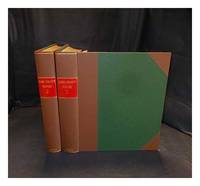
1777Best.-Nr. 390092London : East India Company 1777. 1st edition. Hardcover. Finely bound copies in modern half tan buckram over contrasting fine-ribbed cloth boards. Title page repaired. Particularly well-preserved; tight bright clean and strong. Further scans images and additional bibliographical material available on request. Physical description; 2 volumes. Contents; Vol. 1. Containing orders of the Court of Directors and minutes of Council entered on consultations -- Vol. 2. Containing letters from different persons respecting the above transactions. Subjects; Pigot George Baron 1719-1777. Chennai India History ; Sources. Madras India. Thanjavur India : District History Early works to 1800. London : East India Company hardcover
Best.-Nr. 3337186149.Gpaperback. Good. Access codes and supplements are not guaranteed with used items. May be an ex-library book. paperback
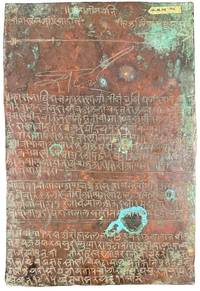
1819Best.-Nr. 42798Eastern India possibly Bengal or Assam circa 18th-19th century. Copper plate 13 7/8 x 9 1/8 inches engraved on both sides. The principal face with several lines of incised text at the head followed by a large engraved validating or emblematic mark and below this three dense sections of text divided by ruled horizontal lines. The reverse largely uninscribed with three small engraved seals or validating marks near the edge. An inscribed copper plate of Indian origin possibly Bengal or Assam engraved in a Bengali or Bengali-Assamese script and preserving a formal documentary text in metal. This copper plate belongs to the South Asian tradition of preserving legal devotional and administrative records on durable metal supports. Copper plate documents often described as tamrapatra or copper charters were used for grants endowments title rights decrees and other formal acts their material permanence giving them authority beyond that of ordinary manuscript documents. The present example appears to preserve a substantial text arranged in ruled sections and accompanied by validating marks. The script appears close to Bengali or Bengali-Assamese. The letterforms show rounded and looped shapes consistent with scripts used in eastern India. If confirmed this would suggest an origin in Bengal Assam or a neighbouring region where related scripts were used for administrative and religious writing. From their earliest centuries of development copper plate inscriptions have occupied a central place in South Asian documentary culture particularly in the recording of land grants royal edicts temple endowments and other formal transactions. Their durability made them suitable for preserving records intended to endure and they were often deposited in temples or held by families or institutions as proof of rights and privileges. While earlier examples are frequently associated with royal chancelleries the practice continued into the early modern and colonial periods with regional administrations and local authorities maintaining related forms of documentation. The present plate appears to belong to this later phase of the tradition when such documents were still being produced for administrative legal or commemorative purposes. Its relatively large format and the density of inscription suggest a formal text of some substance while the additional engraved devices indicate an effort to authenticate or formalise the record. The copper plate offers a direct example of a documentary practice that bridges manuscript culture and more durable forms preserving both the text itself and the physical conventions of its transmission. unknown
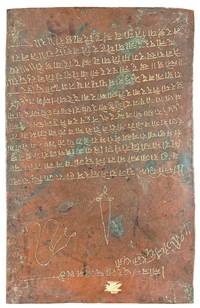
1819Best.-Nr. 42797Western or Northern India circa 18th or 19th century. Copper plate 15 1/2 x 9 3/4 inches engraved on both sides one face densely filled with horizontal lines of incised text and with additional marks including a dagger or torch device and other validating or ownership marks. The reverse more sparsely inscribed with two lines of text. An inscribed copper plate of Indian origin engraved on both sides and belonging to the South Asian tradition of preserving legal devotional and commemorative texts. A striking survival from the documentary culture of South Asia where copper served as a durable support for records intended to outlast paper and palm leaf. Such copper records often described as tamrapatra or copper charters were valued because they were portable difficult to alter and capable of serving as enduring witnesses to grants decrees endowments title rights and other formal acts. The script appears to belong to the Nagari family possibly Devanagari or a related cursive administrative hand such as Modi the script long used for Marathi official and business writing. From their earliest centuries of development copper plate inscriptions have occupied a central place in South Asian documentary culture particularly in the recording of land grants royal edicts temple endowments and other formal transactions. Their durability made them suitable for preserving records intended to endure and they were often deposited in temples or held by families or institutions as proof of rights and privileges. While earlier examples are frequently associated with royal chancelleries the practice continued into the early modern and colonial periods with regional administrations and local authorities maintaining related forms of documentation. The present plate appears to belong to this later phase of the tradition when such documents were still being produced for administrative legal or commemorative purposes. Its relatively large format and the density of inscription suggest a formal text of some substance while the additional engraved devices indicate an effort to authenticate or formalise the record. The copper plate offers a direct example of a documentary practice that bridges manuscript culture and more durable forms preserving both the text itself and the physical conventions of its transmission. unknown
1819Best.-Nr. 42798Eastern India possibly Bengal or Assam circa 18th-19th century. Copper plate 13 7/8 x 9 1/8 inches engraved on both sides. The principal face with several lines of incised text at the head followed by a large engraved validating or emblematic mark and below this three dense sections of text divided by ruled horizontal lines. The reverse largely uninscribed with three small engraved seals or validating marks near the edge. An inscribed copper plate of Indian origin possibly Bengal or Assam engraved in a Bengali or Bengali-Assamese script and preserving a formal documentary text in metal. This copper plate belongs to the South Asian tradition of preserving legal devotional and administrative records on durable metal supports. Copper plate documents often described as tamrapatra or copper charters were used for grants endowments title rights decrees and other formal acts their material permanence giving them authority beyond that of ordinary manuscript documents. The present example appears to preserve a substantial text arranged in ruled sections and accompanied by validating marks. The script appears close to Bengali or Bengali-Assamese. The letterforms show rounded and looped shapes consistent with scripts used in eastern India. If confirmed this would suggest an origin in Bengal Assam or a neighbouring region where related scripts were used for administrative and religious writing. From their earliest centuries of development copper plate inscriptions have occupied a central place in South Asian documentary culture particularly in the recording of land grants royal edicts temple endowments and other formal transactions. Their durability made them suitable for preserving records intended to endure and they were often deposited in temples or held by families or institutions as proof of rights and privileges. While earlier examples are frequently associated with royal chancelleries the practice continued into the early modern and colonial periods with regional administrations and local authorities maintaining related forms of documentation. The present plate appears to belong to this later phase of the tradition when such documents were still being produced for administrative legal or commemorative purposes. Its relatively large format and the density of inscription suggest a formal text of some substance while the additional engraved devices indicate an effort to authenticate or formalise the record. The copper plate offers a direct example of a documentary practice that bridges manuscript culture and more durable forms preserving both the text itself and the physical conventions of its transmission. unknown books
1819Best.-Nr. 42797Western or Northern India circa 18th or 19th century. Copper plate 15 1/2 x 9 3/4 inches engraved on both sides one face densely filled with horizontal lines of incised text and with additional marks including a dagger or torch device and other validating or ownership marks. The reverse more sparsely inscribed with two lines of text. An inscribed copper plate of Indian origin engraved on both sides and belonging to the South Asian tradition of preserving legal devotional and commemorative texts. A striking survival from the documentary culture of South Asia where copper served as a durable support for records intended to outlast paper and palm leaf. Such copper records often described as tamrapatra or copper charters were valued because they were portable difficult to alter and capable of serving as enduring witnesses to grants decrees endowments title rights and other formal acts. The script appears to belong to the Nagari family possibly Devanagari or a related cursive administrative hand such as Modi the script long used for Marathi official and business writing. From their earliest centuries of development copper plate inscriptions have occupied a central place in South Asian documentary culture particularly in the recording of land grants royal edicts temple endowments and other formal transactions. Their durability made them suitable for preserving records intended to endure and they were often deposited in temples or held by families or institutions as proof of rights and privileges. While earlier examples are frequently associated with royal chancelleries the practice continued into the early modern and colonial periods with regional administrations and local authorities maintaining related forms of documentation. The present plate appears to belong to this later phase of the tradition when such documents were still being produced for administrative legal or commemorative purposes. Its relatively large format and the density of inscription suggest a formal text of some substance while the additional engraved devices indicate an effort to authenticate or formalise the record. The copper plate offers a direct example of a documentary practice that bridges manuscript culture and more durable forms preserving both the text itself and the physical conventions of its transmission. unknown books
Best.-Nr. 17527Paris, Librairie de H. Fournier, 1835. 2 tomes en 1 vol. in-8, 434-[1] pp. + 417 pp. 1 pl., demi-basane maroquinée aubergine de Rivage, filet doré sur les plats, dos lisse orné de filets, arabesques et fleurons dorés, tranches marbrées (petites épidermures, rousseurs).
Best.-Nr. 13983131Bruxelles: Ludion, Europalia India, 2013 pet. in-4, 360 pages, 422 illustrations. Broché, très lég. marques d'usage sur la couv., bon état d'occasion.
Best.-Nr. R320131863Office national du tourisme coréen. non daté. In-12. Broché. Etat d'usage, Tâchée, Dos satisfaisant, Intérieur frais. 223 pages - nombreuses photos et cartes en couleurs hors texte - textes sur deux colonnes - un plan dépliant en couleur.. . . . Classification Dewey : 954-Asie du Sud, Inde
1846Best.-Nr. LITT3107MParis: Garnier frères, Fournier, 1841. Nouvelle édition augmentée de lettres inédites et accompagnée d'une carte, 2 volumes in-12; T.I: [iv], 370p., 1 grande carte dépliante. T.II: [iv], 372p. Reliure demi dos ornée à cuir.
Best.-Nr. 27336Paris Calmann Lévy, Editeur. Ancienne Maison Michel Lévy Frères 1877 in 8 (18x12) 2 volumes reliures demi chagrin rouge de l'époque, dos à nerfs très ornés, caissons dorés, XVI et 390 pages, 436 pages, quelques rousseurs sur les premières et dernières pages. Venceslas Victor Jacquemont, Paris 1801 - Bombay 1832, explorateur et savant naturaliste français. Précédée d'une notice biographique par V. Jacquemont Neveu et d'une introduction par Prosper Mérimée, de l'Académie Française. Deuxième édition. Bel exemplaire, bien relié ( Photographies sur demande / We can send pictures of this book on simple request )
Best.-Nr. 36588Paris Garnier Frères / H. Fournier 1846 in 12 (18x12) 2 volumes reliures demi basane verte de l'époque, dos lisses ornés de filets dorés, 370 pages, 372 pages, avec une grande une carte gravée dépliante (de l'Inde), quelques rousseurs éparses. Venceslas Victor Jacquemont, Paris 1801 - Bombay 1832, explorateur et savant naturaliste français. Deuxième édition, accompagné d'une carte nouvelle. Bon exemplaire ( Photographies sur demande / We can send pictures of this book on simple request )
Best.-Nr. 36589Paris Calmann Lévy, Editeur 1885 in 12 (18x12) 2 volumes reliures demi chagrin marron de l'époque, dos à nerfs soulignés de filets à froid, XVI et 390 pages, 430 pages. Venceslas Victor Jacquemont, Paris 1801 - Bombay 1832, explorateur et savant naturaliste français. Précédée d'une notice biographique par V. Jacquemont Neveu et d'une introduction par Prosper Mérimée, de l'Académie Française. Bel exemplaire ( Photographies sur demande / We can send pictures of this book on simple request )