11 261 résultats
réf. 12412ARCHITECTURE AND SCULPTURE OF INDIA. N.P.: Ministry of Information and Broadcasting 1956. Small folio. Wrappers. Frontispiece vi pages 19 plates. First edition. Photographs showing the sculpture and construction of Indian monuments. Worn. unknown books
1980Oriental Book reprint, 1980. Fort In-8 relié toile éditeur sous jaquette illustrée rempliée de LIX + 793 pages. Jaquette manipulée sinon Bon état.
Cartella edit. in Tela cm. 31x25, con legacci, fregi al piatto che incorniciano il titolo ed una fig. applicata, contenente un front. e 75 tavv. fotografiche con antichi edifici dell'India. Abrasioni alla cartella, interno ottimo.
1944Milano, 1944, estratto con copertina posticcia muta, pp. 396/400 con ill. - !! ATTENZIONE !!: Con il termine estratto (o stralcio) intendiamo riferirci ad un fascicolo contenente un articolo di rivista, sia che esso sia stato stampato a parte utilizzando la stessa composizione sia che provenga direttamente da una rivista. Le pagine sono indicate come "da/a", ad esempio: 229/231 significa che il testo è composto da tre pagine. Quando la rivista di provenienza non viene indicata é perchè ci è sconosciuta. - !! ATTENTION !!: : NOT A BOOK : “estratto” or “stralcio” means simply a few pages, original nonetheless, printed in a magazine. Pages are indicated as in "from” “to", for example: 229/231 means the text comprises three pages (229, 230 and 231). If the magazine that contained the pages is not mentioned, it is because it is unknown to us.
19508°, 23 cm, pp. 13, 48 tavole fuori testo, rilegatura editoriale, titolo al piatto e dorso, dorso con tracce d'uso, ex libris privato al contropiatto, esemplare nell'assieme molto buono
1796réf. 398421796. The archive comprises: 1. Autograph letter signed "John Canning." Bifolium 13 x 8 1/4 inches 21 lines in fine Malay Jawi with Arabic opening formula docketed "Calcutta 10 Dec 1796"; octagonal red-wax armorial seal of the Canning family. Letter requests that local rulers receive Capt. Hogan "as our agent. to conclude a treaty advantageous to both sides" dated 22 Jumada II 1211 / 10 Dec 1796. 2. to 5. 4 Paper wrappers. English addresses in a copperplate hand & parallel Jawi headings each with intact Canning seal. Addressed to the Sultan of Magindanao King of Mempawah Borneo King of Bali Sultan of Borneo. 6. to 8. 3 Yellow-silk diplomatic covers. Golden satin sleeves with paper address bands in two languages; two remain unopened and sealed. Addressed to the Sultan of Johor unopened King of Sumbawa unopened Sultan of Sulu wrapper only. An exceptional archive uniting British Malay and Islamic manuscript traditions that captures the East India Company’s first concerted overtures to the island-states of Southeast Asia. Drafted in the wake of the Dutch East India Company's collapse and the French Revolutionary Wars this archive documents the East India Company's first concerted diplomatic overtures to the maritime courts of the Malay world. With Dutch control unraveling after the 1795 Batavian Revolution Britain saw a strategic opportunity to enter the lucrative Spice Island trade. Lacking on-the-ground alliances the Company turned to private initiative: Captain Michael Hogan an Irish-American merchant and former convict transport captain was enlisted as unofficial envoy aboard his ship Marquis Cornwallis. The diplomatic texts were composed by Captain John Goodall Canning then Harbour-Master of the port in refined court Malay using Jawi script the Islamic-inflected lingua franca of diplomacy from Aceh to Sulu. In keeping with regional tradition the letters open with Islamic invocation and florid honorifics followed by carefully phrased expressions of friendship and commercial intent. The surviving autograph letter fixes the date of the mission and declares its purpose: "to plant affection and concord and if Your Highness deem it good to enter with us into a compact benefiting both realms." After disembarking convicts in Port Jackson Sydney in February 1796 the Marquis Cornwallis passed northward through Torres Strait calling at New Guinea the Moluccas and ports across the Java Sea almost certainly delivering these and parallel documents en route. The silk wrappers signal the elevated diplomatic status of the messages which were meant to be presented in person by Hogan and opened only in the presence of the addressee. The present archive offers a rare and vivid glimpse into the hybrid ceremonial linguistic and political world of early modern Southeast Asia and into the improvisational diplomacy of the Company at the edge of empire. unknown
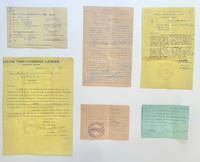
1943réf. 010675Kyaiklat Burma British India 1943. Handwritten. Very Good. Loose Leaf. 4to - over 9¾ - 12" tall. Correspondence from Chettiar in Tamil from IIL in English. 9 letters from Chettiar and IIL in manuscript and typescript; 10 pieces of correspondence from IIL on note cards with IIL letterhead; 1 IIL membership card for Chettiar. CONDITION: Overall Very Good old folds some splitting and tape repairs along folds of documents by IIL but Chettiar's letters largely free of wear or tear text legible throughout. All documents now housed in sleeves that are mounted onto backing but it remains easy to remove documents from enclosures. This collection contains English translations of Chettiar's letters presumably made by the previous owner who also wrote captions describing each piece of correspondence on their respective mounts. An evocative collection of correspondence document- ing an Indian nationalist organization's coercion of funds from a member of a prominent money-lending Burmese-Tamil family. These letters show the Indian Independence League's attempt to extort money from a wealthy man whom they had identified as being in a position to help "free India from bondage and for the maintenance of the Indian National Army." This was M.S.M. Somasundarum Chettiar a 63-year-old merchant who operated his business on Strand Road in Kyaiklat a town in the Pyapon District of Burma. A recent historical study by Suppiah and Raja on the Chettiar families of Burma suggests that Somasundaram was part of a "distinguished ethnic group comprising the business class among Malaysian Indian-Tamils" who made their fortunes by lending money to the Indian working class in Burma. The Chettiar ethnic group boasted "a centuries long tradition as an indigenous banking caste in South India" and thus due to a combination of "stringent business regulations during British colonialism in the Madras Presidency and economic opportunities in the newly opened British colonies in Southeast Asia" both the Indian working class in Burma and members of the Straits Settlement Chinese utilized "Chettiar agents in order to conduct bank transactions.in the middle of the nineteenth century." This reliance upon the Chettiar's services only increased by the turn of the twen- tieth century as the demand rose for rubber and tin made in Southeast Asia. As "local Chinese and Malays with only small and medium capital sources relied on loans from Chettiar agents to develop land plant rubber and open mines.Chettiar agents" became "known as the leading moneylenders" in late-colonial Burma. Somasundaram would thus have been part of a known community of capitalists "who accumulated capital for further expansion of their activities at the expense of the Indian working class." The Indian Independence League and the Indian National Army were closely intertwined movements during WWII both led by Subhas Chandra Bose and governed by the Azad Hind Provisional Government in Exile.They worked to unite the Indian diaspora in Southeast Asia to support the cause of independence and sought military support from Japan to facilitate an armed wing for their movement. Primary source documentation of the Azad Hind government's activities is scant institutionally. We locate a scrapbook created by a member of the Indian National Army held at the Institute of Social Research in the Netherlands and a letter from Subhas Chandra Bose asking for a loan from the Hikari Kikan of Syonan held by the National Library Board of Singapore. This would be the only comparable collection held in North America.A rich collection of correspondence highlighting the conflicting poles between Indian diasporic wealth and Indian nationalists' aspirations for the nation's self-rule listing credit Pico Banerjee Peek A Boo Rare Books & Ephemera . unknown
1943réf. 010675Kyaiklat Burma British India 1943. Handwritten. Very Good. Loose Leaf. 4to - over 9¾ - 12" tall. Correspondence from Chettiar in Tamil from IIL in English. 9 letters from Chettiar and IIL in manuscript and typescript; 10 pieces of correspondence from IIL on note cards with IIL letterhead; 1 IIL membership card for Chettiar. CONDITION: Overall Very Good old folds some splitting and tape repairs along folds of documents by IIL but Chettiar's letters largely free of wear or tear text legible throughout. All documents now housed in sleeves that are mounted onto backing but it remains easy to remove documents from enclosures. This collection contains English translations of Chettiar's letters presumably made by the previous owner who also wrote captions describing each piece of correspondence on their respective mounts. An evocative collection of correspondence document- ing an Indian nationalist organization's coercion of funds from a member of a prominent money-lending Burmese-Tamil family. These letters show the Indian Independence League's attempt to extort money from a wealthy man whom they had identified as being in a position to help "free India from bondage and for the maintenance of the Indian National Army." This was M.S.M. Somasundarum Chettiar a 63-year-old merchant who operated his business on Strand Road in Kyaiklat a town in the Pyapon District of Burma. A recent historical study by Suppiah and Raja on the Chettiar families of Burma suggests that Somasundaram was part of a "distinguished ethnic group comprising the business class among Malaysian Indian-Tamils" who made their fortunes by lending money to the Indian working class in Burma. The Chettiar ethnic group boasted "a centuries long tradition as an indigenous banking caste in South India" and thus due to a combination of "stringent business regulations during British colonialism in the Madras Presidency and economic opportunities in the newly opened British colonies in Southeast Asia" both the Indian working class in Burma and members of the Straits Settlement Chinese utilized "Chettiar agents in order to conduct bank transactions.in the middle of the nineteenth century." This reliance upon the Chettiar's services only increased by the turn of the twen- tieth century as the demand rose for rubber and tin made in Southeast Asia. As "local Chinese and Malays with only small and medium capital sources relied on loans from Chettiar agents to develop land plant rubber and open mines.Chettiar agents" became "known as the leading moneylenders" in late-colonial Burma. Somasundaram would thus have been part of a known community of capitalists "who accumulated capital for further expansion of their activities at the expense of the Indian working class." The Indian Independence League and the Indian National Army were closely intertwined movements during WWII both led by Subhas Chandra Bose and governed by the Azad Hind Provisional Government in Exile.They worked to unite the Indian diaspora in Southeast Asia to support the cause of independence and sought military support from Japan to facilitate an armed wing for their movement. Primary source documentation of the Azad Hind government's activities is scant institutionally. We locate a scrapbook created by a member of the Indian National Army held at the Institute of Social Research in the Netherlands and a letter from Subhas Chandra Bose asking for a loan from the Hikari Kikan of Syonan held by the National Library Board of Singapore. This would be the only comparable collection held in North America.A rich collection of correspondence highlighting the conflicting poles between Indian diasporic wealth and Indian nationalists' aspirations for the nation's self-rule listing credit Pico Banerjee Peek A Boo Rare Books & Ephemera . unknown books
1796réf. 398421796. The archive comprises: 1. Autograph letter signed "John Canning." Bifolium 13 x 8 1/4 inches 21 lines in fine Malay Jawi with Arabic opening formula docketed "Calcutta 10 Dec 1796"; octagonal red-wax armorial seal of the Canning family. Letter requests that local rulers receive Capt. Hogan "as our agent. to conclude a treaty advantageous to both sides" dated 22 Jumada II 1211 / 10 Dec 1796. 2. to 5. 4 Paper wrappers. English addresses in a copperplate hand & parallel Jawi headings each with intact Canning seal. Addressed to the Sultan of Magindanao King of Mempawah Borneo King of Bali Sultan of Borneo. 6. to 8. 3 Yellow-silk diplomatic covers. Golden satin sleeves with paper address bands in two languages; two remain unopened and sealed. Addressed to the Sultan of Johor unopened King of Sumbawa unopened Sultan of Sulu wrapper only. An exceptional archive uniting British Malay and Islamic manuscript traditions that captures the East India Company’s first concerted overtures to the island-states of Southeast Asia. Drafted in the wake of the Dutch East India Company's collapse and the French Revolutionary Wars this archive documents the East India Company's first concerted diplomatic overtures to the maritime courts of the Malay world. With Dutch control unraveling after the 1795 Batavian Revolution Britain saw a strategic opportunity to enter the lucrative Spice Island trade. Lacking on-the-ground alliances the Company turned to private initiative: Captain Michael Hogan an Irish-American merchant and former convict transport captain was enlisted as unofficial envoy aboard his ship Marquis Cornwallis. The diplomatic texts were composed by Captain John Goodall Canning then Harbour-Master of the port in refined court Malay using Jawi script the Islamic-inflected lingua franca of diplomacy from Aceh to Sulu. In keeping with regional tradition the letters open with Islamic invocation and florid honorifics followed by carefully phrased expressions of friendship and commercial intent. The surviving autograph letter fixes the date of the mission and declares its purpose: "to plant affection and concord and if Your Highness deem it good to enter with us into a compact benefiting both realms." After disembarking convicts in Port Jackson Sydney in February 1796 the Marquis Cornwallis passed northward through Torres Strait calling at New Guinea the Moluccas and ports across the Java Sea almost certainly delivering these and parallel documents en route. The silk wrappers signal the elevated diplomatic status of the messages which were meant to be presented in person by Hogan and opened only in the presence of the addressee. The present archive offers a rare and vivid glimpse into the hybrid ceremonial linguistic and political world of early modern Southeast Asia and into the improvisational diplomacy of the Company at the edge of empire. unknown books
19111 vol. in-8 reliure pleine basane racinée (reliure de comptoir français en Inde), dos à 4 nerfs dorés orné, Société de l'Histoire de l'Inde Française, Pondichéry, 1911-1914, 1 f., 402 pp. Bon état pour cet exemplaire en reliure de comptoir français d'Inde (restaurations marginales à 3 ff., bon exemplaire par ailleurs). Français
1975réf. 1093905Halle, Martin-Luther-Universität, (1975). 77 S. m. Abb. OKart.
réf. 0428759181.Gpaperback. Good. Access codes and supplements are not guaranteed with used items. May be an ex-library book. paperback
réf. 0428759300.Ghardcover. Good. Access codes and supplements are not guaranteed with used items. May be an ex-library book. hardcover
2004181 p., ill. n.t.; 20,5 cm. Bross. edit. con sovrac. Molto buono
2003Folio, First Edition; pictorial wrappers, a fine copy.
réf. 4814840-nnew. unknown
réf. 4814840like new. unknown
2006réf. x-1847340806Naval & Military Pr 2006. Hardcover. New. 108 pages. 8.50x5.50x0.38 inches. Naval & Military Pr hardcover
2006réf. DADAX1847340806Naval & Military Press 2006-06-20. hardcover. New. 5.50x0.38x8.50. Buy with confidence. Excellent Customer Service & Return policy. Naval & Military Press hardcover
1908réf. EJ5861Calcutta: Superintendent Government Printing 1908. HB. Heavy card covers with dark brown backstrip brown lettering on front cover 8vo 29 pp. India Army Orders Simla the 17th August 1908 No. 466 Robert Scallon Major-General Adjutant General in India. Price 1s or 10 annas. Detailed account of the strength and equipment of a British Cavalry Regiment in India at the beginning of the twentieth century. Contents include established strength regimental equipment and supplies by the Ordnance Department supplies by the Supply and Transport Corps supplies by the Military Works Services or the Public Works Department supplies by the Medical Store Department and supplies by other departments and by local purchase. Ex-General Staff Library War Office with stamp dated 16 Nov. 1908. Library stamps both on title page and front cover no marks in text binding tight. Covers show minor soiling. Scarce title. Book condition VG-. Superintendent Government Printing unknown
1954réf. 1093510New York, The John Day Comp. (1954). 4 Bl., 310 S. m. Abb. auf Bildtaf. OLwd.
réf. 6935(Montauban), (1724). Placard de 38 x 48 cm sur vergé (petit manque de papier dans la marge).
réf. 8052P., Imprimerie Royale, 1770. In 4° de 7 pp., bandeau gravé.