11.790 resultados
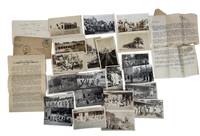
1941ref. 209861941. Gregson Anita. A.P. Mission City School archive 1941-1942 documenting girls' education missionary activity and community life in Ambala Punjab during World War II. This material records daily instruction social interaction and local conditions within a mission-run school for girls alongside written correspondence and institutional reporting that situate the school within wartime pressures and colonial India's educational landscape. The archive provides direct evidence of classroom practices gendered education and the integration of local families into school environments as well as the impact of global conflict on regional communities. Archive comprises 21 original black and white and sepia photographs one typed letter and one annual report. Photographs measuring approximately 2" x 3" to 3" x 5" frequently bear handwritten or typed captions on the verso likely by Anita Gregson identifying subjects and activities. Images show groups of schoolgirls engaged in classroom exercises and outdoor instruction including one scene of students constructing a ground map of India to illustrate agricultural production. Another photograph depicts a semicircle of young children seated outdoors during a lesson with their teacher identified as Miss Atmaran and a veiled mother observing her burkha partially drawn back. Additional images document craft instruction including girls weaving coconut palm leaves into fans and producing woven ties on frames. Musical activity is also present with students playing instruments. Beyond the school photographs depict village life in Punjab including oxen operating a water-drawing mechanism children gathered around a missionary playing a ukulele and a merchant carrying goods suspended from a yoke. The accompanying letter dated June 14 1942 from Gregson to a correspondent in New York references World War II noting international observances and local enlistment: "The young men in our Indian community are continuing to sign up for the army navy and air force." The annual report for the 1941-1942 school year details wartime financial strain fundraising efforts and instructional programs including an adult literacy course for women teaching reading writing and arithmetic. Created while India functioned as part of the British Empire during World War II these materials document the intersection of missionary education wartime mobilization and local social life. The inclusion of adult literacy instruction for women reflects ongoing efforts to expand female education under colonial conditions while the letter and report connect the school directly to global conflict and its local consequences. Light wear and minor fading to photographs; handling wear present. Letter on thin paper with tears and fragility consistent with wartime materials poor to fair condition; remaining materials overall very good condition. This archive provides a concentrated visual and textual record of girls' education and community experience in wartime Punjab. unknown books
1929ref. 198081929. Women in Sciences Balfour Margaret and Young Ruth. "The Work of Medical Women in India". London: Oxford University Press 1929. First Edition No Dust Jacket. 201 pages. Measures 5.75" x 8.75". The United States sent the first qualified medical woman to 1880 and for the next sixty years many women physicians from America England and other countries have gone to India as missionaries. The Association of Medical Women in India grew to 281 members by 1930 and there were four women's medical schools where 351 students were studying for the subassistant surgeon's diploma. This book focuses on the women from 1880 to 1929 who contributed to improving the health of women in India. It follows several famous figures from the medical movement of the day including Pechey Phipson E. Bielby CFlara Swain A. Jaganadhan and R. Rukhmabai. The book also includes several illustrations of the women where they worked and additional medical charts. Also included is a map of India from 1930 located as a pull-out at the end of the book. Textblock is tight with only minor wear from shelf use. Overall in very good condition. unknown books
1912ref. 179481912. Lot of 2 silver gelatin photos of students and faculty at Udupiddi Girls' School in India. 1912. Each photo Approx. 5" x 3.5" inches. Pasted to brown paper with inscriptions on both sides one reading "Udupiddi Girls' School 1912" and the other "Matron teachers and graduating class of the Udupiddi GIrls Boarding School March 1912." Women's education in India was uncommon in the early 1900's with very few options available. Among the higher castes who could afford private schooling girls were married before puberty and expected to take on domestic life at that time. If they were lucky they were taught at home. The first photo shows 59 young female students a male and female adult presumably instructors both Indian and a white female adult. The other photo shows a smaller class of 15 girls with the same white adult female who appears to be the "matron" mentioned in inscription. All of the subjects wear white some of the girls in simple long dresses others with more adornments. The girls appear to range in age from around 5 to 18 many of them looking directly at the camera their faces studious as if instructed to look serious some with half smiles. These classes show a group of girls who would have been anomalous during their time paving the way for future generations. These images predate the 1930 law where the age for marriage was raised to fourteen years old that improved female literacy rates substantially. Slight tear to bottom corner has been repaired. Very good condition. unknown books
1914ref. 180951914. Certificate awarded to the Vicereine of India Lady Hardinge of Penshurst upon her visit to the Indraprastha Hindu Girls School in Delhi. 1914. Measures 10" x 16" inches. Text enclosed in ornately decorative box with the school's seal centered at the top reading "The Hindu Girls School Delhi First deserve then desire 1904." The certificate's attractive green script reads in part "To her excellency Lady Hardinge of Penshurst May it please your Excellency It is with feelings of the profoundest joy and gratitude that we to-day welcome Your Excellency to the Indraprastha Hindu Girls School Delhi.Your Excellency's loving interest in the advancement of the women of this land and motherly affection for the children your care for the suffering poor the exemplary fortitude which you have shewn in the time of danger and the heroic devotion to your husband--our ideals of womanhood--have endeared your name to every woman and child in India and we pray you to accept our reverential and warm-hearted welcome to-day." Lady Hardinge of Penshurst Winifred Selina Sturt married her first cousin Henry Sturt a racing magnate and close friend of Edward Prince of Wales. She served as a Woman of the Bedchamber to the Princess of Wales before her husband by then a Baron was named Viceroy of India. The concurrence of monarchical rule and colonialism put aristocratic families with close ties to the royal family put aristocratic Europeans in positions of power worldwide no matter their qualifications. The family moved to India where Lady Hardinge worked to advance women's education. She was instrumental in starting the Lady Hardinge Medical College in Delhi the first medical school exclusively for women in India. She died in November of 1914 just 8 months after receiving this certificate. Signed by the school's President Lady Superintendent and Secretary. Creased along lines where paper was folded. 3 small holes along left side do not affect text. 1" tears along top do not affect text. Tape attached to verso. Very good condition. unknown books
1965ref. 169291965. Birth Control India 2 silver gelatin print photographs showing Rural Indian women learn about birth control in outdoor classroom. An Indian woman instructor from International Planned Parenthood Federation leads a demonstration on different contraceptive health devices. 2 silver gelatin print photographs. 11 x 8 in. Original press photos. Filing stamps on back dated "18 Okt 1965". Printed on the van behind speaker: "Van donated by International Planned Parenthood Federation / Imported through Church World Service". In 1952 India was the first country in the wold to implement a family planning strategy as part of national development. The same year the International Planned Parenthood Federation IPPF a global offshoot fo Planned Parenthood with the broad aims of promoting sexual and reproductive health and advocating the right of individuals to make their own choices in family planning was founded in Bombay present-day Mumbai by Margaret Sanger and Lady Rama Rau. Educators would use vans such as these to travel around rural areas and teach women in makeshift classrooms-sometimes even outdoors as in this images. These original press photo taken by photojournalist within tight timeframe for the benefit of particular editorial board and with the aim of usage by the press to illustrate an article often affected public opinion in the nation. Crease to bottom right corner of vertical photo. Both in very good condition. unknown books
1929ref. 151011929. Act No. XIX of 1929 Passed by the Indian Legislature.An Act to Restrain the Solemnisation of Child Marriages 1929 records the enactment of the Child Marriage Restraint Act an early statutory attempt in British India to restrict marriages involving children. Receiving the Governor-General's assent on October 1 1929 and taking effect April 1 1930 the Act defined a "child" as a male under eighteen or a female under fourteen and imposed criminal penalties on adult men contracting child marriages and on persons performing conducting or directing such marriages. The legislation is commonly associated with reformer Harbilas Sarda and became known as the Sarda Act. Act No. XIX of 1929 Passed by the Indian Legislature.An Act to Restrain the Solemnisation of Child Marriages. 1929. Pamphlet. The text specifies the "punishment for male adult below twenty one years of age marrying a child" the "punishment for male adult above twenty one years of age marrying a child" and the punishment for "solemnising a child marriage." Under the original Act a male between eighteen and twenty-one who contracted a child marriage could be fined up to one thousand rupees; a male over twenty-one could receive up to one month of simple imprisonment a fine of up to one thousand rupees or both. Comparable penalties applied to a person who performed conducted or directed a child marriage. The pamphlet preserves the statutory language by which the colonial legislature sought to regulate marriage age through penalties imposed upon adult participants and officiants. The Act preceded later Indian legislation that progressively raised legal marriage ages and strengthened protections against child marriage. Its provisions document an early legislative attempt to intervene directly in the solemnization of marriages involving children and to assign legal responsibility to adult husbands and those conducting such marriages. unknown books
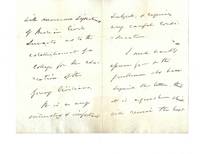
1864ref. 160811864. Wood Charles later 1st Viscount Halifax. Autograph Letter Signed to H. Reckitts 1864 addresses the continuing development of British educational administration in India during Wood's tenure as Secretary of State for India. Wood had earlier set out an extensive program for education in the 1854 document subsequently known as Wood's Despatch recommending provincial education departments universities modeled on British institutions support for public and private schools and the use of Indian languages in provincial curricula. Written a decade later this letter concerns a proposal for a college intended to educate young members of the Indian Civil Service and records Wood's direct consideration of another institution connected with the administration of British India. Wood Charles. Autograph Letter Signed to H. Reckitts. Balmoral September 5 1864. 4 pages. Wood reports that Algernon West had forwarded "the printed letter with numerous signatures of Indian Civil Servants as to the establishment of a College for the education of the young Civilians." He describes the proposal as "a very interesting and important subject" requiring "very careful attention" and assures Reckitts that it "will receive the best attention which the members of the Indian Council and I myself can give to it." The letter documents the route by which a proposal supported by serving Indian Civil Servants reached the Secretary of State and his council showing consultation between colonial administrators and the metropolitan office responsible for Indian government. Wood's 1854 Despatch had recommended the creation of education departments in the provinces and the establishment of universities in major Indian cities; universities at Calcutta Bombay and Madras opened in 1857 with later institutions established in Punjab in 1882 and Allahabad in 1887. This 1864 letter places Wood within the continuing administrative work of developing educational institutions after those initial reforms specifically in relation to the training of British civil servants charged with governing India. Condition was not provided in the supplied description. unknown books
1938ref. 165001938. Jeffrey Mary Pauline. Dr. Ida: India The Life Story of Ida S. Scudder 1938. Signed biography of American physician and medical missionary Ida Sophia Scudder 1870-1960 who established hospitals and medical training programs for women in colonial India. Born in India to American missionary parents Scudder pursued medicine after witnessing the consequences of restrictions preventing Indian women from receiving treatment from male physicians. In 1899 she graduated from Cornell Medical College as a member of its first graduating class to include women returning to India in 1900 to establish a small clinic in Vellore. Within two years she had founded the Mary Taber Schell Memorial Hospital which developed into a major center for women's medical treatment and professional training. Her subsequent establishment of a nursing school in 1909 and the Union Mission Medical School for Women in 1918 expanded opportunities for Indian women to enter the medical profession. Jeffrey Mary Pauline. Dr. Ida: India The Life Story of Ida S. Scudder. New York: Fleming H. Revell Company 1938. Signed and inscribed by the author on the front endpaper. 212 pages with a frontispiece portrait and 18 additional illustrations throughout. Original blue cloth boards measuring 8 x 6 inches. Jeffrey recounts Scudder's upbringing in a missionary family her medical education in the United States and her return to India to establish healthcare facilities for women who faced religious and social restrictions on treatment by male physicians. The biography traces the expansion of her work from a small rural clinic into a hospital and medical training institution documenting her efforts to provide both medical care and professional education for Indian women. Published in 1938 while Scudder remained active in the administration of her medical institutions the biography records the development of women's medical education in British India before independence. Her work at Vellore addressed both the shortage of female physicians and the restrictions that prevented many Indian women from seeking treatment while establishing training opportunities for Indian women in nursing and medicine. The author's inscription distinguishes this copy and the illustrations provide additional contemporary documentation of Scudder's life and medical work. A few pages contain ink corrections or annotations. Very good condition. unknown books
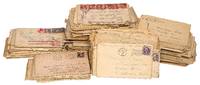
1924ref. 426129Missouri Illinois Maine New Jersey Colorado Washington DC Kansas New York 1924. Unbound. Near Fine. A collection of 209 letters from 1914 through 1924 from a young man sailor writing home to his wife with some later correspondence. Near fine with small tears and some age toning most on the envelopes. The majority of the letters are written from Garnett Blair Martin to his wife India Faye Martin née Gentry with some written from India to Garnett while he was serving in the Navy during World War I. He was stationed in several different base camps and moved around frequently as the letters are from various places in the United States including Missouri Illinois Maine New Jersey Colorado Washington DC Kansas New York among others. A large portion of the letters are holiday and birthday cards along with a few postcards sent to Martin's daughter explaining he will be home soon. However most of the letters are written affectionately to Martin's wife and with her letters replying in kind. Some of the letters discuss Martin's experience at the army bases from packing and moving constantly to having physical ailments such as poor eyesight sores and cuts. He also critiques the living situations while at war "it's cold and cramped here I can't even smoke a cigarette without blowing it in someone's face." Most of the letters somehow find a way back to lovelorn acclamations to his wife about how "a sweet kiss from your dear lips could cure it soon." Accompanied by a few letters and postcards from friends. A collection of romantic correspondence from a wife and husband separated during the World War. unknown books
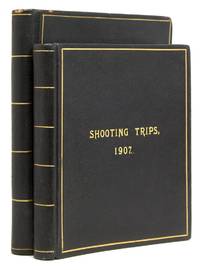
1909ref. 312711N.p. India 1909. 126 tipped in gelatin photographs 63 in each volume; with four manuscript sketch maps 2 in each volume. 153 pp.; 7 numbered a-g 124 ff. including blanks. 2 vols. 8vo and 4to. Contemporary full brown morocco covers ruled and lettered in gilt black coated endpapers by Thacker & Co. Bombay with their red ticket at the back. Corners bumped faintest traces of rubbing. 126 tipped in gelatin photographs 63 in each volume; with four manuscript sketch maps 2 in each volume. 153 pp.; 7 numbered a-g 124 ff. including blanks. 2 vols. 8vo and 4to. Substantial detailed and extensively illustrated chronicle of travel and sport in the area north and east of Simla Sutlej River Adampur Jhansi and elsewhere in India including a trip in the Himalayas. The author was Lawrence Christian Gordon a major in the artillery; at this time he was staioned in Jhansi. The first volume is divided in three parts: Part I. Trip near Adampur after black buck and gazelle pp. 1-26 dated 23 December 1906 to 3 January 1907 Part II. Near Jhansi after black buck pp. 27-37 Part III. Himalayas after burhel and ibex pp. 39-153 dated April to July 1907 up the Sutlej river from Simla with mention of Asirang Lipi Jangi The second volume is a continuous narrative describing short shooting and fishing trips in 1908 and one longer account of three months' shooting leave March to June 1909 in the terrain upriver from Simla close to the border with Tibet and indeed many of the villages and monasteries passed were of TIbetan culture. The photographs are well composed and printed; burhel was the chief game hunted. Gordon writes candidly with many observations on local conditions and weather. Provenance: Norman James Anderson Galleries 9 November 1928 lot 784; Harvard Travellers Club in May 1934 bookplates unknown books
1906ref. 321920Poona and Bombay India 1906. Comprising 17 album leaves with approximately 84 mounted photographs ranging in size from 16 full page and 8 half page photographs to smaller snapshots mounted with some thought many with detailed captions identifiers and dates in ink. 1 vols. Oblong folio 10-3/4 x 14 inches. Modern three quarter brown morocco and marbled boards new endpapers a.e.g. Some toning to a few album leaves the photographs generally clean and fresh. Comprising 17 album leaves with approximately 84 mounted photographs ranging in size from 16 full page and 8 half page photographs to smaller snapshots mounted with some thought many with detailed captions identifiers and dates in ink. 1 vols. Oblong folio 10-3/4 x 14 inches. A nice little family album of foxhunting and equestrian scenes relating to the Poon and Bombay Hunts as well as views of landscape and family life. The paterfamilias is identified in captions as A.W.S. a British officer and his wife R.A.S. even while numerous others members of hunts or parties are identified by name and rank. "Ruth" and "Baby" complete the family unit and RUth can be seen seated among a line of children in hunting kit at the "Children's Fancy Dress Party / Given by Poona Bachelors / Poona Gymkhana" and then mounted on a pony in panoramic Hunt portraits. One leaf with six photographs depicts the stages of a meet from draw to check to who'oop! with the central image captioned "Ruth's first brush given by J.A. Lord Esq. M.F.H. / Snapshots by Capt. Jennings" and another contemporary hand has added in pencil " run near Saula Creek Bombay Hunt . 1905". Other groups of images show views at "Singhur 1901-1905" and domestic scenes. unknown books
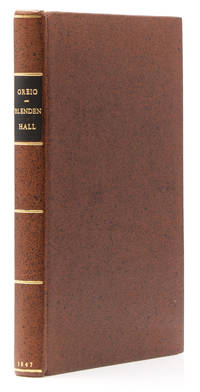
1847ref. 316972New York: William H. Colyer 1847. First Edition. Frontis. 209pp. Bound in full modern mottled brown calf. Fine. First Edition. Frontis. 209pp. Huntress 166 William H. Colyer unknown books
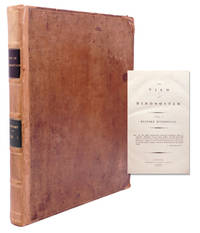
1798ref. 319520London: Henry Hughes 1798. First edition. Folding map frontispieces plates. xv 263 9 index; x 374 12 pp. 2 vols. 4to 11 x 9 inches. Contemporary full tan calf rebacked retaining original boards lower corner of Vol. I repaired. 19th-century ownership inscriptions to first blanks 1-inch tear to map near mount some thumb soiling and scattered spotting. First edition. Folding map frontispieces plates. xv 263 9 index; x 374 12 pp. 2 vols. 4to 11 x 9 inches. "This tireless naturalist and antiquary reached out to the ends of the world to gather in knowledge" Cox. These are volumes one and two on India and Ceylon of an intended 14-volume series entitled "Outlines of the Globe." Welshman Pennant died in 1798 the year of publication and only two more volumes China and Japan were published after his death by his son. ESTC T145966; Cox I p. 307 Henry Hughes unknown books
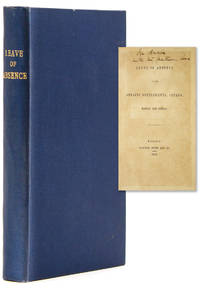
1859ref. 320421Calcutta: Thacker Spink & Co. printed by P.M. Craneburgh at the Bengal Military Orphan Press 1859. First edition. iv 244 viii pp. 8vo. Original blue ribbed cloth spine gilt bookplate to front pastedown of Sir Charles P. Hobhouse Bart. Bradford-on-Avon presentation inscription to title page. A fine copy. First edition. iv 244 viii pp. 8vo. Inscribed on the title page: "For Annie with the Author's love." This copy also formerly belonged to Sir Charles Parry Hobhouse 3rd Baronet of Westbury. A crisp copy recording the anonymous author's seven month's of exploring through South East Asia in 1851 and 1853. Departing 8 September 1851 the author who remains anonymous to this day spent four months travelling to Ceylon and Singapore before returning to Calcutta. In 1853 he set off again this time for a three month excursion to the Madras and Bombay Presidencies. There are vivid descriptions of Singapore Penang Malacca Madras Calcutta Bombay Bangalore and Candy as well as coffee plantations and Buddhist temples. The author spends quite some time travelling overland and describes an ascent of Pedro Tallagalla and Kilkamany and camping at Makoortie Peak. Despite the scarcity of this little book it did attract critical attention. A favourable notice appeared in the Calcutta Review which states that the author had "seen and noted down . as much as any one who had preceded or who has since followed him in the same track." The work concludes with an appendix in two parts the first being a table showing the route modes of transport ship rail bandy pony and the amount of time spent at each location. The second is titled "Hints for travellers" which concludes: "Travellers will find it wiser never to have coolies to their palanquins when they can procure bearers; never to go in palanquins when they can with safety from the sun ride; never ride down passes when they can walk and never to be discouraged by indifference or dissuaded by alarms from prosecuting any enterprise." There is nothing in the preface to explain the six year delay between the conclusion of his travel and the publication of the account. Exceedingly rare. No copies on OCLC or COPAC. The only other copy we know of is the Brooke-Hitching copy identically bound; the present copy is in superior condition. The Calcutta Review vol. 33. July-December 1859. Serampore: "Friend of India" Press 1859 pp. lxviii-lxxi Thacker, Spink & Co. (printed by P.M. Craneburgh at the [Bengal] Military Orphan Press) unknown books
1959ref. 164581959. Chand Kailash. An Appeal to Members of Parliament of India and the World at Large 1959 a public petition challenging the legal and social preference for paternal lineage in India and advocating the right of individuals to identify through their mothers. Addressing members of the Indian Parliament and an international audience Chand argued that recognition of maternal descent would advance women's equality while eliminating the stigma attached to children born outside marriage. His appeal followed his efforts to establish through India's courts the right to identify with his mother's lineage rather than his father's challenging prevailing conventions governing family descent legitimacy and the legal standing of mothers. Chand Kailash. An Appeal to Members of Parliament of India and the World at Large. Bombay: Society for the Cause of Mother's Lineage Theosophical Colony 1959. One sheet printed on both sides measuring 10 x 7.75 inches. The handbill presents Chand's arguments for recognizing maternal ancestry as an alternative to patrilineal descent. Central to his proposal was the contention that children should be entitled to their mothers' lineage regardless of their parents' marital status thereby removing distinctions that subjected children born outside marriage to social discrimination. Issued under the auspices of the Society for the Cause of Mother's Lineage the appeal sought support for changes in the treatment of ancestry and legitimacy under Indian law. Published during the first decade following India's independence the appeal addressed questions of family law and women's legal status amid continuing debates over marriage inheritance and social reform. The Hindu Marriage Act of 1955 and the Hindu Succession Act of 1956 had introduced major changes to Hindu personal law although customary preferences for paternal descent remained influential. Chand's 1959 petition advanced a distinct proposal: recognizing maternal lineage as a means of challenging both the subordinate status of women in family relationships and the discrimination faced by children classified as illegitimate. Blue pen check marks on the second page and horizontal folds. In very good condition. unknown books
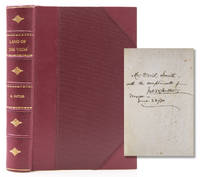
1873ref. 316648New York: Nelson & Phillips 1873. Eighth edition. Illus. with a map and 42 illustraions. 557pp. Three quarters crimson morocco and cloth sides. Fine. Eighth edition. Illus. with a map and 42 illustraions. 557pp. Inscribed on ffep"Mr David Smith/ with trhe compliments of/ Jno. W. Butler/ Mexico/ June 22/80. Nelson & Phillips unknown books
1900ref. 316898London: Macmillan and Co 1900. New Edition in One Volume. With 42 Illus. ii 601pp. 8vo. Bound in three quarters mottled brown calf and marbled boards green leather title label. Fine. New Edition in One Volume. With 42 Illus. ii 601pp. 8vo. Macmillan and Co unknown books
1828ref. 317758London: James Duncan and Thomas Tegg and Son 1828. Folding engraved map 15 engraved views. 4 vols. Small 8vo. Bound in half contemporary morocco and cloth. Very Good. Folding engraved map 15 engraved views. 4 vols. Small 8vo. James Duncan and Thomas Tegg and Son unknown books
1865ref. 311412Madras: Lawrence Asylum Press 1865. Illustrated with 12 mounted albumen photographs captioned in ink. Text within braided rule borders. ii 65 pp. 1 vols. 8vo. Full black morocco spine with gilt rules boards with gilt roll borders ornamental cornerpieces titled in gilt on upper cover yellow endsheets with orange ticket Bound at the Lawrence Asylum Press within border. Some minor rubbing occasional foxing. Fine. Gift inscription on first blank "J. Michael with the kindest regards of J.C.H. July 17th 1875. Illustrated with 12 mounted albumen photographs captioned in ink. Text within braided rule borders. ii 65 pp. 1 vols. 8vo. Spectacular unrecorded privately printed diary recounting a hunting expedition in Kerala southern India from 27 July to 22 September 1865 "the best shikar trip I have ever had". The narrator and his companion A.M.D. bagged 43 heads of eleven different types of big game including tiger bear elephant bison chettul and others with original albumen photographs mounted and captioned in a neat hand. The unnamed narrator mentions passing hunting parties one such Brown Jones and Robinson suggests that he read Trollope when the novel appeared as a serial in the Cornhill; the terrain around Hassanoor Ghaut was familiar to him for he had planted fruit trees and roses near a camp building; mention is made also of Hamilton Brooke and Faulkener hunting the area the previous year. This may be Douglas Hamilton who in 1892 published a long retrospective 'Records of Sport in Southern India'. The narrator buys prepared photographic plates from a departing hunter who had ordered them from the Patent dry Collodion Co. of Birmingham. The two hunters were accompanied by the dog Scamp chief among a pack that included Tinker and a plucky three-legged dog Pinko both killed by a panther and bearers of cowardly deportment save for the plucky Rajii who stood by when the narrator faced bear and elephant. At times the grass was too high for a man to get through easily. Notably the hunter describes many photographic incidents including how the frontispiece "The Tiger's Siesta" came to be made. One day D. encountered a a tigress atop the head of a young elephant and shot her despite the commotion. The young elephant ran off. The next day going to photograph the tigress the narrator was charged by a herd of elephants. He shot an elephant cow and they moved on to photograph the elephant "taking the tigress with us. The men who carried her threw her body into the elephants arms and it looked so strange the tigers mouth being curiously drawn up as if she were laughing that I thought I would try a picture in that position.". UNRECORDED in all the usual references and catalogues Lawrence Asylum Press unknown books
1870ref. 302484London: The London Printing and Publishing Company Limited 1870. 37 plates with 3 prints laid in and a portrait of Dr. Colin Rogers with notation on verso " Superintending Surgeon Madras Med. Dept. who married my Aunt Mary Anne. J.T.C. Ross.". 1 vols. Oblong 8vo. Contemporary green morocco 2 minor tears to the tail of the first leaf not affecting illustration 1-1/2 inch tear to the tail of the second leaf affecting bottom center of image some staining and soiling but overall very good. Various artists including S. Austin Clarkson Stan. 37 plates with 3 prints laid in and a portrait of Dr. Colin Rogers with notation on verso " Superintending Surgeon Madras Med. Dept. who married my Aunt Mary Anne. J.T.C. Ross.". 1 vols. Oblong 8vo. A wonderful album containing images of India drawn during the first two decades of the British Raj signed by "J.T.C. Ross as belonging to Aunt Jini ." J.T.C. Ross 1823-1897 recieved his medical education at St. George's Hospital and was admitted as a member of the Royal College of Surgeons in 1845. He served as Surgeon Major with the British Bengal Army Medical Service and was eventually promoted to Deputy Surgeon General and Surgeon-General. He was also the first editor of the Indian Medical Gazzette. The London Printing and Publishing Company, Limited unknown books
1893ref. 3075751893. 193 original albumen prints ranging in size from 180mm x 260mm to 239mm x 290mm mounted on card most captioned in ink in English in a fin-de-siècle Vienna hand; approx. 60 with small printed captions mounted to boards; 8 photographs untitled. 2 vols. Oblong 4to. Housed in two contemporary morocco backed cases stamped in gilt "Indien" on spine and upper covers with third box to match. Some occasional bowing of boards photographs fine and well preserved with exception of a stock image of the Taj Mahal lightly faded and some soiling to the mount. 193 original albumen prints ranging in size from 180mm x 260mm to 239mm x 290mm mounted on card most captioned in ink in English in a fin-de-siècle Vienna hand; approx. 60 with small printed captions mounted to boards; 8 photographs untitled. 2 vols. Oblong 4to. Group of 193 original albumen print photographs documenting the Indian portion of the world tour of Archduke Franz-Ferdinand of Austria 1863-1914. This official voyage of the Archduke lasting from December 1892 to October 1893 had explicit diplomatic ethnographic and scientific aims as well as an unspoken goal of permitting the Archduke to recover his health after a diagnosis of tuberculosis. The royal party traveled aboard the imperial cruiser Kaiserin Elisabeth the most modern vessel of the Austrian fleet. They spent two weeks in Ceylon now Sri Lanka before arriving in India in mid-January 1893. The party spent two-and-a-half months in India before touring Nepal returning briefly to Calcutta to embark for Singapore at the end of March. The world tour continued with visits in Australia the Pacific Islands Japan Canada and the American West before the Archduke sailed from New York to Le Havre. The Archduke's stay in India included diplomatic engagements military reviews and a formal visit to the sixth Nizam of Hyderabad who was in late Victorian times the richest man in the world. The Archduke was put up in the Nizam's Bashir Bagh palace. The Archduke also spent considerable time hunting hawking pigsticking bagging some 20 tigers and leopard antelope sambhur black buck and just about every other beast of the chase in Ceylon he had hunted elephant. Franz-Ferdinand was a devoted hunter whose lifetime game bag exceeded 200000 animals; on the world tour his entourage included a huntsman and his taxidemist Eduard Hodek 1858-1929 who was also the Archduke's photographer and boon companion. The itinerary of the Archduke's travels permits the close dating of many of the photographs and events of the trip. A detailed list of the photographs is available. An exhibition in Vienna in 1894 publicized the collections made by the Archduke during his world travels and his diary was published as Tagebuch meiner Reise um die Erde in two volumes 1895-6. Upon the death of his father in 1896 Franz-Ferdinand became the heir to the Austrian throne. His assassination at Sarajevo in 1914 proved the spark that sent Europe and the world into war. The photographs document a wide range of subjects both formal and informal including views of the Archduke's activities grand receptions by the Nizam of Hyderabad military reviews sporting and equestrian events topographical vistas palace scenes as well as ethnographic and hunting images including substantial game bags. Many of the formal photographs of events in Hyderabad were taken by Lala Deen Dayal 1844-1905 noted court photographer to the Nizam and the first Indian photographer to gain international recognition for his work as a pioneer of photography in India only a few bear his studio stamp; but the images are identified in Höfer. Some of the views of and around Calcutta are from Samuel Bourne or Bourne and Shepherd. A spectacular visual record of 1890s India the opulence of the court of Hyderabad and sporting episodes in the life of Franz-Ferdinand. Regina Höfer Imperial Sightseeing: Die Indienreise von Erzherzog Franz-Ferdinand von Österreich-Este Vienna Museum für Völkerkunde Wien 2010 unknown books
1880ref. 3050981880. Albumen prints approximately 9 x 11-1/2 in. mounted on card with manuscript captions 61 signed and numbered in the negative by Bourne the rest unattributed. 1 vols. Oblong folio. Contemporary full pebbled morocco. Light traces of rubbing occasional light foxing to mounts. Albumen prints approximately 9 x 11-1/2 in. mounted on card with manuscript captions 61 signed and numbered in the negative by Bourne the rest unattributed. 1 vols. Oblong folio. An excellent and varied view of British India in the 1860s with large-format photographs supplied by one of the longest running photography firms in the world. The images grouped by location generally show architectural views as well as some Himalayan and rural views. Images include scenes from Goverdhan Deig Cawnpore Lucknow Benares Calcutta Darjeeling Udaipur Palace in the Lake and Ahmedabad. unknown books
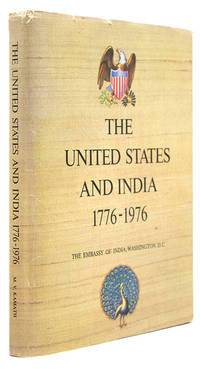
1976ref. 306083Washington D.C.: Embassy of India 1976. First edition. 222 pp. 4to. Original blue silk-covered boards dust jacket. Front hinge over-opened some minor edgewear to jacket. First edition. 222 pp. 4to. INSCRIBED by the author to then Secretary of State Cyrus Vance 1917-2002. Vance occupied the post 1977-1980 succeeding Henry Kissinger. He accompanied President Carter on his historic visit to India in January 1978 a few months before this inscription which culminated in the Delhi Declaration in which the two nations made a strong commitment to global diplomacy and human rights. The visit was crucial in restoring good relations with India following Nixon's tilt toward Pakistan in 1971. Kamath was Washington correspondent for the Times of India from 1969 to 1978. Embassy of India unknown books
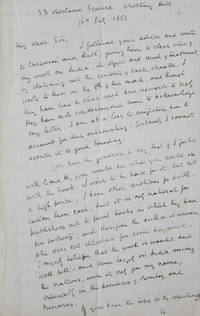
1861ref. 30491033 Norland Square Notting Hill 1861. 4pp. 12mo. Old folds. 4pp. 12mo. Born in Bombay in 1799 Duncan was the illegitimate son of the Governor of Bombay. Duncan's father's wealth enabled him to pursue a literary life and he published regularly from 1825-57. He summarises the work thus: "The object of this book is to enable those who have never studied India to acquire a knowledge of its institutions with the best possible expenditure of time." A book on India would be seemingly inevitable for a writer with his background yet the work described here was seemingly never published. unknown books
1928ref. 305460Berlin: Fretz & Wasmuth Verlag 1928. 1-15 taiusend. xxxvi iv 304 pp. of photographs. 4to. Burnt orange cloth. Fine in dustjacket with loss to upper front cover and a little on spine. 1-15 taiusend. xxxvi iv 304 pp. of photographs. 4to. Part of the series "Orbis Terrarum Fretz & Wasmuth Verlag unknown books