102 résultats
1995réf. LFA010c0Un ouvrage de 619 pages, format 185 x 130 mm, broché couverture couleurs, illustré, publié en 1995, Lonely Planet
réf. DADAX0367183412New unknown
1765pp. lix, 679, (xxviii). Folio. Engraved bookplate of: John Glaisyer, Chymist & Druggist, Brighton" Engraved armorial bookplate of Francis Frederick Fox. Contemporary full leather binding, joints cracked. A nice copy of an important and scarce Quaker work. George Fox (1624-1691), was the founder of the Society of Friends (Quakers). By nature serious and contemplative, at the age of 19 he entered upon a wandering quest for spiritual enlightenment. In 1646 he underwent a mystical experience that convinced him that Christianity was not an outward profession but an inner light by which Christ directly illumines the believing soul. Revelation was for Fox not confined to the Scriptures. In 1647 he began to preach. Although often the victim of mob brutality and eight times imprisoned between 1649 and 1675, Fox won many followers, especially among groups of separatists. In 1668 he prepared the first pattern of organization, which was for some years to serve as the discipline of the Society of Friends. The London Yearly Meeting was started in 1671. To confirm his followers in their beliefs and to spread the truths, Fox went in 1671 to the West Indies and to America, where he made arduous journeys to various colonies scattered between New England and North Carolina. Later he twice visited Holland. His sincerity, serenity, fearlessness, and powerful preaching are attested to by a number of his contemporaries. This Journal, with a preface by William Penn, was first published in 1694. An early owner of this book was Francis Frederick Fox (1832-1915) the 2nd son of Francis Ker Fox of Brislington House. He was an oil and colour merchant, President of the Grateful Society in 1869. Sadly, his wife Alice died in childbirth in 1870 and he was left a widower with six children. He was Master of the Society of Merchant Venturers in 1878 & 79 and Sheriff in 1894. He was a J.P. for Bristol and for Gloucestershire and an Alderman for the city from 1865. He wrote extensively on local history. Perhaps he was a descendant of the great Quaker George Fox. Smith p. 690; Sabin 25352. **PRICE JUST REDUCED! PA62
réf. DADAX3642035485New unknown
réf. 1018231986.Ghardcover. Good. Access codes and supplements are not guaranteed with used items. May be an ex-library book. hardcover
réf. DADAX1436837235New unknown
réf. SONG0199253897Used: Good unknown
réf. DADAX0199253897New unknown
réf. DADAX0719078768New unknown
réf. DADAX1432677055New unknown
1794réf. PHO-1886John Stockdale, Londres, 1794-1801, 3 volumes in-4 (275 X 225 mm), reliés plein veau marbré époque (restauration ancienne), pièce de titre rouge et de tomaison vert. Tome I, liv-494 pp., Tome II 520 pp, Tome III (1801) xix 443 pp., illustré de 3 frontispices, 11 cartes dont une en double feuille et dépliante (720 X 620) (cartes des Indes occidentales), 2 dépliantes Saint Domingo (250 X 225) et Jamaïque et 8 planches h.t., ex-libris en page de garde, déchirures aux pliures et brunissures en marge de la grande carte, frottements, griffures, pièces de titre et tomaison avec petits manques, quelques brunissures sur les titres et quelques feuillets.
réf. SONG0813015391Used: Good unknown
réf. DADAX1504901010New unknown
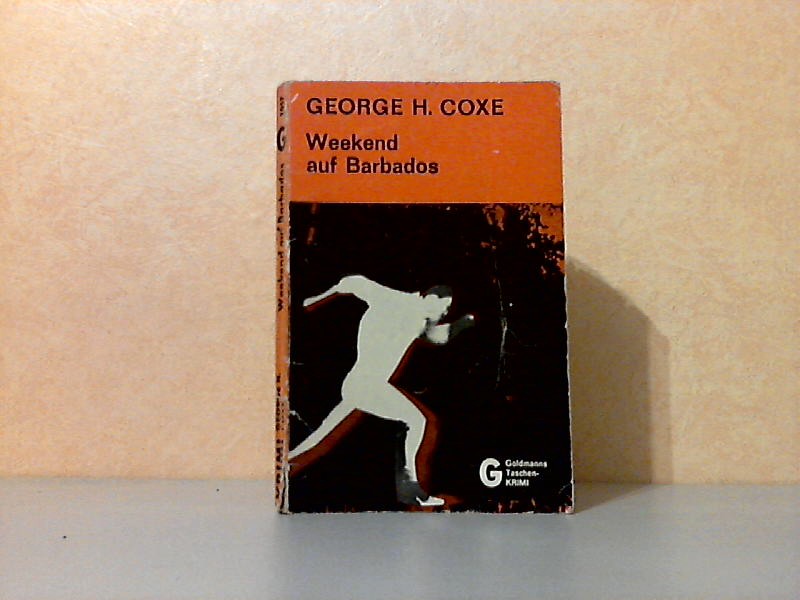
1963réf. 41165München, Wilhelm Goldmann Verlag, 1963. 179 Seiten , 18 cm, kartoniert
1999Austin Clarke grew up in Barbados, enveloped in the heavenly smells and smoke of women cooking. From them, he learned how to prepare the beloved dishes of the island - Rich Golden Roast Pork, Fried King Fish, Breadfruit Cou-Cou and, of course, his very own Chicken Austintacious. He shares his recipes for these hearty meals and reminisces about the "slave" food that was so much a part of his life. Whether it's a story about the village butcher whose qualifications were somewhat suspect, or a sure-fire route to a woman's love through her stomach, Austin Clarke will make you hungry for the "hot cuisine" and spirit of the island. 248p. Inscribed by author 22 February 2002, else as new Book
réf. SONG0847833070Used: Good unknown
1780réf. 18799genève pellet 1780 -in-4 une carte ancienne gravée sur cuivre (Copper etching) en noir par André, gravée par Arrivet. Format : 32 x 21 cm, pour illustrer l'uvre de l'Abbé Guillaume-Thomas Raynal intitulée "l'Histoire philosophique et Politique des Etablissemens et du Commerce des Européens dans les Deux Indes", pli central horizontal normal venant d'un atlas( horizontal centerfold), 1780 Genève Pellet Editeur,
réf. 1307LES MUSEE DE LA VILLE DE STRASBOURG
27pp., orig. printed wrappers. 97 items described.
1962réf. 4281glBarbados: Government Printing Office 1962. Octavo softbound 162 pp. Photos. Very Good. Government Printing Office, 1962. paperback books
réf. 0260093831.Ghardcover. Good. Access codes and supplements are not guaranteed with used items. May be an ex-library book. hardcover
réf. 15253Bridgetown Government Printing Office 1990. Hardcover. various internal paginations cloth and boards. Bridgetown, Government Printing Office, (1990) hardcover
réf. 15255Bridgetown Government Printing Office 1992. Hardcover. 2 vols various internal paginations; 807p. index cloth and boards. Bridgetown, Government Printing Office, (1992) hardcover
réf. 46414615-nnew. unknown
réf. 22407Whitehall 29 July 1707. 2 pp. 12 x 8 inches integral blank leaf neatly mounted docketed concerning Mr Holder one of the Councill of Barbadoes. The Board of Trade and Plantations regulated foreign commerce enforced trade and navigation acts supervised colonial administration and negotiated commercial treaties. In 1706 the colonial assembly of Barbados a British colony enacted legislation that led to one of the more unusual monetary experiments in history creating a fiat domestic currency that was virtually legal tender. The legislation sparked a strong protest from merchants slave traders and other English traders the creditors in the economy of Barbados. The British Board of Trade acted to force the redemption of the paper money but the episode reveals the secret war between debtors and creditors that often surfaces when monetary institutions are evolving. This handsome letter is signed by William Lord Dartmouth Henry Lord Herbert John Pulteney and Sir Philip Meadows. Sir Philip Meadows 1626-1718 had a distinguished career as a diplomat representing Cromwell in international treaty negotiations. Meadows was the author of several works including Observations concerning the Dominion and Sovereignty of the Seas 1689. unknown