1783 resultados
1791ref. 6424A Paris, Chez F. Buisson, Imprimeur-Libraire, rue Hautefeuille, n°20. (1791). 1791 2 vol. in-8° (200 x 125 mm.) de : I. [2] ff. (titre, f. t.), viii, 466 pp.; II. [2] ff. (titre, f. t.), 486 pp. Initiales manuscrites à l'encre "L R" surles faux titres. Demi-basane dépoque, dos lisses ornés et titrés à l'or, coins de parchemin, plats recouverts de papier à la colle bleu.
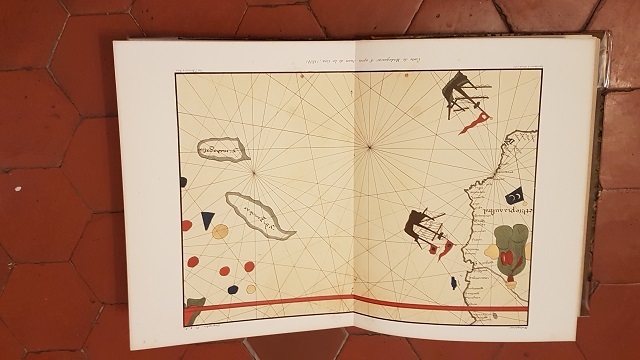
ref. ORD-19801Paris. (Imprimerie Nationale, ca 1885-1892). 1 volume in-4 (250 x 308 mm) cartonnage dos et coins toile ocre jaune, plats marbrés, gardes satinées. Exemplaire sans page de titre contenant 61 planches, fac-similés de cartes et plans anciens, montés sur onglets soit 6 à double page dont 4 en couleurs, 15 simples en couleurs et 40 en noir et blanc. (Chadenat 4890, seule référence que j'ai pu trouver en donne 67). Dos et coins épidermés, mors intérieur faible, rares rousseurs, planches en excellent état. Ouvrage de toute rareté.
ref. ORD-15771Femme distinguée et cultivée son récit ne manque pas de charme littéraire ni de poésie. Elle part de Marseille le 10 février 1900 à bord du paquebot Iraouaddy des Messageries Maritimes. Enchantée de ce qu'elle découvre elle décrit les paysages et les incidents du voyage avec souvent de brefs rappels historiques. Mais c'est surtout lorsqu'elle décrit sa vie parmi les autres colons et les indigènes qu'elle est la plus intéressante, par ses observations, des réflexions, les récits des événements divers, parfois dramatiques, qui animent la société dans laquelle elle vit en nommant les personnes qu'elle rencontre, donnant ainsi un aperçu assez intime de cette vie coloniale à Diégo-Suarez et à Tamatave entre 1900 et 1904. On peut diviser l'ouvrage en 4 parties. 1° Premier voyage à Madascar avec son mari et son retour en France. 2°. Deuxième Voyage Marseille 25 Mars 1903 toujours à bord du même paquebot. 3°.Souvenirs de la difficile mission de son mari de Fort Dauphin à Tananarive d'Août 1907 à fin Octobre 1904 qui compte 16 pages. 4°. Voyage d'inspection du Général Gallieni autour de l'île de Madagascar 1904. Reportage photographique de 28 photos originales de formats divers et d'une carte postale collées. Les 2 voyages sont illustrés de nombreuses photos, cartes postales et illustrations découpées. On note le très joli menu du repas de 1re classe du Paquebot Iraouaddy du 25 Février 1900 et le Programme des Courses du 27 Septembre 1903 à l'Hippodrome des Manguiers imprimé én noir sur soie blanche.
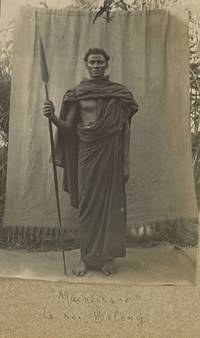
ref. PF25Oblong Elephant Folio ca. 43 x 35 cm or 17 x 13 ¾ in. 26 double paper leaves eight blank one split. 84 mounted gelatin silver photographs from ca. 16 x 12 cm 6 ½ x 4 ½ in to 11.5 x 8.5 cm 4 ½ x 3 ¼ in. 36 images with period French pencil captions on mounts; one image captioned in negative. Period brown cloth album with blind-stamped borders on the boards. Boards and mounts slightly waved; mounts with water stains on extremities; a few photographs mildly faded but overall a very good album of interesting strong photos. A collection of 84 gelatin silver photographs showing Madagascar including portraits of local rulers nobility and Malagasy people and views of their villages at the turn of the 20th century. The French protectorate of Madagascar the Malagasy Protectorate was declared in 1882 in an attempt to control the country’s foreign affairs and justified by land claims on surrounding islands. Sovereigns of the Merina Kingdom Kingdom of Madagascar disputed the declaration and rejected French demands and interference. In 1895 French forces occupied the capital city of Antananarivo and imprisoned Queen Ranavalona III 1861-1917 and Prime Minister Rainilaiarivony 1828-1896. Shortly after the Merina Kingdom formally became a French protectorate. In 1897 it was annexed and became French Madagascar. Nine photographs are portraits identified in the captions as being local rulers or their family in mostly northern and central Madagascar. They include the queen of the Sakalava people Binao 1867-1927 r. 1881-1927; the king of the Antankarana people Tsialana II ca. 1843-1924 r. 1883-1924 with his son and brothers; Betsileo princesses; the family of “Prince Ramaharo”; “Morozy ancien roi former king Sakalava” and “Vazoho ancien roi Sakalava”; and the “king” or “chief” of Beleny. Two portraits also show the “young princes” Abdallah and Halid of Anjouan established as a French protectorate in 1886 became part of the French colony of Madagascar in 1908 gained independence as part of the Comoros in 1975 sons of “Prince Salim” and their tutor. The caption also includes their dates of birth. Over 50 photographs are general portraits of Malagasy people. Over 10 are captioned “Katzaby femme Betsimisaraka”; “Yalman femme de Ste. Marie”; “Antanibe – groupe des femmes Sakalava”; “Majunga Sakalava Mahajam” etc. Portraits include those of men and women wearing traditional dress and hairstyles a man dressed as a warrior a prisoner with a restraining device around his neck and a group of male dancers for the “circumcision celebration” a tradition among the Sakalava. Other photographs in the album include scenes from village life building a hut one woman doing another’s hair a market in Ambositra etc.; views of Ambositra a Tanala village and a Betsileo village; a betsabetsa a type of rum mill; and Malagasy people panning for gold in a river. There are also photographs showing a Betsimisaraka tomb in Andevoranto an Antambaoaka tomb in Mananjary a Betsileo tomb the interior of a tomb in Antananarivo and a commemorative stele in Betafo. Three photographs show an event possibly at a school featuring musicians dancers children and Malagasy youth dressed in military uniform. Overall an interesting and lively collection of photographs showing Madagascar at the turn of the 20th century. hardcover
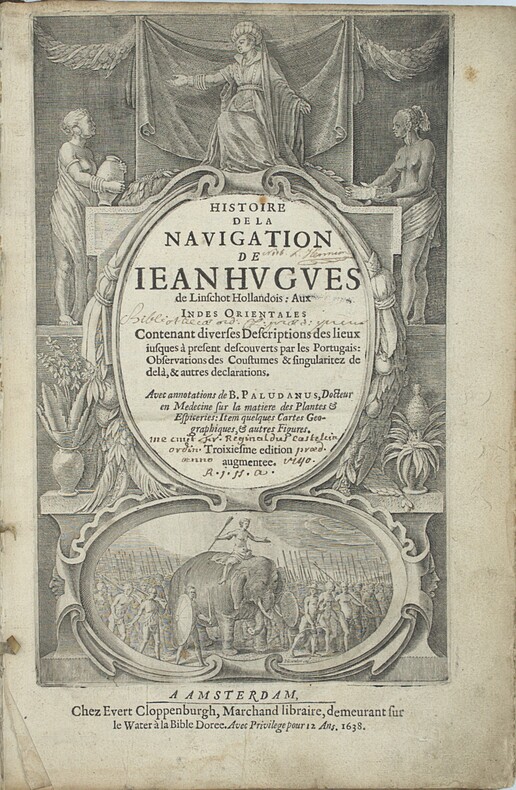
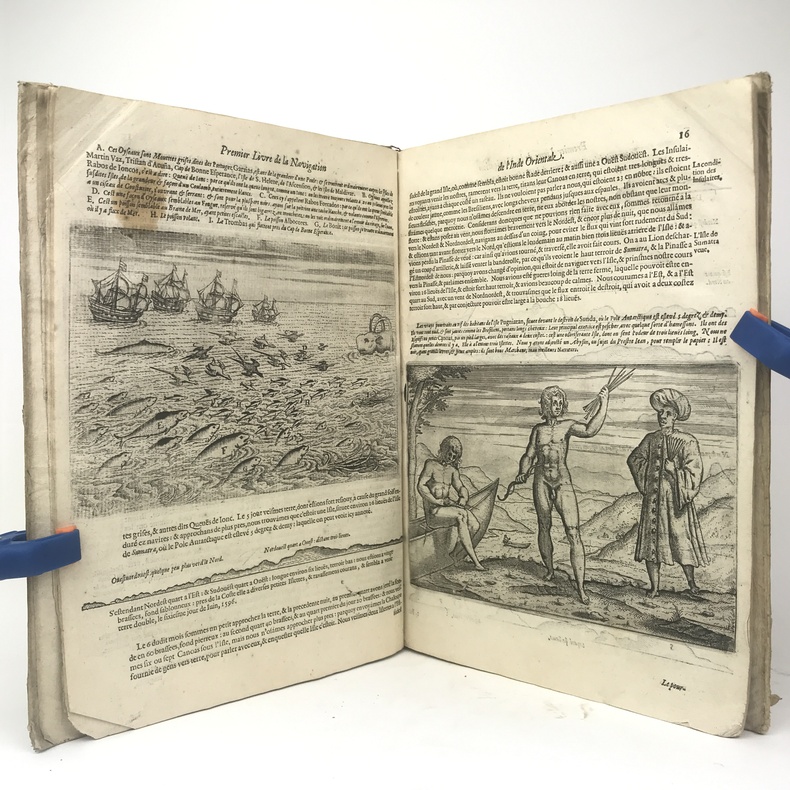
1638ref. PHO-2460Amsterdam : J.E. Cloppenburch, 1638, in-folio, 315 x 220mm, 4pp. (titre, préface, indice des chapitres) 206pp., titre avec des figures allégoriques (Asie, Afrique Europe) et une scène d’un roi sur éléphant, illustré du portrait de l’auteur, 29 (sur 36 ) planches gravées dépliantes à double page et vues de Johann et Baptiste ven Doetecom d'aprés Linschoten , les cartes sont absentes. Titre empoussiéré, quelques taches et mouillures, le dernier feuillet détaché. Reliure en partie détachée du corps de l’ouvrage. Provenance - « Fr. Reginaldus Castelin (?) ordin. 1740 » (ex-libris manuscrit ancien). – L. Hennion (ex-libris manuscrit ancien sur une garde). Bibliographie Sabin, n°20128. Leclerc, n°363. Cordier Japonica, 222. Gay, 260
1609ref. PHO-11431 volume in-folio (33 x 23 cm), vélin rigide parchemin (reliure de l'époque), dos lisse titré à l'encre, nombreuses écritures manuscrites sur les plats, 5 à 53-[1] feuillets. Page de titre, 3 premiers feuillets et feuillets 51 et 52 manquants, charnière fendue ,mouillure sur 5 ff et manque de papier en marge , galerie de vers avec manque. Seconde édition française, illustrée de 55 gravures sur bois in-texte.
1904ref. 22917(1904) in-8 oblong percaline rouge, minimes piqûres éparses
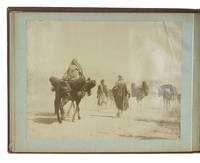
1900ref. H9GCKI5261RRZanzibar Madagascar Mayette 1900. Brown cloth album made by M. Andouard in Paris decorated endpapers. Oblong album 25 x 34 cm with 47 silver gelatin photographic prints many with handwritten captions in French. The photographs vary in size from 8 x 5.5 cm to 27 x 20.5 cm. The 30 panorama photographs measure 5.5 x 17.5 cm. 10 10 blank ll. A unique set of views from Zanzibar and Madagascar taken five years after the French military intervention of 1894/95 also called the Second Madagascar expedition. The unidentified photographer can be seen in three of the photographs wearing a white coat and white pith sun helmet being the French tropical style as used by white colonial troops since 1878 suggesting the photographers connection with the French colonial army. His travel partner is occasionally shown as well. Their visit took place during the final years of the notorious slave trading activities of Tippu Tip 1837-1905 in Zanzibar.The photo album opens with a portrait of a young Sakalavan woman in a beautiful dress. Three other photographs show other native women as well including one family with a baby. The majority of the photographs are panoramic views showing villages harbours coasts and landscapes the first dated 28 November 1900. The only full-page photograph in the album shows an Arab caravan marching along the beach. Rare are the few photographs taken in Mayotte giving some highly uncommon scenes of the island nation's pre-development era.Binding somewhat scratched spine slightly worn. The front endleaf clipped. Only a few photographs slightly faded: in very good condition. AFRICA ART ARCHITECTURE & PHOTOGRAPHY Photography ZZ East & Southern Africa hardcover