1 285 résultats
1777réf. 233860Augsburg: Tobias Conrad Lotter 1777. Hand-colored map. Engraved by Tobias Conrad Lotter. 1 vols. 30-1/8 x 22-1/4 inces 765 x 565 mm 2 sheets. Minor creasing light toning original reinforcement on verso of joint. Framed but without glass. Hand-colored map. Engraved by Tobias Conrad Lotter. 1 vols. 30-1/8 x 22-1/4 inces 765 x 565 mm 2 sheets. This map is Lotter's German edition of Sauthier's map of 1776 done by William Faden. Tobias Conrad Lotter unknown books
1740réf. 19594(Augsburg), Matthäus Seutter, um 1740. Ca. 58,5 cm x 51 cm (ganze Blatt).
1777réf. 233860Augsburg: Tobias Conrad Lotter 1777. Hand-colored map. Engraved by Tobias Conrad Lotter. 1 vols. 30-1/8 x 22-1/4 inces 765 x 565 mm 2 sheets. Minor creasing light toning original reinforcement on verso of joint. Framed but without glass. Hand-colored map. Engraved by Tobias Conrad Lotter. 1 vols. 30-1/8 x 22-1/4 inces 765 x 565 mm 2 sheets. This map is Lotter's German edition of Sauthier's map of 1776 done by William Faden. Tobias Conrad Lotter unknown
1758réf. 67012Philadelphia:: Printed by W. Bradford 1758. First edition. old sueded leather. Later additional ownership name on title page; a few neat old marginal annotations; some scattered inoffensive staining to text; several significant losses to the leather at the top of the spine and corners; nevertheless tight and sound. . Folio. One-time legislator Aaron D. Woodruff's copy with his 1785 ownership signature at the head of the title page and bookplate on pastedown. Printed by W. Bradford, hardcover
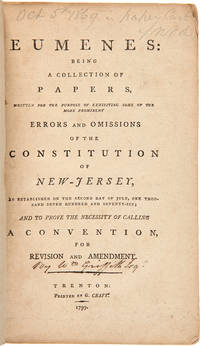
1799réf. WRCAM36586Trenton: Printed by G. Craft 1799. vi9-1496pp. Later plain wrappers paper label. Wrappers edgeworn splitting along front hinge. Light even tanning. About very good. In a half morocco box. This copy bears the ownership signature of Elisha Boudinot on page 29. The tract's author William Griffith studied law in Boudinot's office in Newark before being admitted to the bar in 1788. Boudinot's brother Elias was an important New Jersey lawyer and politician a member of the Continental Congress in the 1770s and '80s and a U.S. Representative from 1789 to 1795. This scarce collection of essays by William Griffith a prominent Burlington lawyer and legal writer argues for the revision of the Revolutionary-era New Jersey constitution. The original constitution crafted over a period of five days and signed just before the Declaration of Independence was a document that did little more than proclaim the state's independence from royal authority and establish a basic framework for government. In these essays some of which had been printed in the STATE GAZETTE Griffith sought to "bring home to every man's heart a conviction of the actual evils which arise out of the theoretic errors of the constitution." The fifty-three essays point out the defects in the constitution and describe Griffith's alternatives on issues such as the judiciary representation etc. Though Griffith and his Federalist cohorts supported revising the 1776 constitution the Republicans in the state opposed revision and carried the day. The New Jersey constitution would not be revised until 1844. EVANS 35570. FELCONE 105. SABIN 28829. COHEN 3194. Printed by G. Craft unknown books
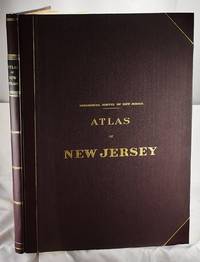
1888réf. 2003030066New York Julius Bien & Co 1888. 2nd. Hardcover. Very Good. Atlas folio 26 3/8 x 19 inches. Rebacked with modern leather spine over publisher's gilt-lettered boards. Very good binding and cover. At head of title: Geological Survey of New Jersey. Scale of maps 1-17: 1 mile to an inch. 20 double page chromolithographic maps 70 x 51 cm. Light toning. Collated listed of maps: no. 1. Kittatinny; no. 2. Southwestern Highlands; no. 3. Central Highlands; no. 4. Northeastern Highlands; no. 5. Southwestern Red Sandstone Vicinity of Flemington; no. 6. Central Red Sandstone Valley of the Passaic; no. 7. Northeastern Red Sandstone The Counties of Bergen Hudson Essex; no. 8. Trenton; no. 9. Monmouth Shore; no. 10. Lower Delaware Vicinity of Salem; no. 11. Camden; no. 12. Mount Holly; no. 13. Barnegat Bay; no. 14. Delaware Bay Bridgeton; no. 15. Southern Interior; no. 16. Egg Harbor; no. 17. Cape May; no. 18 New Jersey State Map Geographic; no. 19 New Jersey Relief map Hypsometric; no. 20 Geological Map of New Jersey. 2nd edition 1st was published in 1884 this edition has an additional map not present in the first. According to Felcone this atlas represents the first accurate mapping of New Jersey the result of the first topographical survey based on triangulation of an American State. LeGear. Atlases of the United States L5609; Schwartz Seymour I. and Ehrenberg Ralph E. The mapping of America p. 310. Rumsey 2902. This is an oversized or heavy book which requires additional postage for international delivery outside the US. New York, Julius Bien & Co hardcover
1799réf. 36586Trenton: Printed by G. Craft 1799. Critiquing New Jersey's Revolutionary Constitution This copy bears the ownership signature of Elisha Boudinot on page 29. The tract's author William Griffith studied law in Boudinot's office in Newark before being admitted to the bar in 1788. Boudinot's brother Elias was an important New Jersey lawyer and politician a member of the Continental Congress in the 1770s and '80s and a U.S. Representative from 1789 to 1795. This scarce collection of essays by William Griffith a prominent Burlington lawyer and legal writer argues for the revision of the Revolutionary-era New Jersey constitution. The original constitution crafted over a period of five days and signed just before the Declaration of Independence was a document that did little more than proclaim the state's independence from royal authority and establish a basic framework for government. In these essays some of which had been printed in the STATE GAZETTE Griffith sought to "bring home to every man's heart a conviction of the actual evils which arise out of the theoretic errors of the constitution." The fifty-three essays point out the defects in the constitution and describe Griffith's alternatives on issues such as the judiciary representation etc. Though Griffith and his Federalist cohorts supported revising the 1776 constitution the Republicans in the state opposed revision and carried the day. The New Jersey constitution would not be revised until 1844. Later plain wrappers paper label. Wrappers edgeworn splitting along front hinge. Light even tanning. About very good. In a half morocco box. EVANS 35570. FELCONE 105. SABIN 28829. COHEN 3194. unknown
1758réf. 016251Philadelphia: William Bradford 1758. First Edition. Hardcover. Title page with a few repaired tears hinged with following Preface page; two adjoining leaves pages 441-444 of text lacking and supplied with facsimiles. Contents Very Good binding about Fine. Folio 7-1/4" x 11-1/2" bound in contemporary calf leather with a decorative blindstamped border recently rebacked with a new gilt-lettered and decorated spine preserving original paste-downs and free endpapers; 4 763 pages. Title within rule border decorative woodcut head- and tail-pieces. An important compilation of the fundamental New Jersey charters and session laws of the proprietary period 1664 to 1702 up to Lord Cornbury's commission and instructions as Royal Governor when New Jersey became a crown colony under Queen Anne. Publication was ordered by the New Jersey Assembly in 1752 but two years were required to collect the documents to be included while the typesetting and printing took Bradford an additional three. By the date of publication some 170 copies had been subscribed. This title was the largest volume issued from Bradford's press and one of the largest from any eighteenth-century American press. Evans 8205; Sabin 39527. Early owner name on the title page and early twentieth century names on the front pastedown. W[illiam] Bradford hardcover
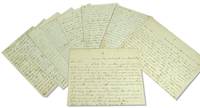
1862réf. 72838np: np 1862. Civil War letter archive comprising 78 chronologically arranged letters the majority from Corporal Christopher C. Mead of the 12th New Jersey Regiment to his wife Hannah dated November 12 1862 to May 29 1864. Two letters comprise correspondence between Christopher and Hannah in March and April 1864; Hannah authored two additional letters in May 1864. Three letters are incomplete. Most bear penciled numbers on the front apparently added by a previous handler. The correspondence is generally legible though some letters have faded more than others; overall the paper is in good condition. The archive also includes three undated and unsigned letter fragments; an unsigned letter dated June 18 1863; a September 16 1862 letter addressed to "Uncle Christopher" concerning family matters accompanied by a note reading "Mrs. Hannah Mead Woodstown Salem Co. New Jersey Please forward"; and a four-page indenture dated 1811 and signed by James Mead. The most striking letters are Corporal Mead's fist hand account at the Battle at Gettysburg with vivid description of Picket's charge written on July 6th. Shortly after Pickett's Charge at Gettysburg Mead. an active participant in the battle. writes his wife Hannah: ".The next day was the severest of the fighting. Skirmishing was kept up until about noon when the rebels opened with about 80 pieces of artillery upon us which was kept up for about 3 hours when they succeeded in silencing one of our batteries; the artillery fight which was about a half mile apart ours being on a hill theirs masked in the woods the ground between us was lower than either of the artillery positions. After they had succeeded in silencing in silencing the battery they began to pour out of the woods in 3 lines of battle and a line of skirmishers in advance of them. In all 18 reg's strong approaching our front they made a splendid approach with their colors flying in the breeze. I was about the center of our line at the point of which they were approaching and had a fair view of them although they had silenced our battery. Thanks be to God of our Nation we had more in reserve for them. Well charged with great and canister shot which was opened upon them with terrible effect. But as their ranks were terribly thinned by the artillery fire yet they closed up quickly their ranks and marched on like brave determined men to accomplish their purposes. On they came driving our skirmishing line before them like so many frightened sheep. Although they fought well until they saw there was no chance then they fell back quickly as they possibly could; and as soon as the rebs came in range of our guns of our line of battle which laid behind piles of rails and stones four deep we opened on them and they fell like grain before the reaper which nearly annihilated them and all that came as far as our line of battle came as prisoners and of the 18 stand of colors they so nobly brought out only one seen to go back." Letter from Gettysburg recounts the Battle of Pickett's Charge. During Pickets Charge Mead writes "But as their ranks were terribly thinned by the artillery fire yet they closed up quickly their ranks and marched on like brave determined men to accomplish their purposes. On they came driving our skirmishing line before them like so many frightened sheep. Although they fought well until they saw there was no chance then they fell back quickly as they possibly could; and as soon as the rebs came in range of our guns of our line of battle which laid behind piles of rails and stones four deep we opened on them and they fell like grain before the reaper which nearly annihilated them and all that came as far as our line of battle came as prisoners and of the 18 stand of colors they so nobly brought out only one seen to go back." From Longacre page 135 "Several minutes under the storm of Federal bullets reduced Lowrances and Lane's brigades to bloody fragments. A handful managed to reach the wall before they went down riddled with balls. Their comrades at last convinced of the futility of it all began to flee. Many fell dead the moment they turned their backs to the enemy. Others hugged the ground in the hope of surviving the hail of lead long enough to surrender." Pickett's Charge July 3 1863 also known as the Pickett-Pettigrew-Trimble Assault was a major Confederate infantry attack against Union positions under Major General George G. Meade on the final day of the Battle of Gettysburg. Ordered by General Robert E. Lee and directed by Lieutenant General James Longstreet approximately 12500 Confederate soldiers advanced nearly three-quarters of a mile across open ground toward the center of the Union line on Cemetery Ridge. Preceded by a heavy artillery bombardment the assault was met by intense Union artillery and rifle fire and was repulsed with more than 50 percent Confederate casualties. The failed attack effectively ended Lee's invasion of Pennsylvania and forced the Confederate Army's retreat to Virginia. Popularly named for Major General George Pickett whose division formed the center of the assault the charge is often regarded as a major turning point of the Civil War and is associated with the "high-water mark of the Confederacy" referring to the farthest point reached by Confederate forces. Mead writes from Hanover County Virginia late May 1864. Soon after he fought in the Battle of Cold Harbor May 31 - June 12 1864 where Mead was killed. Battle of Cold Harbor May 31-June 12 1864 was a major engagement of the Union Army's Overland Campaign against Richmond. At the crossroads of Cold Harbor roughly ten miles northeast of Richmond General Ulysses S. Grant's Army of the Potomac launched repeated assaults against entrenched Confederate forces under General Robert E. Lee culminating in a devastating attack on June 3. The Union assaults failed to break the Confederate defenses and resulted in more than 17000 casualties. Grant subsequently disengaged crossed the James River and moved toward Petersburg a vital railroad and manufacturing center that guarded the approaches to Richmond. Although Cold Harbor was a costly Union defeat Grant's continued advance ultimately placed Confederate forces under sustained pressure around Richmond and Petersburg. np unknown
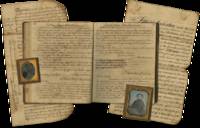
1855réf. BK0035New Jersey 1855. Appx. 43 items: letterbook 26 documents related to properties in New Jersey and 15 images. Letterbook 9 x 7 ¼ inches 58 pp totaling appx. 17500 words. Front cover detached and covers generally quite worn though spine intact contents excellent; overall very good plus. Document conditions vary fair to excellent with some damaged or partial generally very good minus. A full inventory of the contents of the letterbook and legal documents is available on request. Very good. A multigenerational archive of the Woolman family and its allied Hunt Burr Haines and other families documenting nearly a century and a half of Quaker family life in southern New Jersey. The collection is highlighted by a letterbook preserving copies of letters from prominent Quaker minister and colonial-era abolitionist John Woolman 1729-1772 his cousin and fellow minister Wiliam Hunt 1733-1772 and several others written to John Woolman's brother Uriah. These include a number of unpublished letters from authors including Woolman Hunt and others. The collection also contains a number of legal documents relating to family land holdings including an illustrative 1769 document concerning the division of a tract of land inherited by the Woolman brothers on the death of patriarch Samuel Woolman in 1750. Besides several memorials poems and copies of letters of Mary Peisly the letterbook contains two letters from Woolman that have not been published in full eleven unpublished letters from Hunt and two unpublished letters from friends in England concerning Woolman and Hunt's deaths there from smallpox in 1772. The letterbook was likely maintained by Uriah Woolman's wife Susanna Burr Woolman as an inscription on the first page reads "Phebe Woolman 1st Mo. 10th 1823 / given by Susana Woolman"; Susana Woolman was Phebe Woolman's great aunt. A full inventory of the contents of the letterbook and the legal documents can be found at the end of this description. Unpublished Letters of William Hunt 1758-1771 The unpublished Hunt letters come from the late 1750s to early 1770s and trace the North Carolinian's path along the Quaker networks of the US's east coast up to New York and down to the "very pleasant" Delaware capes May 5 1771 and finally to Europe. Hunt John Woolman's cousin was born in Pennsylvania and emigrated to Virginia and eventually the Quaker settlement of New Garden now Greensboro North Carolina. He began his ministry before he turned fifteen and by twenty had begun traveling to minister; his Memoirs state that he visited meetings at every North American colony.1 Like his cousin John Woolman Hunt preached against enslavement. He reported feeling so disturbed by the practice while in Pennsylvania that he nearly abandoned food and drink entirely feeling that consuming goods made by enslaved people would be participating in their oppression.2 The first two letters from Hunt in the letterbook were likely sent from home in New Garden though they indicate that he had already made at least one journey north; in the first undated letter he writes: "The little contract of firm friendship Occasion'd by our small Acquaint's in this Remote Land Induces my hand to paper at this time to Lett thee know that tho' the distance is great and the days are many since I Saw thee we being depriv'd of personal and almost litteral Converse with each other yet that Spring of infinite love that first cemented our hearts together Remains with me unchangable in the hidden Life of our God .". N.d. He states that he feels drawn "in the Spring of Life towards your Land but the Time when as Yet I know not". The next letter is dated to 1758 and also seems to report on home affairs and a visit to New Garden by Uriah Woolman: "we are well in General at this time I also heard from Cousin Grantt not long since; they were then well and settled at the Watterrees Meeting Brother Clearor had the Misfortune to have his House and most of his Household Goods Burnt and allso a pretty Compleat New House that he built since thou wast here .". August 13 1758 He again comments on coming north stating that "I dont see my way quite Cleare in Coming to that province this fall tho' I have made some preparation for it and expect it to be my Lot ere long." In 1761 he traveled to Virginia Maryland Pennsylvania and New Jersey.3 There are two letters to Woolman in the letterbook sent from this journey the first reporting on meetings: "Dear cousin by this I may inform thee that I am favour'd with health through mercy I have visitted meetings as far as Maiden Creek likely Pennsylvania and this day am going to the forest through gracious help I am come thus far pretty safe having had some satisfactory meetings; Deare Cousin it is the desire of my mind that though and I stand in real obedience to our duty which brings true peace and perfect Liberty of mind not to be crampt or fetter'd with those things that suddenly end nor subject unto our own Passions we might become freeborn of that City which John Saw .". July 31 1761 The next reports on a planned visit to the Woolmans: "I hereby convey my dear love to thee as also to lett the know that through gracious favour I am as well as common and intend to be in Town on day come Week if the Lord permitt; if thou hast opportunity please to let Cousin Asher know the Time as he desired me I may further acquaint thee that my companion intends directly home from Town and if it should be agreeable I should be glad if thou or Cousin Asher could go with me into Buck's County". August 13 1761 The letterbook states that this letter was sent from "Willinstown". This is possibly the Willistown meeting Newtown Square Pennsylvania; though that meetinghouse was constructed in 1798 its website states that there was a history of Quaker worship there before its construction.4 It could also be from Williamstown New Jersey. Both locations are fairly close to the Woolmans' Mount Holly homestead. The next two letters dated to 1766 were likely both written from home with one identified as sent from New Garden. This would have been during one of the brief periods of Hunt's life wherein he did not feel called to travel instead spending the time with his young family. In the earlier letter dated April 11 Hunt tells Woolman "I conceive my spirit often united in a secret sympathy with thy deep trials and close besetments". In the later dated letter he weighs in on the value of some land owned by Woolman: "I understood by John Unthank that thou desired I with some others would view thy Land and send an account of our Judgment upon the price it is the mind of many that One hundred pounds is the Value but I think if thou would send Orders to sell it for One hundred and twenty pounds it would fetch it readilly". September 3 1766 The next letters date from 1771 NB: four letters are missing according to the letterbook's numbering meaning likely a single page has been lost and find Hunt on the journey of ministry that would take him to England Holland and his eventual death. In January he reports: "Much esteemed Relations by these you may understand how far we have got on our journey we have been at most of the meetings along shore up to Raway likely Rahway New Jersey where Last night at New York it looks rather likely to my present view we shall return to your City towards spring in order to Embark but leave it to the wise disposer who best knows his Secret purposes concerning us". January 11 The next was written from the Delaware capes where Hunt and his companion nephew Thomas Thornburgh were aboard the Mary and Elizabeth.5 Hunt writes: "After my very dear Love saluting thee and thy Wife these may inform that we are well had a good and Comfortable Night are likely to get past the Capes this Evening Divine regard extending his sweetning presence which seems to make this little habbitation likely to be very pleasant and easey beyond what I expected". May 5 The latest unpublished Hunt letter was sent from London in June of that year and appears to be the first written to Uriah Woolman upon Hunt's and Thornburgh's arrival. Hunt is less than impressed with the English Friends: "I have to Inform thee that we are safe arrived in London having had a short and very agreeable passage we Landed in this City the 28th day att 6 OClock in the morning after parting with thee which was little more than twenty Seven days I have been at a few meetings wherein there seems a number of well disciplin'd friends but these alass are every where but small in comparison of the great number who profess the Glorious Truth but being ignorant of its working are Dead weights and Burthens to those who are Baptis'd in and with the Seed . my dear companion was very Sick the first two Weeks at Sea but after got ; Our Capt. Treated us with great respect". June 4 1771 Unpublished Letters of John Woolman 1760 and 1763 Woolman's letters follow a similar tack to Hunt's though he is more scrupulous about including the full names of Friends he encounters making them promising material for further research into the northeast's Quaker networks. He writes from Nantucket in June 1760: "My companions & I are both middling well in health and expect if way open to go from this place tomorrow Ann Grant and Mercy Richman are here and both middling well. We Samuel & I expect if Providence permit to be at New Port Quarterly Meeting on the Tenth of Next Month and then Turn homewards by the way of Oblong in York Government We were in Company at Rhode Island with J. Storer E Shipley & Th Foster at their Yearly Meeting the 16th 6mo. who are all middling and are Gone toward Boston --" June 30 1760 In this same letter the former merchant Woolman makes a remark characteristic of his views on wealth and accumulation expressed to his merchant brother Uriah: "I have had renew'd occasion since I left home to consider the excellency of that Doctrine Of being Satisfied of the Trueness of Things or in Scripture phrase 'Having food and Raiment therewith to be content' the desire of Wealth and outward Greatness leads many into snares hard to get out of; for whose sake I have in their Journey been Often sorrowful". Fixated on the Quaker belief in plain living Woolman did not object to commerce per se but instead believed that the practice could only be "safe" if "we retain a single Eye to the Real usefulness of Trade And use it no further than it may be Beneficial to True Christians" May 3 17596. In a later letter he expands: "A Belief in the Allsufficiency of God and in his care in providing for those that fear him hath often afforded comfort to me not only in regard to my self but also with Relation to my fellow creatures whom I love and who have the same need of this Fatherly help as I have. They who dwell on Lands as their Inheritance who Eat the food which they raise and wear Garments of their Own Work and of many others appear to be the least exposd to Temptation; Even these stand dayly in need of Divine Assistance to support their Minds in Uprightness before the Lord. But when I think on the Various kinds of Trafic which are in some degree connected with that spirit which works in disobedient children and on the difficulties and Temptations which attends Trade in the present Condition of Countries I have often felt a particular tenderness towards and care for those who depend on Merchandize for a living And when my mind have been thus filled with care and affection mix'd with a feeling of the Manifold difficulties Attending Business A fresh sense of Gods goodness in guiding his People in Quallifying with sound Judgment to distinguish things which differ; and in preserving them from inward dangers hath felt very precious to me and thou hath often on this Account been the Object of my hearty desires". June 4 17637 This letter is quoted partially in Geoffrey Plank's John Woolman's Path to the Peaceable Kingdom 2012 but to our knowledge has never been published in full. Woolman had had a successful retail business in Mount Holly but had mostly retired from business to devote his time to ministry. In his Journal he discusses how the experience during his merchant years of writing a bill of sale for an enslaved person belonging to a fellow Quaker had solidified his abolitionist beliefs.8 In addition he felt strongly that the drive to acquire wealth and land was in itself harmful and warned fellow Quakers against the practice including acquisition with the aim of distributing it through inheritance.9 Woolman Family Land Division Document 1769 In the context of John Woolman's beliefs the 1769 land document is especially interesting. Samuel Woolman had like many other Quakers in the area acquired significant land holdings specifically to distribute them to his sons-of which by the time John left home there were seven alongside six sisters.10 The document divides the land as follows: "Asher Uriah Jonah and Abraham Woolman Made an assay to divide their Cedar Swamp into Two Equal parts: One half to be held by Asher & Abraham. And the Other half by Uriah & Jonah. And in order thereto Run a Line though ye Swamp from the north Side about Thirteen Chains & half from ye Lower Corner of ye Upper fifty Acres: South thirty nine illegible to a post for a Corner of ye South side of ye Swamp. Which is agreed shall Stand at a Division Line between ye Two Lots; & the day following they all mett at Jonahs House; And there Unanimously agreed: that Assher & Abraham Should hold as their full part and Share of ye Swamp: That Lot which Lays on ye Easterly side of sade Line And that Uriah & Jonah shall have for their text missing Residence of sd. Swamp saying on ye text missing That part of ye lower fifty acre text missing sold. --- And also at ye Division Asher & Abraham Agrees that Uriah & Jonah shall have one half of ye part of ye money due from Jos. Moore for a Lot sold him by Company. In Consideration of ye parts being thought to be of Less Value yn-ye other. NB It is agreed yt ye above mentioned Line through ye Swamp shall be Esstablesh as it now stands & ye trees mark'd where the Line is open: without any alteration: whether ye Line should prove straight or not As a Confirmation of ye above the Parties have here unto set their hands & seals Sealed & Deliver'd Abner Woolman in the illegible of Uriah Woolman Sarah Mullen Jonah Woolman Aaron Wills Woolman" For his part John Woolman had already inherited his portion of his father's land in 1750 and it was this land that financially supported his ministry as he steered away from what he called "the road to large business."11 He turned to various vocations primarily with an eye not to accumulation but to the basic need to provide a living for his family and support his ministry mainly through small-scale agriculture and a business in tailoring. The document itself is possibly in Woolman's own hand; checking against attributed documents available online suggests a similarity between the handwritings though with differences in some letters. In fact research suggests that Woolman had drawn up a large number of legal documents in his life with seventy identified and suggesting the existence of many more.12 Moreover it is interesting to see a legal document from the family outlining the very process warned against by Woolman. Two Unpublished Accounts of Hunt's and Woolman's Deaths 1772 In 1771 Woolman would travel to England and Holland and join with Hunt and Thornburgh where like his cousin he would contract smallpox dying within a month of Hunt in the fall of 1772. Thornburgh would also die from smallpox after a visit to Europe in 1787.13 William Tuke's letter to Rubin Haines about Woolman's death included in the letterbook has been published.14 However the letterbook also contains two lengthy letters on their deaths which from our research do not seem to have been published. One was sent from James King of Newcastle to Thomas Smith of London and describes Hunt's final days and death in detail: "Wm Hunt came to my house on the 26th past from Holland with his Nephew Thomas Thornbrough. Accompanied by Morris Berbick of Settle North Yorkshire; they attended our week days meeting on the 27th Return'd to my house with several friends About a Mile from Town and dined and appear'd to be very well next day he complaind of his head and after dinner stepd into Town . And next morning he layed Longer than usual I stept into his room and found he was hott He told me he intended to go into the country to dine at my Brothers in a Carriage to prevent catching more cold; I said I could not give consent to that til my surgeon pronounced it safe for him to go; who upon paying of him a visit order'd him to keep close in bed all day being the 29th he grew worse on the 30th And then I call'd in a Physician to attend him; who discoverd the smallpox appearing on the 31st: for on the 29th & 30th he was extreamly sick and had a continual Braiding & Vomitting with a slow-fever they filled pretty well and appeard promising til Second day last the 7th Atho' they were of the confluent kind when he was first attack'd with the second feaver very smartly of the Putrid kind and indeed we almost lost hope then . The physitian attended twice a day and on the 7th three Times and staid with him from 5 till 10 OClock at Night and came next morning about 5 OClock discovering a great anxiety for the preservation of so valuable a Life And on the evening of the eighth instant I went to bed in good hopes of his getting through; but alass alass; I was call'd up before one this morning A Sudden alteration for the worse had taken place the fever run high and Just att 3 OClock he departed this Life; And make no doubt he is translated to his Eternal rest; to our deep concern and Sorrow for the Churches sake - and for the sake of his dear Wife and Eight Children but his Great Gain . Both Physician & Surgeon who constantly attended him remark'd the steady Calm and patient nammer wherein he bore his Affliction The former Saying this is a man of Men indeed the serenity of his countenance denoted the Tranquility of his mind Being rais'd from Earthly to contemplate on heavenly things - Saying about an hour before he departed on my hearing Friends Truth is over all - in a sweet frame of mind - being preserv'd sensible to the Last." September 9 1772 The second comes from Thomas Thornburgh himself. Thornburgh's letter also mentions the health of Sarah and Debbey Morris updates his recipient on the locations of Robert Willis Samuel Emlen and Samuel Neal and requests his letter be forwarded to John Pemberton Israel Pemberton John Parish and their families. He also opens with an account of Hunt's passing: "He was taken unwell the third day after our return from Holland where we spent about Nineteen days to Good satisfaction; as he express'd in his last illness on reflecting on our journey thereto; it seemed always to afford satisfaction; we thought when he was first taken ill it proceeded from a Cold he had got at Sea but in about three days it appear'd to be the smallpox; Then it was thought advisable for me to leave him which was a sore trial upon me but he would not allow me to be about him; tho' before he would always have me with him their was a skillful physician and Apothecary call'd in who did all they could but to no effect; there was two friends whom he lov'd much that attended him night and Day to the Last; He express'd much satisfaction in their Company and with their care over and for him; He was very full and continued about twelve Days in perfect resignation to the Lord's Will; And then Quietly departed this Life with these Expressions; Truth reins over all the 9th of the 9mo 1772." December 10 1772 At Hunt's funeral at the Newcastle Friends Burying Ground in September "there was a large and comfortable meeting upon the occasion in which there was several Living and Precious Testimonies born for the promotion of that Great cause for which he was engaged and did so faithfully labour to spread and propagate among the Children of Men". Thornbury then describes the final days of John Woolman: "Some time after the Burial of my Dear Uncle I came to York to their Quarterly meeting where I mett with our Aforesaid Friend he complaind a little but attended most of the sittings of the Meetings but grew worse And in a few days appear'd to be the smallpox. I was with him till after they began to come out upon which he was desireous I should leave him the perfect resignation and sweetness of his mind was truely comfortable I heard him say he did not know he had a Will in it either to Live or Die; he Continued 13 or 14 Days and then in A very sweet fame of Mind departed this Life without Sigh or Groan or Struggle; The 7th of the 10th Month and was deacently Buryd in Friends burying Ground at York the 9th of the Same; Some little time before his departure he Ask'd for Pen & Ink it being very difficult for him to speak Intelligibly And at several Times wrote thus I Believe my being here is in the Wisdom of Christ I know not as to Life or Death". Images The collection also includes thirteen images and one lock of hair held in a mother-of-pearl egg. Most are unidentified; the identified subjects belong to later generations of the Woolman family. A quarter-plate daguerreotype of Alan Wood Lukens 1836-1885 is captioned "grandfather of Rev. H.C. Lukens"; Alan Lukens's son Frank Lukens was married to Edith Starr Churchman the great-great-granddaughter of Jonah Woolman John Woolman's brother. Churchman and Lukens's child was the aforementioned H.C. Horace Churchman Lukens. A printed photograph of Edith Anna Woolman Jonah Woolman's great-granddaughter and Edith Starr Churchman's mother is captioned "grandmother of Rev. H.C. Lukens." Also identified is a framed photograph of Elizabeth M. Haines and her daughter Edith Anna Woolman. Haines was married to Thomas Burr Woolman Jonah Woolman's grandson. Unidentified are three ambrotypes four daguerreotypes three photographs one porcelain portrait and the lock of "Nana's" hair. 1 Memoirs of William and Nathan Hunt Taken Chiefly From Their Journals and Letters Uriah Hunt & Son 1858 19. 2 Memoirs 47-48. 3 Memoirs 37-38. 4 "History Of The Meeting House" Willistown Friends Meeting accessed September 7 2026 https://willistownfriendsmeeting.com/menu. 5 Memoirs 74. 6 From the letterbook; this letter appears in Friends' Review V no. 39 June 12 1852: 611. 7 From the letterbook; this letter is quoted in Geoffrey Plank John Woolman's Path to the Peaceable Kingdom University of Pennsylvania Press 2012 116 but to our knowledge has not been published in full. 8 John Woolman A Journal of the Life Gospel Labours and Christian Experiences of that Faithful Minister of Jesus Christ John Woolman Friends' Bookstore Philadelphia 1883 31. 9 Geoffrey Plank John Woolman's Path to the Peaceable Kingdom University of Pennsylvania Press 2012 91. 10 Plank John Woolman's Path 11. 11 John Woolman Memoir of John Woolman Chiefly extracted from a journal of his life and travels Tract Association of the Society of Friends 1856 13. 12 "John Woolman's Testamentary Experiences" Friends Journal 1 no. 18 October 1955 274-282. 13 Memoirs 24-25. 14 William Tuke "Letter from William Tuke On the Death of John Woolman" Friends' Miscellany vol. VIII no. 5 April 1836: 229-239. 15 Ethel Stanwood Bolton and Eva Johnston Coe American Samplers The Massachusetts Society of the Colonial Dames of America 1921 325. . unknown