2.938 Ergebnisse
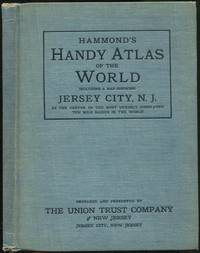
1910Best.-Nr. 135530New York: C.S. Hammond & Company 1910. Hardcover. Very Good. First edition. 97pp. Illustrated with color maps including a map showing Jersey City N.J. as the center of the most densely populated ten mile radius in the world. Owners stamps on title page foxing cloth lightly stained and faded spine ends worn very good without the dustwrapper as issued. Prepared and presented by the Union Trust Company of New Jersey. C.S. Hammond & Company hardcover books
Best.-Nr. chcp01sdemPaperback. Very Good. A very nice clean copy. paperback
Best.-Nr. 0910170746.Gpaperback. Good. Access codes and supplements are not guaranteed with used items. May be an ex-library book. paperback
Best.-Nr. B9781015176614Paperback / softback. New. paperback
Best.-Nr. B9781013874772Hardback. New. hardcover
Best.-Nr. 0266097715.Gpaperback. Good. Access codes and supplements are not guaranteed with used items. May be an ex-library book. paperback
Best.-Nr. 1617Middleton near Oxford 6 Dec. 1826 - the year of Ainsworth's bookselling visit Ellis i.159. See de Ricci Quaritch for Earl of Jersey Francis Child Osterley Park. One page 8vo spike-hole sl. grubby text readable and complete. "Lady Jersey wants to <have> a person to come down & arrange the Library here - It would be a work of 7 or 8 Days & requires an intelligent Person used to the <> - If there is any "Person" excised one inserted whom you hear of or belonging to you whom you could recommend to do it be so good as to write to Lady Jersey <> upon it -". S.M. Ellis Ainswworth i.159 quotes Ainsworth letter: " . . . I have this morning been paying a visit to the Countess of Jersey who has invited me to visit her at her house near Oxford and arrange her Library which it will give me infinite pleasure to attend to." Footnote describes her as "the italic leader of society" at that time. Was she Prince Regent's mistress Middleton near Oxford, 6 Dec. [1826 - the year of Ainsworth's bookselling visit, Ellis, i.159 unknown
1932Best.-Nr. 5264Jersey City: Harold S. Williamson 1932. Good plus. Small broadside inches. Previously folded. Minor edge wear. Moderate toning and dust soiling. An ephemeral handbill for a Depression-era meeting of the New Jersey Conference of Colored Republicans. The president of the conference J. Mercer Burrell was a Newark attorney and one of the first Black assemblymen to serve in the New Jersey statehouse. In 1933 he filled his seat as member of the Republican party but was re-elected on the Clean Government line in 1934. This handbill advertises a April 30 1932 meeting at the Monumental Baptist Church in Jersey City where "reports on the national situation and consideration of candidates for President and U.S. Senator" were to be discussed. The lower portion of the flyer prints a list of speakers including a female Assembly candidate La Bella Ortiz and a roster of the local Jersey City Republican committee. Harold S. Williamson unknown
1906Best.-Nr. 4138Hackensack N.J.: The Riverside Press 1906. Very good. Printed handbill 9 x 6 inches. Minor wear and toning to edges. An unrecorded handbill emblematic of an intriguing practice by mortgage holders in the late-19th and early-20th centuries. Mortgage burning services and celebrations were particularly popular in African-American churches and involved just what they imply: upon the completion of payment of a given mortgage the debtor would burn the promissory note to signal its fulfillment. As related in the present handbill a mortgage burning would often result in a neighborhood party "Come and Rejoice with Us on the Occasion. This Mortgage Is of About 20 Years Standing." The present celebration involved two days of sermons addresses music and food most notably a lecture by Right Reverend Alexander Walters. The handbill includes the names of other preachers and the trustees involved in the event. No copies in OCLC. The Riverside Press unknown
1932Best.-Nr. 5264Jersey City: Harold S. Williamson 1932. Good plus. Small broadside inches. Previously folded. Minor edge wear. Moderate toning and dust soiling. An ephemeral handbill for a Depression-era meeting of the New Jersey Conference of Colored Republicans. The president of the conference J. Mercer Burrell was a Newark attorney and one of the first Black assemblymen to serve in the New Jersey statehouse. In 1933 he filled his seat as member of the Republican party but was re-elected on the Clean Government line in 1934. This handbill advertises a April 30 1932 meeting at the Monumental Baptist Church in Jersey City where "reports on the national situation and consideration of candidates for President and U.S. Senator" were to be discussed. The lower portion of the flyer prints a list of speakers including a female Assembly candidate La Bella Ortiz and a roster of the local Jersey City Republican committee. Harold S. Williamson unknown books
1906Best.-Nr. 4138Hackensack N.J.: The Riverside Press 1906. Very good. Printed handbill 9 x 6 inches. Minor wear and toning to edges. An unrecorded handbill emblematic of an intriguing practice by mortgage holders in the late-19th and early-20th centuries. Mortgage burning services and celebrations were particularly popular in African-American churches and involved just what they imply: upon the completion of payment of a given mortgage the debtor would burn the promissory note to signal its fulfillment. As related in the present handbill a mortgage burning would often result in a neighborhood party "Come and Rejoice with Us on the Occasion. This Mortgage Is of About 20 Years Standing." The present celebration involved two days of sermons addresses music and food most notably a lecture by Right Reverend Alexander Walters. The handbill includes the names of other preachers and the trustees involved in the event. No copies in OCLC. The Riverside Press unknown books
1951Best.-Nr. 4588Newark N.J.: Holmes Printing Service 1951. Good. 20pp. Folio. Original orange printed wrappers stapled. Wrappers stained and spotted. Some staining and spotting to text. An informative pamphlet celebrating the second anniversary of the service of Reverend James Coleman pastor of the Calvary Baptist Church in Morristown New Jersey. The text recounts Reverend Coleman's time at the church and includes numerous photographs of Coleman his family and several members of the church. The program lists the events celebrating Coleman's pastorship and the text is supplemented with dozens of well wishes and advertisements for local businesses. Holmes Printing Service unknown
1951Best.-Nr. 4588Newark N.J.: Holmes Printing Service 1951. Good. 20pp. Folio. Original orange printed wrappers stapled. Wrappers stained and spotted. Some staining and spotting to text. An informative pamphlet celebrating the second anniversary of the service of Reverend James Coleman pastor of the Calvary Baptist Church in Morristown New Jersey. The text recounts Reverend Coleman's time at the church and includes numerous photographs of Coleman his family and several members of the church. The program lists the events celebrating Coleman's pastorship and the text is supplemented with dozens of well wishes and advertisements for local businesses. Holmes Printing Service unknown books
1881Best.-Nr. 62284Baltimore MD; Worcester MA; New York NY & Raleigh NC: Printed by John Cox; American Jersey Cattle Club; J.H. Walker Lizzie Pullen Belvin 1881-1890. Four parts in one sammelband volume. Tall 8vo. 27 leaves included two inserted dittoed TLS manuscript index card & genealogy table engraved genealogy table original printed front wrapper; 104 pp. woodcut-engraved plates original printed wrappers w/ laid-in manuscript note sized by Lizzie Belvin; 14 38 2 pp. including table original printed softcovers some foxing & soiling to outer fore-edge. Contemporary quarter-calf over marbled boards raised bands on spine gilt lettering bound as instructed by MS pencil note on first leaf with “100 blank leaves to go in back of book bound with covers” some minor scuffing edgewear rubbing still VG exemplar from the library of Charles Hinton Belvin Sr. 1845-1908 and Lizzie Lee Pullen Belvin 1854-1907 noted farmers and breeders of Jersey cattle in Raleigh NC where Charles Belvin was longtime founder and president of the National Bank of Raleigh. First editions of these works in this Jersey Cattle sammelband organized and bound for Jersey Cattle breeder and specialists Charles & Lizzie Belvin of Raleigh NC in the 1880’s. Samuel Moor Shoemaker’s Jersey Cattle herd was one of the most significant breeding operations for productive Jersey dairy cattle in 19th-Century Maryland as Jerseys produced milk components at a far lower cost had greater nutritional value had greater fertility and fewer calving problems as well as much better temperament. Included are two dittoed TLS from the American Jersey Cattle Club to Charles Belvin concerning the registration of prize cow “Miss May” subsequently bred with “Thoroughbred Jersey Bull ‘Bismarck of Torrington’ owned by Dr. Jas. McKee and W.C. Stronach” with certification from 1882 included.Lizzie Belvin was apparently actively involved in caring for the Jersey’s and included here are bound-in manuscript note indicating “On the 2nd of Feb. 1884 a swelling was observed on the neck of May. After using some ointment it was found next day to be better.” Although discovered having convulsions the next day they used treatment of kerosene on the neck and even while 6 months with calf was producing milk within a few days. The other dated 1890 and laid-in notes that “I was fixing to give the medicine to calf in her. I read a little further & send you the book read on page 92 in here I have marked -- give the eggs in a pint of hot milk now and tonight. . . Lizzie.” Worldcat locates 1 copy of 1st work Rutherford B. Hayes Presidential Center; 2 copies of 2nd AAS State Lib. of Mass. & 1 copy of 3rd UNC - Chapel Hill. Printed by John Cox; American Jersey Cattle Club; J.H. Walker, Lizzie Pullen Belvin, paperback
1965Best.-Nr. 48531Lewiston Maine: Inter-Continental Inc 1965. First edition. Very good. Rare program for Muhammad Ali's legendary rematch against Sonny Liston signed as "Muhammad Ali" shortly before the bout only a year after he took the name - and additionally signed by three other heavyweight champs present at Ali's training camp: Joe Louis Jim Braddock and Jersey Joe Walcott. Ali's swift and crushing defeat of Sonny Liston in the first round of their second title fight in May of 1965 remains not only one of the most iconic moments of Ali's storied career and of boxing history - but also in all of sports. An almost 2-1 underdog Ali's knockout after less than two minutes was famously captured in photographer Neil Leifer's legendary image of Ali towering over the fallen Liston. It remains one of the greatest sports photographs ever taken. The fight's status today however is belied in many ways by the humble circumstances of its original context. Postponed due to Ali's hernia surgery it was then rescheduled in the small industrial Maine town of Lewiston - partially because it was the one of the few arenas procurable on short notice but also because major venues were reluctant to be associated with Ali who was increasingly seen as a draft dodger. The fight was sparsely attended: by most accounts only about 2500 of the roughly 4500 seats in the Lewiston high school hockey rink were filled that night. Thus surviving examples of this program are scarce. Prior to the bout Ali had holed up at the Schine Inn in Chicopee MA to train talk to the media and receive well-wishers. On May 20 1965 five days before the fight he hosted three fellow champions: the "Brown Bomber" Joe Louis Jim Braddock and Jersey Joe Walcott who would also be the referee for the match where all four of these signatures were gathered the original owner noting as much above the signatures of Louis Braddock and Walcott. The program also reflects the confusion controversy and outright resistance surrounding Ali's recent name change. At the start of the fight itself the boxer was booed by the Lewiston crown when the ring announcer introduced him as "Muhammad Ali." Ali is referred to throughout the program as both Cassius Clay and Muhammad Ali and sometimes both at once. Ali had taken the name only the previous years after an address by Elijah Muhammad conferred him with the honorific meaning "most high one worthy of praise". This signature therefore represents one of the verifiably earliest "Muhammad Ali" autographs - and on the program and at the training camp for one of his most famous matches. A rare document linking Ali not only to the great Black boxers who immediately preceded him but capturing him at the very cusp of his popular transformation from heavyweight champion to civil rights leader anti-war activist and ultimately legendary humanitarian. A totemic object from the career of one of the 20th century's most famous important and influential figures. 11'' x 8.5''. Original black-and-white pictorial wrappers with red and blue elements saddle-stapled. Illustrated in black and white. 8 leaves. Signed by Ali in blue ink to verso of first leaf over his image. Additionally signed by Joe Louis James Braddock and Jersey Joe Walcott to blank verso of third leaf below the holograph caption likely original owner's: "The Schine Inn / May 20 1965." Wrapper with a bit of toning tiny area of discoloration to lower staple; careful narrow glue repair to upper spine very close inspection only. Leaves with a touch of toning. Else clean and sound. Inter-Continental Inc unknown
1965Best.-Nr. 48531Lewiston Maine: Inter-Continental Inc 1965. First edition. Very good. Rare program for Muhammad Ali's legendary rematch against Sonny Liston signed as "Muhammad Ali" shortly before the bout only a year after he took the name - and additionally signed by three other heavyweight champs present at Ali's training camp: Joe Louis Jim Braddock and Jersey Joe Walcott. Ali's swift and crushing defeat of Sonny Liston in the first round of their second title fight in May of 1965 remains not only one of the most iconic moments of Ali's storied career and of boxing history - but also in all of sports. An almost 2-1 underdog Ali's knockout after less than two minutes was famously captured in photographer Neil Leifer's legendary image of Ali towering over the fallen Liston. It remains one of the greatest sports photographs ever taken. The fight's status today however is belied in many ways by the humble circumstances of its original context. Postponed due to Ali's hernia surgery it was then rescheduled in the small industrial Maine town of Lewiston - partially because it was the one of the few arenas procurable on short notice but also because major venues were reluctant to be associated with Ali who was increasingly seen as a draft dodger. The fight was sparsely attended: by most accounts only about 2500 of the roughly 4500 seats in the Lewiston high school hockey rink were filled that night. Thus surviving examples of this program are scarce. Prior to the bout Ali had holed up at the Schine Inn in Chicopee MA to train talk to the media and receive well-wishers. On May 20 1965 five days before the fight he hosted three fellow champions: the "Brown Bomber" Joe Louis Jim Braddock and Jersey Joe Walcott who would also be the referee for the match where all four of these signatures were gathered the original owner noting as much above the signatures of Louis Braddock and Walcott. The program also reflects the confusion controversy and outright resistance surrounding Ali's recent name change. At the start of the fight itself the boxer was booed by the Lewiston crown when the ring announcer introduced him as "Muhammad Ali." Ali is referred to throughout the program as both Cassius Clay and Muhammad Ali and sometimes both at once. Ali had taken the name only the previous years after an address by Elijah Muhammad conferred him with the honorific meaning "most high one worthy of praise". This signature therefore represents one of the verifiably earliest "Muhammad Ali" autographs - and on the program and at the training camp for one of his most famous matches. A rare document linking Ali not only to the great Black boxers who immediately preceded him but capturing him at the very cusp of his popular transformation from heavyweight champion to civil rights leader anti-war activist and ultimately legendary humanitarian. A totemic object from the career of one of the 20th century's most famous important and influential figures. 11'' x 8.5''. Original black-and-white pictorial wrappers with red and blue elements saddle-stapled. Illustrated in black and white. 8 leaves. Signed by Ali in blue ink to verso of first leaf over his image. Additionally signed by Joe Louis James Braddock and Jersey Joe Walcott to blank verso of third leaf below the holograph caption likely original owner's: "The Schine Inn / May 20 1965." Wrapper with a bit of toning tiny area of discoloration to lower staple; careful narrow glue repair to upper spine very close inspection only. Leaves with a touch of toning. Else clean and sound. Inter-Continental Inc unknown books
1900Best.-Nr. 7193Asbury Park, Pennypacker Press, o. J. [um 1900]. Farb. ill. Broschur, Quer-4°, 32 unpag. S., mit 44 s/w Aufnahmen; -etwas abgegriffen, fleckig u. mit Randläsuren, Rücken mit Einrissen, Seiten durchgehend mit blasser Wasserspur u. teilweise mit Knickspuren/ soft board, large 8vo, 32 np pp, 44 b/w illustrations; -cover worn, some wrinkles.
1908Best.-Nr. 69006Barbour Flax Spinning Company Paterson NJ 1908. Hardcover. Used - Good. No date 1908 - text. 60 pages of ink notes in 100pp lined blank book. 7 x 4.5" cloth spine paper boards. Wholesale prices for patent linen thread sewing machine draper gilling lace & crochet Irish silk flourishing carpet welt closing tailor shoemaker threads seaming & roping parcelling drug netting twines specifications & prices for creel brownell &c. Trifle rubbed VG. Barbour Flax Spinning Company, Paterson, NJ hardcover
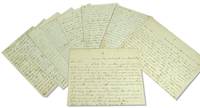
1862Best.-Nr. 72838np: np 1862. Civil War letter archive comprising 78 chronologically arranged letters the majority from Corporal Christopher C. Mead of the 12th New Jersey Regiment to his wife Hannah dated November 12 1862 to May 29 1864. Two letters comprise correspondence between Christopher and Hannah in March and April 1864; Hannah authored two additional letters in May 1864. Three letters are incomplete. Most bear penciled numbers on the front apparently added by a previous handler. The correspondence is generally legible though some letters have faded more than others; overall the paper is in good condition. The archive also includes three undated and unsigned letter fragments; an unsigned letter dated June 18 1863; a September 16 1862 letter addressed to "Uncle Christopher" concerning family matters accompanied by a note reading "Mrs. Hannah Mead Woodstown Salem Co. New Jersey Please forward"; and a four-page indenture dated 1811 and signed by James Mead. The most striking letters are Corporal Mead's fist hand account at the Battle at Gettysburg with vivid description of Picket's charge written on July 6th. Shortly after Pickett's Charge at Gettysburg Mead. an active participant in the battle. writes his wife Hannah: ".The next day was the severest of the fighting. Skirmishing was kept up until about noon when the rebels opened with about 80 pieces of artillery upon us which was kept up for about 3 hours when they succeeded in silencing one of our batteries; the artillery fight which was about a half mile apart ours being on a hill theirs masked in the woods the ground between us was lower than either of the artillery positions. After they had succeeded in silencing in silencing the battery they began to pour out of the woods in 3 lines of battle and a line of skirmishers in advance of them. In all 18 reg's strong approaching our front they made a splendid approach with their colors flying in the breeze. I was about the center of our line at the point of which they were approaching and had a fair view of them although they had silenced our battery. Thanks be to God of our Nation we had more in reserve for them. Well charged with great and canister shot which was opened upon them with terrible effect. But as their ranks were terribly thinned by the artillery fire yet they closed up quickly their ranks and marched on like brave determined men to accomplish their purposes. On they came driving our skirmishing line before them like so many frightened sheep. Although they fought well until they saw there was no chance then they fell back quickly as they possibly could; and as soon as the rebs came in range of our guns of our line of battle which laid behind piles of rails and stones four deep we opened on them and they fell like grain before the reaper which nearly annihilated them and all that came as far as our line of battle came as prisoners and of the 18 stand of colors they so nobly brought out only one seen to go back." Letter from Gettysburg recounts the Battle of Pickett's Charge. During Pickets Charge Mead writes "But as their ranks were terribly thinned by the artillery fire yet they closed up quickly their ranks and marched on like brave determined men to accomplish their purposes. On they came driving our skirmishing line before them like so many frightened sheep. Although they fought well until they saw there was no chance then they fell back quickly as they possibly could; and as soon as the rebs came in range of our guns of our line of battle which laid behind piles of rails and stones four deep we opened on them and they fell like grain before the reaper which nearly annihilated them and all that came as far as our line of battle came as prisoners and of the 18 stand of colors they so nobly brought out only one seen to go back." From Longacre page 135 "Several minutes under the storm of Federal bullets reduced Lowrances and Lane's brigades to bloody fragments. A handful managed to reach the wall before they went down riddled with balls. Their comrades at last convinced of the futility of it all began to flee. Many fell dead the moment they turned their backs to the enemy. Others hugged the ground in the hope of surviving the hail of lead long enough to surrender." Pickett's Charge July 3 1863 also known as the Pickett-Pettigrew-Trimble Assault was a major Confederate infantry attack against Union positions under Major General George G. Meade on the final day of the Battle of Gettysburg. Ordered by General Robert E. Lee and directed by Lieutenant General James Longstreet approximately 12500 Confederate soldiers advanced nearly three-quarters of a mile across open ground toward the center of the Union line on Cemetery Ridge. Preceded by a heavy artillery bombardment the assault was met by intense Union artillery and rifle fire and was repulsed with more than 50 percent Confederate casualties. The failed attack effectively ended Lee's invasion of Pennsylvania and forced the Confederate Army's retreat to Virginia. Popularly named for Major General George Pickett whose division formed the center of the assault the charge is often regarded as a major turning point of the Civil War and is associated with the "high-water mark of the Confederacy" referring to the farthest point reached by Confederate forces. Mead writes from Hanover County Virginia late May 1864. Soon after he fought in the Battle of Cold Harbor May 31 - June 12 1864 where Mead was killed. Battle of Cold Harbor May 31-June 12 1864 was a major engagement of the Union Army's Overland Campaign against Richmond. At the crossroads of Cold Harbor roughly ten miles northeast of Richmond General Ulysses S. Grant's Army of the Potomac launched repeated assaults against entrenched Confederate forces under General Robert E. Lee culminating in a devastating attack on June 3. The Union assaults failed to break the Confederate defenses and resulted in more than 17000 casualties. Grant subsequently disengaged crossed the James River and moved toward Petersburg a vital railroad and manufacturing center that guarded the approaches to Richmond. Although Cold Harbor was a costly Union defeat Grant's continued advance ultimately placed Confederate forces under sustained pressure around Richmond and Petersburg. np unknown
1862Best.-Nr. 72838np: np 1862. Civil War letter archive comprising 78 chronologically arranged letters the majority from Corporal Christopher C. Mead of the 12th New Jersey Regiment to his wife Hannah dated November 12 1862 to May 29 1864. Two letters comprise correspondence between Christopher and Hannah in March and April 1864; Hannah authored two additional letters in May 1864. Three letters are incomplete. Most bear penciled numbers on the front apparently added by a previous handler. The correspondence is generally legible though some letters have faded more than others; overall the paper is in good condition. The archive also includes three undated and unsigned letter fragments; an unsigned letter dated June 18 1863; a September 16 1862 letter addressed to "Uncle Christopher" concerning family matters accompanied by a note reading "Mrs. Hannah Mead Woodstown Salem Co. New Jersey Please forward"; and a four-page indenture dated 1811 and signed by James Mead. The most striking letters are Corporal Mead's fist hand account at the Battle at Gettysburg with vivid description of Picket's charge written on July 6th. Shortly after Pickett's Charge at Gettysburg Mead. an active participant in the battle. writes his wife Hannah: ".The next day was the severest of the fighting. Skirmishing was kept up until about noon when the rebels opened with about 80 pieces of artillery upon us which was kept up for about 3 hours when they succeeded in silencing one of our batteries; the artillery fight which was about a half mile apart ours being on a hill theirs masked in the woods the ground between us was lower than either of the artillery positions. After they had succeeded in silencing in silencing the battery they began to pour out of the woods in 3 lines of battle and a line of skirmishers in advance of them. In all 18 reg's strong approaching our front they made a splendid approach with their colors flying in the breeze. I was about the center of our line at the point of which they were approaching and had a fair view of them although they had silenced our battery. Thanks be to God of our Nation we had more in reserve for them. Well charged with great and canister shot which was opened upon them with terrible effect. But as their ranks were terribly thinned by the artillery fire yet they closed up quickly their ranks and marched on like brave determined men to accomplish their purposes. On they came driving our skirmishing line before them like so many frightened sheep. Although they fought well until they saw there was no chance then they fell back quickly as they possibly could; and as soon as the rebs came in range of our guns of our line of battle which laid behind piles of rails and stones four deep we opened on them and they fell like grain before the reaper which nearly annihilated them and all that came as far as our line of battle came as prisoners and of the 18 stand of colors they so nobly brought out only one seen to go back." Letter from Gettysburg recounts the Battle of Pickett's Charge. During Pickets Charge Mead writes "But as their ranks were terribly thinned by the artillery fire yet they closed up quickly their ranks and marched on like brave determined men to accomplish their purposes. On they came driving our skirmishing line before them like so many frightened sheep. Although they fought well until they saw there was no chance then they fell back quickly as they possibly could; and as soon as the rebs came in range of our guns of our line of battle which laid behind piles of rails and stones four deep we opened on them and they fell like grain before the reaper which nearly annihilated them and all that came as far as our line of battle came as prisoners and of the 18 stand of colors they so nobly brought out only one seen to go back." From Longacre page 135 "Several minutes under the storm of Federal bullets reduced Lowrances and Lane's brigades to bloody fragments. A handful managed to reach the wall before they went down riddled with balls. Their comrades at last convinced of the futility of it all began to flee. Many fell dead the moment they turned their backs to the enemy. Others hugged the ground in the hope of surviving the hail of lead long enough to surrender." Pickett's Charge July 3 1863 also known as the Pickett-Pettigrew-Trimble Assault was a major Confederate infantry attack against Union positions under Major General George G. Meade on the final day of the Battle of Gettysburg. Ordered by General Robert E. Lee and directed by Lieutenant General James Longstreet approximately 12500 Confederate soldiers advanced nearly three-quarters of a mile across open ground toward the center of the Union line on Cemetery Ridge. Preceded by a heavy artillery bombardment the assault was met by intense Union artillery and rifle fire and was repulsed with more than 50 percent Confederate casualties. The failed attack effectively ended Lee's invasion of Pennsylvania and forced the Confederate Army's retreat to Virginia. Popularly named for Major General George Pickett whose division formed the center of the assault the charge is often regarded as a major turning point of the Civil War and is associated with the "high-water mark of the Confederacy" referring to the farthest point reached by Confederate forces. Mead writes from Hanover County Virginia late May 1864. Soon after he fought in the Battle of Cold Harbor May 31 - June 12 1864 where Mead was killed. Battle of Cold Harbor May 31-June 12 1864 was a major engagement of the Union Army's Overland Campaign against Richmond. At the crossroads of Cold Harbor roughly ten miles northeast of Richmond General Ulysses S. Grant's Army of the Potomac launched repeated assaults against entrenched Confederate forces under General Robert E. Lee culminating in a devastating attack on June 3. The Union assaults failed to break the Confederate defenses and resulted in more than 17000 casualties. Grant subsequently disengaged crossed the James River and moved toward Petersburg a vital railroad and manufacturing center that guarded the approaches to Richmond. Although Cold Harbor was a costly Union defeat Grant's continued advance ultimately placed Confederate forces under sustained pressure around Richmond and Petersburg. np unknown books
1872Best.-Nr. 46897Jersey City: John H. Lyon 1872. Hardcover. Very good. Hardcover. 5245pp. Small ink name on verso of front free endpaper minor spot of loss at the head of the spine else very good in publisher's brown cloth. John H. Lyon hardcover
1872Best.-Nr. 46897Jersey City: John H. Lyon 1872. Hardcover. Very good. Hardcover. 5245pp. Small ink name on verso of front free endpaper minor spot of loss at the head of the spine else very good in publisher's brown cloth. John H. Lyon hardcover books
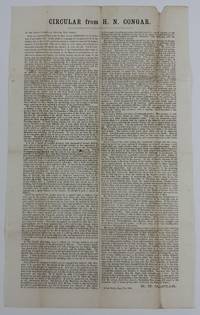
1864Best.-Nr. 3721N.p. but most likely Newark N.J. 1864. Good plus. Letterpress broadside printed in two columns 16.5 x 10 inches. Old folds small chip to top outer margin two tiny holes affecting just a few letters. A very rare Unionist broadside supporting the re-election of Abraham Lincoln in the critical presidential contest of 1864. The present broadside was authored in early June 1864 by New Jersey Republican Party stalwart Horace N. Congar an editor diplomat and politician who was at that time serving as U.S. consul to Hong Kong. In this rather stirring broadside which Congar writes from his position in Hong Kong he lauds "the thousands of earnest faithful men who are giving freely of their blood and treasure to the suppression of this infamous rebellion" and "the noble daring the undaunted courage and the determined valour of our brave soldiers of Freedom" and urges that "in November New Jersey will stand in the unbroken rank of States giving their verdict for the Party of Union." He also spends considerable space discussing the clear role of "the social moral and political evil" of slavery as the precipitating event of the Civil War. Congar writes that "the evil it has wrought was as natural as the poisoned breath of the Upas tree." Stated clearly Congar writes "I heartily rejoice at the destruction of slavery" and looks forward to the time when "I shall tread my native land with a newer life if within its boundless domain there shall not be heard the clanking chain or the cry of the suffering and the oppressed." "Horace Newton Congar 1817-1893 was a radical republican politician during the midnineteenth century and served on both the state and national levels. Mr. Congar had a great love for his party and hope for its success which is reflected in his writing . Horace Newton Congar was born in Newark on July 31 1817. He married Isabell Reeves and had two children; a daughter Ella and a son Horace Junior. Horace Congar taught school for a while and he studied law in his leisure time. He was admitted to the New Jersey State Bar in 1847 and later Cornelius Boice of Plainfield and Lewis Grove of Newark were his law partners. Congar was a friend of the abolitionist cause and he was one of the founders of the antislavery Free Soil Party in New Jersey. The party slogan 'Free Soil Free Speech Free Labor and Free Men' basically described the party platform. Congar later became a delegate from New Jersey to the Republican National Convention in 1848 which was held in Buffalo. He supported the nomination of Van Buren for president and Adams for vice-president" - New Jersey Historical Society. A rare and unusual Lincoln campaign broadside with just two physical copies in OCLC at AAS and Middlebury College. unknown
1864Best.-Nr. 3721N.p. but most likely Newark N.J. 1864. Good plus. Letterpress broadside printed in two columns 16.5 x 10 inches. Old folds small chip to top outer margin two tiny holes affecting just a few letters. A very rare Unionist broadside supporting the re-election of Abraham Lincoln in the critical presidential contest of 1864. The present broadside was authored in early June 1864 by New Jersey Republican Party stalwart Horace N. Congar an editor diplomat and politician who was at that time serving as U.S. consul to Hong Kong. In this rather stirring broadside which Congar writes from his position in Hong Kong he lauds "the thousands of earnest faithful men who are giving freely of their blood and treasure to the suppression of this infamous rebellion" and "the noble daring the undaunted courage and the determined valour of our brave soldiers of Freedom" and urges that "in November New Jersey will stand in the unbroken rank of States giving their verdict for the Party of Union." He also spends considerable space discussing the clear role of "the social moral and political evil" of slavery as the precipitating event of the Civil War. Congar writes that "the evil it has wrought was as natural as the poisoned breath of the Upas tree." Stated clearly Congar writes "I heartily rejoice at the destruction of slavery" and looks forward to the time when "I shall tread my native land with a newer life if within its boundless domain there shall not be heard the clanking chain or the cry of the suffering and the oppressed." "Horace Newton Congar 1817-1893 was a radical republican politician during the midnineteenth century and served on both the state and national levels. Mr. Congar had a great love for his party and hope for its success which is reflected in his writing . Horace Newton Congar was born in Newark on July 31 1817. He married Isabell Reeves and had two children; a daughter Ella and a son Horace Junior. Horace Congar taught school for a while and he studied law in his leisure time. He was admitted to the New Jersey State Bar in 1847 and later Cornelius Boice of Plainfield and Lewis Grove of Newark were his law partners. Congar was a friend of the abolitionist cause and he was one of the founders of the antislavery Free Soil Party in New Jersey. The party slogan 'Free Soil Free Speech Free Labor and Free Men' basically described the party platform. Congar later became a delegate from New Jersey to the Republican National Convention in 1848 which was held in Buffalo. He supported the nomination of Van Buren for president and Adams for vice-president" - New Jersey Historical Society. A rare and unusual Lincoln campaign broadside with just two physical copies in OCLC at AAS and Middlebury College. unknown books
1840Best.-Nr. SCA-50London, T. Baker, 1840. In-8 relié demi-veau fauve à coins, dos orné, fer doré d’une bibliotheque australienne sur le premier plat de reliure. (Cachets de cette même bibliothèque sur les premiers et derniers feuillets, annotation datée 1865, à l’encre en tête de la page de titre, quelques soulignements et annotations dans le texte. Coins usés, cuir du dos séparé du volume).