Antiquariat.de
2 913 résultats
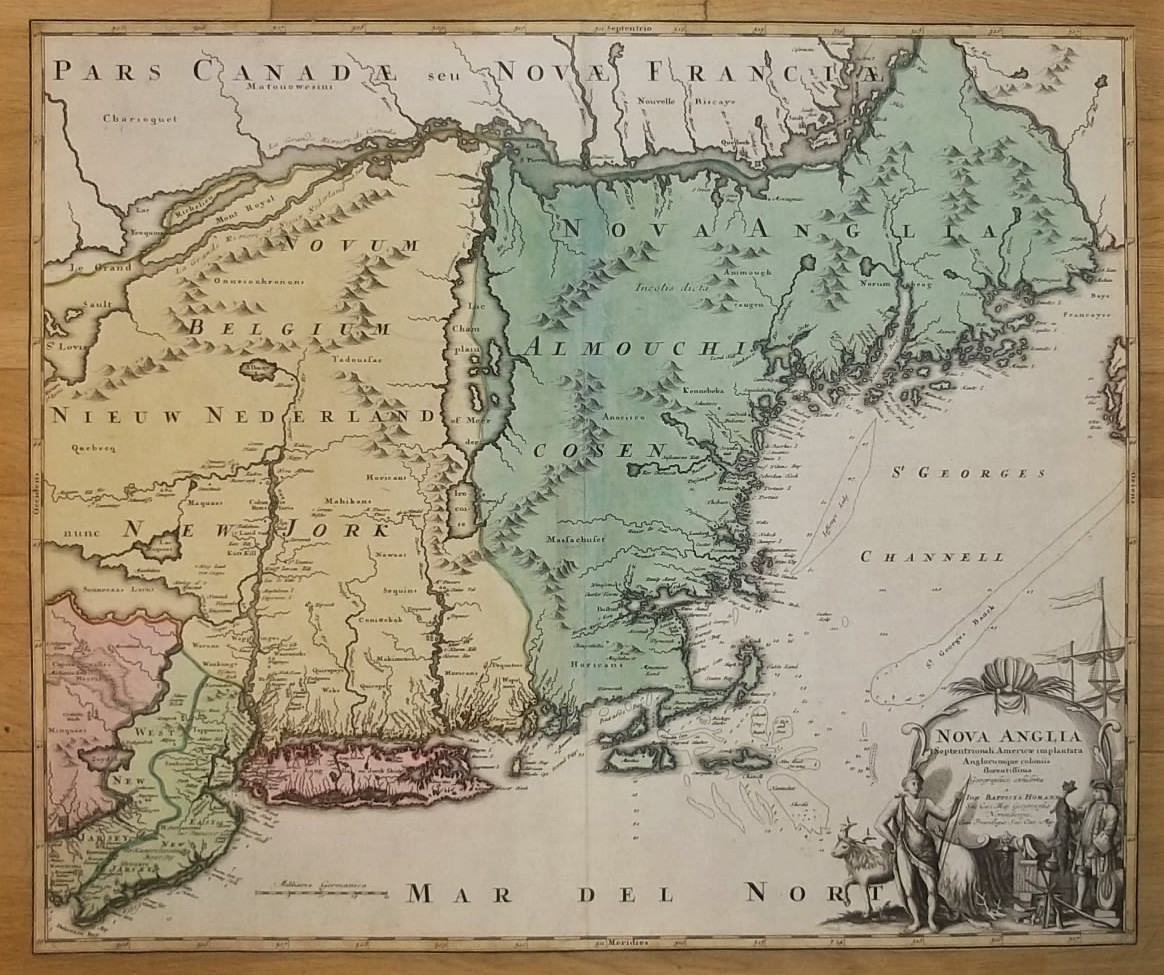
1730réf. 18639Nürnberg, Homann, ca. 1730. Ca. 49 cm x 58 cm.
1740réf. 19594(Augsburg), Matthäus Seutter, um 1740. Ca. 58,5 cm x 51 cm (ganze Blatt).
réf. RGW20186Lithograph Printed by C. Hullmandel foxing on surround unknown
réf. B9781015176614Paperback / softback. New. paperback
réf. B9781013874772Hardback. New. hardcover
2000réf. 1654552000 Comte Régis de L' Estourbeillon..LES FAMILLES FRANCAISES A JERSEY PENDANT LA REVOLUTION.Mayenne,Editions régionales de l'Ouest ,2000 ,fort in8 broché,680ppImpression à l'identique de l'édition Nantes,Forest,1886.Tirée à 212ex ( n°50)Quelques plis sur la couverture. Très bon état général.
réf. ABE-1526571202812LE PHARE DE TEIGNOUSE, 2435, VOYAGEE 1917, COLLECTION LAURENT-LETREPORT LA JETEE ET LE PHARE, L'HIRONDELLE 14 BIS COULEURS, VOYAGEE 1913-ILE DE BREHAT LE PHARE DU PAON, 1601 RENAULT, VOYAGEE 1903-ILE D'OLERON PHARE DE CHASSIRON, RAMUNTCHO, BERGEVIN 3323, NON VOYAGEE-BERCK PLAGE LE PHARE, B.F., VOYAGEE 1904-BERCK PLAGE LE PHARE, AQUA 16 COULEURS, NON VOYAGEE-ILE DE RE PHARE DE BALEINE, NOZAIS, VERS 1930, VOYAGEE-PHARE DE CORDOUAN, BLOC 194, NON VOYAGEE-HONFLEUR L'ESTUAIRE DE LA SEINE, LEVY 45 COULEURS, VOYAGEE-FECAMP, 79, VOYAGEE 1912-JERSEY PHARE DE LA CORBIERE, 99, NON VOYAGEE-MARSEILLE PHARE DE LA DESIRADE, EL 153, NON VOYAGEE-BIARRITZ LE PHARE, LL 107 COULEURS, VOYAGEE 1928-CAP FREHEL, NON VOYAGEE (BCP3)
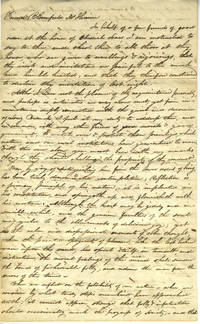
1823réf. 281351823. A three-page manuscript letter from Ephraim Smooth to Bloomfield McIlvaine exhorting him to follow the tenants of meditation and balance inherent in the Quaker tradition. A dance was held at the home of Obediah Sears and Ephraim Smooth writes at length about Quaker tradition of contemplation rejecting "ill-judged indulgence of riot & gaiety" refering to Bloomfield's education he graduated from the College of New Jersey later Princeton in 1812 and his power to influence the youths and finally offers a curative silent meditation with Simon Pure Obediah Broadbrim and himself to "cheerfully join in the dance of the spirit". Dated 5th day 7 month 1823 5 July 1823. Reference is made to the flute and fiddle made in Edenton North Carolina we assume; and addressed to "Bottany Bay" which we assume is the one on Edisto Island South Carolina. Bloomfield McIlvaine 22 Feb 1797- 18 Aug 1826 died at 30 in New Jersey. He married Henrietta Maria Banker in June 1824. His father was Joseph McIlvaine who died a couple hours after his son aged 58. Joseph was a US senator for New Jersey. Bloomfield was a lawyer - his extensive library takes four pages in his will just the books valued at $939.35. He is buried in Saint Mary's Episcopal Churchyard in Burlington New Jersey. unknown
1825réf. BOOKS013045IEast Windsor NJ 1825. Original manuscript. Very Good. Two documents 6pp; few spots of foxing. Dated March 15 1825. 12.5" x 7.75" Michael Lykes and his wife Elizabeth daughter of Thomas Morford deceased appoint East Windsor attorney Elijah Davis. The lawyer is to represent them in selling certain lands in Middlesex County to which Elizabeth has claim as the only daughter and heir of Thomas Morford who inherited the land from his grandfather William Updike of Middlesex County by terms of a will dated November 22 1778. On the back of this first document one Andrew Rowan attests that Elizabeth came before him on August 15 1824 at which time he examined her without her husband and she agreed to give power-of-attorney to Davis. The second document dated at Lamberton on 21 June 1825 comprises several testimonials that Elizabeth is the daughter of Thomas Morford and Lucy Reed who "for many years lived together and cohabited as man and wife." Elizabeth Dye attests that she believes Morford and Reed were legally married. Sarah Reed Lucy's mother states that Lucy was married to Morford at age 19 without Sarah's consent and that they had a daughter named Elizabeth. Inserted in this document is the testimonial of John Smith of Lambertville NJ who states that he officiated at the marriage of Elizabeth and Michael a few years earlier believing that she was the daughter of Thomas Morford who was the son of Mrs. Elizabeth Story wife of Joseph Story of Story Farm. Also signing this document are Robert and Ann Taylor who attest to the lineage and Abraham Creque who was in the house when Thomas Morford and Lucy Reed lived as man and wife. unknown
1835réf. 0391331835. Original manuscript. Good. One page tall quarto. Hutchinson rented to Danser "all that house and lot . in the Village of Assanpink including a Meadow Lot on the Assanping brook with the following exceptions viz. the Store Room a front Room above the Store Cellar and half the Smoke House . for one year for the sum of fifty Dollars Cash . &c." &c. Dated 1 July 1835. Signed by John Hutchinson and Wesley Danser and witnessed by Jefferson Ely. On the verso is a long list of "Receipts Paid by John Perrine Jr." and other computations. Original horizontal folds cancelled with seals. 12.25" x 7.75" The site of this Monmouth County property herein called Assunpink Village seems to be the present Cooley's Corner now part of the Assunpink Wildlife Management Area and along the Assunpink Creek. unknown
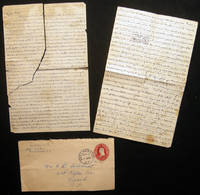
1857réf. 028914Toulon France: Not Published 1857. Two letters one dated 1857 and both addressing Robert with his first & last name written in full across the text on one of the pages. Written in very formal English as perhaps translated from a very formal French reference to the use of a translator is made within the letters. Mostly with family news with interesting asides: cousin Eugene constructing a bridge in the Pyrenees ".where the rocks it appears are immensely high. Napoleon who was with him at the time made a plan and had a mind to make this bridge as he said after the American way but Eugene told him that a bridge of wood would soon get destroyed. Napoleon then told him to make a plan which he did which has been sent to Paris and has been adopted by the Minister and company; the bridge will be made of hewn stones." And ".The newspapers will relate you better than I can what is going on in Europe with China M. Jaurequiberry is now governor at Segon.Octave Noel left France not long ago for China before he quit Toulon he passed an evening with us.I am getting a cask made to send some oil to my friends of which your sister Bacot I hope will partake. Madame la comtesse de Linnange the Queen of England's half-sister is again at Hyeres; I find a resemblance in her of your sister Sarah; she is a kind lady-like woman. She esteems Mr. Bruniquet very much. " This letter 1 1/2 sides very finely written in ink in a small almost printerly hand and very legible. The second letter perhaps included with the first as a later missive from internal evidence comments that ".I am duly instructed that your reputation is one of the most flattering in the state of New Jersey and proud am I to think that such an honorable and much-esteemed gentleman is so near to me by the ties of blood." And expressing some anti-Catholic clergy sentiment including surprise that the American government doesn't pay more attention to the machinations of Catholic church leaders dreading "…another Saint-Barthélemy massacre." And agriculture news of Provence: ".we have had a fine crop of delicious melons.As for the grapes at a certain distance around Toulon they again are attacked.which makes the grape leaves black and afterwords it withers.The peasants who labour very hard in this climate as the ground is so compact are in want of a little wine to keep up their strength as their diet is hardly nourishing. They generally live upon soup made with vegetables with a small quantity of oil in it - their bread is always of a good quality." and other chatty news of neighbors travelers and with affectionate regards to relations. This letter is three pages in length. The addressee Robert Gilchrist Jr. 1825 - 1888 was the Attorney General of New Jersey from 1870 to 1875; evidently he had French cousins. with a 1915 dated envelope addressed to Fredericka Beardsley Gilchrist whom he had married later in life. Letter page size approx. 5 1/4" x 8 1/4" size written on very thin paper stock. With some spotting and discoloration one page with long tear no loss and all text visible; interesting commentary from mid-19th century France in about good condition. Manuscript. Paper. Good. Not Published paperback
1862réf. 72838np: np 1862. Civil War letter archive comprising 78 chronologically arranged letters the majority from Corporal Christopher C. Mead of the 12th New Jersey Regiment to his wife Hannah dated November 12 1862 to May 29 1864. Two letters comprise correspondence between Christopher and Hannah in March and April 1864; Hannah authored two additional letters in May 1864. Three letters are incomplete. Most bear penciled numbers on the front apparently added by a previous handler. The correspondence is generally legible though some letters have faded more than others; overall the paper is in good condition. The archive also includes three undated and unsigned letter fragments; an unsigned letter dated June 18 1863; a September 16 1862 letter addressed to "Uncle Christopher" concerning family matters accompanied by a note reading "Mrs. Hannah Mead Woodstown Salem Co. New Jersey Please forward"; and a four-page indenture dated 1811 and signed by James Mead. The most striking letters are Corporal Mead's fist hand account at the Battle at Gettysburg with vivid description of Picket's charge written on July 6th. Shortly after Pickett's Charge at Gettysburg Mead. an active participant in the battle. writes his wife Hannah: ".The next day was the severest of the fighting. Skirmishing was kept up until about noon when the rebels opened with about 80 pieces of artillery upon us which was kept up for about 3 hours when they succeeded in silencing one of our batteries; the artillery fight which was about a half mile apart ours being on a hill theirs masked in the woods the ground between us was lower than either of the artillery positions. After they had succeeded in silencing in silencing the battery they began to pour out of the woods in 3 lines of battle and a line of skirmishers in advance of them. In all 18 reg's strong approaching our front they made a splendid approach with their colors flying in the breeze. I was about the center of our line at the point of which they were approaching and had a fair view of them although they had silenced our battery. Thanks be to God of our Nation we had more in reserve for them. Well charged with great and canister shot which was opened upon them with terrible effect. But as their ranks were terribly thinned by the artillery fire yet they closed up quickly their ranks and marched on like brave determined men to accomplish their purposes. On they came driving our skirmishing line before them like so many frightened sheep. Although they fought well until they saw there was no chance then they fell back quickly as they possibly could; and as soon as the rebs came in range of our guns of our line of battle which laid behind piles of rails and stones four deep we opened on them and they fell like grain before the reaper which nearly annihilated them and all that came as far as our line of battle came as prisoners and of the 18 stand of colors they so nobly brought out only one seen to go back." Letter from Gettysburg recounts the Battle of Pickett's Charge. During Pickets Charge Mead writes "But as their ranks were terribly thinned by the artillery fire yet they closed up quickly their ranks and marched on like brave determined men to accomplish their purposes. On they came driving our skirmishing line before them like so many frightened sheep. Although they fought well until they saw there was no chance then they fell back quickly as they possibly could; and as soon as the rebs came in range of our guns of our line of battle which laid behind piles of rails and stones four deep we opened on them and they fell like grain before the reaper which nearly annihilated them and all that came as far as our line of battle came as prisoners and of the 18 stand of colors they so nobly brought out only one seen to go back." From Longacre page 135 "Several minutes under the storm of Federal bullets reduced Lowrances and Lane's brigades to bloody fragments. A handful managed to reach the wall before they went down riddled with balls. Their comrades at last convinced of the futility of it all began to flee. Many fell dead the moment they turned their backs to the enemy. Others hugged the ground in the hope of surviving the hail of lead long enough to surrender." Pickett's Charge July 3 1863 also known as the Pickett-Pettigrew-Trimble Assault was a major Confederate infantry attack against Union positions under Major General George G. Meade on the final day of the Battle of Gettysburg. Ordered by General Robert E. Lee and directed by Lieutenant General James Longstreet approximately 12500 Confederate soldiers advanced nearly three-quarters of a mile across open ground toward the center of the Union line on Cemetery Ridge. Preceded by a heavy artillery bombardment the assault was met by intense Union artillery and rifle fire and was repulsed with more than 50 percent Confederate casualties. The failed attack effectively ended Lee's invasion of Pennsylvania and forced the Confederate Army's retreat to Virginia. Popularly named for Major General George Pickett whose division formed the center of the assault the charge is often regarded as a major turning point of the Civil War and is associated with the "high-water mark of the Confederacy" referring to the farthest point reached by Confederate forces. Mead writes from Hanover County Virginia late May 1864. Soon after he fought in the Battle of Cold Harbor May 31 - June 12 1864 where Mead was killed. Battle of Cold Harbor May 31-June 12 1864 was a major engagement of the Union Army's Overland Campaign against Richmond. At the crossroads of Cold Harbor roughly ten miles northeast of Richmond General Ulysses S. Grant's Army of the Potomac launched repeated assaults against entrenched Confederate forces under General Robert E. Lee culminating in a devastating attack on June 3. The Union assaults failed to break the Confederate defenses and resulted in more than 17000 casualties. Grant subsequently disengaged crossed the James River and moved toward Petersburg a vital railroad and manufacturing center that guarded the approaches to Richmond. Although Cold Harbor was a costly Union defeat Grant's continued advance ultimately placed Confederate forces under sustained pressure around Richmond and Petersburg. np unknown
1862réf. 72838np: np 1862. Civil War letter archive comprising 78 chronologically arranged letters the majority from Corporal Christopher C. Mead of the 12th New Jersey Regiment to his wife Hannah dated November 12 1862 to May 29 1864. Two letters comprise correspondence between Christopher and Hannah in March and April 1864; Hannah authored two additional letters in May 1864. Three letters are incomplete. Most bear penciled numbers on the front apparently added by a previous handler. The correspondence is generally legible though some letters have faded more than others; overall the paper is in good condition. The archive also includes three undated and unsigned letter fragments; an unsigned letter dated June 18 1863; a September 16 1862 letter addressed to "Uncle Christopher" concerning family matters accompanied by a note reading "Mrs. Hannah Mead Woodstown Salem Co. New Jersey Please forward"; and a four-page indenture dated 1811 and signed by James Mead. The most striking letters are Corporal Mead's fist hand account at the Battle at Gettysburg with vivid description of Picket's charge written on July 6th. Shortly after Pickett's Charge at Gettysburg Mead. an active participant in the battle. writes his wife Hannah: ".The next day was the severest of the fighting. Skirmishing was kept up until about noon when the rebels opened with about 80 pieces of artillery upon us which was kept up for about 3 hours when they succeeded in silencing one of our batteries; the artillery fight which was about a half mile apart ours being on a hill theirs masked in the woods the ground between us was lower than either of the artillery positions. After they had succeeded in silencing in silencing the battery they began to pour out of the woods in 3 lines of battle and a line of skirmishers in advance of them. In all 18 reg's strong approaching our front they made a splendid approach with their colors flying in the breeze. I was about the center of our line at the point of which they were approaching and had a fair view of them although they had silenced our battery. Thanks be to God of our Nation we had more in reserve for them. Well charged with great and canister shot which was opened upon them with terrible effect. But as their ranks were terribly thinned by the artillery fire yet they closed up quickly their ranks and marched on like brave determined men to accomplish their purposes. On they came driving our skirmishing line before them like so many frightened sheep. Although they fought well until they saw there was no chance then they fell back quickly as they possibly could; and as soon as the rebs came in range of our guns of our line of battle which laid behind piles of rails and stones four deep we opened on them and they fell like grain before the reaper which nearly annihilated them and all that came as far as our line of battle came as prisoners and of the 18 stand of colors they so nobly brought out only one seen to go back." Letter from Gettysburg recounts the Battle of Pickett's Charge. During Pickets Charge Mead writes "But as their ranks were terribly thinned by the artillery fire yet they closed up quickly their ranks and marched on like brave determined men to accomplish their purposes. On they came driving our skirmishing line before them like so many frightened sheep. Although they fought well until they saw there was no chance then they fell back quickly as they possibly could; and as soon as the rebs came in range of our guns of our line of battle which laid behind piles of rails and stones four deep we opened on them and they fell like grain before the reaper which nearly annihilated them and all that came as far as our line of battle came as prisoners and of the 18 stand of colors they so nobly brought out only one seen to go back." From Longacre page 135 "Several minutes under the storm of Federal bullets reduced Lowrances and Lane's brigades to bloody fragments. A handful managed to reach the wall before they went down riddled with balls. Their comrades at last convinced of the futility of it all began to flee. Many fell dead the moment they turned their backs to the enemy. Others hugged the ground in the hope of surviving the hail of lead long enough to surrender." Pickett's Charge July 3 1863 also known as the Pickett-Pettigrew-Trimble Assault was a major Confederate infantry attack against Union positions under Major General George G. Meade on the final day of the Battle of Gettysburg. Ordered by General Robert E. Lee and directed by Lieutenant General James Longstreet approximately 12500 Confederate soldiers advanced nearly three-quarters of a mile across open ground toward the center of the Union line on Cemetery Ridge. Preceded by a heavy artillery bombardment the assault was met by intense Union artillery and rifle fire and was repulsed with more than 50 percent Confederate casualties. The failed attack effectively ended Lee's invasion of Pennsylvania and forced the Confederate Army's retreat to Virginia. Popularly named for Major General George Pickett whose division formed the center of the assault the charge is often regarded as a major turning point of the Civil War and is associated with the "high-water mark of the Confederacy" referring to the farthest point reached by Confederate forces. Mead writes from Hanover County Virginia late May 1864. Soon after he fought in the Battle of Cold Harbor May 31 - June 12 1864 where Mead was killed. Battle of Cold Harbor May 31-June 12 1864 was a major engagement of the Union Army's Overland Campaign against Richmond. At the crossroads of Cold Harbor roughly ten miles northeast of Richmond General Ulysses S. Grant's Army of the Potomac launched repeated assaults against entrenched Confederate forces under General Robert E. Lee culminating in a devastating attack on June 3. The Union assaults failed to break the Confederate defenses and resulted in more than 17000 casualties. Grant subsequently disengaged crossed the James River and moved toward Petersburg a vital railroad and manufacturing center that guarded the approaches to Richmond. Although Cold Harbor was a costly Union defeat Grant's continued advance ultimately placed Confederate forces under sustained pressure around Richmond and Petersburg. np unknown books
1868réf. 038056Newark NJ: Wm. D. Roe & Co. Stationers 1868. Original documents. Good. Five engraved forms accomplished by hand in sepia ink signed by five different shareholders and five witnesses. For example: "Know all Men by these Presents that I Joseph L. Clark of Morristown N.J. do hereby constitute and appoint Samuel W. Corwin of Newark New Jersey my Attorney and Agent for me and in my name place and stead to vote in my proxy at any Annual or Special Meeting of the Morris & Essex Mutual Coal Co. according to the number of votes I should be entitled to vote if then personally present. In Witness whereof I have hereunto set my hand and seal this Twenty First day of January one thousand eight hundred and Sixty Eight. signed Jos. L. Clark. Sealed and Delivered in the presence of signed' H. Fred Scofield." Small paper seal on each document. Dated in January 1868. 7" x 8.5" WorldCat records only Charter and by-laws of the Morris and Essex Mutual Coal Company Morristown 1866 published two years before this group of proxy votes were accomplished. This company is not in the Rutgers U New Jersey collection catalog. Wm. D. Roe & Co., Stationers unknown
1930réf. 13913New Jersey: Private 1930. First Edition Thus. Leather bound. Very good. Original album with photos ledgers scoring records and articles from various New Jersey Rifle Clubs of the 1930s including The Ridgewood Rifle Club The Jersey Rifle Association and The Garden State Rifle League. Folio 28pp 468pp. Three-quarter morocco four raised bands title in gilt on spine. Newspaper clippings of shooting competition records and wins affixed to leaves 28 unpaginated; 1-37pp of ledger. Hundreds of additional leaves with handwritten notes specifically records of car part sales to various New Jersey automotive garages. Additional items laid-in include an 8x10 photograph of the Ridgewood Rifle Club members three used card stock targets and a series of official reports from matches and game associations. Solid text block wear to covers and spine splitting to hinges. A unique piece of ephemera. Although the original compiler of this album is unknown certain names frequently appear throughout including Charlie Vanderbush and Bill Troeger. Private unknown
1930réf. 13913New Jersey: Private 1930. First Edition Thus. Leather bound. Very good. Original album with photos ledgers scoring records and articles from various New Jersey Rifle Clubs of the 1930s including The Ridgewood Rifle Club The Jersey Rifle Association and The Garden State Rifle League. Folio 28pp 468pp. Three-quarter morocco four raised bands title in gilt on spine. Newspaper clippings of shooting competition records and wins affixed to leaves 28 unpaginated; 1-37pp of ledger. Hundreds of additional leaves with handwritten notes specifically records of car part sales to various New Jersey automotive garages. Additional items laid-in include an 8x10 photograph of the Ridgewood Rifle Club members three used card stock targets and a series of official reports from matches and game associations. Solid text block wear to covers and spine splitting to hinges. A unique piece of ephemera. Although the original compiler of this album is unknown certain names frequently appear throughout including Charlie Vanderbush and Bill Troeger. Private unknown books
1982réf. 82531982. Softcover. VG small label on upper front cover. Wraps. 12 pp. 10 bw plates. Includes works by Michele Araujo Bill Barrell Priscilla Derven Elsie Driggs Dennis Lick Kaare Rafoss Harry Roseman Roger Shepherd Adam Simon and Kay WalkingStick. Brief biographical information on each of these resident New Jersey artists. paperback books
1982réf. 425241Jersey City: DMV/DRS Creative Services 1982. Softcover. Near Fine. 1983 unmarked calendar near fine with some light age-toning on wrappers. DMV/DRS Creative Services unknown books
1999réf. 22207New Jersey: City of Jersey City 1999. Large plan of Jersey City approx. 29 1/2" x 44" size; map keys listing the District Regulations including low density residential office and retail finance and business district intensive industrial altogether a dozen designations; with the list of 50 named 'Redevelopment Areas' per the city's planning Bay Street to Morris Canal; also showing the historic district boundaries; Robert D. Cotter PP AICP Director and the Mayor Bret Schundler; this being the revised plan of May 19 1999; little fade of color along fold lines; light edgewear; in very good condition interesting Jersey City planning and development history of the last year of the 20th century. . Blueprint. Not Bound. Very Good. City of Jersey City Paperback
1714réf. 230704052016ybvkGuernsey 1706 / 1714. 2 manuscripts in brown(ed) ink on vellum with orig. black wax(?)-seals with imprinted Royal Arms of England (three-lions) surrounded by engraved words, difficult to read. - I. ca. 14 x 38 cm; II. ca. 12 x 31 cm, formerly folded, framed above each other under glass around mid-20th century (ca. 42 x 52 cm).
réf. SONG160983917XICC 0000-00-00. paperback. Used: Good. 11.00x8.00x0.50. Buy with confidence. Excellent Customer Service & Return policy. ICC paperback
réf. SKU1717778ICC. paperback. New. 11x8x0. New Book Ships with Tracking ICC paperback
2004No inscriptions or marks. A lovely clean very tight copy with bright unmarked boards and no bumping to corners. Dust jacket not price clipped, marked or torn with very faint creasing to upper edge. 310pp. The story of Armstrong's sixth Tour de France win. Illustrated in colour.
8vo (215 x 135 mm), [2], 37, [1]pp., with half-title, recent quarter calf, marbled paper boards, morocco title label on upper cover. Three extracts from larger works but with pagination continues: 1. Extract from the Foreign Communications to the Board of Agriculture of London. Vol. I. Of Sea Weed or Wreck in Jersey. 2. Extract from an Essay on Kelp, By the Rev. Dr. Walker, Professor of Natural History in the University of Edinburgh. History of the Plants from which the Kelp in Made. 3. Extract from a Memoir on the Art of Making Kelp, &c. By Mr. Angus Beaton, Canongate, Edinburgh. How to prepare the Shore, so as to increase the materials of which Kelp is made.
réf. 1120GBLJZMVHardcover. Very Good. Like new hardcover . No readers' or remainder marks. In no dustjacket 1st ed. first printing. PU Press. hardcover