18 269 résultats
1971192 p. plates bibliography. index Book
1977"The efforts of the British philhellenes in the Greek War of Independence have never been forgotten by the Greeks. The British themselves, however, have been slow to honour their fellow-countrymen who fought for the first of the new nation states to achieve independence in the nineteenth century. In this account of the movement at home and in the field, Mr. Woodhouse shows that it did not consist merely of Byron plus an entourage of eccentrics, ruffian, and romantics, though there were plenty of all three. They were part of an international movement of protest in which nationalism, religion, radicalism and commercial greed all played a part, as well as sentiment and pure heroism. This is an attempt to widen the context." 264p. bibliography. index Book
1902Scholar's bookplate to inner cover (G. P. Goold). Spine sunned and faded with dampstaining to front board. Former owner's name to ffep. ; Greek Text with English Introduction and Commentary. ; 132 pages
1969Useful Reference for Classical, Byzantine, Oriental and African Literature and History. ; The Penguin companion to world literature; 360 pages
1979"This selection of Greek verse in the original . covers approximately three thousand years, from Homer to the 20th Century .(to which is added] an introduction and a prose translation. Individual sections are devoted to ancient Greece, The Hellenistic world, .the Byzantine Empire, Greece under Frankish and Turkish rule, and finally modern Greece." 630p. bibliography, index Clean, tight unmarked copy. Paper slightly tanned Book
1959Two volume set, in great condition with faded spines. Clean, unmarked with tight bindings and sharp edges. Slipcase is in Very Good shape with creases and wear to pasted-down paper covering. The Thomas Hobbes translation edited by David Grene. Introduction by Bertrand de Jouvenel. 590 pages.
2003For almost three decades at the end of the fifth century B.C., Athens and Sparta fought a war that changed the Greek world and its civilization forever. A conflict unprecedented in its brutality, the Peloponnesian War brought a collapse in the institutions, beliefs, and customs that were the foundations of society. Today, scholars in fields ranging from international relations and political and military history to political philosophy continue to study the war for its timeless relevance to the history of our own time. Now Donald Kagan, classical scholar and historian of international relations, ancient and modern, presents a sweeping new narrative of this epic contest that captures all its drama, action, and tragedy. In describing the rise and fall of a great empire he examines the clash between two disparate societies, the interplay of intelligence and chance in human affairs, the role of great human beings in determining the course of events, and the challenge of leadership and the limits in which it must operate. The result is an engrossing, fresh perspective on a key historical event that will be welcomed by general readers and history buffs alike-and anyone seeking a better understanding of the pivotal events that shaped the world as we know it. 511p.maps, bibliography,index. Book
1982Detailed and well illustrated guide to places in the Peloponnese. 208p. illus (col) large fold-out-map Book
1987Detailed and well illustrated guide to places in the Peloponnese. 208p. illus (col) site plans. Large fold-out-map. Name of owner, else fine. Book
1992réf. 007732Ithaca New York U.S.A.: Cornell Univ Pr 1992. 393pp. Clean no marks. Trade Paperback. Fine/No Jacket - Wraps. 8vo - over 7¾" - 9¾" tall. Cornell Univ Pr Paperback
1945" An adaptation of the epic poem "Erotokritos" originally written in Cretan dialect in about the sixteenth century by Vitzentzos Kornaros"480p, Neat unmarked coy, some slight shelf wear. Book
1945réf. 041251Boston MA: Athena Publishers 1945 Book. Near Fine. Hardcover. First Thus. A prose adaptation in English of the epic poem "Erotokritos" originally written in Cretan dialect in a the 16-17th century by Vitzentzos Kornaros"480p Neat unmarked vintage copy some slight shelf wearto head and foot of spine. Athena Publishers hardcover
2004New English Paperback. Pbo. Roy. 8vo. (24 x 17 cm). In English. 228 p. The passage from the Ottoman Empire to the nation-states. A long and difficult process: The Greek case.
1994Dustjacket has edgewear with a couple of small tears. Book has very minor shelfwear. ; The artistic genius of Athens in the fifth century BC reached its peak in the sculpted marble reliefs of the Parthenon frieze. Designed by Phidias and carved by a team of anonymous masons, the frieze adorned the temple of Athena on the Acropolis and represents a festival procession in honour of the Olympian gods. Its original composition and precise meaning, however, have long been the subject of lively debate. Most of what survives of the frieze is now in the British Museum or the Acropolis Museum in Athens; the rest is scattered among a number of European collections. This book reconstructs the frieze in its entirety according to the most up-to-date research, with a detailed scene-by-scene commentary, and the superb quality of the carving is vividly shown in a series of close-up photographs. In his introduction Ian Jenkins places the frieze in its architectural, historical and artistic setting. He discusses the various interpretations suggested by previous scholars, and finally puts forward a view of his own.; Oblong 8vo 8" to 9" tall; 119 pages
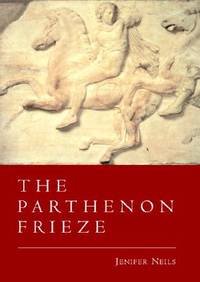
2001Book has minor foxing to boards and textblock. Light bump to 1 corner. Dustjacket has minor shelfwear. Dustjacket is protected in mylar. ; Includes cd-rom; 1 x 10.39 x 7.36 Inches; 316 pages; While the sculpted Ionic frieze of the Parthenon with its galloping horsemen and classically portrayed gods is reproduced in every art history text and has been much studied by scholars, no single book has yet been devoted to all its myriad aspects. This study by classical archaeologist and art historian Jenifer Neils breaks new ground by considering all aspects of this complex and controversial monument. Although the frieze has been studied for over two hundred years, most scholarship has sought an overall interpretation of the iconography rather than focusing on the sculpture's visual language, essential for a full understanding of the narrative. Neils' study not only decodes the language of the frieze, but also analyzes its conception and design, style and content, as well as its impact on later art. Unusual for its wide-ranging approach to the frieze, this book also brings ethical reasoning to bear on the issue of its possible repatriation as part of the on-going Elgin Marble debate. As one of the foremost examples of the high classical style and the finest expression of mid-fifth century Athenian ideology, the Parthenon frieze is without doubt one of the major monuments of western civilization, and as such deserves to be understood in all its dimensions. The accompanying CD-ROM contains a virtual reality Macromedia Director movie of the complete frieze, based on the plaster casts in the Skulpturhalle in Basel, Switzerland. Developed by Rachel Rosenzweig of the Department of Greek and Roman Art of the Cleveland Museum of Art, the casts are arranged in conformity with Neils' reconstruction and enable the user to view them in succession, as if walking around the Parthenon. The CD-ROM requires a computer running either MAC OS 8.01 or later, or Windows 95 or later.
2014Built in the fifth century b.c., the Parthenon has been venerated for more than two millennia as the West's ultimate paragon of beauty and proportion. Since the Enlightenment, it has also come to represent our political ideals, the lavish temple to the goddess Athena serving as the model for our most hallowed civic architecture. But how much do the values of those who built the Parthenon truly correspond with our own? And apart from the significance with which we have invested it, what exactly did this marvel of human hands mean to those who made it? In this revolutionary book, Joan Breton Connelly challenges our most basic assumptions about the Parthenon and the ancient Athenians. Beginning with the natural environment and its rich mythic associations, she re-creates the development of the Acropolis -the Sacred Rock at the heart of the city-state- from its prehistoric origins to its Periklean glory days as a constellation of temples among which the Parthenon stood supreme. In particular, she probes the Parthenon's legendary frieze: the 525-foot-long relief sculpture that originally encircled the upper reaches before it was partially destroyed by Venetian cannon fire (in the seventeenth century. ... The frieze's vast enigmatic procession -a dazzling pageant of cavalrymen and elders, musicians and maidens - has for more than two hundred years been thought to represent a scene of annual civic celebration in the birthplace of democracy. But thanks to a once-lost play by Euripides (the discovery of which, in the wrappings of a Hellenistic Egyptian mummy, is only one of this book's intriguing adventures), Connelly has uncovered a long-buried meaning, a story of human sacrifice set during the city's mythic founding. In a society startlingly preoccupied with cult ritual, this story was at the core of what it meant to be Athenian. Connelly reveals a world that beggars our popular notions of Athens as a city of staid philosophers, rationalists, and rhetoricians, a world in which our modern secular conception of democracy would have been simply incomprehensible. The Parthenon's full significance has been obscured until now owing in no small part, Connelly argues, to the frieze's dismemberment. And so her investigation concludes with a call to reunite the pieces, in order that what is perhaps the greatest single work of art surviving from antiquity may be viewed more nearly as its makers intended. Marshalling a breathtaking range of textual and visual evidence, full of fresh insights woven into a thrilling narrative that brings the distant past to life, The Parthenon Enigma is sure to become a landmark in our understanding of the civilization from which we claim cultural descent. 512p. illus [some col] bibliography,index Remainder mark, else new Book
1985réf. 88474London Thames and Hudson 1985 1 vol. relié in-4, cartonnage sous jaquette illustrée, 256 pp., nombreuses photos en noir et en couleurs de David Finn, index. Texte en anglais. Dos de la jaquette un peu passé, sinon en très bon état.
1973Binding not tight; The very symbol of the cradle of democracy is here profiled; Wonders of Man; B&W and Color Photographs; Small 4to 9" - 11" tall; 172 pages
1973Well illustrated large format book about the Parthenon . 152p. illus. (some col) bibliography.index Book
1981(Cambridge Introduction to World History Series) Introduction to the Archiecture and art of the Parthenon.48p. illus diagrams glossary, Contents complete, Library stamps and label Ex-Library
2014réf. 33780New York: A.A.Knopf 2014 Book. As New. Hardcover. 1st US Edition. Built in the fifth century b.c. the Parthenon has been venerated for more than two millennia as the West's ultimate paragon of beauty and proportion. Since the Enlightenment it has also come to represent our political ideals the lavish temple to the goddess Athena serving as the model for our most hallowed civic architecture. But how much do the values of those who built the Parthenon truly correspond with our own And apart from the significance with which we have invested it what exactly did this marvel of human hands mean to those who made it In this revolutionary book Joan Breton Connelly challenges our most basic assumptions about the Parthenon and the ancient Athenians. Beginning with the natural environment and its rich mythic associations she re-creates the development of the Acropolis -the Sacred Rock at the heart of the city-state- from its prehistoric origins to its Periklean glory days as a constellation of temples among which the Parthenon stood supreme. In particular she probes the Parthenon's legendary frieze: the 525-foot-long relief sculpture that originally encircled the upper reaches before it was partially destroyed by Venetian cannon fire in the seventeenth century. . The frieze's vast enigmatic procession -a dazzling pageant of cavalrymen and elders musicians and maidens - has for more than two hundred years been thought to represent a scene of annual civic celebration in the birthplace of democracy. But thanks to a once-lost play by Euripides the discovery of which in the wrappings of a Hellenistic Egyptian mummy is only one of this book's intriguing adventures Connelly has uncovered a long-buried meaning a story of human sacrifice set during the city's mythic founding. In a society startlingly preoccupied with cult ritual this story was at the core of what it meant to be Athenian. Connelly reveals a world that beggars our popular notions of Athens as a city of staid philosophers rationalists and rhetoricians a world in which our modern secular conception of democracy would have been simply incomprehensible. The Parthenon's full significance has been obscured until now owing in no small part Connelly argues to the frieze's dismemberment. And so her investigation concludes with a call to reunite the pieces in order that what is perhaps the greatest single work of art surviving from antiquity may be viewed more nearly as its makers intended. Marshalling a breathtaking range of textual and visual evidence full of fresh insights woven into a thrilling narrative that brings the distant past to life The Parthenon Enigma is sure to become a landmark in our understanding of the civilization from which we claim cultural descent. 512p. illus some col bibliographyindex Remainder mark else new . A.A.Knopf hardcover
2001réf. 43615Cambridge University Press. Fine in Near Fine dust jacket. Hardcover. Includes cd-rom; 4to 11" - 13" tall; 316 pages; While the sculpted Ionic frieze of the Parthenon with its galloping horsemen and classically portrayed gods is reproduced in every art history text and has been much studied by scholars no single book has yet been devoted to all its myriad aspects. This study by classical archaeologist and art historian Jenifer Neils breaks new ground by considering all aspects of this complex and controversial monument. Although the frieze has been studied for over two hundred years most scholarship has sought an overall interpretation of the iconography rather than focusing on the sculpture's visual language essential for a full understanding of the narrative. Neils' study not only decodes the language of the frieze but also analyzes its conception and design style and content as well as its impact on later art. Unusual for its wide-ranging approach to the frieze this book also brings ethical reasoning to bear on the issue of its possible repatriation as part of the on-going Elgin Marble debate. As one of the foremost examples of the high classical style and the finest expression of mid-fifth century Athenian ideology the Parthenon frieze is without doubt one of the major monuments of western civilization and as such deserves to be understood in all its dimensions. The accompanying CD-ROM contains a virtual reality Macromedia Director movie of the complete frieze based on the plaster casts in the Skulpturhalle in Basel Switzerland. Developed by Rachel Rosenzweig of the Department of Greek and Roman Art of the Cleveland Museum of Art the casts are arranged in conformity with Neils' reconstruction and enable the user to view them in succession as if walking around the Parthenon. The CD-ROM requires a computer running either MAC OS 8.01 or later or Windows 95 or later. . 2001. 0521641616 . Cambridge University Press hardcover
2001réf. 18578Cambridge University Press. Very Good in Near Fine dust jacket. Hardcover. Book has minor foxing to boards and textblock. Light bump to 1 corner. Dustjacket has minor shelfwear. Dustjacket is protected in mylar.; Includes cd-rom; 4to 11" - 13" tall; 316 pages; While the sculpted Ionic frieze of the Parthenon with its galloping horsemen and classically portrayed gods is reproduced in every art history text and has been much studied by scholars no single book has yet been devoted to all its myriad aspects. This study by classical archaeologist and art historian Jenifer Neils breaks new ground by considering all aspects of this complex and controversial monument. Although the frieze has been studied for over two hundred years most scholarship has sought an overall interpretation of the iconography rather than focusing on the sculpture's visual language essential for a full understanding of the narrative. Neils' study not only decodes the language of the frieze but also analyzes its conception and design style and content as well as its impact on later art. Unusual for its wide-ranging approach to the frieze this book also brings ethical reasoning to bear on the issue of its possible repatriation as part of the on-going Elgin Marble debate. As one of the foremost examples of the high classical style and the finest expression of mid-fifth century Athenian ideology the Parthenon frieze is without doubt one of the major monuments of western civilization and as such deserves to be understood in all its dimensions. The accompanying CD-ROM contains a virtual reality Macromedia Director movie of the complete frieze based on the plaster casts in the Skulpturhalle in Basel Switzerland. Developed by Rachel Rosenzweig of the Department of Greek and Roman Art of the Cleveland Museum of Art the casts are arranged in conformity with Neils' reconstruction and enable the user to view them in succession as if walking around the Parthenon. The CD-ROM requires a computer running either MAC OS 8.01 or later or Windows 95 or later. . 2001. 0521641616 . Cambridge University Press hardcover
1994336 ilustraciones, incluidas 138 grabados en color.