BARTOK, BélaAntiquariat.de
2025 risultati
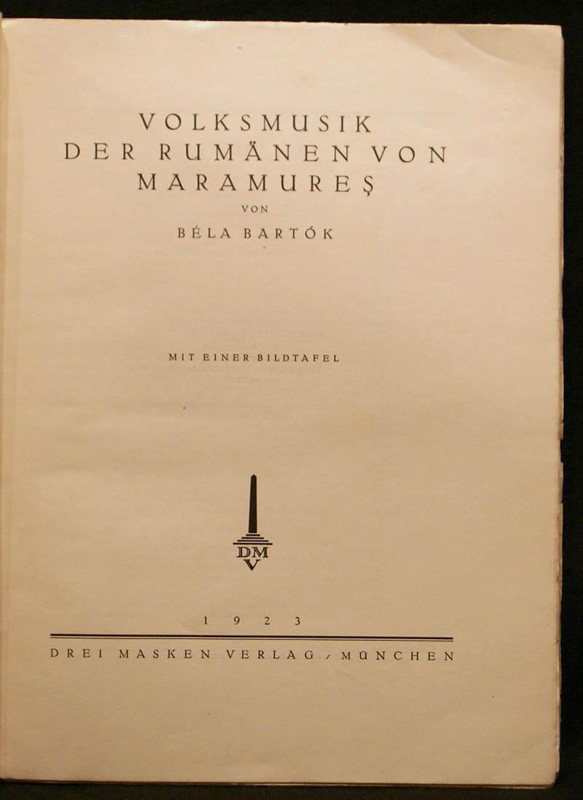
1923rif. STLL0103München, Drei Masken Vlg. 1923. 4°. XXXVII(1) S. (Titelei), 1 Bl. (Nebentit.), 226(4) S. Mit 1 Bildtafel. Brauner OKart. m. blaugedr. Tit. auf Rü. u. Vorderdeckel. Unt. Kapital bestoßen; Einbd., Schnitt u. einzelne Ss. stockfl. Riemann I, 105 ff. EA. Die größte Arbeitskraft seines Lebens widmete er aber der Sammlung und Erforschung der Volksmusik Osteuropas.Im Jahr 1934 bat er um Entbindung von seinem Lehrauftrag, um sich ganz der Forschung widmen zu können" (vgl. dazu Riemann). Das in diesem Band enthaltene Material phonographierte B. 1913 in verschiedenen Dörfern der in Nord-Siebenbürgen liegenden Gebirgsregion Maramures. Dem Noten- u. (zweisprachigen) Textteil ist eine wissenschaftliche Beschreibung der Charakteristik, Instrumente u. Notation vorangestellt. Der lange Gesang, auf rumänisch "cintec liung", dem B. in den Dörfern der Komitate Maramures das erste Mal begegnete, war eine seiner größten Entdeckungen auf dem Gebiet der rumänischen Volksmusik und Stücke dieser Gattung in vorliegender Veröffentlichung erstmals publiziert. - Die Bildtafel zeigt verschiedene Instrumente."
1917rif. ZB573646Bucuresci 1917. approx 600 pp. thick folio hardcover ex library very good. - If you are reading this this item is actually physically in our stock and ready for shipment once ordered. We are not bookjackers. Buyer is responsible for any additional duties taxes or fees required by recipient's country. Photos available upon request. Bucuresci hardcover
2016As New Romanian Original bdg. HC. Mint. 4to. (26 x 20 cm). In Romanian. 216 p., color and b/w ills. Carte veche la braila, 1612-1830: Biblioteca Judeteana Panait Istrati Braila. Old books in Braila, 1612-1830: Panait Istrati Braila County Library. The catalog is structured in two chapters: Old Romanian Book, 1673 - 1830 and Old Foreign Book, 1612 - 1750, containing descriptions of 53 rare books found in Braila in the special collections of the Library and Archives. The works analyzed in the catalog are present in the great libraries of the world, being representative for the European pattern from the 17th to the 18th centuries, some of them being very rare in the Romanian space. The catalog is a useful working tool for researchers, but also a modest contribution that we make to the old and foreign Romanian bibliography. Printed to 300 copies. All copies are numbered. This copy is 221 (221 / 300). Signed by Ion Volcu.
1895rif. ZB573642Bucuresci 1895. 624 pp. thick folio later half cloth ex library very good. - If you are reading this this item is actually physically in our stock and ready for shipment once ordered. We are not bookjackers. Buyer is responsible for any additional duties taxes or fees required by recipient's country. Photos available upon request. Bucuresci hardcover
1903rif. ZB573644Bucuresci 1903. thick folio 1281 pp. hardcover ex library else text clean & binding tight. - If you are reading this this item is actually physically in our stock and ready for shipment once ordered. We are not bookjackers. Buyer is responsible for any additional duties taxes or fees required by recipient's country. Photos available upon request. Bucuresci hardcover
Suggestiva carta della regione danubiana compresa tra la Dalmazia, a ovest, e il Mar Nero, a est, e tra la Macedonia, a sud, e la Moldavia e Podolia a nord. Prevale, nel tracciato, la netta idrografia con l'orografia a monticelli, mentre ancora approssimativi appaiono il profilo costiero e la toponomastica. Un fastoso cartiglio arricchisce l'angolo superiore sinistro; a destra e sinistra, vascelli e mostri marini navigano nel mare Adriatico e nel Mar Nero. Giacomo Gastaldi, l'illustre geografo piemontese che si pone tra i maggiori cartografi del '500, esplicò la sua attività soprattutto a Venezia, allora una delle capitali della cartografia, dove rivestì prestigiosi incarichi attinenti alla sua disciplina, divenendo anche professore di cosmografia all'Accademia della Fama. Sue carte si trovano, come la presente, nei celebri atlanti dell'Ortelio e del Lafréry. Koeman, Atlantes Neerlandici, III, p. 47 n. 12; D.B.I., vol. LII, pp. 529-32.
rif. GF267857 pages in4 - trés bon état -
rif. ORD-9560Tome I: Des origines à la fin du XVIIIe siècle. Tome II: Le XIXe siècle (1800-1850). Paris. Champion. 1912. 2 tomes en 1 volume fort in-12 (134 x 194mm) pleine toile rouge à dos lisse, XV, 427 et 2ff., 470 pages. Les pages 263 à 468 sont consacrées à un Glossaire Étymologique. Dos passé, reliure modeste, 2 taches de colle sur le fx-titre du tome I sinon très bon état intérieur. Edition originale peu courante.
1920Very Good Turkish, Ottoman (1500-1928) Original color map on cloth. Oblong atlas folio. (44 x 58 cm). Scale: 1/200.000. Toponyms in Ottoman script /Turkish with Arabic letters). Shows southwest of the Gallipoli Peninsula [and the Hellespont], Edremid Gulf, Tenedos, and North Aegean shores of Anatolia]. Folded. This is one of the series of the Bonn projection maps which are the first map series in modern techniques in Turkey and the Ottoman Empire. In order to produce these maps covering Turkish territory, Reconnaissance Branch was incorporated into The Mapping Commission. The maps were produced in the datum based on the latitude and longitude of the Ayasofya Mosque in equal area Bonn Projection. The field works for the 123 sheets covering the country were conducted by 76 staff. The production was completed in 18 years starting from east-west. Fieldworks continued without stopping except in the years 1914 and 1920. This map series called also reconnaissance maps contributed a lot to producing 1:25.000 scale maps. Hegira: 1336 = Gregorian: 1920. Not description on map-maker. Extremely rare.
1900Very Good German Original b/w city plan. Atlas folio. (58x47 cm). In German. Folded. [CITY PLAN of BRAILA -IBRAIL-] Stadtplan von Braila. Scale (Masstab): 1/10.000. No cartographer. 33 descriptive articles on bottom-right corner of the plan. Slightly chipped at extremities of paper and soiling. It shows Braila and Donau. Braila (Turkish: Ibrail) is a city in Muntenia, eastern Romania, a port on the Danube and the capital of Braila County. There's some Ottoman manuscript including translations of the German descriptive text on the plan, and also "'Ibrail' sehir plâni" written on verso in Ottoman script. Extremely rare.
1880rif. ZB573954Bucuresci 1880. 600 pp. thick folio later half cloth ex library very good. - If you are reading this this item is actually physically in our stock and ready for shipment once ordered. We are not bookjackers. Buyer is responsible for any additional duties taxes or fees required by recipient's country. Photos available upon request. Bucuresci hardcover
In 4°, br. edit. ill. da C. Doudelet, pp. 216-(4nn). Fascicolo dedicato alla Romania, a cura di Carla Cadorna con documenti e ricordi italo-romeni raccolti da Elena Bacaloglu. Buon es. corredato da numerosi disegni originali inediti di Charles Doudelet. Dorso restaurato, peraltro es. molto buono in barbe e a fogli chiusi. (Cfr.: "L'Eroica. Una rivista italiana del Novecento. A cura di Guido Giubbini", 1983)
1878rif. 1004Aus der kaiserlich-königlichen Hof und Staatsdruckerei 21,5 x 27,5 Wien 1878 Troisième volume relié d'époque, demi chagrin à coins, plats des couvertures de toile noire, dos à nerfs et titres dorés, Nr.17 bis Nr.24. Drittes Heft, 142 Seiten / pages, 25 Plänen / 25 plans dépliants. Inhalt / contenu : Nr.17. Neubau zur Vergrösserung des Friedens-Artillerie-Laboratoriums am Gubacser-Hotter bei Budapest. Ergänzung des statistischen Bau-Berichtes Nr.9 (mit 3 beilagen und 1 Plane). Nr.18. Neubau der Artillerie-Kaserne für den Divisionstab und zwei Fuss-Batterien zu Klagenfurt (mit 4 beilagen und 2 Plänen). Nr.19. Neubau des Anatomie-Gebäudes im Militär-Thier-Arznei-Institute in Wien. (mit 4 beilagen und 2 Plänen). Nr.20. Neubau des Truppen-Spitales in Budua (mit 4 Beilagen und 1 Plane). Nr.21. Neubau des Kavallerie-Etablissements zu Stockerau mit Ausnützung der gebäude der bestandenen Haupt-Monturs-Kommission. (mit 4 Beilagen und 4 Plänen). Nr.22. Neubau und Adaptirung von truppen-Unterkünsten in Kronstadt. (mit 4 Beilagen und 3 Plänen). Nr.23. Neubau des Laboratoriums für die Artillerie-Schiess-Versuchs-Kommission am Steinfelde nächst Felixdorf (mit 4 Beilagen und 2 Plänen). Nr.24. Neubau des General-Kommando-Gebäudes in Wien. (mit 4 beilagen und 10 Plänen). Intéressant et rare document qui décrit, avec de nombreux tableaux statistiques et plans dépliants à l'appui, la construction de bâtiments militaires réalisés de 1871 à 1876, pour la plupart dans la partie hongroise de la double Monarchie. La description de chaque bâtiment est en général composée de 10 points : Disposizion / Bau-Materielen / Bau-Konstrucktionen und besondere Einrichtungen / Hilfsmittel zur Bau-Ausführung / Ausbildung der Façade / Ausschmückung des Innern / Art der Bau-Ausführung / Zeitdauer des Baues / Personale der Bauleitung / Kostens des Baues. Chaque description est accompagnée de quatre annexes "Beilagen" suivantes : Uebersicht / Detail-Nachweisung / Taglohn und Material-Preis-Tabelle / Nachweisung, et d'un ou plusieurs plans dépliants détaillées de grande taille (jusqu'à 75cm/60cm). Ces documents illustrent la stratégie de défense de la double monarchie austro-hongroise issue du compromis de 1867. La victoire prussienne de Sadowa oblige Vienne à se recentrer sur les Balkans et à s'assurer du concours des Hongrois face aux intérêts russes. On lit facilement à travers ces documents la nouvelle ligne de défense stratégique de la double Monarchie dans sa partie hongroise au début des années 1870. Les villes stratégiques sont en Transsylvanie (Karlsburg, l'ancienne Alba Julia, Klausenburg, l'actuelle Cluj-Napoca, Herrmannstadt, l'actuelle Sibiu, Kronstadt, l'actuelle Brasov en Roumanie), aux points clés du Danube (Komorn entre Hongrie et Slovaquie, Budapest, Stockerau au nord de Vienne), à la frontière nord (Prag, Therezienstadt près de Prague, Krakau, Przemysl), Klagenfurt en Carinthie, au sud en Croatie-Slavonie (Agram) ou dans le Monténégro (Budva près de Cattaro). A noter enfin la description riche et détaillée, étage par étage, du "General-Kommando-Gebäude" situé "in der Universitätsstraße" à Vienne, détruit par des bombardements pendant la guerre, à l'emplacement duquel se trouve aujourd'hui "das Neue Institutsgebäude der Universität" construit en 1960-1962. La description mentionne l'achitecte du bâtiment, Carl Wilhelm (Christian von) Doderer (1825-1900), qui fit sa carrière à Vienne et est accompagnée de 10 plans dépliants (photolitho). Le coût du bâtiment est évalué à 1,454 093 Gulden. L'ensemble des trois volumes représente une source de premier plan pour l'histoire de l'architecture miltaire. Reliure solide, plats des couvertures usés et tachés, coins usés, dos très frotté avec épidermures, petite étiquelle ronde de classement sur le plat supérieur, intérieur en très bon état sans aucune rousseur, plans dépliants de chaque description en excellent état. Très bon et rare ensemble. Il semble que l'Österreichische Nationalbibliothek de Vienne (Katalog 1501-1929) ne possède que le volume II de 1875. Le volume III est vendu avec Livre
1878rif. 1004Aus der kaiserlich-königlichen Hof und Staatsdruckerei 21,5 x 27,5 Wien 1878 Troisième volume relié d'époque, demi chagrin à coins, plats des couvertures de toile noire, dos à nerfs et titres dorés, Nr.17 bis Nr.24. Drittes Heft, 142 Seiten / pages, 25 Plänen / 25 plans dépliants. Inhalt / contenu : Nr.17. Neubau zur Vergrösserung des Friedens-Artillerie-Laboratoriums am Gubacser-Hotter bei Budapest. Ergänzung des statistischen Bau-Berichtes Nr.9 (mit 3 beilagen und 1 Plane). Nr.18. Neubau der Artillerie-Kaserne für den Divisionstab und zwei Fuss-Batterien zu Klagenfurt (mit 4 beilagen und 2 Plänen). Nr.19. Neubau des Anatomie-Gebäudes im Militär-Thier-Arznei-Institute in Wien. (mit 4 beilagen und 2 Plänen). Nr.20. Neubau des Truppen-Spitales in Budua (mit 4 Beilagen und 1 Plane). Nr.21. Neubau des Kavallerie-Etablissements zu Stockerau mit Ausnützung der gebäude der bestandenen Haupt-Monturs-Kommission. (mit 4 Beilagen und 4 Plänen). Nr.22. Neubau und Adaptirung von truppen-Unterkünsten in Kronstadt. (mit 4 Beilagen und 3 Plänen). Nr.23. Neubau des Laboratoriums für die Artillerie-Schiess-Versuchs-Kommission am Steinfelde nächst Felixdorf (mit 4 Beilagen und 2 Plänen). Nr.24. Neubau des General-Kommando-Gebäudes in Wien. (mit 4 beilagen und 10 Plänen). Intéressant et rare document qui décrit, avec de nombreux tableaux statistiques et plans dépliants à l'appui, la construction de bâtiments militaires réalisés de 1871 à 1876, pour la plupart dans la partie hongroise de la double Monarchie. La description de chaque bâtiment est en général composée de 10 points : Disposizion / Bau-Materielen / Bau-Konstrucktionen und besondere Einrichtungen / Hilfsmittel zur Bau-Ausführung / Ausbildung der Façade / Ausschmückung des Innern / Art der Bau-Ausführung / Zeitdauer des Baues / Personale der Bauleitung / Kostens des Baues. Chaque description est accompagnée de quatre annexes "Beilagen" suivantes : Uebersicht / Detail-Nachweisung / Taglohn und Material-Preis-Tabelle / Nachweisung, et d'un ou plusieurs plans dépliants détaillées de grande taille (jusqu'à 75cm/60cm). Ces documents illustrent la stratégie de défense de la double monarchie austro-hongroise issue du compromis de 1867. La victoire prussienne de Sadowa oblige Vienne à se recentrer sur les Balkans et à s'assurer du concours des Hongrois face aux intérêts russes. On lit facilement à travers ces documents la nouvelle ligne de défense stratégique de la double Monarchie dans sa partie hongroise au début des années 1870. Les villes stratégiques sont en Transsylvanie (Karlsburg, l'ancienne Alba Julia, Klausenburg, l'actuelle Cluj-Napoca, Herrmannstadt, l'actuelle Sibiu, Kronstadt, l'actuelle Brasov en Roumanie), aux points clés du Danube (Komorn entre Hongrie et Slovaquie, Budapest, Stockerau au nord de Vienne), à la frontière nord (Prag, Therezienstadt près de Prague, Krakau, Przemysl), Klagenfurt en Carinthie, au sud en Croatie-Slavonie (Agram) ou dans le Monténégro (Budva près de Cattaro). A noter enfin la description riche et détaillée, étage par étage, du "General-Kommando-Gebäude" situé "in der Universitätsstraße" à Vienne, détruit par des bombardements pendant la guerre, à l'emplacement duquel se trouve aujourd'hui "das Neue Institutsgebäude der Universität" construit en 1960-1962. La description mentionne l'achitecte du bâtiment, Carl Wilhelm (Christian von) Doderer (1825-1900), qui fit sa carrière à Vienne et est accompagnée de 10 plans dépliants (photolitho). Le coût du bâtiment est évalué à 1,454 093 Gulden. L'ensemble des trois volumes représente une source de premier plan pour l'histoire de l'architecture miltaire. Reliure solide, plats des couvertures usés et tachés, coins usés, dos très frotté avec épidermures, petite étiquelle ronde de classement sur le plat supérieur, intérieur en très bon état sans aucune rousseur, plans dépliants de chaque description en excellent état. Très bon et rare ensemble. Il semble que l'Österreichische Nationalbibliothek de Vienne (Katalog 1501-1929) ne possède que le volume II de 1875. Le volume III est vendu avec Livre
1893rif. ZB573648Bucuresci 1893. 652 pp. thick folio later half cloth ex library very good. - If you are reading this this item is actually physically in our stock and ready for shipment once ordered. We are not bookjackers. Buyer is responsible for any additional duties taxes or fees required by recipient's country. Photos available upon request. Bucuresci hardcover
1884rif. ZB573645Bucuresci 1884. 686 pp. thick folio later half cloth ex library very good. - If you are reading this this item is actually physically in our stock and ready for shipment once ordered. We are not bookjackers. Buyer is responsible for any additional duties taxes or fees required by recipient's country. Photos available upon request. Bucuresci hardcover
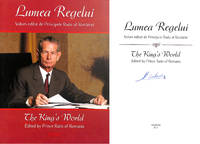
2011rif. 310287Polirom 2011. Hardcover. Very Good/Good Jacket. 19 to 25 cm tall Octavo 8vo. Signed by Kind Michael I of Romania. Hardcover. Published by Polirom in 2011. In English and Romanian. Posted within 1 working day. Royal Mail Tracked 24 to UK. Tracked Airmail worldwide. Robust recyclable packaging. Picture is the actual item. Polirom hardcover
1921rif. 24527Tours A. Mame et fils 1921 in-folio plein chagrin un volume, reliure demi-chagrin havane in-folio à coins Editeur (34 x 27 cm), dos 5 nerfs (spine with raised bands), décorations "or" et à froid (gilt and blind stamping decoration), titre, auteur et illustrateur frappés "or", Pièce d'auteur chocolat en tête avec un filet "or" en encadrement, Pièce de titre havane au centre du dos avec un filet "or" en encadrement, Pièce grenat en queue avec le nom de l'illustrateur avec un filet "or" en encadrement (plaques spéciales Editeur), entre-nerfs à Caissons ornés d'une couronne Royale "or" sur un semis d'étoiles "or" avec une roulette feuillage "or" de part et d'autre et deux filets "or" de chaque côtés, double filets "or" entourant une roulette feuillage "or" en tête et en pied, filet "or" en place des nerfs avec un filet à froid de part et d'autre des nerfs, plats décorés "or", d'un filet "or" aux mors et aux coins, papier peigné marron, vert et ocre aux plats (cover with painted paper), tête lisse dorée (gilt top edge smooth), gouttière et tranche de queue non-rognées, non rognée (edges no smoothes), couverture couleur illustrée par JOB conservée (cover preserved - library edition), Abondamment illustré en noir et en couleurs par JOB, XII + 96 pages, sans date (1921) Tours : A. Mame et fils Editeurs,
1897rif. 29348Bruxelles ; Paris P. Lacomblez ; H. Le Soudier 1897 in-8 demi-chagrin bouteille, dos à nerfs [Rel. de l'époque], dos insolé et un peu épidermé
rif. 217456Paris, Pigoreau, s.d. 2 vol. in-8, 440 pp. et 447 pp., 13 planches (dont une de musique), carte dépliante en couleurs, demi-chagrin vert, dos à nerfs orné de filets dorés, fer du lycée de Montpellier sur le premier plat (reliure de l'époque). Traces blanches sur les plats. Rousseurs, parfois fortes.
1933rif. feb1188731933. Used. For more details please contact me unknown
1926rif. 3298581926. framed. near fine. Card signed by Queen Marie of Romania in 1926 framed with three portrait photographs titled 'Her Majesty Queen Marie of Romania'. Please inquire for more information. Marie Romanian: Maria; born Princess Marie Alexandra Victoria of Edinburgh was the last queen of Romania from 10 October 1914 to 20 July 1927 as the wife of King Ferdinand I. Marie was born into the British royal family. Her parents were Prince Alfred Duke of Edinburgh later Duke of Saxe-Coburg and Gotha and Grand Duchess Maria Alexandrovna of Russia. Marie's early years were spent in Kent Malta and Coburg. After refusing a marriage proposal from her cousin the future King George V she was chosen in 1892 to marry Ferdinand then crown prince of Romania and they wed the next year. Marie was crown princess between 1893 and 1914 and became immediately popular with the Romanian people. unknown
1926rif. 3298581926. framed. near fine. Card signed by Queen Marie of Romania in 1926 framed with three portrait photographs titled 'Her Majesty Queen Marie of Romania'. Please inquire for more information. Marie Romanian: Maria; born Princess Marie Alexandra Victoria of Edinburgh was the last queen of Romania from 10 October 1914 to 20 July 1927 as the wife of King Ferdinand I. Marie was born into the British royal family. Her parents were Prince Alfred Duke of Edinburgh later Duke of Saxe-Coburg and Gotha and Grand Duchess Maria Alexandrovna of Russia. Marie's early years were spent in Kent Malta and Coburg. After refusing a marriage proposal from her cousin the future King George V she was chosen in 1892 to marry Ferdinand then crown prince of Romania and they wed the next year. Marie was crown princess between 1893 and 1914 and became immediately popular with the Romanian people. unknown books
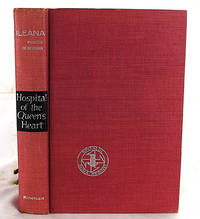
1954rif. 2607210117Rinehart 1954. First Edition. Hardcover. Very Good. 0x0x0. Near fine. Bound in publisher's red cloth. Hardcover. No dust jacket. Good binding and cover. Clean unmarked pages. ix 310 pages portraits. "During World War II Princess Ileana of Romania who later became Mother Alexandra of the Orthodox Monastery of the Transfiguration in Pennsylvania built a hospital in memory of her mother Queen Marie at the foot of her castle of Bran Romania. She called it the Hospital of the Queen's Heart. As both nurse and hospital administrator Ileana devoted herself to the care of the war-wounded and lovingly served the surrounding population. It was here she witnessed the end of the war and the communist takeover in August 1944. This book tells the gripping story of her sacrificial labors on behalf of the Romanian people in a time of great crisis. Rinehart hardcover
1919rif. 15743London: Hodder & Stoughton 1919. Scarce and desirable Attwell title an Alice in Wonderland-esque fantasy adventure illustrated by the creator of the Boo-Boos 10'' x 7.75''. Original pictorial orange cloth stamped in black. Illustrated by Attwell with 8 full-page color plates illustrated tissue guards and 8 full-page black-and-white images. 312 pages. Early ink gift inscription to front pastedown. Binding rather shaken. Light spotting to boards a bit more to text block edges. Offsetting to endpapers. Interior bright. Hodder & Stoughton unknown