1 737 résultats
1848réf. 47149Paris Bachelier 1848. 4to. No wrappers. In: "Comptes Rendus Hebdomadaires des Séances de L'Academie des Sciences" Tome 26 No 21. Pp. 529- 548. Entire issue offered. Pasteur's paper: pp. 535-538. First appearance of the announcement of Pasteur's momentous and revolutionary discovery of "molecular assymetry" and founding the science of Polarimetry.The discovery was first announced by Pasteur in may 1848 by the printing of the preliminary report of only 4 short pages in order to establish priority the paper offered. A more full exposition was published the same year in "Annales de Chimie et de Physique" 3me Series - Tome XXIV."In 1848.Pasteur studied the crystals of tartrates one of the substances that exhibited the now-clockwise now-counterclockwise effect under the microscope and found that the xcrystasls were mirror images of the others. The two crystals resemmbled each other as a right-hand glove resembles a left-hand glove.This was a revolutionary discovery and it took some courage to announce it. A few years before the well-known chemist Mitscherlich had studies the same tartrate crystals and declared them all to be identical. Pasteur was only a twenty-sic-year-old unknown. neverthelless he announced his findings and went before Biot to repeat the separation ofthe crystals before the eyes of the aged authority in the field. Biot was convinced and Pasteur received the Rumford medal of the Royal Society for his work.Pasteur had thus founded the science of polarimetry in which the measurements of the manner in which the plane of polarized light was twisted could be used to help to determine the structure of organic substance to follow various chemical reactions and so on."Asimov. Leicester & Klickstein "A Source Book of Chemistry" p. 374-379. unknown
1895réf. 49284London arrison and Sons 1895. - Paris Gauthier-Villars 1895. 8vo. and 4to. Later full cloth gilt lettering to spine Ramsay and without wrappers Cleve. In "Proceedings of the Royal Society" Ramsay Vol. 58. Entire vol. offered. And in "Comptes Rendus Hebdomadaires des Séances de L'Academie des Sciences" Cleve Tome 120 No 15. Pp. 797- 850. Entire issue offered. Ramsay's papers: pp. 65-67 and pp. 81-89. - Cleve's paper: p. 834. Stamps tp edges and a few corners a bit bumped on vol. 58 otherwise clean and fine. First printing of both papers in which Ramsay and Cleve - independently - announced their discovery of Helium on the Earth. Although Ramsay announced the discovery of Helium before Cleve had completed his research the Swedish chemist was independent discoverer of the element.Helium was discovered in the sun already in 1868 by Jules Janssen and independently by Lockyer the same year. Janssen discovered helium in the sun when he observed a total eclipse in India by studying the spectra of the suns chromosphere and Lockyer also by spectroscopy found that the new line in the spectrum did not belong to any element then known and he named it Helium for the sun.In the same volume as Ramsays paper there are 5 papers by NORMAN LOCKYER dealing with the discovery of Helium on the earth examining Ramsay's and Cleve's findings.Parkinson "Breakthroughs" 1895. hardcover
1836réf. 43417Leipzig Johann Ambrosius Barth 1836. Without wrappers. In "Annalen der Physik und Chemie. Hrsg. von J.C. Poggendorff" Band 38 No. 6 = Zweyte Stück. Titlepage to Vol. 38. Pp. 241-450 a. 3 engraved plates.Entire issue offered Heft No. 6 Bd. 38. Schwann's paper: pp. 358-364. Clean and fine. First appearance of an importent paper in the history of biology in which Schwann describes his discovery and isolation of pepsin the substance in the stomach that aids digestion of eggwhite. It is the FIRST KNOWN ANIMAL ENZYME. The paper appeared at the same time in "Archiv für Anatomie Physiologie und Wissenschaftliches Medicin"Theodor Schwann 1810-1882 was a great German physiologist pathologist and experimenter. One of the founders of the cell doctrine and of the idea of the living nature of yeast. Born at Neuss near Düsseldorff. A catholic educated in the Jesuit Gymnasium in Cologne. Intended for the church but took to medicine. He was a pupil of Johannes Müller and a collegueand lifelong friend of J. Henle the anatomist. In Berlin Schwann was Johannes Müller's assistent for five years and it was then that he discovered pepsin in 1836 the paper offered.Parkinson "Breakthroughs" 1836 B.The issue contains other importent papers by Seebeck Matteucci Marchand G. Magnus "Ueber die Wirkung des Ankers auf Elektromagnete und Stahlmagnete" Schönbein J. Müller "Ueber die Structur und die chemischen Eigenschaften der thierischen Bestandtheile der Knorpel und Knochen" Nachtrag. Forchhammer "Der kopaische See und seine unterirdischen Abzugskanäle." with a map. unknown
1900réf. 51313Paris Gauthier-Villars 1900. 4to. No wrappers. In: "Comptes Rendus Hebdomadaires des Séances de L'Academie des Sciences" Tome 130 No 15 a. No 18. Pp. 962- 1044 a. pp. 1145- 1220. Entire issues offered. Villard's papers: pp. 1010-1012 a. 1178-1182 textillustrations. Clean and fine. First apperance of Villard's two papers in which he announced and described the discovery of a new type of radiation more powerfull and penetrating than alpha-and beta rays. The new type of rays was named by Rutherford as gammarays. unknown
1743réf. WOC-1128Avec un Mémoire contenant des avis utiles à ceux qui voudront faire le même voyage. Cinquième édition, plus ample & plus correcte que les précédentes; & enrichie de nouvelles Figures. 79 planches, dont certaines dépliantes. A. La Haye, Chez Henry van Bulderen, Marchand Libraire, dans le Pooten, à l'Enseigne de Mezeray, 1731-1743. 3 volumes in-12 composite de (17,5x9,5cm) pour le 1 et 3 et de (16,8x9,5cm) reliés en plein veau, dos à nerfs ornés de caissons et de fleurons dorés, titre sur maroquin rouge, tranches rouges, fentes sur les charnières du tome 2 et coiffes supérieures faibles. ff-avis,339pp,ff-table + 364pp. + 414 ff-table.
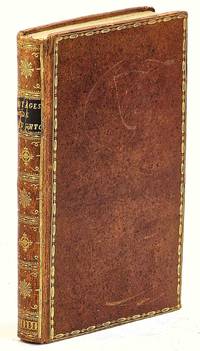
1797réf. 105650Paris: Chez Tavernier. 1797. 1st ed. An VI. Octavo full-leather binding with gilt-stamped decorations bands and title to spine gilt dec border to boards contemporary marbled endpapers pp viii 243 last page misprinted as 343. Three large folding engraved maps drawn up by Major James Rennell the leading British geographer of his time when Mungo Park returned from West Africa: all in very good condition. Spine rubbed minor scuffs to boards front free endpaper just starting to detach. Very good condition. First edition. Published in Paris in the revolutionary "An VI" 1797. Describes the explorations in the interior of Africa of Daniel Houghton 1740 - 1791 and Mungo Park 1771 - 1806. Daniel Houghton was sent by the African Association the Association for Promoting the Discovery of the Interior Parts of Africa; his instructions were to sail to the mouth of the Gambia navigate the river to the Barra Kunda falls and then to travel overland to the Hausa lands to the east. He was one of the first European explorers in the interior of Africa but after a successful visit in Bambouk territory he disappeared somewhere on his journey to Timbuctoo his last despatch being in July 1791. Mungo Park was then sent by the African Association and travelled more extensively in West Africa. He published the book "Travels in the interior districts of Africa" in 1799 i.e. this book precedes Park's publication. Uncommon. 1st Edition. Leather. Chez Tavernier hardcover
1842réf. 44147(Leipzig, Johann Ambrosius Barth, 1842). Without wrappers. In ""Annalen der Physik und Chemie. Hrsg. von J.C. Poggendorff"", Ergänzungsband 1, Stück 2. Pp. 193-384 a. 1 folded engraved plate. (The entire issue offered). Henry's paper: pp. 282-312.
1842réf. 44147Leipzig Johann Ambrosius Barth 1842. Without wrappers. In "Annalen der Physik und Chemie. Hrsg. von J.C. Poggendorff" Ergänzungsband 1 Stück 2. Pp. 193-384 a. 1 folded engraved plate. The entire issue offered. Henry's paper: pp. 282-312. First German version of Henry's description of his discovery of self-induction. He missed the credit for the discovery of induction to Faraday but he had done the key experiment ahead of Faraday but Faraday was the first to publish. But he is credited for the discovery of self-induction 1832 and Faraday discovered it independently two years later 1834."In Henry's paper however he explained thet the electric current in a coil can induce another current not only in another coil but in itself. The actual current observed in the coil is then the combination of the original current and the induced current. This is called self induction."Isac Asimov.The issue contains further notable papers Michael Faraday's "Vierzehnte Reihe von Experimental-Untersuchungen über Elektricität" § 2o-22. Nos 1667-1748. Pp. 249-281. First German version. In this paper FARADAYamplifies his theory of electrostatic induction by making further use of the analogy with the induction of magnetism. Whittaker describes the paper as having "THE FUNDAMENTAL EQUATION OF ELECTROSTATICS" as modified in order to take into account the effect of the specific inductive capacity."Whittaker I pp.187-89. unknown
1882réf. 47024(Paris, Gauthier-Villars), 1882. 4to. No wrappers. In: ""Comptes Rendus Hebdomadaires des Séances de L'Academie des Sciences"", Tome 95, No 22 a. Tome 104 No 21 (entire issues offered). Pp. 1017-1076 and pp. 1387-1462. Raoult's papers: pp. 1030-33 (tome 95) and pp. 1430-1433 (tome 104).
1882réf. 47024Paris Gauthier-Villars 1882. 4to. No wrappers. In: "Comptes Rendus Hebdomadaires des Séances de L'Academie des Sciences" Tome 95 No 22 a. Tome 104 No 21 entire issues offered. Pp. 1017-1076 and pp. 1387-1462. Raoult's papers: pp. 1030-33 tome 95 and pp. 1430-1433 tome 104. First appearance of Raoult's two importent papers in which described a method for finding the molecular weight of an organic compound by the determination of the lowering of the freezing point of water that resulted from dissolving that compound in water and the law governing the relation between solutes and vapor pressure."Then in 1882 F.-M. Raoult published his results on the effects of nondissociating organic solutes from which he deduced a general law controlling the lowering of freezing points the first paper offered. Four years later he extended this work to show the effect of solutes on vapor pressure the second paper offered. Having established the effect of nondissociating compounds he was in position to show that salts produced an eeffect which though anomalous could nevertheless be explained by the supposition that a dissolved molecule broke up into other molecules. This work was of great value in supplying a new method for determining molecular weights since the depression of freezing point and vapor pressure as well a the related rise in boiling point later discovered are proportional to the moleculat concentrations ofthe solutions; it was of equal value in supporting the ideas of van't Hoff on osmotic pressure. With the announcement of the dissociation theory of Arrhenius the anomalies were explained and the full significance of the generalizations of Raoult was recognized. Raoult published the formulations of his laws in the "Comptes Rendus" for 1882 and 1887 the papers offered" Leicester a. Klickstein "A Source Book in Chemistry" pp. 471 ff. unknown
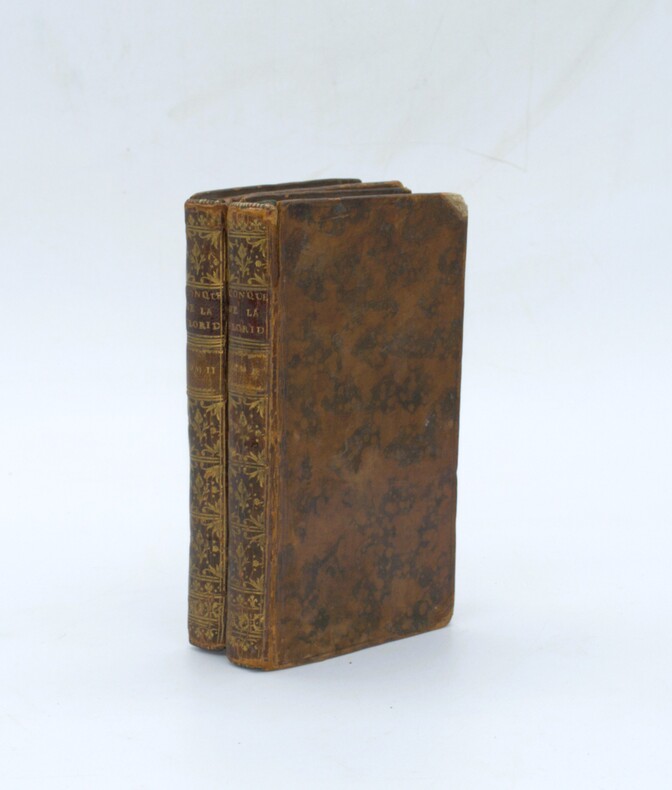
1731réf. PHO-2473Leiden, Chez Pierre Vander Aa, 1731, 2 volumes in-12 (17x10cm), 13ff.-290pp. et 293-582pp., veau marbré époque, dos lisse orné avec pièce de titre rouge et tomaison, tranches rouges, ex-libris gravé en page de garde (De Goderville). Frottements, coiffes arasées, coins usés, papier légèrement bruni, petits débuts de fentes. Illustré d’une carte, tirée de l’édition hollandaise de 1706 et de 9 planches dépliantes
1977346 pages. Bibliography. Author index. Report of the Estuary Working Group, Department of Fisheries and the Environment, Regional Board Pacific Region. Contains 9 pages of memorial dedicated to Roderick Haig-Brown who passed away in 1976. Includes a full-page photo of Mr. Haig-Brown, a bibliography of his writings, copies of two letters written by RHB to Dr. M. Waldichuk, Director of the Special Estuary Series, and more. Contents include: Geology and Soils, Climatology, Hydrology, Oceanography, Fish, Invertebrates, Flora, Wildlife, Land and Water Use, Pollution and Water Quality, Effects of Development, and more. Average wear. Unmarked. Binding intact. Quality copy. Book
1866xxii, 638, 6 (ads) pages. Fold-out map. Occasional black and white illustrations. "It has been my object in this work to give as clear an account as I was able of tracts of country previously unexplored, with their river systems, natural productions, and capabilities; and to bring before my countrymen, and all others interested in the cause of humanity, the misery entailed by the slave-trade in its inland phases - a subject on which I and my companions are the first who have had any opportunities of forming a judgement." - from Preface. "There must be something in the appearance of white men frightfully repulsive to the unsophisticated natives of Africa; for, on entering villages previously unvisited by Europeans, if we met a child... he would take to his heels in an agony of terror, such as we might feel if we met a live Egyptian mummy at the door of the British Museum." - from page 199. Fold-out map measures 24" wide by 17" high and is entitled "The River Shire, The Lakes Nyassa & Shirwa, The Lower Courses of the Rivers Zambesi & Rovuma" - based on the Astronomical observations and sketches of Dr. Livingstone, Constructed by John Arrowsmith, 1865. The routes of Dr. Livingstone and the Officers of the expedition are indicated in red. Map bears one inch opening along left side. Book has been recased in red buckram with new beige endpapers. Binding sound. Average wear. Unmarked. Lettering upon spine rubbed but legible. A quality copy. Book
1832réf. 47933Paris, Crochard, 1832. Contemp. hcalf. Spine gilt. Light wear along edges. Stamps to verso of titlepage. In: ""Annales de Chimie et de Physique"", 2e Series, vol. 51. (Entire volume offered). 448 pp. a. 1 folded engraved plate. Faraday's letter: pp. 404-434. Internally clean and fine.
1808réf. 43299Paris, Chez Mad. Ve. Bernard, 1808 Contemp. hcalf., gilt spine. Some scratches to binding.. Verso of titlepage and plates with small stamps.In: ""Annales de Chimie"" Vol. 68. - 358 pp. a. 3 engraved plates. (The entire volume offered). Gay-Lussac's a. Thenard's paper: pp. 169-174.
1843réf. 42662(London, Richard and John E., Taylor, 1843. 4to. No wrappers as extracted from ""Philosophical Transactions"" 1843 - Part I. Pp. 1-6.
1837réf. 47418(London, Richard and John E. Taylor, 1837). No wrappers. Extracted fron ""Scientific Memoirs, selected from The Transactions of Foreign Academies of Science and Learned Societies. Edited by Richard Taylor."", Vol. I. Pp. 540-547.
1869réf. 59086(Paris, Gauthier-Villars), 1869. 4to. In: ""Comptes Rendus Hebdomadaires des Séances de L'Academie des Sciences"", Tome 68, No 7. Pp. (349-) 408. (Entire issue offered). Janssen's paper pp. 367-376.
1818réf. 43871(Paris, Crochard, 1818,1819). No wrappers. In: ""Annales de Chimie et de Physique, Par MM. Gay-Lussac et Arago."", tome 8 (Cahier 3) a. 10 ( Cahier 2), pp. 225-336 and pp. 129-240. (Entire issues offered). Pelletier & Caventou's papers: pp. 323-324 (tome 8) and pp. 142-176 (tome 10). A few scattered brownspots.
1801réf. 43492Halle, Rengerschen Buchhandlung, 1801. Without wrappers as published in ""Annalen der Physik. Herausgegeben von Ludwig Wilhelm Gilbert"", Bd. 7, Viertes Stück. The entire issue offered (=Heft 4). Pp. 387-528. Ritter's announcement p. 525. With titlepage to volume 7. Clean and fine. Titlepage a bit shavedin inner margin.
1831réf. 43365Paris, Crochard, 1831. No wrappers as extracted from ""Annales de Chimie et de Physique"", 2. Series, Tome 48. Titlepage to vol. 48. Pp. 113-157. A few brownspots, but fine. Small stamps on verso of titlepage.
1832réf. 47933Paris Crochard 1832. Contemp. hcalf. Spine gilt. Light wear along edges. Stamps to verso of titlepage. In: "Annales de Chimie et de Physique" 2e Series vol. 51. Entire volume offered. 448 pp. a. 1 folded engraved plate. Faraday's letter: pp. 404-434. Internally clean and fine. First printing of Faraday's famous letter to Gay-Lussac in which he claim to be the discoverer of electro-magnetic induction analysed the results of the Italian philosophers pointing out their errors and defending himself from what he regarded as imputations on his character. The style of this letter is unexceptionable for Faraday could not write otherwise than as a gentleman; but the letter shows that had he willed it he could have hit hard. The letter was later translated into English and published in "Philosophical Magazine" in 1840 under the title "On Magneto-electric Induction"."In 1831 seemingly out of nowhere came the discovery of electromagnetic induction and the beginning of the experimental researches in electricity which were to lead Faraday to the discovery of the laws of electrochemistry specific inductive capacity the Faraday effect and the foundations of classical field theory." DSB. The volume contains further importent papers by AMPÈRE "Note sur une Experience de Hippolyte Pixii relative au Courant produit par la Rotation d'un aimant à l'aide dün appareil imagine par M. Hippolyte Pixii" WÖHLER et LIEBIG "recherches sur le Radical de l'Acide benzoique" and "Lettre de M. Berzelius sur le Benzoyle et l'Acide benzoique" papers by Strohmeyer Gay-Lussac Dutrochet Boussingault BERZELIUS "Sur le Bleu de Prusse et le Cyanoferrure de plomb" etc. etc. unknown
1808réf. 43299Paris Chez Mad. Ve. Bernard 1808 Contemp. hcalf. gilt spine. Some scratches to binding. Verso of titlepage and plates with small stamps.In: "Annales de Chimie" Vol. 68. - 358 pp. a. 3 engraved plates. The entire volume offered. Gay-Lussac's a. Thenard's paper: pp. 169-174. First announcement of the results that they had obtaines by treating boric acid with potassium showing that acid is composed of a combustible substance and oxygen. "Before regarding their proof of the existance of a new element as complete Gay-Lussac and Thenard wished not only to decomposed boric acid but to recompose it. On November 30 of the same year they were able to state in the 'Annales de Chemie et de Physique" the paper offered that "the composition of boracid s no longer problematical. In fact said they "we decompose and we recompose this acid at will" Weeks "Discovery of the Elements" p. 160. - Parkinson "Breakthroughs" 1808 C. - Bunch 1808.The volume contains other importent paper Davy's famous paper on electrolysis in first French translations Gayton-Morveau"Description d'un hygrometre pour le gaz." d¨'Arcet "Observations sur la potasse et sur la soude préparées à l'alcool" etc. unknown
1837réf. 47418London Richard and John E. Taylor 1837. No wrappers. Extracted fron "Scientific Memoirs selected from The Transactions of Foreign Academies of Science and Learned Societies. Edited by Richard Taylor." Vol. I. Pp. 540-547. Henry's milestone paper announcing his discovery of electrical self-induction. "Henry independently discovered electro-magnetic induction and in this paper announced his discovery of electric self-induction one of the prime properies of an electro-magnetic circuit. Henry was an eminent experimenter but was casual in publishing his findings with resulting lack of recognition of his contributions."Bern Dibner.Dibner "Heralds of Sciece" No.63.It was also printed the same year in "Transactions of the American Philosophical Society New Series Vol. 5". The paper was later printed in "Philosophical Magazine" 1840."The direction of Henry’s thought became somewhat apparent in his 1835 paper refers to the papers reading before the American Phil. Soc. febr. 6th 1835 on the action of a spiral conductor in increasing the intensity of galvanic currents. The paper started out as an affirmation of Henry’s priority in the discovery of self-induction. He then combined induction proper using Faraday’s findings and his own with selfinduction to show how these produce a pattern of repulsions yielding an increased effect in spirals. He specifically linked these “magneto-electrical” results to the principles of static induction developed by Cavendish and Poisson. This explanation was then applied to Savary’s report of changes of polarity when magnetic needles were placed at varying distances from a wire in which a current was being transmitted "Mémoire sur l’aimantation" in Annales de chimie et de physique 34 1827. That is currents appeared periodically in the air surrounding a current-bearing straight wire as a result of the actions of induction and self-induction." DSB.Wheeler Gift: 2724-2725a. unknown
1843réf. 42662London Richard and John E. Taylor 1843. 4to. No wrappers as extracted from "Philosophical Transactions" 1843 - Part I. Pp. 1-6. First appearance of a pioneer-paper in the history of early photography as Herschel here for the first time describes his discovery of the iron printing process with ammonio-citrate of iron by both methods namely with blue lines on a white background and white lines on a blue ground. unknown