2 048 résultats
1972réf. 1227121972 Editions Paulines, collection "Problèmes de vie" - 1972 - Petit In-8, broché - 191 pages
réf. SONG981441719XWorld Scientific Publishing Company 2014-04-30. Revised Expanded ed. paperback. Used: Good. 8.30x0.70x10.90. Buy with confidence. Excellent Customer Service & Return policy. World Scientific Publishing Company paperback
1976réf. 500330819Hachette 1976 119 pages 1976. 119 pages. Oui-Oui le petit bonhomme en bois rêve d'aventure sur les mers. Il part en voyage sur un gros navire parfois pour ramener Bastien Bouboule qui a fait une fugue et vit plusieurs jours d'aventures en mer où il se fait de nombreux amis
1977réf. 100144317Città Nuova Editrice 1977 in8. 1977. Broché.
réf. 1334862095.Gpaperback. Good. Access codes and supplements are not guaranteed with used items. May be an ex-library book. paperback
réf. 1528390768.Gpaperback. Good. Access codes and supplements are not guaranteed with used items. May be an ex-library book. paperback
réf. 9812340904.Gpaperback. Good. Access codes and supplements are not guaranteed with used items. May be an ex-library book. paperback
2001réf. 4112Stock 2001 136 pages 15x21x2cm. 2001. broché. 136 pages. Jeanne 10 ans et son frère Thomas 14 ans enfants de parents divorcés font naufrage lors d'une traversée de l'Atlantique. Ils échouent sur une île étrange où les mots ont une vie propre. Ce roman d'Erik Orsenna publié en 2001 utilise cette aventure comme une allégorie poétique pour célébrer la beauté et la musicalité de la langue française transformant l'apprentissage de la grammaire en un voyage enchanteur
1987réf. 28294Paris Perrin 1987 In-12 285 pp
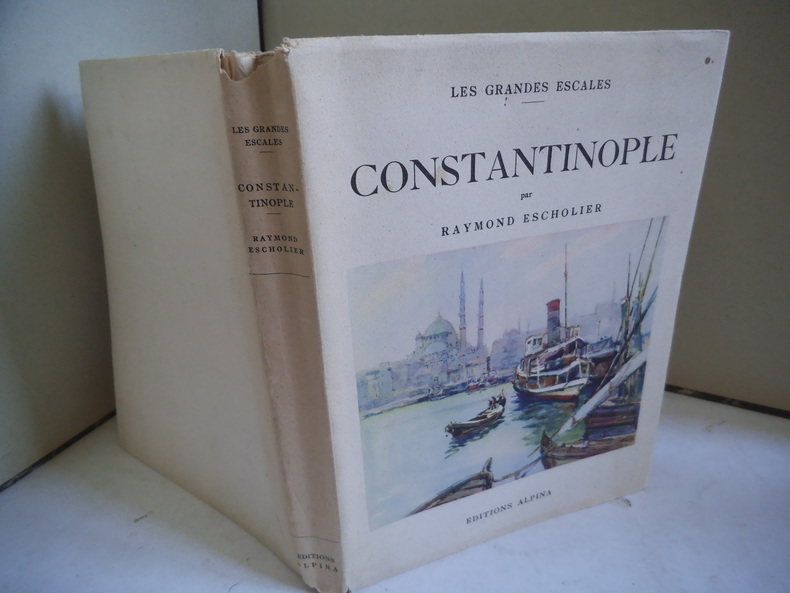
réf. 12921In 8 carré brioché, jaquette illustrée en couleurs. Faux-titre, titre, 152 pages, illustrations en couleurs hors-texte plus la couverture de Nicolas MARKOVITCH. Photos dans le texte et à pleine page. Edition Alpine Les grandes escales septembre 1935. Très bon état
réf. 107.453Paris, Albin Michel, 1963. 20 x 28, 223 pp., 57 planches en couleurs, 56 illustrations en N/B, cartonnage d'édition pleine toile + jaquette en couleurs, très bon état (sauf couvertture légèrement plissée d'origine).
réf. DADAX036757540XNew unknown
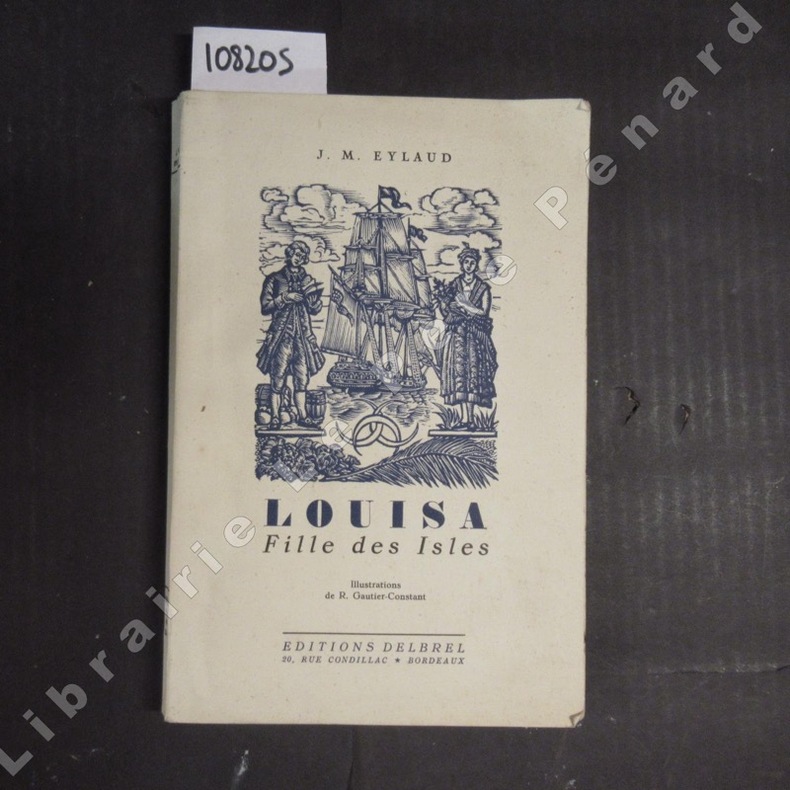
1951réf. 1082051951 Editions Delbrel - 1951 - In-8, broché - 142 p. - Quelques illustrations et cul-de-lampe en N&B par R. Gautier-Constant - Avec un envoi de l'auteur en page de garde - Il a été tiré 200 exemplaires sur Albélio, numérotés de 101 à 300 - Exemplaire numéroté 191/300
réf. 46650Paris, Furne, Jouvet et Cie, s.d. (ca 1865). "18 x 28, 692 pp., reliure dos toilé, état moyen (mors fendus; bords et coins émoussés; pages de titre et da faux-titre restaurées)."
1920réf. 8365Librairie Felix Alcan 1920 609-747 pages in8. 1920. broché. 609-747 pages. L'Histoire du Canada de François-Xavier Garneau est une œuvre fondatrice et classique de l'historiographie canadienne-française publiée initialement en quatre tomes entre 1845 et 1852. Elle retrace l'histoire du Canada depuis sa découverte jusqu'au milieu du XIXe siècle avec une perspective marquée par la défense de la nation canadienne-française dans un contexte politique d'union des Canadas. L'ouvrage plusieurs fois réédité et augmenté comprend des descriptions géographiques des tableaux des nations autochtones et leurs coutumes
1832réf. 48329Paris Crochard 1832. No wrappers. In: "Annales de Chimie et de Physique" 2e Series vol. 51 Cahier 4. Pp. 337-444 Entire issue offered. Faraday's letter: pp. 404-434 a. 1 engraved plate. Some brownspots. First printing of Faraday's famous letter to Gay-Lussac in which he claim to be the discoverer of electro-magnetic induction analysed the results of the Italian philosophers pointing out their errors and defending himself from what he regarded as imputations on his character. The style of this letter is unexceptionable for Faraday could not write otherwise than as a gentleman; but the letter shows that had he willed it he could have hit hard. The letter was later translated into English and published in "Philosophical Magazine" in 1840 under the title "On Magneto-electric Induction"."In 1831 seemingly out of nowhere came the discovery of electromagnetic induction and the beginning of the experimental researches in electricity which were to lead Faraday to the discovery of the laws of electrochemistry specific inductive capacity the Faraday effect and the foundations of classical field theory." DSB. unknown
1832réf. 47933Paris Crochard 1832. Contemp. hcalf. Spine gilt. Light wear along edges. Stamps to verso of titlepage. In: "Annales de Chimie et de Physique" 2e Series vol. 51. Entire volume offered. 448 pp. a. 1 folded engraved plate. Faraday's letter: pp. 404-434. Internally clean and fine. First printing of Faraday's famous letter to Gay-Lussac in which he claim to be the discoverer of electro-magnetic induction analysed the results of the Italian philosophers pointing out their errors and defending himself from what he regarded as imputations on his character. The style of this letter is unexceptionable for Faraday could not write otherwise than as a gentleman; but the letter shows that had he willed it he could have hit hard. The letter was later translated into English and published in "Philosophical Magazine" in 1840 under the title "On Magneto-electric Induction"."In 1831 seemingly out of nowhere came the discovery of electromagnetic induction and the beginning of the experimental researches in electricity which were to lead Faraday to the discovery of the laws of electrochemistry specific inductive capacity the Faraday effect and the foundations of classical field theory." DSB. The volume contains further importent papers by AMPÈRE "Note sur une Experience de Hippolyte Pixii relative au Courant produit par la Rotation d'un aimant à l'aide dün appareil imagine par M. Hippolyte Pixii" WÖHLER et LIEBIG "recherches sur le Radical de l'Acide benzoique" and "Lettre de M. Berzelius sur le Benzoyle et l'Acide benzoique" papers by Strohmeyer Gay-Lussac Dutrochet Boussingault BERZELIUS "Sur le Bleu de Prusse et le Cyanoferrure de plomb" etc. etc. unknown
1832réf. 44146Leipzig Johann Ambrosius Barth 1832. Contemp. hcalf. raised bands gilt spine. Light wear along edges. In "Annalen der Physik und Chemie. Hrsg. von J.C. Poggendorff" Band 25. Entire volume offered. VIII648 pp. and 6 folded engraved plates. Small stamps on verso of titlepage and plates. Faraday's papers: pp. 91-142 a. pp. 142-186. with 3 folded engraved plates. Clean and fine. First German editions of the 2 first memoirs of Faradays groundbreaking researches on electricity constituting the first 2 papers of his "Experimental Researches in Electricity" and containing his fundamental discovery of electromagnetic induction THE FOUNDATION OF NEARLY ALL THE ELECTRICITY IN USE TODAY. In 1820 Oersted had generated magnetism from electricity Faraday here finds the opposite effect generating electricity by magnetism. He also described the first electrical generator second paper. THESE PAPERS ARE SOME OF THE GREAT CLASSICS OF CHEMISTRY AND PHYSICS."Faraday demonstrated this theory involving the lines of force.by inserting a magnet into a coil of wire attached to a galvanometer. While the magnet was being inserted or removd current flowed through the wire. If the magnet was held stationary and the coil moved over it one way or the other there was current in the wire. In either case the magnetic lines of force about the magnet were cut by the wire.If the magnet and coil were both held motionless whether the magnet was within the coil or not there was no current.Faraday hd thus discovered electricalinduction.It was to lead to great things but this was not apparent."Asimov."Although his discovery of the electric motor and the dynamo was almost entirely identical to his theoretical discoveries it laid the foundation of the modern electrical industry - electric light and power teælephony wireless telegraphy televison etc. - by providing for the production of continous mechanical motion from an electrical source and vice versa." PMM 308.Horblit 29 - Milestones 62. - Dibner 64. - PMM 308.The volume contains further notable papers. Elie de Beaumont "Zweiter geologischer Brief.an A.v. Humboldt über die relative Alter der Gebirgszüge" pp. 1-58 a. 2 plates one handcoloured papers by Döbereiner E. Lenz Moser Mitscherlich de Saussure J. Dumas F.E. Neumann Gay-Lussac Johannes Müller "Beobachtungen zur Analyse der Lymphe des Bluts und des Chylus" pp. 513-590. hardcover
1825réf. 43119London W. Nicol 1825. 4to. No wrappers as extracted from "Philosophical Transactions" 1825 - Part II. Pp. 440-466. Clean and fine. First appearance of this remarkable paper in which Faraday announces his discovery of Benzene. Berzelius described this research as "without doubt one of the most importent which has enriched chemistry during 1825.""The first public announcement of the discovery of benzene the greatest chemical discovery made by Faraday. Originally named by him "bicaburet of hydrogen" benzene is the parent substance of all aromatic compounds. It constitutes the basis of thousands of organic compounds dyes perfumes and medicinal products as well as many polymers and structural materials. The discovery of benzene led to the creation of numerous chemical companies and the manufacture of materials previously unknown. This paper is a thourough study of the physical and chemical properties of benzene."Neville I p. 443. - Parkinson "Breakthrough" 1825 C. unknown
1832réf. 44145Paris Crochard 1832. Contemp. hcalf. gilt spine light wear along edges. In: "Annales de Chimie et de Physique Par MM. Gay-Lussac et Arago." tome 50 Series 2. Entire volume offered. 448 pp. 2 folded engraved plates. Faraday's papers: pp. 5-67 a. pp. 113-162. First French editions of the 2 first memoirs of Faradays groundbreaking researches on electricity constituting the first 2 papers of his "Experimental Researches in Electricity" and containing his fundamental discovery of electromagnetic induction THE FOUNDATION OF NEARLY ALL THE ELECTRICITY IN USE TODAY. In 1820 Oersted had generated magnetism from electricity Faraday here finds the opposite effect generating electricity by magnetism. He also described the first electrical generator second paper. THESE PAPERS ARE SOME OF THE GREAT CLASSICS OF CHEMISTRY AND PHYSICS."Faraday demonstrated this theory involving the lines of force.by inserting a magnet into a coil of wire attached to a galvanometer. While the magnet was being inserted or removd current flowed through the wire. If the magnet was held stationary and the coil moved over it one way or the other there was current in the wire. In either case the magnetic lines of force about the magnet were cut by the wire.If the magnet and coil were both held motionless whether the magnet was within the coil or not there was no current.Faraday hd thus discovered electricalinduction.It was to lead to great things but this was not apparent."Asimov."Although his discovery of the electric motor and the dynamo was almost entirely identical to his theoretical discoveries it laid the foundation of the modern electrical industry - electric light and power teælephony wireless telegraphy televison etc. - by providing for the production of continous mechanical motion from an electrical source and vice versa." PMM 308.Horblit 29 - Milestones 62. - Dibner 64. - PMM 308. unknown
1832réf. 48987Paris Crochard 1832. Contemp. hcloth gilt lettering to spine. In: "Annales de Chimie et de Physique Par MM. Gay-Lussac et Arago." tome 50 Series 2. Entire volume offered. 448 pp. 2 folded engraved plates. Faraday's papers: pp. 5-67 a. pp. 113-162. Some scattered brownspots. First French editions of the 2 first memoirs of Faradays groundbreaking researches on electricity constituting the first 2 papers of his "Experimental Researches in Electricity" and containing his fundamental discovery of electromagnetic induction THE FOUNDATION OF NEARLY ALL THE ELECTRICITY IN USE TODAY. In 1820 Oersted had generated magnetism from electricity Faraday here finds the opposite effect generating electricity by magnetism. He also described the first electrical generator second paper. THESE PAPERS ARE SOME OF THE GREAT CLASSICS OF CHEMISTRY AND PHYSICS."Faraday demonstrated this theory involving the lines of force.by inserting a magnet into a coil of wire attached to a galvanometer. While the magnet was being inserted or removd current flowed through the wire. If the magnet was held stationary and the coil moved over it one way or the other there was current in the wire. In either case the magnetic lines of force about the magnet were cut by the wire.If the magnet and coil were both held motionless whether the magnet was within the coil or not there was no current.Faraday hd thus discovered electricalinduction.It was to lead to great things but this was not apparent."Asimov."Although his discovery of the electric motor and the dynamo was almost entirely identical to his theoretical discoveries it laid the foundation of the modern electrical industry - electric light and power teælephony wireless telegraphy televison etc. - by providing for the production of continous mechanical motion from an electrical source and vice versa." PMM 308.Horblit 29 - Milestones 62. - Dibner 64. - PMM 308.The volume contains further notable papers. Elie de Beaumont "Zweiter geologischer Brief.an A.v. Humboldt über die relative Alter der Gebirgszüge" pp. 1-58 a. 2 plates one handcoloured papers by Döbereiner E. Lenz Moser Mitscherlich de Saussure J. Dumas F.E. Neumann Gay-Lussac Johannes Müller "Beobachtungen zur Analyse der Lymphe des Bluts und des Chylus" pp. 513-590. hardcover
réf. 113531aafLondon, Longsmans, Green, and Co., 1877, pt. in-8vo, XII + 208 p., rousseurs éparses, reliure en cuir originale, titre doré sur le dos, dos à 4 nerfs, bel exemplaire.
réf. 46238Paris : Farjas, 1899. 2 volumes 18,5x28cm pleine percaline imprimés, 516 et 326 pages avec 32 planches hors texte des inventions découvertes en 1898 (aviation, photographie, automobiles, cycles, arts militaires, marine, chemins de fer, mécanique, etc.). Couvertures légèrement frottées sinon bon état.
réf. 9522Gallimard Jeunesse Reliure au format BD, 72pages,superbe exemplaire . Bel réalisation pour les curieux , dans un visuel attractif
réf. 100.385Paris, Ernest Flammarion, 1925. 15 x 22, 281 pp., nombreuses illustrations, reliure d'édition pleine toile grise, plat avant orné d'une photo, tête dorée, très bon état.