2 710 résultats
réf. DADAX0471771511New unknown
réf. DADAX0590471287New unknown
réf. DADAX0553807501New unknown
1801réf. 43492Halle Rengerschen Buchhandlung 1801. Without wrappers as published in "Annalen der Physik. Herausgegeben von Ludwig Wilhelm Gilbert" Bd. 7 Viertes Stück. The entire issue offered =Heft 4. Pp. 387-528. Ritter's announcement p. 525. With titlepage to volume 7. Clean and fine. Titlepage a bit shavedin inner margin. First printing of Ritter's announcement of his discovery of ultraviolet light in a halfpage letter addressed to Gilbert's Annalen. With that discovery it became clear that visible light represents no more than a fraction of a continous spectrum.A year earlier in 1800 William Herschel discovered infrared light. This was the first time that a form of light beyond visible light had been detected. After hearing about Herschel's discovery of an invisible form of light beyond the red portion of the spectrum Ritter decided to conduct experiments to determine if invisible light existed beyond the violet end of the spectrum as well. He had heard that blue light caused a greater reaction in silver chloride than red light did. Ritter decided to measure the rate at which silver chloride reacted to the different colors of light. He directed sunlight through a glass prism to create a spectrum. He then placed silver chloride in each color of the spectrum and found that it showed little change in the red part of the spectrum but darkened toward the violet end of the spectrum. Johann Ritter then decided to place silver chloride in the area just beyond the violet end of the spectrum in a region where no sunlight was visible. To his amazement this region showed the most intense reaction of all. This showed for the first time that an invisible form of light existed beyond the violet end of the visible spectrum. This new type of light which Ritter called Chemical Rays later became known as ultraviolet light or ultraviolet radiation the word ultra means beyond. - Parkinson Breakthroughs: 1801 P. unknown
1803réf. 43638Halle Rengerschen Buchhandlung 1803. Without wrappers as extracted from "Annalen der Physik. Herausgegeben von Ludwig Wilhelm Gilbert" Jahrgang 1802 Bd. 12 Zwölftes Stück. Pp. 409-416. Titlepage to vol. 12. This is Ritter's first expositon of his discovery of ultraviolet light. It was announced the year before in a halfpage letter addressed to Gilbert's Annalen and printed in the Annalen. With that discovery it became clear that visible light represents no more than a fraction of a continous spectrum.A year earlier in 1800 William Herschel discovered infrared light. This was the first time that a form of light beyond visible light had been detected. After hearing about Herschel's discovery of an invisible form of light beyond the red portion of the spectrum Ritter decided to conduct experiments to determine if invisible light existed beyond the violet end of the spectrum as well. He had heard that blue light caused a greater reaction in silver chloride than red light did. Ritter decided to measure the rate at which silver chloride reacted to the different colors of light. He directed sunlight through a glass prism to create a spectrum. He then placed silver chloride in each color of the spectrum and found that it showed little change in the red part of the spectrum but darkened toward the violet end of the spectrum. Johann Ritter then decided to place silver chloride in the area just beyond the violet end of the spectrum in a region where no sunlight was visible. To his amazement this region showed the most intense reaction of all. This showed for the first time that an invisible form of light existed beyond the violet end of the visible spectrum. This new type of light which Ritter called Chemical Rays later became known as ultraviolet light or ultraviolet radiation the word ultra means beyond. unknown
1954réf. 728561954 Editions C.P.E. Editeur-Imprimeur - 1954 - Petit in-8, broché, couverture illustrée - 219 p.
2005384pp. Paperback Very good condition
réf. 381Paris, Amiot-Dumont, 1953. In-8, 266 pp, reliure pleine toile bleue. Traduit de l'américain et mis à jour par Michel Bourdet-Pléville. Gravures, cartes.
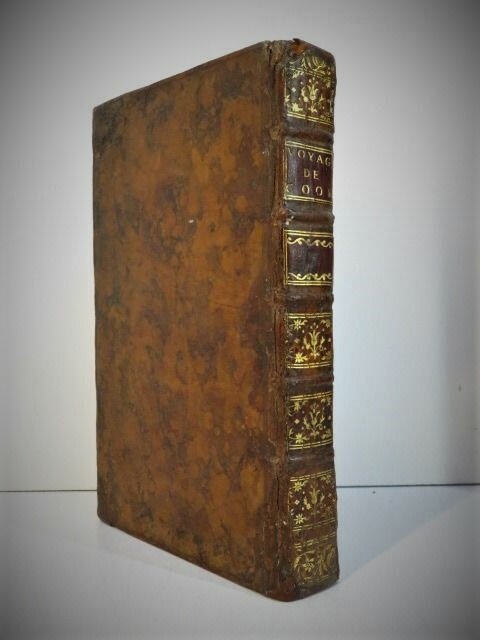
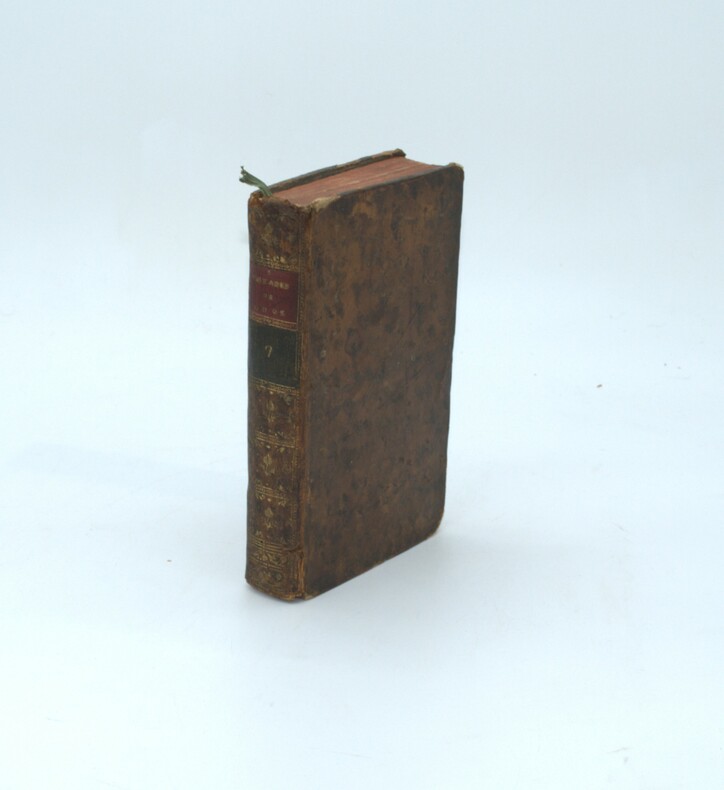
1782réf. PHO-717Paris ,Chez Pissot père et fils, Chez Laporte, (1782) 1 volume in-octavo (20 x 13 cm) de X-508 pp. Reliure plein veau marbré d'époque, dos à nerfs orné avec pièce de titre,la carte et le frontispice sont manquants.
1782réf. PHO-1331Paris ,Chez Pissot père et fils, Chez Laporte, (1782) 1 volume in-octavo (20 x 12,7 cm) de X-508 pp. ,Reliure plein veau marbré d'époque, dos lisse orné avec pièce de titre et tomaison, tranches rouges ,la carte et le frontispice sont manquants , défauts à la reliure .
1782réf. PHO-1839Paris, Chez Pissot père et fils, Chez Laporte, (1782) 1 volume in-octavo (20 x 12,7 cm) de X-508 pp., Reliure plein veau marbré d'époque, dos lisse orné avec pièce de titre, tranches rouges, illustré de la gravure de la mort de Cook, la carte est manquante, défauts à la reliure, mouillure en fin d’ouvrage.
1969Volume I - 413 pages plus fold-out map. Volume II - 426 pages. Includes appendix on the physical geography of North America. Both volumes clean, bright and unmarked with lightest wear. Possibly unread. Excellent copy. Book
1996268 pages. Author's signature atop first leaf. "Joy's beginning, as daughter of a prominent, horse loving farmer in England, a fine education, service in the WRNS, 2 husbands, a long standing affair, penniless immigration to Canada, culminated in her discovery of the American Quarter Horse, and attaining outstanding success in spite of overwhelming odds." - from back cover. Clean, bright and unmarked. Crease to upper corner of front cover and first few pages else as new. Excellent copy. Book
réf. 115348sd Edition du Musée Océanographique de Monaco - Ouvrage non daté (Approx. 1930 / 1940) - 18e édition - 89e Mille - Petit in-8, broché avec illustration sur la première de couverture, sous papier cristal - 67 pages - Très nombreuses illustrations et reproductions photographiques en N&B in et hors texte
2016réf. 500301868Pocket 2016 221 pages 10 6x17 6x1 6cm. 2016. pocket_book. 221 pages.
réf. 64835aafLausanne, Delachaux et Niestlé, 1999, gr. in-4to, 335 p., rich. ill. en couleur, cartonnage original, avec jaquette. Bel ouvrage ex. neuf.
1821réf. 11960(Bourg), (Janinet), (1821) ; in-8, broché ; 38 pp., texte encadré d’un double filet noir.
1996réf. 3931996 Numéro 22 - Septembre / Octobre / Novembre 1996 - Revue trimestrielle distribuée par les éditions Hazan - In-4 (33 x 23,5 cm) broché - Très nombreuses photographies en couleurs - Jean Loup PIVIN (Directeur de la publication) - N'Goné Fall (Directeur de la rédaction) - Revue sous titrée "Art, Danse et Littérature. Découverte et Inédits. Art Contemporain Africain." - ISBN : 9771157412190 - Ce numéro a été réalisé suite aux recherches, et sous la direction, de André-Jean JOLLY à l'occasion de la 7e Biennale de la Danse de Lyon
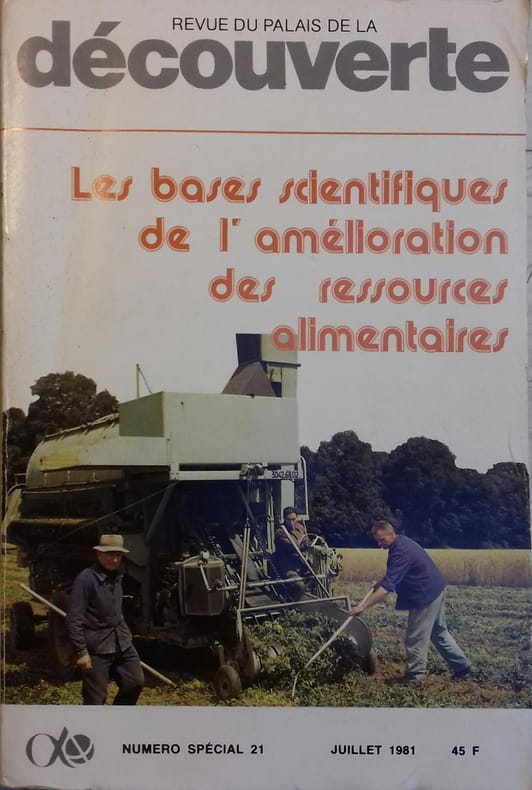
réf. 480301 vol in-8 broché - Juillet 1973 - numéro spécial 2 - 44 pages
1981réf. 207582Couverture souple. Broché. 352 pages. Couverture légèrement abîmée.
1973réf. 145216Couverture souple. Broché. 100 pages. Graffiti sur la couverture.
1976réf. 63501976 328 pages in8. 1976. Broché. 328 pages.
1983réf. ROD0035063Chez l'auteur. 1983. In-8. Broché. Bon état, Couv. convenable, Dos satisfaisant, Intérieur bon état. 80p. Nombreuses illustrations en noir et blanc.. . . . Classification Dewey : 553-Géologie économique
1979réf. ROD0035062Chez l'auteur. 1979. In-8. Broché. Bon état, Couv. convenable, Dos satisfaisant, Intérieur bon état. 111p. Illustrations en noir et blanc.. . . . Classification Dewey : 530-Physique