MAYLE Peter ROSENTHAL JeanLivre Rare Book
1 819 résultats
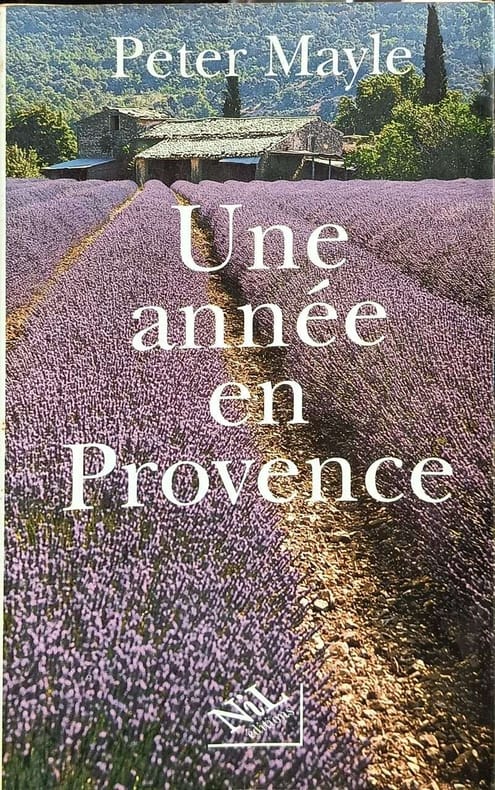
1994réf. 8864Nil 1994 245 pages 13x22x2cm. 1994. broché. 245 pages. Peter Mayle raconte avec humour et tendresse son expérience d'installation avec sa femme dans une ferme du Lubéron en Provence. Ce récit autobiographique décrit leur immersion dans la région ses traditions ses paysages et ses habitants offrant un voyage sensoriel entre délices culinaires et rencontres pittoresques
réf. 9826in 4 broché, couverture illustrée en couleurs, faux-titre, titre illustré, 317 pages, 1 page de table des matières, illustrations dans le texte et hors-texte d’E. BOUARD.Couverture réhaussée à l'aquarelle. TOLRA et M. SIMONET éditeurs, Paris, sans date
19698vo., First US Edition, with 9 plates on 8, and a full-page map and full-page plan in the text; cloth, gilt back, a very good, clean copy in price-clipped dustwrapper, the latter very lightly chafed at extremities. Published simultaneously with the UK edition. This is the first dedicated publication of Lashly's complete diary. Lashly was awarded the Albert Medal for rescuing 'Teddy' Evans; the harrowing story of their return is vividly portrayed in Cherry-Garrard's 'The Worst Journey in the World'. Uncommon in this condition. Spence 686 (recording the far scarcer UK edition).
19698vo., Third Impression, with 9 plates on 8, and a full-page map and full-page plan in the text; blue cloth, gilt back, a near fine copy in unclipped dustwrapper, the latter lightly sunned at backstrip. Published four months after the first edition. This is the first dedicated publication of Lashly's complete diary. Lashly was awarded the Albert Medal for rescuing 'Teddy' Evans; the harrowing story of their return is vividly portrayed in Cherry-Garrard's 'The Worst Journey in the World'. The UK edition is considerably scarcer than its American (Taplinger) counterpart, especially in the dustwrapper. Spence 686.
1934réf. 47071Paris Gauthier-Villars 1934. 4to. No wrappers. In: "Comptes Rendus Hebdomadaires des Séances de L'Academie des Sciences" Tome 198 No 3. Titlepage to vol. 198. Pp. 213- 292. Entire issue offered. The joint paper: pp. 254-256 a. 1 photographic illustration in the text. Titlepage with a stamp on verso 2 small tears and a tiny bit of upper right corner gone. Titlepage a bit browned. First appearance of this seminal paper in which artificial radioactivity was announced for the first time. Curie and Joliot were awarded the Nobel Prize in Chemistry 1935 "in recognition of their synthesis of new radioactive elements"."Until this date 1934 atomic nuclei emitting radiation were found in nature: it was called the natural radioactivity. It had been known since Rutherford that this natural radioactivity changed a nucleus into an other one: for instance radium becomes finally lead after many radioactive decays. We could say that lead does not become gold but gold becomes lead! But. this change of matter was not under control. It was not possible to construct the desired chemical element as the alchemist dreamed. But Irene and Frederic Joliot-Curie made the dream become almost reality.""Another very important development in the early 1934 by the Joliot-Curies in connection with irradiation of aluminum by alpha particles. The two French scientists detected the production of the recently discovered positrons. . However they soon realized that the positron activity continued after the alpha source was removed and that they had in fact discovered positive beta radioactivity. The importance of the discovery of artificial radioactivity was immediately recognized and resulted in a Nobel Prize in chemistry to the Joliot-Curies in 1935. The new phenomenon immediately became widely employed in nuclear physics chemistry biology and medicine." Kragh Quantum Generations p. 187"These elegant experiments which provided the first chemical proof of induced transmutations and showed the possibility of artificially creating radioisotopes of known stable elements were repeated and extended in the major nuclear physics laboratories of various countries " DSB.Born on 12 September 1897 in Paris Irène Curie was the daughter of Pierre and Marie Curie. "During World War I she worked as a nurse helping her mother operate radiography equipment and then studied physics and mathematics at the Sorbonne gaining a doctorate for studying the range of alpha particles. She then went to work for her mother at the Radium Institute. There she met Frédéric Joliot whom she married in 1926. Frédéric Joliot was born on 19 March 1900 in Paris - He joined the Radium Institute in 1925 and obtained his PhD in 1930. Together the Joliot-Curies worked on radioactivity and the transmutation of the elements. Twice they just missed major discoveries: in 1932 when Chadwick beat them to the neutron and in 1933 when Anderson discovered the positron. However in 1934 whilst bombarding light elements with alpha particles the Joliot-Curies noticed that although proton production stopped when the alpha particle bombardment stopped another form of radiation continued. The alpha particles had produced an isotope of phosphorus not found in nature. This isotope was radioactive and was decaying through beta-decay" DSB. unknown
1934réf. 47071Paris, Gauthier-Villars, 1934. 4to. No wrappers. In: ""Comptes Rendus Hebdomadaires des Séances de L'Academie des Sciences"", Tome 198 No 3. Titlepage to vol. 198. Pp. (213-) 292. (Entire issue offered). The joint paper: pp. 254-256 a. 1 photographic illustration in the text. Titlepage with a stamp on verso, 2 small tears and a tiny bit of upper right corner gone. Titlepage a bit browned.
réf. 9516histoire, sciences, monuments, paysages. Deux tomes en un volume in 12 demi-chagrin vert à nerfs, titre et caissons dorés, plats percaline, filet à froid encadrant les plats. Tome 1 : faux-titre, frontispice (Morgarten) titre 315 pages. Tome 2 Faux-titre, frontispice (environ de Guttamen) 315 pages, illustrations hors-texte de Karl GIRARDET. Tranches dorées. Tours Alfred Mame et fils 1866, coins très légèrement émoussés, sinon très bon état.
réf. 11912Histoire, science, monuments, paysages. In 8 pleine toile rouge de l’éditeur à décor passe partout. Quadruple filet doré et double filet noir, encadrés d’une frise grecque en noir. Titre et caissons dorés. Faux-titre, frontispice sous serpente, titre, 365 pages, 1 page de table, tranches dorées. Illustrations hors-texte et dans le texte, plus le frontispice, de Karl GIRARDET. Tour Alfred MAME & fils 1884. Bon exemplaire
réf. 13991Récit de voyage adapté de l’anglais d’après l’ouvrage de J.H.M ABBOTT. In 8 pleine toile rouge de l’éditeur, illustrations en couleurs contrecollée sur le premier plat avec titre et filets dorés en encadrement. Titre et fers dorés au dos. 105x190mm. Faux-titre, frontispice illustré en couleurs, titre, une carte, 169pages, une page de table des matières. Illustrations hors texte en couleurs de NORMAN HARDY. Vincennes les Arts Graphiques. Collection contes et nouvelles 1912. Bon exemplaire
réf. 500318315France loisirs Sans date. Selma une femme libre est un grand roman d'amour qui se déroule à cheval sur deux mondes explorant l'histoire et la culture de la Tunisie à travers des lieux emblématiques comme Tunis Djerba Tozeur et Sidi Bou Saïd. L'auteur Gérard Cardonne convaincu de la proximité des cultures invite le lecteur à ressentir le pays son peuple et une femme à travers une écriture cinématographique sur fond de mélancolie liée à la fin d'une civilisation
réf. 72396sd Editions Pierre Lafitte, collection "Idéal-Bibliothèque" - Sans date - 1 fascicule in-8, broché - 80 pages - Illustrations de Henri Delaspre.
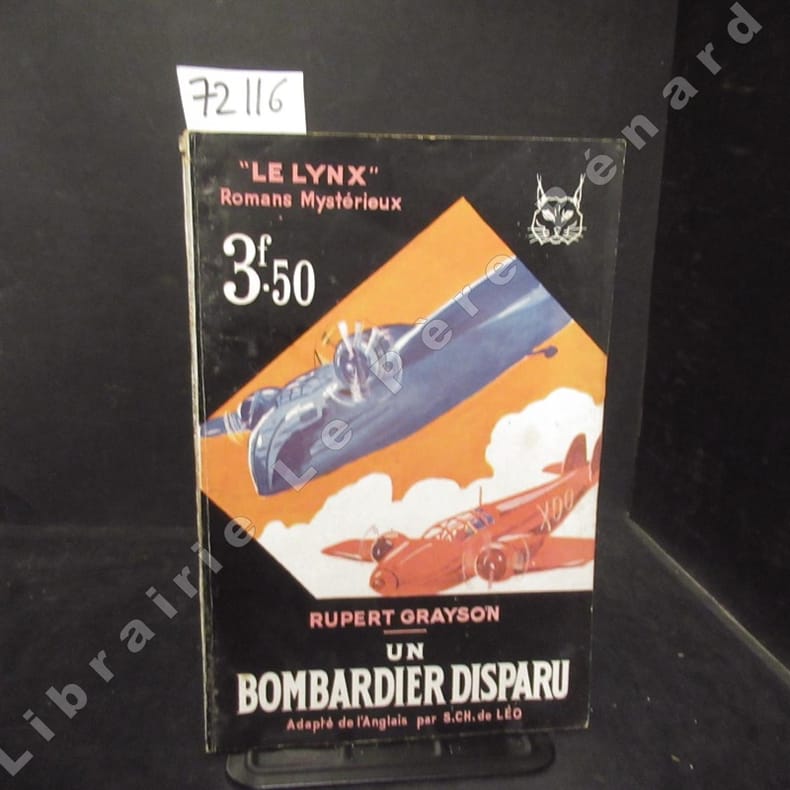
1940réf. 721161940 Editions Tallandier, collection "Le Lynx" N° 10 - 1940 - In-8, broché couverture illustrée - 63 pages
2012réf. 12543Grasset 2012 180 pages 12 9x20 5x1 9cm. 2012. Broché. 180 pages. Le roman raconte l'histoire de Louis un jeune homme engagé pour s'occuper d'Iannis un adolescent singulier et mutique en séjour avec sa mère Helena. À travers cette rencontre Louis revisite son propre passé amoureux et ses blessures enfouies tandis que le récit explore les méandres de l'âme humaine et les liens entre conscient et inconscient
1908réf. 1193901908 A Genève, Atar, S. A., éditeur - Extrait de l'Annuaire du conservatoire et du jardin botaniques de Genève, 11ème et 12ème années, 1907-1908 - 1908 - In-8, broché - 8 p. - 2 planches hors texte en fin d'ouvrage
réf. 9451In 12 broché, faux-titre, titre, 293 pages, 16 gravures hors-texte, 1 carte dépliante en fin de volume, Librairie Plon-Nourrit & Cie 1910. Rousseurs éparses habituelles. Columbo, Mount Lavina, une ville morte à travers la jungle etc
2012réf. 9772012 - broché - Editions La Découverte - 2012 - In-8 (24 x 15,5 cm) broché - 229 pages - ISBN : 9782707145710
réf. 500327468France loisirs Sans date. Un étudiant étranger part travailler tout un été dans les montagnes du Colorado et découvre un territoire irréel et sauvage. Il est d'abord confronté au peuple de la route avant de s'imprégner de l'Ouest américain
2014New English Paperback. Pbo. 8vo. (22 x 15 cm). Articles bilingual in English and Turkish. 6 volumes set: (317 p.; 232 p.; 325 p.; 225 p.; 225 p.; 267 p.). Contents (selected): The Global Significance of Unesco's Commemoration of the Piri Reis World Map of 1513., Yasemin DOBRA MANCO.; The First Steps of Ottoman Maritime Cartography Isolar II Before Piri Reis., Dimitris LOUPIS.; The Piri Reis Map of 1513 is Important Because., Prof. Dr. Gregory C. MCINTOSH.; Kitab-i Bahriye: A Landmark in Geographical and Nautical Literature., Prof. Dr. Azza Abdelrahman El SAWY.; Ottoman Maritime Activity in the Arabian Gulf in the Sixteenth Century Through the Book Bahriye by Piri Reis., Dr. Hisam Swadi Hashim Al KARKOULEE.; The Northern Coast of Sinai and Geographic and Archaeological Features Between Damietta and Gaza in Light of the Piri Reis Maps 'A Study in Historical Geography and Antiquities'., Sami Saleh Abd AL-MALIK.; Ottoman Naval Preparations During The Period Of Selim's Egyptian Campaign of 1515 To 1518: An Assessment of the Planning, Execution and Aftermath Phases of The Ottoman Conquest of Syria And Egypt., Prof. Dr. Rhoads MURPHEY.; The Battle of Preveza and The Siege of Diu., Dr. Svat SOUCEK., The Turks in the Mediterranean: The Expedition of Khair-Ed-Din Barbarossa (1543-1544)., Mirella Vera MAFRICI.; Murâd Bey, Seydî Alî Reîs and He Warfare Against The Portuguese (1553-1554): New Insights on Original Iberian Accounts., Prof. Dr. Dejanirah COUTO.; Ottoman Ambitions on Tripoli and Lybia in The First Half of The XVI Century., Nicola MELIS.; Lepanto: Fearlessness Was Not Enough., Prof. Marco MORIN.; Ottoman Corsairs in The Atlantic During The 16th Century: Murat Rais, The Albanian and the First Ottoman Expedition to The Canary Islands., Ardian MUHAJ.; Russian and Ottoman Empires Maritime Politics and Russian-Turkish Relations in 1774-1787., Prof . Dr. Galina GREBENSHCHIKOVA.; The Activities of Maltese Corsairs in Ottoman Waters and Territories, 1750-1798., Liam GAUCI.; Reading Between The Lines: Admiral Ushakov's Relations with Kapudane Abdülkadir Beg According to Russian and Ottoman Sources., Dr. Mitia FRUMIN- Assist. Prof. Kahraman SAKUL.; Role and Place of The Balkan Entente in The European Space. Negotiations. Turkish-Romanian Cooperation. Straits Issue., Lecturer, Ionut COJOCARU-Assist. Prof. Ema MILJKOVIC.; Patronage In The Ottoman Navy During The Late 15Th and 16Th Centuries., Instructor Christine Isom-VERHAAREN.; Aspects Of The Venice - Ottoman Peaceful Coexistence: Muslim Merchant Ships Used To Transport Goods From Istanbul To Venice During The Late Sixteenth Century Associate Professor Cristian LUCA.; The Most North Port Ottoman Kemal Ibrahimzade., Irina GUSACH.; Commercial Consuls of The Ottoman Subjects In The Ionian Islands, (16Th-18Th Centuries) Historian - Researcher., Christina E. PAPAKOSTA.; Merchants, Warriors, Nobles: The Turks And India, 16Th - Early 18Th Centuries., Associate Professor Radhika SESHAN.; Trade and Politics Between Naples, Sicily and The Ottoman Empire During The Kingdom Of Charles Of Bourbon (1734-1759)., Senior Lecturer Salvatore BOTTARI.; The Ottoman Fleet And The Greek Revolution in The Correspondence Of The British Consuls in Morea (1821-1827)., Contract Professor Rosa Maria DELLI QUADRI.; The Knowledge of The Seas According to The Ottoman Translations and Adaptations of Arabic Works (15 Th -16Th C.)., Director of Studies Ducène Jean-CHARLES.; Maritime Law and Maritime Space in The Indian Ocean: A Comparison Of Ottoman and Portuguese Concepts in The Sixteenth Century., Emeritus Professor Michael PEARSON.
2010réf. 35659Lighthouse Home Entertainment, 2010. Auflage: Standard Version 1 DVD DVD
1842réf. 44147Leipzig Johann Ambrosius Barth 1842. Without wrappers. In "Annalen der Physik und Chemie. Hrsg. von J.C. Poggendorff" Ergänzungsband 1 Stück 2. Pp. 193-384 a. 1 folded engraved plate. The entire issue offered. Henry's paper: pp. 282-312. First German version of Henry's description of his discovery of self-induction. He missed the credit for the discovery of induction to Faraday but he had done the key experiment ahead of Faraday but Faraday was the first to publish. But he is credited for the discovery of self-induction 1832 and Faraday discovered it independently two years later 1834."In Henry's paper however he explained thet the electric current in a coil can induce another current not only in another coil but in itself. The actual current observed in the coil is then the combination of the original current and the induced current. This is called self induction."Isac Asimov.The issue contains further notable papers Michael Faraday's "Vierzehnte Reihe von Experimental-Untersuchungen über Elektricität" § 2o-22. Nos 1667-1748. Pp. 249-281. First German version. In this paper FARADAYamplifies his theory of electrostatic induction by making further use of the analogy with the induction of magnetism. Whittaker describes the paper as having "THE FUNDAMENTAL EQUATION OF ELECTROSTATICS" as modified in order to take into account the effect of the specific inductive capacity."Whittaker I pp.187-89. unknown
1834réf. 45159Leipzig Johann Ambrosius Barth 1834. Without wrappers. Extracted from "Annalen der Physik und Chemie. Hrsg.von Poggendorff" Bd. 31 No 5. Pp. 65-80. First printing of the paper in which Runge discloses his discovery of carbolic acid or phenol and how he prepared it by distilling coal.Parkinson "Breakthroughs" 1834 C. - Partington IV pp. 183-84. unknown
1862réf. 44063Leipzig Johann Ambrosius Barth 1862. Without wrappers as issued in "Annalen der Physik und Chemie. Hrsg. von J.C. Poggendorff" Vierte Reihe Bd. 27 117 Stück Zwei No. 10. The entire issue offered. Titlepage to vol. 27. Pp. 193-352 a. 1 engraved plate. Ångströms paper: pp. 290-302. First appearance in German of Ångström's famous paper in which he announced the discovery of hydrogen in the atmosphere of the sun and in which he also confirmed the probable existence of of other elements there. The paper appeared in "Oefversigt af K. Vet. Acad. Förhandl." in 1861. The German paper here is expanded. At the same time it was translated into English and publishe as "On the Fraunhofer Lines Visible in the Solar Spectrum".Ångström was one of the early formulators of the science of modern spectroscopy; he wrote extensively on terrestrial magnetism the conduction of heat and especially spectroscopy. He published a monumental map of the normal solar spectrum that expressed the length of light waves in units of one ten-millionth of a millimeter a unit of length now known as the angstrom. He discovered that hydrogen is present in the sun's atmosphere and he was the first to examine the spectrum of the aurora borealis. unknown
1874réf. 49327Leipzig Johann Ambrosius Barth 1874. 8vo. Contemp. hcalf. 5 raised bands gilt spine and gilt lettering to spine. A few scratches to spine. Small stamp on verso of first -and general- titlepage. In: "Annalen der Physik und Chemie. Hrsg. von J.C. Poggendorff" Sechste Reihe Bd. 3 = Poggendorff Bd. 153. X636 pp. 4 plates. Entire volume offered. Braun's paper: pp. 556-563. First printing of Brown's importent paper in which he described his discovery of a semiconductor diode noting that electrical currents flows freely in only one direction at the contact between a metal point and a galena crystal."In 1874 Braun published the results of his research on mineral metal sulfides. He found that these crystals conducted electric currents in only one direction. This information was important in electrical research and in measuring another property of substances the electrical conductivity but Braun’s discovery did not have immediate practical application. In the early twentieth century the principle that Braun had discovered was employed in crystal radio receivers."DSB.The Nobel Prize in Physics 1909 was awarded jointly to Guglielmo Marconi and Karl Ferdinand Braun "in recognition of their contributions to the development of wireless telegraphy". hardcover
1859réf. 43325Leipzig Johann Ambrosius Barth 1859. Without wrappers as issued in "Annalen der Physik und Chemie. Hrsg.von Poggendorff" Bd. 107 Viertes Stück.= Heft No. 8 of 1859. The entire issue offered Heft 4 of vol. 107 with titlepage to vol. 107. Pp. 497-660. - Plücker's papers: pp. 497-539 a. 638-643. Clean and fine. First printing of this milestone paper describing Plückers first observations on Cathode Rays which he called "the beautiful and mysterious green glow" and produced by discharges in tubes exhausted by means of the Geissler pump. These importent observations lead directly to Röntgens discovery of the Röntgen Rays."Cathode rays were first observed by Julius Plücker in 1859 the paper offered. They are rays which are found in the neighbourhood of the point of exit of an electrical current passing through a Geissler tube. These rays stimulated intense interest and experiment. William Crookes greatly improved these discharge tubes and intensified the degree of rarification of gases within them. The tubes in this form is known as Crookes tube. Crookes declared his conciction that the cathode rays represented matter in a fourth hitherto unobserved form.It was reserved for J.J. Thomson in 1908 to discover the true nature of the cathode rays."PMM no 386. unknown
1898réf. 43857Berlin J.A. Barth 1898. No wrappers. In "Annalen der Physik" Neue Folge Band 65 No 5. Pp. 1-240. Entire issue offered No.5. Titlepage to vol. 65. Stamp on titlepage. Schmidt's paper: pp. 141-151 textillustr. A tear to inner lower corners of pp. 24-32. not affecting Schmidt's paper. Clean and fine. First printing of Schmidt's full exposition in which he describes his discovery of the radioactivity of Thorium. Schmidt and Marie Curie independently demonstrated the radioactive quality but Schmidt's demonstration took place a few months before Curie's. The discovery was announced but not described in full in a short message published in "Verhandl. d. Phys. Gesellsch. zu Berlin 1898."Schmidt made his discovery while examining "many elements and compounds" in an effeort to determine whether any of the rays that were emitted bore a resemblance to those that Henri becquerel had found emerging from uranium and uranium compounds. He located only one such element thorium and immediately conducted absorption ionization reflection refradction and poklarization studies to determine the characteristics of its rays. Having combined a misinterpretation of Becquerel's with one of his own Schmidt concluded that thorium rays most resembled Röntgen rays - a conclusion that soon required revisoln in view of the researches of Marie Curie and Ernest Rutherford."DSB XII p. 191. unknown