Smith, Cyril StanleyMareMagnum

1.819 Ergebnisse
1981410 pages. Index. Reproductions of black and white photos. Printed upon glossy stock. "The essays make the case that historically many advances and discoveries regarding metals and ceramics came about through aesthetic curiosity and the desire to improve works of fine and decorative art, rather than through scientific investigation or in response to the need for products having practical utility. Other essays deal with the emerging understanding of the remarkable properties of steel, the positive uses of corrosion, ancient casting and molding techniques, and the connection between attempts to reproduce oriental porcelain in Europe and modern geological ideas. Still others are more philosophical in approach." - from dust jacket. Includes bibliography of the author's works. Average wear to unmarked book. Binding intact. Somewhat above-average wear to dust jacket which is now preserved in glossy new archival-grade Brodart. Book
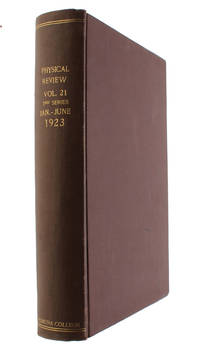
1923Best.-Nr. 47061Lancaster The Physical Review 1923. Royal8vo. Contemp. full buckram. In:"The Physical Review" Series II vol. 21. 4736 pp. Plates and textillustr. Entire volume offered. A perforated stamp in upper margin on a few leaves. Compton's paper: pp. 483- 501. First printing of this milestone paper in quantum physics in which Compton verifies Planck's quantum postulate and found that some of the X-rays had in scattering lenghtened their wavelenght. This phenomena was called the "Compton Effect" in his honour. For this discovery Compton received the Nobel prize in physics in 1927."Compton was able to account for this lenghtening of wavelenght by presuming that a photon of light struch an electron which recoiled subtracting some energy from the photon and therefore increasing its wavelenght. This made it seem that a photon acted as a particle: thus after more than a century the particulate natuer of light as evolved by Newton was revived. What itamounted to was that Compton brought to fruition the view that electromagnetic radiation had both a wave aspect and a particle aspect and that the aspect which was most evident depended on how the radiation was tested. De Broglie was at the same time showing that this held true also for ordinary particles such as electrons." AsimovParkinson "Breakthroughs" 1923 P. - Sigmund Brandt "The Harvest of as Century" Episode 31. hardcover
1923Best.-Nr. 47061Lancaster, The Physical Review, 1923. Royal8vo. Contemp. full buckram. In:""The Physical Review"", Series II, vol. 21. (4),736 pp., Plates and textillustr. (Entire volume offered). A perforated stamp in upper margin on a few leaves. Compton's paper: pp. (483-) 501.
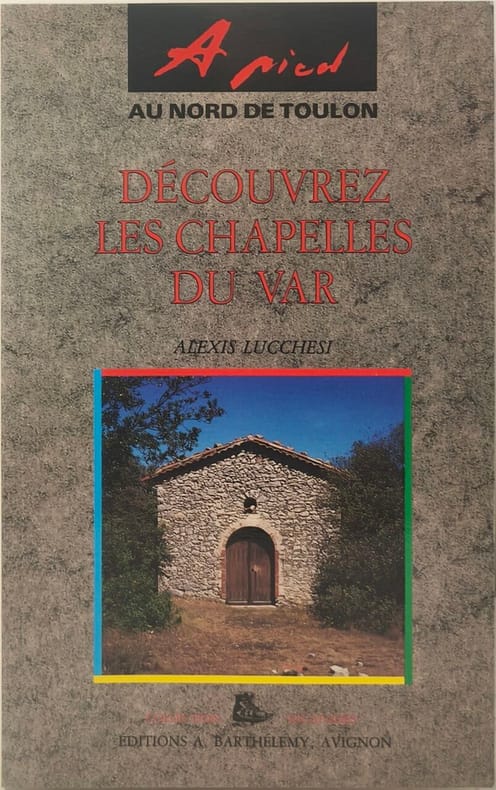
1993Best.-Nr. 4958Editions Alain Barthélemy 1993 240 pages 13x21x2cm. 1993. broché. 240 pages.
Best.-Nr. 98326aafLondon, john Murray, 1859, lg. in-8vo, frontispiece + XVII + 403 p., illustrated + 4 maps, small legacy stamp ‘Guggisberg’, original publisher’s blue pictorial clothbound, spine a bit darkened, top of spine small loss Very good copy.
Best.-Nr. 10036In 8 pleine toile rouge, titre, doré, caissons à froid, armes du collège de Commercy sur le premier plat. faux-titre, titre, XXVII-367 pages, Paris Librairie classique et d’éducation A. PIGOREAU successeur, sans date. (1859) 190€ étude politique, historique, sociale, description des provinces, mœurs, coutumes, conquête, colonisation
1992Best.-Nr. 125826Couverture rigide. Cartonnage de l'éditeur. 22 x 26 cm. 472 pages.
1965Best.-Nr. 300010217Chocolat Suchard 1965 1965.
1951Best.-Nr. AUB-9139Librairie Charles Poisson, éditions touristiques et littéraires s.d. (1951). Bel exemplaire relié, reliure souple, jaquette conservée, in-8 (19x13), XX + 348 pages avec annexes.
1968Best.-Nr. AUB-4087Paris, l'école des loisirs 1968. Bel exemplaire relié, cartonnage orné d'éd., in-8 oblong, 96 pages.
1965Best.-Nr. 1044761965 Ed. Plon - Coll. Découverte du passé (d'un monde à l'autre) (dirigée par Marcel Brion) - 1965 - In-8 broché, couv. illustrée en couleurs avec rabats - 239 p. - Reproductions photographiques hors texte en N&B et illustrations en N&B
Best.-Nr. 6213journal des missionnaire d’Alger dans l’Afrique Equatoriale in 8 broché frontispice(le cardinal Labigerie)titre 347 pages,illustrations hors-texte,Paris à l’oeuvre des écoles d’Orient 1884,très bon état
Best.-Nr. 8450Selection du Reader's Digest, 2001. Grand in-8 avec reliure illustree de 352 pages.Excellent etat.
Best.-Nr. 2116GRÜND [1997], 1997. première édition française grand et fort in-4 toile d'éditeur, jaquette de protection illustrée 351p très bel ex
2003Best.-Nr. 1186812003 Editions BD'Empher - DL 11/2003 - Edition limitée à 1200 exemplaires numérotés et signés par l'auteur, n°528 - Coffret composé d'un livre de 56 pages couleurs toilé avec jaquette et d'une chemise comprenant 8 ex-libris sur Rivoli 320 g, sous emboîtage cartonné illustré de l'éditeur - 52 p - Très nombreuses illustrations en couleurs
First edition, 8vo (215 x 135 mm), xi, [1], 320pp., without half-title, frontispiece of a large folding engraved chart (browned and offset onto title), one engraved map (also browned and offset), woodcut illustrs., in the text, cont. half calf, marbled boards, slightly rubbed otherwise and very good copy. "The journal of the first voyage commanded by William Edward Parry. On this expedition, Fisher was assistant surgeon aboard the Hecla. He gives an account of the voyage through Lancaster Sound to Melville Island in the western part of the Parry Archipelago, in sear of the Northwest Passage."?Hill. Hill, Pacific Voyages, 605 (second edition).
Best.-Nr. 1330060776.Gpaperback. Good. Access codes and supplements are not guaranteed with used items. May be an ex-library book. paperback
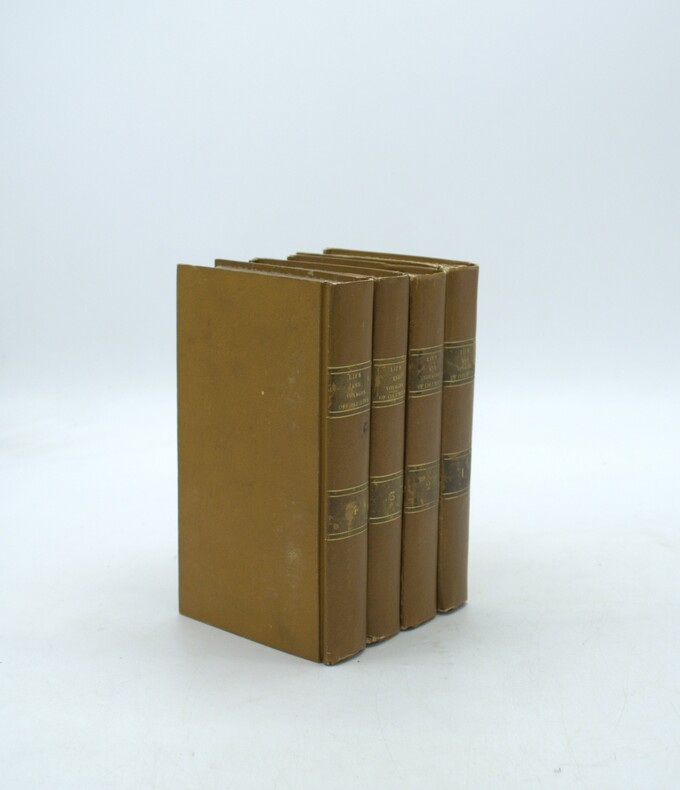
1828Best.-Nr. PHO-2111Paris, Baudry, 1828. 4 volumes in-8 (18,5 x 10,5 cm), reliés plein cartonnage d’époque, dos lisse avec pièces de titre et tomaison, quelques frottements aux pièces, coins légèrement usés, très peu de rousseurs. Illustré d’une carte dépliante en frontispice du premier volume.
Best.-Nr. 1333716311.Gpaperback. Good. Access codes and supplements are not guaranteed with used items. May be an ex-library book. paperback
Best.-Nr. 79632Paris, Hachette, 1990. 12 x 22, 128 pp., quelques illustrations, cartes et plans en couleurs, broché, bon état.
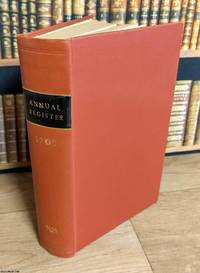
1793Best.-Nr. 373234J. Dodsley London 1793. 5th Edition. Hardcover. Very Good Condition. 21 pages. This 1765 article published in The Annual Register provides a detailed account of John Harrison's groundbreaking work in solving the longitude problem at sea through the use of artificial time-keepers. Harrison an English clockmaker developed the marine chronometer a device that allowed sailors to accurately determine their longitude while at sea. His invention was crucial for safe navigation reducing the risk of ships becoming lost or wrecked due to miscalculations. The article outlines the proceedings and debates surrounding Harrison's work including his struggles with the Longitude Board which was reluctant to grant him the full 20000 prize promised under the 1714 Longitude Act. Despite proving the accuracy of his time-keepers Harrison faced political opposition and bureaucratic delays before finally receiving recognition for his achievements. Published at around the same time that Harrison's book of a similar title was published this contemporary 21 page account quotes Harrison extensively and represents the opinions and ideas regarding navigation from the perspective of the time. The whole volume extends to around 600 pages. Bound in modern but not recent brown buckram with a contrasting black leather lettering piece gilt title. Library label to the endpapers stamp on first blank and label to reverse of the title page. The first blank has a hand note stating "Given by Lt.Col. A.R. Hurst". Hurst has served with the Royal Field Artillery in the First World War. The whole volume is very clean with bright pages very firmly bound and in attractive condition. Size: 13.5 x 21 cms. Category: Antiquarian & Rare; Featured Items; Printed before 1800; Special Interest. This item may require more postage than the rates shown for delivery outside the UK. If extra postage is required we will contact you before processing your order and you will be given the details and option to decline the extra cost. J. Dodsley hardcover
1906Very Good Turkish, Ottoman (1500-1928) Original wrappers. Foolscap 8vo. (17 x 12 cm). In Ottoman script (Old Turkish with Arabic letters). 152 p. Roumi: 1324 = Gregorian: 1906. Taken from a volume including multiple books. Spine is restored. A very good copy. First and only edition of this early and extensively rare book including a first-hand account of the topography and descriptions of Hejaz, Mecca, and other parts of Arabian Peninsula such as Taif and Yemen by Sadiq Sherif, who was the first person to take photographs of Mecca, Medina, and the Hajj in 1880 and 1881 as well. Sadiq Sherif was the grandson of Serif Abdulmuttalib, the Emîr of Mecca. This book written by Sherif was dedicated to 'the Progress and Union Society' [i.e. Ittihad ve Terakki Cemiyeti]. The book describes the way of administration and territorial division of Hejaz after giving some information of its geography, borders, tribes and natives, mountains, rivers, crops and products, and animals of this Ottoman 'vilâyat' [i.e. province]. Sherif gives detailed information on how and when the Ottoman Empire ruled Hejaz, the location of Mecca city, its borders, physical and social geography, crops in Mecca and around, its flora, fauna, demographic structure, 'nahiyes', Kâba's construction, and its history, sacred places around, Masjid-i Haram and other masjids, cemeteries, mountains, gifts by Ottoman caliphs to Kaba, 'Taif' area, people who were 'Emîr' of Mecca from the period of Mohammad, Wahhabism and its birth, etc. At the last, Sherif gives place to his personal letter (layihâ) including 49 articles. The letter was about the reforms that Hejaz needs and it was sent to the Ottoman 'sadâret' [i.e. prime ministry]. (Source: History of geographical literature during the Ottoman Empire, Edited by Ihsanoglu). Muhammad Sadiq Sherif Bey was the first person to take photographs of Mecca, Medina, and the Hajj in 1880 and 1881. Sadiq Bey trained as a military engineer after completing his studies in Cairo and at the École Polytechnique in Paris. It is not known when, or from whom, Sadiq Bey learned to take photographs but it was most probably through one of the resident photographers in Egypt. In 1861, prompted by the need to carry out more extensive military land surveys of the area between Wajh and Medina, Sadiq Bey made his first journey to Arabia. He took a camera along with his surveying equipment and took his very first photographs of Medina. In a series of articles published in the Egyptian Military Gazette in 1877, he refers to his early photography at Medina describing the use of a 'photographia'. Sadly, however, none of the photographs from this first journey has survived. In 1880 he was appointed as the treasurer of the Mahmal, the ornate cloth to cover the Ka'ba brought each year on a special litter to Mecca. He accompanied the Mahmal to Medina and Mecca from September 1880 until January 1881. Again equipped with his camera, he succeeded in producing the series of photographs that are now considered some of the earliest known photographs of the region, those of the Ka'ba, taken under great secrecy. Sadiq Bey published various accounts of his travels in Arabia in military journals, through the Emiry Grand Press in Cairo, but the 1880/81 series of photographs appear to have been issued separately for wider distribution through the Société Khédiviale de Géographie. The society's secretary, Dr. Frederic Bonola, advertised sets of photographs for sale. In January and April 1880 Sadiq Bey gave a talk and report to the society on his earlier 1861 expedition, and on 20 May 1881 he presented a report on his recent journey to Mecca; detailed accounts were published in the society's bulletins, numbers 9/10 and 12. (Source: Christie's). Özege 11888.; Karatay, TM II: 695.; MKAHTBK, II: 991.; OCLC 248374684 / 4082352.
1875Very Good Turkish, Ottoman (1500-1928) Original wrappers. Foolscap 8vo. (18 x 13 cm). In Ottoman script (Old Turkish with Arabic letters). 112 p. On the first page, written 'copies without seals are fake', and this copy is with a seal. Slightly faded and chipped on extremities. Foxing on first pages. Uncut marginal extremities Otherwise a good copy. Exceedingly rare first edition of the first Ottoman voyage to Cape of Good Hope and first-hand travel account of the Ottoman qadi Abubakr Effendi (1814-1880) of South Africa and Mozambique, who was sent in 1862 by Sultan Abdulaziz at the British Queen Victoria's request in order to teach and assist the Muslim community of the Cape Malays. The presence of the Muslim population in South Africa dates back to the 16th century, South Africa and the Cape of Hope have become a colony of Western countries such as Portugal, the Netherlands, and the United Kingdom. The Ottoman Empire was interested in the Far East, Javanese, and South African regions in the 16th century and then tried to establish a relationship. The direct relationship between the Ottoman Empire and South Africa in the 19th century, upon the request of the Muslim people and England, was formed through Abubakr Effendi. The Muslims in conflict with various religious issues have found the remedy by consulting a scholar from the Ottoman Empire through England. After all, Abubakr Effendi reached Cape Town in 1862 and tried to resolve the conflicts among the Muslim people. (Abubakr Effendi: An Ottoman Scholar in South Africa in the Nineteenth Century: Yilmaz, Yusuf). "Abubakr Efendi was sent to Cape Town by Ottoman Sultan Abdulaziz. When chaos reigned in the Islamic society because of the imams who declared themselves as leaders in the region, Muslim leaders in Cape of Good Hope conveyed their letters to the Queen of England in 1862 declaring that they needed a religious leader. Since they had not been educated for years, they had forgotten their Java language and could not read their own books. They sent a letter to the Queen of England, informing them that help could be sought from the Ottoman court, the center of Muslim countries in the period. The issue was refused in the Parliament and the Ottoman Ambassador Musurus Pasha was offered it to the Ottoman Sultan. Abubakr Effendi's mission was to prevent Muslims in Cape of Good Hope to clash with each other and teaching them authentic Islamic knowledge free of superstition. Although Abubakr Efendi had some Arabic translators in his service, he still learned English and African languages in a short time and wrote books in order to benefit the Muslims there. On the fifteenth day he set foot on the continent, he opened a madrasah called the "Ottoman School" and enrolled three hundred students in twenty days. He traveled to Mauritius and Mozambique. He wrote his famous book 'Bayan al-Din' (a sort of catechism) in Afrikaan in Arabic letters. Then he married Rukiye Hanim, but they divorced after a while since they had to communicate by using an English and Arabic dictionary. Then he married James Cook's nephew Tahota Saban Cook. In his memoir, Ömer Lütfi wrote down all the travels of Abubakr Efendi for two years. Abubakr Efendi stayed in South Africa for 22 years and died there." (140 yillik miras: Güney Afrika'da Osmanlilar: Uçar, Ahmet). Abubakr Efendi first traveled to London and then to South Africa by a ship with his assistant Omar Lutfi. He established the first Ottoman School in Cape Town and then wrote his work Bayan Al-Din in Afrikaans with Arabic letters and distributed it to the Muslim population of South Africa. Four printed copies in OCLC: 427674106 (Three copies); 635151131 (One copy). Özege 22397. First Edition. Extremely rare.
1857Very Good Turkish, Ottoman (1500-1928) Lithographed Edition. First and Only Edition of this first Turkish book exclusively related to America. This very rare work (both in scarce institutional holdings and market rarity) is the first book in Turkish to describe the discovery and conquest of America. Thus, it is an important and early source on America in the Islamic world. "The first treatise [in Turkish] dedicated exclusively to America" (Strauss). It is printed in a format that is specific to the early printing period of the Ottoman Empire and is written in a tâliq script and has the appearance of a manuscript. It has neither a preface nor a proper title. The heading (serlevha) on the first page which is placed in a decorative floral design reads: "First chapter: On the Islands Discovered by the Venetian and Genoese seafarers, and, secondly, on the discovery of America by Christopher Columbus". It also contains the mandatory praise of the ruler, i.e., Sultan Abdülmecid, and indicates that it was "translated and transferred from some selected writings (ba'z-i evrâk-i müntahabe)". The dramatic events of the discovery and of the different conquests by the Spaniards are vividly described in plain and simple language. Though it is not free from clichés adopted from Western sources, the darker aspects of the European expansion are not omitted. Particular interest is devoted to the fauna and flora of the American continent. The modern territorial divisions of the American continent, and briefly, its political history, are dealt with in a special chapter at the end of the book. This chapter comprises information about both North and South America from the Polar Regions (Arazi-i kutbiyye) and "Russian America" (Amerika-i Rusiyye) to the Banda Oriental (Banda) or the Cisplatine Republic (Çisplatin) and the Province of Patagonia (Patakonya Eyaleti). It takes into account the latest developments. The last event referred to is General Soulouque's takeover in Haiti. "[.] ?in Santa Domingo (Sen Domeng), i.e., the island of Haiti, a general from the Negro people appeared in the Frankish year of 1847 and beat the Spaniards and the French. Assuming the title of 'king', he is known today as Faustin I." (p. 54). In fact, General Soulouque (Emperor of Hayti, (1782-1867)) had assumed the title of 'Emperor' in 1849. His reign lasted until 1859. (Source: Nineteenth-Century Ottoman Americana by Johann Strauss). Original wrappers. Occasionally slight stains on some pages and chipped on front cover, otherwise a very good copy. Roy. 8vo. (23 x 16 cm). In Ottoman script (Turkish with Arabic letters). 56 p. Litho. Only two copies in OCLC: (University of California, Los Angeles & Library of Congress, Karl Süssheim Collection, no. 1717.): 948879228.; TBTK 4412 / 5557.; Özege 1591 / 22639.
1928Good Turkish, Ottoman (1500-1928) Original wrappers. Roy. 8vo. (23 x 16 cm). In Ottoman script (Old Turkish with Arabic letters. 120 p., several tables of zones and routes. Slight foxing on cover, fading on pages, chippings on extremities of cover and some pages, repaired spine. Otherwise a good copy. First and only Turkish edition of this rare description of the Black Sea, including the historical geography of the western shores of the region, written in a travelogue style, by Bulgarian admiral Ivanov when he was the head of the Naval School in Varna (1928-1931) where he lectured on meteorology, oceanography and naval aviation for officers and conducted the seamanship course for the civil navy. Ivanov was a Bulgarian officer and admiral and a freemason, who was a member of the "Black Sea Friends" Lodge. He is a descendant of Kolyo Ficheto. In 1910, he graduated from the Military School in Sofia, and in 1914, he also completed a naval cadet course in St. Petersburg. From 1912 to 1913 he served in the Port Company of the Navy. During the period March 30, 1913 - September 1, 1913, he was the chief of the ship "Druzki". In the same year, he also served on the ship "Nadezhda". From 1914 he was adjutant of the Mobile Defense and flag officer of the destroyer detachment. He participated in World War I. Özege 10186.; Six copies can be traced in OCLC: 977483558.; 949487717.; 67339656.; 1030754762.