1 737 résultats
réf. 107.449Paris, Albin Michel, 1972. 20 x 28, 246 pp., 26 planches en couleurs, 180 illustrations en N/B, cartonnage d'édition pleine toile + jaquette en couleurs, très bon état.
1866réf. 805691866 Tours, Alfred Mame et Fils, éditeurs, Bibliothèque de la Jeunesse Chrétienne - MDCCCLXVI (1866) - In-8, demi chagrin rouge, 4 nerfs, caissons et titres dorés, toutes tranches dorées - 394 pages - Gravures sur acier
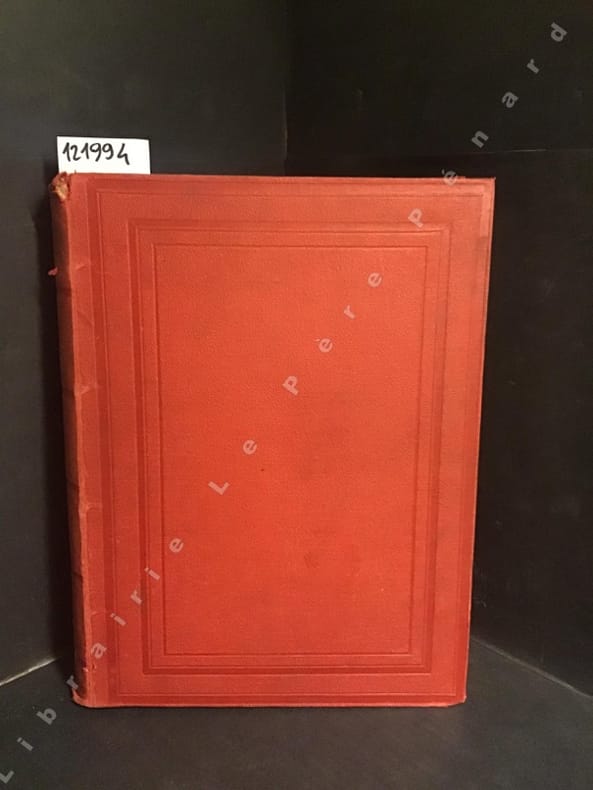
réf. 121994Editions Librairie Hachette et Cie, Paris - 1875 - Fort in-folio, pleine percaline rouge, titre doré au dos - 760 pages - Nombreuses gravures sur bois dessinées par nos plus célèbres artistes et un plan
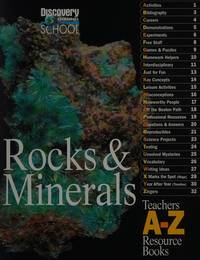
2000réf. 17001405110162000-01-01. Paperback. Very Good. Nice looking book has minor edge wear. paperback
1975Features: How to Forge a Ring; New Mexico's Catron Country; Casting with Water-Soluble Wax; Mexican Wulfenite Discovery; Beads and Bear Claws; Ben Mayo - Space Age Silversmith; Make a Bead Punch; Seashell Roses; The Precious Plumes of Graveyard Point; Rack'em Up; Pt. Mugu Coquina; Working with Opals. Above-average wear. Date stamp and company stamp to front cover. Magazine
1983réf. dk1279Palais de la découverte Revue du palais de la découverte Dos carré collé 1983 In-8 (15.5x23.5 cm), dos carré collé, couverture illustrée en couleurs, 96 pages, n°106 de la Revue du Palais des Découvertes, avant-propos de A.J. Rose, photographies et illustrations noir et blanc ; coiffes et coins légèrement frottés, quelques marques d'usage aux plats, bon état. Livraison a domicile (La Poste) ou en Mondial Relay sur simple demande.
réf. Z19289ZLa DÃcouverte BROCHE
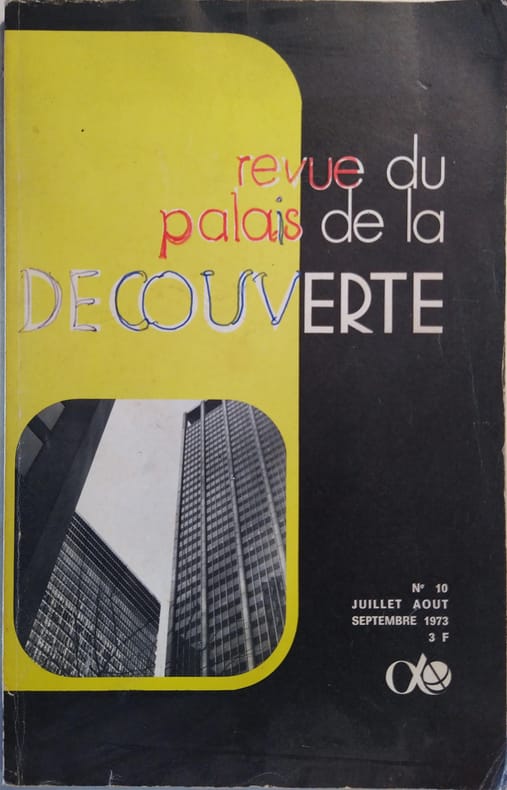
1973réf. 145216Couverture souple. Broché. 100 pages. Graffiti sur la couverture.
réf. 480301 vol in-8 broché - Juillet 1973 - numéro spécial 2 - 44 pages
1999réf. 538911999 Les Editions Naturellement - 1999 - 317 pages - 1 volume de 11x18 cm environ - broché -
1999réf. 538921999 Les Editions Naturellement - 1999 - 287 pages - 1 volume de 11x18 cm environ - broché
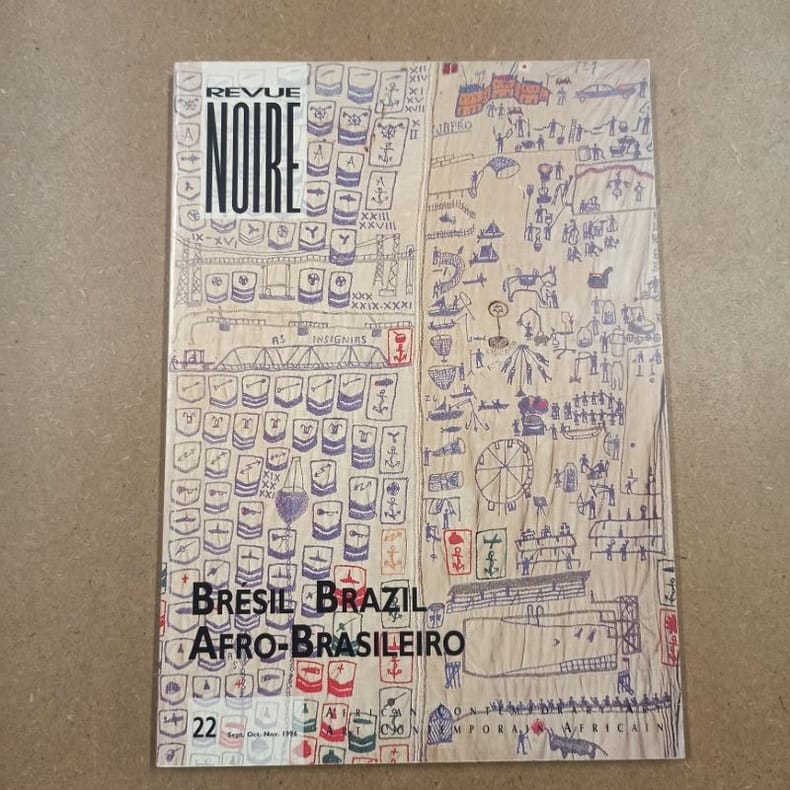
1996réf. 3931996 Numéro 22 - Septembre / Octobre / Novembre 1996 - Revue trimestrielle distribuée par les éditions Hazan - In-4 (33 x 23,5 cm) broché - Très nombreuses photographies en couleurs - Jean Loup PIVIN (Directeur de la publication) - N'Goné Fall (Directeur de la rédaction) - Revue sous titrée "Art, Danse et Littérature. Découverte et Inédits. Art Contemporain Africain." - ISBN : 9771157412190 - Ce numéro a été réalisé suite aux recherches, et sous la direction, de André-Jean JOLLY à l'occasion de la 7e Biennale de la Danse de Lyon
réf. 23791Plon, collection "Les grandes fouilles archeologiques", 1961. Format 14x20 cm, reliure souple sous jaquette illustree, 420 pages. Jaquette sale.Bon etat, petites traces d'usage sur un livre d'occasion.
1855Two volumes. pp. vii, 776; xxxii, 332. Includes a great many technical drawings. 8vo. 240 mm. Original cloth bindings, decorated in blind and lettered in gilt. Non-uniform. Hardbound. Very Good. NOTE: Early embossed ownership of Montgomery Cunningham Meigs (1816-1892) a career U.S. Army officer and civil engineer, who served as Quartermaster General of the Union Army during and after the American Civil War. Despite his Southern birth, Meigs strongly opposed secession and remained loyal to the Union; his record as Quartermaster General was regarded as outstanding, both in effectiveness and in ethical probity, and Secretary of State William H. Seward viewed it as a key factor in the Union victory. The ownership stamp highlights his favorite pre-war engineering project - the Washington Aqueduct (1852-1860). He supervised the construction of the monumental Union Arch Bridge across Cabin John Creek, designed by Alfred Rives, which for 50 years remained the longest single-span masonry arch in the world. It also mentions his service (1853-1859) supervising the building of the wings and dome of the United States Capitol. A remarkable record of 19th Century American invention and ingenuity, in an example associated with one of the most important figures of the Civil War era. BOX 66 Basement
1983réf. 10280La Decouverte Editions 1983 125 pages 20 3x10 9x1cm. 1983. broché. 125 pages. L'ouvrage 'Repères - La Découverte: L'Immigration' d'Ezzedine Mestiri propose une analyse précise et documentée des enjeux liés à l'immigration en mettant en lumière les politiques migratoires les débats publics et les réalités vécues par les migrants. Il s'inscrit dans la collection 'Repères' des éditions La Découverte connue pour ses synthèses accessibles sur des sujets de société
1944réf. 528981944 Les Editions J. Susse, collection "Grands Marins et Pionniers" - 1944 - In-8, broché couverture illustrée par R. Marmottin - 24 pages - Belles illustrations couverture et in-texte de Marmottin
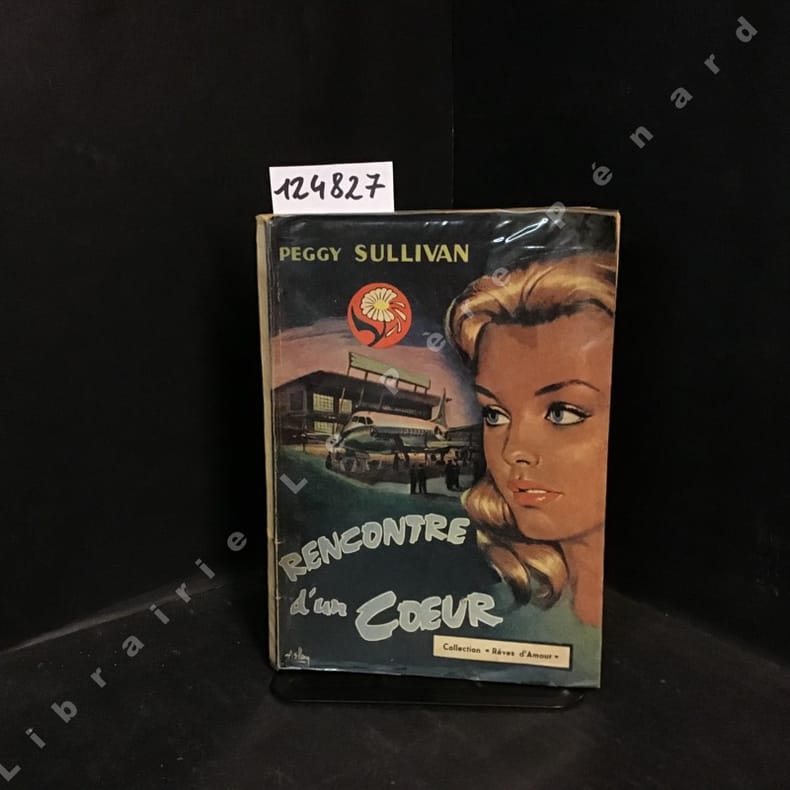
1957réf. 1248271957 Editions Le Grand Damier - Collection "Rêves d'Amour" - 1957 - In-12 broché, couverture illustrée signée Aslan - 95 pages
réf. 96710aaf1869, in-8vo (23 x 9.5 cm), 120 pages écrites dans une petite écriture, pas toujours de lecture facile, parfois à l'encre, parfois au crayon, brochure originale.
2007réf. AME_9781588296726Humana Press 2007. 1st. Hardcover. New/New. Humana Press hardcover
1936réf. 3111441Bruxelles: Universite de Bruxelles, Institut d'Astronomie 1936. Seiten 349-446. Gr. 8° (22,5-25 cm). Orig.-Broschur. [Softcover / Paperback].
1809réf. 50198Paris Mad. Ve Barnard 1809. Contemp. hcalf. Spine gilt. Wear to top of spine. A few scratches to binding. Small stamps on verso of titlepage.In: "Annales de Chimie ou Recueil de Mémoires concernant la Chemie" Tome 70. 336 pp. Entire volume offered. Davy's paper: pp. 189-254. First edition in French the first English 1808 of this importent historical paper in chemistry in which Davy shows that electricity is capable of decomposing some alkalies isolating two new substances and discovering potassium and sodium. Neville in his Historical Chemical Library vol. I p.340 writes about this paper "ONE OF THE GREAT CLASSIC RESEARCHES IN CHEMISTRY in which Davy announced in this his second Bakterian lecture the isloation of metallic potassium and sodium by the electrolytic decomposition of their fused oxides.""He Davy began his own electrical experiments.The results were spectacular. On October 6 1807 the current passing through molten potash liberated a metal which Davy called potassium. The little globules of shining metal tore the water molecule apart as it eagerly recombined with oxygen and the liberated hydrogen burst into lavender flame. Davy danced about in a delirium of joy. A week later he isolated sodium from soda."Asimow. The paper offered here describes these discoveries."Humphry Davy was one of the most brilliant chemists of the early nineteenth century. His early study of nitrous oxide brought him his first reputation but his later and most importent investigations were devoted to electrochemistry. Following Galvani's experiments and the discovery of the voltaic pile interest in galvanic electricity had become widespread. The first electrolysis by means of the pile was carried out in 1800 by Nicholson and Carisle who obtained oxygen and hydrogen from water. Davy began to examine the chemical effects of electricity in 1800 and his numerous discoveries were presented in his Bakerian lecture to the Royal Society on November 20 1806. A Source Book in Chemistry p. 243. unknown
1832réf. 44145Paris Crochard 1832. Contemp. hcalf. gilt spine light wear along edges. In: "Annales de Chimie et de Physique Par MM. Gay-Lussac et Arago." tome 50 Series 2. Entire volume offered. 448 pp. 2 folded engraved plates. Faraday's papers: pp. 5-67 a. pp. 113-162. First French editions of the 2 first memoirs of Faradays groundbreaking researches on electricity constituting the first 2 papers of his "Experimental Researches in Electricity" and containing his fundamental discovery of electromagnetic induction THE FOUNDATION OF NEARLY ALL THE ELECTRICITY IN USE TODAY. In 1820 Oersted had generated magnetism from electricity Faraday here finds the opposite effect generating electricity by magnetism. He also described the first electrical generator second paper. THESE PAPERS ARE SOME OF THE GREAT CLASSICS OF CHEMISTRY AND PHYSICS."Faraday demonstrated this theory involving the lines of force.by inserting a magnet into a coil of wire attached to a galvanometer. While the magnet was being inserted or removd current flowed through the wire. If the magnet was held stationary and the coil moved over it one way or the other there was current in the wire. In either case the magnetic lines of force about the magnet were cut by the wire.If the magnet and coil were both held motionless whether the magnet was within the coil or not there was no current.Faraday hd thus discovered electricalinduction.It was to lead to great things but this was not apparent."Asimov."Although his discovery of the electric motor and the dynamo was almost entirely identical to his theoretical discoveries it laid the foundation of the modern electrical industry - electric light and power teælephony wireless telegraphy televison etc. - by providing for the production of continous mechanical motion from an electrical source and vice versa." PMM 308.Horblit 29 - Milestones 62. - Dibner 64. - PMM 308. unknown
1832réf. 48987Paris Crochard 1832. Contemp. hcloth gilt lettering to spine. In: "Annales de Chimie et de Physique Par MM. Gay-Lussac et Arago." tome 50 Series 2. Entire volume offered. 448 pp. 2 folded engraved plates. Faraday's papers: pp. 5-67 a. pp. 113-162. Some scattered brownspots. First French editions of the 2 first memoirs of Faradays groundbreaking researches on electricity constituting the first 2 papers of his "Experimental Researches in Electricity" and containing his fundamental discovery of electromagnetic induction THE FOUNDATION OF NEARLY ALL THE ELECTRICITY IN USE TODAY. In 1820 Oersted had generated magnetism from electricity Faraday here finds the opposite effect generating electricity by magnetism. He also described the first electrical generator second paper. THESE PAPERS ARE SOME OF THE GREAT CLASSICS OF CHEMISTRY AND PHYSICS."Faraday demonstrated this theory involving the lines of force.by inserting a magnet into a coil of wire attached to a galvanometer. While the magnet was being inserted or removd current flowed through the wire. If the magnet was held stationary and the coil moved over it one way or the other there was current in the wire. In either case the magnetic lines of force about the magnet were cut by the wire.If the magnet and coil were both held motionless whether the magnet was within the coil or not there was no current.Faraday hd thus discovered electricalinduction.It was to lead to great things but this was not apparent."Asimov."Although his discovery of the electric motor and the dynamo was almost entirely identical to his theoretical discoveries it laid the foundation of the modern electrical industry - electric light and power teælephony wireless telegraphy televison etc. - by providing for the production of continous mechanical motion from an electrical source and vice versa." PMM 308.Horblit 29 - Milestones 62. - Dibner 64. - PMM 308.The volume contains further notable papers. Elie de Beaumont "Zweiter geologischer Brief.an A.v. Humboldt über die relative Alter der Gebirgszüge" pp. 1-58 a. 2 plates one handcoloured papers by Döbereiner E. Lenz Moser Mitscherlich de Saussure J. Dumas F.E. Neumann Gay-Lussac Johannes Müller "Beobachtungen zur Analyse der Lymphe des Bluts und des Chylus" pp. 513-590. hardcover