1,737 results
Paris, La Belle édition, s.d. 3 volumes petits in-4 (19,5 x24,5 cm),299 - 269 - 231 pp étui individuel. Un des 800 exemplaires numérotés sur vélin de Lana. Les aquarelles ont été reproduites par Duval et coloriés dans les Ateliers de Maurice Beaufumé. Bel exemplaire.
ref. 8982Nouvelle édition revue et augmentée, enrichie de notes scientifiques par M. François ARAGO et précédée d’une introduction par M. Jules JANIN Deux tomes en un volume in 8 demi-chagrin marron à nefs, titre, roulette, caissons dorés. Plats percaline, triple filet à froid en encadrement. Tome 1 : faux-titre, frontispice gravé sous serpent. Portrait de Jacques ARAGO. Titre général illustré, titre orné d’une vignette, XII, 449 pages, notes scientifiques, XXVIII et 2 pages de table des matières. Tome 2 : faux-titre, portrait gravé de François Dominique ARAGO en frontispice, sous serpente. Titre orné d’une vignette, 439 pages, XXII, notes scientifiques, 2 pages de table des matières, tranches dorées. 22 gravures hors-texte, 150 gravures dans le texte. Paris H. Lebrun éditeur, Garnier Frères sans date rousseurs éparses plus ou moins fortes, dorure éclatante
Paris, Aux éditeurs associés, Les éditions du Monde nouveau, 1925-1926. 4 volumes in-8, demi-chagrin rouge à coins, dos à 4 nerfs, couvertures conservées. Tome 1. XVI pp Avant-propos de Pierre Borel - Un portrait en frontispice - une double page fac-similé d'une lettre autographe de M. B - un deuxième portrait et 325 pp. Tome II. XIX pp. Préface de Charles Régismanset.- 217 pp. Tome III. XII pp. Préface de Jean-Jacques Brousson - 245 pp. Tome IV et dernier. XV pp. Préface d'Albéric Cahuet. - 221 pp. Edition originale. Un des 300 exemplaires numérotés sur vélin pur fil (3ème papier après 15 sur Japon et 120 sur Hollande). Bel exemplaire.
192632 pages. Features: The Senator Nobody Knows - William E. Borah will not play politics; Our Soldiers and Reform of Court-Martial System - Ex-Noncommissioned Officer says that in the World War American Soldiers were tried by Court-Martial System of George III; Heroes of the Air Mail - they carry on every day of the year, through rain or fog, over mountains and treacherous valleys; Lo! The Poor Indian, A Citizen Who Has Few Rights; Did High Freight Rates Occasion the Discovery of America?; Henry Ford's Page - America is a challenge to other nations to put their social foundations at the bottom instead of the top; Editorials - anti-American forces arrayed against Hon. Albert Johnson, Farmer Butte discovers dinotherium in Ohio, gunplay in Pittsburgh; Exploring Where Paul Preached - notable architectural and art treasures unearthed on the site of ancient Antioch - photo-illustrated article; The Lobster is Supreme in the village of Cape Porpoise; Can Courage be Cultivated?; Chats with Office Callers; The Strange Transient Woman - A One-Act Play; I Read In the Papers; Can You Tell Me? Soiling to front cover near spine. Unmarked with average wear. A worthy vintage copy. Book
ref. 109644Petit In-8, demi percaline - 5 volumes reliés en un, répartis comme suit :(1) A Paris, Chez Leiber, Librairie-Editeur - 1866 - 72 p.(2) A Paris, Chez Gauthier-Villars, Imprimeur-Librairie, Série "Actualités scientifiques" - 1876 - Deuxième édition, augmentée du formulaire de Th. Sutton - 63 p.(3) A Paris, Chez Gauthier-Villars, Imprimeur-Librairie, Série "Actualités scientifiques" - 1878 - 84 p.(4) A Paris, Chez Gauthier-Villars, Imprimeur-Librairie, Série "Bibliothèque photographique" - 1876 - Troisième édition, refondue et complétée - 87 p.(5) A Paris, Chez Gauthier-Villars, Imprimeur-Librairie - 1885 - 204 p. (Avec 91 figures dans le texte)
ref. 212Grand in 8 demi-chagrin vert à nerfs,titre,filets,caissons dorés.plats percaline verte à filets à froid en encadrement.Faux-titre,frontispice (chasse au lasso),titre,XXXVI,444 pages,tranches dorées,20 gravures sur acier hors texte sous serpentes,dont deux en couleurs par MM Jules NOEL,LEBRETON,Gustave JANET, gravées par MM Willmann,Outhwaite,Naigrot,Delannoy et Aubert.Ancienne maison Morizot, F de P. Mellado & Cie successeurs 1867.Rousseurs éparses habituelles.Bel exemplair,belles vues de La Havane,Buenos-Ayres,Veracruz et...
ref. 47628, Paris, Librairie Hachette, 1893, Reliure en demi chagrin. Dos a 5 nerfs. Titre et auteur en lettres dorees. Tranche superieure doree. 395pp., 20.5x28.5cm. Tres belle exemplaire!!! (qq traces d'usure a la reliure).
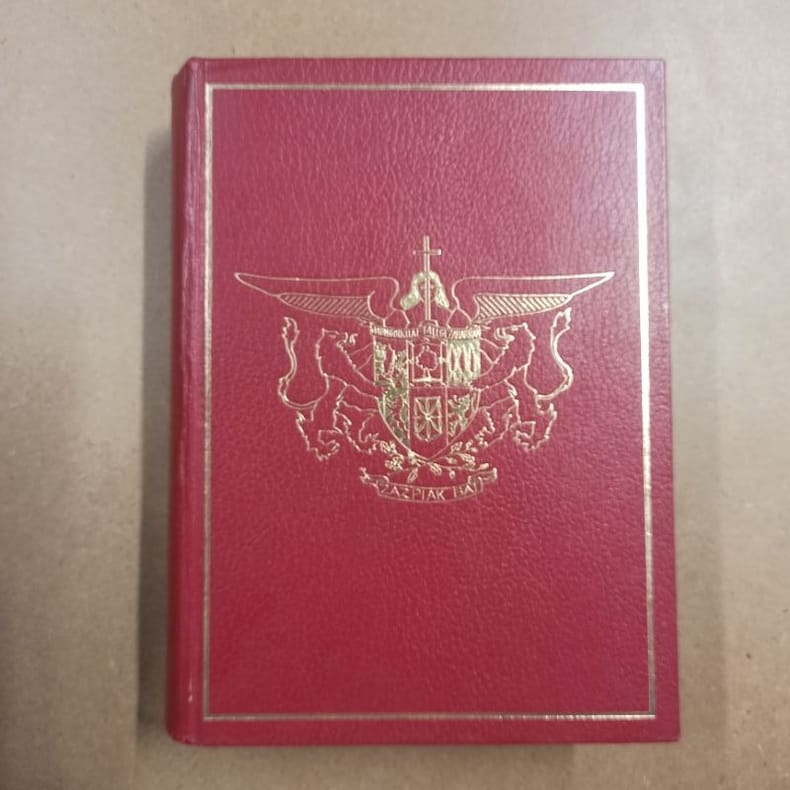
1979ref. 5871979 - reliure - Société Nouvelle d'Editions Régionales et de Diffusion, Pau - 1979 - Fort in-4 (30 x 22 cm) reliure éditeur plein cuir rouge, avec cadre et décor doré au premier plat. Titre doré au dos - 671 pages - Très nombreuses photographies en noir et blanc hors texte + Cartes in fine - Louis COZZOLINO (Directeur de la rédaction) - Marguerite DEMANGEON (Reliure) - Monique MORALES (Cartographie) - Robert BRU (Photographie) - Ouvrage sous titré : "Le Pays Basque. Soule, Labourd, Basse-Navarre" - Tirage limité. Exemplaire nominatif, ouvrage numéroté N° 715, imprimé pour M et Mme Bernard ARDOHAIN
Paris, Poulet-Malassis et de Broise, 1859-1861. 7 volumes in-12, demi-percaline grise, dos lisse, auteur titre et tomaison en lettres dorées, (reliure époque). T. 1. XXXII-(préface)-475 pp. T. 2. 479 pp. T. 3. 512 pp. T. 4. 466 pp. T. 5. 482[1]. T. 6. 550 pp. T. 7. 606 pp. Pour chaque tome : 3 ff-(1 f blanc, faux-titre et titre). Eugène Louis Hatin, né à Auxerre le 8 septembre 1809 et mort à Paris le 16 septembre 1893, est un historien, journaliste et bibliographe français. Son travail considérable de l’Histoire politique et littéraire de la presse en France a été considéré comme n’ayant guère d’équivalent à l’étranger. Sa Bibliographie de la presse est un recueil précieux abondant en renseignements curieux. Sept volumes sur 8. Le tome 7 s'arrête à La Presse sous L'Empire. (Le Publiciste - Journal des Débats - Journal de Paris - Le Spectateur du Nord). Edition originale. Bons exemplaires rares.
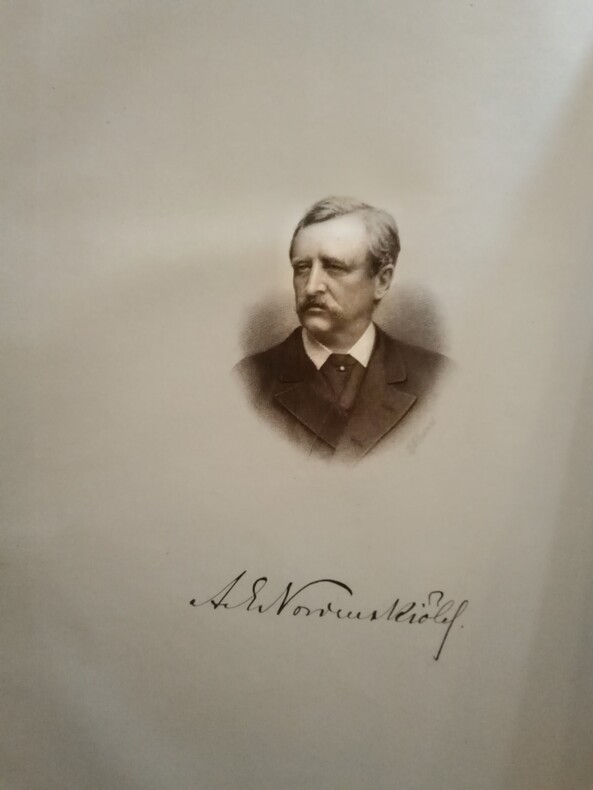
1883ref. WOC-2661Accompagné d'un résumé des voyages précédemment effectués le Long des Côtes Septentrionales de l'Ancien Continent. Ouvrage traduit du Suédois avec l'autorisation de l'auteur par MM. Charles Rabot (Membre de la Société de Géographie de Paris) et Charles Lallemand (Ingénieur au Corps des Mines). Contenant 293 gravures sur bois, 3 gravures sur acier et 18 cartes. Paris, Librairie Hachettes et Cie, 1883-1885. 2 volumes in-4 (28,5x3,5x20cm) reliés demi chagrin brun à coins, dos petits nerfs ornés de caissons dorés, double filets sur les plats, têtes dorées (reliure d'époques). [2]ff. n. ch., IV,481pp. + [2]ff. n.ch., 278pp.
ref. 17049Paris, Cercle du Livre Précieux, 1966. 5 volumes in-8, format oblong, pleine reliure verte, 312-341-436-545 et 524 pages, plus une table et des notes par volume.
Paris, Cercle du Livre Précieux, 1966. 5 volumes in-8, format oblong, pleine reliure verte, 312-341-436-545 et 524 pages, plus une table et des notes par volume. Edition originale des Oeuvres complètes réalisée d'après les maquettes de Bruno Pfäffli pour le compte des Editions Tchou. Exemplaire sur numéroté sur vélin. Trsè bel exemplaire en PARFAIT état. Tome 1 : Récits. Les instants bien employés suivis de Jean Paulhan, voyageur et conteur ou le Monde inconnu par André Dhôtel. (Lalie. - Progrès en amour assez lents - Le Pont traversé. - Le Guerrier appliqué.- La guérison sévère. - Aytré qui perd l'habitude. - La métromanie ou les dessous de la capitale.- Les Causes célèbres. - Guide d'un petit voyage en Suisse. - L'aveuglette. - De mauvais sujets. - Une semaine au secret. - 13 Entretien à la radio avec Robert Mallet. Etc., etc...)
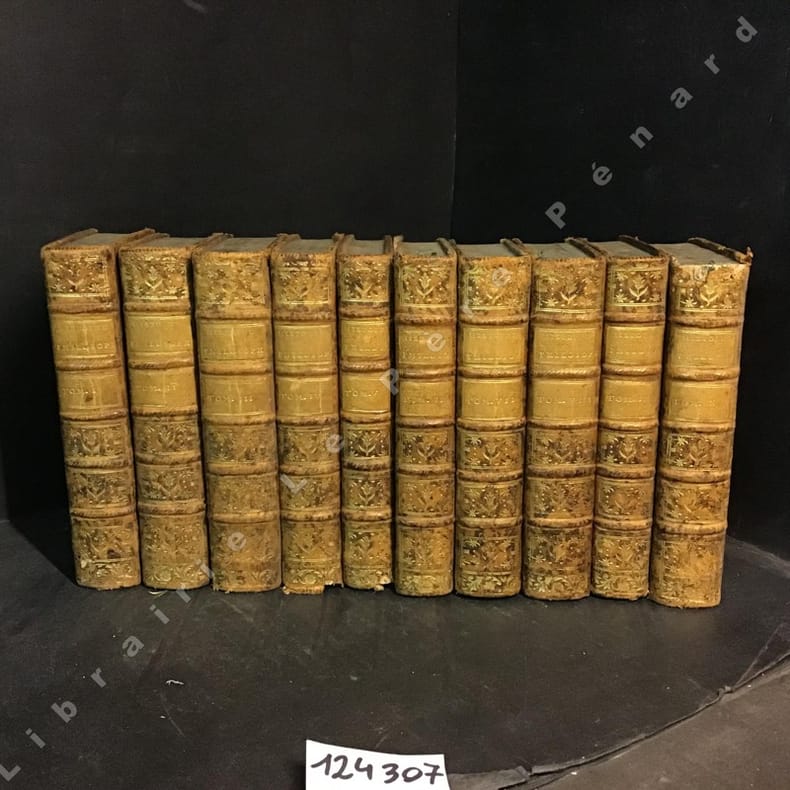
1780ref. 1243071780 A Genève, Chez Jean-Léonard Pellet, Imprimeur de la Ville & de l'Académie - M. DCC. LXXX. (1780) - Dix volumes In-12, reliures pleine peau marbrée d'époque, dos à 5 nerfs avec pièce de titre et de tomaison sur fond marron clair, caissons ornés de fleurons en doré, toutes tranches marbrées, signet vert - xij-571 + 624 + 608 + 500 + 425 + 511 + 589 + 599 + 431 + 564 pages - Sans le volume d'Atlas
1973ref. 35251973 Editions Hier et Demain, , 1973. In-plano, en feuilles, sous emboîtage toile jaune éditeur, texte liminaire et 42 planches. en noir et couleurs Ce tirage a ete limite a 799 exemplaires exemplaire Présentation du professeur Robert Bonecque. Les documents reproduits proviennent notamment du département des cartes et plans de la Bibliothéque Nationale du Cabinet des Estampes des musées et Bibliothéques locaux et de collections priveés sous emboitage recouvert de tissus jaune original 57 cm. parfait etat
1994ref. 6946Sao Paulo: Fundacao Quadrilátero do Descobrimento 1994. 1st ed. Paperback. Used; Like New. Small Folio bds 239 pp.dust jacket semi glossy stock maps color plates facsimiles bibl. Fundacao Quadrilátero do Descobrimento paperback
1826ref. 43853(Paris, Crochard, 1826). Without wrappers. In: ""Annales de Chimie et de Physique, par Gay-Lussac et Arago"", tome 32, Sec. Series, Cahier 4. Pp. 337-443 a. 1 fodled engraved plate. (The entire issue offerd). Balard's paper: pp. 337-84.
1799ref. 44095Halle, Rengerschen Buchhandlung, 1799, 1800. Without wrappers extracted from ""Annalen der Physik. Herausgegeben von Ludwig Wilhelm Gilbert"", Bd. 2. p. 483 (one page). and Bd. 6, pp. 105-115. Some scattered brownspots.
1898ref. 44238(London, Taylor and Francis, 1898) No wrappers. In ""Proceedings of the Royal Society of London."", Vol.63, Nos. 399-400 (both issues offered).. Pp. 373-480 a. 5 plates. Ransay & Travers' paper: pp. 405-408.
1804ref. 42469(London, Bulwer and Co., 1804). 4to. Without wrappers as extracted from ""Philosophical Transactions of the Royal Society of London."" Year 1804-Part II. Pp. 419-430. Clean and fine.
1826ref. 43853Paris Crochard 1826. Without wrappers. In: "Annales de Chimie et de Physique par Gay-Lussac et Arago" tome 32 Sec. Series Cahier 4. Pp. 337-443 a. 1 fodled engraved plate. The entire issue offerd. Balard's paper: pp. 337-84. First printing of Balard's famous memoire in which he records his discovery of the new element Bromine le brôme. While he was studying the flora of a salt marsh he notized a deposit of sodium saulfate which had crystallized out in a pan containing mother liquer from common salts. "In an attempt to find a use for the waste liquers he performed a number of experiments and notized that when certain reagents were added the mother liquer bacame brown. His investigation of this phenomenon.ked to the remarkable discovery.Weeks p. 264."The discovery of a new chemical element by a young and obscure provincial pharmacist caused a sensation in Paris. Balard's achievemnt was recognized by the Academie des Sciences and he was awarded a medal by the Royal Society of London."DSB I p. 416."The discovery of bromine is a very importent acquisition to chemistry and gives M. Balrad honorable rank inthe career of the sciences. We are of the opinion that this young chemist is every way worthy of the encouragement of the Academy and we have the honour to propose that his memoir shall be printed in the "Recueil des Savants Étrangers" The report from the French Academy signed by Vaugelin Thenard and Gay-Lussac. unknown
1799ref. 44095Halle Rengerschen Buchhandlung 1799 1800. Without wrappers extracted from "Annalen der Physik. Herausgegeben von Ludwig Wilhelm Gilbert" Bd. 2. p. 483 one page. and Bd. 6 pp. 105-115. Some scattered brownspots. First German translation of Davy's announcement the announcement on 1 page of his discovery of the unusual anaesthetic effects of nitrous oxide which on being inhaled gave rise to a giddy intoxicated feeling. On announcing his discovery he says that he will publish a paper discribing the experiments with the gas later. This is the paper offered here also in the first German version. Both the announcement and the paper were issued in the "Annalen" the same year as they appeared in Nicholson's Journal.The gas was first synthesized by English natural philosopher and chemist Joseph Priestley in 1772 who called it phlogisticated nitrous air."Following Priestley's discovery Humphry Davy of the Pneumatic Institute in Bristol England experimented with the physiological properties of the gas such as its effects upon respiration. He even administered the gas to visitors to the institute and after watching the amusing effects on people who inhaled it coined the term 'laughing gas'! Davy even noted the anaesthetic effects of the gas: "As nitrous oxide in its extensive operation appears capable of destroying physical pain it may probably be used with advantage during surgical operations in which no great effusion of blood takes place".Wikipedia."Davy discovered the anaesthetic properties of nitrous oxide and suggested its use during surgiical operations a suggestion which was not turned to useful account until 1844."Garrison & Morton 5646 not mentioning the announcing of its discovery in 1799. unknown
1898ref. 44238London Taylor and Francis 1898 No wrappers. In "Proceedings of the Royal Society of London." Vol.63 Nos. 399-400 both issues offered. Pp. 373-480 a. 5 plates. Ransay & Travers' paper: pp. 405-408. First appearance of the paper in which Ramsay and Travers announced their discovery of a new element which they named "krypton" meaning hidden."Dr. William Hampson presented them Ransay & Travers with about a liter of liquid air which they used not for liquefying the argon but for obstaining sufficient skill in manipulation so that they would not risk loosing their precious fifteen liter of argon.The residue left after most of the liquid air had boliled away consisted largly of oxygen and nitrogen which Ramsay and Travers temoved with red-hot copper and magnesium. .they then examined the twenty-five cibic centimeters of residual gas and when they found it to be inerst they immediately placedit in a Pl'ucker tube connected to and induction coil and observed its spectrum. There was a bright yelælow line with a greener tint than that of the helium line and a brilliant green line that did nor coincide with any line of argon helium mercury or hydrogen. They discoverede this gas on 30 May 1898 and named it 'krypton'.they found that it belonged between bromine and rubidium in the periodic table and so great was their excitement that the younger chemist almost forgot about his examination for doctor of sciwence which had been schedules for the next day."Weeks p. 267.Parkinson "Breakthroughs" 1898 C. unknown
1805ref. 45516Paris, Chez Bernard, AN XIII (1805). No wrappers. In: ""Annales de Chimie ou Recueil de Mémoires.."" Vol. 55, Cahier 2 (30 Thermidor an XIII). Pp. 113-224 (entire issue offered). Htitle to vol. 55 present. Robiquet's paper: pp. 152-171.
1805ref. 45516Paris Chez Bernard AN XIII 1805. No wrappers. In: "Annales de Chimie ou Recueil de Mémoires." Vol. 55 Cahier 2 30 Thermidor an XIII. Pp. 113-224 entire issue offered. Htitle to vol. 55 present. Robiquet's paper: pp. 152-171. First appearance of Robiquet's first chemical paper in which he relates his discovery of asparagine by analysis of asparagus juice the first amino acid to be discovered. The following year he made the first isolation of this amino acid together with Vaguelin. Pierre Jean Robiquet was a French chemist who laid founding work in identifying amino acids the fundamental bricks of proteins through recognizing the first of them asparagin in 1806 in the take up of the industry of industrial dyes with the identification of alizarin in 1826 and in the emergence of modern medications through the identification of codeine in 1832 a powerful molecule today of widespread use with analgesic and antidiarrheal properties. unknown
1804ref. 42469London Bulwer and Co. 1804. 4to. Without wrappers as extracted from "Philosophical Transactions of the Royal Society of London." Year 1804-Part II. Pp. 419-430. Clean and fine. First appearance of the paper in which Wollaston announced his discovery of the metallic element Rhodium."Dr. Wollaston dissolved a portion of crude platinum in qgua regia and neutralized the excess acid with caustic soda. He then added salammoniac to precipitate the platinum as ammonium chloroplatinate and mercurous cyanide to precipitate the palladium as palladium cyanide. After filteringoff the precipitate he decomposed the excess mercurous cyanide inthe filtarate by adding hydrochloric acid and evaporating to dryness. When he washed the residue with alcohol everything dissolved except a beautiful dark red powder which proved to be a double chloride of sodium and a new metal which because of the rose color of its salts Dr. Wollaston named 'Rhodium'. He found that the sodium rhodium chloride could be easely reduced by heating it in a current of hydrogen and that after the sodium chloride had been washed out the rhodium remained as a metallic powder. he also succeeded in obtaining a rhodium button."Weeks: Discovery of the Elements. p. 104-05. unknown