WHITE (John)Livre Rare Book

rif. 238070Paris, Pougin, an III (1795) in-8, XII-206-[2]-256-[4] pp., demi-basane fauve à coins de vélin, dos lisse orné (reliure de l'époque). Dos un peu frotté, infimes trous de ver sans atteinte au texte à la fin de l'ouvrage.
1795rif. 20628A Paris, chez Pougin, an 3 (1795). In-8 de XII-206-[2]-256-[4] pages, demi-veau moucheté brun, dos lisse orné, pièce de titre rouge.
rif. 987526Chez Pougin, Imprimeur-Libraire Paris 1795 In-8 ( 215 X 135 mm ) de 206[2] et 256-[4] pages, demi chagrin anthracite, dos lisse orné de filets dorés et à froid. Edition originale française de cette importante relation de voyage sur l'Australie. "( . )Ouvrage ou l'on trouve de nouveaux détails sur le caractère et les usages des habitans du Cap de Bonne-Espérance, de l'Île Ténériffe, de Rio-Janeiro et de la Nouvelle-Hollande, ainsi qu'une description exacte de plusieurs animaux inconnus jusqu'à présent." L'auteur était chirurgien en chef à bord de l'un des navires de l'Escadre anglaise qui transportait les condamnés, déportés en Australie. Rousseurs claires, anciens cachets de bibliothèque, bon exemplaire.
rif. 141954aafFeldkirch, Unterberger, 1906, in-4to, farb. Front. (Bregenz) + 3 Bl. + 194 S. mit zahlr. Abb. + 5 (davon 1 schwarzweis.) Taf., Original-Leinen goldgeprägt (Verlagseinband in blau).
rif. 142407aafFeldkirch, Unterberger, 1906, in-4to, farb. Front. (Bregenz) + 3 Bl. + 194 S. mit zahlr. Abb. + 5 (davon 4 Farbtafeln & 1 schwarzweis.) Tafeln, Exlibris Peter E. Obergfell, Original-Leinen goldgeprägt (Verlagseinband in dunkelrot).
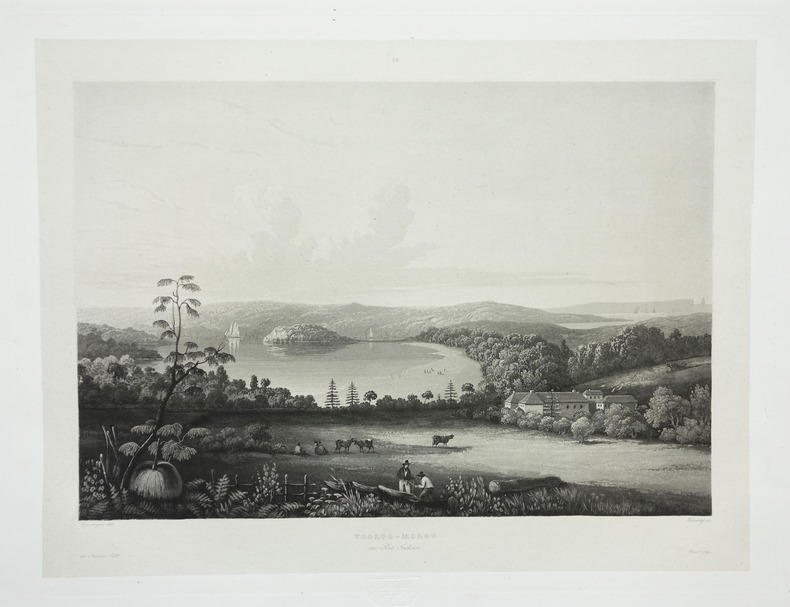
1833rif. LBW-1978Paris, 1833-1839. 268 x 358 mm.
19758vo., First Edition, with frontispiece and plates, tape marks on free endpapers; brown cloth, backstrip lettered in white, red endpapers, a very good, bright copy in unclipped dustwrapper, the latter with tape marks on inner surface. With personal bookplate on front free endpaper.
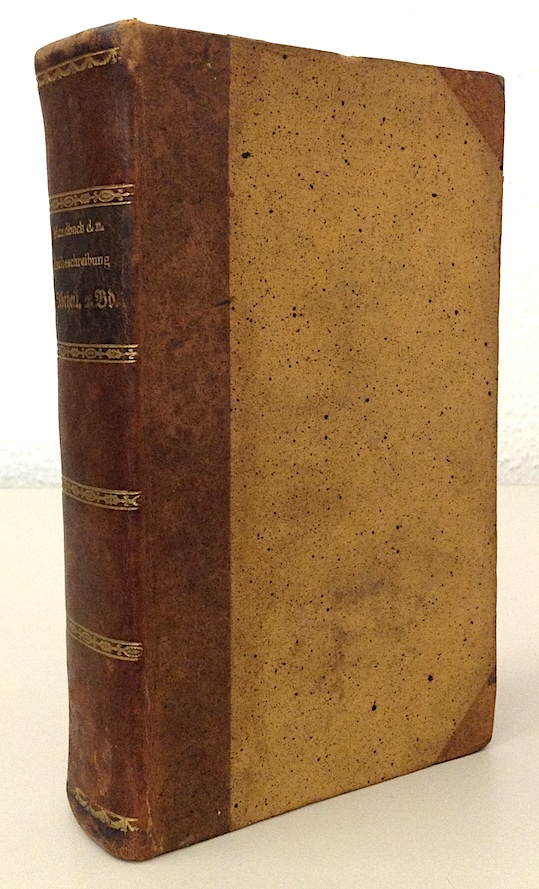
1825rif. 622846Weimar, Geographisches Institut, 1825. XVI, 900 S.; 1 Bl., 8 S., 1 Bl. Verlagsanzeigen. Halbleder d. Zeit mit Rückenvergoldung (leicht berieben).
18863 pages. Plus a fold-out colour map measuring approximately 7 x 7.5 inches (18 x 19cm). Original condition with blue wrappers, titles to front, and containing all the ads. This is a complete issue, seldom found in such good and original condition. A brief account accompanied by an an incredible early colour map of the deadly volcanic explosions in the Tarawera districts of New Zealand. Tarawera Mountain is a volcanic peak, situated on the North Island, New Zealand, in Rotorua. Its eruption in 1886 destroyed villages and unique silica terraces, transformed local terrain, and temporarily drained Lake Rotomahana. June 10th 1886, shortly after midnight, earthquakes are felt in Te Wairoa and Rotorua. The area is renowned for tremors and no-one is too worried. Residents sleep blissfully unaware of the impending danger. Around 1:30am there is a violent earthquake followed by the sound of an explosion. Sleepy residents look in terror across the lake to see Tarawera's Wahanga dome, exploding into life. The eruption cloud was about 9.5 km high and easily visible, being lit up by the mountain's continuing eruption and accompanying lightning storm. For half an hour, the spell bound residents stare in awe at the scene before them, a few sense the danger and head toward the safety of nearby Rotorua. At 2.00am, there is a second explosion as the Ruawahia peak, and then the Tarawera peak erupt with all the fury that mother nature can muster. So loud was the second explosion, that it was heard in Christchurch over 800 kilometres south. In Wellington 400km south, locals believed that Russians were invading New Zealand by way of bombing. The amazing lightning storm above the second Tarawera eruption was visible as lights in the sky from New Zealand's South Island. Eyewitnesses near the mountain reported that Mount Tarawera had split open, and that a huge column of fire could be seen shooting up into the air and forming a black cloud of smoke and ash. In fact, a 17km fissure had been created down the length of the Tarawera complex. Near Rotorua, New Zealand: At 2:00am 10 June 1886, terrified families awoke to a rumbling giant, the noise was heard over 500 kilometres away. The mountain, lit by a tremendous display of lightning, rained ash upon her neighbours and began the deadly renovation of her buried landscape. This spectacular map provides the visual account of Mount Tarawera, the volcano that stole more than life.
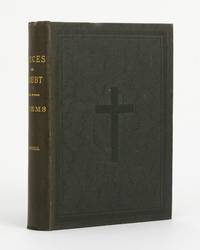
1884rif. 86353Adelaide: E.S. Wigg & Son 1884. First Edition. Hardcover. Very Good. Adelaide E.S. Wigg & Son 1884. Octavo viii 286 pages. Black watered cloth lettered in gilt on the spine and blind-stamped on both sides; all edges dyed red; cloth lightly rubbed; spine very lightly sunned; an excellent copy. Alexander Russell 1825-1886 was Dean of Adelaide; he was the 'most cultivated and least fatuous writer of didactic verse' in the colony Depasquale: 'A Critical History of south Australian Literature 1836-1930' 1978. E.S. Wigg & Son hardcover
1884rif. 77339Adelaide: E.S. Wigg & Son 1884. First Edition. Hardcover. Very Good. Adelaide E.S. Wigg & Son 1884. Octavo viii 286 pages. Black watered cloth lettered in gilt on the spine and blind-stamped on both sides; all edges dyed red; cloth lightly rubbed and flecked with trifling wear to two corners; spine lightly sunned; an excellent copy. Alexander Russell 1825-1886 was Dean of Adelaide; he was the 'most cultivated and least fatuous writer of didactic verse' in the colony Depasquale: 'A Critical History of south Australian Literature 1836-1930' 1978. Provenance: Thomas Thornton Reed sometime Anglican Archbishop of Adelaide with his armorial bookplate on the front pastedown. E.S. Wigg & Son hardcover
1992rif. ABE-157005973818328,5 CM X 21,5 CM-EN COUVERTURE "KYLE MACLACHLAN L'ETRANGE SEDUCTION DU HEROS DE TWIN PEAKS", GROS PLAN NOIR ET BLANC, PHOTO ALBERT WATSON-LE BLUES DES COLONIES-CHARLELIE EN AUSTRALIE, CHARLELIE COUTURE, 10 PAGES, DESSINS-FAMILY ROCK, MODE-DUEL EN DUO MODE-LES BANQUES CHICS-PASSIONS PHOTOS ELLEN VON UNWERTH-LES DEUX VISAGES DE KYLE MACLACHLAN-LE PARIS DE DAVID LYNCH-OH! DAHO, 4 PAGES-PLEIN PEAU, MODE-AVEC SON SUPPLEMENT "LA NUIT A PARIS", 28 PAGES
1920rif. 20759Adelaide: RSSA 1920. First Edition. Paperback. Fine. Adelaide RSSA 1920. Octavo pages 76-93. Original flush-cut quarter cloth and stiffened wrappers; a fine copy. This issue contains numerous other papers unrelated but of considerable interest including some by eminent scientists such as Professor Thorburn Brailsford Robertson 'Observations on the Physiology of the Fly's Intestine' 13 pages and Professor Frederic Wood Jones 'The External Characters of Pouch Embryos of Marsupials' 13 pages with numerous illustrations plus 2 plates - the first of a series of articles over several volumes. RSSA paperback
rif. R200086499MENGES. NON DATE. In-4. Relié. Parfait état, Couv. convenable, Dos satisfaisant, Intérieur frais. Environ 250 pages. 194 photos en couleurs, hors texte. Jaquette et sous-emboîtage en parfait état.. Avec Jaquette. Sous Emboitage. A l'italienne. Classification Dewey : 994-Australie
1984rif. RO30302382Mengès. 1984. In-4. Relié toilé. Bon état, Couv. convenable, Dos satisfaisant, Intérieur frais. Environ 400 pages augmentées de nombreuses photos en couleurs , hors texte. Jaquette en bon état.. Avec Jaquette. . . Classification Dewey : 994-Australie
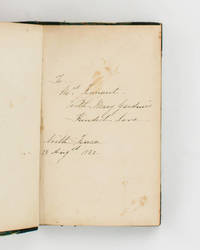
1850rif. 110032London: James Blackwood 1850. Hardcover. London James Blackwood early edition circa 1850s. Duodecimo xxxii 33-323 pages plus a frontispiece 'Castle of Chillon'. Early half calf and marbled papered boards all edges and endpapers marbled with the spine extensively gilt-decorated in compartments with a contrasting title-label; leather a little rubbed at the extremities and bumped at the corners; marbled paper moderately rubbed and worn along the edges with slight loss to the rear cover; early leaves slightly marked; a binder's blank at the rear has an internal tear; overall a very presentable copy. The initial binder's blank is inscribed 'To Mrs Tennant With Mary Gardner's Kindest Love. North Terrace. 28 Augst 1862'. With more than a little help from the 'Australian Dictionary of Biography' we have discovered this was a wedding present. On that day Rachael Christina Ferguson married a young Andrew Tennant 1835-1913 pastoralist and politician Tennant Creek is named after his father. One of their daughters Rosina Forsyth Tennant married the pastoralist William Tennant Mortlock yes genealogy is sometimes confusing. One of their children was John Andrew Tennant Mortlock 1894-1950 pastoralist and philanthropist. He was the State Library of South Australia's most significant benefactor and the Mortlock Wing is named after him. James Blackwood hardcover
rif. 917455-nnew. unknown
rif. 917455like new. unknown
rif. 91780Môtiers / NE, Fondation Burkhardt-Felder, Arts et Culture 2010, 290x220mm, 96pages, broché. Exemplaire à l'état de neuf.
1990rif. AUSTRALIELITT313La Différence, "Orphée", 1990, 11,5 x 16,5, 126 pages cousues sous couverture illustrée. Traduit de l'anglais (Australie) par Patrick Hersant. Présenté par Christine Michel. BILINGUE - traduction française en regard.
2009rif. 58043AB[Blackheath NSW], WriteLight, 2009. 4° (30x24), 311 p., with photos, publisher's hardbound with jacket, 1. ed. spine sl sunned, else tight and clean, well cared,
rif. 127218Fine. Albumen paper photographs each approximately 157 × 207 mm in fine condition; the mount has a few trifling blemishes. The Bank of South Australia building still stands on King William Street Adelaide. The photographer's credit and reference number 'Sweet Adelaide 92' is scratched in the negative. The imposing hospital buildings now demolished are photographed from an elevated vantage point probably the roof of the Botanic Hotel across North Terrace and the wide-angled view shows a sparsely-developed city now lost to history. The reference to Sweet was painted out in the original negative before this print was made suggesting it may be a posthumous print. Captain Samuel White Sweet 1825-1886 was a sea captain surveyor and photographer: after he was censured when his ship ran aground in 1875 he 'retired from the sea opened a photographic studio in Adelaide and concentrated on landscapes. With his horse-drawn dark room he travelled through South Australia taking hundreds of skilful pictures of the outback stations and homesteads. The colony's foremost documentary photographer of the 1870s in the early 1880s he was one of the first to use the new dry-plate process' 'Australian Dictionary of Biography'. unknown
rif. 127211Fine. Albumen paper photographs each approximately 157 × 207 mm in fine condition; the mount has a few trifling blemishes. The first photograph appears to be taken from the top of the old Treasury Building looking south-west across the square at the imposing Supreme Court building still extant. The second photograph is a panoramic view of the city skyline centred on the towers of the Town Hall and the GPO; a tall chimney on the riverbank pouring out black smoke stands visually between them. Captain Samuel White Sweet 1825-1886 was a sea captain surveyor and photographer: after he was censured when his ship ran aground in 1875 he 'retired from the sea opened a photographic studio in Adelaide and concentrated on landscapes. With his horse-drawn dark room he travelled through South Australia taking hundreds of skilful pictures of the outback stations and homesteads. The colony's foremost documentary photographer of the 1870s in the early 1880s he was one of the first to use the new dry-plate process' 'Australian Dictionary of Biography'. unknown
rif. 127216Albumen paper photographs each approximately 157 × 207 mm; the road scene has been printed from a broken negative and a hairline crack and small fingerprint are visible in the central portion of the sky; the top margin of the mount on this side has some spots of residual glue and the bottom edge of the mount on the other side has a few trifling surface chips; overall the condition is excellent. The photographer's credit and reference number 'Sweet Adelaide 335' is scratched in the negative of the City Bridge the second bridge built over the Torrens at that spot in 1877. Oarsmen in four boats in the foreground have clearly paused for the event as have the numerous pedestrians on the bridge. The second photograph shows Adelaide's twin towers - the Town Hall and the GPO - in the distance but the most prominent features of the scene are the tall eucalypts lining the road and the cart-horses drinking at a shaded trough. Captain Samuel White Sweet 1825-1886 was a sea captain surveyor and photographer: after he was censured when his ship ran aground in 1875 he 'retired from the sea opened a photographic studio in Adelaide and concentrated on landscapes. With his horse-drawn dark room he travelled through South Australia taking hundreds of skilful pictures of the outback stations and homesteads. The colony's foremost documentary photographer of the 1870s in the early 1880s he was one of the first to use the new dry-plate process' 'Australian Dictionary of Biography'. unknown
2019rif. 161459Melbourne: Images Publishing 2019. 1st edition. As New. quarto. hardback with dust jacket 416pp. colour & b/w plates text ills. bibliog. index Fabulous production; copiously illustrated with colour & b/w photos of Bentleys owned by Australian collectors. Limited to 600 copies Images Publishing hardcover