ANGAS, George FifeBiblio.com

1870rif. 112789Adelaide: The Adelaide Photographic Company 1870. Adelaide The Adelaide Photographic Company circa 1870. An albumen paper photograph 94 × 61 mm mounted as issued on the printed card 104 × 63 mm of The Adelaide Photographic Company. A few tiny surface scrapes to the bottom millimetre or so of the photograph and slight surface loss to the plain section of the mount adjacent to it but overall the condition is excellent. There is an example of the same image in the State Library of NSW a gift from a family member John Howard Johnson dated January 1870. The 'Australian Dictionary of Biography' has this to say about Angas: 'although his prominence in the foundation of South Australia has been somewhat exaggerated . he deserves full credit for the capital and settlers that he introduced into the new colony'. He emigrated with his family in 1851 and spent the rest of his life in the colony. The Adelaide Photographic Company unknown
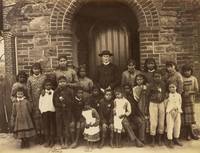
rif. 141099Original sepia-toned albumen paper photograph 158 × 210 mm unmounted as issued; in fine condition. Captain Samuel White Sweet 1825-1886 sea captain surveyor and photographer: after he was censured when his ship ran aground in 1875 he 'retired from the sea opened a photographic studio in Adelaide and concentrated on landscapes. With his horse-drawn dark room he travelled through South Australia taking hundreds of skilful pictures of the outback stations and homesteads. The colony's foremost documentary photographer of the 1870s in the early 1880s he was one of the first to use the new dry-plate process' 'Australian Dictionary of Biography'. 'Sweet Adelaide ' is inscribed in the negative the three-digit reference number is cropped but it appears to be 442 or 443; 'Poonindie native mission school' is written in pencil on the verso. The Art Gallery of South Australia and the State Library of Victoria also have an example of this print. There are several differences between all these three examples: they are different enlargements; the AGSA example does not have the photographer's credit in the negative; the SLV example does but the negative is printed in reverse. 'Captain Sweet's Colonial Imagination - The Ideals of Modernity in South Australian Views Photography 1866-1886' by Karen Magee a 2014 University of Adelaide doctoral thesis accessible online records that Sweet visited Poonindie in 1884. Magee reproduces the AGSA photograph in her extensive catalogue see number 820. unknown
rif. 127212Very Good. An albumen paper photograph 159 × 205 mm; tiny quarter-round indentations to the bottom corners a legacy of having been tipped in on a mount at some stage; slight fading around the edges; now unmounted and in excellent condition. The photograph shows the eastern side of a fairly quiet King William Street; the clockless tower of the Town Hall has a prominent position to the right of the image. Captain Samuel White Sweet 1825-1886 was a sea captain surveyor and photographer: after he was censured when his ship ran aground in 1875 he 'retired from the sea opened a photographic studio in Adelaide and concentrated on landscapes. With his horse-drawn dark room he travelled through South Australia taking hundreds of skilful pictures of the outback stations and homesteads. The colony's foremost documentary photographer of the 1870s in the early 1880s he was one of the first to use the new dry-plate process' 'Australian Dictionary of Biography'. unknown
rif. 127215Very Good. An albumen paper photograph 158 × 208 mm mounted on card a little tanned; in excellent condition. The photographer's credit and reference number 'Sweet Adelaide 526' is scratched in the negative. The photograph was taken from on top of the Kent Town Brewery looking west along Rundle Street across the parklands taking in all to the right north as far as the old Royal Adelaide Hospital and the dome of the Palm House in the Adelaide Botanic Gardens. Captain Samuel White Sweet 1825-1886 was a sea captain surveyor and photographer: after he was censured when his ship ran aground in 1875 he 'retired from the sea opened a photographic studio in Adelaide and concentrated on landscapes. With his horse-drawn dark room he travelled through South Australia taking hundreds of skilful pictures of the outback stations and homesteads. The colony's foremost documentary photographer of the 1870s in the early 1880s he was one of the first to use the new dry-plate process' 'Australian Dictionary of Biography'. unknown
rif. 115751George Taplin 1831-1879 missionary and teacher began his work with the Ngarrindjeri in April 1859; the 'site he chose for a settlement on the shores of Lake Alexandrina was a traditional camping ground called Raukkan The Ancient Way known to Europeans as Point McLeay. Keenly interested in Ngarrindjeri culture and society he learned their language used it in preaching and translated and published Bible tracts. He published invaluable anthropological studies which were much superior to contemporary work on South Australian Aboriginals. Despite his sympathy with the people and their traditions Taplin adhered to the contemporary view that Christianity and Europeanization should be adopted and Ngarrindjeri civilization abandoned; as a result he assisted in undermining their government and social structure further weakened traditional discipline and morale within the confederacy and provoked strong opposition from conservative tribal members. But they had been dispossessed and persecuted before his arrival and by helping them become literate and numerate and to acquire trades he enabled them to survive and flourish briefly in European society. Today hundreds of their descendants remain in various districts of Australia; their durability can largely be attributed to Taplin. He was a compassionate Christian and a courageous fighter. Exhausted he died of heart disease at Raukkan on 24 June 1879 survived by his wife and six children. He was buried in the village cemetery' 'Australian Dictionary of Biography'. The photograph 163 × 220 mm shows the newly-installed headstone which was 'Erected By The Aborigines'. It is on the original mount captioned along the bottom margin 'S.W. Sweet Photo. Flinders Street Adelaide'. The acidic mount is discoloured lightly stained and unevenly trimmed; the top right-hand corner is broken away taking with it a small triangular piece of the photograph approximately 10 × 45 mm of the sky; the sepia-toned print is a little speckled confined mainly to the left and right margins but overall it is a very arresting image. The only example recorded in Trove in the State Library of SA appears to be of better quality but it is not for sale and more importantly the photographer is not identified. This significant fact may now be added to the record. Captain Samuel White Sweet 1825-1886 was a sea captain surveyor and photographer: after he was censured when his ship ran aground in 1875 he 'retired from the sea opened a photographic studio in Adelaide and concentrated on landscapes. With his horse-drawn dark room he travelled through South Australia taking hundreds of skilful pictures of the outback stations and homesteads. The colony's foremost documentary photographer of the 1870s in the early 1880s he was one of the first to use the new dry-plate process' 'Australian Dictionary of Biography'. unknown
rif. 105467Very Good. Image size approximately 325 × 263 mm on the original ruled mount visible surface 430 × 365 mm framed and glazed. The photograph is beginning to lift slightly at two corners; mount slightly soiled at one corner; frame a little scuffed and marked; overall in excellent condition. On the reverse is the paper label of 'S. Solomon Photographer 51 Rundle Street Adelaide'. The address the original of which was illustrated and illuminated by W.G.P. Joyner gives an indication of the scale and importance of Dunn's enterprises: '. by your perseverance energy and strict integrity you have overcome all obstacles and today you have the satisfaction of leaving to your successors the largest milling and wheat business in the Southern Hemisphere'. An article in the 'South Australian Chronicle' for 8 June 1889 describes the circumstances of the presentation of the address and also describes the original in detail. 'The address is the work of Mr. Joyner and is one of his most artistic productions . The words and the signatures which number 105 being those of most of the leading employés are situated in the centre while all around are well executed paintings of a number of the mills belonging to the firm taken from photographs. In the left-hand corner there is a painting of the site of the original mill at Hay Valley . On the top are Mr. Dunn's residence at Mount Barker 'The Laurels' and the Dunn Memorial Church which that gentleman presented to the residents of Mount Barker while the right hand corner is occupied by a view of the firm's stores and offices in Freeman-street Adelaide now Gawler Place. On the left side of the address there are views of the mills at Wilmington the old mill at Port Adelaide and at Mount Barker and two representations of the new Roller Eclipse mill at Port Adelaide. On the other side the Nairne mill takes precedence while underneath it is the gem of the collection the works at Port Pirie including some of the shipping of the port with the railway in front. The Port Augusta and Bridgewater mills are represented and an excellent portrait of Mr. Dunn is also included in the set.' A number of the source photographs are to be found in a Dunn family photograph album now held by the State Library of South Australia PRG 1485/3. Dunn's entry in the 'Australian Dictionary of Biography' records that 'he retired in 1889 and died at Mount Barker on 13 October 1894. The firm's eleven mills five with the most modern machinery then represented an investment of £150000. They annually had an export trade of some 20000 tons of flour to Britain Western Australia New South Wales and South Africa some 400 employees and a payment to farmers of £500000'. unknown
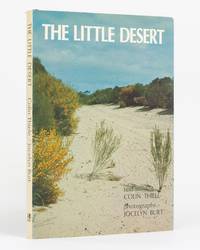
rif. 131324Fine. One page quarto folded once across the middle; in fine condition. The letter accompanied an inscribed and signed copy of Thiele's book 'The Little Desert' Rigby 1975. It is dated 3 April 1997 and was sent from King Scrub via Dayboro in Queensland where the Thieles lived after leaving Adelaide. He is responding to a letter from his old Adelaide friend Alan Brissenden 1932-2020 academic noted scholar of Shakespeare writer and critic who had recently visited the Little Desert in Victoria's Wimmera district and in the first paragraph he writes about his love for the area. He encloses a photocopy of a recent newspaper article still present on the practice of modern plagiarism which leads him to a critical discussion of the actions of Helen Demidenko / Darville referencing her recent fortnightly columns in the 'Courier Mail' 'Her first piece was unbelievably awful. A few days later it was revealed that - yet again - she had pinched much of it verbatim from an American "professor" on the Internet'. Apparently plagiarism 'is actually taught as a technique at some universities . Incredible! We obviously live in "the new morality"'. He finishes on a positive note still busy with publishers 'although I think it is about time I hung up my keyboard and retired to a hammock under the palm trees. Now I'll let you get on with your own work so that you can finish a book on Shakespeare with a bit of post-modern intertextualisation'. unknown
Hardcover and dustjacket, both a very nice clean copy. A Picture of the Painting Bailed Up by Tom Roberts, depicting an incident in the days of bushrangers, Illustrates the front cover. Pages 310. Size 8vo. The book contains pen drawings by Cedric EMANUEL. [P-15] Pictorial illustrated inside front and back covers with Australian Pictorial Symbols.
1875Broch?. 16 pages. 23x31 cm. Couverture factice.
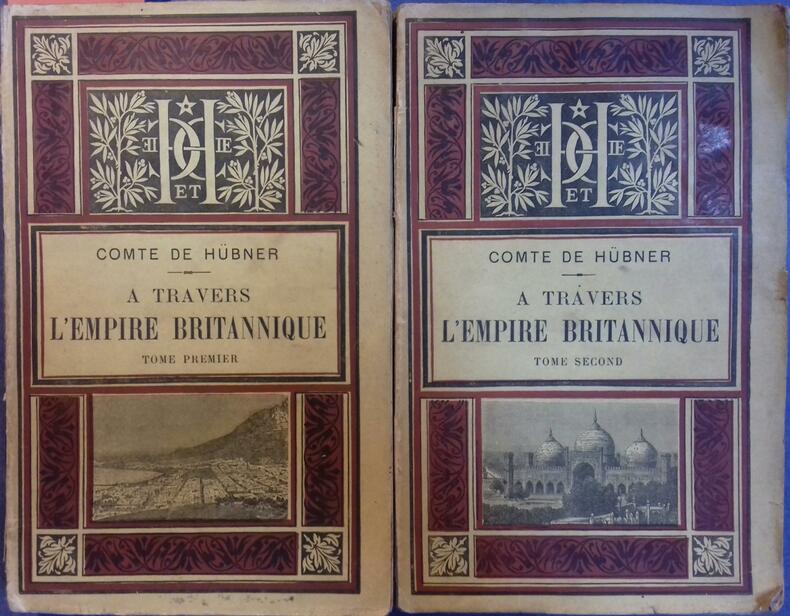
rif. 2390Paris, Hachette et Cie, 1889, deuxième édition, reliure demi-basane vert foncé, dos à 5 nerfs, titre et fleurons dorés, 12x18 cm , 498+485 pages, rousseurs, ouvrage contenant 49 gravures sur bois . (dos bruni au tome 1)
1889rif. 28983Couverture souple. 2 volumes brochés. 501 + 485 pages. Rousseurs. Couverture légèrement défraîchie. Manques au dos.
1890rif. 23999Paris Librairie Victor Palmé 1890 -in-8 demi-chagrin un volume, reliure demi-chagrin rouge in-octavo (binding half shagreen in-octavo), cartonnage éditeur à plaques spéciales Editeur bicolores (rouge, noir et or) pour le dos et les plats (editor hard-back percale with special covers editor for the spine and the cover), dos long (spine without raised bands) décoré "or" (gilt decoration), plats décorés noir, rouge et "or" (gilt decoration), percaline rouge aux plats, toutes tranches dorées (all edge smooth es gilt ), marque-page en tissu (bookmark in tissue), orné de trés nombreuses illustrations in et hors-texte en noir + une grande carte dépliante hors-texte en noir in-fine, XVI + 365 pages, 1890 Paris Librairie Victor Palmé Editeur,
1880rif. R320030712HACHETTE ET CIE. 1880. In-8. Cartonné. Etat d'usage, Coins frottés, Dos très frotté, Rousseurs. 224 pages illustrées de nombreuses gavures en noir in et hors texte - Frontispice (Carte) - coins et tranches frottés - Dos fané - Mors et coiffes abimés - Caronnage monochrome.. . . . Classification Dewey : 994-Australie
1880rif. 11962Paris Hachette 1880 in-8 demi-chagrin rouge, dos à nerfs, fleurons dorés, encadrement de listels à froid sur les plats [Rel. de l'époque], plaque de prix de la ville de Paris sur le premier plat
rif. BIB330600Adelaide: Friends of State Library of South Australia. Large octavo size 16x24cm approx. Very Good condition. Issued without a dustacket. Folding map. Edition limited to 500 copies. Blind-stamped cloth boards with gilt lettering on spine. Previous owner had habit of turning down top corner of pages and some crease marks remain. Australiana Facsimile Editions No. 208. Standard edition. Robust professional packaging and tracking provided for all parcels. xiv396pages. . Very Good. Facsimile. Hardback. Friends of State Library of South Australia hardcover
rif. 95963The archive comprises nearly 440 pieces each approximately 320 × 510 mm or larger many from the later 1970s when Mitchell was at the height of his powers. A unique commentary on the personalities and events of the times: when Hawke Fraser and Dunstan were in power Nixon went to China the war in Vietnam ended and the first wave of 'boat people' began to arrive here many Indigenous Australians were in a parlous state cricket and cricketers still caused grief . Approximately 440 items. unknown
1973Book shows sunning to covers and spine and light shelf wear. Binding is solid and square, covers have sharp corners, exterior shows no other blemishes, text/interior is clean and free of marking of any kind. Previous owner's flower mark on half title page, along with small stain. 499 pages in 79 chapters; no indication of any other "book." An "alchemical novel."
1895(Codice VI/0244) In 8° 378 pp. Worn/soiled hardcover, spine missing. Front folded map (expertly tape-repaired). Internally very good. ~~~ SPEDIZIONE IN ITALIA SEMPRE TRACCIATA
1984rif. 322215Adelaide: Wakefield Press and the South Australian Cricket Association 1984. First Edition. . Leather. Fine. Copy #32 of special edition. 262pp ills listIndex This edition was limited to 299 to commemmorate Bradman's highest score at the Oval. Sumptuously bound ribbon marker. Size: 4to Wakefield Press and the South Australian Cricket Association hardcover
1994No marks or inscriptions. No creasing to covers. A very clean very tight copy with bright unmarked boards, very minor traces of storage and no bumping to corners. 57pp. A mainly illustrated tribute to the beauty and diversity of the Australian city of Sydney.
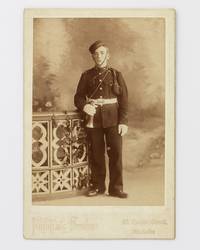
1890rif. 128029Adelaide: Fruhling Studio 62 Rundle Street 1890. Very Good. Adelaide Fruhling Studio 62 Rundle Street mid- to late-1890s. A vintage gelatin silver photograph 134 × 94 mm mounted on the original cabinet card 165 × 110 mm with the photographer's details blindstamped in the bottom margin. Both the photograph and mount are in excellent condition. Contemporary business directories indicate that Fruhling Studio commenced operating from 62 Rundle Street in 1895 'Portrait and Enlarging Co. Fruhling & Co.'; this 'continued until 1913 when the address was changed to 62A Rundle Street. From 1918 to 1927 the address was given as 103A Rundle Street. Although listed as Fruhling & Co. in directories the name Fruhling Studios sic was usually printed on their photographs' Photohistory SA website. The particulars of the uniform elude us but the following information about the parlous state of military affairs in colonial SA at the time this photograph was taken provides some context. These comments come from an unpublished manuscript by Geoffrey H. Manning 'The Russians are Coming - The Defence of Colonial South Australia' now in the State Library of SA. 'By May of 1896 it was finally recognised that the basis upon which the military forces of the Australian colonies were organised was unsatisfactory and it was to cure defects and place matters on a more effective footing that a Consolidating and Amending Act had been passed in the previous session. In the dying days of Parliament its progress through all stages was pushed on and the headlong speed with which it was carried through the two chambers necessarily militated against the critical examination of its many clauses.The fact that the majority of the sections were merely repetitions of those in existing Acts was obviously no justification for dealing with the Bill in such a spasmodic manner. After the Act was assented to more than four months were allowed to pass without anything being done to bring the members of the old force together with a view to acquainting them with the conditions under which they were to be asked to enroll and this policy of procrastination was observed to the last. Enrolment commenced in August but in the face of the many other allurements held out to the youth of South Australia in the form of cricket football baseball lacrosse and - most attractive of all - cycling it was not to be wondered that the process of recruiting was painfully slow; by mid-February 1897 there had been 611 enrollments. With this change came the end of the colourful uniforms that marked the early military history of the colony. The scarlet tunics white-striped blue trousers and white helmets that had followed the grey uniform of the 1880s - the "Destitutes" they called the men in these uniforms - were replaced by khaki with maroon facings and a felt hat. The first parade of the new military forces took place on 3 October 1896 when "The South Australian Army" presented a rather nondescript appearance owing to the fact of so many recruits being in the ranks and yet unprovided with uniforms and also a proportion of men in the old force whose uniforms were worn out and too shabby for wear. The public manifested little interest in the proceedings - it was race-day - and moreover the band was not expressively in evidence. A few people probably the mothers and fathers the sisters and the aunts of the new recruits attended'. Fruhling Studio, 62 Rundle Street unknown
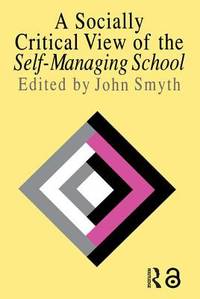
1993rif. x-0750702133Falmer Pr 1993. Paperback. New. 1st edition. 268 pages. 9.25x6.25x0.50 inches. Falmer Pr paperback
rif. 3156235like new. unknown
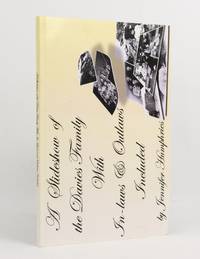
2008rif. 141820Fairview Park: The Author 2008. First Edition. Paperback. Very Good. Fairview Park The Author 2008. Oblong foolscap folio 149 pages with several family trees and numerous illustrations from photographs. Colour-pictorial card covers lightly scored and marked; an excellent copy. The Author] paperback
1962rif. 137491Adelaide: Public Library of South Australia 1962. Hardcover. Near fine. Adelaide Public Library of South Australia 1962 facsimile edition/ 1836. Octavo ii 60 pages. Synthetic brown cloth lettered in gilt on the spine a little rubbed and unevenly sunned; endpapers renewed; a near-fine copy. Peade SA29: one of only 37 copies probably making it as rare as the original. This is one of the earliest volumes in the ground-breaking first series of facsimile editions produced by the Public later State Library of SA and one of the few produced by the Xerographic process from a microfilmed copy with the text bound from fan-fold paper printed on one side only uncut and unopened along the leading edges. Public Library of South Australia hardcover