[Canterbury Association, New Zealand]Biblio.com

734 resultados
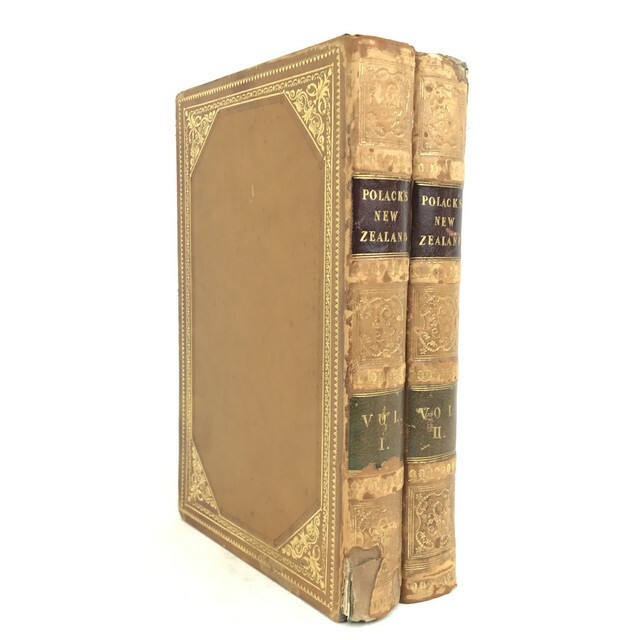
1850ref. 7175London: John W. Parker. Good with no dust jacket. 1850. First Edition. Hardcover. Canterbury Papers numbers 1-6: 184 pages 2 maps on one folding sheet without original wrappers and without the 8 pages of advertisements found at the beginning of Parts 1-2. References: Bagnall 895: "The 'Canterbury Papers' were published at intervals between February 1850 and May 1852. The 12 numbers were issued in nine parts of which three were double numbers; paging was continuous."; Johnstone "Canterbury Books 1847-1955" pp.3-4: "'Canterbury Papers' is the most important publication published in the early days of the Province. Accounts of meetings despatches various schemes for the settlemen and for funds practical advice and a general desciption of the Canterbury site." Bound with two other pamphlets: 1. "The Accounts of the Canterbury Association: with Explanatory Remarks in A Letter to Lord Lyttelton" by H. Selfe. London: John W. Parker and Son 1854. 81 1 pages. Signature of "Wodehouse" on title page. 2. "Report to the Canterbury Association from the Committee of Management". No publisher information. 42 pages. Half-leather binding binding probably late 19th C. Binding rubbed and worn with some loss and abrasions to leather along joints and at corners. Page dimensions: 208 x 132mm. Spine title: "Pamplets / 14". A loosely included typed note records this volume as being Volume 14 of Lord Wodehouse's pamphlets. Wodehouse was on the committee of the Canterbury Association "a Church of England corporation which founded the Settlement at Canterbury N.Z. in 1850." ; 8vo . John W. Parker hardcover
1983367 pages. Generously illustrated with colour and black and white photos. Endpapers attractively illustrated with logos of aerial spraying companies. "Tells for the first time the remarkable story of aerial topdressing in New Zealand. It begins with Len Daniell, who tried to interest the Government in providing an aircraft for trials in 1926, and ends with an industry poised on the brink of change. Explains how aircraft and aviators flew out onto the farm and fertilised vast areas of unproductive land from the air, an achievement unparalleled in modern agriculture, and significant in the history of world aviation." - dust jacket. Book unmarked with average wear. Binding tight. Somewhat above-average wear to dust jacket which is now preserved in archival-grade brodart. A sound copy of this fascinating and informative history. Book
1922Abundant black and white illustrations and reproductions of photos. Features: The Last Fight of the Great Green Eel - three-day battle with a Conger eel in Trinidad; De Rougemont Right After All! - Shortly after his passing, the incredible stories by Louis de Rougement of adventures with the wild blacks (aborigines) of Australia are proven true! - article with great photos; The Lure of the Jewel - The Forcing of the Duke of Brunswick's safe; Crossed Trails - A remarkable tale of linked lives; The Midnight Visitor - A grim tale of the famous North-West Mounted Police of Canada; Trapped in a Well - two men in Nebraska set out to deepen a well; The Moffat County Mystery - an odd tale from Colorado; A Film-Hunter on the Amazon - Part II - Probably the most adventurous expedition ever undertaken in the interest of film-making - article with interesting photos; A Christmas Hunt in East Africa - sometimes 'exiles' can have a good Christmas; A Double Escape a thrilling royal tiger hunt in India; A Man's Luck - Part V - the true story of a man who set out to build an Alaskan home for the girl of his dream but kept being jailed; The Accursed Lake - The strange story of David Burton and Charles Snisted in New Zealand; The Living Death - an explorer's grim story from the South American jungle; Anthropop - Apology; and more. pp. 8 [ads], [2] 268-351, 9-16 [ads]. Clean and unmarked with light wear. A quality vintage copy of this wonderful issue. Book
ref. 13980532Dunedin, N.Z.: Printed and published for the Board of Governors of the New Zealand institute by Fergusson & Mitchell, 1896-1900 gr. in-4 (32 x 26 cm), frontispice, page de titre (Maori art, by A. Hamilton. Published by the New Zealand institute, Wellington, N.Z., 1901) [reliées au début de Part V], 439-vi (general index)-(1)(Author's acknowledgements) pages, 65 planches hors texte, illustrations dans le texte. Reliure toile usagée, cachet de bibliothèque sur le contre-plat, très bon état intérieur. Edition originale comprenant les 5 parties publiées de 1896 à 1900, reliées par l'éditeur avec ajout d'un fontispice et d'une page de titre datée de 1901. Part IV est relié après Part V.
1853ref. 30600Paris Imprimerie Auguste Bry s.d. [1853] in-folio oblong (45 x 65 cm) en feuille, contrecollée sur carton rigide
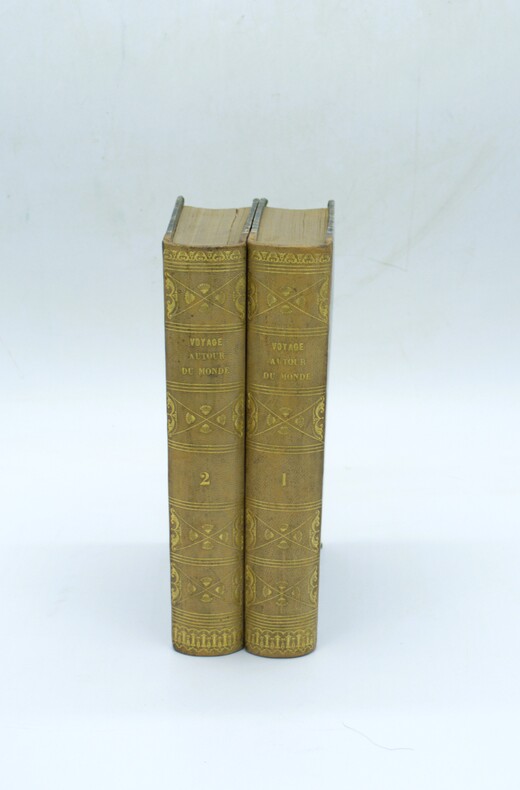
1839ref. PHO-2300Paris, Pourrat frères, 1839. 2 volumes in-8 (24x16cm), 2ff.-510pp.-1f. , 2ff.-547pp.-2ff. , illustré d’un frontispice et de 41 planches dont 19 en couleurs d’époque représentant des animaux, des poissons et des oiseaux, demi basane époque, dos lisse orné avec titre et tomaison, étiquette de bibliothèque, 2 feuillets détachés, quelques rousseurs, dos insolé, petits frottements.
1848ref. 9299Paris, A. Frank, 1848. In-4 de [10]-326-[4] pages, demi-veau brun, dos lisse orné de filets et fleurons dorés et à froid, étiquette de titre verte. Mors fendus et frottés, dos légèrement frotté, quelques rousseurs.
ref. 13983511London: British Museum Press, 2020 in-4, 168 pages, 200 planches représentant 2335 objets. Bibliographie, index. Cartonné, jaquette, très bon état.
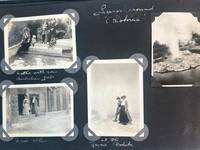
1918ref. 236571918. International travel and native documentation photograph album circa 1918 to 1930 documenting how an English speaking group encountered MÄori New Zealand Atlantic Africa Chile California and the Panama Canal during the golden age of long distance steamship travel and an era of Western imperial expansion across the globe. Photographs record the MÄori built environment at Rotorua the geothermal landscape surrounding PÅhutu geyser and Cape Verdean men working from small boats beside a passenger vessel at São Vicente. These images preserve the travelers' view of early twentieth century infrastructure cities Indigenous people labor and daily life. The album documents Indigenous communities rural life and economy and the foreign visitors who photographed and captioned them. Photograph album of approximately 220 silver gelatin photographs in various small formats New Zealand Britain Atlantic Africa South America California and Panama circa 1918 to 1930. The Rotorua sequence includes two travelers standing before a carved MÄori whare women beside a thermal pool and visitors at PÅhutu geyser recording architecture and geothermal land as parts of the tourist economy. The photographs preserve MÄori visual culture through the carved meeting house and its ornament but the captions remain those of visitors and do not identify the house carvers guides or community represented. A photograph captioned "Divers at St Vincent's off the coast of Africa" shows several small boats clustered around the travelers' ship with local men rowing diving and working close to the hull. The scene records maritime labor at São Vicente in Cape Verde a major Atlantic coaling and provisioning port where local workers serviced foreign steamships and performed hazardous labor within an economy controlled by international shipping. Chilean pages show ox drawn traffic in Santiago streets in Valparaíso and Coquimbo and residents posed in urban settings while California photographs include San Juan Capistrano and San Diego's mission revival architecture. Other photographs show women and men on farms horse teams plowing fields harvesting machinery a steam powered chaff cutter railway assisted canal operations cargo handling passenger steamships and small boat traffic. The album belongs to the golden age of passenger travel when steamship companies expanded international routes and promoted distant ports Indigenous cultural sites engineering works and territories shaped by Western imperial power as components of an increasingly accessible international tourism. At Rotorua MÄori guides hosts performers and communities made tourism possible while government agencies regulated access presentation and revenue; the resulting photographs preserve MÄori presence and engagement while also recording the selective framework through which visitors encountered MÄori culture. At São Vicente the divers and boatmen appear as laboring figures their work framed as spectacle from the deck of a foreign vessel. Moderate wear to the album covers and binding with occasional fading silvering and surface abrasion to the photographs; several captions faint but legible. Overall in good condition. A visual record of how Indigenous architecture labor land and historical memory were encountered during the expansion of Western imperial commercial and transportation power. unknown
1918ref. 236571918. International travel and native documentation photograph album circa 1918 to 1930 documenting how an English speaking group encountered MÄori New Zealand Atlantic Africa Chile California and the Panama Canal during the golden age of long distance steamship travel and an era of Western imperial expansion across the globe. Photographs record the MÄori built environment at Rotorua the geothermal landscape surrounding PÅhutu geyser and Cape Verdean men working from small boats beside a passenger vessel at São Vicente. These images preserve the travelers' view of early twentieth century infrastructure cities Indigenous people labor and daily life. The album documents Indigenous communities rural life and economy and the foreign visitors who photographed and captioned them. Photograph album of approximately 220 silver gelatin photographs in various small formats New Zealand Britain Atlantic Africa South America California and Panama circa 1918 to 1930. The Rotorua sequence includes two travelers standing before a carved MÄori whare women beside a thermal pool and visitors at PÅhutu geyser recording architecture and geothermal land as parts of the tourist economy. The photographs preserve MÄori visual culture through the carved meeting house and its ornament but the captions remain those of visitors and do not identify the house carvers guides or community represented. A photograph captioned "Divers at St Vincent's off the coast of Africa" shows several small boats clustered around the travelers' ship with local men rowing diving and working close to the hull. The scene records maritime labor at São Vicente in Cape Verde a major Atlantic coaling and provisioning port where local workers serviced foreign steamships and performed hazardous labor within an economy controlled by international shipping. Chilean pages show ox drawn traffic in Santiago streets in Valparaíso and Coquimbo and residents posed in urban settings while California photographs include San Juan Capistrano and San Diego's mission revival architecture. Other photographs show women and men on farms horse teams plowing fields harvesting machinery a steam powered chaff cutter railway assisted canal operations cargo handling passenger steamships and small boat traffic. The album belongs to the golden age of passenger travel when steamship companies expanded international routes and promoted distant ports Indigenous cultural sites engineering works and territories shaped by Western imperial power as components of an increasingly accessible international tourism. At Rotorua MÄori guides hosts performers and communities made tourism possible while government agencies regulated access presentation and revenue; the resulting photographs preserve MÄori presence and engagement while also recording the selective framework through which visitors encountered MÄori culture. At São Vicente the divers and boatmen appear as laboring figures their work framed as spectacle from the deck of a foreign vessel. Moderate wear to the album covers and binding with occasional fading silvering and surface abrasion to the photographs; several captions faint but legible. Overall in good condition. A visual record of how Indigenous architecture labor land and historical memory were encountered during the expansion of Western imperial commercial and transportation power. unknown books
ref. ORD-16636Écrit par Jacques COOK, Commandant de la Résolution; dans lequel on a inséré La Relation du Capitaine FURNEAUX, & celle de MM. FORSTER. Traduit de l'anglois. Paris. Hôtel de Thou. 1778. 6 volumes in-8 (130 x 198mm) pleine basane racinée, dos à 5 nerfs ornés, pièces de titre et de tomaison fauves, gardes peignées, tranches marbrées, 2ff., LII, 496, 2ff., 516, 2ff. 500, 2ff., 499, 2ff., 423 et 2ff., 367, (1) pages. Manque de papier à une page de garde du tome IV dont la coiffe de tête est arasée, coins parfois émoussés, des rousseurs et petits défauts mais plutôt bel ensemble. Première édition parue la même année que l'édition in-4. Complet du texte, sans l'atlas.
1833ref. PHO-1342Paris (Imprimerie Royale) 1833/35. 4 vol. in-8°, 23,5 x 15,5 cms, reliés demi basane lisse rouge, dos ornés.Coiffes accidentées, cachets effacés 3ff-XLI-558pps; 6ff-481pps; 6ff-510pps; 6ff-480pps., pages de titre avec réparations (tome 3 et 4)
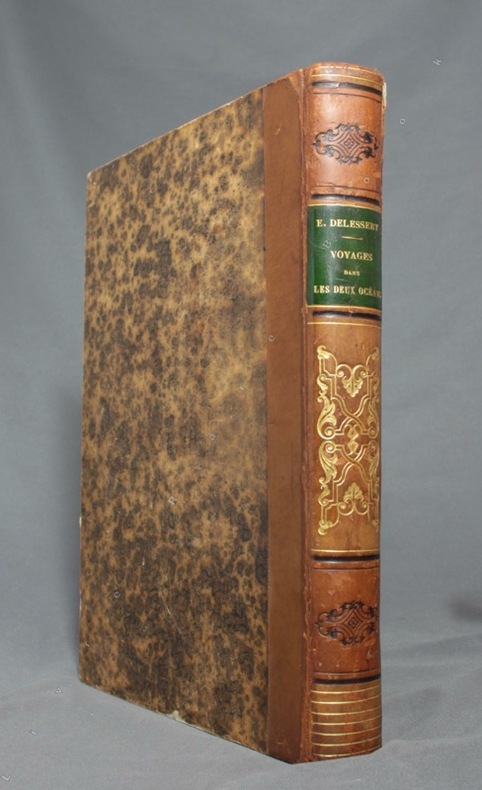
1838ref. PHO-1194London, Richard Bentley, 1838. 2 volumes in-8 (21 x 13 cm), veau fauve glacé (reliure de l'époque), dos lisse orné, pièces de titre et de tomaison en maroquin grenat et olive, dentelles dorées et triple filet à froid encadrant les plats, roulette dorée intérieure et sur les coupes, tranches peignées, xii-403-[1];vi-441-[1] pages (complet). Coins usés, charnières frottées et fendues, coiffes accidentées ,manque au dos avec épidermure .
2018Together 4 vols., 8vo., First Edition thus, with decorative titles, numerous coloured and monochrome illustrations, maps in the text and large folding coloured map in separate cloth case; pictorial cloth, backstrips lettered in white, green endpapers, a fine copy housed in publisher's board slip-case lettered in white. The set comprises: First Voyage 1768-1771; Second Voyage 1772-1775; Third Voyage 1776-1779. The chart was drawn by Lieutenant Henry Roberts in 1784 and updated to include new discoveries in 1794.
1772ref. PHO-1350Paris, de Hansy, 1774. 2 vol. in-8 de xlviii, 522 pp., (1) f., 1 carte dépliante; (4), 572, (4) pp. , plein veau marbré, dos à nerfs ornés avec tomaison et pièce de titre rouge , tr. Rouge (reliure de l'époque). Accroc au dos ,coiffes, mors et coins usagés, frottés, déchirure et réparation à la carte .
1860ref. 25848Paris Arthus Bertrand 1860 in-8 de 80 pp., br., couv. imprimée beige, rouss
1887ref. PHO-1969Rio de Janeiro, Lombaerts & Cie, 1887, grand in-4° (32x23cm), pleine percale époque, titre au dos, petits frottements aux mors, quelques rousseurs. Texte en portugais avec sa traduction française en regard, complet de ses illustrations sous serpentes.
1885ref. PHO-1499Paris, Gauthier-Villars, 1885, 2 volumes grands in-4, couverture éditeur, Introduction et Zoologie 576pp., Botanique 23pp., Géologie 180pp., Planches 32pp.-2ff. et son Atlas de 2ff. et 68 planches en lithographie, d'études géologiques et zoologiques (55 planches de zoologie sur fond crème et 13 planches de géologie dont 10 d'observations microscopiques de roches, en couleurs), dos cassé à l’atlas.
1879ref. 14861[Cherbourg] Imp. Ch. Syffert [1879] gr. in-8 en feuilles, qq. lég. rouss
1839ref. PHO-1319Paris, Pourrat frères, 1839. 2 volumes in-8 (220x150), demi-basane maroquinée à grain long fauve , 2ff.-510pp.-1f. , 2ff.-547pp.-2ff. , illustré d’un frontispice et de 36 planches dont 19 en couleurs d’époque représentant des animaux, des poissons et des oiseaux, frottements aux plats , coins usés, très peu de rousseurs .
1772ref. PHO-1925Paris, Saillant & Nyon, 1772, 2 volumes in-8 (200x130), relié plein veau marbré époque, dos à nerfs orné, pièce de titre et tomaison, tranches rouges 2ff. xliii , 336pp-2ff.453pp,1ff-1ff. , illustré de 3 planches et 20 cartes dépliantes ( sur 21, manque la carte n°3), 2 cartes détachées, déchirures et léger manque en marge à 3 cartes , coins et coupes usés, coiffes absentes tome 2, petit manque au plat, charnière fendillée tome 2.
1865ref. PHO-766London ,Longmans, Green & Co, 1865. Première édition. 8vo - viii, 487 pp avec deux chromo-lithographies dépliantes. 44 gravures sur bois N&B et 50 gravures coloriées à la main d'« objets d'histoire naturelle », c'est-à-dire. oiseaux, reptiles, poissons, coquillages et insectes, sous serpentes. Une carte dépliante colorée des îles des mers du Sud reliée avant l'index , relié pleine percale éditeur avec canoë traditionnel sur le plat ,dos lisse avec titre , auteur et éditeur , accident sur le plat , couverture légèrement frottée , mouillure claire en fin d’ouvrage.Ex-dono , de la bibliothèque de monsieur de Quatrefages biologiste, zoologiste et anthropologue français, puis offert à l’explorateur français ,Joseph Montaro
1774ref. PHO-1976Paris, Saillant et Nyon, Panckoucke, 1774. 4 volumes in-4, 2 ff., xviii, 1 ff., xxxii, 388 ; 3 ff., 536 ; 3 ff., 394, 1 ff.; 1 ff., viii, 367, demi veau et coins , dos lisse orné avec titre et tomaison ,tranches bleues, supra libris aux premiers plats ,cachets de bibliothèque, illustré de 43 planches et cartes (52), la plupart dépliantes, 5 planches détachées, quelques planches courtes en marges, mouillure sur une dizaine de feuille (tome 1) , petites rousseurs , plats ,coins et coupes frottés,
1839ref. PHO-1115Paris, Pourrat frères, 1839. 2 volumes in-8 (220x150), demi veau vert contemporain, dos lisse orné avec pièces de titre et auteur , tomaison rouges ,petits frottements aux plats , manque de papier p299 avec atteinte et réparation p301,rousseurs ,mouillures. Édition originale, illustrée d'un portrait de l'auteur et 38 planches gravées sur cuivre et sous serpentes, dont 18 finement coloriées représentant des animaux, des poissons et des oiseaux.
1848ref. 24537Paris A. Franck 1848 in-4 demi-chagrin vert, dos à nerfs, caissons de filets et fleurons dorés au dos, tranches mouchetées [Rel. de l'époque], qqs très lég. épidermures et rouss. pâles éparses