(Hawaii) [Dwight, Edwin Welles]Biblio.com

939 risultati
1819rif. 377917Elizabethtown NJ: Edson Hart 1819. Second edition. Frontispiece portrait. 104 32 33 10 10 pp. Five parts in one with sectional title pages. 12mo. Contemporary mottled sheep red morocco spine label. Joints rubbed and just starting. Light foxing throughout. Very good. Second edition. Frontispiece portrait. 104 32 33 10 10 pp. Five parts in one with sectional title pages. 12mo. ʻŌpūkahaʻia c.1792-1818 came from Hawaii to New Haven Connecticut in 1807 following the death of his parents. There he met Dwight and was eventually housed and tutored by relative Timothy Dwight IV then president at Yale College and a founder of the American Board of Commissioners for Foreign Missions. Today ʻŌpūkahaʻia is best known as one of the first Hawaiians to convert to Christianity and an early translator of the Hawaiian language into English. His desire to become a missionary was among the inspirations for the opening of the Foreign Mission School in Cornwall Connecticut which published this posthumous biography. It was issued with a sermon delivered at ʻŌpūkahaʻia's funeral by Lyan Beecher and three other pieces related to the founding of the Foreign Mission School. Sabin 56429; Felcone 556 Edson Hart unknown
1819rif. 377917Elizabethtown NJ: Edson Hart 1819. Second edition. Frontispiece portrait. 104 32 33 10 10 pp. Five parts in one with sectional title pages. 12mo. Contemporary mottled sheep red morocco spine label. Joints rubbed and just starting. Light foxing throughout. Very good. Second edition. Frontispiece portrait. 104 32 33 10 10 pp. Five parts in one with sectional title pages. 12mo. ʻŌpūkahaʻia c.1792-1818 came from Hawaii to New Haven Connecticut in 1807 following the death of his parents. There he met Dwight and was eventually housed and tutored by relative Timothy Dwight IV then president at Yale College and a founder of the American Board of Commissioners for Foreign Missions. Today ʻŌpūkahaʻia is best known as one of the first Hawaiians to convert to Christianity and an early translator of the Hawaiian language into English. His desire to become a missionary was among the inspirations for the opening of the Foreign Mission School in Cornwall Connecticut which published this posthumous biography. It was issued with a sermon delivered at ʻŌpūkahaʻia's funeral by Lyan Beecher and three other pieces related to the founding of the Foreign Mission School. Sabin 56429; Felcone 556 Edson Hart unknown books
1850rif. 36075Paris H. Lebrun s.d. [1850] 2 vol. in-8 demi-basane moutarde, dos à nerfs ornés de filets et caissons dorés, pièces de titre et de tomaison noires, tranches mouchetées [Rel. de l'époque], rousseurs
1839rif. PHO-1813Hortet et Ozanne, Paris 1839, 4 volumes en 2 tomes in-8, 400pp. et 423pp. et 399pp. et 451pp., relié demi basane aubergine, dos à faux nerfs avec auteur, titre et tomaison, illustré de 60 gravures, petit dictionnaire du dialecte des différents peuples rencontrés à la fin du quatrième tome, frottements aux plats, peu de rousseurs.
1896Oblong quarto in red cloth with ornamental gilt titling; [10], 239 pages frontispiece, sepia plates, portraits 16 x 25 cm Profusely illus with b&w photo reproductions. Hawaii -- History. Imperialism. Business History. Hawai'i.
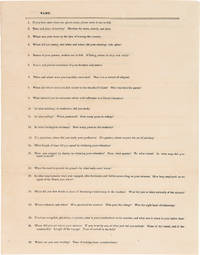
1830rif. 63884N.p.: American Board of Commissioners for Foreign Missions ca. 1830s. Original Questionnaire for Hawaiian Missionaries A questionnaire produced by the American Board of Commissioners for Foreign Missions ABCFM directed towards new missionaries to Hawaii. The Board was founded in 1810 by graduates from Williams College and sent its first missionaries to British India in 1812. Beginning in the 1820s the ABCFM sent twelve companies of missionaries to Hawaii many of whom became instrumental figures in the public life of the Islands in the 19th century. The questionnaire consists of two conjugate leaves: the first contains twenty-two questions and is directed at the missionary. The second leaf is headed "For Females" and contains fifteen questions. In addition to personal questions such as nativity and educational background missionaries are asked to provide information about when and where they were converted licensed and ordained when they "first decided in favor of becoming a missionary to the heathen" what their role was in the mission "if not an evangelist physician or printer" and details of their vessel and journey. The questionnaire for females asks mostly similar questions but omits those related to preaching and ministry in favor of questions about children and family. This form is addressed to "J.S. Emerson & Mrs. Emerson." John S. and Ursula Sophia Newell Emerson arrived in Hawaii in 1832 as members of the fifth company of missionaries sent by the American Board of Commissioners for Foreign Missions. John S. Emerson 1800-67 was born in Chester New Hampshire and graduated from Dartmouth College and Andover Theological Seminary. In 1831 he married Ursula Sophia Newell 1806-88 of Nelson New Hampshire the couple soon thereafter embarking for Hawaii. Except for an interval at the Mission Seminary at Lahainaluna Maui in the 1840s and a return visit to the United States in 1860-61 the couple spent the rest of their lives in Waialua Oahu. There they founded a Protestant Church and established schools - John instructing the boys and Ursula instructing the girls in not only academics but in singing sewing and other domestic work. A remarkable survival from the early days of Christian missionary activity in Hawaii. Old folds lower fold just beginning to split. Very good plus. unknown
1830rif. 63884N.p.: American Board of Commissioners for Foreign Missions ca. 1830s. Original Questionnaire for Hawaiian Missionaries A questionnaire produced by the American Board of Commissioners for Foreign Missions ABCFM directed towards new missionaries to Hawaii. The Board was founded in 1810 by graduates from Williams College and sent its first missionaries to British India in 1812. Beginning in the 1820s the ABCFM sent twelve companies of missionaries to Hawaii many of whom became instrumental figures in the public life of the Islands in the 19th century. The questionnaire consists of two conjugate leaves: the first contains twenty-two questions and is directed at the missionary. The second leaf is headed "For Females" and contains fifteen questions. In addition to personal questions such as nativity and educational background missionaries are asked to provide information about when and where they were converted licensed and ordained when they "first decided in favor of becoming a missionary to the heathen" what their role was in the mission "if not an evangelist physician or printer" and details of their vessel and journey. The questionnaire for females asks mostly similar questions but omits those related to preaching and ministry in favor of questions about children and family. This form is addressed to "J.S. Emerson & Mrs. Emerson." John S. and Ursula Sophia Newell Emerson arrived in Hawaii in 1832 as members of the fifth company of missionaries sent by the American Board of Commissioners for Foreign Missions. John S. Emerson 1800-67 was born in Chester New Hampshire and graduated from Dartmouth College and Andover Theological Seminary. In 1831 he married Ursula Sophia Newell 1806-88 of Nelson New Hampshire the couple soon thereafter embarking for Hawaii. Except for an interval at the Mission Seminary at Lahainaluna Maui in the 1840s and a return visit to the United States in 1860-61 the couple spent the rest of their lives in Waialua Oahu. There they founded a Protestant Church and established schools - John instructing the boys and Ursula instructing the girls in not only academics but in singing sewing and other domestic work. A remarkable survival from the early days of Christian missionary activity in Hawaii. Old folds lower fold just beginning to split. Very good plus. unknown books
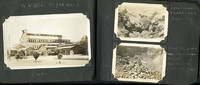
1925rif. 227841925. SS Resolute photo archive approximately 86 photographs dating to 1925 documenting a passenger voyage through the Hawaiian Islands and broader Pacific region during a period of expanding U.S. tourism and colonial presence. The material captures volcanic landscapes urban development agricultural activity and Native Hawaiian individuals providing visual evidence of both environmental features and social life. These images record the intersection of natural geography and emerging tourist infrastructure in Hawaii during the interwar period when the islands were increasingly integrated into trans-Pacific travel networks. Approximately 86 black-and-white and color photographs each measuring about 3.5 x 5 inches mounted on black album leaves with white ink captions identifying locations such as Honolulu Hilo Waimea Bay Kilauea Crater and the Royal Hawaiian Hotel. The archive includes multiple views of volcanic activity including lava flows associated with eruptions from 1868 1901 and 1924 as well as craters at Halemaumau and Kilauea steam vents and descending lava formations. Coastal landscapes and inland terrain of Oahu and the Big Island are represented alongside urban scenes in Honolulu including hotels streetscapes and institutional buildings such as the Moana Hotel and the Mormon Temple at Laie. Agricultural images show sugarcane cultivation and rural labor environments while market scenes and portraits depict local residents in daily settings. A group of photographs includes Duke Kahanamoku posed with a surfboard marked "DUKE" alongside additional images referencing Pacific locations such as Tutuila and Upolu indicating the voyage extended beyond Hawaii. Produced during the 1920s expansion of Pacific tourism these photographs document how Hawaii and surrounding islands were visually framed for travelers within a colonial and commercial context. The combination of landscape infrastructure and human subjects reflects both the promotion of the islands as a destination and the presence of established local communities and industries. The archive supports research into tourism history Pacific colonial networks environmental documentation and Native Hawaiian cultural representation. Mild toning and occasional rippling to prints with minimal edge wear; captions remain clear; overall very good condition. A comprehensive visual record of a trans-Pacific यातà¥à¤°à¤¾ and its documentation of Hawaii and neighboring islands in the early twentieth century. unknown
1925rif. 227841925. SS Resolute photo archive approximately 86 photographs dating to 1925 documenting a passenger voyage through the Hawaiian Islands and broader Pacific region during a period of expanding U.S. tourism and colonial presence. The material captures volcanic landscapes urban development agricultural activity and Native Hawaiian individuals providing visual evidence of both environmental features and social life. These images record the intersection of natural geography and emerging tourist infrastructure in Hawaii during the interwar period when the islands were increasingly integrated into trans-Pacific travel networks. Approximately 86 black-and-white and color photographs each measuring about 3.5 x 5 inches mounted on black album leaves with white ink captions identifying locations such as Honolulu Hilo Waimea Bay Kilauea Crater and the Royal Hawaiian Hotel. The archive includes multiple views of volcanic activity including lava flows associated with eruptions from 1868 1901 and 1924 as well as craters at Halemaumau and Kilauea steam vents and descending lava formations. Coastal landscapes and inland terrain of Oahu and the Big Island are represented alongside urban scenes in Honolulu including hotels streetscapes and institutional buildings such as the Moana Hotel and the Mormon Temple at Laie. Agricultural images show sugarcane cultivation and rural labor environments while market scenes and portraits depict local residents in daily settings. A group of photographs includes Duke Kahanamoku posed with a surfboard marked "DUKE" alongside additional images referencing Pacific locations such as Tutuila and Upolu indicating the voyage extended beyond Hawaii. Produced during the 1920s expansion of Pacific tourism these photographs document how Hawaii and surrounding islands were visually framed for travelers within a colonial and commercial context. The combination of landscape infrastructure and human subjects reflects both the promotion of the islands as a destination and the presence of established local communities and industries. The archive supports research into tourism history Pacific colonial networks environmental documentation and Native Hawaiian cultural representation. Mild toning and occasional rippling to prints with minimal edge wear; captions remain clear; overall very good condition. A comprehensive visual record of a trans-Pacific यातà¥à¤°à¤¾ and its documentation of Hawaii and neighboring islands in the early twentieth century. unknown books
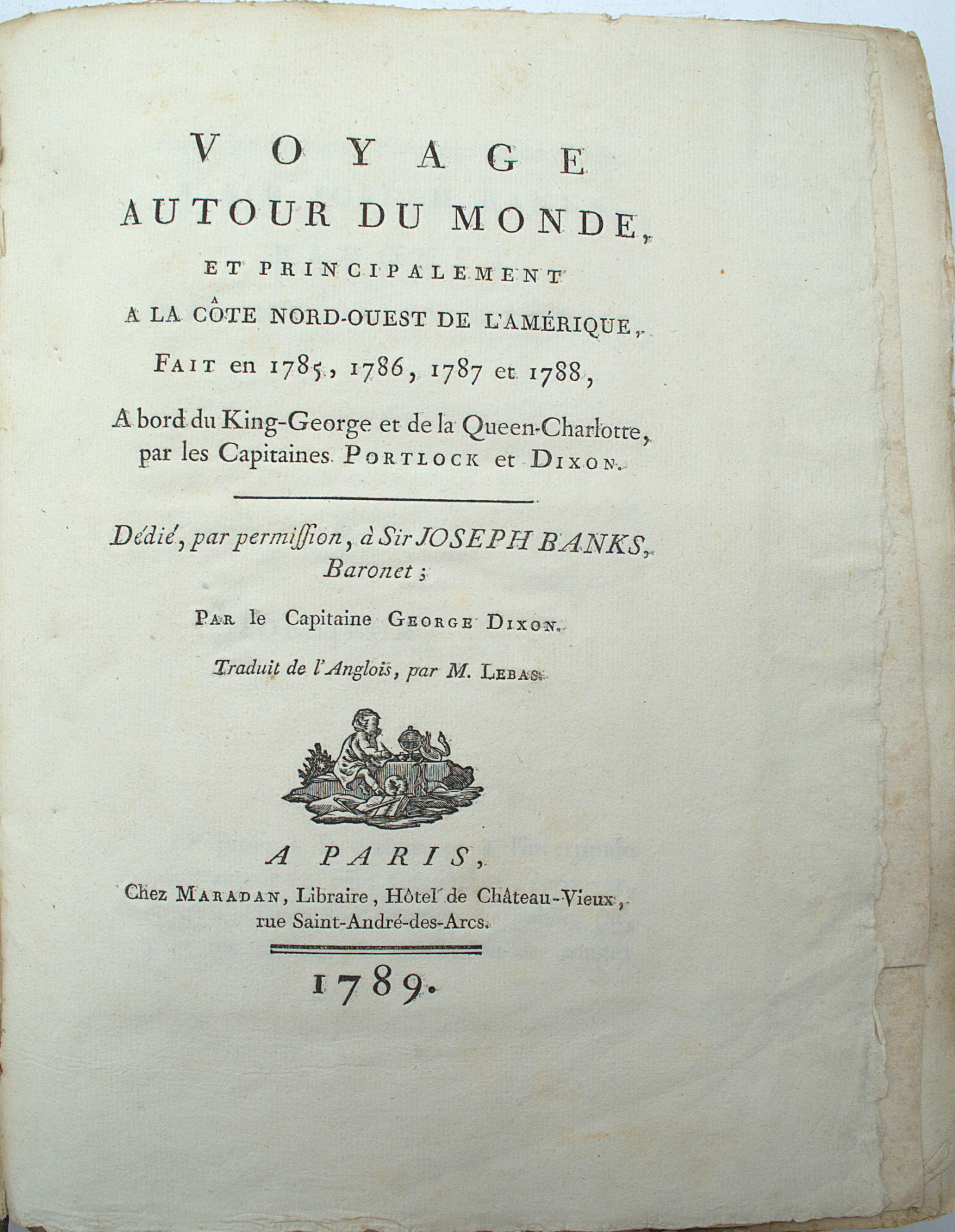
1789rif. PHO-2526Paris, Maradan, 1789, in-4 (28x21,5cm), 2ff.-499pp.-46pp.-1f., reliure d’attente, dos manquant, coins usés, quelques rousseurs.
1943rif. 203061943. Photographer unknown. World War II photo album 1943-1944. This album documents the daily lives of American service members and their families across multiple locations with a significant concentration of images in Hawaii shortly after the Attack on Pearl Harbor. The photographs record military personnel in uniform alongside wives girlfriends and social circles capturing leisure travel and domestic life during wartime. Scenes from Hawaii include beaches agricultural landscapes and local environments providing visual evidence of how stationed personnel experienced the Pacific setting beyond formal military activity. The material supports research into World War II social history military life outside combat and the intersection of service travel and civilian relationships during the war years. Photo album containing approximately 173 black-and-white silver gelatin photographs with 47 images loose ranging in size from 1.5 x 3 inches to 8 x 10 inches most approximately 4 x 5 inches. Album measures 9.25 x 11 inches with woven fabric covers and 62 pages. Many photographs are captioned with names ranks locations and dates. Images include men in Navy and Army uniforms posing with women in dresses and swimwear beach scenes and group outings. Hawaiian photographs depict sugar cane fields waterfalls coastal views and botanical landscapes as well as individuals hiking relaxing on beaches and interacting in social settings. Additional images show oxen plowing fields and local scenes including residents in huts and outrigger canoes. Mainland photographs include locations in Lake Michigan Florida Charlottesville Tucson and Philadelphia documenting travel and movement across the United States. Other scenes include a wedding portrait a sorority picnic and informal gatherings indicating the range of social environments captured within the album. These photographs align with broader patterns of wartime mobility and social life when military service relocated individuals across regions while maintaining connections to civilian routines and relationships. Hawaii functioned as a critical military and logistical center following the attack on Pearl Harbor while also serving as a site of recreation and daily life for stationed personnel. Personal photographic albums from this period provide primary evidence for the study of how individuals experienced wartime conditions beyond combat including leisure practices gender roles and cross-regional movement within the United States and Pacific territories. Minor wear to album covers and edges; photographs remain clear with strong contrast and legible captions. Overall very good condition. unknown
1943rif. 203061943. Photographer unknown. World War II photo album 1943-1944. This album documents the daily lives of American service members and their families across multiple locations with a significant concentration of images in Hawaii shortly after the Attack on Pearl Harbor. The photographs record military personnel in uniform alongside wives girlfriends and social circles capturing leisure travel and domestic life during wartime. Scenes from Hawaii include beaches agricultural landscapes and local environments providing visual evidence of how stationed personnel experienced the Pacific setting beyond formal military activity. The material supports research into World War II social history military life outside combat and the intersection of service travel and civilian relationships during the war years. Photo album containing approximately 173 black-and-white silver gelatin photographs with 47 images loose ranging in size from 1.5 x 3 inches to 8 x 10 inches most approximately 4 x 5 inches. Album measures 9.25 x 11 inches with woven fabric covers and 62 pages. Many photographs are captioned with names ranks locations and dates. Images include men in Navy and Army uniforms posing with women in dresses and swimwear beach scenes and group outings. Hawaiian photographs depict sugar cane fields waterfalls coastal views and botanical landscapes as well as individuals hiking relaxing on beaches and interacting in social settings. Additional images show oxen plowing fields and local scenes including residents in huts and outrigger canoes. Mainland photographs include locations in Lake Michigan Florida Charlottesville Tucson and Philadelphia documenting travel and movement across the United States. Other scenes include a wedding portrait a sorority picnic and informal gatherings indicating the range of social environments captured within the album. These photographs align with broader patterns of wartime mobility and social life when military service relocated individuals across regions while maintaining connections to civilian routines and relationships. Hawaii functioned as a critical military and logistical center following the attack on Pearl Harbor while also serving as a site of recreation and daily life for stationed personnel. Personal photographic albums from this period provide primary evidence for the study of how individuals experienced wartime conditions beyond combat including leisure practices gender roles and cross-regional movement within the United States and Pacific territories. Minor wear to album covers and edges; photographs remain clear with strong contrast and legible captions. Overall very good condition. unknown books
1847rif. 332697Honolulu 1847. 12pp. 12mo. Unbound. Toned and a bit brittle some splits. 12pp. 12mo. Lists the names of the women missionaries and their children with dates of birth. Includes two children born in January 1847 and none thereafter thus ascribing the date of this listing to 1847. Forbes 1669 unknown
1847rif. 332697Honolulu 1847. 12pp. 12mo. Unbound. Toned and a bit brittle some splits. 12pp. 12mo. Lists the names of the women missionaries and their children with dates of birth. Includes two children born in January 1847 and none thereafter thus ascribing the date of this listing to 1847. Forbes 1669 unknown books
1819rif. 332862Boston: Samuel T. Armstrong 1819. 40 xvi pp. 8vo. Disbound. Foxing. 40 xvi pp. 8vo. "A sermon preached at the ordination of two missionaries just prior to their departure as members of the first 'company' of missioanries . to the Hawaiian Islands" Forbes. Includes "Instructions from the Prudential Committee of the American Board of Commissioners for Foreign Missions to the Rev. Hiram Bingham and the Rev. Asa Thurston and others . Members of the Mission to the Sandwich Islands" in the rear. Shaw & Shoemaker 48291; Forbes 499; Sabin 33794 Samuel T. Armstrong unknown
1819rif. 332862Boston: Samuel T. Armstrong 1819. 40 xvi pp. 8vo. Disbound. Foxing. 40 xvi pp. 8vo. "A sermon preached at the ordination of two missionaries just prior to their departure as members of the first 'company' of missioanries . to the Hawaiian Islands" Forbes. Includes "Instructions from the Prudential Committee of the American Board of Commissioners for Foreign Missions to the Rev. Hiram Bingham and the Rev. Asa Thurston and others . Members of the Mission to the Sandwich Islands" in the rear. Shaw & Shoemaker 48291; Forbes 499; Sabin 33794 Samuel T. Armstrong unknown books
1935rif. 52777Various locations in and around Honolulu Oahu Hawaii. ca. 1935. American Military Life in Pre-War Hawaii An absorbing collection of photographs capturing American military life in Hawaii during the first half of the 20th century with the great majority of the photographs captioned in ink on the album pages. The unnamed photographer and compiler of the photographs apparently served at the Schofield Barracks in Honolulu as he includes several photographs of the base including the "Boxing Bowl." He also records other notable locations around Honolulu including the Waipahu Sugar Mill the Kilaeua Crater Japanese Temple the Mid-Pacific Railway wreck Kapiolani Park the Honolulu railway station Sand Island the naval destroyer Jeanne D'Arc Sampans Haleiwa Bay the Monoa Hotel the Waipahi Sugar Mill Diamondhead and Kahala Bay Waikiki Beach several shots of volcanoes and lava formations and more. He even includes a shot of the pack mule he presumably used in his wanderings. Hawaiian photographs are scarce in the market and continually more desirable especially with holographic notations like those present in this intriguing album. Seventy-eight mounted silver gelatin photographs either 3½ x 5¼ inches or 2½ x 3½ inches. Oblong octavo photograph album paper-covered boards string-bound. Front cover detached covers and spine chipped. Some album pages chipped but photographs remain largely untouched. Very good. hardcover
1935rif. 52777Various locations in and around Honolulu Oahu Hawaii. ca. 1935. American Military Life in Pre-War Hawaii An absorbing collection of photographs capturing American military life in Hawaii during the first half of the 20th century with the great majority of the photographs captioned in ink on the album pages. The unnamed photographer and compiler of the photographs apparently served at the Schofield Barracks in Honolulu as he includes several photographs of the base including the "Boxing Bowl." He also records other notable locations around Honolulu including the Waipahu Sugar Mill the Kilaeua Crater Japanese Temple the Mid-Pacific Railway wreck Kapiolani Park the Honolulu railway station Sand Island the naval destroyer Jeanne D'Arc Sampans Haleiwa Bay the Monoa Hotel the Waipahi Sugar Mill Diamondhead and Kahala Bay Waikiki Beach several shots of volcanoes and lava formations and more. He even includes a shot of the pack mule he presumably used in his wanderings. Hawaiian photographs are scarce in the market and continually more desirable especially with holographic notations like those present in this intriguing album. Seventy-eight mounted silver gelatin photographs either 3½ x 5¼ inches or 2½ x 3½ inches. Oblong octavo photograph album paper-covered boards string-bound. Front cover detached covers and spine chipped. Some album pages chipped but photographs remain largely untouched. Very good. hardcover books
1854rif. 329930Honolulu: Mission Press 1854. 47pp. 12mo. Original blue wrappers minor browning and chipping. 47pp. 12mo. Scarce pamphlet commemorating the inauguration of Edward G. Beckwith as president of Oahu College giving a complete account of the event. The work includes a history of Oahu College also called Punahou School which was founded in 1841 by missionaries. "The minutes of the Hawaiian Evangelical Association record the edition as 500 copies" Forbes. Forbes 2042 Mission Press unknown
1854rif. 329930Honolulu: Mission Press 1854. 47pp. 12mo. Original blue wrappers minor browning and chipping. 47pp. 12mo. Scarce pamphlet commemorating the inauguration of Edward G. Beckwith as president of Oahu College giving a complete account of the event. The work includes a history of Oahu College also called Punahou School which was founded in 1841 by missionaries. "The minutes of the Hawaiian Evangelical Association record the edition as 500 copies" Forbes. Forbes 2042 Mission Press unknown books
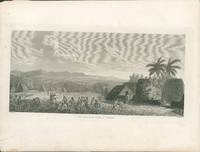
1785rif. 29433London 1785. Very good overall. Copper engraved images of Hawaii from the folio atlas of Cook's 3rd voyage Pacific Ocean exploration. The images illustrate the native Hawaiians at their village on the island now called Kauai plt. 35. The ethnographic items include featherwork carving and weapons embedded with shark teeth plt. 67. Both with very wide margin. Paper sizes 21.5 x 16.25". The Atooi print with light marginal dusting and a small closed tear ikn the margin lower left. unknown
1879rif. 28286S.l. [Cherbourg] Imprimerie Ch. Syffert s.d. [1879] in-8 en feuilles
1833rif. PHO-1342Paris (Imprimerie Royale) 1833/35. 4 vol. in-8°, 23,5 x 15,5 cms, reliés demi basane lisse rouge, dos ornés.Coiffes accidentées, cachets effacés 3ff-XLI-558pps; 6ff-481pps; 6ff-510pps; 6ff-480pps., pages de titre avec réparations (tome 3 et 4)
1839rif. 332695Honolulu 1839. 4pp. 8vo. Unbound. 4pp. 8vo. "Under the name of each member are listed the names and birth dates of her children . The printed minutes of the 1840 General Meeting record an edition of 250 copies" Forbes. The 1839 edition is scarce with only a single example at auction. Forbes 1180 unknown
1839rif. 332695Honolulu 1839. 4pp. 8vo. Unbound. 4pp. 8vo. "Under the name of each member are listed the names and birth dates of her children . The printed minutes of the 1840 General Meeting record an edition of 250 copies" Forbes. The 1839 edition is scarce with only a single example at auction. Forbes 1180 unknown books