Japanese-American in HawaiiBiblio.com
939 risultati
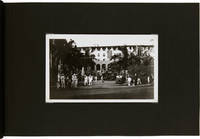
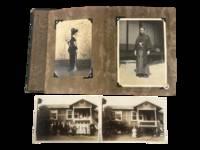
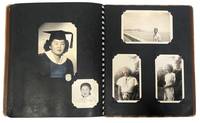
1946rif. 230681946. Japanese-American Women's Education Postwar Hawaiʻi identified Japanese-American university school girl's photo album. Oʻahu Territory of Hawaiʻi 1946-1950 spanning the years right after World War II. Approximately 260 silver gelatin photographs documenting the daily life friendships education and civic participation of a Japanese American young woman living on Oʻahu in the immediate postwar period. The photographs are mounted in a 9" x 11" woven album with photos cornered in on black board pages. Images range from small snapshot-format prints to larger horizontal photographs. Following Pearl Harbor Hawaii was initially considered a war zone and the Japanese Americans there were subject to heavy surveillance and civil rights violations until the war ended in 1945. This album ranges 1946 to circa 1950 with one loose photograph predating the album by approximately a decade likely depicting the compiler as a child. The compiler is identified by name in captions as Reiko who also went by "Rei" Reiko was a Japanese American college student and Pre-Med Club member residing on Oʻahu. This substantial and unusually well-captioned album offers a deeply personal record of Japanese American civilian life in Hawaiʻi following the end of World War II and the lifting of martial law. The first third of the album features extensive handwritten captions frequently identifying individuals locations and events while the latter portion contains fewer annotations but continues the visual narrative of family friendship and place. Reiko's life is documented across academic social and community spheres depicting college friendships Pre-Med Club activities leisure outings and participation in Laulima a Hawaiian community support organization emphasizing mutual aid and collective responsibility. Numerous images record friendships among young women posed confidently in dresses skirts slacks and swimsuits as well as traditional Japanese dress and Hawaiian dress and leis showcasing cross-cultural identity. Family life appears alongside repeated photographs of Lorraine Nakamuta age 2½ likely a relative shown in candid domestic and outdoor scenes some in western attire and a few photos playfully dancing in a straw hula skirt. The album also serves as a visual geographic survey of mid-century Hawaiʻi with identified sites including Halemaʻumaʻu Crater sugar cane fields irrigation infrastructure such as a wooden pipe transporting water Robert Louis Stevenson's hut beaches valleys and residential neighborhoods. Public and civic life figure prominently. Several sequences document an Hawaiian beauty pageant as well as floats marching bands and crowds celebrating the Philippine Islands Independence Day Parade July 4 1946 Honolulu situating Japanese American life within Hawaiʻi's broader multiethnic and postcolonial Pacific context. These images underscore the reemergence of public celebration and civic participation after wartime restriction while highlighting interethnic solidarity and shared urban space. Taken together the album constitutes a rare large-scale vernacular record of Japanese American womanhood education and community engagement during the transitional years between World War II and Hawaiʻi's statehood era. The album remains intact and structurally sound with thick board pages and photographs securely attached using original corner mounts. A few photos loose. Minor age-related wear is present including light scuffing to covers. Handwritten captions remain largely legible throughout. Overall very good condition. This album is an exceptional primary-source document for institutional collections offering sustained visual evidence of Japanese American youth culture women's education in the sciences and everyday resilience in postwar Hawaiʻi enriched by named individuals identified locations and detailed contemporaneous annotations. unknown
1946rif. 230681946. Japanese-American Women's Education Postwar Hawaiʻi identified Japanese-American university school girl's photo album. Oʻahu Territory of Hawaiʻi 1946-1950 spanning the years right after World War II. Approximately 260 silver gelatin photographs documenting the daily life friendships education and civic participation of a Japanese American young woman living on Oʻahu in the immediate postwar period. The photographs are mounted in a 9" x 11" woven album with photos cornered in on black board pages. Images range from small snapshot-format prints to larger horizontal photographs. Following Pearl Harbor Hawaii was initially considered a war zone and the Japanese Americans there were subject to heavy surveillance and civil rights violations until the war ended in 1945. This album ranges 1946 to circa 1950 with one loose photograph predating the album by approximately a decade likely depicting the compiler as a child. The compiler is identified by name in captions as Reiko who also went by "Rei" Reiko was a Japanese American college student and Pre-Med Club member residing on Oʻahu. This substantial and unusually well-captioned album offers a deeply personal record of Japanese American civilian life in Hawaiʻi following the end of World War II and the lifting of martial law. The first third of the album features extensive handwritten captions frequently identifying individuals locations and events while the latter portion contains fewer annotations but continues the visual narrative of family friendship and place. Reiko's life is documented across academic social and community spheres depicting college friendships Pre-Med Club activities leisure outings and participation in Laulima a Hawaiian community support organization emphasizing mutual aid and collective responsibility. Numerous images record friendships among young women posed confidently in dresses skirts slacks and swimsuits as well as traditional Japanese dress and Hawaiian dress and leis showcasing cross-cultural identity. Family life appears alongside repeated photographs of Lorraine Nakamuta age 2½ likely a relative shown in candid domestic and outdoor scenes some in western attire and a few photos playfully dancing in a straw hula skirt. The album also serves as a visual geographic survey of mid-century Hawaiʻi with identified sites including Halemaʻumaʻu Crater sugar cane fields irrigation infrastructure such as a wooden pipe transporting water Robert Louis Stevenson's hut beaches valleys and residential neighborhoods. Public and civic life figure prominently. Several sequences document an Hawaiian beauty pageant as well as floats marching bands and crowds celebrating the Philippine Islands Independence Day Parade July 4 1946 Honolulu situating Japanese American life within Hawaiʻi's broader multiethnic and postcolonial Pacific context. These images underscore the reemergence of public celebration and civic participation after wartime restriction while highlighting interethnic solidarity and shared urban space. Taken together the album constitutes a rare large-scale vernacular record of Japanese American womanhood education and community engagement during the transitional years between World War II and Hawaiʻi's statehood era. The album remains intact and structurally sound with thick board pages and photographs securely attached using original corner mounts. A few photos loose. Minor age-related wear is present including light scuffing to covers. Handwritten captions remain largely legible throughout. Overall very good condition. This album is an exceptional primary-source document for institutional collections offering sustained visual evidence of Japanese American youth culture women's education in the sciences and everyday resilience in postwar Hawaiʻi enriched by named individuals identified locations and detailed contemporaneous annotations. unknown books
1930rif. 62840Hawaii mostly Honolulu. ca. 1930s. Pre-WWII Hawaiian Photos and Postcards in a Traditional Hawaiian Cloth Binding An attractive album of original photographs and photographic postcards from 1930s Hawaii bound in traditional patterned Hawaiian tapa or kapa cloth. The photographs a handful of which are briefly captioned in manuscript on the verso depict a variety of scenes both natural and urban mostly in and around Honolulu. Some of the original photos include general street scenes of the town several photos of American servicemen at the "Army and Navy Y.M.C.A." Honolulu's famous palace-turned-courthouse Ali'iolani Hale and the most recent building for the city's longstanding and highly influential Central Union Church completed in 1924. The postcards mostly with the logo "KH Ltd." and often captioned in the negative depict various tourist attractions like Diamond Head and the Moanalua gardens and activities such as hula dancing surfing and shark fishing. One postcard captioned "H 152 China Clipper Ship – Pearl Harbor Oahu" shows an image of an amphibious plane resting in the harbor while American military planes fly overhead. By the 1930s the practice of making tapa fabric was beginning to wane; it was primarily seen as an emblem of traditional Hawaiian culture and so would have been an attractive choice for such a souvenir album. An appealing collection of pre-World War II Hawaiian images in an attractive tapa cloth binding. Oblong tapa cloth album tied with string. Light shelf wear three images loose in album. Photographs crisp and clean. Near fine. hardcover
1930rif. 62840Hawaii mostly Honolulu. ca. 1930s. Pre-WWII Hawaiian Photos and Postcards in a Traditional Hawaiian Cloth Binding An attractive album of original photographs and photographic postcards from 1930s Hawaii bound in traditional patterned Hawaiian tapa or kapa cloth. The photographs a handful of which are briefly captioned in manuscript on the verso depict a variety of scenes both natural and urban mostly in and around Honolulu. Some of the original photos include general street scenes of the town several photos of American servicemen at the "Army and Navy Y.M.C.A." Honolulu's famous palace-turned-courthouse Ali'iolani Hale and the most recent building for the city's longstanding and highly influential Central Union Church completed in 1924. The postcards mostly with the logo "KH Ltd." and often captioned in the negative depict various tourist attractions like Diamond Head and the Moanalua gardens and activities such as hula dancing surfing and shark fishing. One postcard captioned "H 152 China Clipper Ship – Pearl Harbor Oahu" shows an image of an amphibious plane resting in the harbor while American military planes fly overhead. By the 1930s the practice of making tapa fabric was beginning to wane; it was primarily seen as an emblem of traditional Hawaiian culture and so would have been an attractive choice for such a souvenir album. An appealing collection of pre-World War II Hawaiian images in an attractive tapa cloth binding. Oblong tapa cloth album tied with string. Light shelf wear three images loose in album. Photographs crisp and clean. Near fine. hardcover books
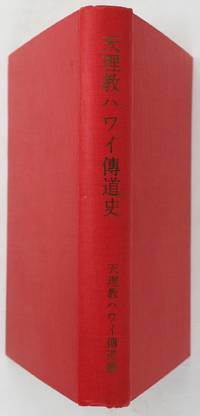
1957rif. 5046Honolulu: Tenrikyo Hawaii Mission 1957. Very good. 1632365pp. including 32pp. of photographically-illustrated plates errata slip laid in. Original orange cloth gilt spine titles housed on the original cardboard slipcase with black spine lettering. Very minor wear to boards internally clean. Small puncture and some wear to spine of slipcase. A rare history of the Tenrikyo Mission in Hawaii beginning with the founding of its first church in Honolulu in 1929. Tenrikyo was a new Japanese religion founded in the 19th century in Japan by Nakayama Miki. The present work also includes information on many other churches on the islands including the Hilo Church Kauai Church the Maui Church and more. The photographic plates contain portraits of some mission members views of churches scenes from church life and more. The text is mostly in Japanese save for a fifteen-page section printing a series of English-language lectures on the Tenrikyo religion by members of the Hawaiian mission. OCLC records just a single physical copy of this rare Japanese-American work at the University of Hawaii at Manoa. Tenrikyo Hawaii Mission unknown
1957rif. 5046Honolulu: Tenrikyo Hawaii Mission 1957. Very good. 1632365pp. including 32pp. of photographically-illustrated plates errata slip laid in. Original orange cloth gilt spine titles housed on the original cardboard slipcase with black spine lettering. Very minor wear to boards internally clean. Small puncture and some wear to spine of slipcase. A rare history of the Tenrikyo Mission in Hawaii beginning with the founding of its first church in Honolulu in 1929. Tenrikyo was a new Japanese religion founded in the 19th century in Japan by Nakayama Miki. The present work also includes information on many other churches on the islands including the Hilo Church Kauai Church the Maui Church and more. The photographic plates contain portraits of some mission members views of churches scenes from church life and more. The text is mostly in Japanese save for a fifteen-page section printing a series of English-language lectures on the Tenrikyo religion by members of the Hawaiian mission. OCLC records just a single physical copy of this rare Japanese-American work at the University of Hawaii at Manoa. Tenrikyo Hawaii Mission unknown books
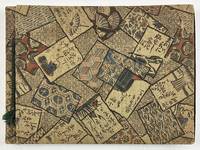
1928rif. 12860Various locations in Hawaii and Japan 1928. 12 leaves illustrated with 123 mounted sepia-toned photographs many captioned in the image area occasional manuscript captions on the album leaves. Oblong folio. Contemporary pictorial cloth illustrated with various Japanese motifs string tied. Minor wear to cloth. Internally clean. Very good. An attractive and informative vernacular photograph album memorializing the experiences of Protestant missionaries in the Pacific. Protestant missionaries came to Hawaii starting in the 1820s and eventually became quite socially and politically influential. The first Protestant missionaries arrived in Japan in the mid-1840s. They were relegated to treaty ports and prohibited from proselytizing but once these restrictions were lifted they were fairly successful with 300 churches and 34000 converts by 1889. Their main avenue was education and by the 1920s they were well established in this sector. The present album of photographs were taken by an American missionary in Hawaii and Japan in 1927 and 1928. It is not entirely clear whether the photographer did any missionary work in Hawaii or if it was just a stop on the way to Japan; the photos from Hawaii show Honolulu harbor from the deck of the President Madison the "Club House" and Diamond Head. The photographs from Japan are more clearly missionary. The photographer was involved in teaching in Kyoto; captions include "Kami Kyoku Bishamon Cho" listed as a theological school in the 1928 Japan Mission Year Book "Japanese Language School" "The Faculty" "Nihongo Faculty" and "St Agnes Ena -- Music." There are two St. Agneses in the Year Book both middle schools one in Tokyo and one in Kyoto. Two photos of an older Japanese man in a clerical collar captioned "Mr Hayakawa" suggest this is the St. Agnes in Kyoto as Mr. K. Hayakawa is listed as the head of that school. Other individuals listed in the Year Book include Sally Rembert Thora Johnson and "Maxine" who is probably Maxine Schannep with the ABCFM. Generally the school shots are exteriors of buildings and people posing outside of them; there are also shots of Christmas trees at St. Agnes the students of "Helen’s Kindergarten" in Koriyama girls in school uniform with deer at Nara Park and several of the nurse's home at St. Luke's Hospital in Tokyo. Other photos show life around Kyoto and other cities including Nikko and Fukui. Most of the men are in Western dress while the women and children wear kimono. Two photos of Buddhist monks included in the album were taken by Japanese photographer Kurokawa Suizan; these show a KomusÅ in a tengai hat playing the flute and a kasa-hatted monk on the steps of a building. Finally some uncaptioned shots show a procession taking place in front of an audience. Some in the procession carry flags a few are on horseback and a few carry plants on their heads and part of the procession carries a litter. Overall the album documents both religious education and everyday life in late 1920s Japan; of particular interest to historians of Protestant missionaries. unknown
1928rif. 12860Various locations in Hawaii and Japan 1928. 12 leaves illustrated with 123 mounted sepia-toned photographs many captioned in the image area occasional manuscript captions on the album leaves. Oblong folio. Contemporary pictorial cloth illustrated with various Japanese motifs string tied. Minor wear to cloth. Internally clean. Very good. An attractive and informative vernacular photograph album memorializing the experiences of Protestant missionaries in the Pacific. Protestant missionaries came to Hawaii starting in the 1820s and eventually became quite socially and politically influential. The first Protestant missionaries arrived in Japan in the mid-1840s. They were relegated to treaty ports and prohibited from proselytizing but once these restrictions were lifted they were fairly successful with 300 churches and 34000 converts by 1889. Their main avenue was education and by the 1920s they were well established in this sector. The present album of photographs were taken by an American missionary in Hawaii and Japan in 1927 and 1928. It is not entirely clear whether the photographer did any missionary work in Hawaii or if it was just a stop on the way to Japan; the photos from Hawaii show Honolulu harbor from the deck of the President Madison the "Club House" and Diamond Head. The photographs from Japan are more clearly missionary. The photographer was involved in teaching in Kyoto; captions include "Kami Kyoku Bishamon Cho" listed as a theological school in the 1928 Japan Mission Year Book "Japanese Language School" "The Faculty" "Nihongo Faculty" and "St Agnes Ena -- Music." There are two St. Agneses in the Year Book both middle schools one in Tokyo and one in Kyoto. Two photos of an older Japanese man in a clerical collar captioned "Mr Hayakawa" suggest this is the St. Agnes in Kyoto as Mr. K. Hayakawa is listed as the head of that school. Other individuals listed in the Year Book include Sally Rembert Thora Johnson and "Maxine" who is probably Maxine Schannep with the ABCFM. Generally the school shots are exteriors of buildings and people posing outside of them; there are also shots of Christmas trees at St. Agnes the students of "Helen’s Kindergarten" in Koriyama girls in school uniform with deer at Nara Park and several of the nurse's home at St. Luke's Hospital in Tokyo. Other photos show life around Kyoto and other cities including Nikko and Fukui. Most of the men are in Western dress while the women and children wear kimono. Two photos of Buddhist monks included in the album were taken by Japanese photographer Kurokawa Suizan; these show a KomusÅ in a tengai hat playing the flute and a kasa-hatted monk on the steps of a building. Finally some uncaptioned shots show a procession taking place in front of an audience. Some in the procession carry flags a few are on horseback and a few carry plants on their heads and part of the procession carries a litter. Overall the album documents both religious education and everyday life in late 1920s Japan; of particular interest to historians of Protestant missionaries. unknown books
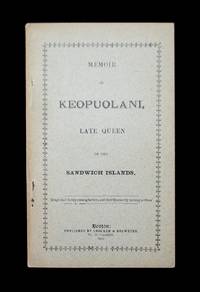
1825rif. 69601Boston: Crocker & Brewster 1825. HAWAII. RICHARDS William author. Memoir of Keopuolani. Late Queen of the Sandwich Islands. Boston: Crocker & Brewster n.d. reprint of 1825 edition. Early reprint of the 1825 first edition. Small sixteenmo pamphlet 7 x 4 1/4 inches; 177 x 108 mm. vii 8-55 pp. With two full page engraved plates in the text. Original full printed drab gray wrappers. Staple bound. Some light toning along spine and edges of wrapper. Staples causing minor rust stains. Still about fine. An early reprint of "the first biographical account of the first Christian convert in the Hawaiian Islands and of the highest-ranking of the Hawaiian ali'i of her time" Forbes. "Memoir of Keopuolani Late Queen of the Sandwich Islands is a book written by William Richards in 1825. It is a historical account of the life of Keopuolani one of the most important figures in the history of Hawaii. Keopuolani was the wife of Kamehameha I the first king of Hawaii and the mother of Kamehameha II and Kamehameha III. The book provides a detailed account of Keopuolani's life from her childhood to her death. It describes her upbringing her marriage to Kamehameha I and her role in the unification of the Hawaiian Islands. The book also discusses her conversion to Christianity and her efforts to spread the faith throughout Hawaii. Memoir of Keopuolani Late Queen of the Sandwich Islands is an important historical document that provides insight into the life and culture of Hawaii during the early 19th century." Booksamilion. Forbes 623 for first edition. HBS 69601. $1250. Crocker & Brewster unknown
1825rif. 69601Boston: Crocker & Brewster 1825. HAWAII. RICHARDS William author. Memoir of Keopuolani. Late Queen of the Sandwich Islands. Boston: Crocker & Brewster n.d. reprint of 1825 edition. Early reprint of the 1825 first edition. Small sixteenmo pamphlet 7 x 4 1/4 inches; 177 x 108 mm. vii 8-55 pp. With two full page engraved plates in the text. Original full printed drab gray wrappers. Staple bound. Some light toning along spine and edges of wrapper. Staples causing minor rust stains. Still about fine. An early reprint of "the first biographical account of the first Christian convert in the Hawaiian Islands and of the highest-ranking of the Hawaiian ali'i of her time" Forbes. "Memoir of Keopuolani Late Queen of the Sandwich Islands is a book written by William Richards in 1825. It is a historical account of the life of Keopuolani one of the most important figures in the history of Hawaii. Keopuolani was the wife of Kamehameha I the first king of Hawaii and the mother of Kamehameha II and Kamehameha III. The book provides a detailed account of Keopuolani's life from her childhood to her death. It describes her upbringing her marriage to Kamehameha I and her role in the unification of the Hawaiian Islands. The book also discusses her conversion to Christianity and her efforts to spread the faith throughout Hawaii. Memoir of Keopuolani Late Queen of the Sandwich Islands is an important historical document that provides insight into the life and culture of Hawaii during the early 19th century." Booksamilion. Forbes 623 for first edition. HBS 69601. $1250. Crocker & Brewster unknown books
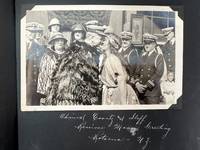
1925rif. 239961925. U.S. Navy Pacific fleet cruise photo album documenting naval service and Indigenous encounters during Admiral Robert E. Coontz's 1925 deployment to Australia and New Zealand. The inscription "Property of J. J. Prieskop. U.S.S. Seattle band" identifies its owner as a musician associated with the fleet flagship. Following major exercises in Hawaiian waters the fleet crossed the Pacific for a voyage combining naval training with public receptions and a demonstration of American maritime reach. www.history.navy.mil At Rotorua Te Arawa hosts welcomed the visiting officers at Ohinemutu where speeches and exchanges of gifts connected MÄori hospitality with hopes for closer British-American friendship. Photo album containing approximately 260 silver gelatin photographs ranging from 2.5 x 3 to 8.5 x 5.5 inches United States and Pacific locations chiefly circa 1925 mostly mounted with corner holders on black paper leaves with numerous contemporary handwritten captions. Coontz wears a feather cloak while exchanging a hongi the MÄori greeting involving the pressing together of noses beneath "Admiral Coontz and staff receives Maori greeting Rotorua - N.Z." Samoan performers carry weapons beneath "Samoan warriors in war dance" while other scenes record sailors visiting vendors and a canoe approaching the ship. Hawaiian women perform with musicians before a commercial backdrop beneath "Hula dancers in Lahaina - 6/25." A portrait printed "'Maori' South Sea Island Belle" presents a woman holding a patu its promotional wording distinguishing commercial souvenir portraiture from the formal Rotorua reception. Sailors handle coal beneath "Coaling ship" and "In coal barge"; additional naval scenes include USS Tennessee's 14-inch gun turrets and costumed equator-crossing festivities. A band portrait dated June 1925 at Lahaina Roads Maui bears handwritten identifications of individual musicians including Prieskop while supporting scenes include horses and a rodeo captioned Oak Grove Portland Oregon. Additional photographs document encounters with Samoan communities including ceremonial performers groups of local residents and American sailors interacting with vendors. One image bears the contemporary caption "Samoan Warriors in War dance" reflecting both the cultural performance depicted and the terminology employed by American observers. Another photograph captioned "Hula dancers in Lahaina - 6/25" records Hawaiian women performing with musicians before a commercial backdrop documenting the presentation of Indigenous culture to visiting naval personnel. The album is particularly valuable for its combination of naval history and Indigenous Pacific encounters. It records the broader cultural and diplomatic dimensions of American naval expansion including the ways MÄori Samoan and Hawaiian communities received interacted with and were represented by visiting American servicemen. Visible wear includes chipped album leaves vacant mounts scattered fading and staining and tears or edge losses to some photographs. Overall good condition. A substantial and historically engaging photographic record of the U.S. Navy's 1925 Pacific deployment distinguished by its identified images of Admiral Coontz and the USS Tennessee a MÄori diplomatic greeting at Rotorua Samoan ceremonial performances Hawaiian hula dancers and named naval musicians-documenting both American maritime power and its encounters with Indigenous Pacific cultures during the interwar era. unknown
1925rif. 239961925. U.S. Navy Pacific fleet cruise photo album documenting naval service and Indigenous encounters during Admiral Robert E. Coontz's 1925 deployment to Australia and New Zealand. The inscription "Property of J. J. Prieskop. U.S.S. Seattle band" identifies its owner as a musician associated with the fleet flagship. Following major exercises in Hawaiian waters the fleet crossed the Pacific for a voyage combining naval training with public receptions and a demonstration of American maritime reach. www.history.navy.mil At Rotorua Te Arawa hosts welcomed the visiting officers at Ohinemutu where speeches and exchanges of gifts connected MÄori hospitality with hopes for closer British-American friendship. Photo album containing approximately 260 silver gelatin photographs ranging from 2.5 x 3 to 8.5 x 5.5 inches United States and Pacific locations chiefly circa 1925 mostly mounted with corner holders on black paper leaves with numerous contemporary handwritten captions. Coontz wears a feather cloak while exchanging a hongi the MÄori greeting involving the pressing together of noses beneath "Admiral Coontz and staff receives Maori greeting Rotorua - N.Z." Samoan performers carry weapons beneath "Samoan warriors in war dance" while other scenes record sailors visiting vendors and a canoe approaching the ship. Hawaiian women perform with musicians before a commercial backdrop beneath "Hula dancers in Lahaina - 6/25." A portrait printed "'Maori' South Sea Island Belle" presents a woman holding a patu its promotional wording distinguishing commercial souvenir portraiture from the formal Rotorua reception. Sailors handle coal beneath "Coaling ship" and "In coal barge"; additional naval scenes include USS Tennessee's 14-inch gun turrets and costumed equator-crossing festivities. A band portrait dated June 1925 at Lahaina Roads Maui bears handwritten identifications of individual musicians including Prieskop while supporting scenes include horses and a rodeo captioned Oak Grove Portland Oregon. Additional photographs document encounters with Samoan communities including ceremonial performers groups of local residents and American sailors interacting with vendors. One image bears the contemporary caption "Samoan Warriors in War dance" reflecting both the cultural performance depicted and the terminology employed by American observers. Another photograph captioned "Hula dancers in Lahaina - 6/25" records Hawaiian women performing with musicians before a commercial backdrop documenting the presentation of Indigenous culture to visiting naval personnel. The album is particularly valuable for its combination of naval history and Indigenous Pacific encounters. It records the broader cultural and diplomatic dimensions of American naval expansion including the ways MÄori Samoan and Hawaiian communities received interacted with and were represented by visiting American servicemen. Visible wear includes chipped album leaves vacant mounts scattered fading and staining and tears or edge losses to some photographs. Overall good condition. A substantial and historically engaging photographic record of the U.S. Navy's 1925 Pacific deployment distinguished by its identified images of Admiral Coontz and the USS Tennessee a MÄori diplomatic greeting at Rotorua Samoan ceremonial performances Hawaiian hula dancers and named naval musicians-documenting both American maritime power and its encounters with Indigenous Pacific cultures during the interwar era. unknown books
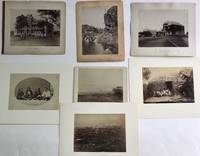
rif. 507021 A group of four Hawaiians three women and a man eating poi sitting cross legged behind bowls in a studio setting. Oval photograph 5 1/4 x 7 1/8 inches inset on photo paper 6 1/2 x 9 inches mounted on a large board. Dated in pencil on verso "circa 1860-70." 2 Hawaiian Hotel Honolulu manuscript caption title below image. Mounted photograph 7 x 9 inches on stiff photo album leaf. Noted below image on mount in pencil "Dickson 1875." 3 Palace Honolulu manuscript caption title below image. Mounted photograph 6 7/8 x 9 1/8inches on stiff photo album leaf recto of photograph 2 above. Noted below image on mount in pencil "About 1883 Front." 4 Scene of sailing ship at anchor in Honolulu Harbor with two small native dugout canoes with outriggers on shore in fore ground ca. 1880. Mounted photograph 6 1/8 x 8 1/8 inches on thick card stock. 5 Eating Poi A group of six Hawaiians four women and two men sitting in front of a grass house before their bowls ca. 1880 by "Severin phot." Mounted photograph 6 1/2 x 9 1/4 inches on thick card stock. 6 Honolulu & Harbor from Punch Bowl ca. 1885 manuscript pencil title from verso. Mounted photograph 6 1/2 x 9 1/8 inches on thick card stock. Bird's-eye view. 7 On Kamehameha Campus manuscript title on mount below image. Mounted photograph 7 x 9 1/4 inches on thick card stock. Pencil note on verso: "The first part of the Bishop Museum on the right; bldg. On left is Kamehameha School for boys now part of the museum." 8 Punch Bowl Honolulu manuscript title in upper right corner of image. Early 20th century mounted photograph 5 3/4 x 8 3/8 inches mounted on verso of a tick photograph album leaf with: 9 Path to Kilauea Extinct Crater 4 Miles Across Kilauea in Here with arrow pointing to middle of photograph manuscript title in upper right corner of image. Early 20th century mounted photograph 5 1/8 x 8 1/2 inches mounted on one side of a photograph album leaf with 8 above. 10 Kapena Falls near Honolulu manuscript title on mount below image. Early 20th century photograph mounted on the verso of the photograph album leaf with 8 and 9 above 9 x 6 1/8 inches picturing a diver on the edge of a cliff over the pool into which the waterfall drops. unknown
rif. 507021 A group of four Hawaiians three women and a man eating poi sitting cross legged behind bowls in a studio setting. Oval photograph 5 1/4 x 7 1/8 inches inset on photo paper 6 1/2 x 9 inches mounted on a large board. Dated in pencil on verso "circa 1860-70." 2 Hawaiian Hotel Honolulu manuscript caption title below image. Mounted photograph 7 x 9 inches on stiff photo album leaf. Noted below image on mount in pencil "Dickson 1875." 3 Palace Honolulu manuscript caption title below image. Mounted photograph 6 7/8 x 9 1/8inches on stiff photo album leaf recto of photograph 2 above. Noted below image on mount in pencil "About 1883 Front." 4 Scene of sailing ship at anchor in Honolulu Harbor with two small native dugout canoes with outriggers on shore in fore ground ca. 1880. Mounted photograph 6 1/8 x 8 1/8 inches on thick card stock. 5 Eating Poi A group of six Hawaiians four women and two men sitting in front of a grass house before their bowls ca. 1880 by "Severin phot." Mounted photograph 6 1/2 x 9 1/4 inches on thick card stock. 6 Honolulu & Harbor from Punch Bowl ca. 1885 manuscript pencil title from verso. Mounted photograph 6 1/2 x 9 1/8 inches on thick card stock. Bird's-eye view. 7 On Kamehameha Campus manuscript title on mount below image. Mounted photograph 7 x 9 1/4 inches on thick card stock. Pencil note on verso: "The first part of the Bishop Museum on the right; bldg. On left is Kamehameha School for boys now part of the museum." 8 Punch Bowl Honolulu manuscript title in upper right corner of image. Early 20th century mounted photograph 5 3/4 x 8 3/8 inches mounted on verso of a tick photograph album leaf with: 9 Path to Kilauea Extinct Crater 4 Miles Across Kilauea in Here with arrow pointing to middle of photograph manuscript title in upper right corner of image. Early 20th century mounted photograph 5 1/8 x 8 1/2 inches mounted on one side of a photograph album leaf with 8 above. 10 Kapena Falls near Honolulu manuscript title on mount below image. Early 20th century photograph mounted on the verso of the photograph album leaf with 8 and 9 above 9 x 6 1/8 inches picturing a diver on the edge of a cliff over the pool into which the waterfall drops. unknown books
1930rif. 227421930. Japanese-American Hawaii Japanese American military family photograph album 1930s documenting everyday life of a Nisei household in interwar Hawaii and tracing the transpacific connections linking Japanese American communities with Japan and Japanese occupied Manchuria. The photographs record family relationships social gatherings military friendships and overseas travel at a time when second generation Japanese Americans were negotiating identity within both American and Japanese spheres of influence. Handwritten captions written in the first person suggest the compiler was a Nisei man with associations to the United States Army referring to relatives and companions as "My father" "My sis Chiyo" and identifying a group of men in a tropical field as "China Souza Manuel myself Choy" further captioned "Army Buddies." During the 1930s Japanese Americans faced significant barriers to military advancement on the mainland United States yet Hawaii's National Guard accepted some Nisei soldiers prior to the Second World War due in part to the islands' large Japanese population. The album therefore documents a rare prewar moment when Japanese American military participation and family life intersected within the broader social landscape of Hawaii. Photo album compiled during the 1930s containing approximately 103 original silver gelatin photographs mounted to brown paper leaves and annotated in ink identifying individuals and locations. Bound in green pebbled boards titled "Photo Album" in gilt on the cover. Each photo measures approximately 2.5 x 3.5 inches to 5 x 7 inches. Album measures approximately 6 x 9.5 inches. The images depict family gatherings beach excursions on Oahu graduations and informal portraits of relatives and friends. Early pages include a graduation photograph of Edna Omatsu and portraits of family members including Uneiko members of the Takayama family Jeanette Ayako and a military dressed man identified as Rob Ogawa. One family group portrait shows individuals wearing leis with the caption "Honolulu - Hakada's Departure to Japan." Several photographs document military friendships and camp environments including the previously noted "Army Buddies" image. A small sequence captioned "Manchurian Trip" records the family's travels through northern China during the period of Japanese control following the establishment of the Japanese puppet state of Manchukuo in 1932 illustrating the mobility of Japanese diaspora families moving between Hawaii Japan and imperial territories across East Asia. Interwar Hawaii contained one of the largest Japanese populations outside Japan with Japanese immigrants and their American born children forming a substantial portion of the islands' workforce and social life during the 1930s. Album spine partially detached at front cover with wear to boards; photographs remain clean and crisp with mostly legible handwritten captions. Overall very good condition. Nisei communities balanced participation in American civic institutions with continuing family linguistic and cultural ties to Japan creating networks that stretched across the Pacific. This album documents those connections through scenes of leisure education military companionship and international travel shortly before the geopolitical tensions that culminated in the Pacific War. unknown
1930rif. 227421930. Japanese-American Hawaii Japanese American military family photograph album 1930s documenting everyday life of a Nisei household in interwar Hawaii and tracing the transpacific connections linking Japanese American communities with Japan and Japanese occupied Manchuria. The photographs record family relationships social gatherings military friendships and overseas travel at a time when second generation Japanese Americans were negotiating identity within both American and Japanese spheres of influence. Handwritten captions written in the first person suggest the compiler was a Nisei man with associations to the United States Army referring to relatives and companions as "My father" "My sis Chiyo" and identifying a group of men in a tropical field as "China Souza Manuel myself Choy" further captioned "Army Buddies." During the 1930s Japanese Americans faced significant barriers to military advancement on the mainland United States yet Hawaii's National Guard accepted some Nisei soldiers prior to the Second World War due in part to the islands' large Japanese population. The album therefore documents a rare prewar moment when Japanese American military participation and family life intersected within the broader social landscape of Hawaii. Photo album compiled during the 1930s containing approximately 103 original silver gelatin photographs mounted to brown paper leaves and annotated in ink identifying individuals and locations. Bound in green pebbled boards titled "Photo Album" in gilt on the cover. Each photo measures approximately 2.5 x 3.5 inches to 5 x 7 inches. Album measures approximately 6 x 9.5 inches. The images depict family gatherings beach excursions on Oahu graduations and informal portraits of relatives and friends. Early pages include a graduation photograph of Edna Omatsu and portraits of family members including Uneiko members of the Takayama family Jeanette Ayako and a military dressed man identified as Rob Ogawa. One family group portrait shows individuals wearing leis with the caption "Honolulu - Hakada's Departure to Japan." Several photographs document military friendships and camp environments including the previously noted "Army Buddies" image. A small sequence captioned "Manchurian Trip" records the family's travels through northern China during the period of Japanese control following the establishment of the Japanese puppet state of Manchukuo in 1932 illustrating the mobility of Japanese diaspora families moving between Hawaii Japan and imperial territories across East Asia. Interwar Hawaii contained one of the largest Japanese populations outside Japan with Japanese immigrants and their American born children forming a substantial portion of the islands' workforce and social life during the 1930s. Album spine partially detached at front cover with wear to boards; photographs remain clean and crisp with mostly legible handwritten captions. Overall very good condition. Nisei communities balanced participation in American civic institutions with continuing family linguistic and cultural ties to Japan creating networks that stretched across the Pacific. This album documents those connections through scenes of leisure education military companionship and international travel shortly before the geopolitical tensions that culminated in the Pacific War. unknown books
1774rif. PHO-1217Paris, Saillant et Nyon, Panckoucke, 1774. 4 volumes in-4, 2 ff., xviii, 1 ff., xxxii, 388; 3 ff., 536 ; 3 ff., 394, 1 ff.; 1 ff., viii, 367, veau marbré, triple filet doré, dos orné, pièces de titre et de tomaison , tome 1 , reliure différente (demi veau) , défauts de reliure ( charnières fendues , manques ,coins usés , coiffes absentes , etc),illustré de 47 planches et cartes (52), la plupart dépliantes , 1 planche déchirée avec manque , plusieurs déchirées sans manque , quelques feuillets détachés.
1832rif. PHO-1689Paris, J. Tastu, 1832, In-folio, demi-chagrin noir, dos orné de filets dorés à froid Atlas de botanique seul comprenant 76/80 pl. sur chine collé, liste des planches in fine, peu de défauts.
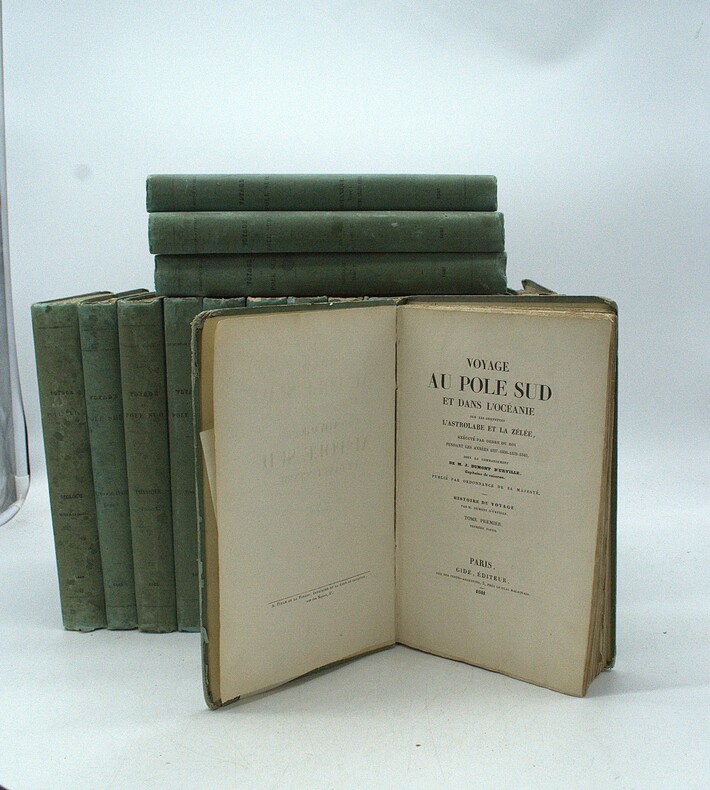
1841rif. PHO-1967Paris, Gide, 1841-1848, in-8, cartonnage éditeur, frottements, qlqs petits manques de matière, coins usés, qlqs coiffes usées, qlqs taches aux plats, T4 avec manque au dos et en haut du 1er plat 16 volumes de texte (sur 21) comprenant : Histoire du voyage, 1841-1846. 10 volumes en premier tirage, (1er tome, 1ère partie correspondant au 1er tome, 1er tome seconde partie correspondant au 2nd tome et 2nd tome, 1ère partie correspondant au tome 3), T2 mouillure en marge sur les derniers feuillets, T4 mouillure, T2 rousseurs, papier légèrement bruni aux tomes 3,4,5,6,7,8 et début tome 9. Zoologie, 1846, 2 volumes (sur 4, tome 1 et2) Botanique, 1845, 1 volume (sur 2), tome 1, plantes cellulaires, papier légèrement bruni Physique, 1842. 1 seul volume (en raison de la mort de Vincendon-Dumoulin) bien que d’autres annoncés, papier légèrement bruni Géologie, Minéralogie et Géographie physique du Voyage. 1848- 1 volume (sur 2, le second paru en 1854), 1 planche in-fine, papier légèrement bruni Hydrographie. 1843. 1 volume (sur 2), 1 planche in-fine, papier légèrement bruni.
1844rif. PHO-2326Paris, Artus Bertrand, 1844, 2 volumes in-8 (220 x 135 mm), xlvi-295pp.-2ff.-298p-1058p., Demi-chagrin et coins, dos lisse avec auteur, titre et tomaison, très légers défauts. Illustrée de 2 cartes dépliantes gravées par S. Jacobs, montées en fin du premier volume : "Carte de l’archipel Taïti par Vincendon-Dumoulin", 1844 et "Carte de l’île Taïti d’après Vilson et les travaux récents de la frégate l’Artémise".
1774rif. PHO-2388Paris, Saillant et Nyon, Panckoucke, Hôtel de Thou, 1774-1785, 14 vol. in-8 (20x12,5cm). Basane porphyre poque, dos à nerfs avec pièces de titre, date du voyage et tomaison maroquin vert, triples filets aux plats, tranches cailloutées bleues. Coins usés, coiffes arasées, frottements, etc…, petite mouillure au t1. 2 tableaux dépliants au tome 3 du 3ème voyage.
1855rif. 22345Paris A. Courcier [1855] in-8 (23 x 14,5 cm) percaline noire de l'éditeur, dos lisse et premier plat orné d'un décor polychrome, tranches dorées, dos passé, qqs rouss
1948xii, [2]-412 pp. Index. Bibliography. Synopsis of the Postal History and Postage Rates of Hawaii. Black and white illustrations. "A handbook on Hawaii worthy of the name, containing everything necessary to the understanding and study of the stamps, postal markings and postal history of this fascinating country." - Preface. Printed upon glossy stock. Map endpapers. Few small ink drops to top edge otherwise clean and unmarked with moderate wear to publisher's blue cloth. Binding tight. No dust jacket. A quality copy of this essentiall reference. Book
1830rif. 329926Honolulu 1830. 4pp. Signed in print Hiram Bingham and 54 others. 8vo. Folded sheet. Browned. 4pp. Signed in print Hiram Bingham and 54 others. 8vo. "The text of this was drawn up in Boston just prior to the departure of the first American Protestant missionaries to Hawaii. Although issued without an imprint or colophon it can be dated to 1830. The last signatories on this are those of the Third Company of missionaries who arrived at Honolulu on the Ship Parthian March 20 1828" Forbes. Forbes 742 unknown
1830rif. 329926Honolulu 1830. 4pp. Signed in print Hiram Bingham and 54 others. 8vo. Folded sheet. Browned. 4pp. Signed in print Hiram Bingham and 54 others. 8vo. "The text of this was drawn up in Boston just prior to the departure of the first American Protestant missionaries to Hawaii. Although issued without an imprint or colophon it can be dated to 1830. The last signatories on this are those of the Third Company of missionaries who arrived at Honolulu on the Ship Parthian March 20 1828" Forbes. Forbes 742 unknown books