1 013 résultats
1946réf. 7700Wash. DC.: GPO 1946. First Edition. 39 parts and final report SD244. Illus. maps plates etc. Original printed wrappers. First edition. Complete file of all published. A compilation of mammoth scope and great research value.some ex-lib markings GPO unknown books
1774réf. PHO-2388Paris, Saillant et Nyon, Panckoucke, Hôtel de Thou, 1774-1785, 14 vol. in-8 (20x12,5cm). Basane porphyre poque, dos à nerfs avec pièces de titre, date du voyage et tomaison maroquin vert, triples filets aux plats, tranches cailloutées bleues. Coins usés, coiffes arasées, frottements, etc…, petite mouillure au t1. 2 tableaux dépliants au tome 3 du 3ème voyage.
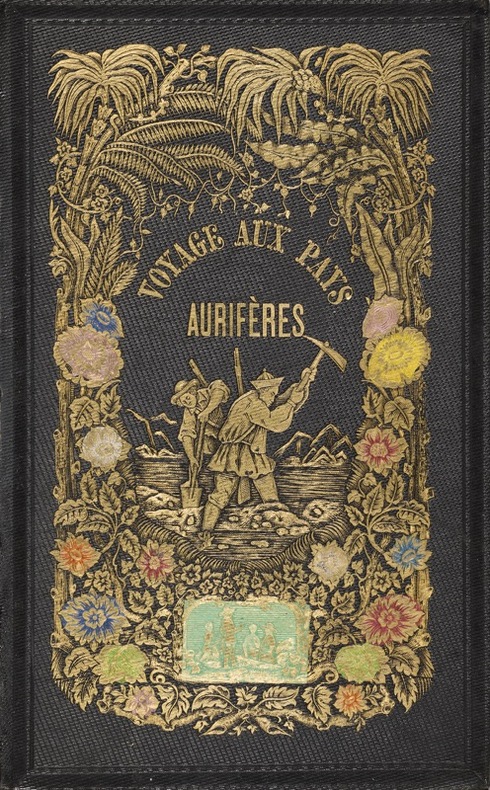
1855réf. 22345Paris A. Courcier [1855] in-8 (23 x 14,5 cm) percaline noire de l'éditeur, dos lisse et premier plat orné d'un décor polychrome, tranches dorées, dos passé, qqs rouss
1948xii, [2]-412 pp. Index. Bibliography. Synopsis of the Postal History and Postage Rates of Hawaii. Black and white illustrations. "A handbook on Hawaii worthy of the name, containing everything necessary to the understanding and study of the stamps, postal markings and postal history of this fascinating country." - Preface. Printed upon glossy stock. Map endpapers. Few small ink drops to top edge otherwise clean and unmarked with moderate wear to publisher's blue cloth. Binding tight. No dust jacket. A quality copy of this essentiall reference. Book
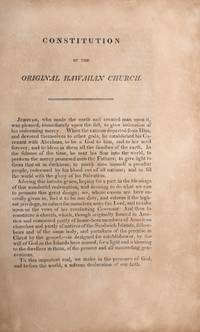
1830réf. 329926Honolulu 1830. 4pp. Signed in print Hiram Bingham and 54 others. 8vo. Folded sheet. Browned. 4pp. Signed in print Hiram Bingham and 54 others. 8vo. "The text of this was drawn up in Boston just prior to the departure of the first American Protestant missionaries to Hawaii. Although issued without an imprint or colophon it can be dated to 1830. The last signatories on this are those of the Third Company of missionaries who arrived at Honolulu on the Ship Parthian March 20 1828" Forbes. Forbes 742 unknown
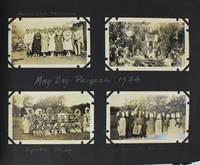
1939réf. 4848Various locations in Hawaii 1939. Good. Two albums both oblong. Forty-seven leaves with 300 photographs plus twenty-one loose images; twenty leaves with 130 photos and eight loose images. First album original black cloth string tied. Moderate wear to extremities leaves very chipped several loose. Second album unbound gray card leaves. Light chipping and wear. Images captioned throughout most of both albums; several photos missing from mounts. Two wonderfully detailed vernacular albums documenting the life of a young Japanese-American woman in Hawaii during her high school years. The first album opens with a full-length portrait of the compiler Satsue Ueda dated June 1934. An image from the second album identifies her as "12th grade" in 1937. She goes on to document her friends family members teacher school and related activities and trips around the islands. Images include a group in front of Maui High a visit to Rainbow Gulch Haleakala Kula Manu the Kipapa School Waikiki Oahu Country Club scenes in Honolulu including the Immigration Station and more. There are several images of the school May Day Program from 1934 as well as photos of President Roosevelt's visit to Honolulu. There are also several images of Japanese-American baseball players. Throughout she has identified friends with their first names occasionally with commentary. Several images in the second album show Japanese-American men in military uniform. Others show the "New Kula Sanatorium building." A large group portrait depicts her Dramatic Class for 1937 with each member identified in the margins. There are also some images of a trip to Japan. A wonderful and dense record of one young woman's social circle and high school career. unknown
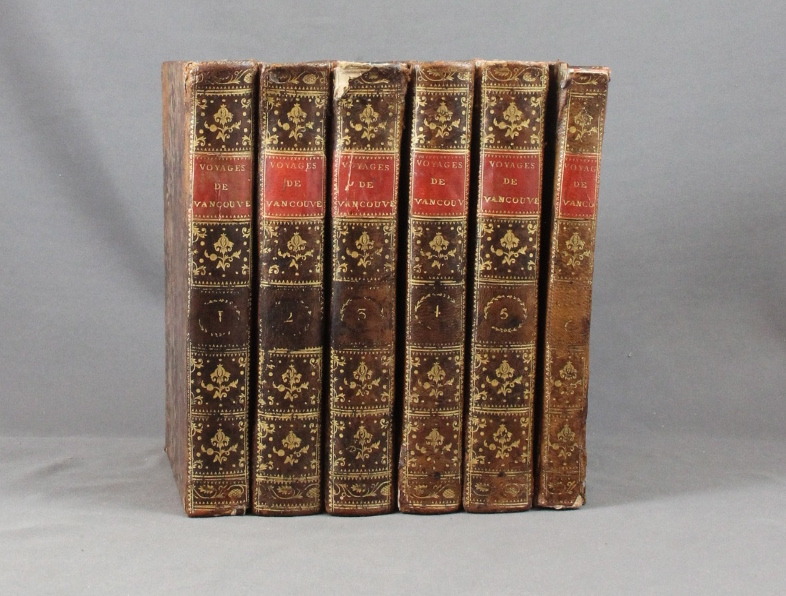
réf. 6293Paris, Didot jeune, an X. 6 volumes in-8 de [4]-VIII-341p., [4]-384p., [4]-381p., [4]-368p., [4]-438p., et un atlas de [4]p., 17 vues et 9 cartes, plein veau moucheté, dos lisses ornés de filets et fleurons dorés, pièces de titre rouge. Reliures un peu malmenées, coiffes frottées, mors un peu fendus, épidermures, auréoles pales à trois volumes, plus présentes dans l'atlas. Chaque première page est frappée d'un large tampon non identifié par votre serviteur.
1784réf. 44312(Paris, ca. 1784-87). 4to. Series of 6 engraved plates in original handcolouring. 21x14,5 cm. (With broad margins: 25,5x19 cm.).
1784réf. 44312Paris ca. 1784-87. 4to. Series of 6 engraved plates in original handcolouring. 21x145 cm. With broad margins: 255x19 cm. The fine series of these early depictions Hawaiians comprises: 1. Femme des Isles Sandwich . 2. Guerrier de Sandwich - 3. Danseur des Isles Sandwich - 4. Pretre des Isles de Sandwich - 5. Roi des Isles de Sandwich - 6. Insulaire des Isles Sandwich. J. Grasset. direc. - J. Laroque Sculp.Colas 1287 ff. - Sabin: 28334 unknown
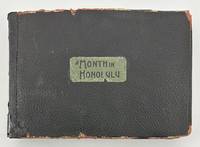
1914réf. 3378Various locations in Southern California and Hawaii 1914. About very good. Sixty-one leaves illustrated with 214 mounted silver gelatin photographs most with manuscript annotations in white ink; plus numerous mounted postcards menus and assorted ephemera. Oblong quarto. Contemporary black textured limp cloth over boards. Edges a bit chipped and tattered inelegant black tape repairs to spine. First leaf detached contents otherwise clean. A wonderful annotated vernacular photograph album documenting a well-to-do family's vacation to Hawaii via brief stops along the West Coast in 1914. The album opens with a group image of the travelers in San Francisco numbering around twenty-two men women and children captioned "Southern California - Honolulu." This is followed by several pages picturing their initial journey from Seattle down to San Pedro Los Angeles and San Diego before they departed for Honolulu on the S.S. Matsonia on June 17. A passenger list is included and many of the images are captioned with the names of the subjects providing a nice opportunity for identifying the travelers by cross-referencing the passenger list. The group spends their vacation time at the Sea Side Hotel on Waikiki Beach in bathing houses and on the beach visiting local businesses plantations and other hotels surfing fishing and more. Through the course of the album much of the landscape of Waikiki is featured providing a snapshot of the hotel and details of its surroundings along with shots of a "Native Village" sugar cane fields and a plantation pineapple fields street views of Honolulu a picnic for "Kids of all nations" at Waikiki the Port of Honolulu and more. The album also features a few early images of surfing at Waikiki Beach. In mid-July true to the title of the album the group heads back across the Pacific Ocean aboard the R.M.S. Niagara after just one month. Most notable among the photographs are about thirty risqué images of local Hawaiian women interspersed throughout. The pictures of the "Native Girls" often feature them topless or scantily clad identifying them with additional captions such as "Hawaiian Beauty" "Maidens bathing" "Girls" "Hula Hula Dancers" and "The Ex. Queen of Hawaii." One group shot shows ten Hawaiian women eating fish captioned "'Lunau' sic Lu'au or Native feast." Another side-view image of a naked Hawaiian woman is annotated "The Natives are a sturdy race of people." There are also numerous images featuring other indigenous Hawaiian people in a variety of settings including a couple of images showing a "Hawaiian boy climbing a cocoa nut palm" two pictures of "Native fisher boys" a "Native hut" "Hawaiian kiddies" a "Native canoeist" a "Group of Natives" a "Native Priest - looks as if he had been fasting for some time" and images showing "Natives selling 'Leis' for departing visitors" and "Native 'Leis' vendors on Honolulu." The images of the Hawaiian women as well as the men combined with the captions provide an opportunity for further studying the ways in which affluent American mainlanders have traditionally viewed indigenous Hawaiians and other native peoples encountered throughout the world. In addition to the passenger list mentioned above the ephemeral items include shipboard menus a program for an onboard concert newspaper clippings cigar labels and postcards. The latter includes a series of forty-one vibrantly-colored postcards illustrated with Hawaiian fish. An interesting travel album detailing a trip to Hawaii at the outset of the First World War with many notable observations on indigenous peoples in Honolulu especially the young women of the island. unknown
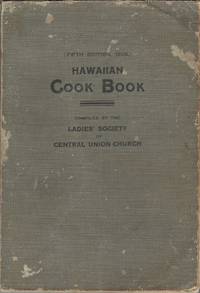
1909réf. 10018Honolulu: Hawaiian Gazette Co 1909. Octavo 21 x 14.5 cm. 150 16 pages. Interleaved with unpaginated blanks for the addition of handwritten recipes. Index and advertisements. Stated "Fifth Edition Revised and Enlarged". Later edition of Hawaii's first cookbook a community cookbook with recipes attributed. The much slimmer first edition - just forty-nine pages - was issued in 1879 by "The Ladies of the Fort Street Church" and printed by P.C. Advertising Printing Establishment. In the new preface to this Fifth Edition the current editor Elizabeth C.V. Hall speaks to the book's origins though miscalculates the original publication date to be 1882. While the chapter headings are fairly standard – Cakes Confectionery Desserts Eggs Fish Game and Poultry etc. – there is a presence of more local recipes and ingredients. Taro breadfruit papaya alligator pear and of course cocoanut and pineapple. Some spotting and light soil throughout. In original limp cloth titled in black on the front panel; wear and abrasions to cloth especially at the spine thought it remains structurally sound. Near very good. With two handwritten recipes "Steamed Chocolate Pudding" and "Caramel Pudding" added to a blank. OCLC locates nine copies of this edition; the first edition is known only by one copy NYPL; Brown 524 for the first edition; Cook page 55; not in Cagle. Hawaiian Gazette Co hardcover
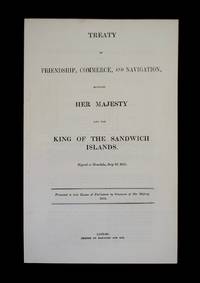
1852réf. 69457London: Harrison and Son 1852. HAWAII. Signed at Paris June 29 1869. Presented to both Houses of Parliament by Command of Her Majesty. 1869. London: Harrison and Sons 1869. First Edition. Small folio pamphlet 12 5/8 x 8 inches; 321 x 205 mm. 4 pp. Two sheets unbound. Inner margin a bit frayed. Inked page numbers to upper right corner of both leaves. Some light foxing. Still about fine. The first pamphlet is the text of the new treaty between Great Britain and Hawaii. This treaty of friendship commerce and navigation between Kamehameha III King of the Hawaiian Islands and Victoria Queen of Great Britain and Ireland to promote relations and trade between the two nations. Drafted on July 10th 1851 and ratified on May 6th 1852. The second pamphlet is in regards to a declaration made in 1869 between the United Kingdom and the Sandwich Islands Hawaii canceling part of Article VII of the Treaty of July 10 1851 specifically regarding British whaling ships while continuing the remaining articles for seven years. Article VII stated that British whale-ships would have access to the ports of the Hawaiian Islands." Forbes 1862 HBS 69457. $2250. Harrison and Son unknown
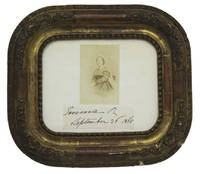
1870réf. 303122Honolulu 1870. Photograph measuring 3-3/8 x 2-1/4 in. with the ms slip laid down beneath it. Framed and glazed measuring 9 x 10⁻¹/2 in. Photograph measuring 3-3/8 x 2-1/4 in. with the ms slip laid down beneath it. A particularly fine example of Emma's photograph and signature in a contemporary frame. She has signed herself "Emma R / September 26 1865." Born in Honolulu in 1836 she was adopted by her maternal aunt the chiefess Grace Kamaʻikuʻi Young Rooke and her husband Dr. Thomas C. B. Rooke. She married Kamehameha IV on 19 June 1856. Emma was an active queen concerned with palace affairs and was involved in the expansion of the royal library. She is best known for founding the Queen's Hospital in 1860 which was built to care for native Hawaiians who had no immunity to many of the European diseases which they encountered. The hospital exists to this day as Queen's Medical Center. Her philanthropic endeavours set a precedent for sitting queens. Although unattributed this image is likely taken by Andreas Montano the Colombian photographer who came to Hawaii in 1870 and immediately set up a studio at 87 Fort St. He photographed much of Hawaiian royalty and became Emma's official photographer. unknown
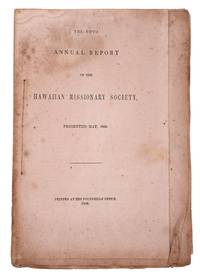
1863réf. 332951Honolulu: American Mission Press 1863. With: 9 additional Reports of the Hawaiian Missionary Society being the Second Report and the Fifth through Twelfth Reports. 10 vols. 8vo. Original wrappers or self-wrappers. With: 9 additional Reports of the Hawaiian Missionary Society being the Second Report and the Fifth through Twelfth Reports. 10 vols. 8vo. The Hawaiian Missionary Society aimed to send missionaries from Hawaii to other Pacific islands. "The first annual report states that preparations were being made to send two missionaries Rev. Mr. Snow and Rev. Luther H. Gulick and their wives to Micronesia. A list of contributions made to the society shows the extraordinary generosity of native Hawaiian churches to this object . From this date the annual reports include excerpts from letters of the missionaries both in Micronesia and in the Marquesas. Twelve annual reports were published between 1852 and 1863 . The first three were printed at the American Mission Press; the fifth at the Polynesian office; and the remainder by the press of H.M. Whitney or the Pacific Commercial Press. This is an important source of information about missionary work by native Hawaiian missionaries in Micronesia the Marquesas and other parts of the Pacific" Forbes This group comprises the following: First Report. Honolulu: American Mission Press 1852. 12pp. Green wrappers. Second Report. Honolulu: American Mission Press 1853. 19pp. Unopened. Tan wrappers. Fifth Report. Honolulu: Printed at the Polynesian Office 1856. 24pp. Uncut and unopened. Stitched self-wrappers. Sixth Report. Honolulu: Press of H.M. Whitney 1857. 24pp. Stitched self-wrappers. Seventh Report. Honolulu: Commercial Advertiser Print 1858. 24pp. Stitched self-wrappers. Eighth Report. Honolulu: Commercial Advertiser Print 1859. 16pp. Stitched self-wrappers. Ninth Report. Honolulu: Henry M. Whitney 1860. 35pp. Stitched self-wrappers. Tenth Report. Honolulu: Henry M. Whitney 1861. 23pp. Stitched self-wrappers. Eleventh Report. Honolulu: Henry M. Whitney 1862. 24pp. Stitched self-wrappers. Twelfth Report. Honolulu: Henry M. Whitney 1863. 12pp. Stitched self-wrappers. Forbes 1877 First Report American Mission Press unknown
1857réf. 37152Stockholm: Norstedt & Soner 1857. 1st printing cf. Forbes #2193 incorrectly noting an 1856 publication date. Lacks wrappers with last leaf detached. Age-toning. The odd stain. A VG copy. 27 1 pp. Text in two columns Swedish & English. 4to. 7-3/4" x 6-3/4" This treaty between Hawaii & Sweden apparently one of the first if not the first international treaties ratified by Kamehameah IV reigned 1855 - 1863. NB. Forbes #2193 notes a date of 1856 listing the copy at Hawaii State Archives. We have checked that copy which also has the 1857 date on p. 28. Both copies recorded by OCLC note an 1857 imprint date as here. Norstedt & Soner unknown books
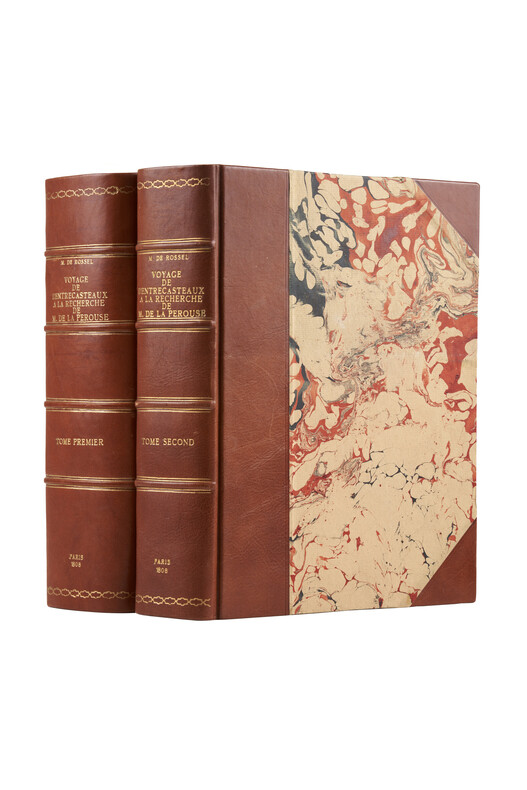
1808réf. PHO-1626Paris, Imprimerie impériale, 1808. 2 grands et forts volumes in-4 (32x24), lvi, 704 p., 33 pl. ; viii, 692 p., relié demi basane et coins moderne, dos avec auteur, titre, tomaison, lieu et date, exlibris en page de garde, non rogné, tome 2 non coupé, petite mouillure au tome 2, petites rousseurs aux illustrations du tome 1. Exemplaire sur papier bleuté, complet de son illustration mais sans son atlas de cartes
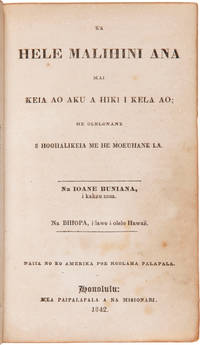
1842réf. WRCAM40245AHonolulu: Mea paipalapala a na Misionari 1842. 418pp. plus eight woodcut plates including frontispiece. 12mo. Contemporary Hawaiian sheep boards and backstrip tooled with triangular and diamond- shaped pattern; rebacked original spine neatly laid down. Very clean and fresh internally. Very good. A significant association copy of the rare first edition in Hawaiian of Bunyan's PILGRIM'S PROGRESS and the first printing in Hawaiian of an English literary classic. This copy bears a presentation inscription on the front free endpaper to the Rev. E.S. Hopkins from the Rev. Elias Bond dated at Kohala Sandwich Islands June 12 1844. Reverend Bond translated at least seven books for the Mission Press between 1859 and 1868. The Hawaiian title translates as THE TRAVELER FROM THIS WORLD TO THAT WHICH IS TO COME. In 1840 the American Tract Society in Honolulu hoped to publish an abridged edition of Bunyan if a translator could be found and in 1841 Artemas Bishop took on the task promising the Society that "it will prove one of the most popular works in the Hawaiian Language." Unfortunately for Artemas and the Society the book flopped and the 10000 copies that were printed were remaindered in unbound sheets most of which were disposed of to Chinese vegetable peddlers for wrapping produce. For copies that survived this the rate of attrition as with all early Hawaiian works of this type remained very high and the book is quite scarce today. The work failed to impact the Hawaiians as the English allusions lost all meaning when translated. The names of the extensive cast of characters became incomprehensible: Mr. Lechery became Kekowale literally lust only and Mrs. Filth became Pelapela decayed flesh. Some of the surviving unbound sheets of this book were bound into limp suede in 1910. This copy on the other hand is in a contemporary Hawaiian sheep binding of the mid-19th century complete with its distinctive triangular and diamond-shaped tooling which is most unusual and notably rare. See David Forbes' BUNIANA San Francisco 1984 for an extensive discussion of the book. An important association copy in a handsome contemporary binding. FORBES 1351. JUDD 237. DAB IX p.381. Mea paipalapala a na Misionari hardcover books
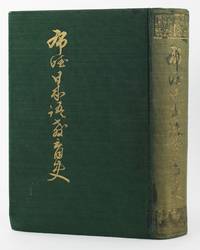
1937réf. 4006Honolulu & Tokyo 1937. About very good. 27021pp. plus plates. Original green silk over boards gilt t.e.g. Spine faded corners bumped and rubbed. Contents clean. A very rare history of Japanese-language schools in Hawaii between 1911 and 1937. The work is written entirely in Japanese and illustrated with several plates depicting school children teachers and other officials. "Once the Issei had decided to settle in Hawaii they wanted their children to become good Americans of Japanese ancestry with a command of both the English and Japanese languages and cultures. In the mid-1910s they came to feel the impact of the Americanization movement and feared that Hawaii's Japanese language schools would be attacked. Thus in 1914 to cope with this pressure the Hawaii Kyoiku Kai Japanese Educational Association of Hawaii was organized by the school principals and teachers to unify over 130 schools. In 1917 the Kyoiku Kai published their own textbooks with content suitable to Hawaii born Nisei and decided to teach only the Japanese language and moral lessons eliminating Japanese patriotic lessons and adding new lessons to encourage Japanese to become loyal Americans who would nonetheless also cherish their Japanese heritage" -- Davidann. We could not locate any copies in OCLC. Davidann Jon: Hawaii at the Crossroads of the U.S. and Japan Before the Pacific War 2008. unknown
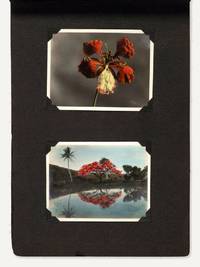
1910réf. ALB25-071910. Photo album; silver prints 174 many hand-colored. About a quarter of the album is dedicated to beautiful hand-colored photographs of native flowers plants and fruits. These images are each 3 x 4 inches and most bear subject identification in pencil on the verso of the print. There are also larger hand-colored photographs printed with holiday greetings. There are also a number of beautiful artistic views of the island completed by the well- known photographer James J. Williams including lovely moonlight views soft-focus landscape shots and some important early images of surfers. These were created earlier than the albums compilation sometimes in the teens or 20s. Also included are views of royalty; lava beds; views of traditional customs; and photographs related to the compiler's work for a Chinese mission school on the island. Back cover missing otherwise nice condition. Various sizes from 2 x 3 inches to 6 x 8 inches ; Most floral studies with specimen name on verso; other photos with J.J. Williams' stamp verso; some with personal annotations verso. ;. unknown
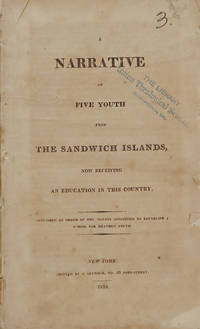
1816réf. 68845New York: Printed by J. Seymour 1816. Inspiration for the First Mission to Hawaii A rare account of the lives of the five Hawaiian youths who would come to form a core of initial students enrolled at the new Foreign Mission School established at Cornwall Connecticut in 1816. The school formed under the auspices of the American Board of Commissioners for Foreign Missions ABCFM would serve to educate foreign students in preparation for missionary work in their native lands and elsewhere. Published in 1816 A Narrative of Five Youth from the Sandwich Islands was the first of many publications intended to raise funds and stir up popular support for the new school as well as for the first Christian mission sent to the Hawaiian Islands three years later. As such it served as part of the early efforts to bring Hawaii within the cultural and commercial orbit of the United States. By the second decade of the 19th century Hawaii had become an integral part of America's burgeoning China trade serving not only as a crucial resupply hub and convenient stopover for Yankee ships sailing between North America and China and around Cape Horn but also as a lucrative source of sandalwood which American merchants traded in exchange for Chinese silk tea and porcelain. Where American merchants saw commercial possibilities however Protestant missionaries saw opportunities for Christian conversion. In April 1809 two Hawaiian youths Henry Obookiah and Thomas Hopoo arrived in New York aboard the China trade ship Triumph in the hope of receiving an education in the United States. Shortly after their arrival the two took up residence in the New Haven home of the ship's captain Caleb Brintnall. There Obookiah quickly came to the attention of several Yale students who offered to tutor him. Soon he was invited to join the household of Yale president Timothy Dwight. As John Demos explains in his history of the Foreign Mission School where Obookiah became the star student and "the most famous Hawaiian emigrant of his time" "Dwight's home was the starting point" of an eight-year odyssey "that would take Obookiah into three states eight different towns and at least a dozen separate families scattered across the New England countryside" and which culminated in his conversion to Christianity and admission to church membership in 1814. Obookiah and Hopoo were eventually joined by three other Hawaiian youths William Tennooe John Honoree and George Prince Tamoree the son of a Hawaiian king. The stories of these five youths shared "a number of common elements. All had spent time as sailors on American trade ships. Three had served at sea in the War of 1812. Most had experienced periods of extreme hardship after reaching New England.All had sooner or later found sponsors teachers and spiritual guides. All had been moved through a kind of missionary pipeline centered in New Haven but reaching out well across the Connecticut countryside" Demos. Together the five Hawaiian youths would "become the founding nucleus of an institution unlike any previously seen on American soil" Demos. The Narrative was part of a publicity campaign designed to raise funds for the new school and for an eventual mission to Hawaii. As Demos explains the Narrative originated as "a 'manuscript account'" of the "lives and prospects" of the five Hawaiian youths "written some months before by parties unknown and circulated by hand in the interim; the agents of the school were eager to arrange its publication "for the information and excitement of the Christian public.'.it was printed in New York in the last weeks of the year 1816." Such publications "capitalized on the interest in the Sandwich Islands and the islands of the Pacific that had begun gradually with the first sales of the journals and logs from the voyages of Captain Cook the much-performed pantomime of his death and the ubiquitous commercial news that related the daily comings and goings of ships from New England to the Pacific" Arista. A New Jersey issue of the Narrative appeared in the same year; it is not known which preceded the other. The text gives biographies of each of the five youths discusses their activities and experiences in America and prints various letters written by them. According to the authors the Narrative offered "a simple and authentic statement of facts respecting the youth now under the care of the agents; with specimens of their ability and improvement." The final pages discuss the establishment of the Foreign Mission School at Cornwall and include the text of the school's constitution. As the constitution states the object of the school would be "the education of heathen youth in such a manner as that.they may be qualified to become missionaries schoolmasters interpreters physicians or surgeons among heathen nations and to communicate such information in agriculture and the arts as shall tend to promote Christianity and civilization." The Narrative Demos explains "was perfectly timed to catch a rising wave of public interest in 'heathens' abroad.Not coincidentally donations to the ABCFM would soar—from just over $12000 to nearly $30000—in the year of the Mission School's founding." Tragically in 1818 two years after the publication of the Narrative Obookiah died of typhus. His Memoirs edited by Edwin Dwight were published shortly thereafter and the success of that book inspired a wave of interest in the islands which culminated in the sailing of the first missionary bark Thaddeus for Hawaii on October 23 1819. Over the course of nearly a decade from 1817 to 1826 some 100 students from around the world passed through the doors of the Foreign Mission School at Cornwall. They included Hawaiians and other Pacific Islanders; Native Americans including Cherokees Choctaws Creeks and others; students from East Asia including China India and the Malay Peninsula; and others from Europe Mexico and throughout the United States. A rare and significant piece of Hawaiiana and part of some of the earliest efforts to bring Hawaii under the cultural influence of the United States. Dbd. Stitched gathering. A few leaves loose but holding. Text lightly foxed and toned. Small section along upper edge of final leaf torn away not affecting text. Library stamp of Union Theological Seminary Richmond Virginia in blue ink to titlepage. Good. FORBES 456. SABIN 51790. AMERICAN IMPRINTS 36725 38355. John Demos The Heathen School: A Story of Hope and Betrayal in the Age of the Early Republic New York: Alfred A. Knopf 2014 pp.22 29 31-32 38-39. Noelani Arista The Kingdom and the Republic: Sovereign Hawai'i and the Early United States Philadelphia: Univ. of Pennsylvania Press 2019 pp.61-62. unknown
1842réf. 63627Honolulu: Mea paipalapala a na Misionari 1842. First Edition of PILGRIM'S PROGRESS in Hawaiian in a Hawaiian Binding A significant association copy of the rare first edition in Hawaiian of Bunyan's Pilgrim's Progress and the first printing in Hawaiian of an English literary classic. This copy bears a presentation inscription on the front free endpaper to C. Blake from the Rev. Elias Bond dated at Kohala Sandwich Islands September 29 1843. Reverend Bond translated at least seven books for the Mission Press between 1859 and 1868. The Hawaiian title translates as The Traveler from This World to That Which Is to Come. In 1840 the American Tract Society in Honolulu hoped to publish an abridged edition of Bunyan if a translator could be found and in 1841 Artemas Bishop took on the task promising the Society that "it will prove one of the most popular works in the Hawaiian Language." Unfortunately for Artemas and the Society the book flopped and the 10000 copies that were printed were remaindered in unbound sheets most of which were disposed of to Chinese vegetable peddlers for wrapping produce. For copies that survived this the rate of attrition as with all early Hawaiian works of this type remained very high and the book is quite scarce today. The work failed to impact the Hawaiians as the English allusions lost all meaning when translated. The names of the extensive cast of characters became incomprehensible: Mr. Lechery became Kekowale literally lust only and Mrs. Filth became Pelapela decayed flesh. Some of the surviving unbound sheets of this book were bound into limp suede in 1910. This copy on the other hand is in a contemporary Hawaiian sheep binding of the mid-19th century complete with its distinctive triangular and diamond-shaped tooling which is most unusual and notably rare. See David Forbes' BUNIANA San Francisco 1984 for an extensive discussion of the book. An important association copy in a handsome contemporary binding. 12mo. Contemporary Hawaiian sheep boards and backstrip tooled with triangular and diamond-shaped pattern rebacked with original backstrip neatly laid down. Light rubbing and staining to boards. Contemporary presentation inscription on front flyleaf see below. Minimal scattered foxing but very clean and fresh internally. Very good. FORBES 1351. JUDD 237. DAB IX p.381. hardcover
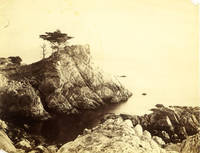
1880réf. J6SGPBJ1IXLV1880. With 12 albumen prints ranging in size from ca. 16.5 x 23 cm to 21 x 28 cm. Collection of 12 vintage photographs from the late 19th century showing China Indonesia the Hawaiian Islands California and Egypt. Of the 4 photographs of China 2 show Hong Kong including one possibly by the famous Chinese photographer Lai Fong ca. 1839-1890 showing Queen's Road Central. The two rarest photographs show several of the 7500 imperial examination cubicles in Canton Guangzhou while a photograph by A Chan Ya Zhen shows the famous five-story pagoda on Kun Yam Hill in 1870. The Indonesian island Java can be seen on 3 photographs including one of lake Telaga Warna by the British firm Woodbury & Page based in Batavia Jakarta. Taken further to the west were 3 photographs of Hawaii probably all taken in or near Honolulu. A rare undated photograph of the statue of King Kamehameha was taken probably right after the unveiling ceremony in 1883 as it shows a small wooden fence around the statue which can be seen in an illustration in The Graphic 28 April 1883 but is absent from all later images. Of the 2 final images one by Isaiah West Taber 1830-1912 shows Midway Point in Monterey California and the other by Hippolyte Arnoux fl. 1860-1890 a group of Arabs and camels waiting for the ferry near El Qantara in Egypt. Most of the photographs are worn at the edges with small tears and folds and a few have small holes; one of the images of Hawaii with a waterstain at the lower margin. AFRICA AMERICAS ART ARCHITECTURE & PHOTOGRAPHY ASIA AUSTRALIA NEW ZEALAND & PACIFIC ISLANDS Charts & Maps China Egypt Indonesia / Dutch East Indies North Africa North America Pacific Islands Photography ZZ Polynesia unknown
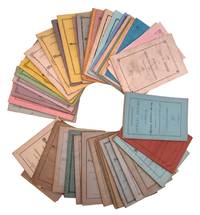
1900réf. 329931Honolulu 1900. Nearly complete run from 1853 to 1900 lacking only the Fourteenth Annual Report from 1866. 47 vols. 12mo. Original wrappers in various colors mostly in very good condition. Nearly complete run from 1853 to 1900 lacking only the Fourteenth Annual Report from 1866. 47 vols. 12mo. "This society was formed in 1852 in the 'Old Mission School House' partly as a social organization but more specifically to lend support to the Micronesian mission then getting started . reports have excerpts from letters from Luther Halsey Gulick and several native Hawaiian missionaries stationed in Micronesia. An address by Hiram Bingham Jr. on 'the cultivation of the Missionary Spirit' is in the 1857 report. The 1858 report includes an essay by Orramel Gulick on his trip to Micronesia. The president's reports found in almost every issue have continued references to local social and religious interests in Hawaii . The birth marriage and death notices and obituaries of these missionary 'Cousins' found in issue after issue are a major source of information on missionary family histories . In the twenty-fifth annual report 1876 an essay by 'Cousin' General Samuel C. Armstrong discusses his educational work with African Americans at Hampton Virginia ." Forbes. Forbes 1942; Carter p. 81; Hunnewell p. 65 unknown
1854réf. 23745"The American Sloop-of-war SARATOGA Capt. Walker arrived at this port on the 29th ult. in 25 days from Japan which is the shortest passage ever made. The S. brings Capt. H.A. Adams U.S.N. as bearer of despatches to the Government at Washington. The point of interest in this intelligence is the fact that Com. Perry concluded a TREATY OF AMITY AND FRIENDSHIP with the EMPIRE OF JAPAN." The Friend was the mouthpiece of Congregational missionaries and reported everything from important local Hawaiian issues to international news reprinted from eastern sources. The nine months covered here feature a great deal of the news of the day ranging from war between England and Russia to lots of whaling and maritime news including shipping arrivals and departures the discovery of new sperm whaling grounds naval intelligence all peppered with a liberal dose of good old fashioned conservative proselytizing. This particular volume was sent from Sag Harbor New York to Thomas Spencer a Rhode Island sea captain who went native opening a successful ship's chandlery and marrying a local girl. HAWAII.Newspapers. Bound volume of The Friend Honolulu HI containing 22 consecutive issues dated from Feb 1 1854 through Oct 25 1855. This volume has the first report of the death of Hawaiian King Kamehameha III including the order of procession Jan 1 1855 issue and the first report of the signing of the US-Japan Treaty negotiated by Commander Matthew Perry May 6 1854 issue and an Independence Day celebration July 6 1854 issue. The Friend was a local newspaper published from 1843 to 1954. Published by and for the missionaries it is invaluable as a source of information concerning the activities experiences and accomplishments of the 19th-century Congregational missionaries to Hawaii as well as 20th-century figures and the development of the United Church of Christ in Hawaii. Today The Friend is the newsletter of the Hawaii Conference of the United Church of Christ. Thomas Spencer 1815-1884 was a whaling captain out of Warwick Rhode Island. He was stranded in the Sandwich Islands Hawaii and decided to remain there. He opened a very successful ship's chandlery in Honolulu and later purchased property on the "big" island in the village of Hilo. His brothers also joined him in Hawaii. He was a notorious celebrity well-liked by all and especially supportive of the Hawaiian royal family. He is buried in Oahu. The children of Thomas Spencer and Makaleka Margaret Robinson were Thomas Spencer Jr. and Charles Lucy Jennie Lily Helen Margaret and Kaliko Spencer. books
1838réf. 67460A Rare Separate Issue of the First Literary and Scientific Periodical Published In The Hawaiian Islands. In the Original Wrappers HAWAII. The Hawaiian Spectator. Volume I. Number I 1838. Conducted by an Association of Gentlemen. January 1838. Honolulu: Edwin O. Hall Printer. Printed For the Proprietors 1838. The rare separate issue preceding the collected edition of volume I number I of the Hawaiian Spectator the first literary and scientific periodical published in the Hawaiian Islands. Octavo 91/4 x 5 5/8 inches; 233 x 144 mm. Volume I Number I. iv 112 pp. With a chart of Meteorological Observations and A Shipping list. We could find no copies of this separate issue of Volume I Number I at auction in the past fifty years. Original tan printed wrappers. Printed in black on front and back wrapper. Front wrapper with lower corner chipped and chips along spine. Backstrip with large chips missing but still held together tightly. Some foxing and toning throughout. Overall a very good copy. A total of eight issues were published between 1838-39 the present copy contains the first issue. It includes important articles by numerous people relating to the Hawaiian islands. HBS 67460. $3850 Edwin O. Hall, Printer. Printed For the Proprietors unknown books