ÉTAT FRANÇAIS - PRÉFECTURE DE LA CHARENTE - 1941Livre Rare Book

206 résultats
réf. 244581 affiche tricolore 85 x 63 cm. Légèrement abîmée en bordure sinon très bon état. Rare.
réf. 244631 affiche 99,5 x 65 cm. Très bon état d'ensemble.
1980réf. KOS01600435TBD 1980. Soft Cover. Fine. KOS01600435 TBD paperback
réf. ria9780444513496_inpHardcover. New. New Book; Fast Shipping from UK; Not signed; Not First Edition; Contains proceedings from the Fourth Tokyo Conference on Advanced Catalytic Science and Technology Tokyo July 14-19 2002. This work contains a selection of works which present the research in catalysis. It provides reports on the ad hardcover
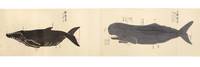
réf. 6620Scroll 273 x 13760 mm. At end in trans.: "All the images are of the whaling at Taiji.April 1857 Tennojiya Shinsuke owned." A remarkable long and vividly rendered whaling scroll from Wakayama Prefecture depicting the whaling activities in unusual detail of the famous town of Taiji and its bay "Taiji ura" the site of the annual dolphin slaughter featured in the 2009 Oscar-winning documentary The Cove. Taiji has long been known as a whaling town and its history is essentially the history of whaling in Japan. In the 17th century whalers of the town developed a series of more sophisticated whaling techniques including the group hunting system 1606 a handheld harpoon and the whaling net technique 1675. The scroll begins with a quite detailed history of whaling in Japan written in a very legible hand describing the above-mentioned new methods of whaling with dates of introduction. There is information on when certain species of whales pass by during the year signaling systems other technical aspects of whaling etc. The first images depict six species of whales found off the coast of Taiji: Semi kujira North Pacific right whale Zato kujira humpback whale Nagasu kujira fin whale Katsuo kujira Bryde's whale Koku kujira gray whale and Makko kujira sperm whale. Each of the dramatically and richly painted whales have notes regarding their most notable identifying features. The next scene takes place at Taiji: it shows the captured Semi kujira whales being winched onto shore and the highly specialized butchering of the carcasses. The slaughter area is fenced off and there are observation decks for government officials to review the work. We see a cross-section of the whale and the various products rendered from it in various stages of dismemberment: skin flesh bone intestines fins penis all displayed in large piles. Spectators stand to the side watching the work. A shrine is depicted in the background. This scene has been heightened with metallic pigments. All the harpoons in this scroll are depicted with metallic pigments. Following this is a scene of the different kinds of boats entering the greater bay towing a whale. The scenes of the houses on shore reveal what a prosperous community it once was. The subsequent scene depicts the specialized boats going out to sea passing two elevated signal posts "Kajitorizaki" & "Shomyozaki" which receive news of whales in the distance and sends signals by a flag system. Smoke is rising a signal to the boats. One of the boats is a "tool" boat containing special harpoons to kill the whale after it had been entangled in a net. Other boats are "net" boats each of which requires 81 sailors; they are seen spreading out the net. There are other boats - seko bune - which guide the whale into the net. Another vessel is fast-moving messenger boat giving directions to the others. In the following two scenes the sky and ocean are very beautifully depicted with delicate gradations of colors. The whale a humpback is shown caught in the net writhing and fighting for its freedom desperately spouting water. The enormous motion of the whale has caused the water to turn white with foam which is very expressively painted on the scroll with almost a 3-D Jackson Pollock splashed effect. A young whaler is seen climbing on the whale to stab it in the nose. The whalers all have special tasks to fulfill and the scroll provides the names of each special function. The next scene shows whalers catching a North Pacific right whale just off the Mikisaki peninsula. Following this we are on shore again at the enormous supply storage compound. The first scene shows government observers at the security gate of the compound with men shown mending and storing the whaling nets. The workers wear different head gear and colors of clothes denoting their jobs and ranks. One room has bundles of poles for harpoons. The next building shows men making boat paddles blacksmiths making harpoon heads barrel makers men assembling the harpoons and men making ropes. The subsequent scene depicts men painting three "leader" whaling boats in vivid colors and patterns. The designs on the boats have been highlighted with metallic pigments. The finished boats are stored in sheds which are shown behind. This is followed by a scene of the sheds where boats are constructed. We see a group of shipbuilders constructing a seko bune using saws planes and various other woodworking tools. The next scene depicts the tools of the whalers: various harpoons of different weights and lengths with different metal heads and large knives on long poles. Each harpoon's specific purpose is mentioned. The ropes attached to the harpoons are contained in a series of bundles to avoid tangling. In fine and fresh condition. This is the finest whaling scroll we have yet encountered with a number of scenes of specific and well-known sites. Preserved in the original but rather decrepit wooden box with metal clasps. Accompanying the scroll is an original metal harpoon tip with the name "Eishichi" engraved. hardcover books
réf. 6620Scroll 273 x 13760 mm. At end in trans.: “All the images are of the whaling at Taiji…April 1857 Tennojiya Shinsuke owned.” A remarkable long and vividly rendered whaling scroll from Wakayama Prefecture depicting the whaling activities in unusual detail of the famous town of Taiji and its bay “Taiji ura” the site of the annual dolphin slaughter featured in the 2009 Oscar-winning documentary The Cove. Taiji has long been known as a whaling town and its history is essentially the history of whaling in Japan. In the 17th century whalers of the town developed a series of more sophisticated whaling techniques including the group hunting system 1606 a handheld harpoon and the whaling net technique 1675. The scroll begins with a quite detailed history of whaling in Japan written in a very legible hand describing the above-mentioned new methods of whaling with dates of introduction. There is information on when certain species of whales pass by during the year signaling systems other technical aspects of whaling etc. The first images depict six species of whales found off the coast of Taiji: Semi kujira North Pacific right whale Zato kujira humpback whale Nagasu kujira fin whale Katsuo kujira Bryde’s whale Koku kujira gray whale and Makko kujira sperm whale. Each of the dramatically and richly painted whales have notes regarding their most notable identifying features. The next scene takes place at Taiji: it shows the captured Semi kujira whales being winched onto shore and the highly specialized butchering of the carcasses. The slaughter area is fenced off and there are observation decks for government officials to review the work. We see a cross-section of the whale and the various products rendered from it in various stages of dismemberment: skin flesh bone intestines fins penis all displayed in large piles. Spectators stand to the side watching the work. A shrine is depicted in the background. This scene has been heightened with metallic pigments. All the harpoons in this scroll are depicted with metallic pigments. Following this is a scene of the different kinds of boats entering the greater bay towing a whale. The scenes of the houses on shore reveal what a prosperous community it once was. The subsequent scene depicts the specialized boats going out to sea passing two elevated signal posts “Kajitorizaki” & “Shomyozaki” which receive news of whales in the distance and sends signals by a flag system. Smoke is rising a signal to the boats. One of the boats is a “tool” boat containing special harpoons to kill the whale after it had been entangled in a net. Other boats are “net” boats each of which requires 81 sailors; they are seen spreading out the net. There are other boats — seko bune — which guide the whale into the net. Another vessel is fast-moving messenger boat giving directions to the others. In the following two scenes the sky and ocean are very beautifully depicted with delicate gradations of colors. The whale a humpback is shown caught in the net writhing and fighting for its freedom desperately spouting water. The enormous motion of the whale has caused the water to turn white with foam which is very expressively painted on the scroll with almost a 3-D Jackson Pollock splashed effect. A young whaler is seen climbing on the whale to stab it in the nose. The whalers all have special tasks to fulfill and the scroll provides the names of each special function. The next scene shows whalers catching a North Pacific right whale just off the Mikisaki peninsula. Following this we are on shore again at the enormous supply storage compound. The first scene shows government observers at the security gate of the compound with men shown mending and storing the whaling nets. The workers wear different head gear and colors of clothes denoting their jobs and ranks. One room has bundles of poles for harpoons. The next building shows men making boat paddles blacksmiths making harpoon heads barrel makers men assembling the harpoons and men making ropes. The subsequent scene depicts men painting three “leader” whaling boats in vivid colors and patterns. The designs on the boats have been highlighted with metallic pigments. The finished boats are stored in sheds which are shown behind. This is followed by a scene of the sheds where boats are constructed. We see a group of shipbuilders constructing a seko bune using saws planes and various other woodworking tools. The next scene depicts the tools of the whalers: various harpoons of different weights and lengths with different metal heads and large knives on long poles. Each harpoon’s specific purpose is mentioned. The ropes attached to the harpoons are contained in a series of bundles to avoid tangling. In fine and fresh condition. This is the finest whaling scroll we have yet encountered with a number of scenes of specific and well-known sites. Preserved in the original but rather decrepit wooden box with metal clasps. Accompanying the scroll is an original metal harpoon tip with the name “Eishichi” engraved. unknown
réf. 35982N° 119 - 25e année - janvier-février 1972 - revue illustrée bimestrielle - illustrée - Broché
1938réf. 1038411938 Editions du Cuvier / Jean Guillermet, Villefranche-en-Beaujolais - 1938 - In-8, broché - 87 pages - Figures en noir & blanc hors texte
réf. 50219331 pp. volume representing the first part of a two-part govermental report on the 1907 Tokyo Industrial Exposition covering the overall operations and organization of the exposition including maps and plans for the arrangement of the pavilions within Ueno Park and interior plans describing the use of the pavilions and displays within. Profusely illustrated throughout with black and white reproductions from photographs of the exposition architectural and engineering plans site plans floor plans and pavilion elevations some in color including approximately 30 folding plates. Some light toning and foxing scattered throughout. 4to. Original embossed wrpps. with title printed to cover some sunning and foxing minor scuffing. Tokyo Tōkyōfu/Meiji 42 n.d. 1909. This volume includes many photographs and architectural plans of the pavilions which made up the Industrial Exposition as well as the configuration of the exhibition. Through the exhibition the organizers had a goal to visually communicate a narrative about modern industrial Japan in a period of colonial expansion just after the Russo-Japanese War. The exhibition was also hoped to help Japan to increase consumption in a time of post-war economic depression. This was the 6th industrial exhibition to take place at Ueno Park and was the grandest. Many of the main exhibition buildings were western in style which differed greatly from Japanese pavilions in previous international expositions where a greater focus was placed on traditional Japanese artistic styles and crafts. The features of the exposition itself included Japan's second Ferris Wheel foreign products and processes and a Crystal Pavilion which became the target of Korean protests and was eventually removed. An estimated 35000 light bulbs or 4% of all of the light bulbs availble in Japan at the time were used at the fair. "The main buildings Gothic in the park proper were built around a huge foundain on six levels surmounted by Bacchus and bathed in lights of red blue and purple. A water chute led down to the lower level on Shinobazu Pond where special exhibitions told of foreign lands and a growing empire." Seidensticker 2011 Scarce; as of September 2019 WorldCat does not locate a single holding of this volume in North America. unknown books
1964réf. c230726k021xbvk(Tokyo, 1964). *) 25 double-sheets (folded folios, = 50 painted interior- + 50 blank exterior pages) on thin untrimmed Japan-paper: doublepage multi-colour brushwork, doublep. with col.-brushw. (monogrammed) and signed manuscript dedication page in japanese Calligraphy; 22 doublesh. with 2 pages of brushwork each, another doublepage multi-colour brushwork; each doublesheet loosely inserted in slightly stronger as untrimmed folded Japan-paper sheets. - Loose in folded plain-white cardboard; 4to.(ca. 32 x 24 x 2 cm).
1964réf. c230726k022xbvk(Tokyo, probably before 1964; some of them were reprinted in the Olympic-Committee's official Book for the 1964 Olympic Games in Tokyo). 59 sheets of thin untrimmed Japan-paper ('Washi', ca. 32 x 23 cm), each with black-ink brushwork (some vertical, some horizontal) in Toki's famous pictographic manner, most of them monogrammed by the artist; loosely tipped-on slightly larger thin white cardboards (ca. 38 x 26 cm), often as folded double-sheets (unfolded ca. 38 x 52 cm).
réf. 358180Hokuryu-kan 1964. Quarto pale brown cloth boards gilt lettering to spine publishers mark blind stamped to rear board ix 99pp 36plates illus/plates VG slight soiling to boards moderate damp stain to boards & penetrating through pages with some loss to pages previous owner's name in ink to fep moderate soiling to eps light to moderate soiling to page edges in slipcase VG light fading & creasing to slipcase moderate soiling previous owner's name in ink Hokuryu-kan 1964 hardcover
1981réf. 1709110667xbvkJapan, Showa 55 (1981). 207 pages with 100 wholepage photographic plates of Shimizus clay-sculptures. - Publisher's white hardcover binding with transparent dustjacket in a triptych-like grey titled clothfolder, in the publisher's titled cardboard-box; oblong-4to.(ca. 30 x 32 x 4 cm; ca. 1,9 kg.).
réf. 11073Yamagata Prefecture: 1819-68. Ushu province today's Yamagata Prefecture has a long tradition of making sake. The region has abundant fresh water and the climate is well-suited for growing sake rice. This archive of 22 manuscript reports was produced for local tax collectors by two sake manufacturers in Higashine village Murayama Ushu province: GenshirÅ æºå››éƒŽ 20 reports and Hachizaemon 八左衛門 two reports. Neither is in business today. Sake was a heavily regulated industry in Edo Japan and a major source of tax revenue. The shogunate also controlled production levels in order to conserve rice in times of shortage and to regulate prices. The government also required manufacturers to brew only in winter time to improve quality. These official reports contain statements of amounts of sake-making rice used and production levels of sake by number of barrels. One report was prepared in 1819 one in the 1820s five in the 1830s four in the 1840s two in the 1850s and nine in the 1860s. Most of the reports consist of four folding leaves of text. In fine condition. The archive's original wrapper is present. unknown
réf. 244621 affiche 96 x 62 cm, pliure en bordure gauche sinon très bon état.
réf. 9264, Paris, l' Archipel, 2001., Broche, couverture d' editeur illustre n/b, 14x22,5cm, 356pp, bon etat.
1959réf. 63656Paris Imprimerie Municipale, Hôtel de Ville 1959 1 vol. broché 3 vol. in-4, brochés, 1 plan dépliat en noir et 7 plans dépliants en couleurs, sous chemise et étui cartonnés. Complet de toutes les pièces : Rapport, Réglement, Compte rendu des débats, plan général, plan de zonage, plan de circulation, plan des zones de protection, plan des réserves, plan des espaces verts, plan des secteurs de rénovation et plan de synthèse. Très bon état malgré quelques salissures marginales.
1959réf. 63656Paris Imprimerie Municipale, Hôtel de Ville 1959 1 vol. broché 3 vol. in-4, brochés, 1 plan dépliat en noir et 7 plans dépliants en couleurs, sous chemise et étui cartonnés. Complet de toutes les pièces : Rapport, Réglement, Compte rendu des débats, plan général, plan de zonage, plan de circulation, plan des zones de protection, plan des réserves, plan des espaces verts, plan des secteurs de rénovation et plan de synthèse. Très bon état malgré quelques salissures marginales.
réf. 020357Raoul Rigault (1846-1871), journaliste, militant blanquiste, communard, franc-maçon, chef de la préfecture de police pendant la Commune de Paris, fusillé lors de la semaine sanglante. P.A., sd [entre 20 mars et 26 avril 1871], 1p in-12. 4 lignes sur un carton découpé (carton préimprimé servant déjà de laisser-passer). « Délivrer de suite un passe-porteur à la citoyenne porteur du présent ». Cachet « Préfecture de Police - Cabinet du Préfet ». Très rare autographe de ce communard mort à 24 ans. [488]
1842réf. 131162Paris; Libraire Classique De Perisse Freres 1842. Second Edition. Hardback. Contemporary red aniline calf over matching buckram boards very good. Minor rubbing and toning only to the spine bands. An uncommonly good example - scans and additional biblio detail on request. ; 1 pages; Scattered marginal foxing to the prelims; inked institutional stamp to the title. Deuxieme edition. Paris; Libraire Classique De Perisse Freres hardcover
1853réf. 2104130207xbvkÀ Rouen, chez tous les Libraires, 1853. 47 untrimmed pages. - Publisher's light blue titled an ornamented paper-wrapper, bound in gilt-tiled brown halfleather-binding of later 19th century with orange-brown marbled panels, decoratively marbled stronger endpapers loose blue marker-ribbon; 8vo.(ca. 22 x 14 cm).
réf. EPB6JBRare affiche tmoignant d'un temps de restriction alimentaire. [GUERRE 14-18]. Prfecture de Police. Ordonnance fixant le prix de vente du lait, du beurre et des fromages de Camembert et de Pont-Lv¬que dans le dpartement de la Seine, 1er octobre 1918, Imprimerie Chaix, (1918), in-plano imprim au recto, 90 x 56 cm. Pour le Prfet de police F. Raux, par le secrtaire gnral J. Paoli. Ordonnance fixant les prix maximum autoriss pour la vente en gros, demi-gros et au dtail dans la priode de restriction et d'inflation conscutive á la Grande guerre. Par exemple, le prix du litre de lait ne devra pas dpasser 0 fr. 75, á l'exception de celui produit dans les tables de Paris et de la Seine, dont le prix sera fix par les communes.
1831réf. 14468Classe de 1830; Certificat d'exemption, Séance du 17 février 1831, Avignon. En feuille Très bon Avignon 1831
réf. 9399Chambéry, Lullin, sans date (1807). Placard de 36 x 46 cm sur vergé.
1892réf. 82968Paris Imprimerie et Librairie Centrales des Chemins de Fer - Imprimerie Chaix, 1892, in-12, broché, 37p. Edition originale. Table : Transport des malades et désinfection. Instruction sur la fièvre typhoïde, la diphtérie (croup), la variole, la scarlatine, la diarrhée cholériforme. Services municipaux. Parfait état.