10 018 résultats
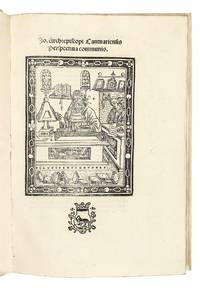
1504réf. 5444Venice: Giovanni Battista Sessa June 1504. THIRD OR FOURTH EDITION of the two editions of 1504 priority has not been determined. THE FIRST TO BE EDITED BY LUCA GAURICO. Hardcover. Fine. Bound in modern vellum. Title with large woodcut showing the author in his study surrounded by books lecturing his students one of whom takes notes. Sessa's cat-and-mouse printer's device appears on the same leaf.The text is illustrated with 77 woodcut diagrams. A very fine copy crisp and bright. There is a very light stain on the title page a bit of soiling in the gutter of leaf A3 and a discreet paper repair to the fore-edge of the final leaf. "The 'Perspectiva communis' was the most widely used of all optical texts from the early fourteenth until the close of the sixteenth century and it remains today the best index of what was known to the scientific community in general on the subject" DSB. It was first printed in Milan around 1482 then in 1503 it was included in a collection by Thomas Bradwardine "Praeclarissimum mathematicarum opus"Valencia. This 1504 edition the first edited by Luca Gaurico can be considered the third although another edition of the pre-Gaurico version was also published in 1504 at Leipzig. A mathematician from Naples and teacher of Scaliger Gaurico who also edited the works of Archimedes and Ptolemy completely revised the text. "The work on which Pecham's fame has chiefly rested is the Perspectiva communis probably written between 1277 and 1279 during Pecham's professorship at the papal curia. In the first book Pecham discussed the propagation of light and color the anatomy and physiology of the eye the act of visual perception physical requirements for vision the psychology of vision and the errors of direct vision. In book II he discussed vision by reflected rays and presented a careful and sophisticated analysis of image formation by reflection. Book III was devoted to the phenomena of refraction the rainbow and the Milky Way. "The central feature of Pecham's optical system and the dominant theme of book I of the 'Perspectiva communis' is the theory of direct vision. Here as elsewhere Pecham endeavored to reconcile all the available authorities-Aristotle Euclid Augustine al-Kindi Ibn al-Haytham Ibn Rushd Grosseteste and Bacon. Following Ibn al-Haytham Pecham argued that the emission of visual rays from the observer's eye is neither necessary nor sufficient as an explanation of sight; the primary agent of sight is therefore the ray coming to the eye from a point on the visible object. But in an attempt to follow Aristotle al-Kindi and Grosseteste as well Pecham argued that visual rays do nevertheless exist and perform the important but not always necessary function of moderating the luminous rays from the visible object and making them "commensurate with the visual power." Thus Pecham like Bacon resolved the age-old debate between the emission and intromission theories of vision in favor of a twofold radiation although to be sure priority was given to rays issuing from the visible object. "The rays issuing from points on the visible object fall perpendicularly onto the cornea and penetrate without refraction to the sensitive ocular organ the glacial humor or crystalline lens; nonperpendicular rays are weakened by refraction and therefore can be largely ignored. Since only one perpendicular ray issues from each point of the visible object and the collection of such perpendicular rays maintains a fixed order between the object and the eye a one-to-one correspondence is established between points on the object and points on the glacial humor and unconfused perception of the visual field is thus achieved. Vision is not "completed" however in the glacial humor. There is a further propagation of the rays or species through the vitreous humor and optic nerve to the common nerve where species from the two eyes combine and eventually to the anterior part of the brain and the "place of interior judgment." "Pecham's optical system included significantly more than a theory of direct vision. He briefly discussed the doctrine of species; treated at length the propagation of rays; and developed a theory to explain how solar radiation when passing through noncircular apertures gives rise to circular images. He expressed the full law of reflection and applied it to image formation by plane spherical cylindrical and conical mirrors; in this analysis he revealed an implicit understanding of the nature of the focal point of a concave mirror. Although he did not possess a mathematical law of refraction he successfully applied the general qualitative principles of refraction to the images that result from refraction at plane and circular interfaces between transparent media of various densities. In his discussion of the rainbow Pecham again attempted to reconcile different theories. He argued that all three kinds of rays rectilinear reflected and refracted concur in the generation of the rainbow. "Pecham's 'Perspectiva communis' is still extant in more than sixty manuscripts and went through twelve printed editions including a translation into Italian between 1482 and 1665. It was used and cited by many medieval and Renaissance natural philosophers including Dominicus de Clavasio Henry of Langenstein Blasius of Parma Lorenzo Ghiberti Leonardo da Vinci Albert Brudzewski Francesco Maurolico Giambattista della Porta Girolamo Fabrici Johannes Kepler Willebroad Snellius and G. B. Riccioli. It was lectured upon in the late Middle Ages at the universities of Vienna Prague Paris Leipzig Cracow Würzburg Alcala and Salamanca."DSB. Giovanni Battista Sessa, June hardcover books
réf. 1331326923.Gpaperback. Good. Access codes and supplements are not guaranteed with used items. May be an ex-library book. paperback
2012In-8 (Cm 24 x 17), pp. 153, brossura editoriale illustrata. COME NUOVO
1921103 pages. Includes organ sheet music for twenty-six famous works including: Ave Maria; Barcarolle; Carnelius March; Hallelujah Chorus; Moonlight; Polonaise Militaire; Song of India; Swing Song; and many more. Few markings. Average wear. Binding intact. A sound vintage copy. Book
1905in-8, pp. (2), 232, (4), bross. edit. con cop. a 2 col. e tit. al d. Con 1 ritr. in antip., con ill. n.t. e 3 cc. topogr. a col. rip. f.t. raff. il territorio di Ancona e dintorni nel 1860, Gaeta e dintorni, Messina e dintorni nel 1861. Ricordi di guerra di un giovane ufficiale. Con errata corrige al fine. Alcuni difetti. Raro. [055]
1903Milano, 1903, estratto con copertina posticcia muta, pp. 219/228 con ill. - !! ATTENZIONE !!: Con il termine estratto (o stralcio) intendiamo riferirci ad un fascicolo contenente un articolo di rivista, sia che esso sia stato stampato a parte utilizzando la stessa composizione sia che provenga direttamente da una rivista. Le pagine sono indicate come "da/a", ad esempio: 229/231 significa che il testo è composto da tre pagine. Quando la rivista di provenienza non viene indicata é perchè ci è sconosciuta. - !! ATTENTION !!: : NOT A BOOK : “estratto” or “stralcio” means simply a few pages, original nonetheless, printed in a magazine. Pages are indicated as in "from” “to", for example: 229/231 means the text comprises three pages (229, 230 and 231). If the magazine that contained the pages is not mentioned, it is because it is unknown to us.
196925,2x16,5 cm; 55, (9) pp. Brossura editoriale realizzatta con cartoncino "Murillo". Edizione stampata in 115 copie (questa nr 99) su carta di Fabriano fatta a mano, con tre aquaforti di Orfeo Tamburi anch'esse numerate. Orfeo Tamburi nasce a Jesi nel 1910. Giovanissimo entra in contatto con i maggiri esponenti dell'arte italiana con i quali stringe salda amicizia. Nel 1939 è presente alla III Quadriennale e alla mostra milanese di "Corrente" dove espone con il gruppo "romano". L'anno dopo espone a Roma insieme a Guttuso, Guzzi, Montanarini, Ziveri, Fazzini. Da questo momento in poi diventa artista affermato in tutta Italia ed Europa. Nel 1944 inizia a pubblicare i primi libri d'arte: il volume di disegni Piccola Roma, con una poesia di Ungaretti, e illustra le Passeggiate romane di Stendhal. Bellissime le acquaforti presenti in questo volume. In perfetto stato di conservazione. COME NUOVO. RARA EDIZIONE ORIGINALE.
réf. 133407643X.Gpaperback. Good. Access codes and supplements are not guaranteed with used items. May be an ex-library book. paperback
réf. 1333877013.Gpaperback. Good. Access codes and supplements are not guaranteed with used items. May be an ex-library book. paperback
1770Veduta tratta dal raro “Delle Citta' d'Italia e Sue Isole Adiacenti Compendiose Notizie Sacre, E Profane Compilate Da Cesare Orlandi Nobile Patrizio Di Fermo, Di Atri, E Di Citta' Della Pieve, Accademico Augusto, Errante Già Raffrontato, E Nella Regia Accademia Peloritana De' Pericolanti Di Messina , Detto Lo Svegliato. Dedicate Alla Santità Di N. S. Papa Pio VI”, stampato In Perugia: nella stamperia augusta: presso Mario Riginaldi, 1770-1778. La raccolta riporta informazioni esaustive e schizzi di notevole qualità artistica di molte città italiane e che è stata pubblicata a spezzoni nell'arco di quasi un decennio (1770-1778). L'opera è rimasta incompiuta a causa della morte dell'autore nel 1779, e l'elenco delle città italiane trattate nell'opera va dalla lettera A alla lettera C. L'opera è spesso una preziosa fonte di informazioni per conoscere la struttura, l'ordinamento, l'architettura e la storia delle città italiane fino al Settecento.Incisione in rame, in perfetto stato di conservazione. Veduta tratta dal raro “Delle Citta' d'Italia e Sue Isole Adiacenti Compendiose Notizie Sacre, E Profane Compilate Da Cesare Orlandi Nobile Patrizio Di Fermo, Di Atri, E Di Citta' Della Pieve, Accademico Augusto, Errante Già Raffrontato, E Nella Regia Accademia Peloritana De' Pericolanti Di Messina , Detto Lo Svegliato. Dedicate Alla Santità Di N. S. Papa Pio VI”, stampato In Perugia: nella stamperia augusta: presso Mario Riginaldi, 1770-1778. La raccolta riporta informazioni esaustive e schizzi di notevole qualità artistica di molte città italiane e che è stata pubblicata a spezzoni nell'arco di quasi un decennio (1770-1778). L'opera è rimasta incompiuta a causa della morte dell'autore nel 1779, e l'elenco delle città italiane trattate nell'opera va dalla lettera A alla lettera C. L'opera è spesso una preziosa fonte di informazioni per conoscere la struttura, l'ordinamento, l'architettura e la storia delle città italiane fino al Settecento.Incisione in rame, in perfetto stato di conservazione.
1836-1837, 3 fascicoli, 28 cm, p. (4) ciascuno, alcuni antichi appunti a penna
1916In 4? (cm 30,5), Graffato, pagg.35 cop. moderna in carta Varese, alcune cancellature a matita nel testo a stampa, ampie annotazioni al margine e su tutta l'ultima pagina bianca verosimilmente scritte dagli stessi autori del testo, fioriture, due forellini al margine bianco inferiore delle prime quattro carte, piccola mancanza al margine bianco laterale della prima pag, ma buon es. Causa tra Cesare Salvietti, negoziante di vino in San Giovanni Valdarno, e i sigg. Macchiati Lamberto e Bartocci Francesco di Camerino relativa al pagamento di dieci botti di vino.
1934Mm 170x245 Estratto dal "Bollettino della Società Eustachiana", Anno XXXII, Fasc. I. Brossura editoriale spillata di [14] pagine, da 18 a 32. Firma dell'autore al piatto anteriore, esemplare in ottime condizioni. SPEDIZIONE IN 24 ORE DALLA CONFERMA DELL'ORDINE.
1965(Ist. di studi per lo sviluppo econ. delle Marche). 8°, pp.219 (3) + 10 carte delle Marche a coll. e 2 grafici f.t. Br. edit.
2017Con saggio di Michele Aleffi (Le briofite della cascata). 107 p., f.to cm 23x24,5, copertina rigida, illustrazioni a colori. Nuovo
2005Mm 170x240 Brossura editoriale di pp. 93, numerose illustrazioni a colori nel testo. Opera in ottime condizioni. SPEDIZIONE IN 24 ORE DALLA CONFERMA DELL'ORDINE.
1974Forlì, 1974, stralcio con copertina posticcia muta, pp. 171/180 con una figura nel testo ed una tavola fotografica f.t. - !! ATTENZIONE !!: Con il termine estratto (o stralcio) intendiamo riferirci ad un fascicolo contenente un articolo di rivista, sia che esso sia stato stampato a parte utilizzando la stessa composizione sia che provenga direttamente da una rivista. Le pagine sono indicate come "da/a", ad esempio: 229/231 significa che il testo è composto da tre pagine. Quando la rivista di provenienza non viene indicata é perchè ci è sconosciuta. - !! ATTENTION !!: : NOT A BOOK : “estratto” or “stralcio” means simply a few pages, original nonetheless, printed in a magazine. Pages are indicated as in "from” “to", for example: 229/231 means the text comprises three pages (229, 230 and 231). If the magazine that contained the pages is not mentioned, it is because it is unknown to us.
1972Forlì, 1972, stralcio con copertina posticcia muta, pp. 124/130 con una figura bel testo e due tavole fuori testo - !! ATTENZIONE !!: Con il termine estratto (o stralcio) intendiamo riferirci ad un fascicolo contenente un articolo di rivista, sia che esso sia stato stampato a parte utilizzando la stessa composizione sia che provenga direttamente da una rivista. Le pagine sono indicate come "da/a", ad esempio: 229/231 significa che il testo è composto da tre pagine. Quando la rivista di provenienza non viene indicata é perchè ci è sconosciuta. - !! ATTENTION !!: : NOT A BOOK : “estratto” or “stralcio” means simply a few pages, original nonetheless, printed in a magazine. Pages are indicated as in "from” “to", for example: 229/231 means the text comprises three pages (229, 230 and 231). If the magazine that contained the pages is not mentioned, it is because it is unknown to us.
1572Tre carte geografiche in un foglio, raffiguranti il territorio senese, la Corsica e le Marche. Foglio tratto dal Theatrum Orbis Terrarum e che è considerato il primo vero “atlante” moderno. L’opera fu pubblicata in 7 lingue e 36 edizioni, per il quale – nel 1570 - Ortelius ottenne il privilegio, ovvero una sorta di diritto d'autore che impediva ad altri cartografi di pubblicare i propri lavori. Il Theatrum rappresentava il lavoro più avanzato del lavoro della descrizione cartografica. L’Ortelius vi raccolse il sapere geografico e cartografico del suo tempo, proponendo in 147 spettacolari tavole incise l’immagine più fedele del mondo allora conosciuto e, in alcune straordinarie “carte storiche”, regioni e itinerari tratti dalla letteratura, dalla mitologia, dalla tradizione. Ortelius fu anche il primo a citare le fonti, menzionando i nomi dei cartografi nel “catalogus auctorum”. Dal 1598 al 1612 le edizioni postume del Theatrum furono realizzate dal suo collaboratore Johannes Baptiste Vrients. Incisione in rame, bella coloritura a mano, leggere ossidazioni, in ottimo stato di conservazione. Three maps in one sheet, showing Siena, Corsica and Marche. Maps taken from the Theatrum Orbis Terrarum, which is considered the first true modern "Atlas". The work was published in 7 languages and 36 editions, for which - in 1570 - Ortelius obtained the privilege, a kind of copyright that prevented other cartographers from publishing his works. The Theatrum represented the most advanced work of cartographic description. Ortelius collected in it the geographical and cartographic knowledge of his time, proposing in 147 spectacular engraved plates the most faithful image of the world then known and, in some extraordinary "historical maps", regions and routes taken from literature, mythology, tradition. Ortelius was also the first to cite sources, mentioning the names of cartographers in the "catalogus auctorum". From 1598 to 1612 the posthumous editions of the Theatrum were made by his collaborator Johannes Baptiste Vrients. Copperplate with later hand colour, some foxing, generally in good conditions. M. Van den Broecke "Ortelius Atlas Maps" (2011), n. 137.
2009In-8 (Cm 22 x 20), pp. 320, brossura editoriale illustrata, illustrazioni a colori e bianco nero nel testo. COME NUOVO
185722 cm, cop. muta recente; pp. 30, (10), vignetta silografica al frontespizio
1977réf. 2090502113713187Not Available 1977. Soft Cover. Fine. The book is in fine condition. Not Available paperback
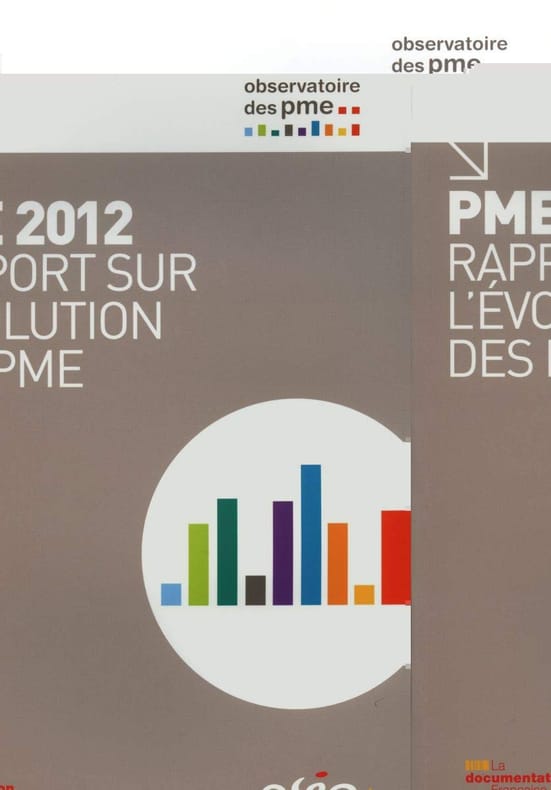
2013réf. 500098206Doc Française 2013 324 pages 22 2x2 8x29 6cm. 2013. Broché. 324 pages.
195134 pages. Features: Let's Do Some Mixers; Obituary for "Uncle" Carl Myles; Asilomar Square Dance Institute; Eastern Trip; Box the Gnat; Sashay Out and Sides Cut In; Squares of the Month - Bea and Barry Binns; Fremont High School Party in Los Angeles; Kern County Callers' Roundup - many photos of callers; Western San Gabriel Jamboree; Riverside Breakfast Club in Glendale, California hold benefit dance; Photos of Ross White and Lee Bedford, Sr.; Third Man Theme; Music Box Waltz; Photo and brief write-up of Merle Coleman, a staffer for this magazine; Large beautiful photo ad for Kathy's Cottons inside back cover features Joan Vohs, M.G.M. starlet; Other nice vintage ads. Average wear. Unmarked. A sound vintage copy. Magazine
réf. #[36402]Diss. Leipzig 18-1-1704 ; 6 57 p. Met afbeelding van de munt op de titelpagina l Opdracht: aan Friedrich van Brandenbrug. unknown