Associazione Nazionale Bersaglieri.MareMagnum

8 866 résultats
1996(Codice MT/1090) In 4º (30 cm) 96 pp. Edizione per il 160° della Fondazione del Corpo. Testo entro cornice tricolore, moltissime illustrazioni in nero e a colori. Brossura editoriale. Ottimo: come nuovo. ~~~ SPEDIZIONE IN ITALIA SEMPRE TRACCIATA
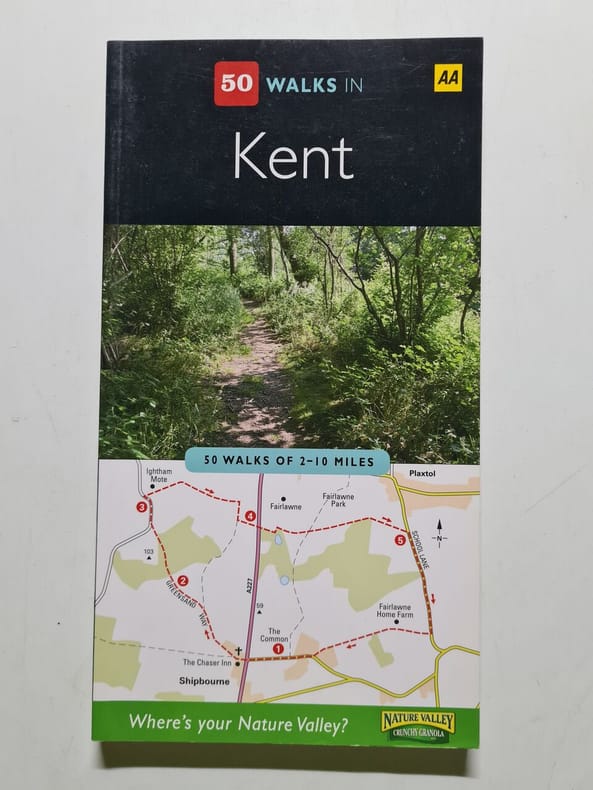
2008réf. 500252918AA PUB 2008 144 pages 21 8x1x11 2cm. 2008. Broché. 144 pages.
2002réf. 500253001Automobile Association 2002 128 pages 11 8x1 2x21 6cm. 2002. Broché. 128 pages.
1998réf. V34832Hamburg (Gruner + Jahr AG) [1998] (= wöchentliche Beilage zum Stern). 4°, illustrierter Originalumschlag ( Klammerheftung) 30 S., Abbildungen, 1
900In 4? (cm 33x26), Leg. mz. tela, piatti marmorizzati, pagg.(2) - 141 lievi mende ai piatti al dorso, alcuni segni a matita, anche colorata, alle pagg. interne, peraltro buon esemplare.
1848NOTE: esemplare mancante delle 2 tavv.inserite nt. TITOLO: 70 Luogotenente di Barbarossa. AUTORE: Cannonieri da Modena,Giuseppe. EDITORE: per Carlo Soldi DATA ED.: 1848, COLLANA: (esemplare mancante delle 2 tavv.inserite nt.).
1977réf. 1027411977. Softbound. VG. Stiff wraps. 32 pp. 25 bw plates. Catalogue lists 200 works. unknown books
1940réf. 1247771940. Softbound. VG- catalogue somewhat soiled with small piece of tape along spine. Printed wraps with map in background. 16 pp. No illus. Catalogue lists 184 works with a list of award winners. paperback books
1969réf. 1357981969. Softcover. VG exlibrary with stamp on outside of folding portfolio case. Green wraps. 12 sheets printed on both sides with images of works 2 are in color andblue folding sheet of Awards and Green tri-fold sheet with essay and listing. Catalogue lists 40 Juried works and 20 works included by invitation.with a two-page introductory essay by Wahneta Robinson some interesting illustrations interspersed with quotes from famous artists. 1200 copies printed. Catalogue designed by Walter Showalter. paperback books
1974réf. b1833MIT Press 1974. 1st American Edition. 360 pages. AsNew Soft cover. 6.85x9.5x0.9 in. be42 MIT Press paperback
réf. 12682710-nnew. unknown
1954réf. 98503Paris, Au Bon Marché, 1954, in-8, 32 pp, Broché, couverture illustrée en noir, Catalogue illustré en noir d'articles de mode. Légères taches. Couverture rigide
1941réf. 43269, , 1941. Album in-4 oblong de 79 photographies argentiques (9 x 13 cm) légendées et contre-collées sur papier fort, couverture rose de l'époque.
1941réf. 43270, , 1941. Album In-4 de 35 photographies (13 x 18 cm) contrecollées sur papier fort bleu, couverture grise.
réf. 219447Bourganeuf, 10 thermidor an IV (28 juillet 1796) in-4, [4] pp. n. ch., couvertes d'une écriture moyenne et très lisible, quelques ratures et biffures, en feuille.
1907Very Good Turkish, Ottoman (1500-1928) Original autograph letter handwritten signed by Mahmud Sevket. (33x21 cm). In Ottoman script. 1 p. Case and its response by Mahmud Sevket when he was the governor of Kosovo. Document has 17 lines including the case of 'comitadjis' in Gjilan region of Kosovo. Report says that several comitadjis have been arrested and for them the court was expected to issue a death sentence. In his response, Mahmud Sevket Pasha has ordered that the death penalty should be converted to life rowing (hard labour). Mahmud Sevket's text: "Mabeyn-i Humayun Cenâb-i mülûkâne-i bas kitâbet celilesinden (?) celileden teblîg buyurulan telgrafane-i âlîsi sureti bilâde nakl-i (?) müebbeden kürek cezasi ile mahkûm edilerek idamlari cihetine gidilmemenin azâ-yi muhakemeye ettirilmeyeek ve muamelât-i muhakeme-i te'dib etmekte olan memuriye mucibiince dahi anlasilamayacak surette muhakeme-i fevkalâde re'isine bizzat sifâhen teblîg buyurulmus ve isbu muharebenin nezd-i âlîsinde hifz-i (?) müsarinileyhin emriyle müstesnâdir. Yevm-i muhakeme gayr-i mâlûm ise de bunun yarisinin bile icrâ olunmasi mahtumun bulunduguna göre teblîgâtin ihtiyâten teblîgi (?) baskaca beyân olunur efendim. Kosova Vâlisi Birinci Ferik Mahmud Sevket.".
1893réf. 5365261893 In-8, relié demi-chagrin havane, dos à nerfs, titre doré, plats et gardes marbrés, couvertures conservées, envois autographes (qqs angles marginaux de. ff. réparés).
1903Very Good Turkish, Ottoman (1500-1928) Original manuscript autograph document signed by Mehmed Said Pasha sent to Trabzon Vilayat, Ordu Kaza, Hasbamane Nahiya local manager, faziletlu 'Mehmed Ali Sevki Beyefendi'. 33,5x20 cm. Folded. 1 p. In Ottoman script. Mehmed Said Pasha was an Ottoman monarchist, senator, statesman and editor of the Turkish newspaper Jerid-i-Havadis. He supported the CUP, the political party which came to power after the Ottoman coup d'état of 1913. His origin comes from 'Sebazâde family' from Ankara. He became first secretary to Sultan Abdul Hamid II shortly after the Sultan's accession, and is said to have contributed to the realizations of his majesty's design of concentrating power in his own hands; later he became successively minister of the interior and then governor of Bursa, reaching the high post of grand vizier in 1879. He was grand vizier seven more times under Abdul Hamid II, and once under his successor, Mehmed V. He was known for his opposition to the extension of foreign influence in Turkey. n 1896, he took refuge at the British embassy in Constantinople, and, though then assured of his personal liberty and safety, remained practically a prisoner in his own house. He came into temporary prominence again during the revolution of 1908. On 22 July he succeeded Mehmed Ferid Pasha as grand vizier, but on the 6 August was replaced by the more liberal Kâmil Pasha, at the insistence of the Young Turks. Also during 1908, Mehmed Said Pasha bought the famed Istanbul arcade in the Beyoglu (Pera) district, today known as Çiçek Pasaji ("Flower Passage"). The modern name became common in the 1940s; during Mehmed Said Pasha's ownership in the 1900s and 1910s, the arcade was known as Sait Pasa Pasaji ("Said Pasha Passage"). During the Italian crisis in 1911-12, he was again called to the premiership. He was again removed from power by the Savior Officers (who backed the Freedom and Accord Party (Liberal Union) against the Committee of Union and Progress) and replaced by a new cabinet supported by the Officers and the Freedom and Accord Party. The CUP would return to power, however, the next year after the Ottoman coup d'état of 1913. (Source: Wikipedia). Seven lines on special paper with watermark 'Joynson Superfine'. Letter of request to provide teaching for some students in the region.
1909Very Good Turkish, Ottoman (1500-1928) Original paper autograph letter handwritten signed by Mahmud Sevket, Izzeddin Çalislar. (33x21 cm). In Ottoman script. 2 p. Repaired back side. Request of a surgical operation by 'Said bin Mehmed' (Siroz Redif Taburu Efrâdindan) and Mahmud Sevket Pasha and Izzeddin's confirmations. Signed by Mahmud Shevket Pasha as "commander of Turkish countercoup of 1909 (Hareket Army)" and by Izzeddin [Çalislar] as "Erkân-i Harb Kolagasi (Batallion commander)". The Ottoman countercoup of 1909 (13 April 1909) was an attempt to dismantle the Second Constitutional Era of the Ottoman Empire and replace it with an autocracy under Sultan/Caliph Abdul Hamid II. Unfortunately for the advocates of representative parliamentary government, mutinous demonstrations by disenfranchised regimental officers broke out which led to the collapse of the Ottoman government. Characterized as a counterrevolution, chaos reigned briefly and several people were killed in the confusion. It was instigated by some parts of the Ottoman Army in a large part by a certain Cypriot Islamic extremist. Dervish Vahdeti reigned supreme in Istanbul for 11 days. The Countercoup was put down in the 31 March Incident, on 24 April 1909 by the Army of Action (Hareket Ordusu) which was the 11th Salonika Reserve Infantry Division of to the Third Army (Ottoman Empire) commanded by Mahmud Shevket Pasha. Extremely rare.
réf. 96400Paris, Au Bon Marché, [1927], in-8, 1 f, , Prospectus illustré en noir présentant quelques articles du magasin parisien Au Bon Marche, d'un côté un phonographe, de l'autre des produits de beauté. Couverture rigide
1924Very Good French Paperback. Folio. (34 x 25 cm). In French. 15 p. 7 p. Stains on pages and cover. [SHEET MUSIC] Ire Valse pour piano Op. 83 par. Marie-Auguste Massacrié-Durand was a French music publisher, organist, and composer. Durand was born in Paris and studied at the Paris Conservatoire with François Benoist. He started as an organist in 1849 in Saint-Ambroise, then at St. Genevieve, St. Roch and St. Vincent de Paul (1862-74). Together with Louis Schoenewerk and other sponsors, Durand founded the company Durand-Schoenewerk & Cie. in December 1869 and acquired the important catalogue of the Paris music publisher Gustave Flaxland (1821-1895), which had grown from approximately 1,200 titles in 1847 to 1,400 titles in 1869. This included the French rights to the early Wagner operas. Following a dispute, the company dissolved on 18 March 1885 and was sold at auction in May 1896. Auguste Durand and Louis Schoenewerk bought the firm in its entirety, and they reconstituted the company with Durand's son Jacques (1865-1928). In November 1891, Jacques replaced Schoenewerk and the name changed to A. Durand & fils. Jacques assumed control of the company in 1909 when his father died, and brought in his cousin Gaston Choisnel (d. 1921) as a partner. Durand became an expert in the publication of works by French composers including Victorin de Joncières, Edouard Lalo, Jules Massenet, Claude Debussy, Camille Saint-Saëns, Maurice Ravel, Albert Roussel and Paul Dukas. The company also published the French editions of Tannhäuser, The Flying Dutchman and Lohengrin by Richard Wagner and many editions of old masters including, in particular, a complete critical edition of Rameau edited under the initial direction of Saint-Saëns. Between 1910 and 1913, Auguste and, after his death, his son Jacques organised concerts to raise awareness of new music. In 1914, Jacques published under the title Édition classique Durand & fils important nineteenth-century works for piano including the music of Chopin edited by Debussy, of Mendelssohn by Ravel and of Schumann by Gabriel Fauré. [.]. Sotiri Christides [sic. Christidis] who is an contemporary of Andria, started music publications in 1905's. Christides published on almost all the areas of music under the captions in Greek and Ottoman languages. He published some various Turkish marches and operets' scores besides Western music. He gave as the address 'Edition S. Christides: Grand Rue de Pera, 215, Constantinople). Hemay be stated that he published almost 1000 musical scores [.]. (Source: Musical publications from Ottoman Empire up today, 1876-1986.; BÜLENT ALANER).
1924Very Good Greek, Modern (post 1453) Paperback. Folio. (32 x 25 cm). In Greek. 4 p. [SHEET MUSIC] Se mia trellin Zanthoula. Lyrics by D. Tzeretapoulou. Music by N. Kokkinou. Sotiri Christides [sic. Christidis] who is contemporary of Andria, started music publications in the 1905's. Christides published in almost all the areas of music under the captions in Greek and Ottoman languages. He published some various Turkish marches and operettas' scores besides Western music. He gave as the address 'Edition S. Christides: Grand Rue de Pera, 215, Constantinople). He may be stated that he published almost 1000 musical scores [.]. (Source: Musical publications from Ottoman Empire up today, 1876-1986.; BÜLENT ALANER).
1924Very Good Greek, Modern (post 1453) Paperback. Folio. (32 x 25 cm). In Greek. 3 p. [SHEET MUSIC] Ztin aponoa zou: N. Kokkinou.; Serenate d'amore: G. Ingenito.; Mi Lizmoniz: E. di Capua.; I. Petalouda: N. Kokkinou. Di Azma kai Klidekumvalon. Sotiri Christides [sic. Christidis] who is an contemporary of Andria, started music publications in 1905's. Christides published on almost all the areas of music under the captions in Greek and Ottoman languages. He published some various Turkish marches and operets' scores besides Western music. He gave as the address 'Edition S. Christides: Grand Rue de Pera, 215, Constantinople). Hemay be stated that he published almost 1000 musical scores [.]. (Source: Musical publications from Ottoman Empire up today, 1876-1986.; BÜLENT ALANER).
[In Macerata, appresso Agostino Grisei, 1648], in-8 piccolo, pp. da [3] a 91, [3]. Modesto esemplare, privo di legatura e mancante del frontespizio. Opera comunque molto rara, censita in un solo esemplare in ICCU (alla Biblioteca comunale Francesco Antolisei di San Severino Marche).