50.777 risultati
1899rif. 53391899 frontispice: portrait de l'auteur gravé à l'eau-forte par Le Rat. Paris, Ollendorff, 1899; in-12, VII + 214 pp.,broché, parfait etat
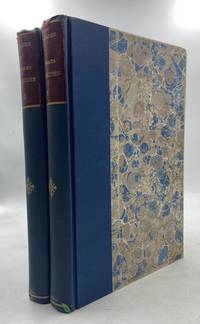
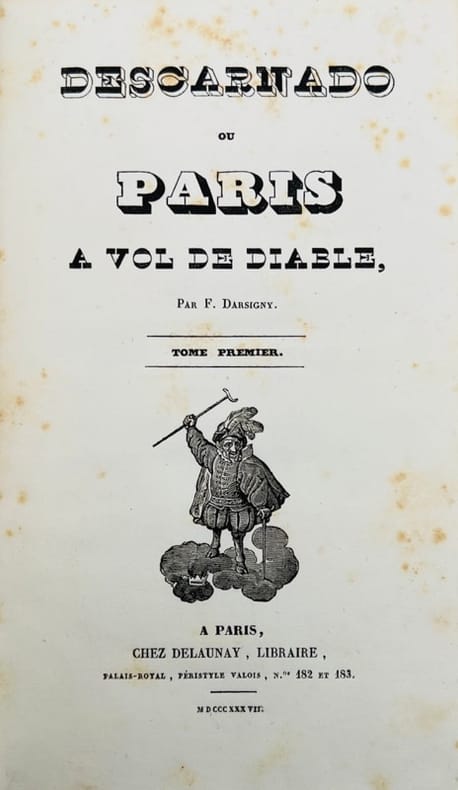
1837rif. 39749Paris, Delaunay, 1837. 2 vol. in-8 de 36-(4)-304 pp. ; 342-(2) pp., demi-veau blond glacé, dos lisse orné (reliure de l'époque).
1759rif. 28993Paris: Chez Moreau Hochereau l'ainé 1759. Cancelled state of leaf L1. 1 vols. 8vo. Contemporary sprinkled calf red morocco label. Some rubbing of extremities short cracks along upper joint light spotting hole in last page affecting a few letters else very good with a manuscript ex-libris on title-page. Cancelled state of leaf L1. 1 vols. 8vo. Chez Moreau, Hochereau l'ainé unknown
1759rif. 29000Paris: Chez Moreau Hochereau l'ainé 1759. With uncancelled state of leaf L1. 1 vols. 8vo. Contemporary stained sheep red morocco label spine gilt. Rubbed head and tail of spine chipped some soiling and light browning else very good with an 1811 ex-libris on the title. With uncancelled state of leaf L1. 1 vols. 8vo. Chez Moreau, Hochereau l'ainé unknown
2026rif. LRB513799Paris: Editions Recreasoft 2026 Langue : Français. Environ 505 pages. Français : Réimpression à la demande. Édition originale : 1820. Ouvrage de référence consacré aux antiques conservés au Musée royal avec descriptions détaillées et tables destinées à faciliter l'étude et le repérage des pièces. L'ensemble témoigne de l'intérêt porté au début du XIXe siècle à la sculpture antique aux inscriptions aux objets d'art et à leur classement savant. Ce volume intéressera les collectionneurs historiens de l'art archéologues et bibliophiles attentifs aux publications muséales anciennes. Images du livre non contractuelles English : Print-on-demand reprint. Original edition : 1820. Reference work devoted to the antiquities preserved in the Royal Museum with detailed descriptions and tables designed to support the study and identification of the objects. It reflects early nineteenth-century scholarly interest in ancient sculpture inscriptions works of art and their systematic classification. This volume will appeal to collectors art historians archaeologists and bibliophiles interested in early museum publications. Book images are non-contractual. Editions Recreasoft. Softcover. New. Editions Recreasoft paperback
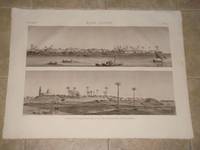
1809rif. 25341Paris: Imprimerie Impériale 1809. Fine. Imprimerie Impériale Paris 1809-1829 53.50 x 70 cm une feuille Original unshaved full-page etching from the Imperial edition of the Description de l'Égypte or Recueil des observations et recherches faites en Égypte pendant l'expédition française publié par les ordres de Sa Majesté l'Empereur Napoléon le Grand A Collection of the observations and research carried out in Egypt during the French expedition published on the orders of his Majesty the Emperor Napoleon the Great'.Produced between February 1802 and 1830 on the orders of Naopleon Bonaparte and published between 1809 and 1828 1000 copies were printed and distributed to institutions on vergé paper with an 'Égypte ancienne et moderne' watermark visible when held up to the light. Light marginal spotting not touching image otherwise in very fresh fine condition. An engraving from the Description de l'Egypte one of the masterpieces of French printing and the birth of a new field: Egyptology. A gigantic survey of Egypt at the time of Bonaparte's conquests in 1798 and 1799 the work is divided into 13 volumes of engravings making up 892 plates of which 72 colored as well as presenting the splendors of the Egypt of the Pharaohs in 9 volumes. The other volumes discuss natural history and present a fascinating portrait of Coptic and Islamic Egypt as it was seen by Bonaparte's Eastern Armies. The Egyptian campaign' militarily a disaster demonstrates through the engravings of the Description d'Egypte the scientific success it nonetheless became thanks to the 167 expert members of the Commission of the Sciences and Arts of the Institut d'Egypte Egyptian Institute who followed Napoleon's army. The Institut gathered together in Egypt the mathematician Monge the chemist Berthollet the naturalist Geoffroy Saint-Hilaire as well as numerous artists engineers architects and doctors. They were tasked with re-discovering modern and ancient Egypt and displaying its natural treasures as well as the know-how of its inhabitants.This edition the so-called Imperial edition of the plates for the Description de l'Egypte was printed in four large formats two of which were specially created for it and christened Moyen-Egypte and Grand-Egypte. A special press was built to print it the process extending over 20 years from 1809 to 1829. The Imperial edition proved so popular that a second edition this time in black and white and without the Egypte ancienne et moderne watermark known as the Royal Edition was published during the Restoration by the printing house of C.-L.-F. Panckoucke Paris.The engravings of the Description d'Egypte owe a great deal to Baron Dominique-Vivant Denon illustrator diplomat collector and later Director of the Musée Napoléon the Louvre. His exploration of the South of Egypt gave Bonaparte the idea of sending the experts of the Institut there thus creating a faithful and complete portrait of the area. This was the research gathered together from 1802 in the mammoth Description de L'Egypte.Denon embarked on this story of archeological exploration at the age of 51 reaching first Alexandria and then Cairo before exploring Upper Egypt. Along with the members of the Institut d'Egypte the Natural History Museum's painter H.J. Redouté brother of Pierre-Joseph Redouté author of Roses the mineralogist Dolomiue and the draughtsman Joly Denon then explored the Nile Delta and Lower Egypt. When however he joined the 21st Light Infantry Regiment as it marched across Upper Egypt in pursuit of the retreating Mameluks in November 1798 he found himself the only civilian. In the very midst of the battle itself he reeled off sketches of the works of art that peppered his path right up to the threshold of the Sudan. He said that he had crossed a country that is apart from its name entirely unknown to Europeans and therefore everything was worth describing Voyages dans la Basse et la Haute Egypte pendant les campagnes Imprimerie Impériale unknown
1809rif. 25365Paris: Imprimerie Impériale 1809. Fine. Imprimerie Impériale Paris 1809-1829 53.50 x 70 cm une feuille Original unshaved full-page etching from the Imperial edition of the Description de l'Égypte or Recueil des observations et recherches faites en Égypte pendant l'expédition française publié par les ordres de Sa Majesté l'Empereur Napoléon le Grand A Collection of the observations and research carried out in Egypt during the French expedition published on the orders of his Majesty the Emperor Napoleon the Great'.Produced between February 1802 and 1830 on the orders of Naopleon Bonaparte and published between 1809 and 1828 1000 copies were printed and distributed to institutions on vergé paper with an 'Égypte ancienne et moderne' watermark visible when held up to the light. Light marginal spotting not touching image otherwise in very fresh fine condition. An engraving from the Description de l'Egypte one of the masterpieces of French printing and the birth of a new field: Egyptology. A gigantic survey of Egypt at the time of Bonaparte's conquests in 1798 and 1799 the work is divided into 13 volumes of engravings making up 892 plates of which 72 colored as well as presenting the splendors of the Egypt of the Pharaohs in 9 volumes. The other volumes discuss natural history and present a fascinating portrait of Coptic and Islamic Egypt as it was seen by Bonaparte's Eastern Armies. The Egyptian campaign' militarily a disaster demonstrates through the engravings of the Description d'Egypte the scientific success it nonetheless became thanks to the 167 expert members of the Commission of the Sciences and Arts of the Institut d'Egypte Egyptian Institute who followed Napoleon's army. The Institut gathered together in Egypt the mathematician Monge the chemist Berthollet the naturalist Geoffroy Saint-Hilaire as well as numerous artists engineers architects and doctors. They were tasked with re-discovering modern and ancient Egypt and displaying its natural treasures as well as the know-how of its inhabitants.This edition the so-called Imperial edition of the plates for the Description de l'Egypte was printed in four large formats two of which were specially created for it and christened Moyen-Egypte and Grand-Egypte. A special press was built to print it the process extending over 20 years from 1809 to 1829. The Imperial edition proved so popular that a second edition this time in black and white and without the Egypte ancienne et moderne watermark known as the Royal Edition was published during the Restoration by the printing house of C.-L.-F. Panckoucke Paris.The engravings of the Description d'Egypte owe a great deal to Baron Dominique-Vivant Denon illustrator diplomat collector and later Director of the Musée Napoléon the Louvre. His exploration of the South of Egypt gave Bonaparte the idea of sending the experts of the Institut there thus creating a faithful and complete portrait of the area. This was the research gathered together from 1802 in the mammoth Description de L'Egypte.Denon embarked on this story of archeological exploration at the age of 51 reaching first Alexandria and then Cairo before exploring Upper Egypt. Along with the members of the Institut d'Egypte the Natural History Museum's painter H.J. Redouté brother of Pierre-Joseph Redouté author of Roses the mineralogist Dolomiue and the draughtsman Joly Denon then explored the Nile Delta and Lower Egypt. When however he joined the 21st Light Infantry Regiment as it marched across Upper Egypt in pursuit of the retreating Mameluks in November 1798 he found himself the only civilian. In the very midst of the battle itself he reeled off sketches of the works of art that peppered his path right up to the threshold of the Sudan. He said that he had crossed a country that is apart from its name entirely unknown to Europeans and therefore everything was worth describing Voyages dans la Basse et la Haute Egypte pendant les campagnes Imprimerie Impériale unknown
1809rif. 25354Paris: Imprimerie Impériale 1809. Fine. Imprimerie Impériale Paris 1809-1829 71 x 53.50 cm une feuille Original unshaved full-page etching from the Imperial edition of the Description de l'Égypte or Recueil des observations et recherches faites en Égypte pendant l'expédition française publié par les ordres de Sa Majesté l'Empereur Napoléon le Grand A Collection of the observations and research carried out in Egypt during the French expedition published on the orders of his Majesty the Emperor Napoleon the Great'.Produced between February 1802 and 1830 on the orders of Naopleon Bonaparte and published between 1809 and 1828 1000 copies were printed and distributed to institutions on vergé paper with an 'Égypte ancienne et moderne' watermark visible when held up to the light. Light marginal spotting not touching image otherwise in very fresh fine condition. An engraving from the Description de l'Egypte one of the masterpieces of French printing and the birth of a new field: Egyptology. A gigantic survey of Egypt at the time of Bonaparte's conquests in 1798 and 1799 the work is divided into 13 volumes of engravings making up 892 plates of which 72 colored as well as presenting the splendors of the Egypt of the Pharaohs in 9 volumes. The other volumes discuss natural history and present a fascinating portrait of Coptic and Islamic Egypt as it was seen by Bonaparte's Eastern Armies. The Egyptian campaign' militarily a disaster demonstrates through the engravings of the Description d'Egypte the scientific success it nonetheless became thanks to the 167 expert members of the Commission of the Sciences and Arts of the Institut d'Egypte Egyptian Institute who followed Napoleon's army. The Institut gathered together in Egypt the mathematician Monge the chemist Berthollet the naturalist Geoffroy Saint-Hilaire as well as numerous artists engineers architects and doctors. They were tasked with re-discovering modern and ancient Egypt and displaying its natural treasures as well as the know-how of its inhabitants.This edition the so-called Imperial edition of the plates for the Description de l'Egypte was printed in four large formats two of which were specially created for it and christened Moyen-Egypte and Grand-Egypte. A special press was built to print it the process extending over 20 years from 1809 to 1829. The Imperial edition proved so popular that a second edition this time in black and white and without the Egypte ancienne et moderne watermark known as the Royal Edition was published during the Restoration by the printing house of C.-L.-F. Panckoucke Paris.The engravings of the Description d'Egypte owe a great deal to Baron Dominique-Vivant Denon illustrator diplomat collector and later Director of the Musée Napoléon the Louvre. His exploration of the South of Egypt gave Bonaparte the idea of sending the experts of the Institut there thus creating a faithful and complete portrait of the area. This was the research gathered together from 1802 in the mammoth Description de L'Egypte.Denon embarked on this story of archeological exploration at the age of 51 reaching first Alexandria and then Cairo before exploring Upper Egypt. Along with the members of the Institut d'Egypte the Natural History Museum's painter H.J. Redouté brother of Pierre-Joseph Redouté author of Roses the mineralogist Dolomiue and the draughtsman Joly Denon then explored the Nile Delta and Lower Egypt. When however he joined the 21st Light Infantry Regiment as it marched across Upper Egypt in pursuit of the retreating Mameluks in November 1798 he found himself the only civilian. In the very midst of the battle itself he reeled off sketches of the works of art that peppered his path right up to the threshold of the Sudan. He said that he had crossed a country that is apart from its name entirely unknown to Europeans and therefore everything was worth describing Voyages dans la Basse et la Haute Egypte pendant les campagnes Imprimerie Impériale unknown
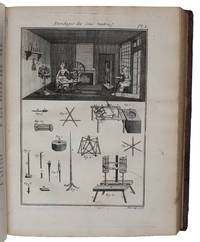
1771rif. 56289Neuchatel L'Imprimerie de la Société Typographique 1771-83. 4to. Bound in 19 contemp. uniform full mottled calf. Raised bands. Gilt spines. Title-and tomelabels with gilt lettering. Spine-ends on nearly all volumes strenghtened. Stamp on title-pages. Each volume around 650 pp. With 508 fine engraved plates. Second edition and the first 4to-edition was published in 19 volumes plus an additional volume by Jean Elie Bertrand where vol. 20 is an additional volume published much later 1799 - not present here - dealing with the art of printing. This importent collection of books on crafts was published by between 1761 and 1788. The full series comprises 113 parts cahiers in 27 folio volumes along with three supplements and "provide detailed accounts of a wide range of handcraft and manufacturing processes carried out in France at that time. The volumes are well-illustrated with precise engravings by Jean Elie Bertrand 1737-1779 a noted typographer from Neuchâtel where the printing was done. Many of them provide the background for shorter articles in Diderot's Encyclopedia which was appearing at much the same time. The project had its origin in request from Colbert in 1675 to the Academy Royal des Sciences for detailed accounts of various mechanic arts to be prepared and for new machines to be reported upon. This led to the formation of the Bignon Commission under Abbé Bignon. René-Antoine Ferchault de Réaumur 1683-1757 became editor soon after he joined the Academy. He inherited number of drawings the earliest prepared in 1693 and an illustrated manuscript on printing type and book binding which had been prepared in 1704. It was left to Réaumur's successor Duhamel du Monceau to bring about the publication of the series probably as the result of the competition from the Encyclopedia." Wikipedia.Brunet II618 ff. - Graesse II 367. hardcover
2026rif. LRB902672Paris: Editions Recreasoft 2026 Langue : Français. Environ 505 pages. Français : Réimpression à la demande. Édition originale : 1820. Ouvrage de référence consacré aux antiques conservés au Musée royal avec des développements attribués à Visconti puis complétés par plusieurs tables qui facilitent la consultation et le repérage des pièces. Cette publication intéresse autant l'histoire de l'art que l'archéologie et la documentation muséale du début du XIXe siècle. Images du livre non contractuelles English : Print-on-demand reprint. Original edition : 1820. Reference work devoted to the antiquities held in the Royal Museum with content initiated by Visconti and later supplemented by several tables that improve consultation and identification. It is of interest to scholars of art history archaeology and early nineteenth-century museum documentation. Book images are non-contractual. Editions Recreasoft. Softcover. New. Editions Recreasoft paperback
1862rif. 13540Paris: Chez MM. Rollin et Feuardent 1862. Qualche alone sulle tavole tracce di ex libris sulle sguardie mancanza sull’occhietto del primo tomo estranea al testo. Due volumi opera completa in mezza tela con titoli dorati su tassello in pelle amaranto cm 24.5 x 17 pp 4 VIII 325 1 4 376 3 complessive LXX tavole incise. In francese. Qualche alone sulle tavole tracce di ex libris sulle sguardie mancanza sull’occhietto del primo tomo estranea al testo. Edizione originale del maggior lavoro di Sabatier pubblicato come «suite et complément» dell’opera di Henry Cohen sulla monetazione imperiale romana. Da non confondersi con le ristampe novecentesche di Leipzig e Graz. Chez MM. Rollin et Feuardent hardcover
rif. 5609PARIS, Sté du traitement des Quinquinas en commémoration du centenaire de la Marque des 3 Cachets -1936 - In-4 - couverture rempliée - Illustrations PP couleurs contre-collées de ce mémoire avec retranscription en français - 45 pages - Très propre
rif. 6919. Gauthier, Libraire-Editeur Paris, 1837, plaquette in-12 br. couvertures muettes, 12pp., une vignette gravée au titre, un frontispice (arc de triomphe de l'étoile) et une vignette p.11. Arc de triomphe du carrousel). La dernière page est une notice historique sur les arcs de triomphe. Bon état.
1809rif. 25365Imprimerie Impériale | Paris 1809-1829 | 53.50 x 70 cm | une feuille
1809rif. 25354Imprimerie Impériale | Paris 1809-1829 | 71 x 53.50 cm | une feuille
1809rif. 25341Imprimerie Impériale | Paris 1809-1829 | 53.50 x 70 cm | une feuille
1873rif. 96331873 reliure demi-chagrin rouge in-octavo, dos long (spine without raised band) nerfs (spine with raised bands) décoré or (gilt decoration) - titre frappé or (gilt title) et filets, papier marbré aux plats (cover with marbled paper), tranches jaspées (marbled edges), sans illustration (no illustration), 108+40+31+16+20 pages, 1859 à 1873 à Paris,
1853rif. 8881853 1 Paris, librairie militaire de Blot, 1853, in-8 broché.
rif. 159422Paris, Blot, 1855 in-12, 108 pp., 1 pl., broché. Dos abîmé.
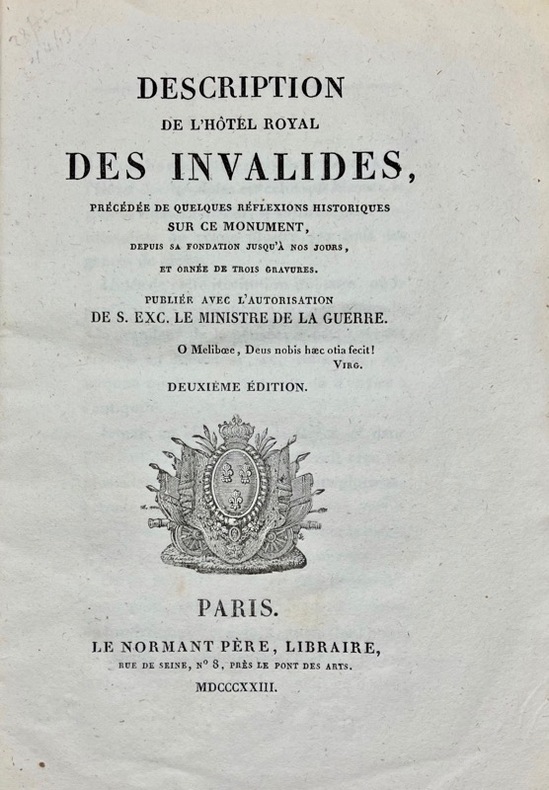
1823rif. 110391823 br. in-8, 96pp., 3 gravures en 2 planches h.t., P. Le Normant Père, 1823,
1823rif. 10003Paris, Le Normant Père, 1823. In-8 broché de 93 pp., couverture imprimée, non coupé.
rif. 225348S.l. [Paris], s.n. [Moreau et Hochereau l'aîné], 1759 3 parties en un vol. in-8, [4] ff. n. ch. (sur 49), 13 pp. [Election de Joigny], 8 pp. [Election de Saint-Florentin], broché sous couverture d'attente de papier coquille de l'époque. Petits manques au dos.
1820rif. 35729Paris Aubry s.d. [vers 1820] in-16 en feuilles
1759rif. 28993Paris: Chez Moreau Hochereau l'ainé 1759. Cancelled state of leaf L1. 1 vols. 8vo. Contemporary sprinkled calf red morocco label. Some rubbing of extremities short cracks along upper joint light spotting hole in last page affecting a few letters else very good with a manuscript ex-libris on title-page. Cancelled state of leaf L1. 1 vols. 8vo. Chez Moreau, Hochereau l'ainé unknown books
1759rif. 29000Paris: Chez Moreau Hochereau l'ainé 1759. With uncancelled state of leaf L1. 1 vols. 8vo. Contemporary stained sheep red morocco label spine gilt. Rubbed head and tail of spine chipped some soiling and light browning else very good with an 1811 ex-libris on the title. With uncancelled state of leaf L1. 1 vols. 8vo. Chez Moreau, Hochereau l'ainé unknown books