51 075 résultats
1925réf. 180181-1Paris, Picard 1925. 4°.XXVIII, 547 S. Mit 600 Abb. Original-Kartonband
1927réf. 95247P., Auguste Picard, 1927, gr. in-8°, (4)-338 pp, broché, pt annotation stylo au 1er plat, bon état
1925réf. 95248P., Auguste Picard, 1925, gr. in-8°, xxviii-547 pp, 152 pages de texte et 597 illustrations d'après des gravures ou des photographies, broché, dos lég. abîmé, couv. lég. salie, état correct
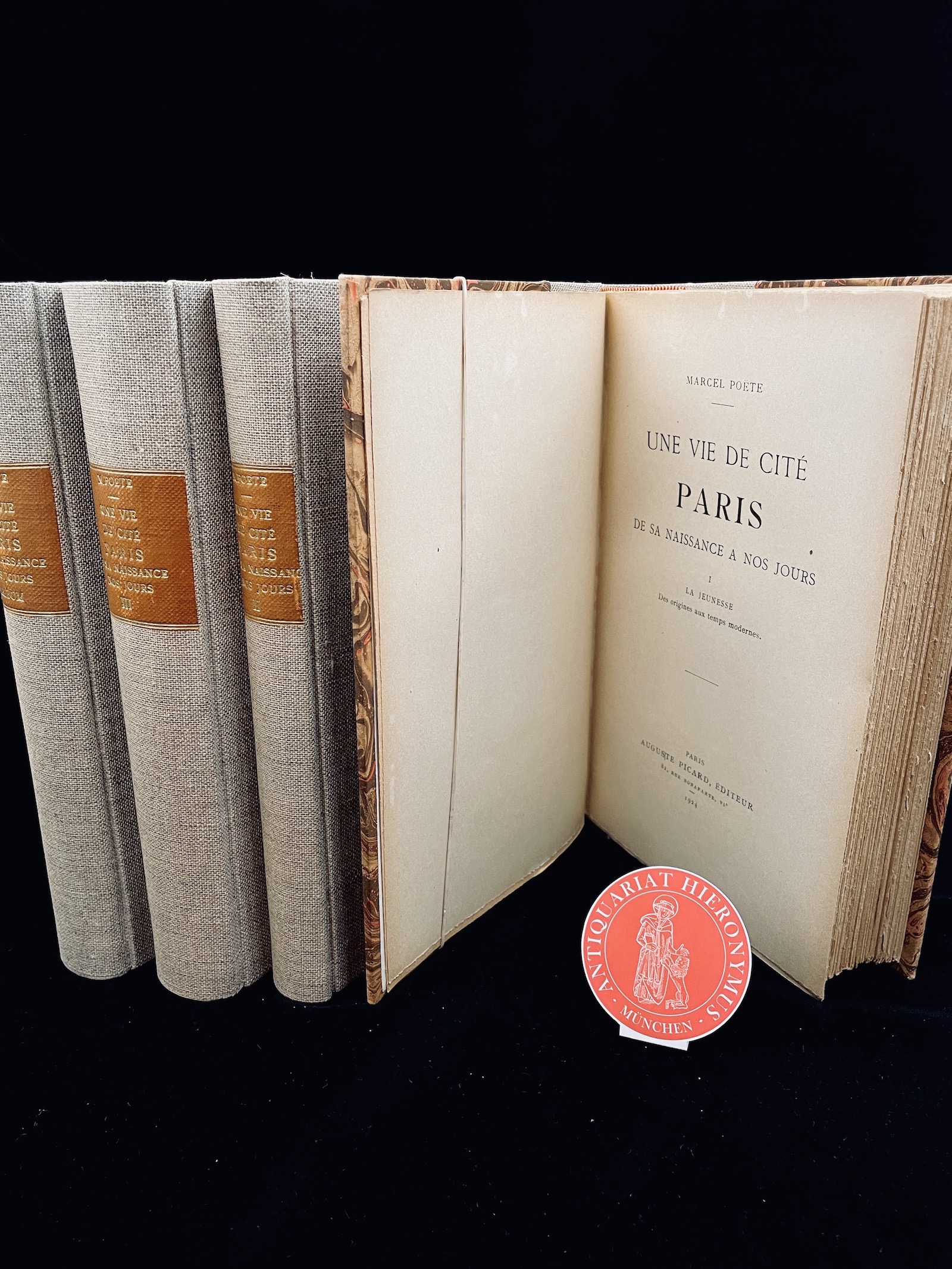
19244 vol. grand in-8 reliure demi-chagrin bleu, couvertures conservéé, Auguste Picard, Paris, 1924-1931, XXXI-626 pp. avec plan dépliant ; 338 pp. ; 579 pp. avec grand plan dépliant ; 547 pp. avec 600 illustrations en noir et blanc. Rappel du titre complet : Une Vie de Cité : Paris de sa Naissance à nos Jours (4 Tomes - Complet) Tome I : La Jeunesse. Des origines aux temps modernes ; Tome II: La Cité de la Renaissance. Du milieu du XVe siècle à la fin du XVIe siècle ; Tome III : La spiritualité de la cité classique. Les origines de la cité moderne (XVIe-XVIIe siècles) ; Tome IV : Album Bon exemplaire bien relié (dos très lég. frotté et très lég. passé, très bel état par ailleurs). Impressionnant travail historique dans lequel Marcel Poëte fait oeuvre de pionnier en utilisant en permanence, et l'un des tous premiers, toutes les ressources des méthodes de l'urbanisme. Français
1924réf. 536694 vol. grand in-8 reliure demi-chagrin bleu, couvertures conservéé, Auguste Picard, Paris, 1924-1931, XXXI-626 pp. avec plan dépliant ; 338 pp. ; 579 pp. avec grand plan dépliant ; 547 pp. avec 600 illustrations en noir et blanc. Rappel du titre complet : Une Vie de Cité : Paris de sa Naissance à nos Jours (4 Tomes - Complet) Tome I : La Jeunesse. Des origines aux temps modernes ; Tome II: La Cité de la Renaissance. Du milieu du XVe siècle à la fin du XVIe siècle ; Tome III : La spiritualité de la cité classique. Les origines de la cité moderne (XVIe-XVIIe siècles) ; Tome IV : Album
1924réf. 71781924 Paris, Auguste Picard, 1925 in 8, reliure pleine toile de l'éditeur, tète dorée, .Album comprenant 600 illustrations d'après les documents, accompagnées de légendes et d'un exposé historique. plan du milieu du XVIème siècle et du XIXème siècle, dépliants. bien complet
1924réf. 11535Paris, Auguste Picard, 1924/1925/1927/1931. 1. Auflage "4° (30-35 cm). XXXI, 621; 336; 579; XXVIII, 547 SS." Private Halbleinwand der Zeit mit montierten Rückenschildern
Paris, Auguste Picard, 1924-1925. 4 volumes forts et grands in-8, brochés, 626 - 338 -579 et 547 pages. Ensemble en parfait état. 2 grandes cartes rempliées, album comprenant 600 illustrations. Ouvrage de référence sur Paris.
réf. 6132Paris, Auguste Picard, 1924-1925. 4 volumes forts et grands in-8, brochés, 626 - 338 -579 et 547 pages.
réf. 241244GERALD DITTMAR, 2006 24 x 15,5 x 1,7 cm., 395 pp, Broché
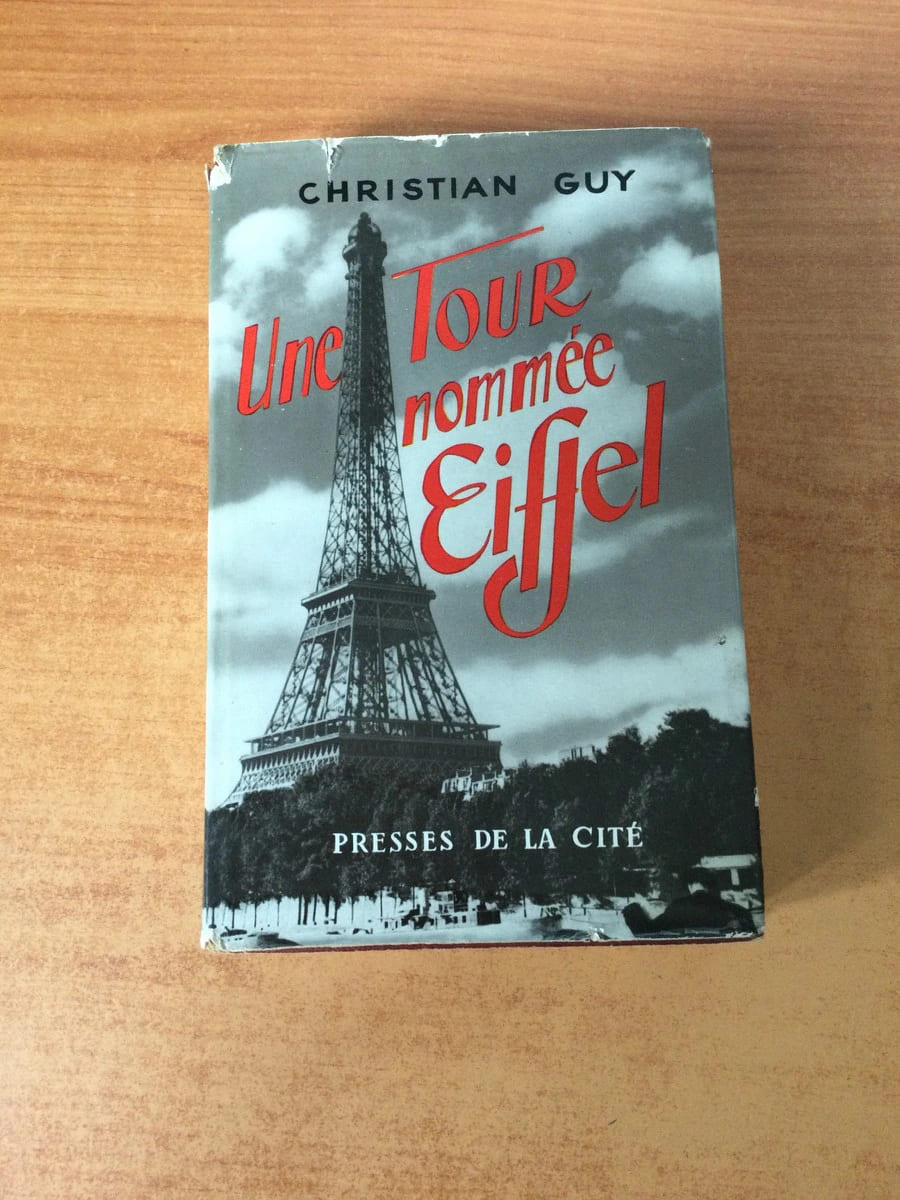
réf. 74680Presses de la cité 1957 livre récit 21,5*13,5 309 pages
1935réf. 882121935 Paris, Bosse, 1929, in 8° broché, 169 pages ; couverture illustrée (fanée). (Saffroy, II, 25080).
1986réf. 124395Une statue pour la liberté 1986 In-folio reliure éd. sous jaquette 37 cm sur 27,3. 289 pages. Jaquette légèrement effrangée. Jaquette en état satisfaisant. Bon état d’occasion.
réf. 235071Paris, Palmé, 1883 in-12, XVI-246 pp., demi-chagrin vert, dos à nerfs (reliure de l'époque). Usures des coins et des coupes.
1830réf. 96513Paris Mame-Delaunay 1830 2 vol. relié in-8, relié demi-basane noire, dos lisse orné de fleurons, filets et roulettes dorés, X + 389 + (1) pp. Edition originale de ce récit de la Révolution de 1830. Dos un peu frotté, sinon bon exemplaire.
réf. 568161Paris Mame et Delaunay-Vallée 1830. In-8, reliure de l'époque demi-basane bordeaux, dos lisse, orné de fleurons dorés, X-389 pp.
réf. 51-6549Paris: Jeanne Bucher 1934. 4to. 22.5 x 28cm. Five portfolios with different colored paper covers. Spines are faded some small tears or cuts at the edge of some covers with a small loss at the top of the cover of the 2nd notebook. Presented in an elegant black pebbled shagreen slipcase. Each one of 812 numbered copies.Five volume serial novel with 182 line blocks after collages.MoMA: A Week of Kindness Une Semaine de bonté is the most elaborate of Ernst’s inventive “collage novels.” Its 182 images were created by cutting up and reorganizing illustrations from nineteenth-century novels scientific journals and other sources. By printing these collages photomechanically Ernst transformed them into the seamless images he desired. The surreal constructions alternately dark and humorous in their subversion of bourgeois gentility are rife with suggestions of repressed sexuality violence anti-militarism and anti-clericalism. Though originally planned as seven volumes one for each day of the week the last three “days” were combined into the fifth and final volume. Ernst released them consecutively like popular serial stories.Luc Monod no. 4323. First notebook: Sunday element: Mud example: The Lion of Belfort. 3 ff. 36 engraved plates out of 18 ff 1 bl.f. Second notebook: Monday element: Water example: Water. 3 ff. 27 engraved plates out of 14 ff 1 bl.f. Third notebook: Tuesday element: Fire example: The Court of the Dragon. 3 ff. 44 engraved plates out of 22 ff 1 bl.f. Fourth notebook: Wednesday element: Blood example: Oedipus. 3 ff. 28 engraved plates out of 14 ff 1 bl.f. Last notebook: Thursday element: The Black examples: The Rooster's Laughter Easter Island Friday element: The View example: The Interior of the View Saturday element: Unknown example: The Key to the Fields. 4 ff. 16 engraved plates on 8 ff. 1 f. 10 engraved plates on 5 ff. 2 ff. 6 pl. heavy on 3 ff. 1 f. 4 pl. heavy on 2 ff. 1 f. 2 pl. heavy on 1 f. 1 f. 10 pl. heavy on 1 f. 1 f. bl. ….No. 416 of 800 on Navarre paper. Apart from the small defects on the covers a very good set well preserved and very complete. Invited to the Château de Vigolino in Italy in August 1933 Max Ernst drew on the library of his hostess the Duchess of Gramont to cut out illustrations from various works of the previous century such as Les Damnées de Paris by Jules Mary or works illustrated by Gustave Doré and thus constitute a fantastic set of 184 collages 182 of which were selected to be published in 5 booklets by the gallery owner Jeanne Bucher. Initially planned in seven booklets for each day of the week each with an element and an associated "example" the poor sales of the first four forced the condensing of the last 3 days into a 5th and final volume. This is Max Ernst's third collage novel after The Woman with 100 Heads 1929 and Dream of a Little Girl Who Wanted to Enter Carmel 1930. The original collages of an incredible degree of perfection and refinement were exhibited for the first time at the Museo de Arte Moderno in Madrid in 1936 except for 5 plates deemed too blasphemous before being rediscovered only in 2008-2009 during a series of exhibitions passing through Vienna Brühl Hamburg Madrid and finally Paris at the Musée d'Orsay provoking the enthusiasm of the public and the press… the dreamlike force the impressive disturbance of déjà vu bewitch. Each rape perpetrated by a statue from Easter Island emerging from behind a curtain each torture of a man with a bird's head each woman in a crinoline surrounded by dragons each staging of a crime that is always absurd: all this goes straight to the brain. And once seen it is impossible to forget these madnesses." Le Figaro June 30 2009 Éric Biétry-Rivierre. "In Une semaine de bonté the scenes and events that unfold over the pages form a striking contrast with the title. Power violence torture murder and catastrophes are the dominant themes. The scenes full of agitation and brutality that appear on many pages are to be linked to the alarming political situation of the time and the rise of dangers. Ernst was reacting to the establishment of dictatorships in Europe and the seizure of power by the National Socialists. His contemporary concerns are intertwined with allegories allusions to mythology Genesis fairy tales and legends but also fragments of dreams and poetic worlds. The work is also pervaded by themes dear to the author: sexuality anticlericalism the rejection of family and the bourgeoisie the refusal of patriotism. It is ultimately a certain form of society that Max Ernst seems to want to denounce…His irreverent collages reflect the state of mind of his men who returned traumatized from the First World War he himself served in the German artillery and who had to find their place in a society that was doing everything possible to forget the horrors of the conflict. He seizes upon conventional stereotypical representations of evil abjection and suffering found in newspapers magazines and novels. But by transforming them and combining them he radically diverts these images from their original message and reinforces their impact." Presentation of the Musée d'Orsay exhibition "Max Ernst 'A Week of Goodness' - The Original Collages" June 30 - September 13 2009…. Paris: Jeanne Bucher, 1934. unknown
réf. 29651860.Paris, H. Dumineray, 1860, 243 pages.parfait etat , relié avec un autre volume :Guide Pratique Pour La Guerre En Afrique a L'usage Des Officiers et Des Sous-OfficiersA. DumontA. Bancharel, Aurillac, 1885.
1835réf. 64007aquatint RARE beautiful view from 'Voyage Autour du Monde par les Mers de l'Inde et de la Chine de La Corvette de Sa Majesté La Favorite exécuté pendant les années 1830 1831 1832 pl. 46 sketched by Francois-Edmond Paris engraved by Sigismond Himely and under the direction of Louis Auguste de Sainson with Arthus Bertrand editeur. "La Favorite" was one of several ships sent out by the France in the 1820/1830s to compete with similar expeditions by other countries. These were voyages with political/territorial objectives via commercial diplomatic scientific and artistic means intending to expand French influence particularly in Southeast Asia to counter British interests. Barthelemy Lauvergne 1805-1871 was a French painter maritime and landscape artist active in the mid 19th C. He accompanied the French naval officer Jules Sebastien Cesar Dumont d'Urville 1790-1842 onboard the L'Astrolabe 1826-1829 Cyrille Pierre Theodore Laplace 1793-1875 on La Favorite 1830-1832 and Auguste-Nicolas Vaillant 1793-1858 on La Bonite 1836-1837. Sigismond Himely 1801-1872 was a mid 19th C. Swiss painter viewmaker acquaint engraver active in Paris known for his excellent aquatints. Louis Auguste de Sainson 1800-1877 was a French artist lithographer and engraver. He worked as a draughtsman on the Astrolabe in its circumnavigation of the globe in 1826-1829 and then spent almost 5 years to create the prints for the publication of its expedition narrative. Reference: Sabin 38985 Bosch 405 Borba de Moraes 458 Hill Coll. 175 Ferguson 1669 Cordier BS 2110 Nissen ZBI 2383. Condition: minor foxing on margins not affecting plate blind stamp at bottom of plate. Libraire de la Société de Géographie in Paris.
réf. 4115Paris, 1977 150 p., 4 cartes, broché. 14,5 x 22
1935Édition originale. Un des 10 exemplaires numérotés sur vélin pur fil Lafuma (seul tirage en grand papier). Envoi autographe de l'auteur.
1935réf. 4417Paris, Les Editions de France, 1935. In-8, broché, exemplaire à grandes marges, non coupé, 279 pp. (bas et haut des coiffes légèrement jaunies).