Donatien Alphonse Francois de SADEBiblio.com

40 877 résultats
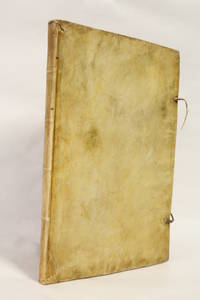
1808réf. 58602Charenton asylum: S. n. 1808. Fine. S. n. Charenton asylum août 1808 17.50 x 21.50 cm broché sous chemise et étui The complete original manuscript of one of Sade's first works ruled in pencil throughout comprising 40 leaves written recto and verso. This manuscript like the other extant items from the Marquis was dictated to a scribe and corrected by Sade himself. Contemporary green paper wrappers with a small lack to middle of spine. Ink title partly erased to upper cover: 9/ Net et corrigé en août 1808 bon brouillon. Les Antiquaires. Comédie en prose en 1 acte Copied and corrected August 1808 a good draft. The Antiquaries. A prose comedy in 1 Act. This title is repeated on the verso of the upper cover. Numerous manuscript corrections annotations and deletions in Sade's hand principally adding blocking and rich in both stage and acting directions. Written in 1776 and re-copied at Charenton in 1808 and most likely augmented at the time with various topical references notably including an allusion to Napoleon of whom he was hoping in vain to receive permission to leave the asylum at Charenton as a free man p.94 Les Antiquaires is one of the first theatrical pieces written by the Marquis and therefore one of his first literary works overall written eight years before the Dialogue entre un prêtre et un moribond Dialogue Between a Priest and a Dying Man. Though the precise dating of these pieces is made difficult due to the lack of the original manuscripts several clues have allowed bibliographers to date the initial composition of this piece to 1776 possibly with a corrected version during the Revolution and a few final changes at the time of this last edit which is today the only extant manuscript of this play. These clues include the status of the Jewish and English characters the style of the dialogues and Sade's correspondence with theatres; the strongest clue being biographical in nature. Les Antiquaires can essentially be considered the true theatrical version of Sade's Voyage en Italie with which it shows a sustained intertextuality. The play is about an antiquary in the 18th century sense of the term which is to say a learned devotee of Classical culture who wants to marry off his daughter to a friend with the same passion who nonetheless finds a way of convincing him to let her marry her young lover. Whether it be in the learned dialogues of the antiquaries or in their eccentric parody by the young lover imitating them Sade draws upon his own experience and observations from his travels which he expands or twists according to the viewpoint of his various characters. Hence the description of Mount Etna by the lover Delcour is a parody of Sade's detailed description of the Pietra Malla volcano and the made-up subterranean tunnel linking Etna to America is directly inspired by the tunnel of the Crypta Neapolitana described by Sade in his Voyage. The Marquis would reach back to this same experience of volcanoes in one of the most famous scenes in his Histoire de Juliette. Barely returned from his latest grand tour and almost at the same time as writing his passionate and detailed account of the experience Sade was thus also writing a satirical version of his own work until his problems with the military authorities. The work is at the same time a social critique of pointless erudition and a self-mockery of his own passion for history and of his zeal to see everything his insatiable curiosity cf. Maurice Lever preface to Voyage en Italie. This virulent satire is paradoxically twinned with a very erudite display of the author's knowledge of the latest architectural discoveries and the major contemporary questions in the field. This was in fact the element criticized by the two heads of theatres to whom Sade sent the play for consideration most likely during 1791 or 1792: The work is well-written. It shows the author's spirit and depth of knowledge but it's too serious too scientific S. n. unknown
1843réf. 87676Paris: Chez Gihaut frères Edit. Boulevard des Italiens 5 1843. Fine. Chez Gihaut frères Edit. Boulevard des Italiens 5 Paris s.d. 1843 36.40 x 49.80 cm relié Complete set of 13 original lithographs by Eugène Delacroix in first edition first issue with the letter one of 20 copies on Chine paper pasted on laid paper: ""It was originally printed in a few proofs on Chine the format of which exceeds the square line by one or two centimeters. They are highly sought-after even though they bear the letter"" Robaut. Bound in the original publisher's brown half-shagreen binding title gilt stamped on first board original first cover wrapper preserved. Small restored tear to the margin of the wrapper over 5 cm sunned spine joints and corners rubbed scattered foxing and a dampstain to the lower part of the laid paper on which the lithographs are pasted on without affecting the lithographs themselves. Exceptional and rare set of original lithographs by Eugène Delacroix on Chine paper illustrating Shakespeare's masterpiece. A cornerstone of Romantic art this series was ""made at M. Delacroix's personal expense. Only 80 copies were printed 60 on blanc and 20 on chine and these were sold out at the time of the author's death"" Henri Béraldi. It is now esteemed as Delacroix's most accomplished graphic undertaking which took him more than ten years to achieve and generally considered to be one of the first modern livres de peintre. This is Delacroix's second lithographic portfolio based on a literary work after Goethe's 'Faust' in 1828. Strongly influenced by Goya's Caprices the plates feature deep black tones and striking contrasts magnified by the Chine paper: ""No one is unaware of the important role played by Delacroix in lithography . in the Hamlet in the Horse struck down by a tiger or better still in the Lion of the Atlas and the Royal Tiger these marvels he shows what vigor and color the lithographic pencil can acquire in the hand of a master""Henri Béraldi. Despite good reviews from Théophile Gautier and Jules Janin the Hamlet suite remained little-known from the moment of its publication by the Gihaut brothers upon Delacroix's request: ""I had them printed in small numbers and I was well advised for they were not successful and were far from having met printing costs"" wrote Delacroix in a letter to Champfleury May 1 1852. Even in the 19th-century copies on Chine paper were almost impossible to find: only twenty years after publication Philippe Burty considered the set ""so rare now"" regardless of its different issues Colonel De La Combe sale 1863. His contribution to Hamlet's visual imagination and iconography is immense. Delacroix first created the pose of Ophelia's lifeless body lying horizontally on the water - foreshadowing John Everett Millais' famous painting. It was from these lithographs that a number of his paintings were created: ""Between the 1830s and his death Delacroix also painted oil versions of a number of lithographs including Hamlet and His Mother now in the Metropolitan Museum."" Alan R. Young Hamlet and the Visual Arts 1709-1900. Delacroix showed interest in Shakespeare's theater - and Hamlet in particular - early on. As a youth he signed some of his letters ""Yorick"" when recounting his first passions for the young Englishwoman Elizabeth Salter. According to his diary studied by Luciana Lourenço Paes he probably read the play in the original English and identified with the main protagonist who inspired his ""Self-portrait as Hamlet"" now in the Musée Delacroix. In 1825 the painter traveled to London where he attended several of the Bard's plays and apparently regretted missing the Hamlet performed by the legendary Henry Keane at the Drury Lane Theater. Two years later Delacroix was among the Romantics who fell under the spell of a special performance of Hamlet at the Théâtre de l'Odéon by the English company of Covent Garden director Charles Kemble. It was the first time Shakespeare had been played in his origin Chez Gihaut frères, Edit. Boulevard des Italiens, 5 unknown
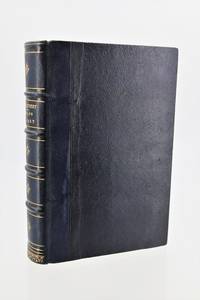
1857réf. 83397Paris: Michel Lévy frères 1857. Fine. Flauberts masterpiece on deluxe paper bound at the time Michel Lévy frères Paris 1857 11.50 x 18.50 cm relié First edition one of the very rare copies on heavy vellum paper Clouzot counts 75. Bound in contemporary half navy blue shagreen spine with four raised bands decorated with gilt garlands partly faded and tooled with gilt fillets and fleurons gilt roll at foot dark blue paper-covered boards marbled endpapers and pastedowns a period binding. Some occasional foxing. Unlike the trade copies printed in two volumes the deluxe paper copies are presented in a single volume without title-page or half-title for the second part the gatherings being continuously signed. They also retain all the first-issue points including the misprint ""Sénart"" on the dedication leaf. A very rare deluxe paper copy strictly bound at the time of publication. Michel Lévy frères hardcover
1842réf. 59614Paris: Charpentier 1842. Fine. Charpentier Paris 1842 12 x 19 cm relié First definitive editions partly original.Bound in red half-shagreen with corners spine with four raised bands decorated with blind-stamped panels and fillets the entwined monogram of Jules Hetzel at the foot uncut copy contemporary binding.A few occasional spots of foxing.Inscribed by the author to Jules Hetzel as a token of the authors friendship. In the 1840s Balzac contributed to a collective volume illustrated with Grandvilles vignettes Scènes de la vie privée et publique des animaux issued in parts by a new publisher Pierre-Jules Hetzel 18141886 who was to become a friend and play a crucial role in the consortium of publishers of La Comédie humaine. Balzac also assisted Hetzel in drafting texts signed P.-J. Stahl the publishers pseudonym. Roger Pierrot Honoré de Balzac Paris Fayard 1994 An outstanding copy inscribed by Balzac in a charming contemporary binding. Charpentier hardcover
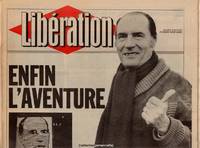
1973réf. 75634Paris: Libération 1973. Fine. Libération Paris 1973-2004 6200 numéros en feuillets Complete run of the first twenty years of the newspaper Libération founded in 1973 by Jean-Paul Sartre Serge July Philippe Gavi Bernard Lallement and Jean-Claude Vernier. 6200 issues in pristine condition never opened. This unique collection comprises 6200 issues of Libération in impeccable condition never opened and is absolutely complete including all the numéros zéros promotional issues special reports thematic supplements including the entire series of the celebrated Sandwich issues and the commemorative twentieth anniversary album from Monday 5 February 1973 to Monday 3 January 1994. The collection is offered with its custom-made display unit 2.60 m high 4.20 m wide and 50 cm deep. It consists of 35 stackable compartments each measuring 84 x 36.5 x 50 cm each housing two sliding drawers. Each drawer holds approximately one hundred issues of the newspaper. Provenance: Frédéric Fredj Collection. Libération unknown
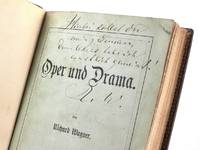
1869réf. 83415Leipzig: Verlagsbuchhandlung von J.J. Weber 1869. Fine. Verlagsbuchhandlung von J.J. Weber Leipzig 1869 14.50 x 23 cm relié Inscribed copy concealing the secret truth of Wagner's thwarted love story Second edition with parts previously unpublished with a new preface ""An Constantin Frantz"" dated April 28 1868 Tribschen bei Luzern. The first edition was published by the same publisher in 1852. Full burgundy morocco binding spine with five raised bands gilt date at foot marbled endpapers and pastedowns gilt turn-ins original first softcover preserved top edge gilt gilt leading edges. Some foxing more pronounced on some leaves a small restoration to the upper right-hand corner on pages IX-XIV not affecting the text pencil annotation on pages 116 and 139 skillful restorations to head and foot of the upper joint. Exceptionally and intimately signed and inscribed by Richard Wagner to a mysterious dedicatee:« Hierbei sollst du meiner gedenken denn alles habe ich ernstlich gemeint. R. W. » At this you shall remember me for I have meant everything seriously. This moving autograph confession with its highly personal tone written on the most important of his theoretical writings radically differs from the hasty ""Zur Erinnerung"" written by the composer on his opera scores or the little notes he used to hand out to patrons after concerts. We did not find any other inscribed copies of Oper und Drama' on the market or in public institutions. However the composer's autobiography and correspondence reveal the existence of two dedications on this major work. The first was addressed to Theodor Uhlig on the original manuscript with an autograph inscription inspired by Goethe. The second and only other inscription mentioned in a letter from Wagner is said to have been made for Malwida von Meysenbug on the same edition as our copy. Although it is not impossible this could be the very same inscription written on the ""book of all books on music"" according to Richard Strauss the style and content of the inscribed words allow for an even more prestigious attribution. A ""VERY SOLID"" MANIFESTO In February 1851 Wagner completed Oper und Drama. This ""very solid book"" - as described in a letter to Franz Liszt - sets out the revolutionary principles of Leitmotiv and Gesamtkunstwerk political and aesthetic utopia of a musical drama acting as a synthesis of the Arts. The text is part of his Zürcher Kunstschriften three seminal essays written during his Swiss exile along with Kunstwerk der Zukunft' and Die Kunst und die Revolution'. He outlines in his treatises the shape of his future scenic festival"" - the celebrated Ring and includes his reflections on the relationship between art and society as well as his theories on the future of opera. In 1868 he decided to complete the composition of this monumental tetralogy and simultaneously worked on the second edition of Oper und Drama' published at the end of 1868 - mistakenly stated on the cover as 1869. In the end it differed from the previous edition only in its new preface the very few changes proving once more the permanence of his musical and artistic vision almost twenty years after it was first written. Wagner will tirelessly defend and promote his ideas which found their ultimate achievement during the 1876 Bayreuth festival. This second corrected edition with a revised preface is an integral part of the artist's creative process giving his reflections the status of a political and musical manifesto as evidenced by the intimate and enigmatic dedication on our copy. The importance of this work in the eyes of the composer the absence of any explicit attribution to the inscription's recipient the use of the familiar form of address and the content of the message confirm the importance of the dedicatee and his place within the author's inner circle. Among the personalities around the master at the time of this inscription several may have inspired these words: FRIEDRICH Friedrich Nietzsch Verlagsbuchhandlung von J.J. Weber paperback
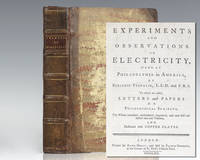
1769réf. 116750London: Printed for David Henry and sold by Francis Newbery 1769. First complete edition of "the most important scientific book of 18th-century America" and "America's first great scientific contribution" PMM. Octavo bound in contemporary half calf over marbled boards morocco spine label. Advertisement & errata leaf inserted following preface. Illustrated with 7 copper-engraved plates 2 of which are folding. In very good condition. First editions are rare exceptionally so in a contemporary binding. Franklin's most important scientific publication" Experiments and Observations contains detailed accounts of the founding father's crucial kite and key experiment his work with Leiden jars lightning rods and charged clouds Norman 830. "The most dramatic result of Franklin's researches was the proof that lightning is really an electrical phenomenon. Others had made such a suggestion before him-- even Newton himself-- but it was he who provided the experimental proof" PMM. "The lightning experiments caused Franklin's name to become known throughout Europe to the public at large and not merely to men of science. Joseph Priestley in his History of Electricity characterized the experimental discovery that the lightning discharge is an electrical phenomenon as 'the greatest perhaps since the time of Isaac Newton. Franklin's achievement. marked the coming of age of electrical science and the full acceptance of the new field of specialization" DSB. Printed for David Henry and sold by Francis Newbery hardcover books
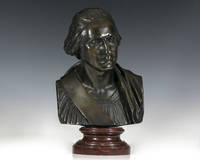
réf. 123102Fine bronze bust of George Washington after the famed Houdon bust of 1785 which is considered the most accurate depiction of Washington. Bronze mounted on a marble pedestal. French sculptor Jean-Antoine Houdon was revered for his life-like portrayals of numerous notable eighteenth-century philosophers inventors and political figures including Jean-Jacques Rousseau Voltaire Benjamin Franklin Thomas Jefferson Napoleon Bonaparte and George Washington. In 1784 the Virginia General Assembly commissioned a statue of George Washington "to be of the finest marble and the best workmanship" necessitating a European craftsman. The Governor of Virginia gave the responsibility of selecting the artist to Thomas Jefferson then ambassador to France who together with Benjamin Franklin recommended that Jean-Antoine Houdon the most famous sculptor of the day execute the work. Unsatisfied to work from a drawing of Washington by Charles Willson Peale sent for the project and lured by a potential commission for an equestrian monument by the Congress of the Confederation Houdon agreed to travel to the United States to work directly from Washington. In early October 1785 Houdon and three assistants arrived at Washington's plantation Mount Vernon where they spent two weeks taking detailed measurements of Washington's arms legs hands and chest and made a plaster cast of his face. Before returning to France to perfect his work Houdon presented his first draft of the bust sculpted in terra cotta to Washington which he is known to have placed in his study. The final statue was carved from Carrara marble depicting a standing life-sized Washington with a cane in his right hand and cape in his left. Chief Justice John Marshall a contemporary of Washington's said of the work "Nothing in bronze or stone could be a more perfect image than this statue of the living Washington." In fine condition. The bronze casting measures 14.25 inches in height. The entire piece measures 17.25 inches in height. American statesman and soldier George Washington served as the first President of the United States from 1789 to 1797 and was one of the Founding Fathers of the United States. He served as Commander-in-Chief of the Continental Army during the American Revolutionary War and later presided over the 1787 convention that drafted the United States Constitution. He is popularly considered the driving force behind the nation's establishment and came to be known as the "father of the country" both during his lifetime and to this day. unknown books
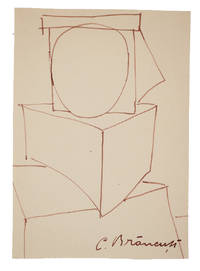
1937réf. 761711937. Fine. s. d. ca 1937 9 x 12.90 cm Une feuille Eva original drawing signed ca 1937 9 x 129 cm one drawing Original drawing signed by Constantin Brâncui in brown ink on cream paper from the collection of Ion Alexandrescu a stone mason who worked with the sculptor in 1937-1938 on the creation and installation of the monumental ensemble at Târgu Jiu and more specifically on The Door of the Kiss and The Table of Silence. Brâncui's preparatory drawings for his sculptures are extremely rare as opposed to most of the few drawings by the artist seen on auctions which are mainly figurative women and anatomical studies. We submitted this unpublished work to renowned Brâncui specialist Dr Doïna Lemny who authenticated and dated it with precision. As an honorary curator of the Musée National d'Art Moderne Georges-Pompidou in Paris where she was in charge of the Brâncui collection for thirty years she is the author of numerous monographs and essays on the artist. She provided the drawing's analysis: This small drawing traced in ink with a quick hand on small paper calls out by the novelty of the composition of geometric forms: two superimposed cubes supporting an oval head framed in a square acquire a caryatid posture supporting an architrave clearly drawn at the top of the figure. The quick firm line indicates the artist's intention to note elements for a more complex composition that he would have intended to make. Although undated this drawing can be related to two other similar compositions made on 3 November 1937. The first of the same size 9 x 13 cm bears the title Eva and is enriched on the reverse with a drawing of the Kiss and a message addressed to Ion Alexandrescu. The second is larger 22 x 32 cm and has the same composition as our drawing but with proportions that more explicitly evoke a female figure see opposite. In these two other drawings Brâncui indicates the materials he plans to use for this future set of sculptures: wood in Romanian: lemn and plaster gips. The drawing we offer is untitled and does not bear indications regarding the materials but is in coherent with the tangible research of the other two compositions and could be a stylisation of the original drawing for a more abstract sculpture project. The interest in this biblical female figure crossed Brâncui's artistic career. As early as 1916 he sculpted a curvaceous Africanising wooden figure to which he gave the title Ève. Reworking it he finally created a more totemic sculpture in 1921: Adam and Eva. As a ""constructed"" work Adam and Eve already announced Brâncui's intention to take up the theme of the original woman mother and protector who is here pruned of male attributes and made into an elevation of primary and matrix forms: the block the egg and the surface. Provenance: collection of the stone mason Ion Alexandrescu friend and close collaborator of the Romanian sculptor. unknown
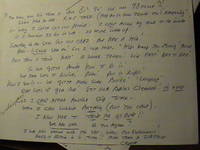
1995réf. 000854nENGLAND BROADMOOR PRISON PARKHURST WAKEFIELD. Very Good. 1995. On offer is an original exciting massive archive of correspondence some hand-drawn art other writings including poetry articles postcards photos greeting cards and both terrifying and humorous intimate personal letters news clippings and ephemera relating to and created by Charles Bronson - born Michael Peterson his named was changed by his boxing manager - who is considered to be Britains most feared in/famous and notorious prisoner. He is also the author of ten books a poet armed robber kidnapper philanthropist philosopher boxer award winning fitness expert and former circus strongman. Mr. Bronson was first arrested as a 19 year old in 1974 and has been in prison for 34 years and over 28 years in solitary and has been free less than 120 days in that 34 years. He has been moved over 150 times to and within different prisons. Mr. Bronson has also committed some renowned notorious acts while in prison including a number of spectacular hostage-takings; they include a two day rooftop protest at Broadmoor Prison in 1983 which caused three quarters of a million pounds damage. In a 1994 kidnapping/escape attempt he demanded a helicopter an inflatable doll and a cup of tea as ransom for the release of the guard he was holding at Woodhill Prison. There is a worldwide petition to free Charles Bronson based on the fact that he has suffered an extraordinarily lengthy incarceration while never having killed raped or molested anyone. Free in spirit Mr. Bronsons original conviction of 7 years for armed robbery has blossomed to 34 years due to his numerous prison scrapes with authority. Many organizations for prisoner's rights have declared him a political prisoner making his long term incarceration all the more untenable. This archive is the accumulation of approximately 15 years by a woman who at one time was engaged to be married to Mr. Bronson. As such the correspondence is of an intimate nature on all levels of Mr. Bronsons personal and penal life; relationships activities hardships with all of its tragedies and comedies. Further correspondence details every aspect of his life in jail his attempts to be free his physical fitness program. Mr. Bronson is an incredibly expressive and prolific writer and there are many many streams of correspondence; writings to and from his fiance lawyers publishers editors other convicts fans and friends. He is obviously intelligent and a very driven man in many ways. Some of this material is not for the weak of heart and some will have you laughing hard. Mr. Bronson also had a number of interesting friends; he is godfather to the son of Ronald Biggs of the Great Train Robbery fame; a pal to the Kray Brothers leaders of an infamous family run crime gang of whom he wrote a book based on their lives and relationship with him are but a few. We noted a Christmas card to Mr. Bronson's fiance with his and perhaps 30 autographs of other well wishers for example. This archive is the definition of 'one of a kind' as a unique unparalleled look into the essence of criminality law enforcement criminal psychology and the British government and it's penal system. It is also a one of a kind portal into the heart soul mind and demons of a long term convict a noted artist prolific writer poet with the added perspective of a romance and long distance relationship of very high intensity. There are many many hundreds if not over a 1000 pages of correspondence filling a 22 x 16 x 7 inch tub right now and will probably ship in one banker's box and will require a secure shipping method like UPS. We noticed about half a dozen pieces of original artwork a small number of large and small format postcard style paper with artwork and then doodles and drawings throughout the correspondence. Overall condition is VG.; Manuscript; 4to - over 9¾" - 12" tall; KEYWORDS: HISTORY OF HANDWRITTEN PARKHURST WAKEFIELD CRIMINALITY CRIMINOLOGISTS CRIME PRISON PRISONER STORIES PRISONER MEMOIRS PRISON DIARY CRIMINAL LIVES PENAL DELINQUENCY ILLEGALITY KIDNAPPING ARMED ROBBERS LAW LEGAL JUDICIAL CUSTODY SOLITARY CHARLES SALVADOR FITNESS IMPRISONMENT DETENTION CONFINEMENT MANUSCRIPT DOCUMENT LETTER AUTOGRAPH DIARY JOURNAL LOG KEEPSAKE WRITER HAND WRITTEN DOCUMENTS SIGNED LETTERS MANUSCRIPTS HISTORICAL HOLOGRAPH WRITERS DIARIES JOURNALS LOGS AUTOGRAPHS PERSONAL MEMOIR MEMORIAL PERSONAL HISTORY antiquité contrat vélin document manuscrit papier Antike Brief Pergament Dokument Manuskript Papier oggetto d'antiquariato atto velina documento manoscritto carta antigüedad hecho vitela documento manuscrito Papel . unknown
1685réf. 151905Boston n.d. 1685–1723. Rare late 17th to early 18th century autograph manuscript of a sermon or devotional essay in the hand of the "first American Evangelical" Puritan clergyman Cotton Mather. Duodecimo comprising two bifolia prepared from a folded and cut sheet of paper to a total of 8 pages penned in dark brown ink very densely written as is usual with Mather two columns with notes and glosses in the left column the text in sections I-VIII the numeral III apparently used twice several thousand words in all. An unusually lengthy manuscript likely written while Mather was assisting his father Increase as the preacher at the Second Church of Boston 1685–1723. Mather was one of the preeminent American intellectuals of the era. He was not simply a theologian and philosopher but was deeply interested in the sciences conducting experiments on inoculation against smallpox plant breeding meteorology and a wide variety of other topics in a broad range of disciplines. He was a member of the Royal Society of London in large part because of his botanical researches which were reported in his book Curiosa Americana. Although his involvement in the Salem Witch Trials has complicated his legacy he remains in many respects one of the most intellectually curious and progressive figures of colonial America. The text of the present manuscript is in large part a theological analysis of the implications of the Doctrine of the Divine Decree in which Mather speaks out against what he sees as the sophistry of the moral position "If all is predestined why should I make any effort for my salvation" This he refutes in detail in these pages with much apparatus and inspirational text ending his argument on the words "Methinks then we should long for heaven! Oh my companions if you would not long for Heaven I can foretell that there are more sorrows on earth to come upon you . Will you long to be where ye weary are at rest. But then Oh Lord how long how long how long!" With this ringing conclusion to the final page the text ends apparently complete. Given the small format of the manuscript it seems likely that it was used in delivering a sermon or homily. In near fine condition with scattered small areas of ink erosion noted. Housed in a custom modern cloth case and accompanied by a complete transcription of the text; with a letter dated September 29 1937 on New York Public Library stationery signed by the late Victor Paltsits Keeper of Mss. indicating that he authenticates the manuscript as in Mather's hand and a note signed by Louis Henry Cohn of House of Books regarding provenance. Rare. hardcover
1895réf. 0002437GROTON MASSACHUSETTS HYDE PARK CHICAGO. Good. 1895. Full-Leather. On offer is an extraordinary collection of diaries that give incredible insight into young Franklin Delano Roosevelts years at Groton--one of the most exclusive preparatory schools in the United States at the time--from the perspective of his closest schoolmate James Lippincott Goodwin. In these six diaries a young J. L. Goodwin chronicles his daily life from 1895 to 1898 and 1903 and features a cast of characters whose family legacies live on to this day. Classmates mentioned include Robert Rutherford "Colonel" McCormick who went on to become owner and publisher of the Chicago Tribune; J. R. "Tadd" Roosevelt Jr. nephew to both FDR and Colonel John Jacob "Jack" Astor IV; Lathrop "Jake" Brown who was FDRs roommate at Harvard and who would go on to become a member of the U. S. House of Representatives; and most significantly Franklin Delano Roosevelt who became 32nd president of the United States and who along with Winston Churchill would lead the free world through its darkest days in WWII. Goodwin himself was also part of a well-connected family. His father owned a railroad and two insurance companies and was the cousin of American financier J. P. Morgan. Goodwins brother Philip was one of the architects of New Yorks Museum of Modern Art. J. L. Goodwin and FDR were both new to Groton School in 1896 and these outsiders became fast friends as they adjusted to student life. Both boys were prolific writers and FDR mentions Goodwin in his letters home. Similarly FDR appears often in Goodwins diary entries. For example: "Passed with Riggs and Franklin Roosevelt during our time after school but it was very disagreeable on account of the ground being so wet" May 3 1897. "This is a legal holiday being Lincolns Birthday. Mrs. Roosevelt is visiting came up today" February 12 1898. "Franklin Roosevelt was down from Harvard. Saw him at the fence a while" May 18 1903. J. L. Goodwin graduated from Groton in 1900 and Yale in 1905. He later pursued a Masters in Forestry and was a noted conservationist and pioneering forester. Although the diaries do not bear his name there are ample contextual clues to determine that they were indeed kept by Goodwin. His collected papers reside in the James L Goodwin collection at Yale University. In this archive there are six personal diaries of J. L. Goodwin: 1 1895: 5.75" x 3.5" 122 pages 100% complete good condition. 2 1896: 5.75" x 3.5" 183 pages 80% complete good condition. 3 1897: 5.75" x 3.5" 183 pages 70% complete good condition. 4 1897: 8.75" x 4.5" 198 pages 50% complete fair condition. This diary was kept at the same time as the other 1897 diary. Some entries overlap but it contains entries that were not entered in the 5.75" x 3.5" 1897 diary. 5 1898: 5.75" x 3.5" 365 pages 75% complete good condition. 6 1903: 5.75" x 3.5" 365 pages 85% complete good condition. Also included in this archive is a first edition copy of the 1947 book "F. D. R. His Personal Letters: Early Years." It is the first in a 3-volume series collated and published by FDR's son Elliott. Many of these letters were written by FDR from Groton School at the same time as J. L. Goodwin was writing his diaries and the volumes are a wonderful complement to each other. This exceptional archive offers historians scholars and collectors valuable information about the formative years of F. D. Roosevelt J. L. Goodwin and many of their prestigious contemporaries who went on to shape the history of the United States. ; Manuscript; 5.75" x 3.75"; Keywords: J. L. Goodwin FDR History of Groton Franklin D. Roosevelt President of the United States Pre World War I Groton School Yale Robert R. McCormick James Roosevelt Roosevelt Tadd Roosevelt Hyde Park Eleanor Roosevelt J. P. Morgan Americana handwritten manuscript autographed authors document letter autograph keepsake writer hand written documents signed letters manuscripts historical holograph writers autographs personal memoir memorial personal history archive diary diaries journal log primary source first hand account social history personal stories living history antiquité contrat vélin document manuscrit papier antike brief pergament dokument manuskript papier oggetto d'antiquariato atto velina documento manoscritto carta antigüedad hecho vitela documento manuscrito papel biography biographical autobiographical autobiography personal narratives . hardcover
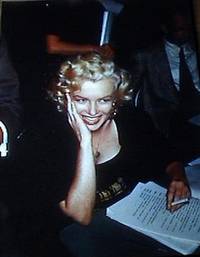
1952réf. 0001038HOLLYWOOD LOS ANGELES CALIFORNIA CA. Very Good. 1952. On offer is an exceptional archive of original color slides positives featuring the most remarkable female beauty of the 20th century being Marilyn Monroe. Ms. Monroe is candidly captured during a rehearsal and live performance of Edgar Bergen's radio show October 26th 1952. The writer of the show featuring the internationally famed Bergen and his equally famous puppet Charlie McCarthy was Mr. Zeno Klinker. Mr. Klinker the character Effie Klinker is named after the man besides being a talented writer and comedian his sister also a creative talent being the renowned Death Valley artist Orpha Klinker was also a passionate photographer who photographed nearly every visiting actor actress or celebrity on the Bergen show and at this particular broadcast he had direct access to Marilyn Monroe. She is absolutely ravishing and at the height of her beauty and appears to be having a sensational time. A number of group shots include Monroe Bergen and other cast members. Collectors and historians of Monroe's life and career will recognize that as her star was ascending and she gaining some small influence due to her roles in 'The Asphalt Jungle' and 'All About Eve' at this broadcast of one of the most popular radio shows ever she was a mere three months before the 1953 film noir movie 'Niagara' would launch her to stardom. This archive is comprised of 42 different unpublished images that have been stored for more than 50 years. Klinker captured two near identical photos of each image to use in a stereographic type viewer and create a 3-D effect so while there are 42 images they are meant to create 21 'stereoviews'. The color positives have sleeves that would slip into the stereo-viewer. There is no stereo-viewer with the archive. VG.; EDGAR BERGEN CHARLIE MCCARTHY MARILYN MONROE VENTRILIQUIST MEMOIR MEMORIAL PERSONAL HISTORY NORMA JEAN NORMA JEANE BAKER EPHEMERA PHOTOGRAPHY PHOTOGRAPHIC HISTORY OF RADIO Norma Jeane Mortenson . unknown
1921réf. 152533Los Angeles 1921-1923. Three of the scarce blank volumes issued to accompany Edward S. Curtis’s monumental work The North American Indian. Two of the three volumes are entirely blank while the third was used as the guest book of Curtis’s Los Angeles studio. Three quarto volumes bound to match the sets of The North American Indian in brown half morocco gilt stamp-signed by the binder H. Blackwell the spines lettered “North American Indian Clippings” Volumes I and II and “North American Indian Letters” Volume I. Printed with blank leaves and half the pages of the standard volumes these books were made for subscribers who owned the Stickley Brothers cabinet built to house the work: the cabinet’s shelving held twenty-four octavo volumes but a completed set numbered only twenty and the blank “Letters” and “Clippings” volumes were evidently produced to fill the empty shelf. Very few appear to have been made or sold and examples are rarely encountered. The “Clippings” volume is blank throughout apart from some thirty pages near the front which Curtis’s daughter Beth used as the sign-in book for the open houses she held at the Curtis Studio in Los Angeles from 1921 to 1923; the endpaper is inscribed with the studio’s address at 668 South Rampart and a note of the two and a half years Curtis spent there. These pages record the names of visitors entered from the first open house of April 7 1921 through the Adam’s Rib exhibition of February 1 1923 in most cases signed by the guests themselves with their addresses and telephone numbers. Among those who signed were the composer Charles Wakefield Cadman the silent film players Snitz Edwards and Hedwiga Reicher the authors Gene Stratton-Porter and Marah Ellis Ryan the Shakespearean actor Frederick Warde the sculptor David Edstrom the choreographer Marion Morgan and the operatic soprano Margaret Romaine. An entry for June 30 1921 bears the signature of Manford “Mag” Magnuson who met Beth Curtis at the studio that very evening and would later marry her. In very good condition with some light rubbing and wear to the bindings. Provenance: Edward S. Curtis; by descent to his daughter Beth Curtis Magnuson and her husband Manford “Mag” Magnuson; acquired from them by Dr. Billy T. Utley. Edward S. Curtis 1868-1952 was among the most important photographers in American history the creator of The North American Indian a monumental twenty-volume study published between 1907 and 1930 with the financial backing of J. Pierpont Morgan and the encouragement of Theodore Roosevelt which documented the traditional life of the Native peoples of the United States in more than two thousand photogravures. When his marriage to Clara ended in divorce in 1919 and she was awarded his own set of the work Curtis relocated from Seattle to Los Angeles where with his daughter Beth he opened his first commercial portrait studio at 668 South Rampart and took work as a still photographer for the Hollywood studios among them Cecil B. DeMille’s production of The Ten Commandments in the hope of financing the completion of his great ethnographic project. Beth built the studio’s clientele through a series of weekly open houses at which her father was the principal attraction aimed at the carriage trade and the growing world of the movies. Among Curtis’s closest allies in these years was the author Marah Ellis Ryan whose novel The Flute of the Gods he had illustrated with his photographs and who shared his devotion to the cause of Native peoples; a subscriber to the deluxe issue of The North American Indian she gave Curtis her own set after his was lost in the divorce and it is through this descent that the present blank volumes are understood to have passed to him. unknown
1797réf. 52680Philadelphia: John Bioren for John Fenno 1797. Rare first edition of one of the major causes célèbres in American governmental history. Octavo bound in contemporary morocco marbled endpapers. In near fine condition. This first edition of 1797 is rare as it was bought up by the Hamilton family in an effort to suppress it but was ultimately reprinted in 1800 by Hamilton’s political enemies. Housed in a custom half calf clamshell box. Alexander Hamilton resigned as Secretary of the Treasury in 1795; two years later "a baseless accusation against his honesty as secretary of the treasury brought by Monroe and others forced him to make public confession of his intrigue some years previous with a Mrs. Reynolds … his confession had the merit of a proud bravery for it showed him willing to endure any personal humiliation rather than a slur on his public integrity" DAB. Mrs. Hamilton tried to buy up all copies of the 1797 pamphlet but some escaped. In 1800 in the midst of the Jefferson-burr election anti-Federalists such as William Duane reprinted Hamilton's admission of infidelity. John Bioren for John Fenno unknown
1797réf. 52680Philadelphia: John Bioren for John Fenno 1797. Rare first edition of one of the major causes celebres in American governmental history. Octavo bound in contemporary morocco marbled endpapers. In near fine condition. This first edition of 1797 is rare as it was bought up by the Hamilton family in an effort to suppress it but was ultimately reprinted in 1800 by Hamilton's political enemies. Housed in a custom half calf clamshell box. Alexander Hamilton resigned as Secretary of the Treasury in 1795; two years later "a baseless accusation against his honesty as secretary of the treasury brought by Monroe and others forced him to make public confession of his intrigue some years previous with a Mrs. Reynolds . his confession had the merit of a proud bravery for it showed him willing to endure any personal humiliation rather than a slur on his public integrity" DAB. Mrs. Hamilton tried to buy up all copies of the 1797 pamphlet but some escaped. In 1800 in the midst of the Jefferson-burr election anti-Federalists such as William Duane reprinted Hamilton's admission of infidelity. John Bioren for John Fenno unknown books
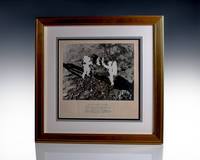
1969réf. 1484731969. Rare original photograph of Neil Armstrong and Buzz Aldrin raising the United States flag at the Apollo 11 lunar landing site. Vintage matte-finish photograph of Neil Armstrong and Buzz Aldrin at Tranquility Base. Boldly signed by Neil Armstrong "Neil Armstrong Tranquility Base Moon Landing of Apollo 11 20 July 1969" and signed by Michael Collins. Armstrong added a proxy signature of Buzz Aldrin. Very few photos of Neil Armstrong on the moon exist as he was the chief photographer during the Apollo 11 EVAs. This remarkable image was taken by the 16mm Data Acquisition Camera that was mounted inside the Lunar Module. It is one of the most iconic photographs of the 20th century captured at the mission's triumphant climax when the stars and stripes were first unfurled on another celestial body. Mounted on cardstock with an affixed caption below. Triple matted and framed. In very good condition. From the collection of Norris McWhirter 1925-2004 by family descent. Norris McWhirter was a British writer political activist and television presenter known most famously for founding with his brother Ross the Guinness World Records which they wrote and annually updated together between 1955 and 1975. A remarkable example with Armstrong's uncommon inclusion of the lunar time and place. The entire piece measures 17 inches by 16.75 inches. On July 20th 1969 American astronauts Neil Armstrong and Buzz Aldrin landed the Apollo Lunar Module Eagle on the lunar surface. Six hours after landing Neil Armstrong became the first person to step onto the lunar surface; Aldrin joined him 19 minutes later and the two spent over two hours collecting lunar materials. Armstrong's first step onto the lunar surface was broadcast on live TV to a worldwide audience during which he uttered the historic phrase "That's one small step for man one giant leap for mankind." Apollo 11 effectively ended the Space Race and fulfilled a national goal proposed in 1961 by President John F. Kennedy: "before this decade is out of landing a man on the Moon and returning him safely to the Earth." unknown
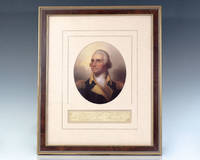
1799réf. 142623January 21 1799. Rare partial document signed by George Washington on January 21 1799 eleven months before his death on December 14 1799. Octavo the partial manuscript document reads "I do acknowledge that this is the Platt referred to in the Deeds made for the Lands of George Mercer." Signed by Washington "Go. Washington" and countersigned by three witnesses. Accompanied by a typed letter signed by Dorothy Twohig editor-in-chief of the The Papers of George Washington which reads in part "The note on Mercer explains Washington's involvement in the whole affair which started before the Revolution. After the war Washington tried to extricate himself from the problems resulting from the power of attorney given him by George Mercer who had died in 1784 and indeed a decree of the Virginia Court of Chancery had removed Mercer's affairs from his control but ramifications from land sales followed him even into his years of retirement after his presidency. I am also inclosing transcriptions of three letters between Washington and Raleigh Colston involving Mercer's land. We think that your document was issued by Washington to reassure Colston in regards to his purchase of Mercer land. It was all an extremely complicated affair that plagued Washington for much of his public life." George Mercer served as a captain under George Washington during the French and Indian War moving to Europe in 1765. Washington became entangled in his American business affairs in the early 1770s after Mercer had inherited properties in Virginia from his father. The present document seems to pertain to the sale of Mercer's lands to Raleigh Colston with Washington offering reassurances of a clean title. It is a particularly noteworthy document in that Washington began his adult life as a surveyor—in July 1749 at the age of 17 Washington was appointed official surveyor for the newly created Culpeper County in northern Virginia. Here a mere eleven months before his death on December 14 1799 he is still attending to matters of plats and surveys. In very good condition. Handsomely matted and framed with a portrait of Washington after Rembrandt Peale’s famed painted portrait “George Washington Patriae Pater" considered by many second only to Gilbert Stuart’s iconic Athenaeum portrait of the first president and variations of which hang in the Oval Office and Old Senate Chamber. The entire piece measures 16 inches by 19.25 inches. American statesman and soldier George Washington served as the first President of the United States from 1789 to 1797 and was one of the Founding Fathers of the United States. He served as Commander-in-Chief of the Continental Army during the American Revolutionary War and later presided over the 1787 convention that drafted the United States Constitution. He is popularly considered the driving force behind the nation's establishment and came to be known as the "father of the country" both during his lifetime and to this day. Washington retired to Mount Vernon in March 1797 and devoted time to his plantations and other business interests including his distillery. His plantation operations were only minimally profitable48 and his lands in the west Piedmont were under Indian attacks and yielded little income with the squatters there refusing to pay rent. He attempted to sell these but without success. Washington was known to be rich because of the well-known "glorified façade of wealth and grandeur" at Mount Vernonbut nearly all of his wealth was in the form of land and slaves rather than ready cash. To supplement his income he erected a distillery for substantial whiskey production. Historians estimate that the estate was worth about $1 million in 1799 dollars equivalent to $17.59 million in 2022. Washington bought land parcels to spur development around the new Federal City named in his honor and he sold individual lots to middle-income investors rather than multiple lots to large investors believing they would more likely commit to making improvements. unknown
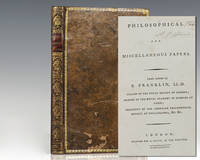
1787réf. 125345London: Printed for C. Dilly in the Poultry 1787. First edition of the last collection of Franklin's writings to appear during his lifetime; a major collection of his political philosophical and scientific writings a second volume of which was planned but never published. First issue with page 25 mispaginated "52." Octavo bound in full contemporary tree calf with elaborate gilt tooling to the spine red morocco spine label lettered in gilt gilt Greek key ruling to the front and rear panels. With four copper-engraved folding plates including diagrams of the Franklin stove and the earliest published map of the Gulf Stream. In very good condition. Armorial bookplate and early ownership inscriptions. Text and plates very clean. Rare. Intended by the publisher as a companion volume to the Experiments and Observations on Electricity 1769 and his Political Miscellaneous and Philosophical Pieces 1779 Franklin's Philosophical and Miscellaneous Papers contains a selection of important political essays including his Remarks concerning the Savages in North America 1784 The letter from Dr. B. Franklin to Benjamin Vaughan… of Privateering 1785 and Information to those who would remove to America 1784 which is "one of the clearest expressions of his belief that American society should be based on the virtues of the middle… classes" Isaacson 423. Also highly notable is Internal State of America his sharply optimistic postwar reply to "complaints of hard times in the American press… with an equally sharp consciousness of British propaganda" Crane William and Mary Quarterly XV:2 218. This volume additionally contains three major scientific writings: Description of a New Stove for the burning of Pitcoal 1785 Letter from Dr. B. Franklin to Dr. Ingenhausz On the Causes and Cure of Smoky Chimneys 1785 and Letter from Dr. Benjamin Franklin… containing sundry Maritime Observations 1785. Merging his political and scientific interests Franklin used Maritime's study of the sea and Gulf Stream to "proclaim the virtues of his nation and its people." This inspired others to also "think of the Gulf Stream in political terms. In 1790 Thomas Paine declared the French Revolution 'as fixed as the Gulf Stream' and Jonathan Williams claimed the current's waters were as distinct as 'the colors of red white and blue'" Chaplin 320-25. Printed for C. Dilly, in the Poultry unknown
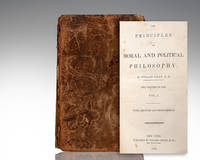
1839réf. 145971New York: Collins Keese & Co 1839. Later edition of this classic book on moral and political philosophy; used by William Tecumseh Sherman while a cadet at the United States Military Academy at West Point. Octavo original calf. General Sherman and his son's bookplates to the front pastedown. Intentionally scratched with "S" multiple times on the front panel by General Sherman. Inscribed by Sherman as a cadet on the front flyleaf "Sherman Nov. 1st/39." The date indicates that Sherman was in his third year at the academy upon signing this book. While at West Point Sherman excelled academically described by fellow cadet William Rosecrans as "one of the brightest and most popular fellows" at the academy. Hirshson The White Tecumseh 1997 p. 13. This book on one of the subjects Sherman described as excelling at would have been used by him in his studies. In good condition with front panel detached splitting to the hinges some loss to the spine and some toning throughout. No other examples of books used by Sherman at West Point are known. Sherman writes about his time at West Point only briefly in his memoirs: "At the Academy I was not considered a good soldier for at no time was I selected for any office but remained a private throughout the whole four years. Then as now neatness in dress and form with a strict conformity to the rules were the qualifications required for office and I suppose I found not to excel in any of these. In studies I always held a respectable reputation with the professors and generally ranked among the best especially in drawing chemistry mathematics and natural philosophy. My average demerits per annum were about one hundred and fifty which reduced my final class standing from number four to six." Collins, Keese, & Co unknown
1787réf. 125345London: Printed for C. Dilly in the Poultry 1787. First edition of the last collection of Franklin's writings to appear during his lifetime; a major collection of his political philosophical and scientific writings a second volume of which was planned but never published. First issue with page 25 mispaginated "52." Octavo bound in full contemporary tree calf with elaborate gilt tooling to the spine red morocco spine label lettered in gilt gilt Greek key ruling to the front and rear panels. With four copper-engraved folding plates including diagrams of the Franklin stove and the earliest published map of the Gulf Stream. In very good condition. Armorial bookplate and early ownership inscriptions. Text and plates very clean. Rare. Intended by the publisher as a companion volume to the Experiments and Observations on Electricity 1769 and his Political Miscellaneous and Philosophical Pieces 1779 Franklin's Philosophical and Miscellaneous Papers contains a selection of important political essays including his Remarks concerning the Savages in North America 1784 The letter from Dr. B. Franklin to Benjamin Vaughan. of Privateering 1785 and Information to those who would remove to America 1784 which is "one of the clearest expressions of his belief that American society should be based on the virtues of the middle. classes" Isaacson 423. Also highly notable is Internal State of America his sharply optimistic postwar reply to "complaints of hard times in the American press. with an equally sharp consciousness of British propaganda" Crane William and Mary Quarterly XV:2 218. This volume additionally contains three major scientific writings: Description of a New Stove for the burning of Pitcoal 1785 Letter from Dr. B. Franklin to Dr. Ingenhausz On the Causes and Cure of Smoky Chimneys 1785 and Letter from Dr. Benjamin Franklin. containing sundry Maritime Observations 1785. Merging his political and scientific interests Franklin used Maritime's study of the sea and Gulf Stream to "proclaim the virtues of his nation and its people." This inspired others to also "think of the Gulf Stream in political terms. In 1790 Thomas Paine declared the French Revolution 'as fixed as the Gulf Stream' and Jonathan Williams claimed the current's waters were as distinct as 'the colors of red white and blue'" Chaplin 320-25. Printed for C. Dilly, in the Poultry unknown books
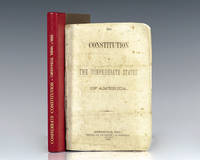
1861réf. 125394Greenneville sic Tenn.: Printed And For Sale by J. M. Robertson 1861. Scarce 1861 Tennessee printing of The Constitution of The Confederate States of America adopted on March 11 1861. Octavo original wrappers. In very good condition wrappers laminated in glassine. Housed in a custom cloth chemise and half morocco slipcase. Exceedingly rare being the only example printed in Tennessee in the year of the Constitution's adoption to appear in auction records. Adopted on March 11 1861 the Constitution of the Confederate States was the supreme law of the Confederate States of America. It was in effect from 22 February 1862 to the conclusion of the American Civil War in May 1865. The majority of its provisions follow the United States Constitution verbatim; however there are critical differences between the two documents regarding slavery. Whereas the original U.S. Constitution did not use the word "slavery" or the term "Negro Slaves" but instead used "Persons held to Service or Labour" which included whites and Native Americans in indentured servitude the Confederate Constitution addresses the legality of slavery directly and by name. Though Article I Section 9 1 of both constitutions are quite similar in banning the importation of slaves from foreign nations the Confederate Constitution permitted the Confederate States to import slaves from the United States and specified the "African race" as the subject. The importation of slaves into the United States including the South had been illegal since 1808. Printed And For Sale by J. M. Robertson hardcover books
1828réf. 102755New York: Published by S. Converse. Printed by Hezekiah Howe 1828. Rare first edition of Webster's monumental American Dictionary one of only 2500 copies with frontispiece portrait of the pioneering lexicographer in full contemporary calf. Quarto two volumes bound in full contemporary calf marbled endpapers illustrated frontispiece tissue guard present. In near fine condition light toning to the text. Most rare and desirable bound in contemporary calf. An exceptional example most rare without any restoration. In 1807 Webster began compiling a fully comprehensive dictionary An American Dictionary of the English Language; it took twenty-eight years to complete. To evaluate the etymology of words Webster learned twenty-six languages including Old English Anglo-Saxon Greek Hebrew and Latin. Webster completed his dictionary during his year abroad in 1825 in Paris France and at the University of Cambridge. His book contained seventy thousand words of which twelve thousand had never appeared in a published dictionary before. As a spelling reformer Webster believed that English spelling rules were unnecessarily complex so his dictionary introduced American English spellings replacing colour with color substituting wagon for waggon and printing center instead of center. He also added American words like skunk and squash that did not appear in British dictionaries. At the age of seventy Webster published his dictionary in 1828 registering the copyright on April 14. Webster did all this in an effort to standardize the American language. "This dictionary which almost at once became and has remained the standard English dictionary in the United States was the end-product of a stream of spelling books grammars readers and dcitionaries which flowed from the pen of the industrious Noah Webster.Webster's great dictionary all the 70000 entries of which he wrote with his own hand has been reprinted and brought up to date innumerable times.the book marked a definite advance in modern lexicography as it included many non-literary terms and paid great attention to the language actually spoken. Moreover his definitions of the meaning of words were accurate and concise.and have for the greater part stood the test of time superbly well" Printing and the Mind of Man. "As a whole Webster's American Dictionary was a scholarly achievement of the first order richly deserving of its great reputation at home and abroad" DAB. With definitions for "some 70000 words--15000 more than any previous English lexicon. Although only 2500 copies of the first edition were printed the work established Webster as a lexicographer of international repute" Lathem 76 United Statesiana 9. Published by S. Converse. Printed by Hezekiah Howe unknown books
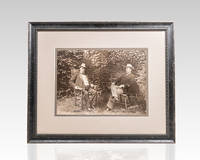
1900réf. 152614Pach Brothers circa 1900. Remarkable photograph for the 1900 McKinley-Roosevelt presidential campaign signed by both William McKinley and Theodore Roosevelt. Full-length sepia-toned photomontage copyrighted Pach Brothers New York 1900 the double portrait shows the two men seated together in a leafy garden. Boldly signed within the image at the lower edge each beneath his own portrait "William McKinley" and "Theodore Roosevelt." The photograph measures 11.5 by 15.75 inches mounted to a larger board handsomely matted and framed in a heavy wooden frame. The entire piece measures 25.75 inches by 21.5 inches. In near fine condition with a very small area of restoration to the upper right corner the signatures very crisp and bold. Exceptionally rare. In 1900 this photograph was created to promote President William McKinley’s re-election campaign pairing him with Governor Theodore Roosevelt of New York whom the Republican National Convention had chosen as his running mate. The image has a remarkable history: the Pach Brothers had first produced it in 1899 for the intended McKinley-Hobart ticket showing McKinley seated in a leafy garden beside his vice president Garret Hobart. When Hobart died in November 1899 the photographers artfully replaced him pasting in a portrait of Roosevelt and rephotographing the result to create the negative from which the present print was made. McKinley and Roosevelt won the election of 1900 in a landslide but McKinley was shot by an assassin in Buffalo in September 1901 only six months into his second term and Theodore Roosevelt succeeded him to become at forty-two the youngest president in American history. Pach Brothers unknown
1532réf. 66816Norimbergae Nürimberg Nuremberg: In aedib. viduae Durerianae Hieronymus Andreae 1532. Fine. In aedib. viduae Durerianae Hieronymus Andreae Norimbergae Nürimberg Nuremberg 1532 20.50 x 32 cm relié Alberti Dureri clarissimi pictoris et geometræ. De symmetria partium in rectis formis humanorum corporum In aedibviduae Durerianae Hieronymus Andreae Norimbergae Nuremberg 1532 folio 20.5 x 32 cm 80 f. A-E6 F4 G-N6 O4 full parchment First edition of the Latin translation created by Joachim Camerarius the work appeared in German in 1528 under the title Vier Bücher von menschlicher Proportion. Our edition contains the first two books the following two will be published in 1534 under the title De varietate figurarum et flexuris partium ac gestibus imaginum. We will have to wait until 1557 for Louis Meigret's French translation to be published. Our edition is illustrated with 85 large wooden insert illustrations and many other smaller in-text illustrations the same as those used in the original German edition. The title page shows Dürer's well-known monogram. Gothic text. The last white leaf missing in most copies is present here. Large greatly fresh margined copy. Full parchment with preserved laces. Very beautiful copy of the most sought-after of Albrecht Dürer's technical works. The illustrations required the examination of several hundred male and female models and something rarer for the time children. These extremely precise analyses resulted in anthropometrical impressionist drawings showing the human body as a whole and also in detail hands feet heads etc. Each drawing squared or scaled in the margin allows the models to be easily reproduced the book being intended to avoid errors of proportion for young artists. Joachim Camerarius' Latin translation humanist and close friend of the author had at the time an essential role: it gave Dürer's work until then written in archaic German a significant audience; without Camerarius Michelangelo would never for example have known of Dürer's theory of proportions. Dürer whose godfather Anton Koberger published La Chronique de Nuremberg in 1493 frequented the world of printing and engraving very early on and unlike his contemporary Florentine Leonardo da Vinci who published nothing he produced several theoretical treatises. It was during a trip to Italy in 1494 that he met Jacopo de' Barbri 1445-1516 who introduced him to the role of mathematics in perspective and the study of the proportions of the human body. On returning to Germany he opened a workshop became the painter of Maximillian I of Habsbourg and joined the Great Council of the City of Nuremberg. Recognition is complete and Dürer becomes an internationally known artist with the knowledge and ability for well-received thought. In the last years of his life not abandoning the pictorial arts Dürer encouraged by his humanist friends spends most of his time writing. Determined to leave the results of his long theoretical thoughts for posterity he publishes several treatises: Instruction sur la manière de mesurer 1525 Instruction relative aux fortifications des bourgs villes et châteaux 1527 and finally Traité des proportions du corps humain 1528. In keeping with the artistic considerations of the Renaissance the intention of this last treaty is to establish a scientific basis geometrical and arithmetical applied to aesthetics and thus to provide practical guidelines aimed at achieving anatomical perfection. A true artistic testament this emblematic work will have a considerable influence on the history of Western art. In aedib. viduae Durerianae[ Hieronymus Andreae] unknown