1 480 résultats
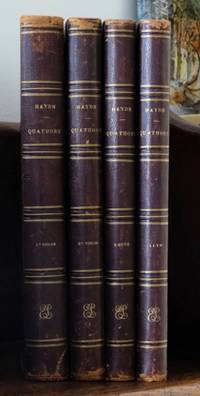
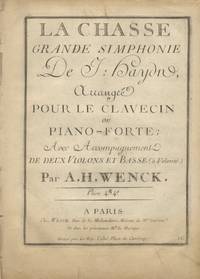
1790réf. 41127Paris 1790. Folio. Disbound. Engraved. Wenck arr. La Chasse Grande Simphonie de J: Haydn Arrangée pour le Clavecin ou Piano-Forte; Avec Accompagnement de Deux Violons et Basse à Volonté par A. H. Wenck. Prix 4₶. 4s. Hob. I/73. Keyboard part only. Paris: Chez Wenck Rue de la Michaudiere Maison de Mr. Garnier et chez les principaux Mds. de Musique. Gravé par Le Roy l'aîné Place de Cambray . 10e. Ca. 1785. Keyboard part. i title 2-15 i blank pp. With "No. 14" in contemporary black ink to head of first page of music. RISM H4478 1 copy of the keyboard part only at the Biblioteca civica musicale "A. della Corte" in Milan. Bound with: Fodor arr. Simphonie Composés Par J Haydn Arrangées pour Clavecin ou Piano forte Avec Accompagnement d'un Violon Par M Fodor. Prix 3₶. Hob. I/47. Keyboard part only. Paris: Chez le Sr. Sieber Musicien rue St. Honore entre la rue des Vieilles Etuve et celle Dorleans chez l'Apothicaire No 92 A. P. D. R. Ca. 1790. 1f. recto title verso blank i "Catalogue de Musique Vocale et Instrumentale appartenant à Mons. Sieber Rue St. Honore entre la Rue des Vielles Etuves et celle d'Orleans chez l'Apothicaire No. 92" 2-13 i blank pp. With Sieber's control signature to lower outer corner of title "3" to head of title and "No 15" to head of first page of music in contemporary manuscript. Outer margin of publisher's catalogue very slightly trimmed just touching text in several instances. RISM H4498 1 copy of the keyboard part only at the Bibliothèque nationale. Bound with: Wenck arr. Quatuor Détache de l'Œuvre XXXIIIe. de M. Haydn Arrangé pour le Piano-Forte ou Clavecin avec Accompagnement de Violon et Violoncelle à volonté par M. Wenck. Op. 33/5 Hob. III:41. Keyboard part only. Paris: Chez M. Wenck rue de la Michodiere Maison de M. Garnier. Et Chez Melle. Rivet au Palais Royal à côté du Caffé de foy. No. 55. Prix 3₶.12f. . 12e. . i title 2-11 i blank pp. With first ten measures printed to head of title. "No. 16." in contemporary manuscript to head of first page of music. Not located in RISM. Slightly worn browned and soiled; a few small tears. Haydn "began his career in the traditional patronage system of the late Austrian Baroque and ended as a 'free' artist within the burgeoning Romanticism of the early 19th century. Famous as early as the mid-1760s by the 1780s he had become the most celebrated composer of his time and from the 1790s until his death was a culture-hero throughout Europe. Since the early 19th century he has been venerated as the first of the three 'Viennese Classics' Haydn Mozart Beethoven. He excelled in every musical genre; during the first half of his career his vocal works were as famous as his instrumental ones although after his death the reception of his music focussed on the latter except for The Creation. He is familiarly known as the 'father of the symphony' and could with greater justice be thus regarded for the string quartet; no other composer approaches his combination of productivity quality and historical importance in these genres. In the 20th century he was understood primarily as an 'absolute' musician exhibiting wit originality of form motivic saturation and a 'modernist' tendency to problematize music rather than merely to compose it but earnestness depth of feeling and referential tendencies are equally important to his art." Georg Feder and James Webster in Grove Music Online Wenck was a German composer and glass harmonica player. "According to Gerber he studied the violin with Hataš and the harpsichord and composition with Georg Benda. He went to Paris with the latter in 1778 and stayed there until at least 1792 as an arranger of popular overtures and airs. On his return to Gotha he became honorary ducal secretary lived on his small estate made pianos that were much sought after and worked at perfecting the glass harmonica with which he toured as a virtuoso. In 1788 he launched a periodical music collection which was intended to appear quarterly but which seems never to have got beyond its first issue: Variétés musicales pour le piano-forte ou clavecin avec accompagnements . mêlées de chant avec paroles italiennes et françaises. In addition he published overtures and airs from favourite operas mostly for piano or harpsichord with violin accompaniment but in one case for string quartet. He also published a set of Six petites sonates op. 1 n.d. and another of Sonates et pièces op.2 four of each for keyboard with violin ad libitum as well as a Ier simphonie op.3 for the same combination. These last two were advertised in 1783; the simphonie in the style of a piano reduction of orchestral textures was to have been the first of six. In addition Gerber reported three violin trios and a bassoon concerto in manuscript. In 1798 Wenck made improvements to the metronome of Sauveur and Duclos which he described in Beschreibung eines Chronometers Magdeburg 1798 and which he sold in quantity. In 1806 he moved to Holland settling in Amsterdam where he was still living in 1810." David Fuller in Grove Music Online Fodor was a French harpsichordist of Dutch birth. "One of the foremost harpsichordists of his time in about 1780 he settled in Paris where he gave concerts and taught and composed harpsichord concertos and sonatas as well as a symphony and music for piano and strings." Elizabeth Forbes in Grove Music Online. unknown books
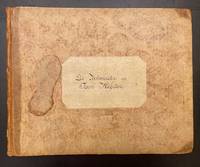
1815réf. 28731815. Part 1: 2 Blank pages / 2er Violon Title Page / 237 Pages / 2 After blanks Part 2: 2 Blank pages / 1er Violon Title Page / 1 NNP / 297 Pages / 3 NNP / 2 After blanks Part 3: 2 Blank pages / Basse Title Page / 205 Pages / 2 Blank pages Part 4: 2 Blank pages / Alto Title Page / 205 Pages / 2 Blank pages Not dated date is an estimate. Binding: Contemporary Half Leather Folio Height cm: 365 CM Width cm: 285 CM Thickness cm: 145 CM hardcover
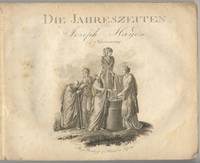
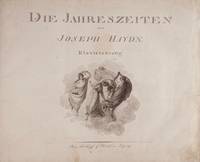
1802réf. 40481Leipzig: Breitkopf & Hartel 1802. Oblong folio. Original publisher's orange decorative printed wrappers with "Les Saisons par J. Haydn double rule Die Jahreszeiten von J. Haydn" within thick decorative rule to upper. 1f. recto title with engraved vignette by F. W. Nettling after Schubert verso blank 176 pp. with publisher's catalogue to lower portion of p. 174 and pp. 175-176. Text in German and French. Typeset throughout. The title-page vignette depicts an allegory of the seasons with two women decorating a statue with flowers and another supporting a hunched old man who carrying a walking stick. Contemporary signature to corner of upper wrapper. Wrappers somewhat worn and rubbed; small tears to upper and spine with minor loss. Light to moderate foxing; several leaves soiled at edges. First Edition later issue. HWV II p. 59. Hoboken Catalogue Vol. 9 1419 variant. RISM H4690. One of Haydn's two masterful oratorios this secular work was written shortly after The Creation 1798 to a libretto by Baron Gottfried von Swieten 1733-1803 after the eponymous poem by James Thomson 1700-1748 published in 1730. The work was first performed on 24 April 1801 in a private première at the Schwarzenberg Palace in Vienna; the first public production took place on 29 May 1801. "Although the initial reception of The Seasons was favourable - Haydn wrote to Clementi that it had enjoyed 'unanimous approval' and that 'many prefer it to The Creation because of its greater variety' - critical opinion soon became mixed owing in part to its perceived 'lower' subject in part to a growing aesthetic resistance to its many pictorialisms. Haydn himself contributed to both strands of criticism: he supposedly said to Francis II 'In The Creation angels speak and tell of God but in The Seasons only Simon speaks' Dies; and he indiscreetly criticized Swieten's croaking frogs 'Frenchified trash' and the absurdity of a choral hymn to toil Fleiss. Nonetheless he maintained that it would join The Creation in assuring his lasting fame. For the publication he took the path of lesser resistance selling the rights to Breitkopf & Härtel. . Notwithstanding its less exalted subject The Seasons is compositionally more virtuoso than The Creation and offers greater variety of tone: Haydn's pastoral is one of the final glories of a tradition that is more than 'high' enough." Georg Feder and James Webster in Grove Music Online The music is "of wonderful freshness and unfailing originality." TNG Vol. 8 p. 347. Breitkopf & Hartel unknown
1802réf. 40481Leipzig: Breitkopf & Hartel 1802. Oblong folio. Original publisher's orange decorative printed wrappers with "Les Saisons par J. Haydn double rule Die Jahreszeiten von J. Haydn" within thick decorative rule to upper. 1f. recto title with engraved vignette by F. W. Nettling after Schubert verso blank 176 pp. with publisher's catalogue to lower portion of p. 174 and pp. 175-176. Text in German and French. Typeset throughout. The title-page vignette depicts an allegory of the seasons with two women decorating a statue with flowers and another supporting a hunched old man who carrying a walking stick. Contemporary signature to corner of upper wrapper. Wrappers somewhat worn and rubbed; small tears to upper and spine with minor loss. Light to moderate foxing; several leaves soiled at edges. First Edition later issue. HWV II p. 59. Hoboken Catalogue Vol. 9 1419 variant. RISM H4690. One of Haydn's two masterful oratorios this secular work was written shortly after The Creation 1798 to a libretto by Baron Gottfried von Swieten 1733-1803 after the eponymous poem by James Thomson 1700-1748 published in 1730. The work was first performed on 24 April 1801 in a private première at the Schwarzenberg Palace in Vienna; the first public production took place on 29 May 1801. "Although the initial reception of The Seasons was favourable - Haydn wrote to Clementi that it had enjoyed 'unanimous approval' and that 'many prefer it to The Creation because of its greater variety' - critical opinion soon became mixed owing in part to its perceived 'lower' subject in part to a growing aesthetic resistance to its many pictorialisms. Haydn himself contributed to both strands of criticism: he supposedly said to Francis II 'In The Creation angels speak and tell of God but in The Seasons only Simon speaks' Dies; and he indiscreetly criticized Swieten's croaking frogs 'Frenchified trash' and the absurdity of a choral hymn to toil Fleiss. Nonetheless he maintained that it would join The Creation in assuring his lasting fame. For the publication he took the path of lesser resistance selling the rights to Breitkopf & Härtel. . Notwithstanding its less exalted subject The Seasons is compositionally more virtuoso than The Creation and offers greater variety of tone: Haydn's pastoral is one of the final glories of a tradition that is more than 'high' enough." Georg Feder and James Webster in Grove Music Online The music is "of wonderful freshness and unfailing originality." TNG Vol. 8 p. 347. Breitkopf & Hartel unknown books
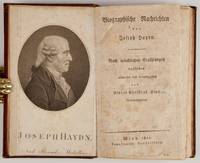
1810réf. 40444Wien: Camesinaische Buchhandlung 1810. Octavo. Full 19th century dark red calf with gilt rules and blindstamping to boards titling gilt to upper dark red doublure endpapers. Preserved in a modern quarter brown mid-tan leather clamshell box with dark ivory linen boards titling gilt to spine. 1f. fine engraved frontispiece portrait of Haydn by D. Weiss after Ihrwack's medallion 1f. recto title verso 3-line verse by D. Tomas de Yriarte 1f. recto dedication verso blank v-x 11-220 pp. 1 folding plate of engraved music. Binding slightly worn rubbed and bumped. Minor to moderate foxing throughout; small tear to lower outer corner of pp. 157/158 with no loss of text; frontispiece loose. First Edition. Catalogue of the Printed Books in the British Museum. Accessions Third Series . Books in the Hirsch Library. P. 118. Eitner III p. 197. Dies was a German writer composer and painter. "Esterhazy sponsored the publication of his Biographische Nachrichten von Joseph Haydn . for which Dies collected material from 30 conversations with the aged composer. Because of its factual tone and the typically Classical standpoint of its aesthetic judgments this work occupies a significant position in early Haydn literature alongside Griesinger and Carpani. . Many Haydn documents appeared for the first time in the Nachtrichten and it contains a 'list of all the works Haydn composed in London' taken from the lost London notebook." Horst Seeger in Grove Music Online An early and important biographical account of Haydn. Camesinaische Buchhandlung unknown
1810réf. 40444Wien: Camesinaische Buchhandlung 1810. Octavo. Full 19th century dark red calf with gilt rules and blindstamping to boards titling gilt to upper dark red doublure endpapers. Preserved in a modern quarter brown mid-tan leather clamshell box with dark ivory linen boards titling gilt to spine. 1f. fine engraved frontispiece portrait of Haydn by D. Weiss after Ihrwack's medallion 1f. recto title verso 3-line verse by D. Tomas de Yriarte 1f. recto dedication verso blank v-x 11-220 pp. 1 folding plate of engraved music. Binding slightly worn rubbed and bumped. Minor to moderate foxing throughout; small tear to lower outer corner of pp. 157/158 with no loss of text; frontispiece loose. First Edition. Catalogue of the Printed Books in the British Museum. Accessions Third Series . Books in the Hirsch Library. P. 118. Eitner III p. 197. Dies was a German writer composer and painter. "Esterhazy sponsored the publication of his Biographische Nachrichten von Joseph Haydn . for which Dies collected material from 30 conversations with the aged composer. Because of its factual tone and the typically Classical standpoint of its aesthetic judgments this work occupies a significant position in early Haydn literature alongside Griesinger and Carpani. . Many Haydn documents appeared for the first time in the Nachtrichten and it contains a 'list of all the works Haydn composed in London' taken from the lost London notebook." Horst Seeger in Grove Music Online An early and important biographical account of Haydn. Camesinaische Buchhandlung unknown books
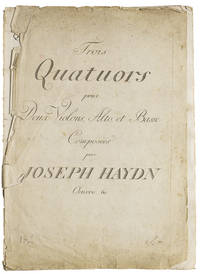
1790réf. 302878Vienna: Artaria et Comp 1790. Engraved music plate number 77 in 4 parts engraved title on front wrapper. Folio. Uncut and loose as issued. Front wrapper detached and worn lacking back wrapper stain to first and second violin parts foxing to final leaf of cello part. Engraved music plate number 77 in 4 parts engraved title on front wrapper. Folio. Franz Joseph Haydn 1732-1809 was born in Austria. Known as the 'father of the symphony' adnd 'father of the quartet' his work was eclipsed by that of Beethoven until the late twentieth century when much of his music finally became available in modern editions. It has been argued that while he did not 'invent' the quartet he was "certainly the first composer to appreciate their potential . and Haydn projected an unequalled mastery of the language of music." Oxford Dictionary of National Biography These string quartets in A major F minor and B-flat major are written for two violins viola and cello and were written in 1788 for Haydn's violinist friend Johann Tost. Hoboken III:60-62 Artaria et Comp unknown
1790réf. 302878Vienna: Artaria et Comp 1790. Engraved music plate number 77 in 4 parts engraved title on front wrapper. Folio. Uncut and loose as issued. Front wrapper detached and worn lacking back wrapper stain to first and second violin parts foxing to final leaf of cello part. Engraved music plate number 77 in 4 parts engraved title on front wrapper. Folio. Franz Joseph Haydn 1732-1809 was born in Austria. Known as the 'father of the symphony' adnd 'father of the quartet' his work was eclipsed by that of Beethoven until the late twentieth century when much of his music finally became available in modern editions. It has been argued that while he did not 'invent' the quartet he was "certainly the first composer to appreciate their potential . and Haydn projected an unequalled mastery of the language of music." Oxford Dictionary of National Biography These string quartets in A major F minor and B-flat major are written for two violins viola and cello and were written in 1788 for Haydn's violinist friend Johann Tost. Hoboken III:60-62 Artaria et Comp unknown books
1841réf. 1029J22London: Edward Moxon 1841. First edition. Cloth. Very Good. 9" by 6". None. A scarce first edition of this extensive history of the world by British journalist Joseph Timothy Hind rarely seen on the market and in its original cloth binding. The first edition of this work. Exceptionally scarce on the market expecially in the original cloth binding. Haydn's ambitious Dictionary of Dates is renowned as the most accuate informative and well-organised work of its time and remains. Bookplate of Henry Charles Blaksley to the front pastedown. Original cloth binding. Externally very smart. Sunning to spine with more gentle sunning to the board perimeters. Bumping to head and tail of spine. Slight marking to boards. Bookplate to front pastedown. Light creasing to front end paper. Internally generally firmly bound occasional starting to hinges. Pages bright and clean. Marginal age toning. Very Good Edward Moxon hardcover
2006réf. __0435909088Heinemann 2006. Mixed media product. New. 15.51x10.47x5.28 inches. Heinemann unknown
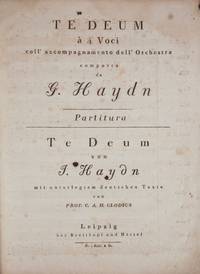
1802réf. 40447Leipzig: Breitkopf und Härtel 1802. Folio. Modern half mid-brown calf with ivory linen boards with leather title label gilt to upper spine with titling gilt. 1 title 2-42 music ii text pp. Typeset throughout. With text in Latin and German. With occasional early accidentals added in early manuscript. Some browning and foxing; minor staining. First Edition. Hoboken Collection Vol. 9 1478. RISM H2517. "The late Te Deum 'for the empress' . for chorus and very large orchestra is an ABA construction of great power and terseness; it whirls through the very long text in little more than eight minutes while still finding time for a double fugue and an immense climax at the end." Georg Feder and James Webster in Grove Music Online The autograph of the present work has been lost. Breitkopf und Härtel unknown
1802réf. 40447Leipzig: Breitkopf und Härtel 1802. Folio. Modern half mid-brown calf with ivory linen boards with leather title label gilt to upper spine with titling gilt. 1 title 2-42 music ii text pp. Typeset throughout. With text in Latin and German. With occasional early accidentals added in early manuscript. Some browning and foxing; minor staining. First Edition. Hoboken Collection Vol. 9 1478. RISM H2517. "The late Te Deum 'for the empress' . for chorus and very large orchestra is an ABA construction of great power and terseness; it whirls through the very long text in little more than eight minutes while still finding time for a double fugue and an immense climax at the end." Georg Feder and James Webster in Grove Music Online The autograph of the present work has been lost. Breitkopf und Härtel unknown books
1800réf. 8581Paris Pleyel 1800 plein veau moucheté, dos lisse à décor floral, motif central sur les plats avec effet de teinte plus foncé, guirlande, tranche dorée. in-4 oblong, titre, 118pp., [Cot. 358]
1801réf. 40448Leipzig: Breitkopf & Hartel 1801. Oblong folio. Orange paper boards with original publisher's printed wrappers with title within decorative borders laid down small early vellum label with "118" to spine. 1f. recto title with engraved vignette by F.W. Nettling after Schubert depicting an allegory of the seasons verso blank 176 pp. with publisher's catalogue to lower portion of p. 174 and pp. 175-176. Text in German and French. Typeset throughout. Numbering and occasional markings in pencil. Wrappers worn and abraded part of lower lacking; small early manuscript annotations to lower outer corner of upper with portion cancelled. Minor to moderate foxing; minor staining. First Edition. HWV II p. 59. Hoboken Catalogue Vol. 9 1419. RISM H4690. One of Haydn's two masterful oratorios this secular work was written shortly after The Creation 1798 to a libretto by Baron Gottfried von Swieten 1733-1803 after the eponymous poem by James Thomson 1700-1748 published in 1730. The work was first performed on 24 April 1801 in a private première at the Schwarzenberg Palace in Vienna; the first public production took place on 29 May 1801. "Although the initial reception of The Seasons was favourable - Haydn wrote to Clementi that it had enjoyed 'unanimous approval' and that 'many prefer it to The Creation because of its greater variety' - critical opinion soon became mixed owing in part to its perceived 'lower' subject in part to a growing aesthetic resistance to its many pictorialisms. Haydn himself contributed to both strands of criticism: he supposedly said to Francis II 'In The Creation angels speak and tell of God but in The Seasons only Simon speaks' Dies; and he indiscreetly criticized Swieten's croaking frogs 'Frenchified trash' and the absurdity of a choral hymn to toil Fleiss. Nonetheless he maintained that it would join The Creation in assuring his lasting fame. For the publication he took the path of lesser resistance selling the rights to Breitkopf & Härtel. . Notwithstanding its less exalted subject The Seasons is compositionally more virtuoso than The Creation and offers greater variety of tone: Haydn's pastoral is one of the final glories of a tradition that is more than 'high' enough." Georg Feder and James Webster in Grove Music Online The music is "of wonderful freshness and unfailing originality." TNG Vol. 8 p. 347. Breitkopf & Hartel unknown
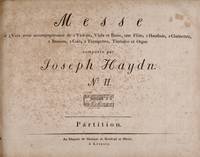
1823réf. 40446Leipsic: Breitkopf et Härtel PN 3454 1823. Oblong folio. Newly bound in quarter dark blue morocco with marbled boards title label gilt to spine. 1f. recto lithographic title verso blank 96 pp. Typeset throughout. Some minor foxing. An attractive copy. First Edition of the Mariazeller Messe. Hoboken Collection Vol. 9 1432 plate 9. RISM H2503 "Vocal music constitutes fully half of Haydn's output. Both his first and last completed compositions were mass settings and he cultivated sacred vocal music extensively throughout his career except during the later 1780s when elaborate church music was inhibited by the Josephinian reforms and the first half of the 1790s in London . "The 'Mariazellermesse' in C 1782 resembles the Missa Cellensis in key scoring and purpose although it is more compact and more closely allied with sonata style." James Webster and Georg Feder in Grove Music Online. Breitkopf et Härtel [PN 3454] unknown
1801réf. 40448Leipzig: Breitkopf & Hartel 1801. Oblong folio. Orange paper boards with original publisher's printed wrappers with title within decorative borders laid down small early vellum label with "118" to spine. 1f. recto title with engraved vignette by F.W. Nettling after Schubert depicting an allegory of the seasons verso blank 176 pp. with publisher's catalogue to lower portion of p. 174 and pp. 175-176. Text in German and French. Typeset throughout. Numbering and occasional markings in pencil. Wrappers worn and abraded part of lower lacking; small early manuscript annotations to lower outer corner of upper with portion cancelled. Minor to moderate foxing; minor staining. First Edition. HWV II p. 59. Hoboken Catalogue Vol. 9 1419. RISM H4690. One of Haydn's two masterful oratorios this secular work was written shortly after The Creation 1798 to a libretto by Baron Gottfried von Swieten 1733-1803 after the eponymous poem by James Thomson 1700-1748 published in 1730. The work was first performed on 24 April 1801 in a private première at the Schwarzenberg Palace in Vienna; the first public production took place on 29 May 1801. "Although the initial reception of The Seasons was favourable - Haydn wrote to Clementi that it had enjoyed 'unanimous approval' and that 'many prefer it to The Creation because of its greater variety' - critical opinion soon became mixed owing in part to its perceived 'lower' subject in part to a growing aesthetic resistance to its many pictorialisms. Haydn himself contributed to both strands of criticism: he supposedly said to Francis II 'In The Creation angels speak and tell of God but in The Seasons only Simon speaks' Dies; and he indiscreetly criticized Swieten's croaking frogs 'Frenchified trash' and the absurdity of a choral hymn to toil Fleiss. Nonetheless he maintained that it would join The Creation in assuring his lasting fame. For the publication he took the path of lesser resistance selling the rights to Breitkopf & Härtel. . Notwithstanding its less exalted subject The Seasons is compositionally more virtuoso than The Creation and offers greater variety of tone: Haydn's pastoral is one of the final glories of a tradition that is more than 'high' enough." Georg Feder and James Webster in Grove Music Online The music is "of wonderful freshness and unfailing originality." TNG Vol. 8 p. 347. Breitkopf & Hartel unknown books
1823réf. 40446Leipsic: Breitkopf et Härtel PN 3454 1823. Oblong folio. Newly bound in quarter dark blue morocco with marbled boards title label gilt to spine. 1f. recto lithographic title verso blank 96 pp. Typeset throughout. Some minor foxing. An attractive copy. First Edition of the Mariazeller Messe. Hoboken Collection Vol. 9 1432 plate 9. RISM H2503 "Vocal music constitutes fully half of Haydn's output. Both his first and last completed compositions were mass settings and he cultivated sacred vocal music extensively throughout his career except during the later 1780s when elaborate church music was inhibited by the Josephinian reforms and the first half of the 1790s in London . "The 'Mariazellermesse' in C 1782 resembles the Missa Cellensis in key scoring and purpose although it is more compact and more closely allied with sonata style." James Webster and Georg Feder in Grove Music Online. Breitkopf et Härtel [PN 3454] unknown books
2015réf. SBBIH-AQNZGU7TFJS6Spartan Press 2015. Good. Our good condition books are generally good for reading but not for gifting or collecting. They could have imperfections such as creasing fanning inscriptions margin notes yellowing staining on edge or cover or pages bumps scuffs etc etc sometimes multiple of these. It's a wide category that encompasses anything that isn't almost-new down to anything that is slightly better than poor. We would NOT recommend gifting Good books - these should be considered reading copies. Our books are dispatched from a Yorkshire former cotton mill. We list via barcode/ISBN so please note that the images are stock images and may not be the exact copy you receive furthermore the details about edition and year might not be accurate as many publishers reuse the same ISBN for multiple editions and as we simply scan a barcode or enter an ISBN we do not check the validity of the edition data when listing. If you're looking for an exact edition please don't order at least not without checking with us first although we don't always have time to check. We aim to dispatch prompty the service used will depend on order value and book size. We can ship to most countries see our shipping policies. Payment is via Abe only. Spartan Press unknown
réf. SBBIH-TEPVEOC7P25YGinn & Company Aylesbury Bucks 1965. paperback. Acceptable. Please see the condition note after this for details if this is missing please consider Acceptable to mean poor quality that could include major staining water damage writing missing dustjacket etc etc. Our books are dispatched from a Yorkshire former cotton mill. We list via barcode/ISBN so please note that the images are stock images and may not be the exact copy you receive furthermore the details about edition and year might not be accurate as many publishers reuse the same ISBN for multiple editions and as we simply scan a barcode or enter an ISBN we do not check the validity of the edition data when listing. If you're looking for an exact edition please don't order at least not without checking with us first although we don't always have time to check. We aim to dispatch prompty the service used will depend on order value and book size. We can ship to most countries see our shipping policies. Payment is via Abe only. Ginn & Company, Aylesbury Bucks paperback
réf. 114439Leipzig Breitkopf und Härtel 1801. Oblong folio. Lith. title blank 176 pp with printed music pp. 174-176 with Verlagsverzeichniss. Stain on title and first 40 pages foxing. Contemporary somewhat worn half calf spine with raised bands marbled but faded board papers the front with handwritten label stain on front board. Hoboken 1417 XXI:3. The first printed edition of Die Jahreszeiten Les Saisons The Seasons published the same year as the first performance and shortly before it was published in Mus. Magazin Hoboken. This edition is for piano and vocals with the text in German and English. The first partitur and a similar piano score as this with the text in German and French were published by Breitkopf & Härtel in 1802. The title vignette is signed by Schubert del. and F. W. Nettling sc. The last 3 pages contain a list of published works from Breitkopf und Härtel.The Seasons and The Creation were the two great oratoriums of Haydn’s later years. They both have their texts from English poets. The Seasons is by James Thompson and The Creation is based on Milton’s Paradise Lost. Haydn’s friend Baron Gottfried van Swieten translated both poems for the German librettos. hardcover
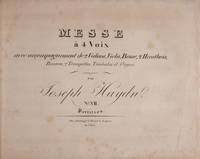
1802réf. 40095Leipsic: Breitkopf et Härtel 1802. Oblong folio. Nineteenth-century marbled boards rebacked and recornered in dark olive half calf spine in gilt-ruled compartments with dark red title label gilt. i title 2-114 pp. Typeset throughout. Dark red leather title label to front pastedown removed but with lettering "W. Russell 1806" visible in impression to free front endpaper. "Charles Beevor 41 Upper Harley St." in nineteenth century black into to upper outer corner of free front endpaper; additional bibliographical notes in blue ink. Binding worn and rubbed. Intermittent moderate foxing and browning. First Edition of the "Missa in tempore belli" one of six masses written by order of Prince Esterházy between 1796 and 1802. Hoboken Collection Vol. 9 1433. RISM H2498. "Vocal music constitutes fully half of Haydn's output. Both his first and last completed compositions were mass settings and he cultivated sacred vocal music extensively throughout his career except during the later 1780s when elaborate church music was inhibited by the Josephinian reforms and the first half of the 1790s in London ." "Notwithstanding their semi-private function for the Esterházy court Haydn's six late masses are consummate masterworks that exhibit no trace of provinciality or the 'occasional'. He exploits the complementary functions of soloists and chorus with inexhaustible freedom and telling effect; owing to his London experience the orchestra plays a newly prominent role. Four are in B perhaps because Bb was Haydn's usual highest pitch for choral sopranos he employed the same key for the final choruses of Parts 2-3 of The Creation and Part 1 of The Seasons. The other two are the only ones for which he provided descriptive titles: the Missa in tempore belli 'Mass in Time of War' 1796 in C features the bright trumpet-dominated sound typical of masses in this key; the Missa in angustiis 'Mass in times of Distress' later nicknamed 'Nelson Mass' 1798 in D minor and major is scored for a dark orchestra comprising only trumpets and timpani strings and organ. Both invoke the travails of the Napoleonic wars. The Agnus Dei of the former includes threatening timpani motifs and harsh trumpet fanfares while the Benedictus of the latter culminates in another harsh fanfare passage 'out of context'; both influenced the Agnus Dei in Beethoven's Missa solemnis. On the other hand except for the sombre Kyrie and Benedictus of the 'Nelson Mass' both are otherwise firmly optimistic; the ending of the latter is downright jaunty." James Webster in Grove Music Online. Breitkopf et Härtel unknown
1802réf. 40095Leipsic: Breitkopf et Härtel 1802. Oblong folio. Nineteenth-century marbled boards rebacked and recornered in dark olive half calf spine in gilt-ruled compartments with dark red title label gilt. i title 2-114 pp. Typeset throughout. Dark red leather title label to front pastedown removed but with lettering "W. Russell 1806" visible in impression to free front endpaper. "Charles Beevor 41 Upper Harley St." in nineteenth century black into to upper outer corner of free front endpaper; additional bibliographical notes in blue ink. Binding worn and rubbed. Intermittent moderate foxing and browning. First Edition of the "Missa in tempore belli" one of six masses written by order of Prince Esterházy between 1796 and 1802. Hoboken Collection Vol. 9 1433. RISM H2498. "Vocal music constitutes fully half of Haydn's output. Both his first and last completed compositions were mass settings and he cultivated sacred vocal music extensively throughout his career except during the later 1780s when elaborate church music was inhibited by the Josephinian reforms and the first half of the 1790s in London ." "Notwithstanding their semi-private function for the Esterházy court Haydn's six late masses are consummate masterworks that exhibit no trace of provinciality or the 'occasional'. He exploits the complementary functions of soloists and chorus with inexhaustible freedom and telling effect; owing to his London experience the orchestra plays a newly prominent role. Four are in B perhaps because Bb was Haydn's usual highest pitch for choral sopranos he employed the same key for the final choruses of Parts 2-3 of The Creation and Part 1 of The Seasons. The other two are the only ones for which he provided descriptive titles: the Missa in tempore belli 'Mass in Time of War' 1796 in C features the bright trumpet-dominated sound typical of masses in this key; the Missa in angustiis 'Mass in times of Distress' later nicknamed 'Nelson Mass' 1798 in D minor and major is scored for a dark orchestra comprising only trumpets and timpani strings and organ. Both invoke the travails of the Napoleonic wars. The Agnus Dei of the former includes threatening timpani motifs and harsh trumpet fanfares while the Benedictus of the latter culminates in another harsh fanfare passage 'out of context'; both influenced the Agnus Dei in Beethoven's Missa solemnis. On the other hand except for the sombre Kyrie and Benedictus of the 'Nelson Mass' both are otherwise firmly optimistic; the ending of the latter is downright jaunty." James Webster in Grove Music Online. Breitkopf et Härtel unknown books
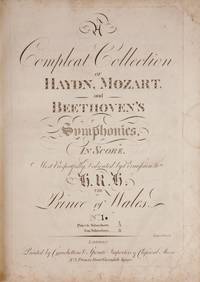
1809réf. 40074London: Cianchettini & Sperati 1809. 11 works bound in 2 volumes. Large octavo. 19th century half dark tan calf with marbled boards spines in decorative compartments gilt with titling gilt. Engraved throughout. Contains: 1 Symphony in E-flat major. 1f. recto title No. I verso blank 41 i blank pp. Hob. I:91. Robbins Landon p. 744. 2 Symphony in C major "London." 1f. recto title No. II verso blank 39 i blank pp. Hob. I:69. Robbins Landon p. 717. 3 Symphony in G major "Oxford." 1f. recto title No. III verso blank 48 pp. Hob. I:92. Robbins Landon p. 745. 4 Symphony in G minor "La Poule." 1f. recto title No. IV verso blank 36 pp. Hob. I:83. Robbins Landon p. 734. 5 Symphony in C major. 1f. recto title No. V verso blank 23 i blank pp. Hob. I:41. Robbins Landon p. 678. 6 Symphony in B-flat major "La Reine." 1f. recto title No. VI verso blank 37 i blank pp. Hob. I:85. Robbins Landon p. 736. 7 Symphony in D major. 1f. recto title No. VII verso blank 28 pp. Hob. I:70. Robbins Landon p. 718. 8 Symphony in F-sharp minor "Farewell." 1f. recto title . No. VIII verso blank 33 i blank pp. With note to head of first page of music: "NB: This is the Fantastical Symphony in which the Performers retire one after the other." Hob. I:45. Robbins Landon p. 686. 9 Symphony in B-flat major. 1f. recto title . No. IX verso blank 38 pp. Hob. I:66. Robbins Landon p. 714 10 Symphony in E minor "Trauer-Symphonie." 1f. recto title . No. X verso blank 33 i blank pp. Hob. I:44. Robbins Landon p. 683 11 Symphony in D major. 1f. recto title . No. XI verso blank 33 i blank pp. Hob. I:57. Robbins Landon p. 702. With early manuscript inscription "Eugene Spinney from Mrs. Huxtable Sutton Waldron Dorset June 1862" in ink to free front endpapers of both volumes. Bindings worn rubbed and bumped. Light marginal foxing. In very condition overall. "From about 1775 in some respects 1773 to 1781 Haydn again changed his orientation. Symphonies nos. 53 61-3 66-71 and 73-5 are primarily in a light even popular style only no.70 is an exception perhaps reflecting his resumption of operatic composition in 1773; indeed nos. 53 62 63 and 73 include adaptations of stage-music ." Georg Feder and James Webster in Grove Music Online The Symphony in G major Hob I:92 was performed by Haydn in 1791 at Oxford University on the occasion of his receiving an honorary doctorate. "No. 45 the Farewell Symphony . had a purpose which explains its extraordinary form. Briefly the story as found the in the authentic biographies is this: the Prince so attracted by Esterháza that splendid palace erected on a wild and remote Hungarian marsh tarried there longer and longer each year. The musicians not being allowed - with the exception of Haydn - to have their families with them were restless after a long season and naturally wished to rejoin their wives and children. Towards the end of the season in 1772 the musicians became desperate and went to their beloved Capellmeister for help. The result was the Farewell symphony in which the regular Presto finale was broken off and a long Adagio began. During the course of this movement one player after another blew out his candle and departed leaving at the end two violins presumably Tomassini and Haydn himself. As these were about to leave the Prince having grasped the idea is supposed to have said 'Well if they all leave we might as well leave too.' And the whole court departed the next day." Robbins Landon: The Symphonies of Joseph Haydn p. 338. Cianchettini & Sperati unknown
1809réf. 40074London: Cianchettini & Sperati 1809. 11 works bound in 2 volumes. Large octavo. 19th century half dark tan calf with marbled boards spines in decorative compartments gilt with titling gilt. Engraved throughout. Contains: 1 Symphony in E-flat major. 1f. recto title No. I verso blank 41 i blank pp. Hob. I:91. Robbins Landon p. 744. 2 Symphony in C major "London." 1f. recto title No. II verso blank 39 i blank pp. Hob. I:69. Robbins Landon p. 717. 3 Symphony in G major "Oxford." 1f. recto title No. III verso blank 48 pp. Hob. I:92. Robbins Landon p. 745. 4 Symphony in G minor "La Poule." 1f. recto title No. IV verso blank 36 pp. Hob. I:83. Robbins Landon p. 734. 5 Symphony in C major. 1f. recto title No. V verso blank 23 i blank pp. Hob. I:41. Robbins Landon p. 678. 6 Symphony in B-flat major "La Reine." 1f. recto title No. VI verso blank 37 i blank pp. Hob. I:85. Robbins Landon p. 736. 7 Symphony in D major. 1f. recto title No. VII verso blank 28 pp. Hob. I:70. Robbins Landon p. 718. 8 Symphony in F-sharp minor "Farewell." 1f. recto title . No. VIII verso blank 33 i blank pp. With note to head of first page of music: "NB: This is the Fantastical Symphony in which the Performers retire one after the other." Hob. I:45. Robbins Landon p. 686. 9 Symphony in B-flat major. 1f. recto title . No. IX verso blank 38 pp. Hob. I:66. Robbins Landon p. 714 10 Symphony in E minor "Trauer-Symphonie." 1f. recto title . No. X verso blank 33 i blank pp. Hob. I:44. Robbins Landon p. 683 11 Symphony in D major. 1f. recto title . No. XI verso blank 33 i blank pp. Hob. I:57. Robbins Landon p. 702. With early manuscript inscription "Eugene Spinney from Mrs. Huxtable Sutton Waldron Dorset June 1862" in ink to free front endpapers of both volumes. Bindings worn rubbed and bumped. Light marginal foxing. In very condition overall. "From about 1775 in some respects 1773 to 1781 Haydn again changed his orientation. Symphonies nos. 53 61-3 66-71 and 73-5 are primarily in a light even popular style only no.70 is an exception perhaps reflecting his resumption of operatic composition in 1773; indeed nos. 53 62 63 and 73 include adaptations of stage-music ." Georg Feder and James Webster in Grove Music Online The Symphony in G major Hob I:92 was performed by Haydn in 1791 at Oxford University on the occasion of his receiving an honorary doctorate. "No. 45 the Farewell Symphony . had a purpose which explains its extraordinary form. Briefly the story as found the in the authentic biographies is this: the Prince so attracted by Esterháza that splendid palace erected on a wild and remote Hungarian marsh tarried there longer and longer each year. The musicians not being allowed - with the exception of Haydn - to have their families with them were restless after a long season and naturally wished to rejoin their wives and children. Towards the end of the season in 1772 the musicians became desperate and went to their beloved Capellmeister for help. The result was the Farewell symphony in which the regular Presto finale was broken off and a long Adagio began. During the course of this movement one player after another blew out his candle and departed leaving at the end two violins presumably Tomassini and Haydn himself. As these were about to leave the Prince having grasped the idea is supposed to have said 'Well if they all leave we might as well leave too.' And the whole court departed the next day." Robbins Landon: The Symphonies of Joseph Haydn p. 338. Cianchettini & Sperati unknown books
réf. Z1-R-017-01923Twayne Publishers. Used - Good. Ships from UK in 48 hours or less usually same day. Your purchase helps support Sri Lankan Children's Charity 'The Rainbow Centre'. Ex-library so some stamps and wear but in good overall condition. 100% money back guarantee. We are a world class secondhand bookstore based in Hertfordshire United Kingdom and specialize in high quality textbooks across an enormous variety of subjects. We aim to provide a vast range of textbooks rare and collectible books at a great price. Our donations to The Rainbow Centre have helped provide an education and a safe haven to hundreds of children who live in appalling conditions. We provide a 100% money back guarantee and are dedicated to providing our customers with the highest standards of service in the bookselling industry. Twayne Publishers unknown