HAYDN, Joseph.Livre Rare Book

1 734 résultats
réf. 1636Couverture rigide À Paris, chez Janet et Cotelle, sans date (circa 1820). Deux volumes in-4 (35 x 27 cm), reliure plein veau raciné de l'époque, dos lisse richement orné, encadrement de dentelle dorée sur les plats, tranche marbrée, titre doré frappé sur les plats, coins émoussés, petit manque de cuir aux coiffes, quelques frottements au dos et aux charnières. Volume Alto : feuillet de titre , 205 pages, 5 feuillets en 2ème partie (pages numérotées de 93 à 101) ; volume basso : feuillet de titre , 205 pages, 5 feuillets en 2ème partie (pages numérotées de 93 à 101). Titres et partition gravés, papier à la cuve aux contreplats du volume Alto, rousseurs éparses dans les marges. Cet ouvrage comprend 56 quatuors et une 2ème partie, "Quatuors sur les dernières paroles de Jésus-Christ sur la Croix, Opéra 51, de 7 quatuors". Les partitions des deux violons sont séparées, chacune dans un volume: la partie du violon alto dans un des volumes, la partie de la basse de violon (l'ancêtre du violoncelle) dans l’autre. Bon exemplaire de musique gravée, peu commun.
1791réf. 231801791 Paris : Chez Pleyel, [179-?]in folio broché,1 score (4 volumes) ; 33 cm [v. 1] Violino I.;19p--[v. 2] Violino II.;19p.--[v. 3] Violoncello.;13p. avec titre faux--[v. 4] Viola Alto ; 15p..- 4 parties. ; 37 cm. trés rare
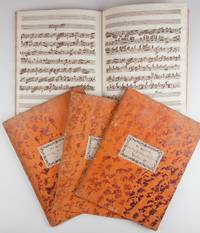
1800réf. 40069Italy 1800. 4 volumes. Small folio 218 x 291 mm. Early flexible dark orange marbled boards with manuscript title label to uppers within decorative printed border. Notated in a professional hand on fine quality l12-stave rastrum-ruled laid paper. Contents in order of appearance: 41no. 5 38 no. 2 37 no. 1 39 no. 3 42 no. 6 and 40 no. 4. Violino primo: i title 40 pp. Violino secondo: i title 38 pp. Viola: i title 36 pp. Violoncello: i title 36 pp. With several additional leaves of blank rastrum-ruled paper. Boards worn faded and abraded with very small portions of spine lacking. Occasional showthrough. In very good internal condition overall. "A decade or so after the Op. 20 set came the fateful Op. 33 again comprising six quartets. It wasn't so much Haydn's fate of which these works proved full as a Mozart's: they prompted him to return to the string quartet and write his own first six masterpieces in the medium - the set that bear a more affectionate and admiring dedication to Haydn than does any great composer's dedicated to any other great composer ." Hans Keller: The Great Haydn Quartets p. 64. unknown
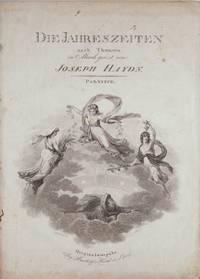
1802réf. 40133Leipzig: Breitkopf & Haertel 1802. Folio. Contemporary full dark brown suede with tooling in black to outer edges of boards. 1f. recto title with elaborate vignette engraved by W. Böhm after G.V. Kiminger incorporating allegories of the seasons floating on a bed of clouds with lyre and six-pointed stars verso blank 1f. recto secondary title "Erste Abtheilung" verso "Personen" 251 i blank. Typeset throughout. With occasional indications of instrumentation in pencil. R. Cocks & Co. handstamp to foot of secondary title. Binding worn rubbed and bumped with minor loss to lower outer corner of upper board and spine; upper partially detached. Some wear soiling staining foxing and browning; occasional minor loss to blank lower margins; worming to blank inner margin of first five leaves. First Edition issue with parallel text in German and English. Hoboken Katalog Vol. 9 1411. Hirsch IV 796. RISM H2542. One of Haydn's two masterful oratorios this secular work was written shortly after The Creation 1798 to a libretto by Baron Gottfried von Swieten 1733-1803 after the eponymous poem by James Thomson 1700-1748 published in 1730. The work was first performed on 24 April 1801 in a private première at the Schwarzenberg Palace in Vienna; the first public production took place on 29 May 1801. "Although the initial reception of The Seasons was favourable - Haydn wrote to Clementi that it had enjoyed 'unanimous approval' and that 'many prefer it to The Creation because of its greater variety' - critical opinion soon became mixed owing in part to its perceived 'lower' subject in part to a growing aesthetic resistance to its many pictorialisms. Haydn himself contributed to both strands of criticism: he supposedly said to Francis II 'In The Creation angels speak and tell of God but in The Seasons only Simon speaks' Dies; and he indiscreetly criticized Swieten's croaking frogs 'Frenchified trash' and the absurdity of a choral hymn to toil Fleiss. Nonetheless he maintained that it would join The Creation in assuring his lasting fame. For the publication he took the path of lesser resistance selling the rights to Breitkopf & Härtel. . Notwithstanding its less exalted subject The Seasons is compositionally more virtuoso than The Creation and offers greater variety of tone: Haydn's pastoral is one of the final glories of a tradition that is more than 'high' enough." Georg Feder and James Webster in Grove Music Online The music is "of wonderful freshness and unfailing originality." TNG Vol. 8 p. 347. Breitkopf & Haertel unknown
1800réf. 40069Italy 1800. 4 volumes. Small folio 218 x 291 mm. Early flexible dark orange marbled boards with manuscript title label to uppers within decorative printed border. Notated in a professional hand on fine quality l12-stave rastrum-ruled laid paper. Contents in order of appearance: 41no. 5 38 no. 2 37 no. 1 39 no. 3 42 no. 6 and 40 no. 4. Violino primo: i title 40 pp. Violino secondo: i title 38 pp. Viola: i title 36 pp. Violoncello: i title 36 pp. With several additional leaves of blank rastrum-ruled paper. Boards worn faded and abraded with very small portions of spine lacking. Occasional showthrough. In very good internal condition overall. "A decade or so after the Op. 20 set came the fateful Op. 33 again comprising six quartets. It wasn't so much Haydn's fate of which these works proved full as a Mozart's: they prompted him to return to the string quartet and write his own first six masterpieces in the medium - the set that bear a more affectionate and admiring dedication to Haydn than does any great composer's dedicated to any other great composer ." Hans Keller: The Great Haydn Quartets p. 64. unknown books
1802réf. 40133Leipzig: Breitkopf & Haertel 1802. Folio. Contemporary full dark brown suede with tooling in black to outer edges of boards. 1f. recto title with elaborate vignette engraved by W. Böhm after G.V. Kiminger incorporating allegories of the seasons floating on a bed of clouds with lyre and six-pointed stars verso blank 1f. recto secondary title "Erste Abtheilung" verso "Personen" 251 i blank. Typeset throughout. With occasional indications of instrumentation in pencil. R. Cocks & Co. handstamp to foot of secondary title. Binding worn rubbed and bumped with minor loss to lower outer corner of upper board and spine; upper partially detached. Some wear soiling staining foxing and browning; occasional minor loss to blank lower margins; worming to blank inner margin of first five leaves. First Edition issue with parallel text in German and English. Hoboken Katalog Vol. 9 1411. Hirsch IV 796. RISM H2542. One of Haydn's two masterful oratorios this secular work was written shortly after The Creation 1798 to a libretto by Baron Gottfried von Swieten 1733-1803 after the eponymous poem by James Thomson 1700-1748 published in 1730. The work was first performed on 24 April 1801 in a private première at the Schwarzenberg Palace in Vienna; the first public production took place on 29 May 1801. "Although the initial reception of The Seasons was favourable - Haydn wrote to Clementi that it had enjoyed 'unanimous approval' and that 'many prefer it to The Creation because of its greater variety' - critical opinion soon became mixed owing in part to its perceived 'lower' subject in part to a growing aesthetic resistance to its many pictorialisms. Haydn himself contributed to both strands of criticism: he supposedly said to Francis II 'In The Creation angels speak and tell of God but in The Seasons only Simon speaks' Dies; and he indiscreetly criticized Swieten's croaking frogs 'Frenchified trash' and the absurdity of a choral hymn to toil Fleiss. Nonetheless he maintained that it would join The Creation in assuring his lasting fame. For the publication he took the path of lesser resistance selling the rights to Breitkopf & Härtel. . Notwithstanding its less exalted subject The Seasons is compositionally more virtuoso than The Creation and offers greater variety of tone: Haydn's pastoral is one of the final glories of a tradition that is more than 'high' enough." Georg Feder and James Webster in Grove Music Online The music is "of wonderful freshness and unfailing originality." TNG Vol. 8 p. 347. Breitkopf & Haertel unknown books
1934réf. mon0001004859George Allen & Unwin Ltd. 1934. Softcover. Very Good. in x in x in. Pages clean no markings wear to edges. Complete with numerous illustrations. George Allen & Unwin Ltd. paperback
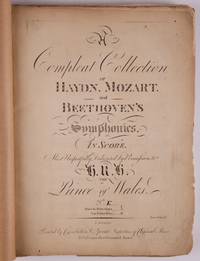
1809réf. 40096London: Cianchettini & Sperati 1809. 4 volumes. Large octavo. Disbound. Engraved throughout. Contains 8 works each with identical title excepting work number. 1 Symphony in E-flat major. 1f. recto title No. I verso blank 42 pp. Hob. I:91. Robbins Landon p. 744. 2 Symphony in C major "Laudon." 1f. recto title No. II." verso blank 39 i blank pp. Hob. I:69. Robbins Landon p. 717. 3 Symphony in G minor "La Poule." 1f. recto title No. IV verso blank 36 pp. Hob. I:83. Robbins Landon p. 734. 4 Symphony in C major No. 41. 1f. recto title No. V verso blank 23 i blank pp. Hob. I:41. Robbins Landon p. 678. 5 Symphony in B-flat major "La Reine. 1f. recto title No. VI verso blank 37 i blank pp. Hob. I:85. Robbins Landon p. 736. 6 Symphony in D major "L'Impériale." 1f. recto title No. XXI verso blank 40 pp. First Edition. Hob. I:53. Robbins Landon p. 696. 7 Symphony in B-flat major. 1f. recto title No. XXIII verso blank 33 i blank pp. Hob. I:71. Robbins Landon p. 719 8 Symphony in D major. 1f. recto title No. XXIV verso blank 27 i blank pp. First Edition. Hob. I:75. Robbins Landon p. 724 Foxing staining soiling and browning to numerous leaves; some small tears and losses to edges; several leaves detached including titles. "Although Haydn's sobriquet 'father of the symphony' is not literally true in a deeper sense it is apt: there is no other genre in Western music for which the output of a single composer is at once so vast in extent 107 works: hI:1-104 107-8 and one recently identified work K 18 not listed in Hoboken so historically important and of such high artistic quality." James Webster in Grove Music Online. Cianchettini & Sperati unknown
1809réf. 40096London: Cianchettini & Sperati 1809. 4 volumes. Large octavo. Disbound. Engraved throughout. Contains 8 works each with identical title excepting work number. 1 Symphony in E-flat major. 1f. recto title No. I verso blank 42 pp. Hob. I:91. Robbins Landon p. 744. 2 Symphony in C major "Laudon." 1f. recto title No. II." verso blank 39 i blank pp. Hob. I:69. Robbins Landon p. 717. 3 Symphony in G minor "La Poule." 1f. recto title No. IV verso blank 36 pp. Hob. I:83. Robbins Landon p. 734. 4 Symphony in C major No. 41. 1f. recto title No. V verso blank 23 i blank pp. Hob. I:41. Robbins Landon p. 678. 5 Symphony in B-flat major "La Reine. 1f. recto title No. VI verso blank 37 i blank pp. Hob. I:85. Robbins Landon p. 736. 6 Symphony in D major "L'Impériale." 1f. recto title No. XXI verso blank 40 pp. First Edition. Hob. I:53. Robbins Landon p. 696. 7 Symphony in B-flat major. 1f. recto title No. XXIII verso blank 33 i blank pp. Hob. I:71. Robbins Landon p. 719 8 Symphony in D major. 1f. recto title No. XXIV verso blank 27 i blank pp. First Edition. Hob. I:75. Robbins Landon p. 724 Foxing staining soiling and browning to numerous leaves; some small tears and losses to edges; several leaves detached including titles. "Although Haydn's sobriquet 'father of the symphony' is not literally true in a deeper sense it is apt: there is no other genre in Western music for which the output of a single composer is at once so vast in extent 107 works: hI:1-104 107-8 and one recently identified work K 18 not listed in Hoboken so historically important and of such high artistic quality." James Webster in Grove Music Online. Cianchettini & Sperati unknown books
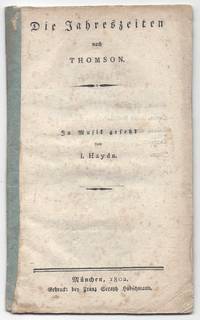
1802réf. 1148München: Gedruckt bey Franz Seraph Hübschmann 1802. Bond together by a blue paper band as published. Wormhole to the first leaves at the inner margin with no effect on the text. Foxing that effects the first and the last leaves more intensely. Very slightly chipped. Overall in fine condition. Bond together by a blue paper band as published. 31 1 p. A very early edition of the libretto of Haydn’s oratorio Die Jahreszeiten The Seasons which was premiered in Vienna in 1801. The libretto was prepared by Baron Gottfried van Swieten who was also responsible for the text of The Creation and it is based on passages taken from the long English poem under the same title by James Thomson. The composition had a dual premier both held in Vienna first in April 1801 exclusively for the aristocracy whose members had financed the work and in about a month for the broader public. The libretto was published with no credit for the translator first in Vienna in 1801 while the music score in Leipzig by Breitkopf & Härtel in 1802. This Munich edition of the libretto possibly accompanied the oratorio’s premiere in the city. Scarce we could trace only one copy of this edition in institutional holdings in Austria. . Gedruckt bey Franz Seraph Hübschmann unknown
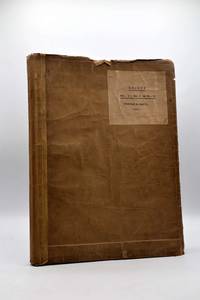
1800réf. 3067France 1800. Manuscript score. Unbound. Oblong. N. Notated on 9-stave page in brown ink. Contains the music for the string quartet the score for the second violin is incomplete. Pages untrimmed. Light stains and dust to some of the edges otherwise in fine condition. Manuscript score. Unbound. Oblong. N. 24 p. An early manuscript copy of the string quartet for Haydn’s Keyboard Concerto in G major. Haydn composed this keyboard concerto during his time at the Esterházy court probably around 1770. It was premiered on 28th April 1784 in Paris and first published in the same year by Boyer also in Paris RISM A/I H 3305; HH 3305. The present manuscript score was copied around the turn of the 19th century and contains the score for two violins viola and “basse” basso violone unfortunately the third movement rondo presto of the second violin is missing. unknown
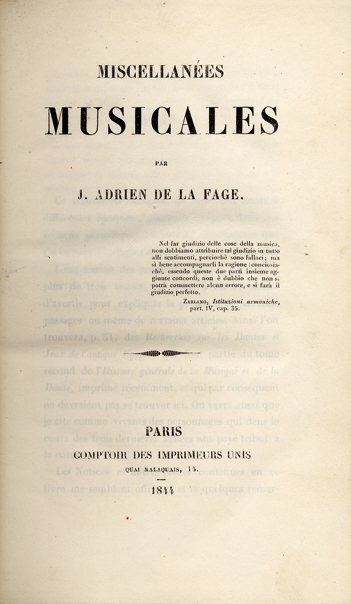
1844réf. 14501Paris, Comptoir des Imprimeurs Unis, 1844 ; in-8 ; plein maroquin bleu-marine, dos à nerfs, titre doré, double filet doré sur les coupes, dentelle intérieure, toutes tranches dorées sur marbrure (Andrieux) ; (8), 526 pp.
1845réf. LTH27-F-6London: Edward Moxon 1845. Leather. Very Good. 8.5" by 5". None. An extensive history of many items peoples and countries of the world by Joseph Haydn. Third edition to which is added a copius index of leading names. In a lovely leather binding. Haydn's reputation rests on the Dictionary of Dates. Posterity has upheld his own assessment of it as far more accurate informative and well-organised than any of its rivals. It remains a important resource and is still consulted by historians. ODNB In a diced calf binding. Externally sound though with some rubbing. Internally firmly bound. Armorial bookplate to front pastedown. Pages are bright and quite clean though with the occasional patch of spotting. Very Good Edward Moxon hardcover
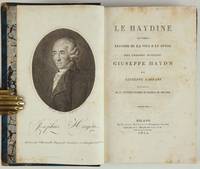
1812réf. 39523Milano: Candido Buccinelli . contrada di s. Margherita num. 1118 1812. Octavo. Dark blue calf-backed marbled boards spine in decorative compartments gilt titling gilt marbled endpapers. 1f. recto title verso publisher's note v-viii 298 i errata ii "Contorni delle Medaglie" i blank pp. First Edition of one of the first biographical accounts of Haydn preceded only by the far less important biographical pieces by Framery and Le Breton. Wolffheim II 523. The present work was translated into English in 1839 as The Life of Haydn in Letters. Carpani was an Italian librettist critic and poet. "Among various writings two books are particularly important: Le Haydine . and Le Rossininane ossia lettere musico-teatrali. . The former was plagiarized by Stendhal and this created a lively controversy. These books show that Carpani was very knowledgeable about all contemporary music and an astute judge of the renewal movement in the early 19th century. He was in touch with all the major composers of his period and accompanied Rossini on his celebrated visit to Beethoven in 1822." TNG Vol. 3 p. 818. Bound with: Majer Andrea 1765-1837. Discorse sulla Origine Progressi e Stato Attuale della Musica Italiana. Padova: Minerva 1821. 1f. recto title verso quotation from Quintil 3-173 i "Avvertimento" 1f. recto "Indice" verso colophon "Della Nuova Società Tipografica in Ditta N.Z. Bettoni e Compagni 1821". First Edition. OCLC copies in France and Italy only. With the fine engraved half-length frontispiece portrait of Haydn by J. Neidl after Zitterer often lacking. Binding slightly worn rubbed and bumped. Some minor wear and foxing but in very good condition overall. Candido Buccinelli ... contrada di s. Margherita num. 1118 unknown
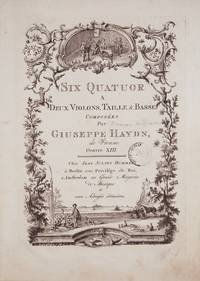
1775réf. 40401à Berlin avec Privilége du Roi à Amsterdam: Jean Julien Hummel PN 356 1775. 4 volumes. Folio. Quarter dark tan mottled calf with marbled boards decorative cut paper label to uppers with titling in contemporary manuscript. Violino primo: 1f. recto title verso blank 3-15 pp. Violino secondo: 1f. recto title verso blank 3-14 pp. Viola: 1f. recto title verso blank i blank 4-15 pp. Basso: 1f. recto title verso blank i blank 4-15 pp. With a fine illustrated title to each part depicting two groups musicians within an elaborate border incorporating vegetation and animals. Engraved throughout. Small circular handstamp of the "Musik=Schule des Cantons" of Solothurn Switzerland to to each title. Binding slightly worn rubbed and bumped; upper hinges slightly split; "Oberlin 1812" in contemporary manuscript to front pastedown of each part. Minor signs of wear soiling and staining; some annotations in pencil. A very good crisp and attractive copy overall. Rare. RISM H 6244 three holdings all incomplete. These quartets were formerly thought to be by Haydn. "Hoffstetter's musical ideas are memorable easily accessible and popular in style but his working out of material does not attain Haydn's concentration. Apart from three viola concertos which might suggest that he was himself a viola player he composed various pieces of church music. His masses show some uncertainty in tonal structure. Writing to F.S. Silverstolpe on 11 January 1802 he confessed as much and acknowledged that 'everything that flows from Haydn's pen seems to me so beautiful and remains so deeply imprinted on my memory that I cannot prevent myself now and again from imitating something as well as I can'. Appropriately several of his works became known under Haydn's name." Hubert Unverricht in Grove Music Online. Jean Julien Hummel [PN 356] unknown
1812réf. 39523Milano: Candido Buccinelli . contrada di s. Margherita num. 1118 1812. Octavo. Dark blue calf-backed marbled boards spine in decorative compartments gilt titling gilt marbled endpapers. 1f. recto title verso publisher's note v-viii 298 i errata ii "Contorni delle Medaglie" i blank pp. First Edition of one of the first biographical accounts of Haydn preceded only by the far less important biographical pieces by Framery and Le Breton. Wolffheim II 523. The present work was translated into English in 1839 as The Life of Haydn in Letters. Carpani was an Italian librettist critic and poet. "Among various writings two books are particularly important: Le Haydine . and Le Rossininane ossia lettere musico-teatrali. . The former was plagiarized by Stendhal and this created a lively controversy. These books show that Carpani was very knowledgeable about all contemporary music and an astute judge of the renewal movement in the early 19th century. He was in touch with all the major composers of his period and accompanied Rossini on his celebrated visit to Beethoven in 1822." TNG Vol. 3 p. 818. Bound with: Majer Andrea 1765-1837. Discorse sulla Origine Progressi e Stato Attuale della Musica Italiana. Padova: Minerva 1821. 1f. recto title verso quotation from Quintil 3-173 i "Avvertimento" 1f. recto "Indice" verso colophon "Della Nuova Società Tipografica in Ditta N.Z. Bettoni e Compagni 1821". First Edition. OCLC copies in France and Italy only. With the fine engraved half-length frontispiece portrait of Haydn by J. Neidl after Zitterer often lacking. Binding slightly worn rubbed and bumped. Some minor wear and foxing but in very good condition overall. Candido Buccinelli ... contrada di s. Margherita num. 1118 unknown books
1775réf. 40401à Berlin avec Privilége du Roi à Amsterdam: Jean Julien Hummel PN 356 1775. 4 volumes. Folio. Quarter dark tan mottled calf with marbled boards decorative cut paper label to uppers with titling in contemporary manuscript. Violino primo: 1f. recto title verso blank 3-15 pp. Violino secondo: 1f. recto title verso blank 3-14 pp. Viola: 1f. recto title verso blank i blank 4-15 pp. Basso: 1f. recto title verso blank i blank 4-15 pp. With a fine illustrated title to each part depicting two groups musicians within an elaborate border incorporating vegetation and animals. Engraved throughout. Small circular handstamp of the "Musik=Schule des Cantons" of Solothurn Switzerland to to each title. Binding slightly worn rubbed and bumped; upper hinges slightly split; "Oberlin 1812" in contemporary manuscript to front pastedown of each part. Minor signs of wear soiling and staining; some annotations in pencil. A very good crisp and attractive copy overall. Rare. RISM H 6244 three holdings all incomplete. These quartets were formerly thought to be by Haydn. "Hoffstetter's musical ideas are memorable easily accessible and popular in style but his working out of material does not attain Haydn's concentration. Apart from three viola concertos which might suggest that he was himself a viola player he composed various pieces of church music. His masses show some uncertainty in tonal structure. Writing to F.S. Silverstolpe on 11 January 1802 he confessed as much and acknowledged that 'everything that flows from Haydn's pen seems to me so beautiful and remains so deeply imprinted on my memory that I cannot prevent myself now and again from imitating something as well as I can'. Appropriately several of his works became known under Haydn's name." Hubert Unverricht in Grove Music Online. Jean Julien Hummel [PN 356] unknown books
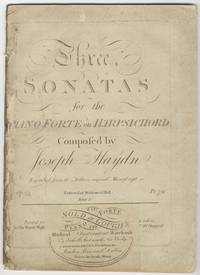
1788réf. 40118London: Longman & Broderip 1788. Folio. Disbound. 1f. recto title verso blank i blank 2-23 i blank pp. Engraved throughout. With contemporary London instrument dealer's overpaste to foot of title: "Sold at Gough's Harp and Piano-Forte Musical Instrument Warehouse No. 4 Sackville Street near the New Bridge ." Occasional light wear and foxing; several small tears with minor loss to edges; title and final leaf slightly soiled; repair to inner margin of blank verso of title. Published in the same year as the edition published in Vienna by Artaria. BUC p. 469. RISM 3850 one copy only in the U.S. at the University of Michigan. OCLC 34921913. Worldcat one copy only in the U.S. Hob. XVI:17 is most probably by Johann Gottfried Schwanenberger 1737-1804 "although authenticated by Haydn in ca. 1799-1803." Larson and Feder: The New Grove Haydn p. 187. Longman & Broderip unknown
1788réf. 40118London: Longman & Broderip 1788. Folio. Disbound. 1f. recto title verso blank i blank 2-23 i blank pp. Engraved throughout. With contemporary London instrument dealer's overpaste to foot of title: "Sold at Gough's Harp and Piano-Forte Musical Instrument Warehouse No. 4 Sackville Street near the New Bridge ." Occasional light wear and foxing; several small tears with minor loss to edges; title and final leaf slightly soiled; repair to inner margin of blank verso of title. Published in the same year as the edition published in Vienna by Artaria. BUC p. 469. RISM 3850 one copy only in the U.S. at the University of Michigan. OCLC 34921913. Worldcat one copy only in the U.S. Hob. XVI:17 is most probably by Johann Gottfried Schwanenberger 1737-1804 "although authenticated by Haydn in ca. 1799-1803." Larson and Feder: The New Grove Haydn p. 187. Longman & Broderip unknown books
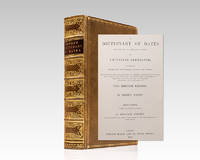
1860réf. 152568London: Edward Moxon and Co. 1860. Finely bound example of Haydn’s celebrated Dictionary of Dates one of the great single-volume reference works of the Victorian age. Thick octavo finely bound in full polished calf the spine richly gilt in six compartments within raised bands red morocco spine label lettered in gilt double gilt ruling to the front and rear panels gilt turn-ins and inner dentelles ribbon bound in marbled endpapers all edges marbled illustrated. Ninth edition revised and greatly enlarged by Benjamin Vincent librarian of the Royal Institution with about five hundred new articles added and the chronological tables revised and continued. In near fine condition. An very attractive example of a standard work of Victorian reference. Haydn’s Dictionary of Dates first published in 1841 was among the most popular and enduring reference works of the Victorian era a single-volume compendium of the significant events of history arranged for ready consultation. Its compiler Joseph Timothy Haydn c. 1786-1856 an Irish-born journalist and editor conceived it as a universal reference comprehending remarkable occurrences ancient and modern the foundation laws and governments of nations and their achievements in arts science and arms with particular attention to the British Empire. After Haydn’s death the work was carried on and greatly expanded by Benjamin Vincent of the Royal Institution who prepared this ninth edition of 1860; the Dictionary went through some twenty-five editions into the twentieth century and remained a fixture of the well-appointed Victorian library. Edward Moxon and Co. hardcover
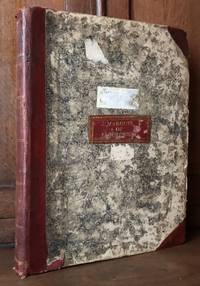
1810réf. H34424London Dublin etc. 1810. Hardcover. Very good. 12.5 x 9.5 inches old dark red leather and marbled boards very good with general rubbing and wear but tightly bound and contents mainly very good. With ownership leather label on front cover of Marquis of Abercorn probably John James Hamilton 1756-1818 and bookplate of Anne Jane Abercorn 1763-1827 who was the third wife of the Marquess of Abercorn; both the Marquess and his wife had Irish roots and interests -- he was very invested in the politics of County Tyrone and she was the daughter of the 2nd Earl of Arran. There is also an old handwritten index of the song titles on a double-sided sheet loosely inserted. Highlights include a number of compositions that appear to be initialed by the composer Mazzinghi over a dozen songs based on Scott's Lady of the Lake an early appearance by Mozart in English and several Dublin imprints. Contains the following titles: 1. Qual strano evento from Phaedra by Radicati. 2. Nume benefico from the same opera. 3. Il core vi dono bell'Idolo mio from Mozart's Cosi Fan Tutte Dublin Goulding. 4. Contento il nor nel sono from Le Virtuose in Puntiglio by Simone Mayer. 5. Dolce Fiamma di Gloria d'onore by Portogallo arranged by Luigi Gianella. 6. Do puri affetti mici by Tarchi. 6. Chi dice mal D'Amore from Il Fanatico per la Musica by Mayer. 7. A Corri's Serenade L'Incanto. 8. The Day of Love A Ballad; music and words by Thomas Moore. 9. Dunque non senti O barbaro from Gli Orazi e I Curazi by Braham. 10. Egli vide le mie Lagrime by Winter. 11. Mad Margery by Henry R. Bishop. 12. While their Sweet Guittars are Tingling by Thomas Cooke words by Miss Owenson. 13. The celebrated Mocck Bravura from the opera First Attempt words by Miss Owenson music by Thomas Cooke. 14. Roderigh vich Alpine from The Lady of the Lake by Walter Scott by J. Mazzinghi possibly initialed by Mazzinghi in ink at bottom right of the title page: "M". 15. Ave Maria also from Lady of the Lake and also with "M" in ink. Blanche of Devan's Song "They bid me sleep they bid me Pray" by Scott music by Dr. Clarke of Cambridge. 16. John of Brent the Soldiers' Song from Lady of the Lake by Mazzinghi with the "M". 17. The Coronach or Funeral Song from Lady of the Lake.by Dr. John Clarke of Cambridge. 18. Norman's Song from Lady of the Lake by Clarke. 19. Dear! In pity do not speak words by Thomas Moore music by J. A. Stevenson Dublin Rhames' Musical Circulating Library. 20. The Beggar Girl by H. Piercy verso advertises other compositions by Piercy available through him. 21. The Favorite Airs from Lady of the Lake by T. Cooke. 22. Hymn to the Virgin from Lady of the Lake by T. Cooke. 23. The Soldier Bridegroom's Song from Lady of the Lake music by Sir J. Stevenson. 24. See our Oars with Feather'd Spray by Sir John A. Stevenson. 25. Lovely Emma by Stevenson. 26. Will you come to the Bow'r by T. M. Thomas Moore Dublin Hime. 27. Tell Me Where Is Fancy Bred by Shakespeare music by J. Stevenson Dublin Powers Music Ware House. 28. Give Me the Harp a Chorus Glee.sung with great applause at the Irish Harmonic Club Wednesday the 4th of May 1803 Dublin Rhames; 18 pages!. 29. Bragela from Ossian music by R. I. S. Stevens Signed at the bottom right of the first page by Stevens. 30. The Rose and the Lover words by E. Fitzsimons music by Braham and Stevenson. 31. And Will He Not Come Again Shakespeare's Ophela by Mrs. J. Williams Dublin William Power & Co. 32. Laura from The Seige of St. Quintin by Mr. Hook. 33. Awake my Lyre words by Cowley music by Joseph Major. 34. Farewell though lovely calm retreat by J. Willis Dublin Goulding & Co. 35. In vain I strive with aspect gay by M. P. King. 36. Together let us range the fields from the opera The Woodman by H. Bate Dudley. 37. The Farewell by Robert Cooke. 38. The Separation words by M. J. Stehl music by V. Novello. 39. Coronation Anthem by Handel. 40. Hymn for the Emperor translated by Burney by Haydn. 41. Who Would Not Love from the opera First Attempt words by Miss Owenson music by Thomas Cooke. hardcover
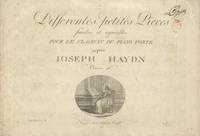
1786réf. 41286Vienne: Chez Artaria Comp. PN 86 1786. Oblong folio. Disbound. i title with oval vignette engraved by Seb. Mansfeld of an aristocratic lady seated at a fortepiano playing from a large folio music book 2-15 i blank pp. Engraved throughout. Contains 10 short works for keyboard including arrangements of music from Haydn's opera La Vera Costanza. With contemporary signature and early stamp incorporating a shield topped by a crown to blank upper outer corner of title. Slightly worn; minor foxing mainly to blank margins of title; small dampstain to upper outer corner; some pages with irregular vertical ink lines as a result of printing from cracked plates. First Edition in this form. Rare. Weinmann p. 18. Hob. I:81/2 Hob. XXVIII:8/6 Hob. I:79/2 Hob. I:85/3 Hob. I:85/2 Hob. Ia:15/2 Hob. XVII:9 Hob. XXVIII:8 Hob. I:53/2 Hob. III:41/4. RISM H 4300 and HH 4300 no copies in the U.S. Haydn "began his career in the traditional patronage system of the late Austrian Baroque and ended as a 'free' artist within the burgeoning Romanticism of the early 19th century. Famous as early as the mid-1760s by the 1780s he had become the most celebrated composer of his time and from the 1790s until his death was a culture-hero throughout Europe. Since the early 19th century he has been venerated as the first of the three 'Viennese Classics' Haydn Mozart Beethoven. He excelled in every musical genre; during the first half of his career his vocal works were as famous as his instrumental ones although after his death the reception of his music focussed on the latter except for The Creation. He is familiarly known as the 'father of the symphony' and could with greater justice be thus regarded for the string quartet; no other composer approaches his combination of productivity quality and historical importance in these genres. In the 20th century he was understood primarily as an 'absolute' musician exhibiting wit originality of form motivic saturation and a 'modernist' tendency to problematize music rather than merely to compose it but earnestness depth of feeling and referential tendencies are equally important to his art." Georg Feder and James Webster in Grove Music Online. Chez Artaria Comp. [PN 86] unknown
1795réf. 40395Offenbach sur le Mein: Jean André PN 760 1795. Folio. Unbound. Preserved in a custom-made reddish brown linen clamshell box with dark brown leather title gilt to spine. Violino primo: 1 title incorporating engraved vignette 2-5 pp. Violino secondo: 4 pp. Viola: 3 pp. Basso è violoncello: 4 pp. 2 copies Flauto: 2 pp. Oboe primo: 2 pp. Oboe secondo: 2 pp. Corno secondo in Es: 2 pp. Engraved throughout. Slightly worn and soiled; uniformly trimmed. Lacking Fagotti Corno primo Clarino primo and secondo and Timpani parts. One of the London symphonies. Published in the same year as the first "authentic edition" issued by Artaria and possibly pre-dating such. HWV Vol. I p. 95 considers this the André edition to take precedence. Robbins Landon p. 752. RISM H3188 and HH3188 no copies in the U.S. Jean André [PN 760] unknown
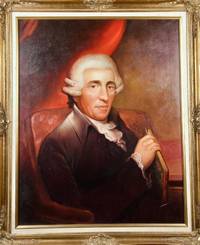
réf. 4156120th century. Haydn is seated turned quarter left and holding a folio volume presumably a volume of his music. 760 x 610 mm 30" 24"; overall size 900 x 745 mm 35.5" x 39.5". Slight surface wear. In very good condition overall. The original is held at the Royal College of Music in London. unknown
1786réf. 41286Vienne: Chez Artaria Comp. PN 86 1786. Oblong folio. Disbound. i title with oval vignette engraved by Seb. Mansfeld of an aristocratic lady seated at a fortepiano playing from a large folio music book 2-15 i blank pp. Engraved throughout. Contains 10 short works for keyboard including arrangements of music from Haydn's opera La Vera Costanza. With contemporary signature and early stamp incorporating a shield topped by a crown to blank upper outer corner of title. Slightly worn; minor foxing mainly to blank margins of title; small dampstain to upper outer corner; some pages with irregular vertical ink lines as a result of printing from cracked plates. First Edition in this form. Rare. Weinmann p. 18. Hob. I:81/2 Hob. XXVIII:8/6 Hob. I:79/2 Hob. I:85/3 Hob. I:85/2 Hob. Ia:15/2 Hob. XVII:9 Hob. XXVIII:8 Hob. I:53/2 Hob. III:41/4. RISM H 4300 and HH 4300 no copies in the U.S. Haydn "began his career in the traditional patronage system of the late Austrian Baroque and ended as a 'free' artist within the burgeoning Romanticism of the early 19th century. Famous as early as the mid-1760s by the 1780s he had become the most celebrated composer of his time and from the 1790s until his death was a culture-hero throughout Europe. Since the early 19th century he has been venerated as the first of the three 'Viennese Classics' Haydn Mozart Beethoven. He excelled in every musical genre; during the first half of his career his vocal works were as famous as his instrumental ones although after his death the reception of his music focussed on the latter except for The Creation. He is familiarly known as the 'father of the symphony' and could with greater justice be thus regarded for the string quartet; no other composer approaches his combination of productivity quality and historical importance in these genres. In the 20th century he was understood primarily as an 'absolute' musician exhibiting wit originality of form motivic saturation and a 'modernist' tendency to problematize music rather than merely to compose it but earnestness depth of feeling and referential tendencies are equally important to his art." Georg Feder and James Webster in Grove Music Online. Chez Artaria Comp. [PN 86] unknown books