LISZT, Franz 1811-1886Biblio.com

1250 resultados
1874ref. 41065Leipzig: Breitkopf & Härtel PN 9056 1874. Octavo. Original publisher's dark ivory wrappers. 1f. recto title verso blank 1f. recto preface in German verso preface in French 1f. recto composer's note in German on performance practice verso same note in French dated "Weimar Mars 1856" 97 i blank pp. Title preface and note lithographed; music engraved. Small B & H stamp to lower outer corner of title. With publisher's catalogue to verso of lower wrapper. Wrappers slightly worn and soiled; spine lacking. Occasional small stains; dampstaining to lower outer corners of first leaves; one signature partiallky detached. Re-issue from first edition plates. Searle 97. Raabe 414. Sonneck p. 266. Liszt was a distinguished Hungarian composer pianist conductor and writer. "Sketchbook evidence points to 1846-7 as the years when Liszt began to conceive the idea of a series of programmatic orchestral works. Of the four works he named all based on French poetry Ce qu'on entend sur la montagne and Les Préludes eventually became symphonic poems. . Liszt's concentration on the symphonic poem largely coincided with his tenure as Kapellmeister in Weimar where he had an orchestra at his disposal and provided music for performances at the Court Theatre. The Grand Duke commissioned Liszt's 'overtures' to preface specific dramas which thereby determined the subject matter of what were to become a number of his symphonic poems. Cormac F2017 argues that Liszt's approach to the overtures and their transformation into symphonic poems was influenced by his experience of an array of dramatic media opera plays melodramas tableaux vivants and by his interaction with staff and actors involved in the dramatic productions in Weimar. A New German School acolyte Felix Draeseke writing about the symphonic poems in a series of essays from the late 1850s acknowledged the influence of dramatic music especially opera on Liszt's Festklänge. Draeseke also addressed the issue that continues to interest scholars - the symphonic poems' engagement with sonata form. . Looking at the 12 Weimar symphonic poems Vande Moortele . views all but three Orpheus Héroide funèbre and Hunnenschlacht as using sonata form as one of the central principles guiding their large-scale organization. Furthermore Liszt seems to have attempted the same merging of sonata form and sonata cycle evident in the B Minor Sonata in Tasso Les préludes and Die Ideale and possibly Ce qu'on entend sur la montagne. . Some of the symphonic poems include mimetic representation of scenes and actions such as Hunnenschlacht's depiction of a battle and Prometheus's evocation of a voice followed by a storm. The inclusion of such passages drew criticism that a number of the symphonic poems seemed formless and could not be understood without access to a programme. In other symphonic poems such as Les Préludes and Orpheus Liszt responded to a philosophical programme without compromising musical logic. In these cases critics recognized Liszt the 'tone poet' who could capture a poetic stimulus in an expressive evocative musical flow unified by a single theme that underwent transformations. In general Liszt's sumptuous orchestral colorings were the dominant focus of critics' positive reception of his symphonic poems and programme symphonies." Dolores Pesce Maria Eckhardt and Rena Charnin Mueller in Grove Music Online. Breitkopf & Härtel [PN 9056] unknown
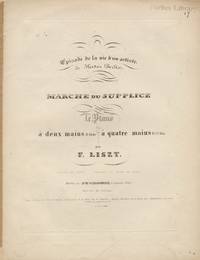
1839ref. 40937Berlin: Ad. Mr. Schlesinger PN S. 2224 1839. Folio. Disbound. 1f. recto title verso blank i blank 4-13 i blank pp. Engraved. With secondary pagination to rectos in manuscript. Formerly in the collection of the Forbes Library in Northampton Massachusetts with their handstamp to upper outer corner of title and several pages. Slightly worn and browned; outer leaf separated at spine; narrow strip of early paper tape to inner margin of title. First Edition later issue. Searle 470. Raabe 134. Ad. Mr. Schlesinger [PN S. 2224] unknown books
1874ref. 41065Leipzig: Breitkopf & Härtel PN 9056 1874. Octavo. Original publisher's dark ivory wrappers. 1f. recto title verso blank 1f. recto preface in German verso preface in French 1f. recto composer's note in German on performance practice verso same note in French dated "Weimar Mars 1856" 97 i blank pp. Title preface and note lithographed; music engraved. Small B & H stamp to lower outer corner of title. With publisher's catalogue to verso of lower wrapper. Wrappers slightly worn and soiled; spine lacking. Occasional small stains; dampstaining to lower outer corners of first leaves; one signature partiallky detached. Re-issue from first edition plates. Searle 97. Raabe 414. Sonneck p. 266. Liszt was a distinguished Hungarian composer pianist conductor and writer. "Sketchbook evidence points to 1846-7 as the years when Liszt began to conceive the idea of a series of programmatic orchestral works. Of the four works he named all based on French poetry Ce qu'on entend sur la montagne and Les Préludes eventually became symphonic poems. . Liszt's concentration on the symphonic poem largely coincided with his tenure as Kapellmeister in Weimar where he had an orchestra at his disposal and provided music for performances at the Court Theatre. The Grand Duke commissioned Liszt's 'overtures' to preface specific dramas which thereby determined the subject matter of what were to become a number of his symphonic poems. Cormac F2017 argues that Liszt's approach to the overtures and their transformation into symphonic poems was influenced by his experience of an array of dramatic media opera plays melodramas tableaux vivants and by his interaction with staff and actors involved in the dramatic productions in Weimar. A New German School acolyte Felix Draeseke writing about the symphonic poems in a series of essays from the late 1850s acknowledged the influence of dramatic music especially opera on Liszt's Festklänge. Draeseke also addressed the issue that continues to interest scholars - the symphonic poems' engagement with sonata form. . Looking at the 12 Weimar symphonic poems Vande Moortele . views all but three Orpheus Héroide funèbre and Hunnenschlacht as using sonata form as one of the central principles guiding their large-scale organization. Furthermore Liszt seems to have attempted the same merging of sonata form and sonata cycle evident in the B Minor Sonata in Tasso Les préludes and Die Ideale and possibly Ce qu'on entend sur la montagne. . Some of the symphonic poems include mimetic representation of scenes and actions such as Hunnenschlacht's depiction of a battle and Prometheus's evocation of a voice followed by a storm. The inclusion of such passages drew criticism that a number of the symphonic poems seemed formless and could not be understood without access to a programme. In other symphonic poems such as Les Préludes and Orpheus Liszt responded to a philosophical programme without compromising musical logic. In these cases critics recognized Liszt the 'tone poet' who could capture a poetic stimulus in an expressive evocative musical flow unified by a single theme that underwent transformations. In general Liszt's sumptuous orchestral colorings were the dominant focus of critics' positive reception of his symphonic poems and programme symphonies." Dolores Pesce Maria Eckhardt and Rena Charnin Mueller in Grove Music Online. Breitkopf & Härtel [PN 9056] unknown books
ref. a771021846 copyright Schlesinger. Lg.4to. 19pp. wraps. VG. tiny circular bookseller stamp no owner marks. Pictures available. . paperback
1993ref. Q-0849795656Kjos Music Company 1993-01-01. Sheet music. New. In shrink wrap. Looks like an interesting title! Kjos Music Company unknown
1981ref. Q-3795766583SCHOTT MUSIK INTL MAINZ 1981-08-01. Paperback. New. In shrink wrap. Looks like an interesting title! SCHOTT MUSIK INTL MAINZ paperback
1998ref. Q-0963976311Greenery Press 1998-12-01. Paperback. New. In shrink wrap. Looks like an interesting title! Greenery Press paperback
ref. 1404313478.Gpaperback. Good. Access codes and supplements are not guaranteed with used items. May be an ex-library book. paperback
ref. 0884020789New. hardcover. New. Satisfaction Guaranteed or your money back. hardcover
1986ref. DADAX3795762189Eulenburg 1986-06-01. paperback. New. 5.50x0.73x7.50. Buy with confidence. Excellent Customer Service & Return policy. Eulenburg paperback
1999ref. 1220130.18Oxford University Press 1999. Hardcover. Very Good. 8vo hardcover. No dj black cloth. Vg condition. Very slight rubbing to rear cover; covers and contents clean no marking or writing; binding square and tight. 1063 pp. Oxford University Press hardcover
1866ref. 31560Paris: S. Richault PN 15383 R 1866. BERLIOZ Hector 1803-1869. Folio. Original publisher's light green printed wrappers. 1f. title 7 1 blank pp. Engraved. From the collection of pianist Mario Feninger 1923-2016 with his small handstamp to upper wrapper "Ex Mario Feninger de Rogatis Libris" and head of first page. Publisher's handstamp to foot of title. Wrappers detached. Somewhat worn and soiled; minor offsetting. First Edition co-published with Biedermann in Germany. LW A205. Searle 475. Raabe 142. LC Catalog 152. Liszt was a fervent champion of Berlioz while in Paris and transcribed a number of his works for piano. It was Berlioz who first introduced Liszt to Goethe's Faust. "A lucid and delicately laid-out scherzo of charming effect." Derek Watson: Liszt p. 201. S. Richault [PN 15383 R] unknown
1866ref. 31560Paris: S. Richault PN 15383 R 1866. BERLIOZ Hector 1803-1869. Folio. Original publisher's light green printed wrappers. 1f. title 7 1 blank pp. Engraved. From the collection of pianist Mario Feninger 1923-2016 with his small handstamp to upper wrapper "Ex Mario Feninger de Rogatis Libris" and head of first page. Publisher's handstamp to foot of title. Wrappers detached. Somewhat worn and soiled; minor offsetting. First Edition co-published with Biedermann in Germany. LW A205. Searle 475. Raabe 142. LC Catalog 152. Liszt was a fervent champion of Berlioz while in Paris and transcribed a number of his works for piano. It was Berlioz who first introduced Liszt to Goethe's Faust. "A lucid and delicately laid-out scherzo of charming effect." Derek Watson: Liszt p. 201. S. Richault [PN 15383 R] unknown books
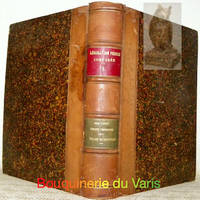
1894ref. 55718Berlin - Paris : Otto Liebmann - Pedone-Lauriel 1894. LISZT Franz von.Le droit criminel des Etats européens. Publié sous les ordres de l’Union internationale de droit criminel. Législation pénale comparée. 1er Volume. Berlin - Paris Otto Liebmann - Pedone-Lauriel 1894 265x175mmXXVI- 706 pages demi-basane dos à nerfs pièce de titres rouge et verte cuir par endroit frotté cachet de bibliothèque sur la page de titre cuir taché sur un bord. No hidden customs fees for orders shipped to the U.S.A with a value of up to 800 USD PDDP shipping we pay the VAT in advance Otto Liebmann - Pedone-Lauriel unknown
1919ref. 290041Paris.: Henry Lemoine & Cie. 1919-1921. Quarter black leather over blue cloth boards red spine labels gilt titles original wraps bound in. Very good pages toned. 29.7x22.3 cm. Classical favorites for the piano 9th volume 3 parts. Heavy set may require extra shipping. Henry Lemoine & Cie. paperback
ref. 8501059498.Gpaperback. Good. Access codes and supplements are not guaranteed with used items. May be an ex-library book. paperback
1970ref. 2092902137502932Iwanamishoten 1970. Soft Cover. Fine. Size: A5 size Number of books: 1 book Iwanamishoten paperback
ref. 3563757410.Ghardcover. Good. Access codes and supplements are not guaranteed with used items. May be an ex-library book. hardcover
ref. 35510353-nnew. unknown
ref. 35510353like new. unknown
ref. 41340771-nnew. unknown
ref. 41340771like new. unknown
196033 pages. Illustrated with photographs from William Goetz Production. Includes these songs: My Consolation - Song; Moonlight Sonata Op. 27 No. 2; Nocturne Op. 55 No. 1; Song Without end - Song; Pilgrim's Chorus - Tannhauser; Hungarian Rhapsody No. 6; Liebestraum - Loves Dream; Largo. Also includes thematics of additional musical material and synopsis of the story. Average wear. Minimal markings. A sound copy. Book
1986ref. 31409AMünchen, List, 1986. Ca. 31,5 x 27,5 cm. 346 Seiten, mit zahlreichen Abbildungen. Original-Leinenband mit illustriertem Original-Umschlag.
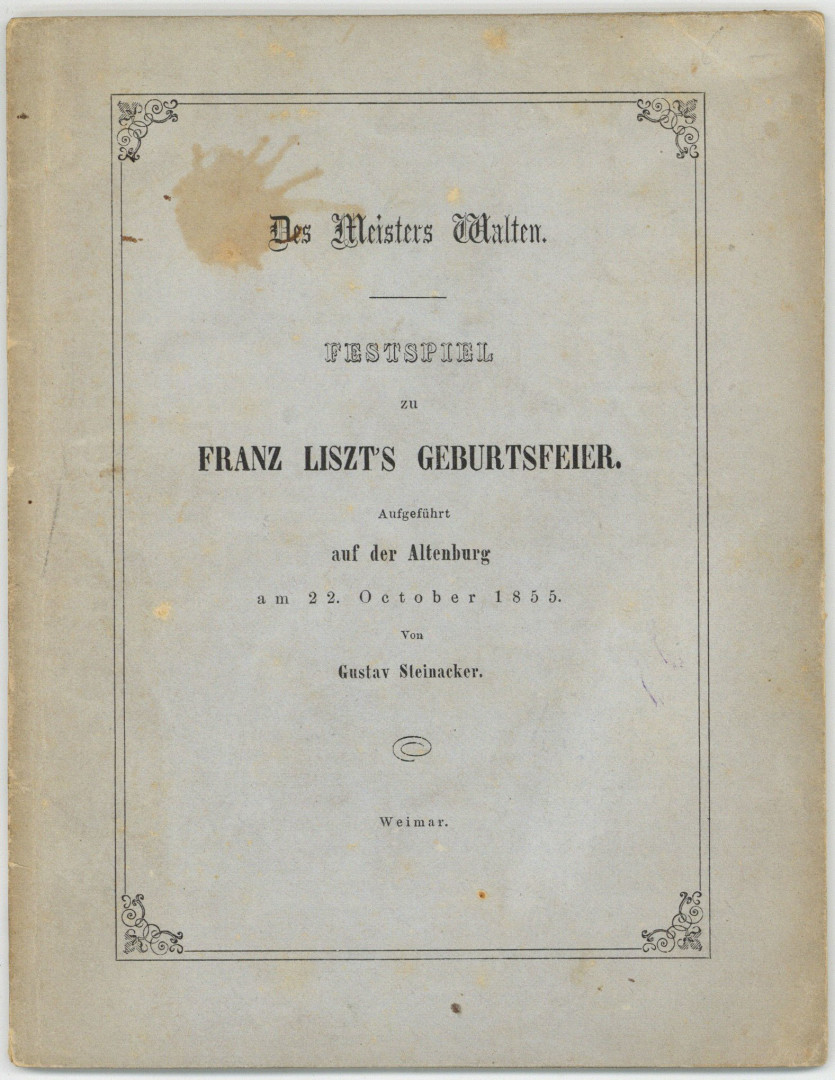
1855ref. 125775Druck: Weimar, Hof-Buchdruckerei 1855. * 29 Seiten. 16,5 x 13 cm. Bedruckte graue Original-Broschur (fleckig).