GOUNOD, Charles (1818 - 1893)Biblio.com
1011 risultati
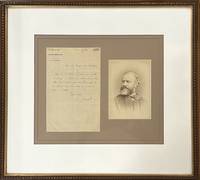
rif. 330767framed. very good. Hand-written letter from French composer Charles Gounod. Written in french the letter is framed with an etched portrait image of Gounod. Envelope is included on the back side of the frame. Circa 1850. Please inquire for more information. Charles Gounod was a French composer. He wrote twelve operas of which the most popular has always been Faust 1859; his Romeo e Juliette 1867 also remains in the international repertory. He composed a large amount of church music many songs and popular short pieces including his "Ave Maria" an elaboration of a Bach piece and "Funeral March of a Marionette". unknown
rif. 330767framed. very good. Hand-written letter from French composer Charles Gounod. Written in french the letter is framed with an etched portrait image of Gounod. Envelope is included on the back side of the frame. Circa 1850. Please inquire for more information. Charles Gounod was a French composer. He wrote twelve operas of which the most popular has always been Faust 1859; his Romeo e Juliette 1867 also remains in the international repertory. He composed a large amount of church music many songs and popular short pieces including his "Ave Maria" an elaboration of a Bach piece and "Funeral March of a Marionette". unknown books
rif. 358629/02/1888 Belle lettre dans laquelle Gounod recommande les compositions musicales de Georges Palicot, (pseudonyme de Marie Schneckenburger, pianiste spcialiste du piano-pdalier. Gounod lui crivit plusieurs pices...Faites-moi, et faites-vous le plaisir d'entendre trois morceaux pour Chant et Piano (Valse chante, le Mousseron et le Drapeau) que Palicot vient de me montrer et dont je suis trs content... Il ajoute au sujet de Palicot, ...Il faut l'encourager et le pousser ; je crois que ce qu'il vous portera est de vente et je serai heureux que ce ft achet par votre maison ; cela ne vous ruinera pas, et cela me semble une bonne affaire, au point de vue du succs...Fils de l'diteur de musique Jean Hartmann, Georges Hartmann devient diteur en 1868. partir de 1870, il est l'diteur exclusif des opras de Jules Massenet. Il dite les grands compositeurs d'opras, Gounod, Georges Bizet, et aussi la musique de Csar Franck, Camille Saint-Sans, Paul Lacombe. Il cre les concerts Colonne. Sa maison d'dition sera rachete par Heugel. La Danse roumaine et la Suite concertante furent crits par Gounod pour Marie Schneckenburger.
rif. 4824BELLE LETTRE SON GRAND AMI LE PEINTRE JULES RICHOMME, QUE GOUNOD CONSIDRAIT COMME UN FRRE.Charles Gounod a reu de son cher ami un petit tableau qui lenchante : ...Ta chre femme nous a apport de ta part un amour de petit tableau qui, je me rappelle, avoit attir mon attention toute particulire dans ton atelier lanne passe. Jai eu le regret de ne pas me trouver la maison quand ta femme y est venue ; jaurois voulu lui dire en personne combien javois de plaisir me savoir dsormais possesseur de cette ravissante petite pastorale ; cest donc toi directement que jen remercie, cher bon ami ; et je laurois fait beaucoup plus tt si depuis trois jours, je navois t toute la journe et mme le soir hors de la maison. Je suis ravi, enchant ; et tu peux bien penser que ce petit bijou l ne me sera pas le moins cher de ceux qui comptent dj mon tout petit muse : nous allons lenvoyer de suite au cadre, et lui faire aussitt aprs dans notre salon une place dami : je veux quon le voie bien parce que je suis sr quon aura un vritable plaisir le regarder.Merci, cher bon, pour ma femme et pour moi : mille affectueux souvenirs ta bonne mre et ta femme, et pour toi lassurance de ma vieille amiti.... a commence prendre des annes de bouteille, sais tu ?...Jules Richomme, fils du graveur Thodore Richomme, est n et mort Paris (1818-1903). Peintre, dessinateur et graveur, il peignit essentiellement des scnes de genre, des tableaux historiques ou religieux. Il partagea avec Camille Corot la dcoration des chapelles de la Vierge et de Saint-Nicolas pour lglise de Ville dAvray. Il signe galement plusieurs dcorations dglises dont celle de Saint-Sverin Paris. Il fit des dcorations pour la Ville de Cherbourg. Son atelier se trouvait 15 Cit Pigalle Paris. Jules Richomme entretient une correspondance remarquable pendant toute sa vie avec son ami le musicien Charles Gounod dont des lments furent publis par son gendre Andr Beaunier.
rif. 4475En 1853, Nadar (pseudonyme de Adrien Gaspard-Flix Tournachon) dessinateur, caricaturiste, journaliste et romancier ses heures, installe un atelier de photographies, au rez-de-chausse avec jardin au 113, rue Saint-Lazare. Il reoit ses amis Eugne Delacroix, Thophile Gautier, Alexandre Dumas, Grard de Nerval. Son assistant prpare les plaques dans un atelier du jardin. Nadar parade dans sa vareuse rouge et affiche ses sympathies pour les rpublicains et les peintres impressionnistes refuss au Salon. Il produit alors le meilleur de son oeuvre, des portraits dans des poses classiques rappelant le travail d'Ingres. La construction du nouvel atelier, boulevard des Capucines, met un terme sept annes de grande crativit. La situation financire du photographe ne cesse de se dtriorer. Derrire la faade rutilante, Nadar est condamn un "travail ht, forcment fivreux, haletant jusqu' la livraison, se compromettant pour presser, forcer le paiement, achetant tout plus cher, sacrifiant souvent tout bnfice pour rentrer dans le solde, dvor dans d'insupportables proportions par l'effroyable usure des frais de justice !".Passionn par toutes les innovations, en 1858, il dpose un brevet pour le "Nouveau systme de photographie arostatique" et fait construire un ballon, Le Gant, bord duquel il prend les premires photographies ariennes. Aprs la Commune, Nadar ouvre un nouvel atelier, plus modeste, 51 rue d'Anjou, mais la priode de grande crativit ne revient pas et les affaires sont loin d'tre prospres. Il cde son affaire et rdige ses mmoires, Quand j'tais photographe, avant de s'teindre en 1910.
1855rif. 244941Paris 1855. 1 pp. pen and ink on Écoles Communales letterhead. Letter 8 1/4 x 5 1/4 in. Frame 14 1/2 x 18 1/4 in. Light edgewear and creasing faint offset. Mounted and framed with photographic portrait. 1 pp. pen and ink on Écoles Communales letterhead. Letter 8 1/4 x 5 1/4 in. Frame 14 1/2 x 18 1/4 in. Gounoud writes in praise of "the new Solfege in three progressive lessons that you have just published" noting its usefulness to music teachers in the instruction of modern music. unknown
1855rif. 244941Paris 1855. 1 pp. pen and ink on Écoles Communales letterhead. Letter 8 1/4 x 5 1/4 in. Frame 14 1/2 x 18 1/4 in. Light edgewear and creasing faint offset. Mounted and framed with photographic portrait. 1 pp. pen and ink on Écoles Communales letterhead. Letter 8 1/4 x 5 1/4 in. Frame 14 1/2 x 18 1/4 in. Gounoud writes in praise of "the new Solfege in three progressive lessons that you have just published" noting its usefulness to music teachers in the instruction of modern music. unknown books
rif. 358727/03/1888 ...Le cardinal Archevque de Reims s'inquite vivement au sujet des tudes de la Messe, et commence concevoir des craintes srieuses sur l'excution, par suite du retard norme apport l'envoi des parties vocales (...). Songez-y mon cher, vous compromettez l'avenir de cette messe : les tudes seront insuffisantes et l'excution mauvaise. Je vous le rpte, songez-y. C'est grave !...En juillet 1887, Gounod avait dj dirig sa Messe la mmoire de Jeanne d'Arc prcde d'un prlude avec fanfare dans la cathdrale de Reims.
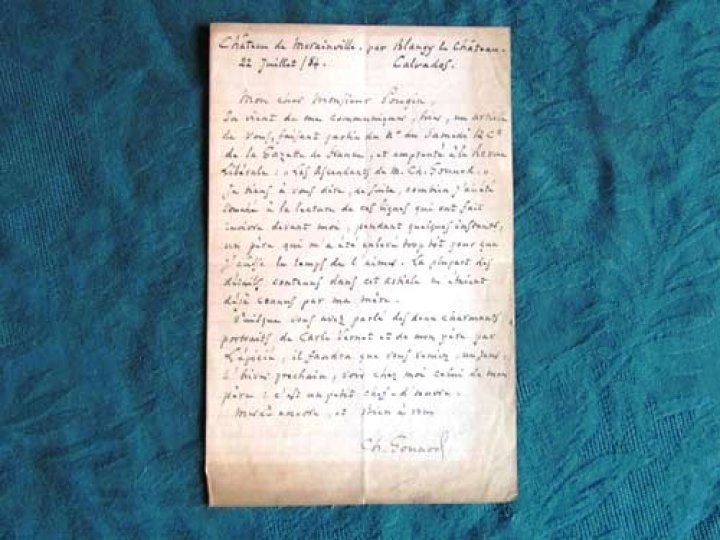
1884rif. 11907Lettre Autographe Signée de Charles Gounod (1818-1893) au musicologue Arthur Pongin.Il étudie l'harmonie avec Antoine Reicha puis, au Conservatoire de Paris, avec Jacques Fromental Halévy et la composition avec Jean-François Lesueur. En 1839, il remporte le Grand Prix de Rome pour sa cantate Fernand.Château de Morainville par Blangy le Château. 22 juillet 1884. Calvados.Il a lu son article sur les Ascendants de M. Ch. Gounod : "J'ai été très touché à la lecture de ces lignes qui ont fait revivre devant moi pendant quelques instants, un père qui m'a été enlevé trop tôt pour que j'eusse le temps de l'aimer. La plupart des détails contenus dans cet article m'étaient déjà connus par ma mère". Il l'invite à venir voir le portrait de son père par Lépicié : "c'est un petit chef-d'oeuvre"...LAS 1 page de format in-8°(21x14). Très bon état.
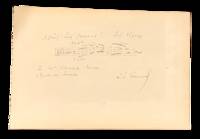
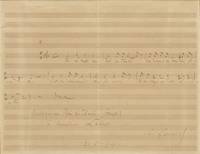
rif. 3802No Binding. Near Fine. Two bars for violin on hand-drawn stave with holograph tempo marking. Titled at the top by Gounod "Après les jeunes!. Les vieux!." Signed Ch. Gounod at the bottom and inscribed in French to the recipient. Beautiful 12 1/4" x 8 1/4" paper which shows some toning and a few pencil marks from previous framing. Comes with a glossy 7" x 5" photo of the composer. The French composer Charles Gounod 1818-1893 was particularly famous for his operas including Faust and Roméo et Juliette which are still widely performed today. His other output included shorter works both instrumental and vocal and church music including his setting of Ave Maria to Bach's Prelude #1 in C. unknown
1880rif. 14523Paris Choudens père et fils sans date (vers 1880) In-4 plein maroquin rouge cardinal Paris, Choudens père et fils, sans date (vers 1880). In-4, (4)-267 pp., plein maroquin rouge cardinal, double filet en encadrement estampé à froid, chiffre "M.D" à l'or sur le plat supérieur, dos à nerfs, entre-nerfs avec encadrement estampés à froid, ornés de lyres, double filet à l'or sur les bords, toutes tranches dorées, dentelles sur les chasses, signée Lortic. (Très petits frottements aux bords des coiffes et aux coins, discrète tache au dos.)
1867rif. 25608Paris: Choudens PN A.C. 1411. 1867. Large octavo. Quarter red pebbled cloth with marbled boards titling gilt to spine. 1f. recto decorative lithographic title by Barbizet printed in light purple verso blank 1f. recto dedication "A Sa Majesté Charles XV Roi de Suède de Norvège" printed in blue verso blank 1 named cast list and index 2-303 i blank pp. Lithographed. Named cast includes Carvalho Daram Duclos Michot Puget Laurent Barré Laveissière Troy jeune Troy Cazaux Wartel and Neveu. Publisher's handstamp to lower margin of title. Binding slightly worn rubbed and bumped; hinges split; endpapers browned. Some dampstaining to inner margins; occasional splitting creasing and small tears. First Edition first issue. Roméo et Juliette was first performed at the Théâtre Lyrique in Paris on 27 April 1867. The opera was "Gounod's most spectacular immediate success. Coming as it did during the Exposition Universelle of 1867 when Paris was invaded by visitors from the provinces and abroad the opera drew full houses for many consecutive nights. It started its rapid conquest of foreign stages at Covent Garden on 11 July 1867 and before the end of the year had been seen at major centres in Germany and Belgium." Steven Huebner in Grove Music Online. Choudens [PN A.C. 1411.] unknown
1867rif. 25608Paris: Choudens PN A.C. 1411. 1867. Large octavo. Quarter red pebbled cloth with marbled boards titling gilt to spine. 1f. recto decorative lithographic title by Barbizet printed in light purple verso blank 1f. recto dedication "A Sa Majesté Charles XV Roi de Suède de Norvège" printed in blue verso blank 1 named cast list and index 2-303 i blank pp. Lithographed. Named cast includes Carvalho Daram Duclos Michot Puget Laurent Barré Laveissière Troy jeune Troy Cazaux Wartel and Neveu. Publisher's handstamp to lower margin of title. Binding slightly worn rubbed and bumped; hinges split; endpapers browned. Some dampstaining to inner margins; occasional splitting creasing and small tears. First Edition first issue. Roméo et Juliette was first performed at the Théâtre Lyrique in Paris on 27 April 1867. The opera was "Gounod's most spectacular immediate success. Coming as it did during the Exposition Universelle of 1867 when Paris was invaded by visitors from the provinces and abroad the opera drew full houses for many consecutive nights. It started its rapid conquest of foreign stages at Covent Garden on 11 July 1867 and before the end of the year had been seen at major centres in Germany and Belgium." Steven Huebner in Grove Music Online. Choudens [PN A.C. 1411.] unknown books
rif. 7116viii 32 pp. 8vo 212 x 138 mm. modern aubergine cloth a little sunned title on upper cover. Paris: Félix & Regnault-Delalande 1824. A rare sale catalogue issued by the prolific expert Regnault-Delalande 1762-1824 describing the painter’s extensive collection. This copy is printed on large paper and begins with a valuable biography of the artist. Gounod 1758-1823 was a pupil of Lépicié; his first appearance at the Paris Salon was in 1799. His son Charles became a famous musician and composer. 192 lots. The catalogue describes paintings by S. Bourdon Chardin van Dyck Gounod La Tour Miel and Rembrandt; drawings by Bouchardon Ant. Carracci Cochin fils van Dyck Gounod Greuze Jordaens Le Brun N. Poussin Raphael C. J. Vernet etc.; prints by G. & B. Audran Bartolozzi Callot Earlom Morghen Nanteuil Porporati Rembrandt C. Vernet etc. The print suites and books include the works of Palladio Scamozzi Perrault Newton Barbault Bartoli Piranesi etc. We also find the standard art historical books and artistic treatises of the 18th century. Fine copy. In the characteristic binding of the Bibliothèque Heim and with the library’s stamp on verso of title. ⧠Lugt 10600. Oxford Art Online. unknown
rif. 7116viii 32 pp. 8vo 212 x 138 mm. modern aubergine cloth a little sunned title on upper cover. Paris: Félix & Regnault-Delalande 1824. A rare sale catalogue issued by the prolific expert Regnault-Delalande 1762-1824 describing the painter’s extensive collection. This copy is printed on large paper and begins with a valuable biography of the artist. Gounod 1758-1823 was a pupil of Lépicié; his first appearance at the Paris Salon was in 1799. His son Charles became a famous musician and composer. 192 lots. The catalogue describes paintings by S. Bourdon Chardin van Dyck Gounod La Tour Miel and Rembrandt; drawings by Bouchardon Ant. Carracci Cochin fils van Dyck Gounod Greuze Jordaens Le Brun N. Poussin Raphael C. J. Vernet etc.; prints by G. & B. Audran Bartolozzi Callot Earlom Morghen Nanteuil Porporati Rembrandt C. Vernet etc. The print suites and books include the works of Palladio Scamozzi Perrault Newton Barbault Bartoli Piranesi etc. We also find the standard art historical books and artistic treatises of the 18th century. Fine copy. In the characteristic binding of the Bibliothèque Heim and with the library’s stamp on verso of title. ⧠Lugt 10600. Oxford Art Online. unknown books
rif. 4840La pice impose au concours est la Cantate Jeanne dArc....N 1. (candidat premier) : ...La premire partie meilleure que le reste : quelques passages assez lgants (...) N2 : ...pas dinvention dans tout cela ! Pauvre dides ; fourmille dexpdients N 3 ...Aucune ide nen aura jamais aucune motion na rien dans le ventre, mme la fin, pas une seconde denthousiasme : cest un vrai glaon !... N 4 pas dides, ennuyeux comme... la pluie... a t dit : un gaga ! . Sa conclusion, les candidats : ...N 3 et 4 sont trs infrieurs aux N 1et 2. Je ne sais quelle ide ils ont eu de faire de la musique. Ce concours, vu ltat actuel de lart dramatique, donne bien peu desprances. Les effets sont cherchs dans la voix, dans les cris, non dans la forme ni dans lexpression...
1881rif. 27462Paris 1881. 279 x 198 mm. Signed by the artist in pencil at lower left. A very good impression on laid paper. Remnants of hinges to upper corners of verso. Béraldi: Les Graveurs du XIXe Siècle Paris: 1885-92 XI-188. Faust an opera in five acts to a libretto by Jules Barbier and Michel Carré after Carré's Faust et Marguerite and Johann Wolfgang von Goethe's Faust Part I in the French translation by Gérard de Nerval was first performed in Paris at the Théâtre Lyrique on March 15 1859. "Faust became particularly important to the French musical establishment at the end of the century. A work by a winner of the Prix de Rome that could claim to be thoroughly modern and personal in style at its première and go on to international stages was a significant enhancement to the musical prestige of a French operatic culture previously dominated by Meyerbeer and the none-too-easily exportable genre of opéra comique. Its national value was enhanced because after some initial assessments as 'Wagnerian' Gounod's compositional voice in Faust was heard as important in the definition of a 'French' musical aesthetic." Steven Huebner in Grove Music Online. Renouard 1845-1924 was a noted painter and engraver whose works are held at the Louvre the Opéra Museum etc. unknown
1881rif. 27462Paris 1881. 279 x 198 mm. Signed by the artist in pencil at lower left. A very good impression on laid paper. Remnants of hinges to upper corners of verso. Béraldi: Les Graveurs du XIXe Siècle Paris: 1885-92 XI-188. Faust an opera in five acts to a libretto by Jules Barbier and Michel Carré after Carré's Faust et Marguerite and Johann Wolfgang von Goethe's Faust Part I in the French translation by Gérard de Nerval was first performed in Paris at the Théâtre Lyrique on March 15 1859. "Faust became particularly important to the French musical establishment at the end of the century. A work by a winner of the Prix de Rome that could claim to be thoroughly modern and personal in style at its première and go on to international stages was a significant enhancement to the musical prestige of a French operatic culture previously dominated by Meyerbeer and the none-too-easily exportable genre of opéra comique. Its national value was enhanced because after some initial assessments as 'Wagnerian' Gounod's compositional voice in Faust was heard as important in the definition of a 'French' musical aesthetic." Steven Huebner in Grove Music Online. Renouard 1845-1924 was a noted painter and engraver whose works are held at the Louvre the Opéra Museum etc. unknown books
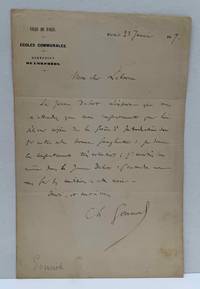
1857rif. 020632Paris France: not published 1857. Book. Very good condition. Unbound. Signed and Inscribed by Author. 1st Edition. Octavo 8vo. One page letter dated January 23 1857 and written on Ecoles Communales letterhead. French Romantic composer Charles Gounod 1818-1893 writes to Belgian-born French composer educator and librarian Aime Leborne 1797-1866. Apparently delivered to him while at the opera. The content is in regards to giving permission for a copy to be made of the introduction of Gounod's opera "La Nonne Sanglante" The Bloody Nun which debuted in 1854 and was canceled after only 11 performances. Minor soiling to the paper. not published Paperback
1888rif. 88513s. n. | Paris 1888 | 11 x 15 cm | Une photographie
1890rif. 20892Ollendorff 1890 1 Paris, Ollendorff Éditeur, 1890, in-12, cartonnage Bradel jaspé, pièce de titre en chagrin noir, couvertures conservées, 216 pages.
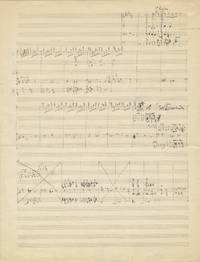
rif. 39978One bifolium 272 x 347 mm. 4 pp. Notated in black ink on 26-stave rastrum-ruled paper. Unsigned and undated. With significant corrections cancels etc. Slightly worn and browned; small tear to blank outer margin of first leaf repaired; horizontal crease; short split to head and tail of spine. In very good condition overall. Music unlocated but very likely from a sacred vocal work with orchestra. The first page contains 16 measures of music on 8-line staves the uppermost stave marked with the key signature of 5 sharps in a contrapuntal style incorporating stretto technique whereby a melody is restated in overlapping fashion in two or more voices. The second page contains 28 measures including four cancelled measures with music still visible on 4- and 5-line staves with a sharp-key signature as in the first page and passages of high-register 8th notes most likely for violin; the uppermost stave is designated "1e. Basson." The third page contains 21 measures on an 8-line stave being an alternate iteration of the material from the first page; the final 4 measures which are cancelled contain tremolo string material similar to the second page. The upper portion of the fourth and final page contains 8 measures of music similar to the first and third pages in a stretto character but with a new key signature of 3 flats. With 2 measures of music also with 3 flats to lower portion of final page. Gounod's interest in sacred music and counterpoint was awakened in his youth and continued for the span of his career. "Gounod arrived at the French Academy in Rome at the end of January 1840. Little there sustained his musical interest. He excoriated performances of operas by Donizetti Bellini and Mercadante composers he later characterized as mere 'vines twisted around the great Rossinian trunk without its vitality and majesty' and unable to match that composer's spontaneous melodic gifts. Gounod was however genuinely moved by performances of Palestrina at the Cappella Sistina and more generally by the cultural legacy of Rome in the other arts a legacy he felt that musicians could ill afford to ignore. His Roman experience laid the foundation for the stark comparison he drew in his aesthetics between on the one hand a universally appealing combination of beauty truth and Christianity and on the other egoism artifice and insularity. He described stile antico counterpoint as a selfless analogue to Michelangelo's frescoes issuing from pure Faith." Steven Huebner in Grove Music Online A fine example of a Gounod working manuscript in the composer's elegant hand displaying how he skillfully wove together counterpoint orchestration and compositional structure; well worthy of further study. unknown
rif. 395518 measures in treble clef notated in black ink on a portion of a 14-stave rastrum-ruled album leaf 177 x 233 mm. With text in French in Gounod's hand commencing "Il etait un Roi du Thulé" Marguerite's melancholy aria from Act III. Identified in the composer's hand at foot: "Ballade du Roi de Thulé . à Monsieur Lebert. Ch. Gounod" and dated 26 August 1869. Slightly faded; browned; creased at central vertical fold; portions of leaf slightly lightened; margins of verso reinforced with brown paper tape. Faust an opera in five acts to a libretto by Jules Barbier and Michel Carré after Carré's Faust et Marguerite and Johann Wolfgang von Goethe's Faust Part I in the French translation by Gérard de Nerval was first performed in Paris at the Théâtre Lyrique on 19 March 1859 in a version with spoken dialogue; recitatives were added in 1860 and a ballet and couplets for Méphistophélès were added for a new production in 1869. "The historical importance of Faust is that it sounded a new note in French music. The conventional pomposities of the grand opera which then dominated the stage were superseded by a more intimate and poetic approach. The fashion Gounod set was one of conversational exchange rather than declamation." James Harding: Gounod p. 114. "Faust remains one of the landmarks of French 19th-century opera full of variety and with an underlying sensuality that saved it from the sentimentality and banality to which Gounod's later works especially his oratorios often descended in his quest for inspired simplicity." Robert Orledge in Grove Music Online A considerable success at its premiere the work was one of the most frequently performed works at the Opéra and one the staples of the international repertory. unknown
rif. 36231Oblong folio 175 x 264 mm. 30 measures in total notated on both sides of the leaf the initial 13 measures in black ink the following 17 in purple pencil possibly a continuation of the same work. With several deletions and "Notes manuscrites de Ch. Gounod" in pencil to upper right margin. Slightly worn and browned; cut from a larger leaf. "Gounod wrote in most of the major genres of his day sacred and secular. That his reputation began to wane even during his lifetime does not detract from his place among the most respected and prolific composers in France during the second half of the 19th century." Steven Huebner in Grove Music Online. unknown
rif. 36231Oblong folio 175 x 264 mm. 30 measures in total notated on both sides of the leaf the initial 13 measures in black ink the following 17 in purple pencil possibly a continuation of the same work. With several deletions and "Notes manuscrites de Ch. Gounod" in pencil to upper right margin. Slightly worn and browned; cut from a larger leaf. "Gounod wrote in most of the major genres of his day sacred and secular. That his reputation began to wane even during his lifetime does not detract from his place among the most respected and prolific composers in France during the second half of the 19th century." Steven Huebner in Grove Music Online. unknown books