613 risultati
1890Leipzig C.F. Peters SD (vers 1890), In-4 demi chagrin noir, 248 pages. Trés bon état. Herausgageben von Artur SCHNABEL und Carl FLESCH.
Raccolta di due spartiti legati insieme nello stesso volume dei primi del novecento. Il primo 10 sonate di Beethoven per pianoforte e violino riviste da Ferd. David: Sonata op. 12 n. 1, op. 12 n. 2, op. 12 n. 3, op. 23 La minore, op. 24 in fa maggiore, op. 30 n. 1 La maggiore, op. 30 n. 2 ut minore, op. 30 n. 3 in sol maggiore, op. 47 in la maggiore, op. 96 in sol maggiore. Il secondo 5 sonate di Beethoven per violino riviste da Friedr. Hermann: sonata op. 5 n. 1, op. 5 n. 2, op. 69 in la maggiore, op. 102 n. 1, op. 102 n. 2. In ottime condizioni con fioriture. Copertina in piena tela con titolo in oro al dorso in ottime condizioni generali con lievi usure ai margini e dorso. Legatura in buone condizioni. Pagine in ottime condizioni con rare fioriture. In folio. cm. 31x23,5. Pp. 73+34. Collection of two scores bound togetehr in the same volume of early 20th century. The first one 10 sonates by Beethoven for piano and vioin reviewd by Ferd. David: Sonata op. 12 n. 1, op. 12 n. 2, op. 12 n. 3, op. 23 La minore, op. 24 in fa maggiore, op. 30 n. 1 La maggiore, op. 30 n. 2 ut minore, op. 30 n. 3 in sol maggiore, op. 47 in la maggiore, op. 96 in sol maggiore. the second one 5 sonates by Beethoven for violin reviewd by Friedr. Hermann: sonata op. 5 n. 1, op. 5 n. 2, op. 69 in la maggiore, op. 102 n. 1, op. 102 n. 2. In very good conditions. Cloth cover with golden title in the spine in very good conditions slightly worn in the edges and spine. Binding in good conditions.Pages in very good conditions with occasional foxings. In folio. cm. 31x23,5. Pp. 73+34.
192030x23,5; 79, (1) pp. Legatura verede editoriale conimpressioni in rosso e ora al dorso (alone d'umidità). All'interno in perfette condizioni di conservazione. Bel frontespizio in nero entro cornice xilografica.
1900Paris Enoch SD (vers 1900), collection Litolff, In-4 de 92 pages, percaline éditeur marron. Premier feuillet détaché.
1900Paris Enoch SD (vers 1900), In-4 de 284 pages. dernier feuillet détaché.
1933rif. 38049Milano: Ulrico Hoepli 1933. Hardcover. Good. Small octavo. Dark ivory illustrated cloth with titling to spine patterned endpapers. 326 pp. 1 folding plate. With occasional illustrations in text. From the library of American musicologist and violinist Alfred Mell with his signature and date to front free endpaper. Binding slightly worn and soiled. Ulrico Hoepli hardcover books
1980Con 42 figure nel testo e alberi genealogici delle scuole violinistiche. Ristampa anastatica autorizzata dall'editore Ulrico Hoepli, dall'edizione stampata nel 1933. Esemplare perfetto. Brossura editoriale a stampa a colori, pp. VI, 326, in 16°
1906In-16 p., tela editoriale (lievi tracce d’uso), pp. VIII,228,64. Prima edizione. Fioriture e alc. postille a biro e matita, ma complessivamente in buono stato.
1925Manuali Hoepli - Avvertenza - Nota bibliografica - Indice dei nomi 1 14,5x10 cm., legatura editoriale cartonata con figura in copertina e titolo in rosso, frontespizio rosso e nero, pp. (4) 282 (1), 42 figure nel testo anche di immagini sacre con lo strumento, in nero, prima edizione, in italiano, leggera lacerazione superficiale e sena alcun danno ai lati del dorso, qualche annotazione in matita, firma di appartenenza. RARO
190615 cm, rilegatura in tela, tit. al piatto e dorso, tagli colorati, p. viii, 228, 64 di catalogo editoriale, firmetta cancellata
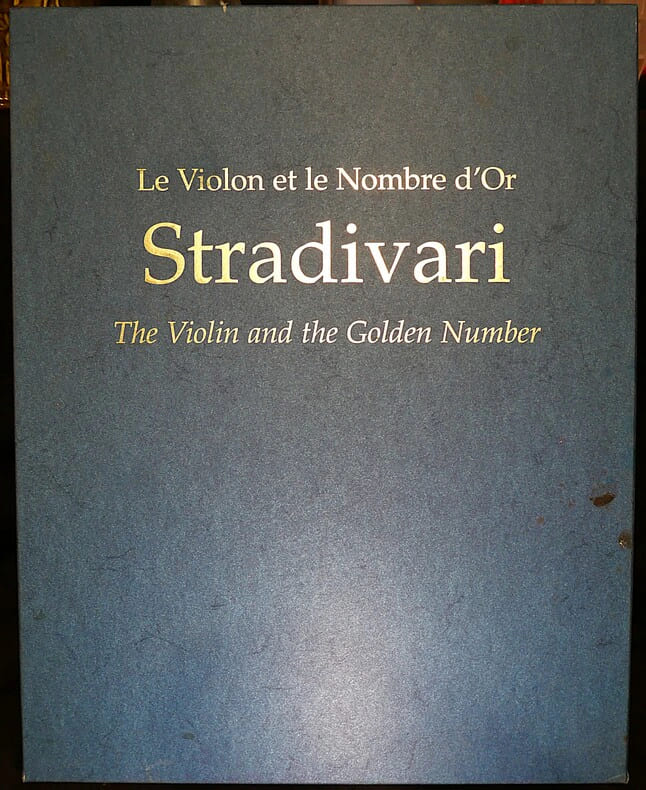
2005rif. 802005 in4 broché, 163pp, nombreux dessins et schémas. 12 planches rhodoid représentant les moules des Stradivarius grandeur nature accompagnées de 12 calques correspondant, avec calculs géométriques en rapport avec le nombre d'or. Le tout dans un grand coffret bleu à titres dorés
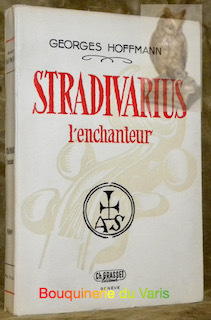
rif. 15449Genève, Ch. Grasset 1945, 200x130mm, 208pages, broché. Bel exemplaire.
194848 pages. Part 2 of a course for individual or class instruction providing training in solo and ensemble playing. This book is for Violin A and B. Average external wear. Contents clean and unmarked. Binding intact. A sound copy. Book
1 Vol. In-4 gr pag. 28 PROG 17483 CATT_ATT 28
1988rif. 7386Paris Filipacchi 1988 GRAND In-8 323 pp, traduit de l'anglais par Christian Gauffre, photographies en noir hors-texte, couvertures illustrées
1719rif. 10894Paris Foucault à la Règle d'Or 1719 in-4 velin sur cartons, (ff. souvent détachés)., titre à l'encre sur le Ier plat. 3 volumesVol. I : Premier dessus de violon : Opera Ia Sonates I à XII : titre, 14pp.; Opera 2a Sonates I à XII: Titre, 11p.; Opera terza Sonates I à XII : titre, 10pp. ; Opera quarta Sonates I à XII: titre, 10pp.Vol. II: Violino secondo 2eme dessus : Opera Prima Sonates I à XII: Titre, 12pp., (1 f. de privilège) ; Opera II Sonates I à XII: titre, 10pp.; Opera terza Sonates I à XII: Titre, 12pp. ; Opera quarta Sonates I à XII : titre, 10pp., (1f. de privilège).Vol. III: Opera Ia : Sonates I à XII : Organo : Titre, 12pp. (privilège à la p. 12) ; Opera Ia Sonates I à XII : Tiorba : Titre, 12pp.; Opera IIa Sonates I à XII : Organo : Titre, 10pp.; Opera terza Sonates I à XII : Organo : Titre, 13pp. ; Opera terza Sonates I à XII :Violoncello : Sonata prima a duodecima : titre, 13pp., ; Opera quarta Sonata I à XII. Violone o Cimbalo, titre, 12pp., (1f. de privilège).
2018brossura
1820rif. 46029(Paris, Crochard, 1820). No wrappers. In ""Annales"". In ""Annales de Chimie et de Physique, Par MM. Gay-Lussac et Arago"" Tome XIV, Juin issue, pp. 113-222. (Entire issue offered with halftitlepage to vol. 14). Savart's paper: pp. 113-172 and 3 folded engraved plates. Plates with some scattered brownspots.
1820rif. 46032Paris, Crochard, 1820. Uncut with orig. printed wrappers (Juin-issue). In ""Annales de Chimie et de Physique, Par MM. Gay-Lussac et Arago"" Tome XIV, Juin issue, pp. 113-222. (Entire issue in orig. wrappers). Savart's paper: pp. 113-172 and 3 folded engraved plates.
rif. 6892textes de Roger Baschet,Luc Bérimont,Mario Bois,José Bruyr, Jacques Bureau,Hélène Cadou etc.harmonisés par pierre Hiégel.In folio reliure éditeur pleine toile écrue,titre en noir,en long,au dos,titre en noir er le premier plat Faux-titre,titre,394 pages sur papier couché,texte sur 2 colonnes,Nombreuses illustrations,dans le texte,pleine page,en noir et en couleurs.Les éditions de l’Illustration 1967.Quelques petites rousseurs sur le premier plat,sinon très bon état
1820rif. 46032Paris Crochard 1820. Uncut with orig. printed wrappers Juin-issue. In "Annales de Chimie et de Physique Par MM. Gay-Lussac et Arago" Tome XIV Juin issue pp. 113-222. Entire issue in orig. wrappers. Savart's paper: pp. 113-172 and 3 folded engraved plates. First printing of a pioneer paper on the acoustics of the violin and on the construction of the Trapezoidal Fiddle."In his earliest work Savart gave the first explanation of the function of certain parts of the violin. To learn how vibrations are transmitted from the strings to the rest of the instrument he induced vibrations in a free wood plate by passing a vibrating string over a bridge at its center; he also used Chladni’s sand-pattern technique to observe the resulting nodal lines. Savart showed that the bridge transmits the string’s vibrations; that the plate can be made to vibrate at any frequency; and that the corresponding mode is a modification of an unforced mode. He demonstrated that the sound post also serves to transmit vibrations and he explained that it therefore should not be placed under a nodal line. Thinking that symmetry and regularity would produce the best tone Savart built a trapezoidal violin with rectangular sound holes. When the instrument was played before a committee that included Biot the Composer Cherubini and other members of the Academy of Sciences and the Académie des Beaux-Arts its tone was judged as extremely clear and even but somewhat subdued."DSB.The issue also contains Eilhard Mitscherlich' famous paper in the first French version "Sur la Relation qui existe entre la forme cristalline et les proportions chimiques" pp. 172-190. unknown
1820rif. 46029Paris Crochard 1820. No wrappers. In "Annales". In "Annales de Chimie et de Physique Par MM. Gay-Lussac et Arago" Tome XIV Juin issue pp. 113-222. Entire issue offered with halftitlepage to vol. 14. Savart's paper: pp. 113-172 and 3 folded engraved plates. Plates with some scattered brownspots. First printing of a pioneer paper on the acoustics of the violin and on the construction of the Trapezoidal Fiddle."In his earliest work Savart gave the first explanation of the function of certain parts of the violin. To learn how vibrations are transmitted from the strings to the rest of the instrument he induced vibrations in a free wood plate by passing a vibrating string over a bridge at its center; he also used Chladni’s sand-pattern technique to observe the resulting nodal lines. Savart showed that the bridge transmits the string’s vibrations; that the plate can be made to vibrate at any frequency; and that the corresponding mode is a modification of an unforced mode. He demonstrated that the sound post also serves to transmit vibrations and he explained that it therefore should not be placed under a nodal line. Thinking that symmetry and regularity would produce the best tone Savart built a trapezoidal violin with rectangular sound holes. When the instrument was played before a committee that included Biot the Composer Cherubini and other members of the Academy of Sciences and the Académie des Beaux-Arts its tone was judged as extremely clear and even but somewhat subdued."DSB.The issue also contains Eilhard Mitscherlich' famous paper in the first French version "Sur la Relation qui existe entre la forme cristalline et les proportions chimiques" pp. 172-190. unknown
2012brossura È il 3° volume del Metodo Suzuki dedicato al violino, pubblicato in una nuova edizione. I temi di studio affrontati sono, in particolare: il progresso attraverso l'ascolto musicale, la tonalization, l'intonazione accurata, lo studio del fraseggio. Sono inclusi esercizi per il vibrato.
2011ril. È il 2° volume del Metodo Suzuki dedicato al violino, pubblicato in una nuova edizione. I temi di studio affrontati sono, in particolare: lo sviluppo della sensibilità musicale del bambino, l'ottenimento di un bel suono, l'intonazione accurata, la corretta postura e la giusta tenuta dell'arco.