4 420 résultats
1961réf. 12099Offenburg, Burda, (1961). Auf den Spuren des Jazz. Mit sehr zahlreichen, z.T. ganzseitigen, selten farbigen Fotoabbildungen nach Aufnahmen von William Claxton. 4°. 268 S. OLeinen mit goldener Titelprägung und farb. Schmuckvorsatz (Jazzkarte der USA).
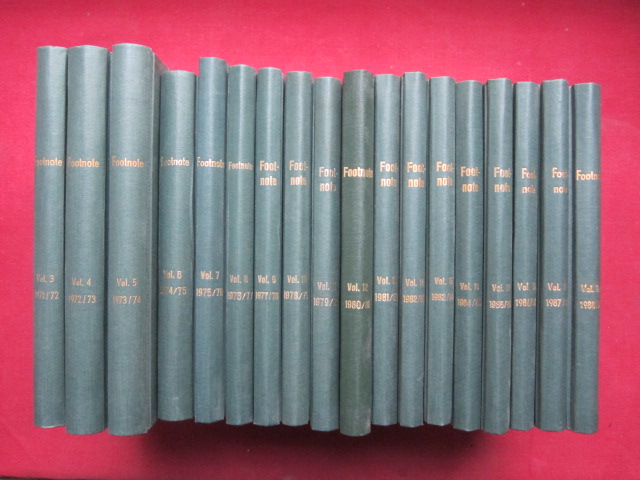
1989réf. 29797Hertfordshire, 1989. 8°, grüner Leinen/ Halbleinen [2 Warenabbildungen]
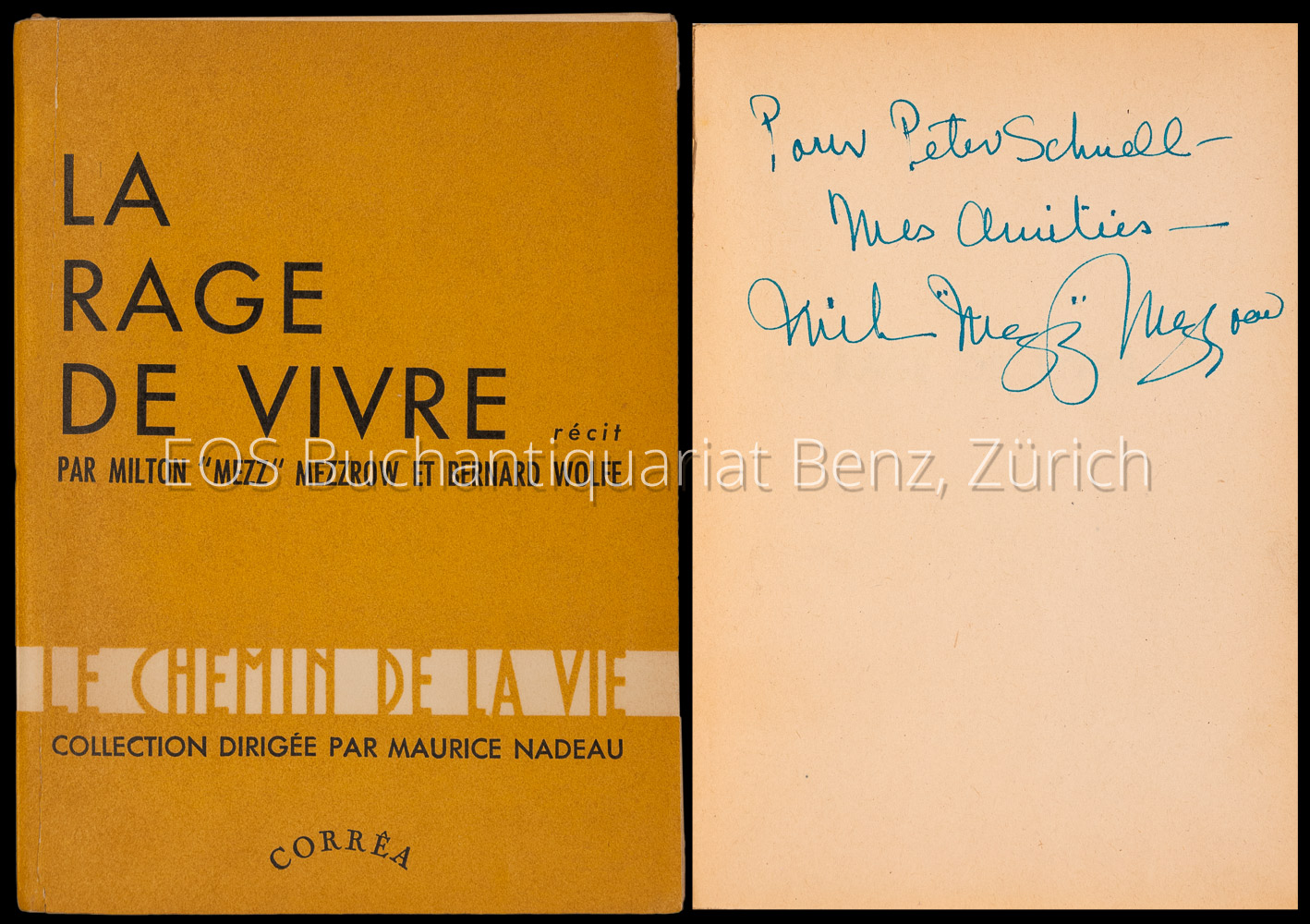
1950réf. 7120CBParis, Éditions Corrêa, 1950. 8°. 419 S. Orig.-Broschur. + Wichtig: Für unsere Kunden in der EU erfolgt der Versand alle 14 Tage verzollt ab Deutschland / Postbank-Konto in Deutschland vorhanden +, A
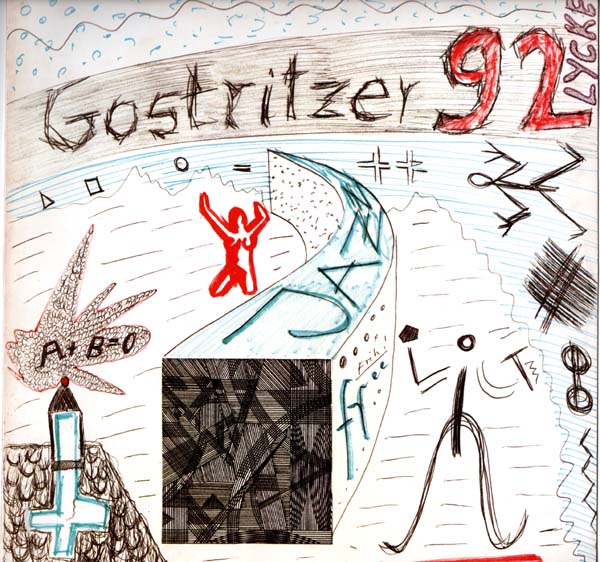
1979réf. 67618AB[Ohne Ort]., Weltmelodie., (1979). 31 x 31 cm. Illustriertes OKarton-Cover., 67618A WM LP 0100 / LC1015 Resco. Cover minimal nachgedunkelt. Sehr gutes Exemplar. Cover und Platte near mint.
réf. 1i7571G & L Rauch Schallplatten-Vertrieb Kassel um 1958 - 1970. Ca. 220 S. mit den original Schallplatten-Cover Leinenalbum mit goldgeprägtem Titel "Jazz" und Impressum quart OHNE die Schallplatten. - darunter: Greenwich Village Jazz at the Club Bohemia von Randy Weston und Cecil Payne/ Chet Baker in Milan/ Chet Baker with Fifty Italian Strings/ Bombastica! The Werner-Rosengren Swedish Jazz Quartet/ Guitar Groove Rene Thomas Quintet/ Out of this world Walter Benton Quintet with Wynton Kelly Paul Chambers Freddy Hubbard/ Tough Tenors the Johnny Griffin and Eddie Lockjaw Davis Quintet/ Art Pepper Gettin together! with an all-star rhyrhm secrion Wynton Kelly Paul Chambers & Jimmie Cobb plus Conte Candoli/ Wes Montgomery Movin Along with James Clay Victor Feldman Sam Jones Louis Hayes uvm. / größtenteils mit handschriftlichen Informationen über die Songs auf der Rückseite des jeweiligen Covers - unknown
1950réf. 7120CBParis, Éditions Corrêa, 1950. 8°. 419 S. Orig.-Broschur.
1929réf. 156898Leipzig : Wilhelm Zimmermann, 1929. 99 S. : Mit 40 [eingedruckten] Notenbeispielen ; gr. 8 OKarton,
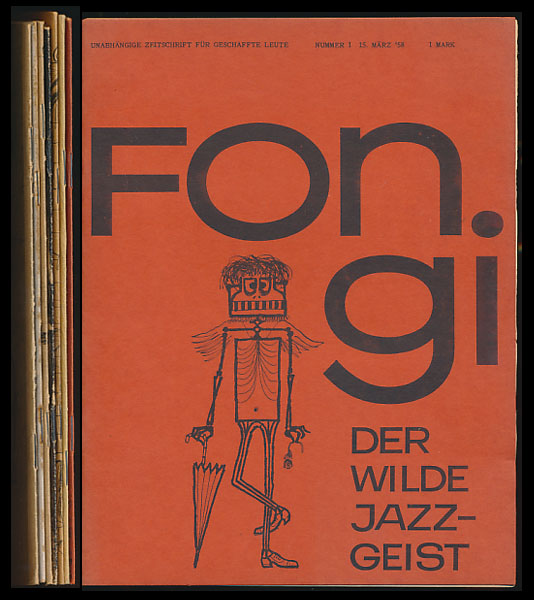
1958réf. 4802EBDuisburg, Visser, 1958-1959. 4°. 28 cm. 20, 24, 23 (1), 24, 24, 23 (1) und 23 (1) Seiten. Original-Broschuren. [4 Warenabbildungen]
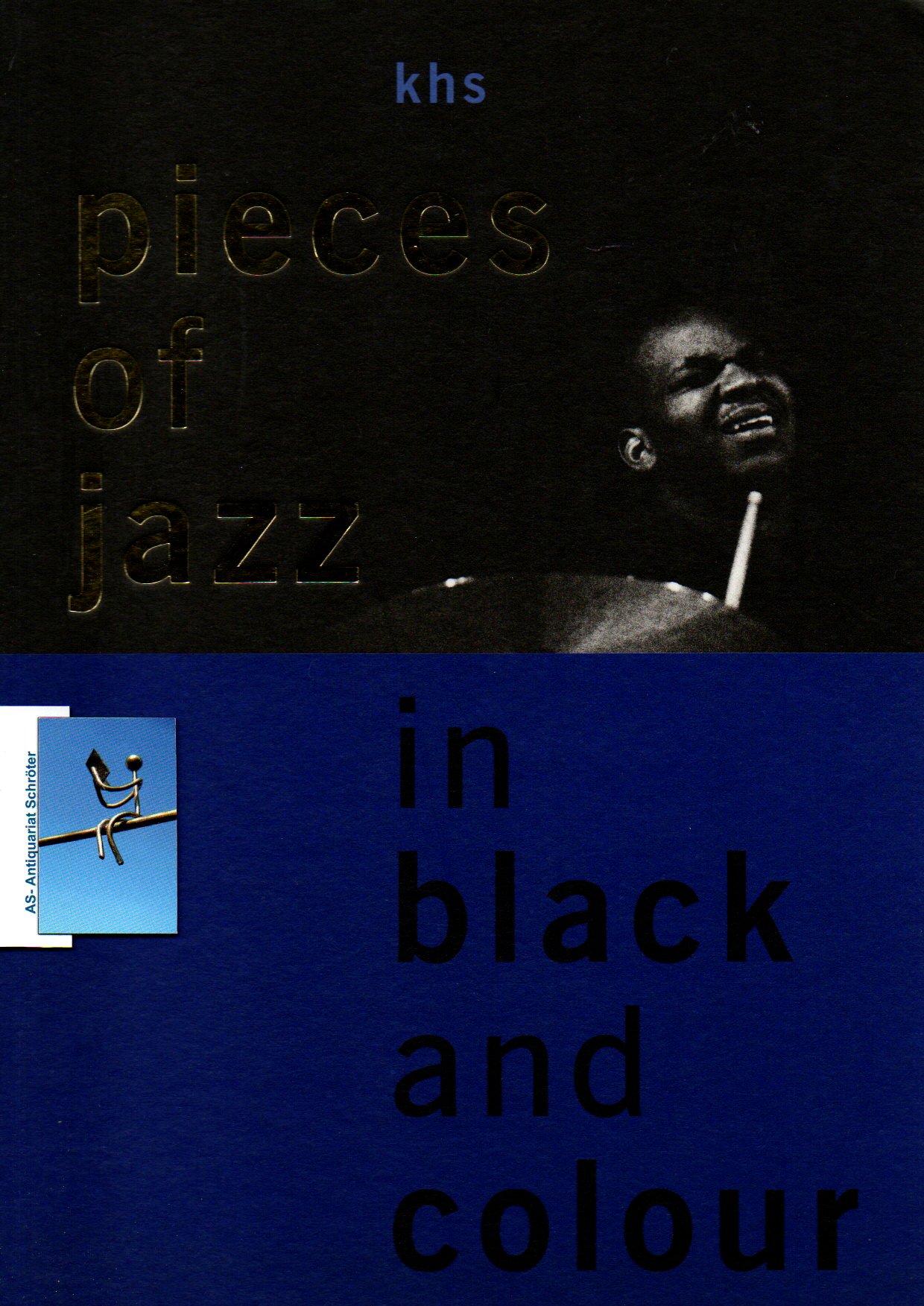
2000réf. 16246Nieswand Verlag, Kiel, 2000. nn Seiten, Großformat, OPappband. Durchgängig mit ganzseitigen Farb- und s/w-Fotos von Schmitt. Motiv sind Aufnahmen von Jazzkonzerten (u.a. Antonella Salis (2000), Eivind Aarset (2000), Nils Petter Molvaer (1998), Charlie Mariano (1999), Paolo Fresu (2000), Tim Warfield (1995), Eberhard Weber (2000), Hein van de Geyn (1998), Dave Holland (2000), Ray Brown (1996), Ahmad Jamal (1999), Joe Zawinul (1999) Jasper van`t Hof (1997), Paolo Conte (1997), Bugge Wesseltoft (2000), Michel Petrucciani (1995), Jan Gabarek (1999). Die lose beigelegten signierten Abzüge haben einen kleinen Eckknick auserhalb des Motivs und befinden sich nicht als Abbildung im Buch. Leider konnten wir die Abbildungen nicht den Künstlern zuordnen.Gutes Exemplar. Das Buch an einer Ecke leicht gestaucht, die Seiten am Rand nachgedunkelt. Good copy with four signed, orginal photos showing jazz musicians. [5 Warenabbildungen]
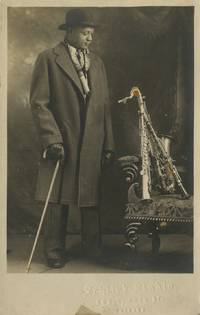
1920réf. List3820Chicago Illinois: Schlink Studio 1920. Real photo postcard measuring approximately 3 ½ x 5 ½ inches. Studio portrait of an African American musician standing in overcoat hat gloves and cane beside a chair displaying a saxophone and clarinet. Divided postcard back. Light wear and soiling with small loss or surface disturbance at lower margin; very good. A real photo postcard portrait of an African American musician posed with saxophone and clarinet. The sitter is not identified but the portrait was clearly made to present him as a professional or semi-professional performer rather than as an informal amateur. The formal clothing cane and carefully arranged instruments give the image the character of a publicity or theatrical portrait. The combination of saxophone and clarinet is especially appropriate to early twentieth-century dance-band and jazz performance when reed players commonly doubled on both instruments. The photograph likely dates from the period in which Black musicians circulated through local orchestras theater bands dance halls vaudeville circuits and early jazz ensembles often leaving behind few named records apart from photographs like this. A strong real photo postcard portrait of an African American reed player with good visual presence and clear musical content. . Schlink Studio unknown
1920réf. List3820Chicago Illinois: Schlink Studio 1920. Real photo postcard measuring approximately 3 ½ x 5 ½ inches. Studio portrait of an African American musician standing in overcoat hat gloves and cane beside a chair displaying a saxophone and clarinet. Divided postcard back. Light wear and soiling with small loss or surface disturbance at lower margin; very good. A real photo postcard portrait of an African American musician posed with saxophone and clarinet. The sitter is not identified but the portrait was clearly made to present him as a professional or semi-professional performer rather than as an informal amateur. The formal clothing cane and carefully arranged instruments give the image the character of a publicity or theatrical portrait. The combination of saxophone and clarinet is especially appropriate to early twentieth-century dance-band and jazz performance when reed players commonly doubled on both instruments. The photograph likely dates from the period in which Black musicians circulated through local orchestras theater bands dance halls vaudeville circuits and early jazz ensembles often leaving behind few named records apart from photographs like this. A strong real photo postcard portrait of an African American reed player with good visual presence and clear musical content. . Schlink Studio unknown books
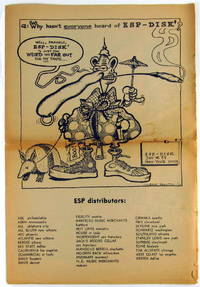
1971réf. 38867NY: ESP Disk 1971. Tabloid format 8 pp. printed on newsprint illustrated with a Gilbert Shelton character on the front. Paper tanned as would be expected with some loss to the folds and edges small light stain to middle front else a very good example. While we've had a few copies of the 1967 catalog and the more uncommon 'Special Complete Catalog" this one is new to us and were not aware of its existence until it threw itself over our transom. Though it originally existed to release Esperanto-based music starting with the release of Albert Ayler's Spiritual Unity ESP became the most important exponent of the burgeoning free jazz music scene of the time releasing records by such future greats as Sun Ra Frank Wright and Sunny Murray among others. Along with free jazz the label also produced music by Ed Sanders' band the Fugs the Lower East Side folk of the Holy Modal Rounders and the primitive proto-noise of the Godz. While never much of a commercial success for the musicians the label's philosophy of "The artists alone decide what you will hear on their ESP-Disk" led to the creation of a musical output that to this day wields a heavy influence. ESP Disk unknown
1971réf. 38867NY: ESP Disk 1971. Tabloid format 8 pp. printed on newsprint illustrated with a Gilbert Shelton character on the front. Paper tanned as would be expected with some loss to the folds and edges small light stain to middle front else a very good example. While we've had a few copies of the 1967 catalog and the more uncommon 'Special Complete Catalog" this one is new to us and were not aware of its existence until it threw itself over our transom. Though it originally existed to release Esperanto-based music starting with the release of Albert Ayler's Spiritual Unity ESP became the most important exponent of the burgeoning free jazz music scene of the time releasing records by such future greats as Sun Ra Frank Wright and Sunny Murray among others. Along with free jazz the label also produced music by Ed Sanders' band the Fugs the Lower East Side folk of the Holy Modal Rounders and the primitive proto-noise of the Godz. While never much of a commercial success for the musicians the label's philosophy of "The artists alone decide what you will hear on their ESP-Disk" led to the creation of a musical output that to this day wields a heavy influence. ESP Disk unknown books
1925réf. 589771925. Two black & white photo images 8" x 10" on glossy stock mounted in Crown Studio mats 11 1/4" x 13 1/4". Images are night shots of windows depicting surroundings full of architectural details. Very minimal soiling to lower fore-edge. 1 image with a bit longer exposure time still a very good pair of photos. These two commercial photos of 1920s window displays provide an invaluable historical glimpse into the marketing of men's fashions at the height of the Jazz Age. The photos include unique period elements with breathtaking flower arrangements positioned amongst the displayed clothing. The men's suits range in tints and style primarily including double-breasted and single-breasted suits with trousers carefully draped over surrounding decorative tables and stands cravats at the neck and each with a dapper cane displayed above it. Rich draperies of men's suit fabrics have been arranged below and around the displays. Frank Jacoby's store was a thriving business in Bridgeport CT. at 1083 Broad Street until the throes of the Great Depression when they were forced to close in 1933. unknown
1925réf. 589771925. Two black & white photo images 8" x 10" on glossy stock mounted in Crown Studio mats 11 1/4" x 13 1/4". Images are night shots of windows depicting surroundings full of architectural details. Very minimal soiling to lower fore-edge. 1 image with a bit longer exposure time still a very good pair of photos. These two commercial photos of 1920s window displays provide an invaluable historical glimpse into the marketing of men's fashions at the height of the Jazz Age. The photos include unique period elements with breathtaking flower arrangements positioned amongst the displayed clothing. The men's suits range in tints and style primarily including double-breasted and single-breasted suits with trousers carefully draped over surrounding decorative tables and stands cravats at the neck and each with a dapper cane displayed above it. Rich draperies of men's suit fabrics have been arranged below and around the displays. Frank Jacoby's store was a thriving business in Bridgeport CT. at 1083 Broad Street until the throes of the Great Depression when they were forced to close in 1933. unknown books
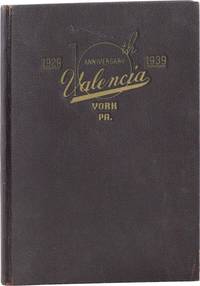
1939réf. 61627York Pennsylvania: The Valencia Ballroom 1939. Quarto. Spiral-bound leatherette boards hardcover; 94pp; illus. Trivial soil to covers with front board very slightly bowed at fore edge; internally fresh clean and unmarked; Near Fine. Promotional album for the storied Valencia Ballroom a popular musical venue during the Swing Band era. Strategically located on a route that connected New York Philadelphia and Baltimore the Valencia caught traveling orchestras on their way north or south thus bringing an impressive assortment of acts to the unlikely industrial city of York PA. Richly illustrated with photographs of the venue of the Tassia family owners and managers of the Valencia architectural views and dozens of portraits of the popular performers who played there including Eddie Duchin Kay Kyser Benny Goodman Sammy Kaye Guy Lombardo Bunny Berrigan the Dorseys and a host of others. Though the Valencia clearly favored white orchestras a few noteworthy African-American performers appeared there regularly and are pictured including Jimmy Lunceford Cab Calloway Duke Ellington and Claude Hopkins. A lavishly-produced souvenir and highly uncommon; OCLC notes four locations and we trace no other copies in the trade. The Valencia Ballroom unknown
1939réf. 61627York Pennsylvania: The Valencia Ballroom 1939. Quarto. Spiral-bound leatherette boards hardcover; 94pp; illus. Trivial soil to covers with front board very slightly bowed at fore edge; internally fresh clean and unmarked; Near Fine. Promotional album for the storied Valencia Ballroom a popular musical venue during the Swing Band era. Strategically located on a route that connected New York Philadelphia and Baltimore the Valencia caught traveling orchestras on their way north or south thus bringing an impressive assortment of acts to the unlikely industrial city of York PA. Richly illustrated with photographs of the venue of the Tassia family owners and managers of the Valencia architectural views and dozens of portraits of the popular performers who played there including Eddie Duchin Kay Kyser Benny Goodman Sammy Kaye Guy Lombardo Bunny Berrigan the Dorseys and a host of others. Though the Valencia clearly favored white orchestras a few noteworthy African-American performers appeared there regularly and are pictured including Jimmy Lunceford Cab Calloway Duke Ellington and Claude Hopkins. A lavishly-produced souvenir and highly uncommon; OCLC notes four locations and we trace no other copies in the trade. The Valencia Ballroom unknown books
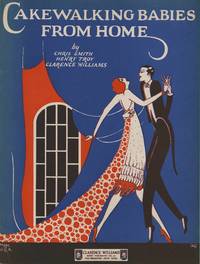
1924réf. List3678New York City: Clarence Williams 1924. Folio measuring 12 x 9 inches 5 pp. With an attractive period style illustration by Sydney Leff with his printed signature in the lower right corner. Fine condition. A very scarce surviving example of the sheet music for "Cakewalking Babies from Home" a cornerstone early jazz-blues composition issued through Clarence Williams’s publishing enterprise at the moment when New Orleans–derived ensemble practice was reshaping American popular music. Written by Williams with Chris Smith and Henry Troy the piece bridges late ragtime syncopation and emerging small-group jazz textures. Though widely disseminated through performance and recording it appears to have circulated only sparingly as domestic sheet music. The song achieved lasting fame through the celebrated 1924 New York recording sessions by the Clarence Williams Blue Five Okeh 8256 featuring Eva Taylor vocal Louis Armstrong cornet Sidney Bechet soprano saxophone Clarence Williams piano and Buddy Christian banjo; a landmark early small-ensemble performance often cited for its dynamic Armstrong–Bechet interplay and its role in defining early jazz ensemble language.12 Circulating widely among classic blues singers vaudeville performers and musicians within Williams’s publishing network and the TOBA circuit the composition reflects the porous boundary between theatrical blues dance music and emerging jazz repertory in mid-1920s Harlem and Chicago. As noted in Smithsonian jazz educational materials “the roots of jazz are heard clearly… in ‘Cake Walking Babies from Home’”.3 Despite its well-documented performance and recording history institutional holdings of the sheet music itself appear extremely limited. We locate a single copy at the Stanley King Jazz Collection at Oberlin with none presently recorded in OCLC. 1 Brian Rust Jazz records 1897–1942 Arlington House Publishers 1978. 2 Tom Lord Jazz Discography Lord Music Reference Inc. 1992. 3 “Act 3. New York Introduction: 1924–1925” Smithsonian Louis Armstrong Education Kit https://amhistory.si.edu/jazz/education/Act3.pdf. Clarence Williams unknown
1924réf. List3678New York City: Clarence Williams 1924. Folio measuring 12 x 9 inches 5 pp. With an attractive period style illustration by Sydney Leff with his printed signature in the lower right corner. Fine condition. A very scarce surviving example of the sheet music for "Cakewalking Babies from Home" a cornerstone early jazz-blues composition issued through Clarence Williams’s publishing enterprise at the moment when New Orleans–derived ensemble practice was reshaping American popular music. Written by Williams with Chris Smith and Henry Troy the piece bridges late ragtime syncopation and emerging small-group jazz textures. Though widely disseminated through performance and recording it appears to have circulated only sparingly as domestic sheet music. The song achieved lasting fame through the celebrated 1924 New York recording sessions by the Clarence Williams Blue Five Okeh 8256 featuring Eva Taylor vocal Louis Armstrong cornet Sidney Bechet soprano saxophone Clarence Williams piano and Buddy Christian banjo; a landmark early small-ensemble performance often cited for its dynamic Armstrong–Bechet interplay and its role in defining early jazz ensemble language.12 Circulating widely among classic blues singers vaudeville performers and musicians within Williams’s publishing network and the TOBA circuit the composition reflects the porous boundary between theatrical blues dance music and emerging jazz repertory in mid-1920s Harlem and Chicago. As noted in Smithsonian jazz educational materials “the roots of jazz are heard clearly… in ‘Cake Walking Babies from Home’”.3 Despite its well-documented performance and recording history institutional holdings of the sheet music itself appear extremely limited. We locate a single copy at the Stanley King Jazz Collection at Oberlin with none presently recorded in OCLC. 1 Brian Rust Jazz records 1897–1942 Arlington House Publishers 1978. 2 Tom Lord Jazz Discography Lord Music Reference Inc. 1992. 3 “Act 3. New York Introduction: 1924–1925” Smithsonian Louis Armstrong Education Kit https://amhistory.si.edu/jazz/education/Act3.pdf. Clarence Williams unknown books
1964réf. 1513341964. unbound. Signatures by Percy Humphrey Jim Robinson Albert Burbank James "Sing" Miller Louis Barbario and Narvin Kimball who appended his instrument banjo to his signature decorate the verso of the album sleeve corners slightly bumped small stain on verso does not obscure signatures. 12 1/2" x 12 1/2". No place no date. Circa 1964. Fine condition. unknown
1964réf. 1513341964. unbound. Signatures by Percy Humphrey Jim Robinson Albert Burbank James "Sing" Miller Louis Barbario and Narvin Kimball who appended his instrument banjo to his signature decorate the verso of the album sleeve corners slightly bumped small stain on verso does not obscure signatures. 12 1/2" x 12 1/2". No place no date. Circa 1964. Fine condition. unknown books
réf. 651Editions Richard Meier 1987. Superbes illustrations de l'auteur sous forme d'une grande feuille in-8 dépliante. Tirage unique à 120 exemplaires alugraphiés n° & signés par l'artiste. Etat de neuf. Rarissime édition originale.
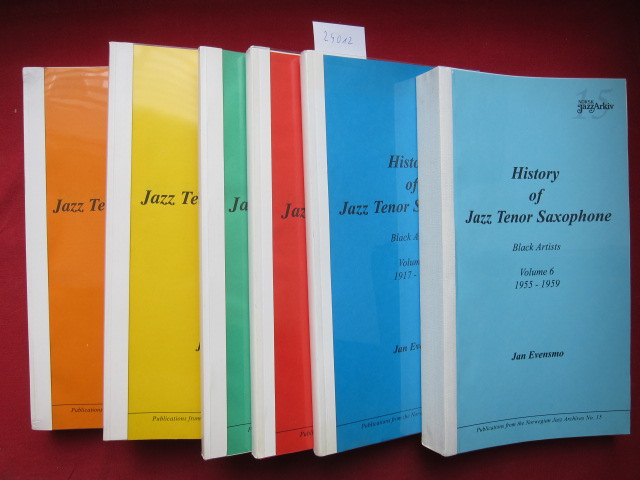
1996réf. 24012Oslo : Norsk Jazzarchiv, 1996. 141, 171, 220, 438, 403, 530 S. ; 30x16 cm , Org.-Broschur
1950réf. 223221950. Complete 1950 run of Jazz Journal Vol. 3 Nos. 1-12. London: L. M. Publications 1950. Complete run of the 1950 volume. Twelve issues with each issue around 20 pages. Black-and-white photo illustrations throughout. Printed paper wraps. Founded in 1948 by editor Sinclair Traill Jazz Journal became a critical platform for serious jazz criticism in Britain at a time when the country began appreciating the impact of African American musical innovation. This volume features twelve monthly issues each spotlighting legendary musicians in deeply reverent portraits: Louis Armstrong Baby Dodds Coleman Hawkins Fats Waller Earl Hines and others. The December cover has a Christmas theme. This archive is a window into Britain's postwar jazz awakening. The articles range from retrospectives to musicology and artist discographies. Floyd Levin's "The American Jazz Scene" captures the transatlantic tone of the journal mourning the death of Buster Wilson and lauding figures like Sidney Anderson and Kid Ory as vanguards of "authentic" jazz-framed as endangered in a postwar America increasingly seduced by commercialism. Meanwhile Derrick Stewart-Baxter's "Preachin' the Blues" traces rural-to-urban migration patterns in blues development analyzing Sleepy John Estes' discography and folk influences. The December issue features a full-page bibliophilic essay "A Case for Books" reviewing A Treasury of the Blues by W. C. Handy whom it names "the composer of the classic Memphis Blues and Joe Turner Blues" emphasizing the book's role in preserving "the true and historical survey of the blues." Taken together the essays discographies and image curation construct a coherent theory of jazz not only as music but as cultural heritage. Moderate and consistent soiling and creasing to wrappers; binding intact but some covers remain delicate. Occasional chipping at spine. Covers remain vivid with strong photographic contrasts. Overall good condition. A complete year's run of one of the earliest and most influential British jazz journals with signatures from leading musicians of the era such as Armstrong Dodds and Hawkins. unknown
1950réf. 223221950. Complete 1950 run of Jazz Journal Vol. 3 Nos. 1-12. London: L. M. Publications 1950. Complete run of the 1950 volume. Twelve issues with each issue around 20 pages. Black-and-white photo illustrations throughout. Printed paper wraps. Founded in 1948 by editor Sinclair Traill Jazz Journal became a critical platform for serious jazz criticism in Britain at a time when the country began appreciating the impact of African American musical innovation. This volume features twelve monthly issues each spotlighting legendary musicians in deeply reverent portraits: Louis Armstrong Baby Dodds Coleman Hawkins Fats Waller Earl Hines and others. The December cover has a Christmas theme. This archive is a window into Britain's postwar jazz awakening. The articles range from retrospectives to musicology and artist discographies. Floyd Levin's "The American Jazz Scene" captures the transatlantic tone of the journal mourning the death of Buster Wilson and lauding figures like Sidney Anderson and Kid Ory as vanguards of "authentic" jazz-framed as endangered in a postwar America increasingly seduced by commercialism. Meanwhile Derrick Stewart-Baxter's "Preachin' the Blues" traces rural-to-urban migration patterns in blues development analyzing Sleepy John Estes' discography and folk influences. The December issue features a full-page bibliophilic essay "A Case for Books" reviewing A Treasury of the Blues by W. C. Handy whom it names "the composer of the classic Memphis Blues and Joe Turner Blues" emphasizing the book's role in preserving "the true and historical survey of the blues." Taken together the essays discographies and image curation construct a coherent theory of jazz not only as music but as cultural heritage. Moderate and consistent soiling and creasing to wrappers; binding intact but some covers remain delicate. Occasional chipping at spine. Covers remain vivid with strong photographic contrasts. Overall good condition. A complete year's run of one of the earliest and most influential British jazz journals with signatures from leading musicians of the era such as Armstrong Dodds and Hawkins. unknown books