4 481 résultats
1930réf. 53742New York: Macmillan Company 1930. 8vo. 8 230 pp. Navy-blue publisher’s cloth gilt lettering minor rubbing to spine very minor shelfwear w/ d.j. printed on metallic silver coated paper Art Deco cover art of 1920s limousine and the well-dressed set in orange & black minor chipping to head & foot of spine very minor edgewear & creasing upper fore-edge couple very small closed tears w/ minor very small tape repair still a VG/VG- copy. First edition of this fast-paced novel set against the backdrop of a penniless Russian Prince exiled by the Revolution who makes a deal with a clever Chicago fashion buyer to act as chauffeur and purchase the sumptuous “Car of Croesus” rented at exorbitant rates to patrons wishing to appear as millionaires. Poole won the first Pulitzer Prize for The Family in 1918. Very scarce in the original dustjacket. Macmillan Company, hardcover
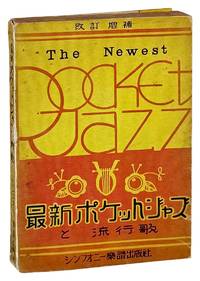
1938réf. 33168Tokyo: Symphony Publishing Company 1938. Very Good. Tokyo: Symphony Publishing Company 1938. Presumed First Edition. 12mo 15.5 cm; publisher's pictorial yellow and orange card wrappers lettered in black; 1923pp.; brief illus. sheet music throughout. Moderate wear and dust-soiled to wrappers small loss mid-spine briefly affecting text textblock a bit browned and foxed else Very Good bright and sound. Evidently unrecorded Japanese guide to popular jazz music the first half almost entirely in Japanese the latter half bilingual primarily in Japanese and English. Includes the music for classics by Jerome Kern like "Ol' Man River" and "Can't Help Lovin' Dat Man"; Romberg and Hammerstein's "Lover Come Back To Me"; Moises Simons' Cuban rumba foxtrot "The Peanut Vendor"; instantly recognizable classics like "Blue Moon" and "La Cucaracha"; and songs by Mabel Wayne and Irving Berlin. The compilation also includes songs in Spanish French and German accompanied by its Japanese translation. A fascinating and beautiful little guide documenting the rise in popularity of Jazz music in Japan and Tokyo in particular issued between the devastating earthquake of 1923 and the beginning of World War II. The import of Jazz to Japan was first heralded with the rise in trans-Pacific luxury liners. A Japanese version of "My Blue Heaven" reproduced here became available as early as the 1920s and the popular 1929 Japanese film "Tokyo March" employed Jazz in its soundtrack. The genre was popular enough that Columbia and Victor records formed subsidiary companies in Japan. The popularity of jazz in Japan continues to this day touted by one of the country's most prominent public and literary figures Haruki Murakami who first opened his Jazz club right out of college after falling in love with the genre at an Art Blakey and the Jazz Messengers show in Kobe in 1964. No copies of this work located in OCLC as of June 2025. References: "How Japan Came To Love Jazz" online interview with historian E. Taylor Atkins author of "Blue Nippon" "Jazz Messenger" by Haruki Murakami available online. Symphony Publishing Company unknown
1938réf. 33168Tokyo: Symphony Publishing Company 1938. Very Good. Tokyo: Symphony Publishing Company 1938. Presumed First Edition. 12mo 15.5 cm; publisher's pictorial yellow and orange card wrappers lettered in black; 1923pp.; brief illus. sheet music throughout. Moderate wear and dust-soiled to wrappers small loss mid-spine briefly affecting text textblock a bit browned and foxed else Very Good bright and sound. Evidently unrecorded Japanese guide to popular jazz music the first half almost entirely in Japanese the latter half bilingual primarily in Japanese and English. Includes the music for classics by Jerome Kern like "Ol' Man River" and "Can't Help Lovin' Dat Man"; Romberg and Hammerstein's "Lover Come Back To Me"; Moises Simons' Cuban rumba foxtrot "The Peanut Vendor"; instantly recognizable classics like "Blue Moon" and "La Cucaracha"; and songs by Mabel Wayne and Irving Berlin. The compilation also includes songs in Spanish French and German accompanied by its Japanese translation. A fascinating and beautiful little guide documenting the rise in popularity of Jazz music in Japan and Tokyo in particular issued between the devastating earthquake of 1923 and the beginning of World War II. The import of Jazz to Japan was first heralded with the rise in trans-Pacific luxury liners. A Japanese version of "My Blue Heaven" reproduced here became available as early as the 1920s and the popular 1929 Japanese film "Tokyo March" employed Jazz in its soundtrack. The genre was popular enough that Columbia and Victor records formed subsidiary companies in Japan. The popularity of jazz in Japan continues to this day touted by one of the country's most prominent public and literary figures Haruki Murakami who first opened his Jazz club right out of college after falling in love with the genre at an Art Blakey and the Jazz Messengers show in Kobe in 1964. No copies of this work located in OCLC as of June 2025. References: "How Japan Came To Love Jazz" online interview with historian E. Taylor Atkins author of "Blue Nippon" "Jazz Messenger" by Haruki Murakami available online. Symphony Publishing Company unknown books
1954réf. 128140Couverture souple. 74 revues de 32 pages. Le N° 2 est manquant.
1921réf. bf4868Editions Sélection, Bruxelles Sélection Abraxas-libris Broché 1921 MAGNIFIQUES POCHOIRS TRES EXPRESSIFS ET MAGNIFIQUEMENT COLORES DE GEO NAVEZ. Miousic. Sept poèmes à la louange de la musique baroque. Bruxelles, Editions Sélection. 1921. In-4 (23,4 x 32,5 cm), broché, 45 pages, édition limitée à 132 exemplaires, un des 100 exemplaires sur papier de Hollande, van Gelder Zonen (ici le n°40), orné de sept dessins rehaussés au pochoir par Géo Navez (peintre belge, 1890-1975). L'auteur, Paul-Gustave van Hecke (1887-1967), entre autres critique, marchand et collectionneur d'art à la pointe de toutes les avant-gardes tant au plan esthétique qu'idéologique, s'est fait le promoteur de l'expressionisme belge et international, mais aussi du dadaïsme et du surréalisme, Cet ouvrage est considéré comme l'un des plus anciens livres illustrés abordant le jazz ; excellent état. Livraison a domicile (La Poste) ou en Mondial Relay sur simple demande.
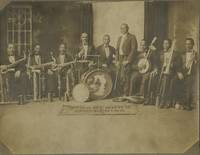
1922réf. BK0009Pittsburgh: Sissman Studio 1922. Photograph measuring approximately 8 x 10 inches. Studio portrait of nine African American musicians posed with saxophones brass instruments violin banjo drums and other instruments with a rug prominently lettered "Bradford's Orchestra" at their feet. Photographer identified as Sissman Studio of Pittsburgh. Some wear and toning particularly at edges and corners; generally well preserved. An early photograph of Bradford's Orchestra an African American ensemble active in Pittsburgh under the direction of Walter Felix Bradford during the early 1920s. Nine musicians pose with an unusually extensive display of their instruments while the orchestra's name is incorporated prominently into the composition on a rug at their feet. The photograph was made by Sissman Studio a Pittsburgh photographic firm later located on Centre Avenue in the city's Hill District. Contemporary sources document Bradford's Orchestra performing over Pittsburgh's pioneering radio station KDKA during this period. A December 1922 program announced an 8:30 evening "Concert by Bradford's Orchestra under the direction of Walter Felix Bradford" with a varied program ranging from Mendelssohn and Verdi to popular marches and light orchestral music.1 The group is also listed as performing on KDKA in the Utica Observer-Dispatch in December 1922.2 The present photograph appears to be an otherwise unrecorded studio portrait of the same Pittsburgh organization. Bradford belonged to a substantial but poorly documented community of African American bandleaders and musicians working in Pittsburgh during the early twentieth century. Later accounts of musical life in the Hill District place him alongside such local ensembles as the Harlem Troubadours Gerty Long and Her Night Hawks and Walt Rainey's High Schoolers.3 These local orchestras formed an important part of the musical culture from which Pittsburgh would subsequently produce an extraordinary generation of nationally prominent Black musicians. 1 "Monday December 11 1922" Radio Broadcasting News 2 no. 28 December 9 1922 6. 2 "To-day's Radio Program" The Utica Observer-Dispatch December 11 1922 5. 3 Hugo A. Freund "Working the Seams: African American Professional Performers Moving Between White Public Culture and African American Private Culture" Pennsylvania Folklife 45 no. 2 1996: 91-97. . Sissman Studio unknown
1922réf. BK0009Pittsburgh: Sissman Studio 1922. Photograph measuring approximately 8 x 10 inches. Studio portrait of nine African American musicians posed with saxophones brass instruments violin banjo drums and other instruments with a rug prominently lettered "Bradford's Orchestra" at their feet. Photographer identified as Sissman Studio of Pittsburgh. Some wear and toning particularly at edges and corners; generally well preserved. An early photograph of Bradford's Orchestra an African American ensemble active in Pittsburgh under the direction of Walter Felix Bradford during the early 1920s. Nine musicians pose with an unusually extensive display of their instruments while the orchestra's name is incorporated prominently into the composition on a rug at their feet. The photograph was made by Sissman Studio a Pittsburgh photographic firm later located on Centre Avenue in the city's Hill District. Contemporary sources document Bradford's Orchestra performing over Pittsburgh's pioneering radio station KDKA during this period. A December 1922 program announced an 8:30 evening "Concert by Bradford's Orchestra under the direction of Walter Felix Bradford" with a varied program ranging from Mendelssohn and Verdi to popular marches and light orchestral music.1 The group is also listed as performing on KDKA in the Utica Observer-Dispatch in December 1922.2 The present photograph appears to be an otherwise unrecorded studio portrait of the same Pittsburgh organization. Bradford belonged to a substantial but poorly documented community of African American bandleaders and musicians working in Pittsburgh during the early twentieth century. Later accounts of musical life in the Hill District place him alongside such local ensembles as the Harlem Troubadours Gerty Long and Her Night Hawks and Walt Rainey's High Schoolers.3 These local orchestras formed an important part of the musical culture from which Pittsburgh would subsequently produce an extraordinary generation of nationally prominent Black musicians. 1 "Monday December 11 1922" Radio Broadcasting News 2 no. 28 December 9 1922 6. 2 "To-day's Radio Program" The Utica Observer-Dispatch December 11 1922 5. 3 Hugo A. Freund "Working the Seams: African American Professional Performers Moving Between White Public Culture and African American Private Culture" Pennsylvania Folklife 45 no. 2 1996: 91-97. . Sissman Studio unknown books
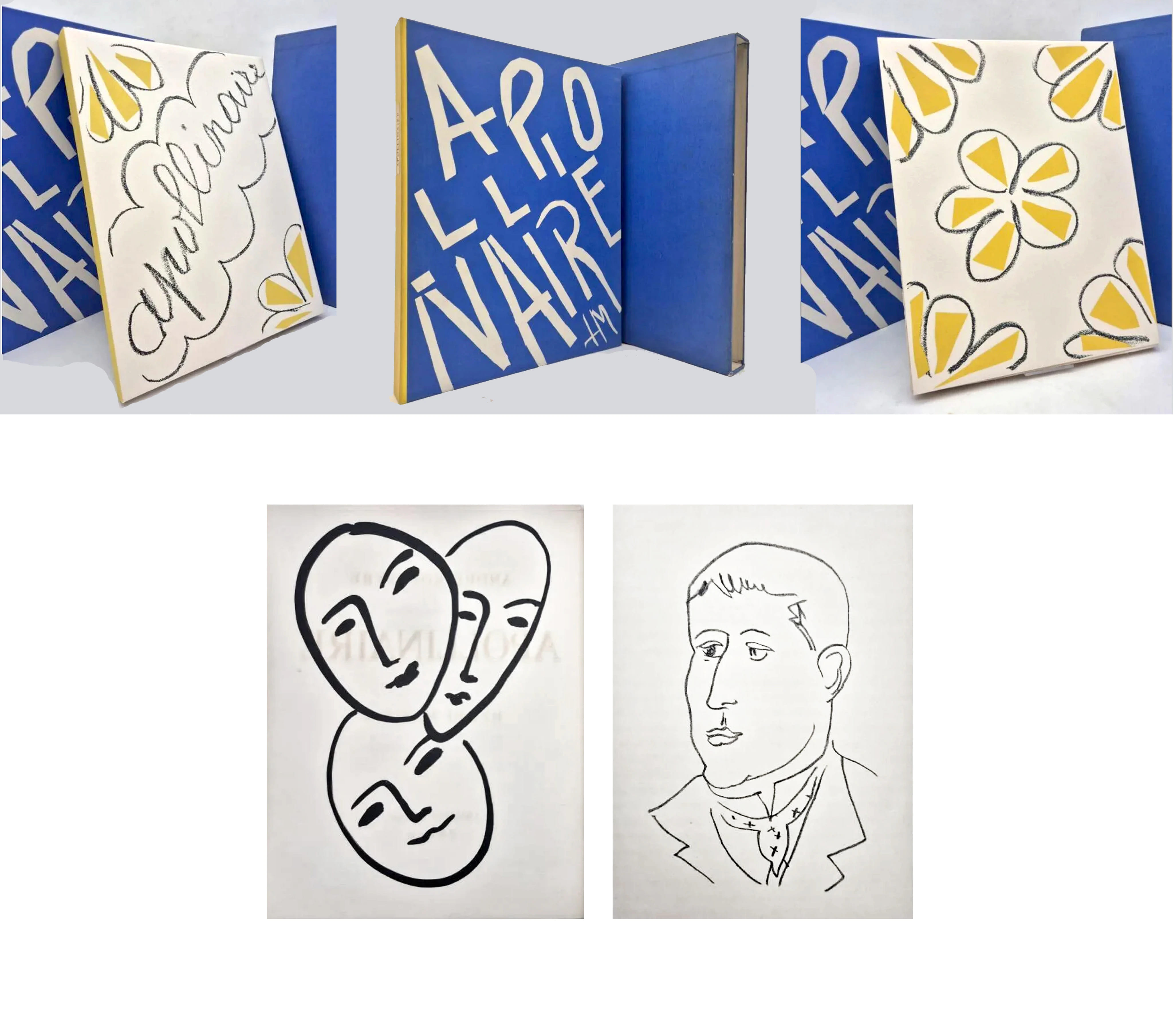
1952réf. 3922Raison d'Être, Paris 1952. 1 volume in-4 (330 x 250 mm), en feuilles, 86 pp + fnch., sous couverture illustrée rempliée, chemise cartonnée décorée et étui recouverts de papier jaune bleu et blanc. Couverture illustrée d'une lithographie en couleur, 1 FRONTISPICE ET 7 LITHOGRAPHIES ORIGINALES PAR HENRI MATISSE en hors-texte sur fond teinté. 3 linogravures en ornementation du texte. Le cartonnage bleu blanc jaune est décoré d'après des papiers découpés. Tirage : 30 + 300 + XX Arches. Celui-ci 1 des 300 numérotés sur Arches à la forme. 11 original prints : 7 lithographs, 3 small linocuts, and 1 etching with acquatint. ONE OF 300 COPIES ON VÉLIN D'ARCHES. (12 7/8 x 9 7/8 inch). FRONTISPIECE AND 7 ORIGINAL LITHOGRAPHS BY HENRI MATISSE. UNBOUND AS ISSUED, ORIGINAL DECORATED WRAPPERS AFTER MATISSE. Exemplaire très beau, le cartonnage décoré parfaitement conservé, quelques très faibles reports internes comme habituellement.
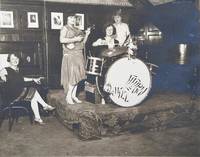
1920réf. 62329Portland OR Spokane WA San Francisco CA & Seaside OR: Lyle E. Lewis Dance Orchestra ca. 1920-1944. Eight vols. 1st - 4to. 48 pp unpaginated. on thick black paper w/ 100’s of pieces of ephemera mounted and laid-in including 7 silver gelatin photographs sized from 5 x 7 in. up to 8 x 10 in. many different TLS and ALS most on stationery letterhead for assorted hotels KGW Radio and others many newspaper clippings tickets promotional brochures advertising cards dance tickets along with a spoof printed “Wanted” notice for Ted Mullen alias Sourdough Sullen with $ 500 million reward offered and large double-page advertising broadside on yellow-gold tinged thick paper stock at rear for gig in Astoria OR under the auspices of the Co. L 186th Infantry Oregon National Guard. Contemporary pebbled black boards punch-sewn at gutter margin chipping edgewear still VG- exemplar; 2nd - 4to. 92 pp unpaginated w/ majority of leaves on ruled paper including 18 leaves of mylar sleeves featuring the majority of the 23 silver gelatin photographs most sized 8 x 10 in. photographer’s imprints on versos remainder w/ clippings promotional announcements tickets broadsides ALS & TLS documents throughout along with a long radio program script. Contemporary 2-ring blue cloth binder rounded corners some edgewear rubbing still VG; 3rd-7th - 16mo. Five daily diaries Approx. 700 pp unpaginated. w/ approx. 4000 words manuscript annotations in ink & pencil throughout featuring some laid-in miniature photos receipts business cards including 1 photographic souvenir business card for Cole McElroy’s Dance Band and Cole McElroy’s Spanish Ballroom 1 tiny postage stamp photo of Lewis at his bungalow in Seaside all bound in cloth some wear still VG grouping; 8th - 12mo. Approx. 150 pp unpaginated. of ruled paper mostly typescript ink & pencil manuscript some ruling throughout annotations & checkmarks last 4th or so blank. Flexible black cloth 6-ring binder business card for Lewis as Commercial Agent for ACME Fast Freight taped in on front pastedown 3 blank routing order forms in red & black some scuffing edgewear still VG all from the library of Genevieve Martha Lewis Levin 1911-1994. This unusually well-preserved archive of a Roaring 20’s Jazz Orchestra musician and Band Leader in the Pacific Northwest reveals the exuberance and business success of this largely forgotten artist through his successful years before foundering during the Great Depression. Both scrapbooks open with clippings thank you and recommendation letters as well as dance broadsides and photographs during 1926 at the height of Lyle Lewis’s orchestra appreciation. Testimonials include B.J. Saad who owned the Garden Dancing Palace and stated “I have taken the Garden which is second to no other ballroom west of Chicago. That is why I have secured Lyle Lewis recognized as one of the best orchestra leaders on the Coast.” C.W. Craig of Lipman Wolfe & Co. department store extolls that Jazz music dance held at the Multnomah Hotel March 16 1926 that “I don’t think we have ever enjoyed better or more up to date dance music than that furnished by your splendid aggregation.” Broadsides and notices advertise the Lewis Jazz Orchestra playing the Grand Ball Room at the Masonic Temple Congress Hotel leading McElroy’s Oregonians at the McElroy’s Spanish Ballroom the Dessert Hotel Oasis near Spokane parties for Studebaker and more. One of the mounted letters includes a rather sad severance letter signed by Cole McElroy explaining the circumstances of Lyle Lewis’s leaving stating “I realise that you were a victim of circumstances. On account of the fact that you had a fine band organized. . . certain music masters of the theatre jobs saw fit to take your men away from you thereby breaking up your fine band and forcing me to make a deal for another organization.” McElroy 1888-1947 was known as “Pop” McElroy was a popular band leader who during the years before World War I and after played the Palm Gardens often and had great success in his McElroy Spanish Ballroom which opened in 1926 and then opened another Seattle McElroy Ballroom in 1928. Several TLS on letterheads include those for KXL Radio station KGW Radio Station and the KOIN Studio Director for The Portland News which played three nights a week on air for over six months. The many photographs capture the Lyle Lewis band joking around with their instruments on the road fully arrayed on stage in the Radio Station posing at various venues stages and even one as late as 1939 conducting the Lyle E. Lewis Dance Orchestra. The band included Cluet Mansfield formerly with Henry Halsted band William Webber on drums Eddie Scroggins & Frank Champion as sax players G. Berardinelli on Bass and also played dances at the Irvington Club Multnomah Athletic Club and for a while with the historic Congress Hotel in Portland which had been the City’s first reinforced concrete building erected during the Progressive Era and by 1924 expanded to 119 rooms with vibrant Jazz ballroom. The daily diaries for 1929 and 1930 show that Lewis regularly played at the Cotillion Hall now the Crystal Ballroom initially at $ 7.00 per night in 1929 and then steadily dropping to less than half by 1933. He writes about traveling for a gig in San Francisco with Mansfield in 1929 leaving Tuesday and arriving Wednesday Sept. 18 1929 driving 40 mph and getting 19 miles to the gallon with a drive made in 19 hours and 15 minutes. He played extensively at the Bungalow Club in Seaside OR which had opened originally June 19 1920 and for more than 25 years was the destination for the biggest names in the Big Band Jazz era including Lyle E. Lewis Cole McElroy Duke Ellington Bob Crosby Glenn Miller and tragically became connected with the death of Jimmie Lunceford who died from a heart attack just before playing his last set at the Bungalow after playing McElroy’s Ballroom in Portland 2 nights before. Lewis 1890-1948 was a popular Portland Oregon based jazz band & orchestra leader who managed to lie about his age and enlist at 15 in the Oregon National Guard Co. G 3rd Battalion served for three years and in May 1910 married Genevieve Franklin while working as salesman and musician before World War I Following the War he quickly became a successful band leader including successful stints with the Cole McElroy Spanish Ballroom Congress Hotel Multnomah Hotel Bungalow Garden Ballroom as well as the Coronado Hotel in California. As indicated by the daily diaries he maintained a fairly close relationship with his daughter Genevieve “Martha” but became largely estranged from his wife Genevieve living in separate rooming houses or hotels. Still in her position as a sales manager she managed to convince Meier & Frank to hire him as their house band for store functions and the restaurant while during the Great Depression he mostly worked for the US Forest Service mapping division while his show business largely disappeared. By 1943 he became the commercial agent for ACME Fast Freight where he worked as commercial agent until his death. This cataloguer could find no surviving recorded discography record for Lyle E. Lewis and his assorted incarnations although there are a few recordings for the Cole McElroy Band from 1926-1928 which most likely would have included him as band leader and musician. Lyle E. Lewis, Dance Orchestra, hardcover
1990Signed and inscribed by Oscar Peterson upon front free endpaper.. 294 pages. "For the millions who know and love the music of Oscar Peterson, here's the definitive biography by his friend and former Down Beat editor, Gene Lees." - from dust jacket. Black and white photographic plates. Clean and bright with negligible wear. Occasional underlining in blue ink. Dust jacket preserved in brodart. A lovely copy signed by the hand of one of the greatest pianists the world has ever known. Book
réf. GOR005342892Paperback. Very Good. paperback
1962réf. 172605Paris: Michel Salou 1962. The band's expanded voicings added orchestral sonority to rhythmic power An evocative sequence: one focusing on Blakey at the kit a particularly luminous shot another showing the front men playing percussion two of Freddie Hubbard soloing one of Curtis Fuller and another of Cedar Walton. Blakey 1919-1920 was a master percussionist and the Jazz Messengers which he led for over 30 years was "the most famous academy in jazz" Cook & Morton. The lineup here is Blakey drums Wayne Shorter tenor sax Freddie Hubbard trumpet Curtis Fuller trombone Cedar Walton piano and Jymie Merritt bass. When Lee Morgan left the band Blakey brought in Hubbard and Fuller with Cedar Walton coming in for Bobby Timmons. The new agglomeration formed perhaps "the most adventurous of Messenger lineups. The band's expanded voicings added orchestral sonority to rhythmic power". The photographer Michel Salou worked as a music executive producing albums by among others Sun Ra Live in Paris at the "Gibus" 1973 the Mal Waldron Trio Ursula 1978 and the French pianists George Arvanitas and Rene Urtreger. He also appears in the annals of the Art Ensemble of Chicago as their "first booking agent. who helped them secure concert dates across France and elsewhere in Europe" Steinbeck p. 130. His excellent work as a lensman appears to have gone virtually unnoticed except that the National Portrait Gallery holds a single print of Ray Charles in performance. Six original carbon print photographs 240 x 180 mm printed on heavy stock paper inscribed on versos in blue ballpoint: "clichés Michel Salou". In excellent condition. Paul Steinbeck Message to Our Folks: The Art Ensemble of Chicago 2017. unknown
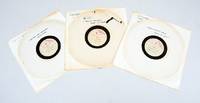
1960réf. 149122Chicago: Hugh Hefner c. 1960s. Lay back and think of Ellington A trio of discs cut specially for Playboy founder Hugh Hefner comprising two recordings by Duke Ellington "Mood Indigo" and "Sophisticated Lady" and one by Artie Shaw "Begin the Beguine". Each label printed in pink: "Custom Pressed by Jukeboxes Unlimited for Hugh M. Hefner" and bearing Playboy's rabbit logo and typed identification. "Hugh Hefner's initial exposure to music and especially to jazz like that of most people was through vinyl recordings and he's always been a record collector" Farmer p. 71. He was also the owner of a magnificent 1946 Wurlitzer 1015 jukebox see his sale at Julien's Auctions 30 November 2018. That lot was offered with 24 "original" 78rpm recordings by a group of artists including Artie Shaw Frank Sinatra Lena Horne and Harry James. Whether these discs were specially cut as here we have not been able to ascertain. What is certain however is the Playboy kingpin's love of jazz. "In this invented lifestyle for the modern age Hef decided that jazz was the go-to soundtrack. Jazz was the hippest music around and had been for decades. Playboy championed jazz at a time when most music critics were looking in all the wrong places for a truly American art form. Even the most forward-thinking composers of the era the Aaron Coplands and their ilk were still just building upon the European tradition. Jazz was bursting at the seams of the staid and academic classical world ripe with musical development rivalling the greatest of the old European masters. In 1957 Playboy produced a two-record set of their Jazz All-Star series featuring performers from Pops to Frank Sinatra to Dave Brubeck. They produced a second edition in 1958 and a third in 1959. Hefner then held the first Playboy Jazz Festival at Chicago Stadium in 1959" Jeff Fitzgerald at allaboutjazz website 28 September 2017. As a coda the jazz-soaked "Playboy's Theme" written and performed by Cy Coleman was the signature tune of the regular late night TV show Playboy's Penthouse. 3 aluminium-cored one-sided 10 inch acetate discs each with original label both Ellington discs with additional drive-pin hole; original plain paper sleeves annotated in ink possibly in Hefner's hand. Sleeves rather brittle torn and chipped with some loss but just about intact; a few abrasions and finger marks to discs. Patty Farmer and Will Friedwald Playboy Swings!: How Hugh Hefner and Playboy Changed the Face of Music 2015. unknown
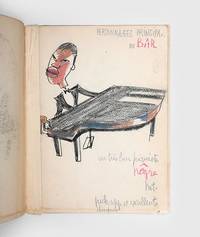
1937réf. 171091Paris: c. 1937. Jazz à la parisienne From the collection of Rolling Stones drummer and jazz aficionado Charlie Watts with his posthumous bookplate: a delightful and highly unusual illustrated "prospectus" of the requisites for running a successful bar in Paris in the late 1930s. First and foremost you'll need "un très bon pianiste nêgre" along with "2 barmaids" and of course "2 ou 3 nêgresses à laisser vagabonder dans le bar". There then follow three pages that offer pen portraits of various artists that you might like to include on the bill along with their contact details. These include "acteurs animant la soirée ou la nuit": character actor and singer Yves Deniaud 1901-1959 Neapolitan sinti jazz guitarist Henri Crolla 1920-1960 "a travaillé avec Djingo Rainart sic du Hot-club de France" "Trois Jeunes - chanteurs s'accompagnant à la guitare et à la flute" including another well-known actor Guy Decomble 1910-1964 and the photographer Pierre Jamet 1910-2000 a close friend of Robert Doisneau and Willy Ronis. The flamboyant impresario Henri Leduc winds up the volume described as a "personnage comique indispensable à l'atmosphere d'un bar". After the Liberation Leduc a native of Montmartre set up Le Bar Vert on the rue Jacob "the first café-restaurant to play American music" Cowan & Steward p. 234. Our unidentified artist concludes by remarking "We can find for you absolutely everything that you could possibly need elephants - naked ladies - non naked ladies - a 'bus - &c. &c. - whales". Quarto. Five pages of original artwork in pencil crayon and pastel with accompanying text. Commercial sketchbook by L. Bourdillon original blue card wrappers. Variably sunning to wrappers which show lght signs of handling contents toned pale tidemark to edges of leaves front blank professionally restored at the corners but overall very good. Alexander Cowan & Jill Steward eds. The City and the Senses: Urban Culture Since 1500 2007. unknown
1927réf. 144081927 P., 1927-1929, 25 revues reliées en 1 vol. in-4° (315 x 240 mm) 1/2 basane beige, dos à 5 nerfs, titre et fleurons dorés, plats de papier marbré.Petite épidermure au dos due à une ancienne étiquette, manque certaines 4e de couvertures, très bel exemplaire par ailleurs.
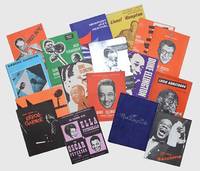
1950réf. 137205Late 1950s - early 70s. Excellent group of UK tour programmes for a constellation of jazz greats: Armstrong 2 Basie 8 Bechet Brubeck 2 Nat King Cole Eddie Condon Sammy Davis Jr. 2 Tommy Dorsey Ellington 4 Errol Garner 3 Lionel Hampton Ella Fitzgerald and Oscar Peterson Woody Herman Harry James JATP 4 Newport Jazz Festival Glen Miller Earl Hines and Jack Teagarden Bal du Moulin Rouge. 36 programmes quarto. Illustrated throughout. Original pictorial wrappers wire-stitched as issued. Overall in excellent condition. unknown
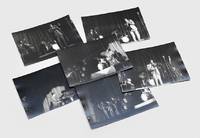
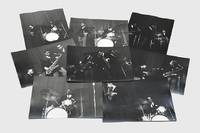
1960réf. 172596Paris: Michel Salou 1960. Superb images of the Messengers live in Paris An outstanding series of "in the moment" images showing one of the great Messengers lineups captured in Paris probably at the Olympia in 1960. The lineup comprises Blakey drums Wayne Shorter tenor sax Lee Morgan trumpet Bobby Timmons piano and Jymie Merrit bass. Blakey 1919-1920 was a master percussionist and the Jazz Messengers which he led for over 30 years was "the most famous academy in jazz" Cook & Morton. Wayne Shorter was relatively new to the band and his playing lent a "dark corrosive edge" to the front line while on ballads his tone became "softly beseeching". Lee Morgan "arguably the defining figure of hard bop" had been with Blakey since 1958. The photographer Michel Salou worked as a music executive producing albums by among others Sun Ra Live in Paris: At the "Gibus" 1973 the Mal Waldron Trio Ursula 1978 and the French pianists George Arvanitas and Rene Urtreger. He also appears in the annals of the Art Ensemble of Chicago as their "first booking agent. who helped them secure concert dates across France and elsewhere in Europe" Steinbeck p. 130. His excellent work as a lensman appears to have gone virtually unnoticed except that the National Portrait Gallery holds a single print of Ray Charles in performance. Eight original carbon print photographs 240 x 180 mm 6 landscape 2 portrait printed on heavy stock paper verso with Salou's identifying note in pencil. In excellent condition. Richard Cook & Brian Morton The Penguin Guide to Jazz Recordings eighth ed. 2006; Paul Steinbeck Message to Our Folks: The Art Ensemble of Chicago 2017. unknown
1928réf. 173491Austria: 1928-33. Girljazzband" wows 1920s Austria A delightful Jazz Age scrapbook that doubles as liber amicorum and guest book assembled by the pianist and singer Anny Gloss recording in part her career with the Ninon Fleuron Jazz Ladies opening a window into the experiences of European women in jazz during the music's formative years. The first set of newspaper clippings record that in 1928 Gloss was teamed with the American "Jazz Queen" Elsie Teele at the "charming and elegant" Viennese bar the Bonbonnière with Teele billed as "the female Whiteman" - she gave the Austrian premier of Gershwin's Rhapsody in Blue in 1927. Much of the album is then devoted to Gloss's experiences at Hotel Radetzky in Hinterbrühl Lower Austria where she performed as part of the Ninon Fleuron Jazz Ladies. At the time the other members of the band were the eponymous Ninon Fleuron drums pseudonym of Rosa Sophie Radio 1899-1974 Mariska Gerö violin and Gretl Heller piano. One advert mentions them "Singing the Latest American Song-hits" while a newspaper clipping praises their "rendering of classical music". The album contains numerous messages sometimes addressed to her directly from friends audience members and well-wishers. While most of these are in German some are in English "Your music makes me feel 10 years younger". The Ninon Fleuron Jazz Ladies which had various personnel came to an abrupt end with Hitler's invasion of Austria in 1938. Gloss also performed under the name Anni Hölzl as demonstrated by the cast list for a 1931 performance of Der Kärntner Totentanz and the programme for a concert in which she had a soprano solo 1933. Octavo 241 x 190 mm ff. 60 final 20 ff. blank. Contents generally on rectos only numerous items of ephemera pasted in including c.20 newspaper clippings 15 original silver gelatin photographs of which two are signed by Ninon Fleuron messages and autographs in various hands one watercolour sketch of the Karlskirche Vienna one concert programme loosely enclosed. Original patterned cloth covers light orange endpapers. Binding just slightly shaken otherwise in excellent condition. hardcover
1953réf. 3267Paris, Pierre Lecuire éditeur, 1953. Un volume in-8 (25,2 x 16,5 cm) en feuilles, 108 p., couverture rempliée illustrée d'une lithographie. - Édition originale du premier livre de Pierre Lecuire, né de la collaboration du poète avec Nicolas de STAËL (1914-1955) qui composa pour l’occasion : - UNE GRANDE LITHOGRAPHIE EN COULEURS SUR UN FEUILLET REMPLIÉ SERVANT DE COUVERTURE. - DEUX BURINS ORIGINAUX À PLEINE PAGE, l'un introduisant la lecture de l'ouvrage et l'autre le refermant. - L'exemplaire est enrichi et personnalisé par une belle lettre de Lecuire et un envoi autographe signé au justificatif à Raymond Schawb. - Note historique et bibliographique : à sa parution l'ouvrage constituait le texte le plus important qui ait été écrit sur la peinture de Nicolas de Staël. - Tirage à 210 exemplaires signés par l’auteur à la justification, celui-ci faisant partie des 190 sur vélin d’Arches (n°139, dédicacé). - ENGLISH (Short description): In-8 (25.2 x 16.5 cm.), in loose sheets as published, printed wrappers with an original colour lithograph and two original burins by Nicolas de Staël. No.129, one of 190 copies on Vélin d'Arches from a total edition of 200, here with an ink autograph dedication and an autograph letter by the author. Mint condition, perfect, very scarce condition.
réf. 12210Bruxelles: Sélection, 1921. In-4, 45-(3) pp., broché (couverture restaurée). 4to, 45-(3) p., softcover (restored cover).
1958réf. 4535Editions Le Livre Contemporain 1958. In-12 broché de 216 pages au format 18,5 x 12 cm. Superbe couverture illustrée par Piem. Dos carré insolé avec deux légères traces de pliure. Plats légèrement brunis avec infimes frottis aux coins. Intérieur frais. Exemplaire non coupé, imprimé sur beau papier ( alfa d'édition ). Complet de la rare et amusante bande annonce, ainsi que de la double feuille avec esquisse d’une classification des chansons. Edition originale en superbe état. Peu courant. Précieux et rarissime exemplaire enrichi d'une dédicace autographe, signée, de Boris Vian au peintre Surréaliste Maurice Rapin. Provenance idéale.
réf. 687145Au Siège - Pierre Nourry Paris 1935-1967 TETE DE COLLECTION "JAZZ HOT". 264 numéros de cette revue in-4 ( 270 X 210 mm ) d'environ 24 pages par numéro. Très importante collection de cette revue doyenne mondiale des revues de Jazz encore en activité. Innombrables illustrations. Nous proposons l'INTEGRALITE DES NUMEROS D'AVANT GUERRE du numéro 1 de 1935 au numéro 32 de 1939. Première série rarissime. + la nouvelle série du numéro 1 de 1945 au numéro 237 de 1967. Il manque à cette collection les années 1960 et 1961 ( soit 8 numéros ) et le numéro 200. Les numéros spéciaux sont présents ( voir détail à la suite ). A noter de nombreuses contributions ( articles et revues de presse ) de Boris VIAN. A part quelques numéros abimés ( voir détail à la suite ), cette collection est en bonne condition.************************************************************- 32 premiers numéros de 1935 à 1939. - 1935 N° 1 à n° 6. ( Duke Ellington, Lucky Millinder, Léon Vauchant, Benni Goodman ). Couvertures effrangées avec petits manques, papier collant sur les dos. Le numéro 1 a des coupures de presse collées sur les 2 premiers feuillets.- 1936 n° 7 à n° 13 ( Amstrong, Redman, Ekyan, Milton Mezz Mesinow ). Le numéro 9 a les plats détachés ( mais présents ) papier collant sur le dos du N°12, second plat absent. - 1937 n° 14 à 21 ( Earl Hines, Philippe Brun, Teagarden Sullivan, Hill, Reinhardt, Wells, Lunceford ). Papier collant sur le dos du N°20.- 1938 n° 22 à 28 ( Newton, Combelle, Mary Lou Williams, Grappelly, Webb, Coleman, Bechet ). Petits trous de brochage du numéro 23 au numéro 28.- 1939 n° 29 à 32 ( Jess Stacy, Basie, Stewart, Ladnier ). Petits trous de brochage sur les numéros 29 à 32 papier collant au dos du numéro 32.Cette première série est publiée bilingue français-anglais. ************************************************************- Nouvelle série 1945 à 1967. - 1945 n° 1 à 3 ( Ellington, Reinhardt, Amstrong ). - 1946 n° 4 à 11 ( Grappelly, Hodges, Brun, Basie, Ekyan, Combelle, Stewart, Gillepsie ). - 1947 n° 12 à 18 ( Hubert Rostaing, Michel Warlop ). - 1948 n° 19 à 28 ( Festival Nice . ) - 1949 n° 29 à 39. - 1950 n° 40 à 50 ( Spécial 1935-1950, Ellington, Salon international ). - 1951 n° 51 à 61. - 1952 n° 62 à 72. - 1953 n° 73 à 83. - 1954 n° 84 à 94 ( Salons. ) - 1955 n° 95 à 105 ( Amstrong, Roy Eldridge ). - 1956 n° 106 à 116 ( Dizzi Gillepsie. ). - 1957 n° 117 à 127 ( Miles Davis, Mitt Jackson, Erroll Garner, Coleman Hawkins, J.J. Johnson, Ellington, etc. ). - 1958 n° 128 à 138 ( Don Byes, Festival de Cannes et Knokke, Sarah Vaughan, Ellington ). - 1959 n° 139 à 142 ( Lee Morgan, Sonny Rollins, Silver, Lester Young ). - 1962 n° 172 à 182 ( Coltran, Freddie Hubbard, Curts Fuller, Nouvelle Orléans, Jazz et Siné, Ray Charles, Festival Juan, Comblain, Rollins, Coltrane, King Oliver ). - 1963 n° 183 à 193 ( Cannon Ball Adderley, Thelonious Monk, Jaspar, Jeanking, Miles et Gréco, Smith, Kirk ). - 1964 n° 194 à 204 ( Lucien Nelson, Boris Vian, Mister T, Charlie Mingus, Fitzgerald, Mimi Perrin, Dave Brubeck, Arvanitas, Johny Griffin ). Manque n° 200. - 1965 n° 205 à 215 ( John Lee Hocker, Amstrong, Evans, Montgomery, Thomas ) Attention Manque n° 207. - 1966 n° 216 à 226 ( Cecil Taylor, Mc Coy Tyner, Don Cherry, James Brown, Ravi Shankar, Earl Hines, Ellington, MJR, Harlem ). - 1967 n° 227 à 237 ( S. Rollins et Sartre, Taylor, Don Cherry à Notre Dame, Max Roach, Abbey Lincoln, Coltrane, Spécial Boris Vian ). - + Numéro spécial Nouvel an 1948 / Numéro spécial 1949 / Numéro spécial 1950 / 1 double Juillet-Août 1958.
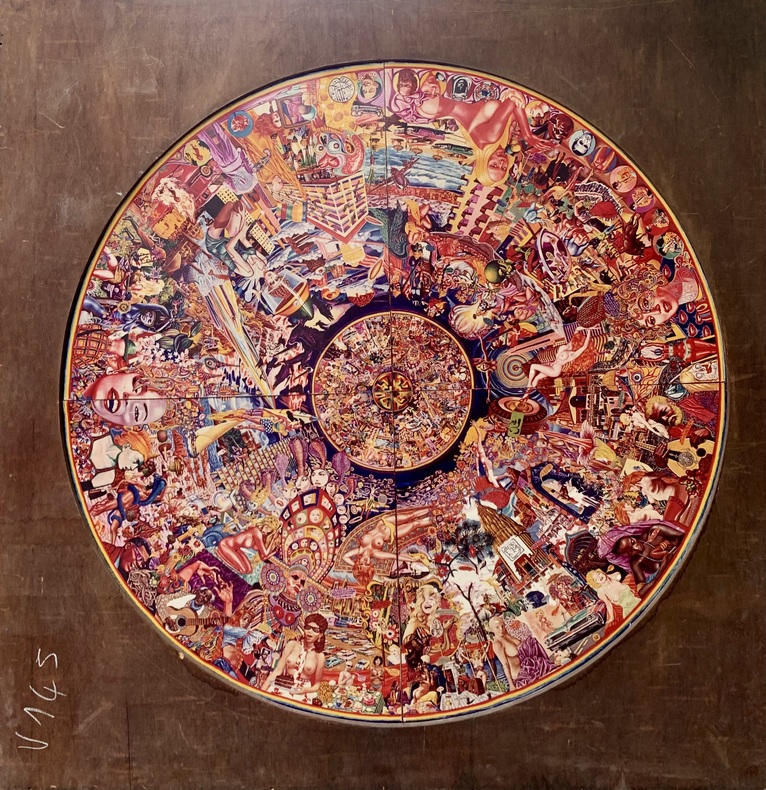
réf. awd-1157Important tirage photographique en couleurs monté dans un encadrement carré en bois, ajouré en cercle au centre. Très rare épreuve, peut-être tirée pour un essai de couleurs lors de la commercialisation d’une affiche en 1969. Mentions Mati Klarwein, Grain of Sand, Robert Crandall Assoc., 1968 sur le côté avec échelles chromatiques, petits manques de pigmentation dans la partie basse (111,5/117,2 cm dans un cadre de 122/122 cm).
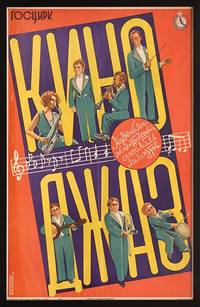
1937réf. 124905Moscow: Upravlenie tsirkov V.K.I. Circus Administration 1937. Uncommon print run of just 8000 copies. An advertisement for the Soviet Little peoples' circus group the "Musical and Eccentric Group of Lilliputians" founded in late 1920s under direction of Mikhail Kachuriner 1896-1976 and continued until shortly after his death. The main accent was always on musical talent the performers having musical instruments specially made for them although the group did include performers of "normal" height. "Lilliputian Jazz"was probably the most popular of similar circus groups of the time their first programme "Cinema Jazz" was a parody of some the great stars of the silver screen; Mary Pickford Charlie Chaplin Douglas Fairbanks and the like. A striking example of the work of Mikhail Dlugach 1893-1988 prolific graphic designer and poster artist whose early career centred on the film industry joining Reklam Film the dvertising department of the Soviet film agency. A member of AKhRR The Association of the Artists of the Revolution and ORRP The Association of Revolutionary Poster Artists in the 30s he continued to work in film but diversified into agitprop and exhibition design. In 1940 he helped to design the exhibition pavilion at the All-Union Agricultural Exhibition in Moscow. During the Second World War Dlugach he was was evacuated to Ufa and worked for Okna TASS creating war propaganda. After the war he continued working as a poster designer in politics and the arts including circus promotions. In 1958 he was one of the team involved in the design and building of the Soviet pavilion at the International Exhibition in Brussels. An attractive and unusual piece much enhanced by the presence of the pictorial programme. Lithographically printed colour poster 905 x 580 mm; together with Kino-dzhaz. Odessa: 1935. 4-page "broadsheet" promotional brochure graphics and images printed in sepia letterpress in black. A few minor chips and splits professionally repaired light creases from old folds consequent whitening of the print surface but remains very good. Presented in a black wooden frame with conservation acrylic glazing; the brochure lightly browned creases from folds some edge-slits but overall very good. unknown
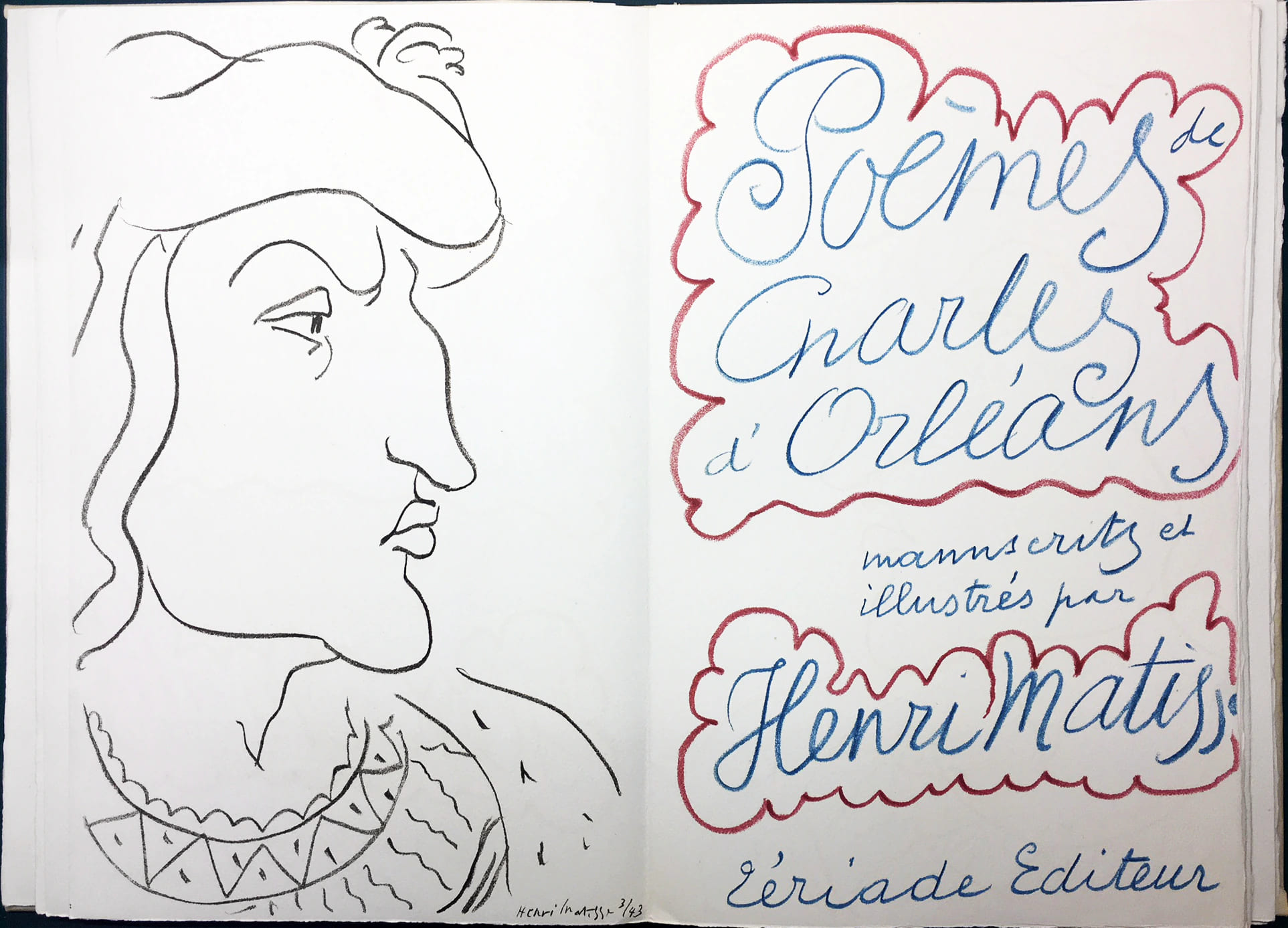
1950réf. 3110Paris, Tériade Editeur, 1950. 1 volume in-folio (410 x 270mm), 100 pages, en feuilles sous couverture illustrée rempliée illustrée, dans un coffret toilé de soie grise et titré au dos. Ouvrage entièrement lithographié en couleur dont le texte reproduisant le manuscrit d'Henri Matisse. 54 LITHOGRAPHIES EN HORS-TEXTE dont le frontispice signé dans la pierre pour un total de 100 lithographies. L'ouvrage est entièrement imprimé en lithographie, texte manuscrit inclus. Édition originale tirée à 1200 exemplaires numérotés sur vélin d'Arches et signés par Henri Matisse. Celui-ci, numéroté 210, sur Arches est bien signé au crayon par Henri Matisse. Bel exemplaire , faibles reports comme généralement, tel que paru, non lavé. Les lithographies ont été tirées chez Mourlot Frères. — ENGLISH DESCRIPTION: POÈMES DE CHARLES D'ORLÉANS 54 original color lithographs by Henri Matisse (1950). The complete book, 1950, comprising 54 ORIGINAL LITHOGRAPHS PRINTED IN COLOUR HORS-TEXTE for a total of 100 lithographs, with THE COVER, title-page, text and justification. The justification is signed in pencil by Matisse and numbered 210 on Arches paper (from the total edition of 1230), published by Tériade, Paris, on Arches wove paper. Overall size: 410 by 270mm. 100 pages. Well preserved in its original condition in a grey cardboard and linen shell-case titled on the spine. Catalogue raisonné: Duthuit n°28, entièrement reproduit. - Tériade & les livres de peintres, Musée Matisse, 2002, p. 131.